Retail News CRM

Tag: Mazda

  • Thaco to sell 10% stake in automobile subsidiary

    Thaco to sell 10% stake in automobile subsidiary

    Truong Hai Group (Thaco Group) is looking for investors to sell a 10% stake in automobile manufacturing and distributing subsidiary Thaco Auto.

    Nguyen Hung Minh, vice chairman of Thaco Group, said Wednesday that the sale of 10 percent of shares in Thaco Auto is meant to raise funds for production and business, investment in expanding the retail system and development of new products.

    Ho Chi Minh City Securities Corporation (HSC), Thaco’s financial advisor, is working on this plan.

    DMeanwhile, Thaco’s ESOP shares issued in 2018 will be converted to make it a public joint stock company. This company plans to list on the market within the next next years.

    According to Nguyen Hung Minh, all production activities of Thaco Auto currently take place at our industrial park in Chu Lai.

    Recently a number of domestic and foreign investors have been working with Thaco and HSC on buying the Thaco Auto shares.

    Negotiations are still ongoing and no decision has been made, but Minh said Thaco expects to complete the deal this year.

    The company, owned by billionaire Tran Ba Duong, is a diversified corporation with interests in automobiles, agriculture, mechanical engineering and supporting industries, construction investment, logistics, trade, and services.

    Thaco Auto manufactures, assembles, and distributes KIA, Mazda, Peugeot, and BMW cars and has nearly 400 showrooms across Vietnam.

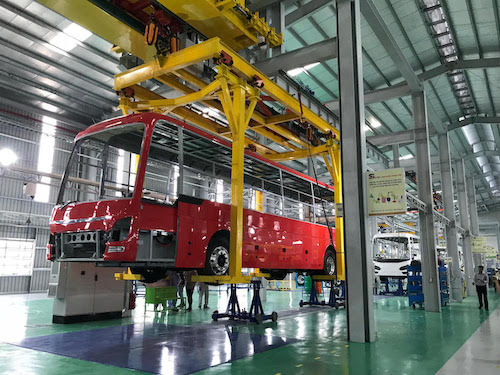
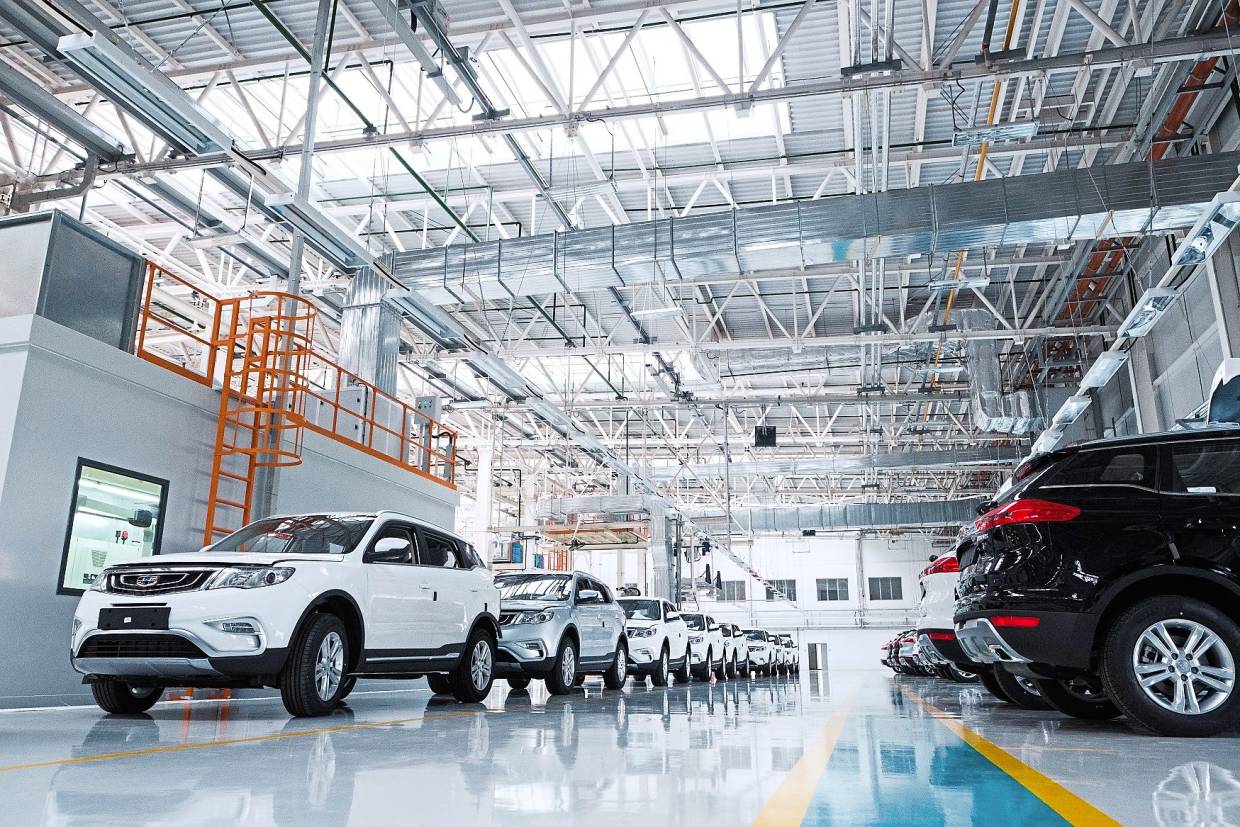
    Mazda cars being manufactured at Thaco Auto’s factory in the Chu Lai Industrial Park, Quang Nam Province. Photo courtesy of Thaco Auto

    Thaco Auto has a production complex with seven factories in the Chu Lai Industrial Park (Quang Nam).

    This year it targets sales of over 120,000 vehicles, including 96,000 passenger cars, 23,500 trucks and 1,500 buses and minibuses.

    It expects consolidated revenues of over VND90 trillion, equivalent to nearly $USD3.8 billion, including VND5.2 billion from services.

    In 2022 the company sold 111,440 vehicles to retain the largest market share in the country at 38 percent.

  • Chinese carmaker Haima returning to Vietnam

    Chinese carmaker Haima returning to Vietnam

    After first unsuccessfully entering the Vietnamese market a dozen years ago, Chinese automaker Haima plans to begin selling cars here again later this year.

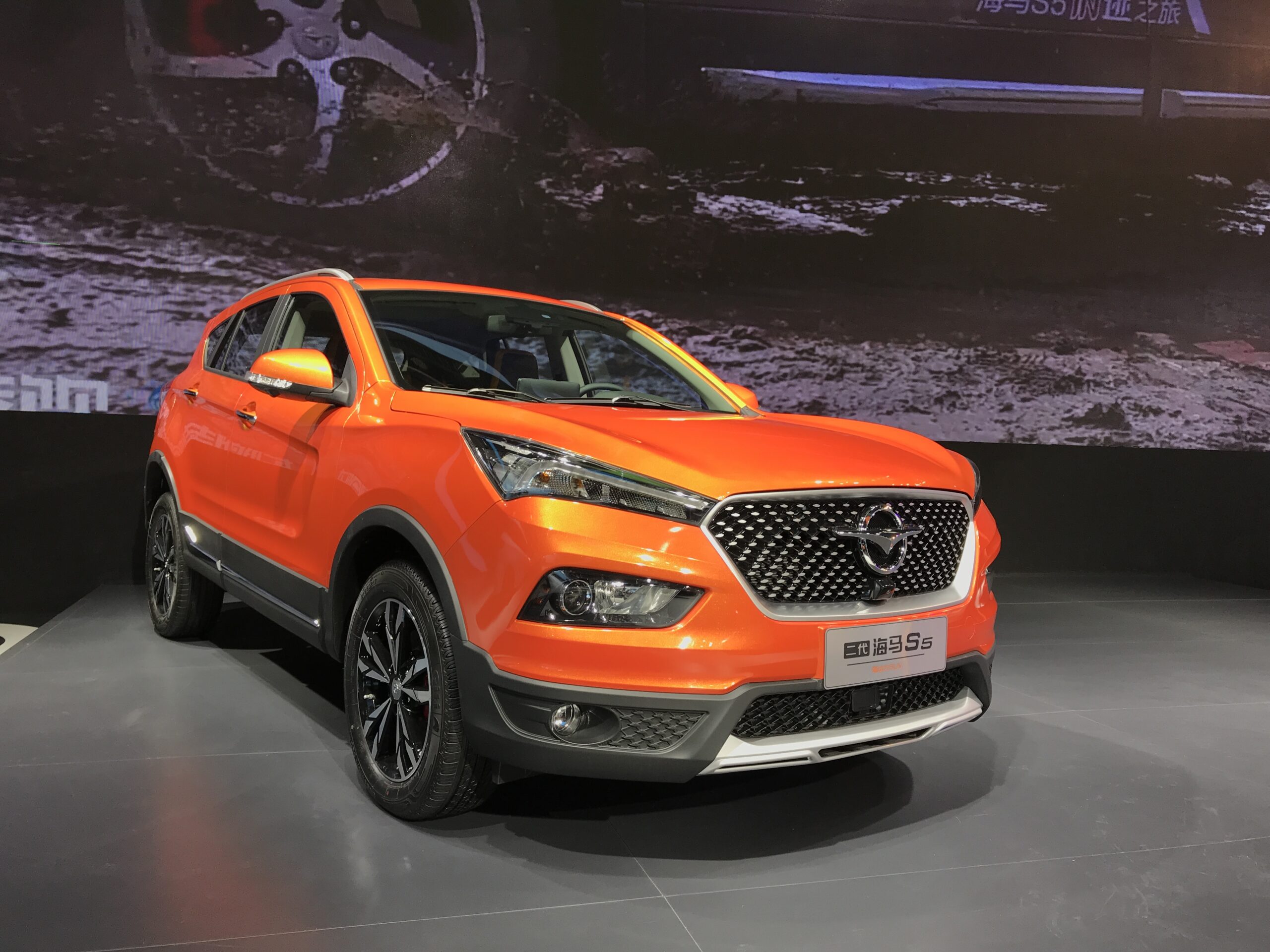
    Tran Viet Son, sales director at Carvivu, Haima’s new distributor in Vietnam, said the company will import 3 Haima models, namely the 8S, 7X and 7X-E.

    The 7X will be the first model released in Vietnam beginning in the second half of 2023. The car is slated to compete with the Mitsubishi Xpander and the Toyota Veloz, Son said. Haimas will be sold at two showrooms in Hanoi and one in HCMC.

    The distributor expects the 7X to be Haima’s biggest seller in Vietnam due to the popularity of multi-purpose vehicles (MPV).

    Son said the car would probably sell for around VND700-800 million (US$29,700-33,900) each. The most popular MPV models in Vietnam currently sell for significantly less than that.

    The Mitsubishi Xpander costs VND555-688 million per unit, while the Toyota Veloz sells for VND658-698 million.

    The most expensive MPV model in Vietnam is the is Kia Carens, which lists at around VND619-859 million.
    The electric variant of the 7X, the 7X-E, is expected to cost VND1 billion or more.

    Haima’s small car offering, the 8S, will also be available on the Vietnamese market in the second half of this year. The 8S will be competing with the Mazda CX-5 (VND839-1,059 million) and the Hyundai Tucson (VND845-1,060 million).

    The Chinese automaker first entered the Vietnamese market in 2011, only to soon exit quietly after failing to compete with stronger, more durable Japanese cars

    However, over the past two years, Chinese automakers such as Beijing, Hongqi and BAIC have begun to reach Vietnamese customers.

    Automobile manufacturer Chery has announced plans to build a factory in Vietnam to assemble cars for export.

    And Vietnamese firm TMT Motors will also begin assembling and distributing Chinese Wuling Hongguang Mini EV electric cars late this year.

  • Court Finds Mazda Australia Misled Customers On Refunds For Faulty Vehicles

    Court Finds Mazda Australia Misled Customers On Refunds For Faulty Vehicles

    An Australian federal court has found that the local unit of Japanese automaker Mazda Motor Corp misled customers over their rights, the country’s competition regulator said on Tuesday.

    The Australian Competition and Consumer Commission started court proceedings against Mazda in October 2019 in a case involving seven different Mazda vehicles and 10 customers.

    It said the court found that Mazda made 49 separate false or misleading representations to nine consumers, who sought refund or replacement after facing serious and recurring faults with their vehicles within a year or two of purchase.

    Mazda either ignored or rejected the claims of the customers and told them that the only available remedy was another repair, the ACCC said.

    “Mazda’s conduct towards these consumers was not just appalling customer service as noted by the judge, it was a serious breach of the law,” ACCC Chair Rod Sims said in a statement.

    Mazda Australia said it was carefully considering the federal court finding, but declined to comment further.

    The court, however, dismissed the regulator’s allegations that Mazda engaged in “unconscionable conduct” in its dealings with these customers. It will decide on penalties and other orders sought by the ACCC at a later date.

  • Toyota, Mazda Joint Venture Alabama Plant Will Now Cost $2.3 Billion

    Toyota, Mazda Joint Venture Alabama Plant Will Now Cost $2.3 Billion

    Toyota Motor and Mazda Motor Corp said on Thursday they will invest $2.3 billion (1.76 billion pounds) in a new joint venture factory in Alabama, $830 million more than announced in their original plan in 2018. Production is expected to start next year building up to 150,000 future Mazda crossover vehicles and 150,000 Toyota sport utility vehicles annually. The Japanese automakers are expected to receive $97 million in additional tax incentives for the added investment, a person briefed on the matter said.

    The automakers have faced challenges as they continued construction work during the coronavirus pandemic on the plant, which will now cost about 50% more than first estimated. The companies said the higher investment “accommodates production line enhancements made to improve manufacturing processes.”

    The plant continues to target up to 4,000 new jobs and has hired approximately 600 employees to date. “Mazda and Toyota’s increased commitment to the development of this manufacturing plant reiterates their belief in the future of manufacturing in America and the potential for the state of Alabama to be an economic leader in the wake of unprecedented economic change,” Alabama Governor Kay Ivey said in a statement. The companies said the plant’s roofing, siding, floor slabs, ductwork, fire protection, and electrical work is 75% to 100% complete.

    State and local governments in Alabama previously provided more than $700 million in tax incentives. In September, President Donald Trump and Japanese Prime Minister Shinzo Abe signed a limited trade deal that cuts tariffs on U.S. farm goods, Japanese machine tools and other products but delayed the question of auto imports for future talks. Trump threatened hikes but did not raise current auto tariffs of 2.5% on passenger vehicles and 25% on pickup trucks.

    Japan exported 1.7 million vehicles last year to the United States, making up about 10% of U.S. vehicle sales.

  • Mazda Motor Seeks $2.8 Billion In Loans To Ride Out Pandemic

    Mazda Motor Seeks $2.8 Billion In Loans To Ride Out Pandemic

    Mazda Motor Corp has sought loans totaling about 300 billion yen ($2.8 billion) from Japan’s three megabanks and other lenders to ride out the coronavirus epidemic, a source with direct knowledge of the matter said on Saturday. The megabanks – Mitsubishi UFJ Financial Group, Sumitomo Mitsui Financial Group and Mizuho Financial Group – along with the Development Bank of Japan, Sumitomo Mitsui Trust Holdings and others are set to agree, with some already having extended the loans, the person said, declining to be identified because the information is not public.

    All three megabanks declined to comment on the loan request, which was reported by the Nikkei business daily earlier. Mazda did not immediately respond to a request for comment.

    Mazda, like most other automakers, has reduced or halted production at factories around the world for the past few months as governments try to limit the spread of the new coronavirus.

    Mazda’s car sales and balance sheet had been weak even before the virus slammed the brakes on demand, with its interest-bearing debt of 650 billion yen far exceeding its cash and cash equivalents, according to the Nikkei. Mazda is scheduled to announce its financial results for the year ended in March on Thursday.

  • Mazda outscores Toyota in customer satisfaction

    Mazda outscores Toyota in customer satisfaction

    Mazda climbed two places from last year to become this year’s auto brand that satisfies Vietnamese customers the most.

    The Japanese brand ranked highest with a satisfaction score of 859 over 1,000, surpassing last year’s joint leaders Toyota (853) and South Korea’s Hyundai (835), according to U.S. market research firm J.D. Power.

    U.S.’s Chevrolet saw the steepest decline from third place last year to seventh this year with a score of 819, said the 2019 Vietnam Sales Satisfaction Index (SSI) Study released Thursday.

    It ranked above two brands with the lowest scores, Japan’s Honda (810) and South Korea’s Kia Motors (799), according to the study, which polled 1,512 new vehicle owners online between March and August.

    73 percent of customers said dealers delivered their cars with a special ceremony, an increase of 21 percentage points from 2018. Among customers who experienced a special ceremony, satisfaction points were higher.

    But demonstration of car features during delivery declined by 3 percentage points to 32 percent, despite customers showing a preference for sales consultants or delivery specialists demonstrating car features to them rather than learning on their own.

    Dealers need to pay attention to the importance of demonstrating car features professionally, especially since 75 percent of all new owners are first-time buyers, said Siros Satrabhaya, J.D. Power regional director for Thailand and Vietnam.

    The study also found out that Vietnamese car buyers are increasingly using the internet to gather information before buying a car.

    The number of people who visit a dealer’s website increased by 42 percentage points to 89 percent, and those who visit its Facebook pages increased by 20 percentage points to 57 percent.

    From January to September, sales of imported cars rose 150 percent year-on-year to nearly 93,600, while that of locally-assembled vehicles dropped 13 percent to 136,800 units, according to the Vietnam Automobile Manufacturers’ Association (VAMA).

  • Mazda Recalls Nearly 190,000 Cars In The US

    Mazda Recalls Nearly 190,000 Cars In The US

    Mazda is recalling nearly 190,000 Mazda 3 compact cars in the U.S. because the windshield wipers can fail.

    The company says in documents posted Saturday by the U.S. National Highway Traffic Safety Administration that the recall covers cars from the 2016 through 2018 model years. The Japanese auto maker traced the problem to metal deposits that can cause a wiper relay to stick, knocking out the wipers and limiting driver visibility.

    The company says it has no reports of crashes or injuries due to the problem. Dealers will replace the front wiper control module at no cost to owners starting June 3.

  • Vietnamese car maker plans private share issue

    Vietnamese car maker plans private share issue

    Truong Hai Auto Corporation (THACO) is planning to issue more than 30.3 million shares to a strategic shareholder. The company is currently collecting shareholders’ opinions on a draft resolution to authorize a private placement worth an estimated total of VND3.89 trillion ($167.19 million) to Jardine Cycle & Carriage, a Singaporean diversified conglomerate that specializes in investment in car manufacturing.

    The share issue aims to raise additional capital to finance THACO’s investment and business plans this year, the company said in a circular issued to shareholders last week.

    The 30.3 million shares proposed in this placement make up 1.82 percent of THACO’s current chartered capital, and will raise the Singaporean shareholder’s stake in the car manufacturer to 26.57 percent.

    The share ownership of remaining shareholders will remain unchanged. Currently, 6.8 percent of THACO is owned by billionaire Tran Ba Duong, founder and chairman of the company, and another 60.6 percent by Tran Oanh JSC, a holding company owned by Duong and his family.

    The shares are expected to be issued soon after the State Securities Commission has confirmed the receipt of all documentation regarding the private placement.

    Dong Nai-based THACO was established as an auto and commercial vehicle maker in 1997. It has a plant in central province of Quang Nam and 89 showrooms and 53 dealerships.

    It makes trucks and buses and assembles cars for brands like Kia (South Korea), Mazda (Japan), and Peugeot (France).

    Jardine Cycle & Carriage Ltd, which is part of the Jardine Group of companies, has a diverse business portfolio. They have long term shareholdings in major manufacturers such as Jakarta based Astra International, as well as other interests in the refrigeration, cement and milk business.

    In Singapore, Jardine C&C is best known as the retailer of Mercedes Benz, Mitsubishi, Kia, Citroen, DS, and Maxus motor vehicles. The company has a current market capitalisation of S$14.55 billion (US$10.71 billion).

  • CGS-CIMB sees strong vehicle sales in December, raises 2018 TIV growth forecast

    CGS-CIMB sees strong vehicle sales in December, raises 2018 TIV growth forecast

    CGS-CIMB expects vehicle sales to be stronger in December and has raised its 2018 total industry volume (TIV) growth forecast from 2.5% to 4% on the back of stronger-than-expected TIV year-to-date. “We expect stronger sales in December in view of year-end promotions and multiple new models that were recently launched. For example, Proton launched its first SUV, the X70 on Dec 12 and we learned that it has started delivery to showrooms. Proton has so far received encouraging bookings of over 12,000 units since the end of November,” it said in its sector note today.

    On Wednesday, the Malaysian Automotive Association (MAA) announced that TIV grew 2.1% month-on-month to 48,282 units in November due to higher passenger vehicles (PV) sold. Perodua and Mazda recorded 8% and 14% month-on-month growth respectively.

    For the 11 months ended November, TIV rose 5.5% year-on-year to 550,526 units due to stronger PV and commercial vehicles (CV) demand on the back of the tax holiday period. PV and CV recorded healthy 5% and 8% year-on-year sales growth respectively during the period.

    For 2019, it expects resilient sales in PV on the back of new model launches in the passenger car and SUV segments from Perodua, Proton, Honda and Toyota but overall, TIV delivery is expected to be flat next year.

    “We project a 10% sector net profit growth in 2019, driven by positive earnings growth from all companies, led by Sime Darby. However, we see downside risk to earnings from the depreciation in ringgit versus US dollar and Japanese yen, as this will increase the distributors’ costs of imported complete knocked-down kits and complete built units,” it said.

    Bermaz Auto Bhd (BAuto) is CGS-CIMB’s top pick, in view of the company’s undemanding valuation, attractive yield and proxy to export sales growth. It has an “add” rating on the stock with a target price of RM2.65.

    “We expect BAuto to deliver robust sales volume in FY19-20, driven by the popular Mazda CX-5 and upcoming new model launches of Mazda 3 and CX-8,” it added.

  • Toyota, Mazda to build $1.6 billion plant in Alabama

    Toyota, Mazda to build $1.6 billion plant in Alabama

    Alabama will be the site of a new $1.6 billion Toyota Motor Corp and Mazda Motor Corp auto plant, a victory for President Donald Trump who had prodded manufacturers to build new U.S. facilities and threatened tariffs on foreign production, sources said on Tuesday.

    The plant, which will employ up to 4,000 people and produce about 300,000 vehicles a year, will be located in Huntsville, Alabama, and is a boon for the state, where Toyota has a large engine plant and an existing network of automotive suppliers.

    A formal announcement by company and state officials is expected on Wednesday in Montgomery, sources briefed on the matter said.

    The new plant –in a state Trump won by 28 points in 2016 — could be a political boost to the Republican president, who has urged automakers to build plants in the United States and add jobs. The companies said they expect the plant to open in 2021.

    Trump tweeted in March he wanted “new plants to be built here for cars sold here.” The White House did not immediately comment on Tuesday.

    The announcement also comes at a time of declining U.S. auto industry sales, so it could exacerbate overcapacity and add pressure to cut prices. U.S. new vehicle sales fell 2 percent in 2017, after hitting an all-time record high in 2016, and are expected to fall further in 2018.

    Details of an anticipated tax and incentive package for the investment were not yet known. It has been reported the companies sought at least $1 billion in incentives.

    A Toyota spokesman declined to comment, except to say an announcement was expected soon. A Mazda spokeswoman also declined to comment.

    In recent months, the companies had narrowed their choices down to sites in Alabama and North Carolina.

    Local media last month said the leading site under consideration was in northern Alabama’s Limestone County, near Toyota’s large engine plant in Huntsville. In September Toyota announced a $106 million technology upgrade for the Huntsville plant.

    A Chamber of Commerce of Huntsville website for the “Huntsville Mega Site” touts the fact it has been “certified as development-ready.” The commerce chamber, local and state officials declined to comment on Tuesday on plans for the plant.

    A year ago, President-elect Trump criticized Toyota and threatened hefty tariffs against the Japanese automaker if it built its Corolla sedan for the U.S. market in Mexico.

    “Toyota Motor said will build a new plant in Baja, Mexico, to build Corolla cars for U.S. NO WAY! Build plant in U.S. or pay big border tax,” Trump posted on Twitter in early 2017.

    Toyota and Mazda announced plans for a new plant in August. Toyota said it would shift production of Corollas from Canada to the new venture rather than in Guanajuato, and would build Tacoma pickups in Mexico instead. Mazda plans to build new crossover SUVs at the plant.

    Trump praised the joint venture announcement, saying in August on Twitter: “Toyota & Mazda to build a new $1.6B plant here in the U.S.A. and create 4K new American jobs. A great investment in American manufacturing!”

    In October, Toyota said it would scale back investment in a planned plant in Mexico by 30 percent to $700 million and cut planned annual capacity in half to 100,000 vehicles as it shuffles its production plans to meet market demands.

    Toyota has 10 U.S. plants in eight states in an arc running from West Virginia through Kentucky, Indiana, Alabama, Mississippi and Texas.Toyota and Mazda announced a capital alliance in August and are exploring joint development of technologies for the basic structure of competitive electric vehicles.

    Over the last 30 years Toyota, along with German and Asian automakers, has built a second auto industry in the United States, rivaling the operations of the Detroit Three automakers in size and employment, but with newer, and fewer unionized, plants.

    States covet auto assembly plants because they typically pay above-average wages and spin off jobs at suppliers and service companies. Southern U.S. states have the advantage of good transportation infrastructure, business-friendly regulators and generally anti-union politicians.

    The Alabama Department of Commerce shows 150 of the large automotive suppliers operate in the state, providing the logistical strength that Kristin Dziczek, a researcher at the Center for Automotive Research in Michigan, said helped land the plant.

    Dziczek said that Alabama in 2017 was tied for fifth among U.S. states in auto production, at 9 percent with Tennessee. It was behind Michigan at 19 percent; Indiana at 12 percent, Kentucky at 11 percent; and Ohio at 10 percent.

    “The impact of an auto assembly plant extends beyond its immediate economic impact, and that’s why states offer robust incentives,” said Dennis Cuneo, a site-selection consultant and former Toyota executive. “It creates a halo effect that in turn helps attract other projects.”

    Alabama spent an estimated $250 million to woo Daimler AG’s Mercedes-Benz to put an auto plant in Tuscaloosa two decades ago.

  • Mazda launches all-new CX-5 in Thailand

    Mazda launches all-new CX-5 in Thailand

    Mazda Sales Thailand has launched the all-new CX-5 with prices mostly competing with those of the Honda CR-V, one of the most popular SUVs in the Thai market.

    The second-generation CX-5 comes with a completely redesigned exterior and interior, although it still uses the same platform, engines and transmission from its predecessor.

    The CX-5 comes with the same 175hp 2.2-litre diesel-turbo and 165hp 2.0-litre petrol motors, both equipped with a carried-over six-speed automatic driving either the front wheels or all four.

    The entry-level model is the petrol-powered C trim priced at 1.29 million baht, some 100k cheaper than the cheapest CR-V powered by 175hp 2.4-litre petrol engine.

    The higher S spec of the CX-5 goes for 1.33 million baht which, like the C, is 70k more expensive than before. A new grade is the 1.53 million baht SP that comes with the brand’s latest driver-assist technologies. All petrol models are purely front-wheel drive.

    As usual, the diesel-powered is available in just two versions: XD asking for 1.56 million baht and XDL 1.77 million baht, the latter getting those driver-assist tech and four-wheel drive. They are 30k and 80k dearer accordingly than the previous models.

    The CR-V, with 160hp 1.6-litre diesel-turbo, is priced at 1.549 million baht in basic E trim and 1.699 million baht in EL guise.

  • Mazda to make all models hybrid, electric by early 2030s

    Mazda to make all models hybrid, electric by early 2030s

    Mazda Motor plans to make all of its vehicles electric-based, including petrol hybrids, by the early 2030s, Japanese media reported on Friday, as more automakers shift strategies to meet tightening global emission regulations.

    The Japanese automaker plans to use electric motors in all of its models by that time, Kyodo News reported, without citing sources. A Mazda spokeswoman declined to comment on the report.

    At the moment, Mazda’s line-up does not include any all-battery electric vehicles, though it sells one hybrid model, a version of its Mazda3.

    The company has said it will introduce electric powertrain technologies including electronic vehicles (EVs) from 2019.

    To catch up with other larger automakers including Nissan Motor, which already market electric cars, Mazda has partnered with Toyota Motor Corp to develop technology.

    Meanwhile, it has also developed an ultra-efficient petrol engine, which can be used in hybrids, and plans to incorporate that into its cars from 2019.

    Unveiling the new technology last month, Mazda CEO Masamichi Kogai said its gasoline, diesel and electric vehicle technologies would “co-exist” in the future.

    The automaker, which also specialises in highly-efficient diesel engines, on Thursday launched a new CX-8 model in Japan, which is only available as a diesel model at the moment.

    Other global automakers are planning to shift away from internal combustion engines towards electrification in the coming years.

    Volvo Car Group in July said that all of its new models from 2019 would use electric motors, while Volkswagen earlier this week said it would launch 80 new electric cars across its brands by 2025.

  • Mazda announces breakthrough in long-coveted engine technology

    Mazda announces breakthrough in long-coveted engine technology

    Mazda said it would become the world’s first automaker to commercialize a much more efficient petrol engine using technology that deep-pocketed rivals have been trying to engineer for decades, a twist in an industry increasingly going electric.

    The new compression ignition engine is 20 percent to 30 percent more fuel efficient than the Japanese automaker’s current engines and uses a technology that has eluded the likes of Daimler AG and General Motors Co.

    Mazda, with a research and development (R&D) budget a fraction of those of major peers, said it plans to sell cars with the new engine from 2019.

    “It’s a major breakthrough,” said Ryoji Miyashita, chairman of automotive engineering company AEMSS Inc.

    The announcement places traditional engines at the center of Mazda’s strategy and comes just days after Mazda said it will work with Toyota Motor Corp to develop electric vehicles and build a $1.6 billion U.S. assembly plant.

    “We think it is an imperative and fundamental job for us to pursue the ideal internal combustion engine,” Mazda R&D head Kiyoshi Fujiwara told reporters. “Electrification is necessary but… the internal combustion engine should come first.”

    A homogeneous charge compression ignition (HCCI) engine ignites petrol through compression, eliminating spark plugs. Its fuel economy potentially matches that of a diesel engine without high emissions of nitrogen oxides or sooty particulates.

    Mazda’s engine employs spark plugs under certain conditions, such as at low temperatures, to overcome technical hurdles that have hampered commercialization of the technology.

    Executive Vice President Akira Marumoto called Mazda’s engine technology the automaker’s “heart”.

    The engine is called SKYACTIV-X and Mazda had no plans to supply the engine to other carmakers, Marumoto said.

    AEMSS’ Miyashita said a key issue would be how smooth and responsive the engine is.

    “Is it jerky? If so, that would pose a big question when it comes to commercializing this technology.” he said. “Hopefully Mazda has an answer to that question.”

    Mazda also said it would introduce electric vehicles and electric technology in its cars from 2019, focusing on markets that restrict the sale of certain vehicles to limit air pollution or that provide clean sources of electricity.

    In addition, it said it aimed to make autonomous-driving technology standard in all of its models by 2025.

    Mazda’s announced its petrol-engine technology breakthrough on the same day that shares in Japan’s GS Yuasa Corp surged after a newspaper reported that it would start producing a lithium battery that would double the range of electric cars as early as 2020.

    Mazda’s share price closed down 1.3 percent. That compared with a 0.3 percent fall in the benchmark Nikkei 225 index.

  • Toyota takes stake in Mazda, links up for $1.6 billion U.S. plant

    Toyota takes stake in Mazda, links up for $1.6 billion U.S. plant

    Toyota  said on Friday it planned to take a 5 percent share of smaller Japanese rival Mazda Motor Corp, as part of an alliance that will see the two build a $1.6 billion U.S. assembly plant and work together on electric vehicles.

    The plant was a surprise for investors at a time of cooling U.S. sales, but marked good news for U.S. President Donald Trump who came to office on the back of promises to bring back manufacturing and jobs for U.S. workers. He commented on Twitter that it was a “great investment in American manufacturing”.

    The plant, whose location is not yet public, will be able to produce 300,000 vehicles a year, with production divided between the two automakers, and employ about 4,000 people. It will start operating in 2021.

    Analysts said the plan was more than a political ploy. The alliance is also an attempt to catch up with rivals in the race for electric car technology, as tighter global emissions rules loom, along with the entry of new players into the market.

    “There will be new rivals appearing – Apple, Google – these are IT companies, we also need to compete with them, too,” Toyota President Akio Toyoda, grandson of the company’s founder, told a news conference in Tokyo.

    He was appointed last year to lead Toyota’s newly formed electric car division, flagging the group’s commitment to a technology it has been slow to embrace.

    “What’s different from the past is that there are no nautical charts for us to follow. It’s without precedent,” he said of the push into alternatives to the internal combustion engine.

    Other traditional automakers such as Daimler and BMW are also weighing how best to work on new, disruptive technology, from electric vehicles to autonomous driving, that require hefty investment and have turned firms like Google and Tesla into rivals.

    Toyota has set a goal for all of its vehicles to be zero emission by 2050. But until recently, it has said it favoured EVs for short-distance commuting, given their limited driving range and lengthy charging time.

    It has been investing heavily in hydrogen fuel-cell vehicles (FCVs), while rivals such as Nissan Motor Co, Volkswagen AG and Tesla have touted pure electric cars as the most viable zero-emission vehicles.

    As part of the agreement, as well as electric car technology, Toyota and Mazda will work together to develop in-car information technologies and automated driving functions.

    Toyota, Japan’s biggest auto company, has been forging alliances with smaller rivals for several years, effectively engineering a loose network at the heart of the Japanese auto sector. It already owns a 16.5 percent stake in sixth-ranked Subaru Corp with which it also has a development partnership.

    Toyota is also courting compact car maker Suzuki Motor Corp to cooperate on R&D and parts supply, as Toyota seeks to tap its smaller rival’s expertise in emerging Asian markets.

    As part of Friday’s plan, Toyota, the world’s second-largest automaker by vehicle sales last year, will take a 5 percent share of Mazda, and Mazda will take a 0.25 percent share of Toyota.

    Mazda said it could even expand the alliance, as long as it could stay in control of its own management. “We will study the possibility of expanding the capital alliance, but the basic premise is that autonomy is assured,” said Mazda Executive Vice President Akira Marumoto.

    A stake in Mazda may also prevent future incursions by tech companies, one analyst said.

    “For a technology company which lacks the expertise in making cars, Mazda could look like a very interesting acquisition. They’re very good, they’re not too expensive. Maybe Toyota realises this,” CLSA managing director Chris Richter said.

    “By buying a 5 percent stake, Toyota takes Mazda off the table rather than having it sit out there like a free agent which could someday be used against them.”

    Mazda, for its part, stands to gain from a deal that gives the small automaker a production foothold in the United States. At the moment, it ships all vehicles sold in the country, its biggest market, from its plants in Japan and Mexico.

    With an R&D budget of around 140 billion yen ($1.27 billion) this year, a fraction of Toyota’s 1 trillion yen, Mazda lacks the funds to develop electric cars on its own, a predicament shared by Subaru and Suzuki.

    “Mazda needs electrification technology. In the past, they’ve pooh-poohed EVs, they’ve felt they can make internal combustion engines more efficient, but the bottom line is that globally you need to have this technology,” said Janet Lewis, head of Asia transportation research at Macquarie Securities.

    The automakers plan to produce Toyota Corollas and a new Mazda SUV crossover at the new plant, and the companies said they could eventually build other cars including electric vehicles.

    Toyota initially had been planning to produce Corollas at its new $1 billion plant being built in Mexico, prompting Trump to threaten punitive tariffs.

    The company has since said it will instead produce its Tacoma truck model in Mexico.
  • Mazda to recall 460,000 cars globally for diesel engine defects

    Mazda to recall 460,000 cars globally for diesel engine defects

    Japan’s Mazda Motor Corp said on Thursday it was recalling about 460,000 CX-5, Mazda3 and Mazda6 cars globally to fix multiple defects in their diesel engines, including a problem that could lead to engines stalling.

    The cars subject to the recalls were produced between Feb. 13, 2012 and Feb. 2 this year. No injury or fire has been reported from the defect, Mazda said.

    Of the total, 170,000 cars were sold in Japan and the remainder overseas.Japan’s Mazda Motor Corp said on Thursday it was recalling about 460,000 CX-5, Mazda3 and Mazda6 cars globally to fix multiple defects in their diesel engines, including a problem that could lead to engines stalling.

    The cars subject to the recalls were produced between Feb. 13, 2012 and Feb. 2 this year. No injury or fire has been reported from the defect, Mazda said.
    Of the total, 170,000 cars were sold in Japan and the remainder overseas.