Tag: mbk

  • MBK plans to sell its troubled Korean supermarket chain Homeplus

    MBK plans to sell its troubled Korean supermarket chain Homeplus

    MBK Partners, a private equity firm primarily operating in Northeast Asia, recently announced plans to sell its struggling South Korean supermarket chain, Homeplus. This move aims to prevent the retailer from going under.

    In an attempt to keep the firm afloat amidst the ongoing pandemic and intensified competition from e-commerce platforms, MBK Partners initiated court-led restructuring of Homeplus, South Korea’s second-largest grocery retailer, back in March.

    MBK Partners revealed that a court-commissioned assessment showed that the firm’s liquidation value surpasses its going concern value. Therefore, the decision to sell seems to be a strategic move to salvage as much value as possible.

    The retail company is planning to issue new shares and find a buyer for them. In contrast, MBK Partners is considering cancelling the shares it currently holds, which are valued at 2.5 trillion Korean won (equivalent to US$1.83 billion).

    MBK Partners originally purchased Homeplus in 2015, buying it from British multinational company Tesco for a hefty sum of 4 billion pounds.

    Legal challenges have surfaced as South Korean prosecutors are investigating whether MBK Partners authorized Homeplus’s debt issue in 2025, despite having prior knowledge of the retailer’s potential credit downgrade. MBK has refuted these accusations.

    The investigation led to a foreign travel ban in May for MBK Partners Chairman, Kim Byung-ju.

    Questions & Answers

    Why is MBK Partners selling Homeplus?
    MBK Partners is planning to sell Homeplus to avoid its liquidation. The decision came after a court-commissioned review showed the company’s liquidation value to be higher than its going concern value.

    What legal challenges is MBK Partners currently facing?
    South Korean prosecutors are investigating if MBK Partners approved Homeplus’s debt issue in 2025, despite being aware of a possible credit downgrade. MBK has denied these allegations.

    What actions are being taken against the chairman of MBK Partners?
    As part of the ongoing investigation, a foreign travel ban was imposed on the chairman of MBK Partners, Kim Byung-ju, in May.
  • Tokyu department store leaves Thailand

    Tokyu department store leaves Thailand

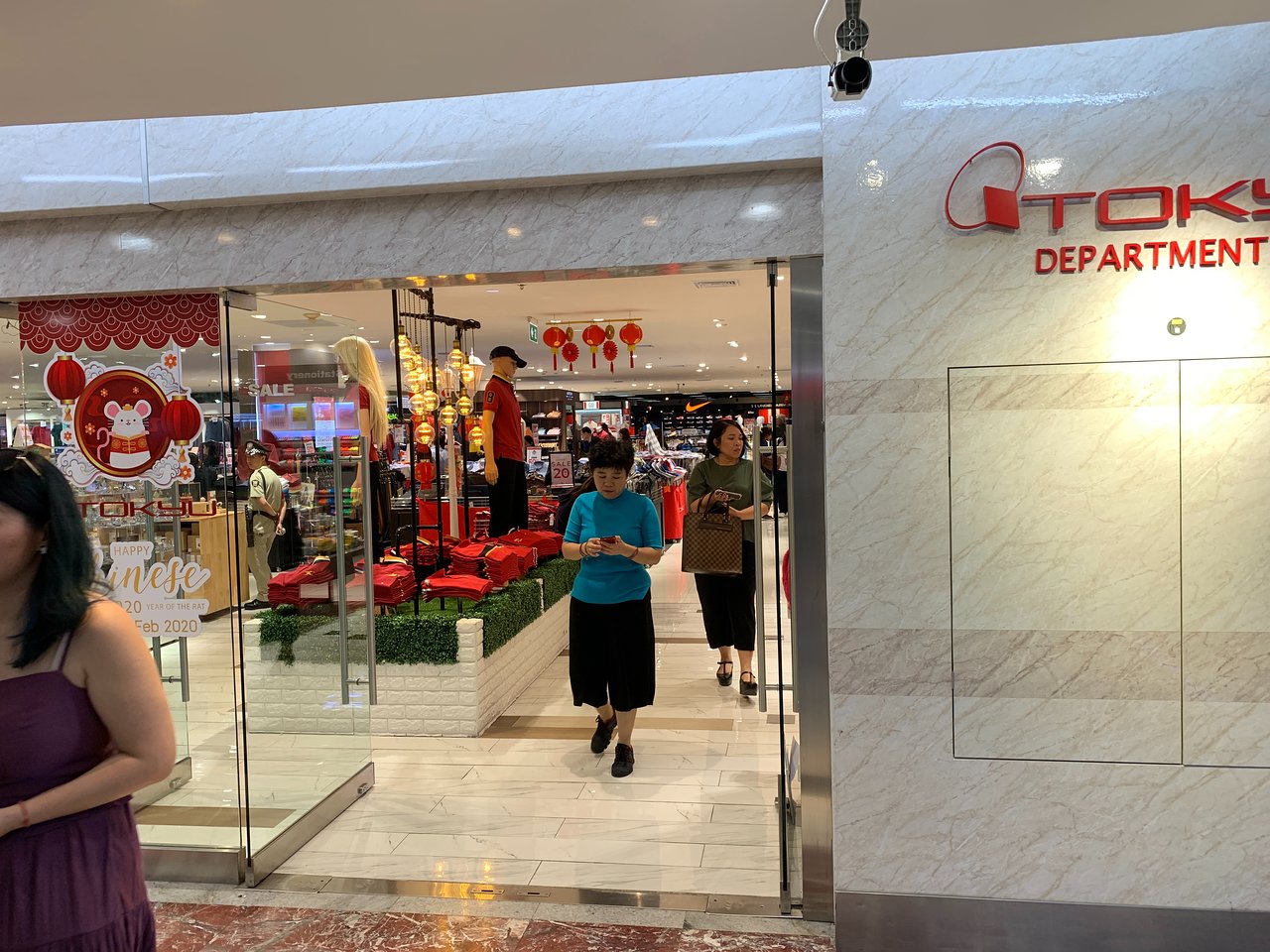
    Japanese department-store chain Tokyu is to exit Thailand, the third Japanese retailer to withdraw from the country this year.

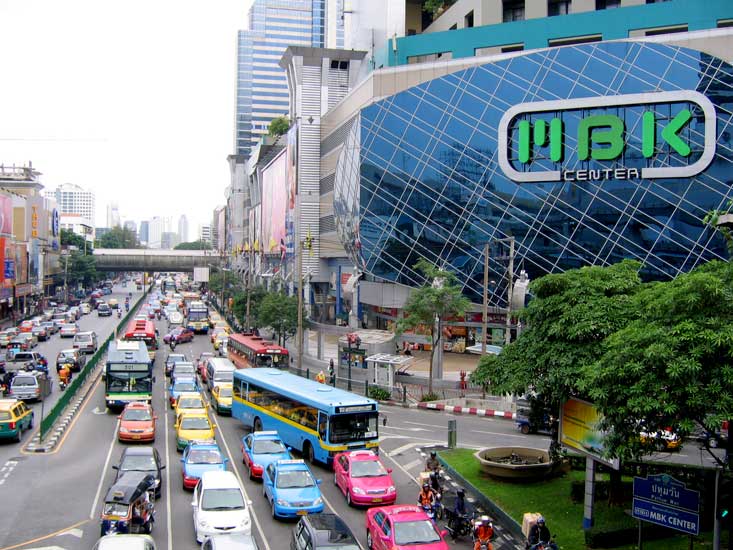
    Tokyu aims to close its last store at Bangkok’s MBK shopping center next January, ending 35 years of trading in the city. The retailer closed its second, newer store at Paradise Park last year.

    The department store has been struggling in the shopping center competition due to the launch of a series of new developments in Bangkok. However, the tourism depression resulting from Covid-19 proved a fatal blow to the company, forcing it to retreat home.

    The closure came suddenly, with the management of MBK saying just two weeks ago that the store would undergo a renovation after the lease agreement was extended for another nine years.

    Tokyu’s withdrawal follows the departure of Japan’s upmarket department store Isetan in September. That company pulled out of Thailand after 28 years of trading there, saying it was unable to continue to compete with other retailers.

    With Tokyu leaving Thailand, Takashimaya will become the only Japanese department-store chain left in the country.

    Another Japanese retailer, FamilyMart effectively withdrew this year after selling its stake to local partner Central Retail, effectively becoming a franchisor.

  • MBK launches “Bangkok Buddy” service

    MBK launches “Bangkok Buddy” service

    Thai shopping mall MBK Center has launched a “Bangkok Buddy” service aimed at providing a memorable customer experience for local and international shoppers.

    Available from 2pm every day, the two-hour experience starts with an exclusive hip hop and contemporary dance production combining electronic music with Thai instruments. The Bangkok Buddy team then walks around the mall to offer customers and tourists any shopping or travelling help they may need.

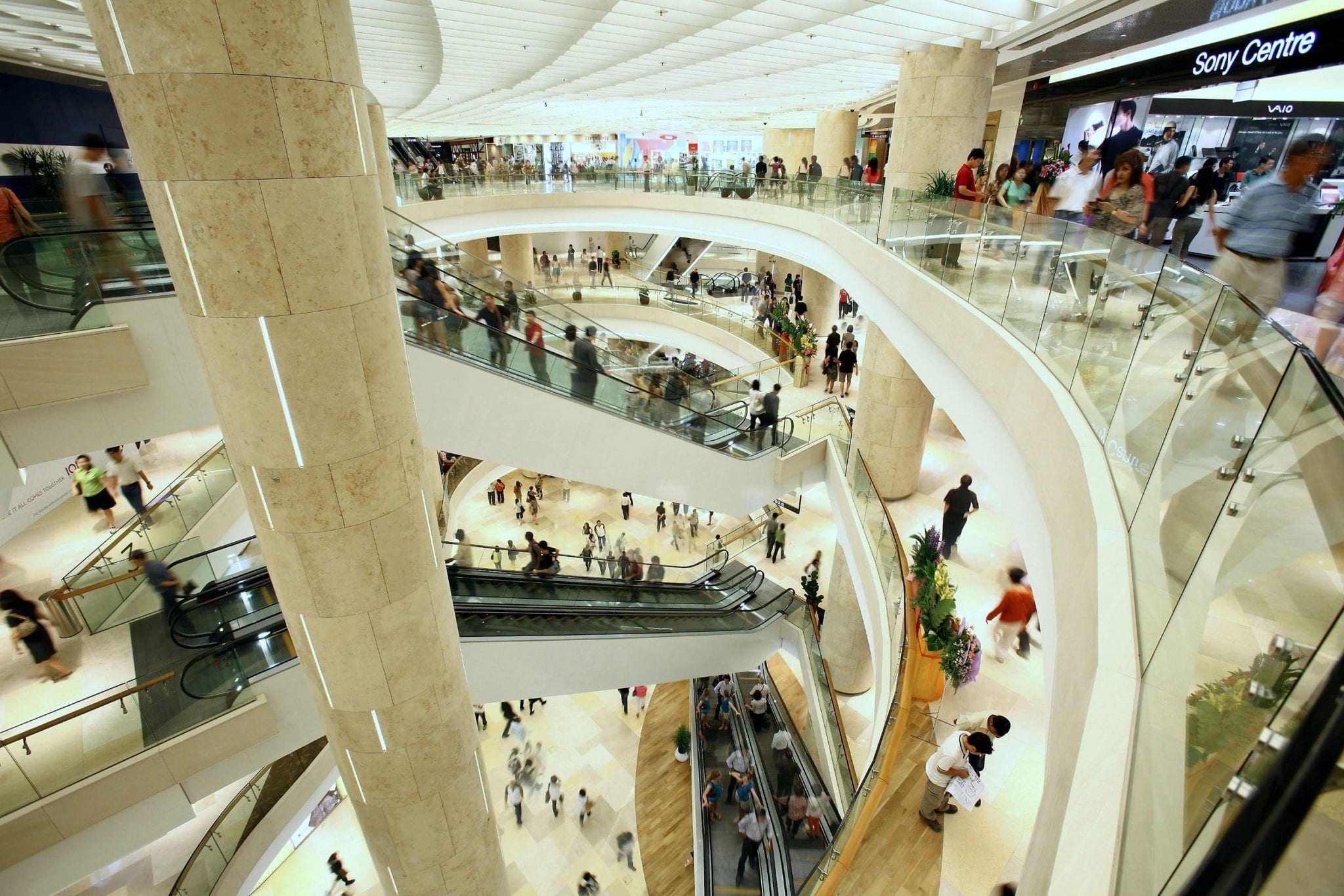
    Founded in 1985 as Mah-Boon-Krong, MBK Shopping Center is at Pathumwan intersection in the heart of the city. The eight-storey mall offers 140,000 sqm with more than 2500 shops and stalls plus 150 eateries. It has an average of 115,000 customers a day, including 35,000 tourists.

    MBK is close to Siam Centre, Siam Discovery, Siam Paragon and Siam Square with their shopping and dining experiences.

  • Central FamilyMart set to expand

    Central FamilyMart set to expand

    Central FamilyMart plans to double the number of its convenience stores in Thailand from 1116 to more than 2000 within five years.

    President Chiranun Poopat says the company will continuously expand the number of FamilyMarts to cater to a growing market and increase access to consumers in specific locations. The expansion will be achieved by capital investment as well as franchising.

    “We are still confident in the high growth potential of convenience stores in the Thai market as shoppers appreciate convenience and diversity as well as product quality.

    “We will focus on opening more FamilyMart stores in Bangkok and the surrounding areas, as well as cities and destinations visited by foreign tourists,” says Chiranun.

    She says the company will add more than 60 stores this year, and also has a focus on improving existing outlets.

    There are also plans to collaborate with local entrepreneurs and suppliers so the stores can offer products for specific areas, especially tourist destinations.

    FamilyMart’s latest branch opened in Bangkok’s MBK shopping centre last week, offering ready-to-eat foods and beverages.

    For the current Vegetarian Festival, Chiranun says FamilyMart has increased its vegetarian options to 400 items. New offerings include vegetarian onigiri (Japanese rice balls), baked Riceberry with taro, stirfried mixed mushrooms with rice, stirfried soy protein with black pepper, a coleslaw sandwich and a vegetarian bento set.

  • MBK plans second community mall

    MBK plans second community mall

    Thai developer MBK plans to spend 500 to 800 million baht (US$14 to 23 million) building a community mall in Pathum Thani province next year.

    President/chief executive Suvait Theeravachirakul says the mall will be opposite Bangkradi Industrial Estate in Pathum Thani.

    It is the company’s second community mall following The Nine Center in Bangkok. The new property will occupy a corner of an MBK site where it is developing the Riverdale Golf & Country Club and the Park Riverdale townhouse project.

    It is envisaged the mall will serve residential projects inside an eight to 10 km radius, and MBK is also looking at the feasibility of developing a mix-used complex.

    Meanwhile, The Nine Center has proven successful through its differentiation from other community malls nearby, says MBK shopping centre department MD Somphol Tripopnart. Its revenue last year was 225 million baht. About 12,000 shoppers visit the centre each day and the company plans to spend 10 million baht to improve its landscaping this year.

  • Animate Japan to open in Bangkok

    Animate Japan to open in Bangkok

    Japanese retail initiative Animate Co will open a store in Bangkok’s MBK shopping centre in the second quarter of next year, part of a program to help spread anime and manga culture throughout Southeast Asia.

    According to Japanese news media, the store will be run by Animate JMA, a Japan Manga Alliance subsidiary formed in September to promote manga and anime businesses outside Japan. It provides officially released products and aims to eradicate copyright thieves, pinpointing Thailand as a market with increasing copyright issues.

    Animate was joined in the JMA’s creation by publishers Kadokawa Corp, Kodansha, Shueisha and Shogakukan.

    The JMA Animate store at MBK will take up a massive 561 sqm space in the 89,000 sqm, eight storey mall.

    The store will stock manga and anime titles, character goods, video software, figurines and other products. It will also provide spaces for live concerts featuring anime singers and concept shops.

    JMA says if the initiative proves a success in Thailand it will open stores in other Southeast Asian markets.

  • Orion is out in bidding for Tesco’s Korea operations

    Orion is out in bidding for Tesco’s Korea operations

    Private-equity firms such as MBK Partners and the Carlyle Group are among the short-listed bidders for Homeplus, a local discount retailer owned by the U.K. grocery chain Tesco, according to people with knowledge of the matter.

    Affinity Equity Partners and Goldman Sachs’ private equity arm have also been short-listed, while the local snack maker Orion, which had submitted a bid, failed to move to the next round after a bid at the lower end of the bidders’ range. Orion’s bid was said to have been between 4 and 5 trillion won ($3.6 billion to $4.4 billion).

    Orion shares jumped 5.7 percent on Thursday after the news of its withdrawal. “Homeplus was probably too big of a prize for Orion to handle. Its failure has been expected,” a brokerage analyst said.

    Hyundai Department Store, which had earlier shown interest in bidding, decided not to, the retail company said. The chain is currently focused on getting a license for a duty-free business in Seoul.

    The Homeplus sale is expected to fetch around $6 billion for the troubled U.K. grocery chain Tesco, which is dealing globally with massive losses and huge outstanding debts. The sale of its Korean operations is part of its efforts to secure cash as it tries to stay afloat.

    Tesco entered the Korean retail market jointly with Samsung C&T in 1999, initially controlling 81 percent stake in Homeplus but gradually buying out Samsung’s stake.

    Homeplus operates 107 hypermarkets and 828 express stores across Korea, and is the third-largest discount retailer, after E-Mart and Lotte Mart, according to regulatory filings.

    Korea’s discount retailing market is estimated to be worth 34.9 trillion won as of the third quarter of 2014, down from 45.1 trillion won a year earlier. The sector has been hurt by an economic slump and government regulations that restrict operations during weekends to protect mom-and-pop stores.

    Homeplus saw a net loss of 299 billion won last year. Homeplus Tesco reported a net loss of 48.8 billion won and Homeplus Bakery contributed a net loss of 6.7 billion won.

  • Tesco Korea technique paying off

    Tesco Korea technique paying off

    Tesco’s obvious technique to attract out bidders for its Korean Homeplus operation is already paying off.

    Whereas personal fairness gamers have been apparently despatched invites to bid, the best way the information of the as but formally unconfirmed sale plan has unfold, has drawn two public declarations of curiosity.

    One is decidedly mischievous – from snack maker Orion, well-known for its “Choco Pie” dessert bought in supermarkets throughout Asia. Simply the place it might discover £6 billion to purchase Tesco Korea is unclear.

    The opposite is from Korea’s Hyundai Division Retailer (no relation to the automotive firm). Hyundai is value about US$three billion, so the probability of it pulling off a reverse takeover in its personal proper is slim. However it might make a worthy companion for a personal fairness investor, comparable to KKR, Carlyle, Affinity Fairness Companions, CVC or MBK, all of whom have been formally invited to bid. Native information, overseas capital and the looks of native possession to a finicky native shopper base would show a strong basis for progress and capital achieve.

    The top results of these two declarations creates the looks that there’s robust curiosity and demand within the Tesco Korea operation which, whereas worthwhile, faces challenges in sustaining market share.

    At the very least one of many events says it has acquired an info memorandum which tends to place past doubt Tesco Plc’s intentions.

    Tesco CEO Dave Lewis has already confirmed at Unilever he was unafraid of robust selections. And he’s dealing with many in his new position – his largest but to place Tesco Korea on the block.

    With a worth of circa £6 billion, it brings an entire new definition to the time period ‘hearth sale’. But when consumers are in search of a reduction given Tesco’s UK operational woes, they’ll be disenchanted.

    The method has been managed by HSBC and an obvious collection of leaks to information media, which, to date, are working properly, presents a protected and risk-free technique of testing the water. If the bids are available and the provides appear affordable, Tesco has a excellent news story of a robust return, a big discount in its debt and a stronger monetary base with which to proceed its residence market reforms and strengthen market share and income. If nobody significantly bites, Tesco can break its silence, deny a sale was ever on – and blame the media and market hypothesis for a misunderstanding.

    Our prediction: Tesco will promote the Korean operation and it’ll get a great worth for it, as a result of one or two or extra of these personal fairness gamers, working with a Korean associate with information of the retail business, will be capable of extract worth out of the enterprise that has hitherto eluded Londoners pulling strings from afar.

  • MBK plans lifestyle mall in Thailand’s Mae Sot to cash in on AEC

    MBK plans lifestyle mall in Thailand’s Mae Sot to cash in on AEC

    MBK Plc, the SET-listed operator of MBK shopping centre in Bangkok, is negotiating with local partners to co-develop a lifestyle shopping complex in Tak province to attract Myanmar shoppers.

    The 20,000-square-metre project will be used as a prototype to develop other malls in border towns to cash in on opportunities arising from the ASEAN Economic Community (AEC), which is set to kick off late this year.

    Sakchai Kengkijkosol, managing director for retail operations, said MBK would start constructing the project in the border town of Mae Sot once the government had a clear policy on infrastructure development in response to the AEC.