Retail News CRM

Tag: McKinsey

  • McKinsey Moves Moscow Staff to Kazakhstan

    McKinsey Moves Moscow Staff to Kazakhstan

    Like many banks, consultancy firms have announced they are pulling out of Russia in response to the country’s attack on Ukraine.

    McKinsey is the next audit firm to announce that it is moving its Russia-based staff out of the country. It will be relocating them to its existing Almaty office in Kazakhstan, citing people familiar.

    Along with KMPG, PricewaterhouseCoopers and EY, McKinsey announced that it was severing ties with Russian business partners soon after the war broke out in Ukraine.

    McKinsey, whose clients included Rosneft and Gazprom, has over 700 staff in Russia, according to the report. Its Almaty office is also strongly focused on the energy sector, it said.

    Furthermore, Boston Consulting Group is looking at relocating staff to Azerbaijan, the report added, citing a person familiar.

  • ZALORA nabs Myntra CMO Gunjan Soni as new CEO

    ZALORA nabs Myntra CMO Gunjan Soni as new CEO

    Global Fashion Group has chosen the head of Jabong India as the new Zalora CEO. Gunjan Soni will over the helm of the Southeast Asian e-commerce portal early next year after she completes her combined tenure as chief marketing officer with India’s largest fashion e-commerce business, Myntra, and the Jabong role.

    Soni has more than 13 years of leadership experience in marketing, strategy and operations and a passion for building new-age consumer businesses.

    “It is truly a huge privilege to lead Zalora, which is already the leading fashion and sports destination, at a time when Southeast Asian markets are poised for increasing fashion and e-commerce consumption,” she said in a statement.

    “When I see Zalora, I see a company with limitless potential and ability to shape the future of fashion commerce in one of the most exciting markets globally. This makes it both exciting and humbling to take on this role.”

    At Myntra, Soni was instrumental in positioning the brand as a leader in fashion and lifestyle and leading the turnaround of the Jabong business post acquisition.

    Prior to joining Myntra, the next Zalora CEO was executive VP for strategy & CEO office with Star India. She also spent a large part of her career at McKinsey where she was a partner, working across multiple consumer sectors and geographies including the UK, Singapore and Bhutan.

    She is a recognised leader in business having featured in Spencer Stuart-Economic Times young leaders 40 under 40 list, Fortune India 40 under 40, and named one of the most influential women leaders in media.

    Patrick Schmidt, Co-CEO of Global Fashion Group, Soni’s experience in leading operations, strategy and marketing in fashion e-commerce and her strong leadership skills will be instrumental in strengthening Zalora’s position as market leader in Southeast Asia’s e-fashion space.

    “She has a deep and broad understanding of the complexities of e-commerce and has contributed to building one of the world’s biggest fashion e-commerce companies.”

  • McKinsey predict Online luxury to leap

    McKinsey predict Online luxury to leap

    Online sales are projected to more than triple to US$74 billion by 2025, involving about one in every five luxury sales, according to management consulting firm McKinsey & Company.

    Its report The Age of Digital Darwinism says there is a growing need for luxury brands to have digital competency, with McKinsey expecting the bricks-and-mortar environment to become dependent on digital.
    It says luxury goods e-commerce sales are growing rapidly. Online sales of personal luxury goods are presently $20 billion, making up 8 per cent of total luxury sales.

    Monobrand online stores are currently dominating, but multibrand platforms are growing their sales more rapidly. These e-tailers or marketplaces were born digitally, giving them an advantage over brands having to adapt legacy systems, says the report.

    Consumers have become more active in the luxury online sector, whether it is sharing content about brands on social media or participating as a secondhand seller or curator.

    In an increasingly digital ecosystem, those poised for success are adopting what McKinsey dubs a “Luxury 4.0” model. Based on Industry 4.0, which integrates customer data with production mechanisms and design, it aims to create a seamless process from concept to consumer.

    While luxury is centred on tradition and craftsmanship, 60 per cent of luxury managers see their brand selling 3D-printed goods within in the next decade, says the report.

    Data is also going to be key in customer engagement. As personalisation becomes the norm, marketers will need to focus on delivering a customised and individual experience.

    Digital is changing consumer expectations – consumers expect to be entertained and engaged offline as well. “Reverse-omnichannel” means that rather than digital needing to live up to the store, the store now has to live up to digital.

    Luxury brands are also facing competition from outside the industry, the report says. Amazon is changing customer behaviour, turning consumers into online buyers and making pushes into categories such as beauty and fashion. Amazon also accounts for 55 per cent of consumer product searches, with shoppers starting their journeys on the platform.

    Converging thriftiness and desire for sustainability is creating new models for consumption, such as rentals and secondhand marketplaces, the report notes.

  • Awakening giant: E-commerce in China

    Awakening giant: E-commerce in China

    With the largest population and the most Internet users of any country in the world and the rise of its middle class, it is not surprising that China is also the world’s largest and fastest-growing e-commerce market. However, capitalizing on this huge market is becoming increasingly difficult for a variety of reasons.

    Recently, McKinsey, the consulting giant, released a new report on this burgeoning market that holds “enormous potential”.

    A growing market

    Two years ago, China’s online retail market overtook the United States’ online retail market. In 2015, China’s online retail market was approximately USD $630 billion of sales, the world’s largest and nearly 80 percent bigger than the US’.

    E-commerce in China accounts for 13.5 percent of all of its retail spending.  Although in the near term Chinese e-commerce is forecast to increase significantly, McKinsey’s survey shows that companies need to prepare for major changes in the Chinese market.

    Major changes coming

    From new customer segments to new product categories and sales channels, China’s online market is set for huge future growth. Representing 30 percent of total retail sales, the categories of consumer electronics and small appliances are well-established online categories, as is apparel.

    On the other hand, Food (including packaged and fresh food), is a category that faces more challenges and opportunities. Though 50 percent of respondents have purchased some food online, online spending represents only five percent of the total food spending.

    The category of food holds promise for companies that can attract consumers to do their regular grocery shopping online stand to capture a lot of business.

    Online-to-Offline (O2O)

    Consumers in China are accustomed to buying through O2O services companies—they are attracted to the website or app, then buy offline. The top sectors for O2O seem to be travel, dining, and mobility, where respondents who use O2O vendors report spending much more than they did before.

    Huge Opportunities

    McKinsey’s survey of China’s digital consumers tells us that growth in e-commerce and O2O is shifting to new areas. “Succeeding in this market is a matter of keeping pace with changes that are playing out across geographies, product categories, and channels.”

    The opportunities are huge for companies willing to look closely into these aspects of the market to find them, then move quickly to take advantage of them before their competitors can.

  • McKinsey report shines light on online-to-offline services

    McKinsey report shines light on online-to-offline services

    As world’s largest and fast-growing e-commerce market, China is expecting the potentialgrowth of the online-to-offline services, which are cutting into incumbents’ margins, accordingto the latest McKinsey’s survey of China’s Internet users.

    “Online-to-offline services can win consumers and even convince them to spend more thanthey might want to,” said Gong Fang, a partner at McKinsey’s Shanghai office.

    China’s online retail market is the world’s largest after 2015 sales grew to approximately $630billion, nearly 80 percent bigger than that of the US. E-commerce in China accounts for 13.5percent of all retail spending.

    “In an e-commerce market as large and fast as China’s, retailers and consumers will have noshortage of opportunities, especially in low-tier cities where online and e-commercepenetration remains relatively low,” said Alau Lau, senior partner and head of McKinseyDigital in Asia.

  • 2C2P helps Myanmar revolution

    2C2P helps Myanmar revolution

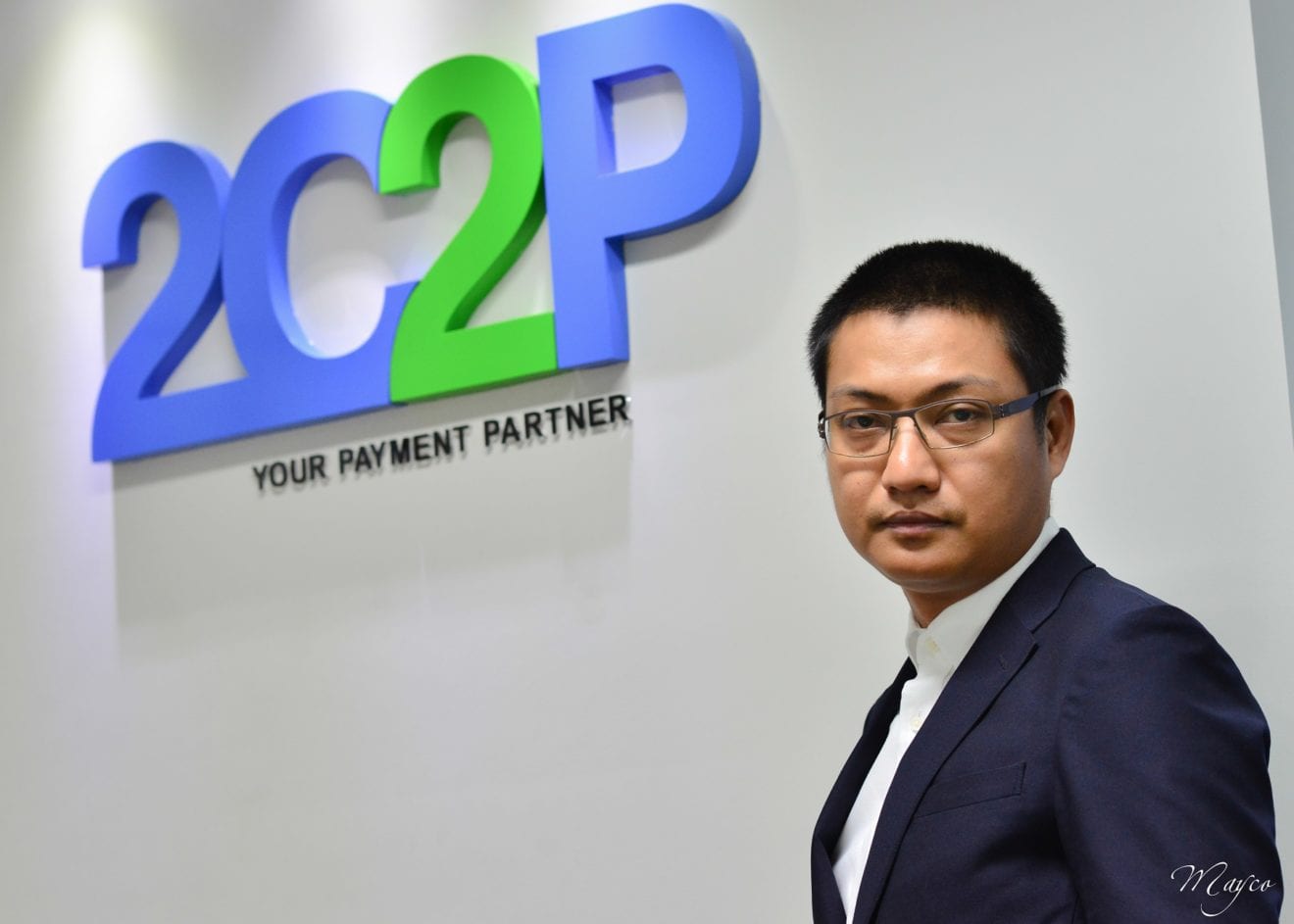
    Southeast Asia payments company 2C2P of Singapore, with its Burmese founder and CEO Aung Kyaw Moe, has taken a step to modernise Myanmar’s economy with the country’s first co-branded debit card so its citizens can shop with international merchants.

    The new UnionPay and Myanmar Payments Union (MPU) co-branded debit card is being introduced along with the launch of 1-Stop, a cash acceptance network of sellers and buyers, bringing digital commerce to Myanmar, especially helpful for its rural communities. Also a partner of the debit card is Myanmar’s Asia Green Development Bank (AGD Bank).

    Anyone in Myanmar can now set up a microbusiness to sell goods and services online. Domestic transactions are processed by MPU, while international transactions go through UnionPay International, which is recognised by more than 4000 merchants domestically and more than 26 million across 150 countries, as well as at 1.8 million ATMs internationally.

    MPU is Myanmar’s national payment network, authorising the issuance and acceptance of all payment cards within the country, of which there are more than 1.2 million. With UnionPay International, a subsidiary of China UnionPay, cardholders can shop with international merchants for the first time. UnionPay is the largest global payment card company with more than five billion cards issued.

    Myanmar is expected to quadruple the size of its economy from $45 billion in 2014 to $200 billion by 2030 (McKinsey), with a reboot of its cash-based economy seen as the key to growth. This will be driven by Myanmar’s young population (47 per cent of its 51.4 million citizens are 24 years old or younger). The World Bank pegs Myanmar’s annual growth rate as leading Asia at 8.3 per cent annually between 2014 and 2017.

    Myanmar’s millennials are also responsible for the country’s spike in outbound tourism. This sector grew from $29 million in 2002 to $257 million in 2012, a rise of 24 per cent, according to the World Trade Organisation.

    “2C2P is committed to support Myanmar’s financial institutions,” says CEO and founder Aung Kyaw Moe. “We do this by bridging the gap between local and international infrastructure.

    “We bring our robust platform, as well as our experience and knowledge in international payments, making it possible for Myanmar’s banking and financial institutions to innovate – offering new services that leapfrog legacy financial technologies.”

    AGD Bank customers can download an app to manage card transactions in real time with online support. A loyalty program offers discounts and privileges from more than 4000 merchants domestically, across food and beverage, retail, hospitality, and travel and tourism.

    “We are committed to innovate, offering Myanmar’s young, fast-growing and connected population the financial services that meet their evolving needs,” says AGD Bank chairman U Than Ye.

    Meanwhile, 1-Stop’s network has more than 3000 locations through 2C2P’s strategic partnerships with the country’s largest distribution network for the agriculture sector Myanmar AWBA Group, retail and convenience store chains Capital Hyper Mart and Grab & Go, mobile stores eCity, Lu Gyi Min andMr.Fone, as well as independent stores.

    It is aiming to contribute to modernising the economy through its online-to-offline commerce approach in a market with relatively high smartphone penetration but limited e-payment infrastructure.

    Myanmar is the fourth-fastest growing mobile market globally, according to Ericsson. In the third quarter of last year, it accounted for nearly 6 per cent of the world’s 87 million new mobile subscribers. Research firm Ovum estimates mobile subscriptions in Myanmar grew by 87.4 per cent in 2014 to 10.7 million. This is forecast to grow at a 21 per cent compounded annual growth rate to reach 38.5 million by the end of 2019 as networks expand to rural areas.

    Last year, 2C2P also launched easyBills, the country’s first online bill-payment system. Previously, along with Myanmar Citizens Bank, 2C2P launched the Citizen Card, a reloadable prepaid card accepted by MasterCard and merchants globally.

    2C2P has offices across Southeast Asia, including Cambodia, Indonesia, Laos, Malaysia, Myanmar, Singapore, Thailand and The Philippines, as well as in Hong Kong.