Tag: MCM

  • MCM Philippines opens first store, at SM Mall of Asia

    MCM Philippines opens first store, at SM Mall of Asia

    The first MCM Philippines store has opened its doors, at the giant Mall of Asia complex in Metro Manila.

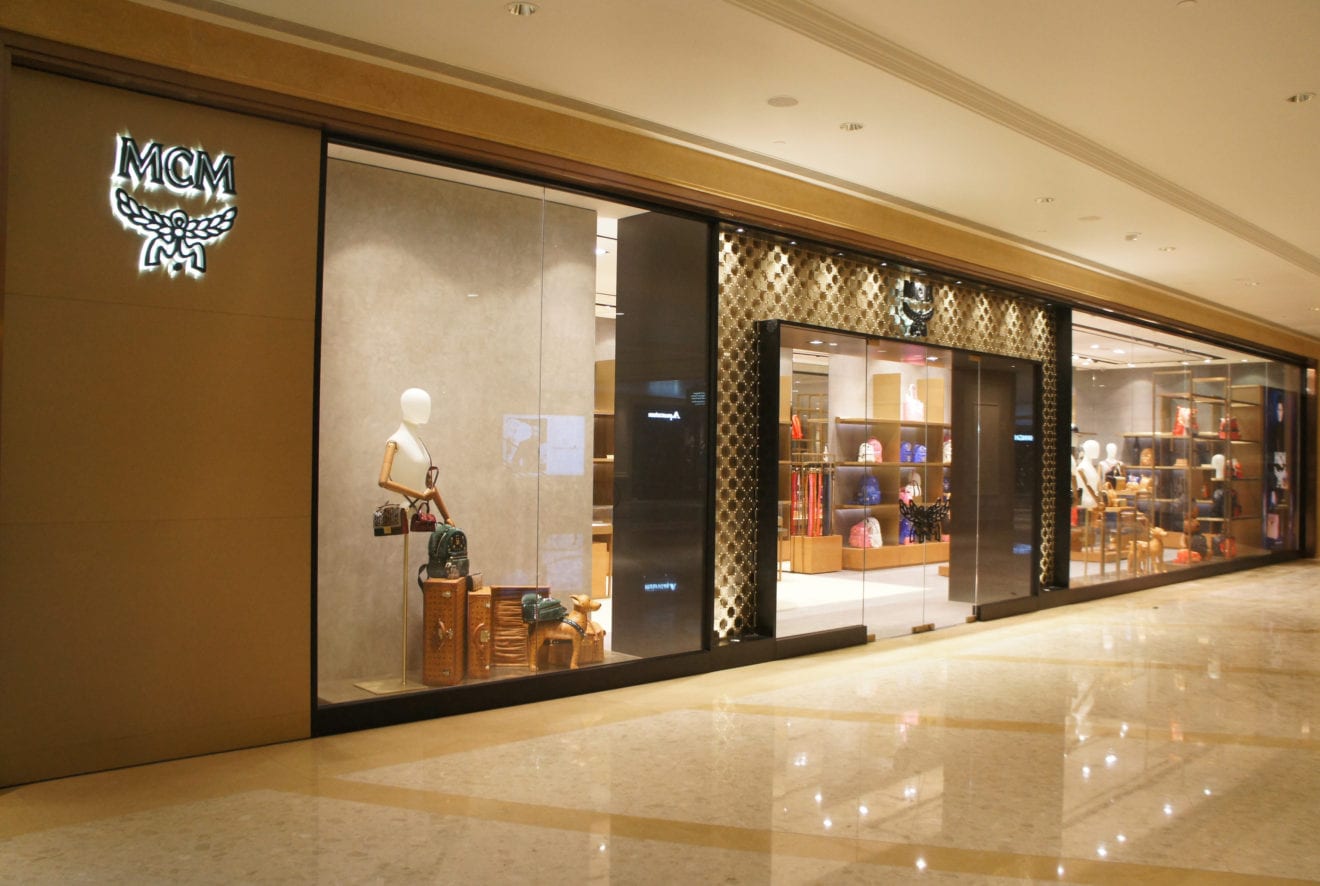
    The German luxury leather accessories brand MCM Worldwide store is located inside the Luxe Duty-Free precinct in the mall.

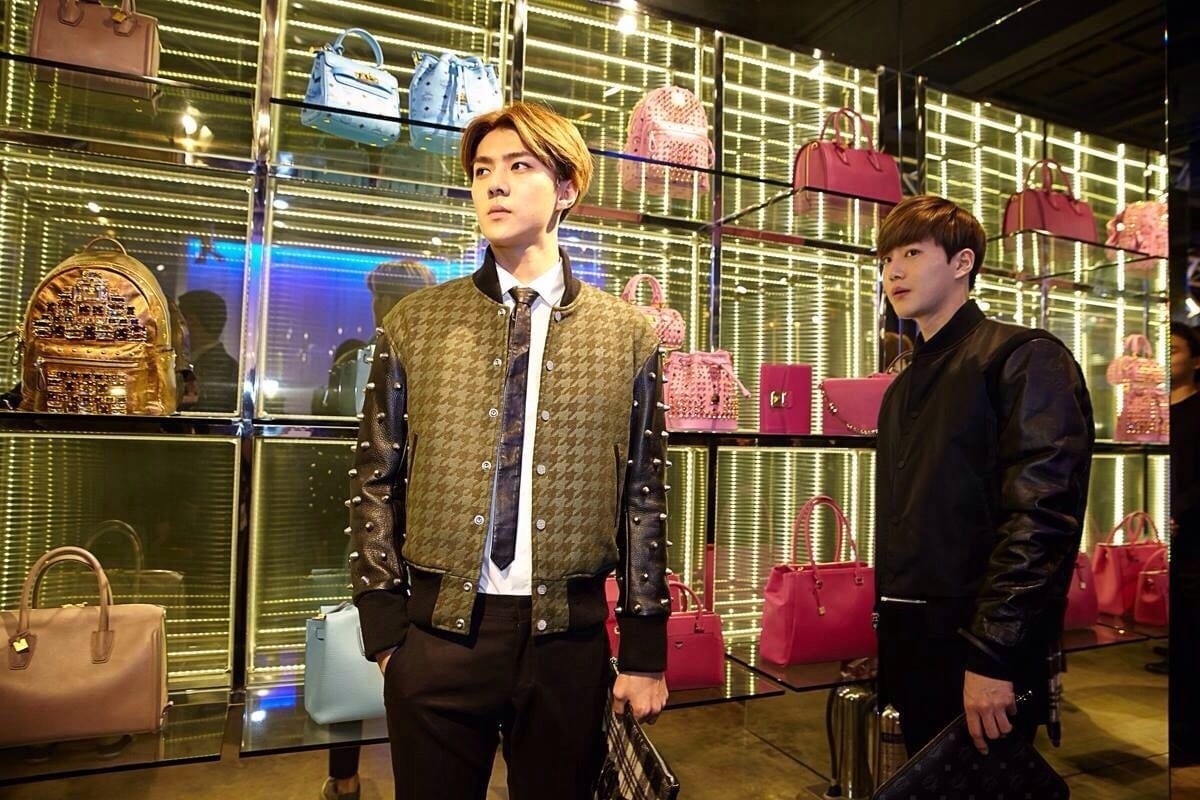
    The MCM Philippines boutique offers leather handbags, luggage and accessories and the store open featuring the Spring/Summer 2020 collection.

    Vicente Pelagio Angala , COO, Duty-Free Philippines Corp (DFPC) said the opening of MCM complements the DFPC’s aim to always be the first Philippine retail brand to bring new luxury labels to the market.

    MCM Worldwide is a leather luxury goods brand founded by Michael Cromer in 1976. The brand’s signature logo-printed material, called Cognac Visetos is being showcased on some of the products. It has a brass plate insignia that can be found on all the heritage collection bags and most of its products.

    In 2005, the company was acquired by Sungjoo Group, a South Korean retail business founded by Kim Sung-joo.

    Kim re-launched the brand in 2006 with a new store in Berlin and currently has 650 stores worldwide including in Hong Kong, New York, Toronto, Paris, London, Singapore, Tokyo, China and the Middle East.

  • 2nd STREET USA to Launch Its First US Store

    2nd STREET USA to Launch Its First US Store

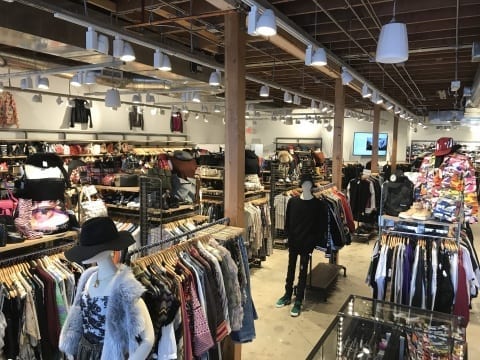
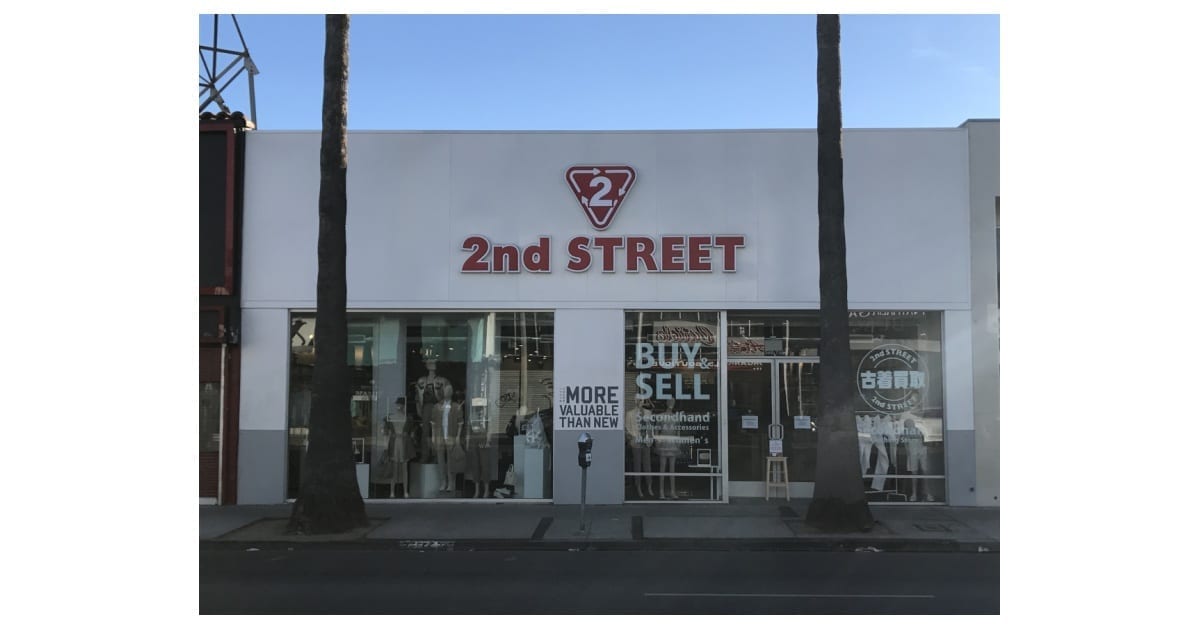
    Japanese used-clothing market 2nd Street USA has set up shop in the US.

    A subsidiary of Tokyo-based GEO Holdings, 2nd Street USA has opened on Melrose Avenue in Los Angeles. Selling and buying goods, it offers men’s and women’s clothing as well as accessories.

    Among the assortment are designer labels like Burberry, MCM and Supreme, along with “big-in-Japan” brands A Bathing Ape, Comme des Garçons and Porter. There is also Kurofine, a clothing line produced by Kyoto Montsuki which recycles used clothing items with a special dyeing process.

    It is 2nd Street’s first venture outside of Japan, where it has 578 stores. The company plans two more stores for California by March next year, and aims to expand to 10 stores in the US by 2020.

    CEO Masahiro Kikuchi says all goods are carefully chosen for quality, and the store offers attentive service.

  • MCM stores become art hubs

    MCM stores become art hubs

    MCM offers a harmony of art and fashion, introducing works of art and artists.

    MCM starts art activities in ‘MCM House’ store, Hongdae ‘MCM Popup’ store located in Hongdae youth street in Mapo-gu, and other flagship stores in Seoul.

    All activities take inspiration from the brand’s identity, and the 70s, years in which the brand was established  in Munich, Germany.

    Germany in the 1970s, when art culture flourished, and at the same time, combined with modern cutting-edge materials and design are att he core of the brand. Music, art, travel, and technology are the four priorities, giving Millennials a lifestyle experience that goes beyond fashion.

    The ‘MCM House’ in Cheongdam-dong allows customer to meet art by decorating the 5th floor and the 1st basement floor as a sole art space. The MCM Culture Program, which was launched in July 2017, is a representative example.

    This program is a lecture program of first-generation interior designers and representative photographers in Korea. It is a place where content creators can communicate with the public and meet with their audience.

    As the ‘MCM House’ is being used as a cultural space, the simple structure in which visitors experience the exhibition is transformed into a virtuous cycle structure in which visitors who visit the store look at the products as they were artworks.

    The ‘Kunst Project’, which is currently holding a photo exhibition at Hongdae’s MCM pop-up store, is a representative cultural and artistic campaign for MCM. Kunst means art and has been steadily opening 3-4 projects a year since 2014.

    In the meantime, it collaborated with artists from various art fields such as tattoo, toy art, molding art, sculpture, photography, installation art, graffiti, digital neon art and pop art.

    MCM will continue to carry out arts and cultural activities in the future.

    The ‘MCM Culture Program’ will host the remaining 5 lectures in the MCM House in the first half of 2018. The Kunst Project is also expected to continue throughout the year and is looking for the 12th collaborative artist.

  • MCM offers made-to-order designs at Tokyo pop-up

    MCM offers made-to-order designs at Tokyo pop-up

    Global fashion brand MCM said that it offered made-to-order designs of its most popular products for the first time at its pop-up store in Isetan department store in Tokyo.

    The store, located in the luxury Isetan Shinjuku department store in Tokyo, Japan, allowed customers to pick up customized items they had designed through the brand‘s mobile app. Customizations included being able to change the color of the leather, handle or studs on MCM’s most popular products, as well as monogramming.

    The digital MTO service is expected to attract great interest in the twenties and thirties with a strong desire to express their individuality in fashion.
    Sungjoo Group, which holds global accessories brand MCM, has gone through a hard time. Since the Korean firm acquired the German brand in 2005, MCM’s sales revenue increased from 61.4 billion won in 2005 to 121.9 billion won in 2007. It posted 370 billion won in 2012, 450 billion won in 2013 and 589.9 billion won in 2014.
    However, the trend began to move downward after 2014. MCM posted 579.1 billion won in sales last year. The luxury brand has gone through a hard time in Japan as well. Its two subsidiaries there have suffered net losses for four consecutive years, recording 17.6 billion won in cumulative losses.

    “The result is because of our initial investment in the country. We do not worry about the result, as we are positive of successfully entering the fiercely competitive Japanese market,” a Sungjoo official said.

    Recently, MCM is strengthening its global business in order to make a second leap.

    Starting in July, the MTO service will be available at the brand‘s two stores in Ginza in Tokyo. The service will be expanded globally to cover MCM’s 35 markets in the second half of 2017.

  • Sungjoo Group seeks to make MCM ‘new school luxury’ brand

    Sungjoo Group seeks to make MCM ‘new school luxury’ brand

    South Korean fashion giant Sungjoo Corp., which owns and runs German luxury bag brand MCM, on Friday said it will adopt the latest technology to create an innovative fashion code and lead the new luxury trend.

    “We will combine technology and fashion to create the new framework in the luxury market,” Sungjoo Group said in the newly published book, titled “The Story of Sungjoo.”

    Sungjoo Group is a fashion retail group that operates franchise stores for leading British retail group Marks & Spencer, Yves Saint Laurent and Gucci in South Korea. It acquired Germany luxury leather goods brand MCM in 2005.

    “We will make MCM the ‘new school luxury’ that caters to various lifestyles and brings changes, not just making luxury products appealing to a small number of affluent customers,” it said.

    As part of efforts, MCM will present “wearable luxury” by collaborating with mobile devices and offer product information on smartphone applications.

    Celebrating the 25th anniversary of its foundation this year, Sungjoo Corp. said it aims to increase the number of MCM stores to 700 across the world and generate 2 trillion won (US$1.7 billion) in sales by 2020.

    When Kim Sung-joo first founded Sunjoo Group as a rare female entrepreneur of the country at the time, few would have expected the small firm could join the world’s top 50 fashion groups.

    Born into a prosperous family in South Korea in 1956, the youngest of six children is in all senses a maverick in her own family and the nation’s male-dominated business circle.

    Her father is Kim Soo-keon, the founder of Daesung Industrial Corp., a Korean conglomerate whose businesses range from energy and auto parts to oil and industrial gas.

    Graduating from Yonsei University, Kim defied her father’s demands not to enter business, and instead, went abroad to study at Amherst College in Massachusetts and the London School of Economics.

    Then while continuing her studies at Harvard University, she met a Canadian classmate and married him. Her furious parents disowned her, and she had to drop out of school and work at Bloomingdales in New York to support herself.

    After her apprenticeships in the luxury American department store, she came back to Korea and founded her own fashion business in 1991.

    As she couldn’t get any financial support from her father, Kim had to start her own business from scratch in a small office in Seoul.

    Witnessing changing consumption trends in South Korea in the 1990s, Kim believed that importing foreign luxury brands to the local market could be a good business venture and won franchise rights for British retail group Marks & Spencer, Yves Saint Laurent and Gucci. In years, Korea became the world’s fifth-largest market for Gucci.

    But the company had to streamline its business in the aftermath of the 1997 Asian financial crisis, which made royalty fees skyrocket and put icy water on consumer sentiment.

    After managing to stay afloat during the tough years, Sungjoo Corp., which had the licensing rights of German craft handbag maker MCM, decided to take over the then-struggling company in 2005.

    Under Kim’s leadership, Sungjoo Corp. resuscitated MCM’s slumping business with a series of innovative products and new way of marketing strategies targeting younger customers.

    Breaking the prejudice that practical backpacks can’t be part of luxury, MCM released unisex backpacks and big bags that have space for laptops. They turned out to be a big hit among younger customers and became signature items for the brand.

    Kim also started to open flagship stores in Europe, the United States and Asia, rapidly expanding the number of stores in China. Now, MCM sells in 30 nations, and China is one of its biggest markets.

    The spirited female entrepreneur, who always sticks to a signature short cut, bold eye makeup and red lipstick, has built her wealth from scratch, but monetary success is not her ultimate goal.

    The dedicated Christian always stresses that her employees “succeed to serve, not serve to succeed,” the book quoted her saying, presenting the 60-year-old CEO’s thick, wrinkled hands as a gesture of her support on the last page.

  • MCM aims to double sales in five years

    MCM aims to double sales in five years

    German accessories brand MCM, owned and run by South Korean entrepreneur Sung-joo Kim, aims to more than double sales to RM7.8 billion (US$2 billion) within five years.

    Founded in Munich in 1976, MCM is known for its colourful $700 studded canvas backpacks. It  plans to expand in markets from Japan to Europe.

    “We have not even explored the Japanese market yet, we are just starting there,” says Kim.

    Unlike many European brands, MCM does not have a star designer, but has an in-house team of stylists to develop its products. Its collection is loaded with logo-embossed products. Its prices are around the same level as brands such as Celine and Louis Vuitton, and it makes around $700 million in annual sales, similar to Versace, reports Reuters.

    MCM is the second-biggest fashion brand by sales after Louis Vuitton in the duty-free market, where South Korea leads with annual sales of about $8 billion, says Kim. MCM makes about 60 per cent of its sales in Asia, with the balance in Europe, the Middle East and America.

    The youngest daughter of South Korean magnate Kim Soo-keon, Kim built her businesses from scratch after gaining experience at US department store Bloomingdale’s then developing Gucci’s South Korean business. After licensing MCM in 1991, she bought the German brand from a Swiss financier in 2005.

    Kim says she estimates that within five years, 15 to 20 per cent of MCM’s sales could be through eCommerce.

  • Lacoste Singapore scores airport outlet

    Lacoste Singapore scores airport outlet

    French clothing company Lacoste Singapore has tendered successfully for an outlet at Changi Airport.

    RSH Singapore, which represents Lacoste, has been awarded a 78 sqm concession in the west departure/transit lounge on level two.

    Calling for mid-priced fashion tenders in Terminal 1, Changi Airport Group awarded two other concessions to Dufry (The Nuance Group Singapore), which will use its 70 sqm and 83 sqm concessions for the Kipling and Trunk & Co brands.

    All concessions are in the same area with three-year contracts, with no option to renew. The tenders attracted 13 participants.

    Meanwhile, Dufry, in partnership with MCM, has also won an extra 104 sqm speciality tender in the same location, also for three years.

  • Tobias Rehberger, artist who’s camouflaged a Hong Kong shop

    Tobias Rehberger, artist who’s camouflaged a Hong Kong shop

    Don’t try to put Tobias Rehberger into a box. The German artist’s work isn’t the sort that fits in a frame and he’d much rather it was out in the world, with people rubbing up against and interacting with it, than being gawped at in a museum. He does his own thing – and has a good time while he’s at it.

    Sitting in MCM’s flagship store, in Central’s Entertainment Building, the 49-year-old seems to be on his best behaviour, his PR minder by his side. His beard is freshly trimmed and, in a crisp white shirt, jeans and trainers, he’s rocking the urban-cool look. But every now and then there’s a flash of the raucous, hard-drinking side he’s known for.

    In Hong Kong for a week for the launch of a collection he designed for the German luxury leather goods brand, as well as Art Basel, he insists he hasn’t got jetlag, he never gets it. His secret?

    “Get drunk on the first day,” he says.

    The PR scowls, but Rehberger doesn’t seem to notice.

    The MCM collaboration began with the bags and it was a 20-year-old assistant – the youngest in his full-time team of 12 – who persuaded him to take on the job. As he explains how it came about you get the sense that Rehberger is porous, open to ideas and giving things a shot, especially if there’s a good chance he or his team might get a kick out of it.

    “‘You have to do it, it’s so cool,’ she said. And I thought, ‘OK, if she says it’s a good thing, let’s try,’” says Rehberger.

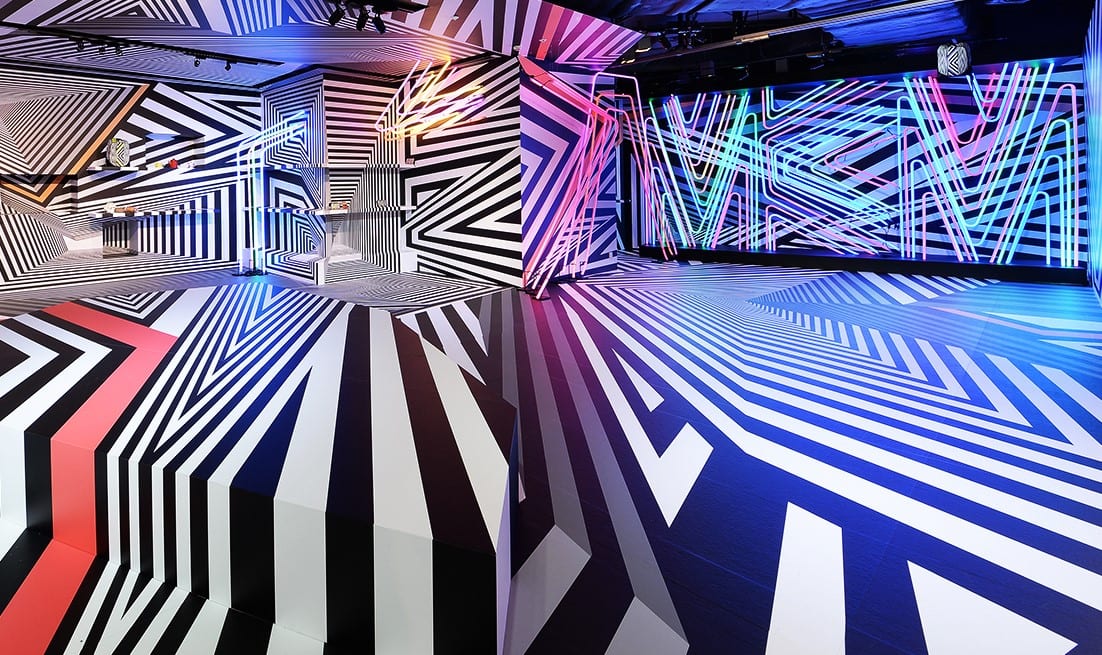
    Employing the bold black-and-white graphics that he has become known for – the “dazzle camouflage” employed during the first world war to make it difficult to visually pinpoint a target – he recreated the German brand’s logo and worked the design into a collection of backpacks, shopping bags and clutches. MCM loved it so much the brand asked him to make over the Hong Kong store – all 8,600 square feet of it.

    This isn’t as wild a leap as it sounds because Rehberger’s perhaps best-known work, which cemented him as one of Germany’s leading contemporary artists, was a massive, functional installation for the 2009 Venice Biennale. He designed the cafeteria at the biennale pavilion and called it ” Was du liebst, bringt dich auch zum Weinen” (“Whatever you love, will bring you to wines”). It was a wild, retro-inspired space, juxtaposed with a jumble of forms and colours but with black and white the unifying theme.

    The walls, floors, ceilings and furniture were covered with the disorienting camouflage used by the dazzle ships of the first world war. It won him the top prize, the biennale’s coveted Golden Lion. The jury said he’d earned the award for “taking us beyond the white cube where past modes of exhibition are reinvented and the work of art turns into a cafeteria. In this shift social communication becomes aesthetic practice”.

    “I’m not very good at starving. I’ve never had to struggle for success, it was just happening”

    Rehberger has applied dazzle camouflage to interiors elsewhere. In 2013, he created a temporary replica of his local Frankfurt bar in a New York hotel, covering the entire space in black and white geometric stripes. He even reproduced the fittings, right down to the radiators. And yes, he did drink there – and felt right at home.

    A year later, he worked on the real deal – a 1918 British warship, the HMS President. Using a print of pipework viewed from different perspectives, he completely covered the ship, to mark the centenary of the first world war. His handiwork was unveiled in July 2014, on the River Thames.

    If a German decorating a British vessel that saw active service in the Great War were not noteworthy enough, “That was special because it was a ship that had been used in the war in this desert camouflage,” Rehberger says. “I thought, ‘Can you make it in the same technique, but that it’s clear it’s not made for military reasons and still use the same strategy?’”

    So has he done it again in Hong Kong? Yes and no. The fact that, here, he has been working with a retail space has thrown up different questions.

    “It’s more about what a shape is, what a product is and how you look at it and how you deal with it and what your focus is,” says Rehberger. He speaks like this a lot – long sentences that throw up lots of ideas and directions, much like his camouflage.

    So, it’s a shop, but not a shop, I venture. Considering the exorbitant rent MCM must be paying for the prime Central spot, that doesn’t seem like the most obvious approach to turning a profit. I hesitate and the PR suddenly lights up.

    “Yes, everybody thinks it’s a shop, but what if it’s not really a shop but it is,” she says.

    She’s clearly been hanging out with Rehberger. I turn away from the pair and take in the shop that isn’t a shop. The geometric patterns in the vast interior make it hard to judge distance and the pillars and escalator – all camouflaged – add to the confusion. It’s not easy to spot the merchandise, which is designed with a similar print. What’s more, alongside the bags on the display shelves are teapots, a pig, a skull propped up against a severed arm.

    “We have the teapots and scientific models and then the bags blend in and you see them less. That’s one of the good things about it – it brings up things you normally don’t think about because you are so conditioned to do things in a certain way and then suddenly, there, hiccup,” says Rehberger.

    And it’s this hiccup, he says, that gives us the chance to think about the way we deal with life. Are we making our own decisions or have we become conditioned to doing things in a certain way?

    I don’t think I’m alone in having been conditioned into thinking that the items on the shelves of a retail space should be for sale. How refreshing to visit a shop that dares to be different, although it’s hard to see this becoming a hot retail trend. The teapots are pretty – Rehberger sourced them himself – and the pig is fun, but they are not going home with a smitten customer.

    “They are something that drops out a little, make you stumble about what you thought you already understood. Especially here, where you are expecting to come and have objects to buy and suddenly you have this almost emptied out teapot shop,” says Rehberger.

    The artist enjoys playing with the viewer – are you seeing what is really there or what you expect to see? Take that severed arm, which will turn out to be, on closer inspection, a scientific model of a worm. Twice I mention the “severed arm” to Rehberger and he doesn’t pull me up on it. True to form, he doesn’t intrude on my perception of the scene.

    For last year’s Art Basel Miami – in another underground venue – he had some fun with this notion of perception. His installation – the mural “1661-1910 from Nagasaki, Meiji, Setti” – covered the space in brightly coloured, wallpapered mosaic tiles. Close up, all you could see was a pixelated blur of colours but step back and you realised you were looking at an orgy.

    Rehberger’s embrace of so many types of media sets him apart from other contemporary artists, especially in the West. Gallery owner Urs Meile represented one of Rehberger’s most recent works, a pigmented wax, steel and wood sculpture-cum-timepiece, at this year’s Art Basel Hong Kong. Two years ago, Rehberger created a huge installation entirely made of porcelain for Galerie Urs Meile in Beijing.

    “He is very open to new media that he’s never used before,” says Meile. “His approach is not the typical Western way. You find that with some other artists working in Asia; probably the most famous is Ai Weiwei, who works with endless different materials.”

    untitled-article-1459241535

    Meile suspects that the tendency towards conceptual thinking might be the reason why Western artists are less likely to experiment with a range of materials. In the West, artists tend to begin a project with a concept and approach their art with a clear vision, doing paintings or sculpture, working in wood or bronze, but “in Asia they don’t have conceptual thinking as we have it”, says the gallerist. “They think, ‘I would like to do this’ and then it’s trial and error. Through this they make a completely other experience.”

    With the exception of Leonardo da Vinci, suggests Meile, Western art history didn’t have a tradition of experimenting with unusual materials until the late 1970s, and the start of conceptual art, when cheap materials began to be used.

    “But to use, let’s say, high-end materials to do something, this is unusual in the West,” says Meile.

    It’s no surprise, then, that Rehberger feels right at home in Asia. In the last six months, he has made at least 10 trips to the region and has a number of projects in the works here. For a Bangkok shopping mall, he is putting together an installation that “looks like an exploded Las Vegas sign”. He says retail spaces are new to him but concedes that shopping malls are where people go to hang out in Asia.

    The can-do attitude and pace in Asian cities appeal to Rehberger, who likes to get things done quickly. At art school in Frankfurt, in the late 80s, he was taught by German artist Martin Kippenberger, who is known for working in a wide range of styles and media.

    “Martin taught me to always push yourself and try not to make yourself comfortable when you find something interesting. With Martin it was not about solutions, it was always, ‘OK, but what if – and then what if from the other side’. That’s the art I’m most interested in, if it’s more about problems than questions and answers,” says Rehberger.

    He graduated in 1992 and moved to London, but stayed only a year in the British capital.

    “If I have an idea I need immediate access to the thing,” he says. “When I need teapots, I need the teapots now. In London, at the time, you had to travel half a day to buy a pencil. It was annoying.”

    From London he moved to New York before returning to Germany, where he has lived since, dividing his time between Berlin and Frankfurt. Berlin, he says, is where he finds inspiration, meets friends and hangs out. Frankfurt offers fewer distractions and is where he gets his work done. It’s also where his family lives.

    Rehberger’s wife specialises in restoring old frames and the couple have three children, aged 16, 11 and four.

    “Since they were young, they have been coming to my studio and hanging out. For them it’s normal to take a spray can and do things. I think you can sense they are visually educated, they all have a good eye – not that I hope they become artists,” he says.

    Rehberger’s father was a hobby painter and, as Tobias grew up, he was surrounded by oil paints and canvases. His father painted portraits and landscapes, copied works by artists such as Picasso and sometimes designed and made furniture. Rehberger started out playing with his father’s materials and when he came to have his first gallery show, “I copied the entire body of my father’s work, copying the paintings four times as big. It was an installation, a reflection of me as a professional artist and where that comes from.

    “I thought it was a good way to introduce myself.”

    His father apparently found it funny. Someone finding his work amusing seems to be a factor that signals to Rehberger that a mission is at least halfway to being accomplished.

    Since that introduction, life has been good to him. He’s never had to live the life of a struggling, starving artist.

    untitled-article-1459241535-body-image-1459242184

    “I’m not very good at starving,” says Rehberger. “I’ve never had to struggle for success, it was just happening.”

    He almost flinches at the suggestion that commercial projects such as the one for MCM might distract him from more personal work.

    “It’s all my own stuff. It’s not less my own stuff if I’m doing this or something in the studio that no one ever sees. There is no difference. If I want to do something, I do it, and if I don’t want to do something, I don’t do it,” he says. “I was never in the position that I had to do something that I didn’t want to.”

    As if to underline the fact he hasn’t had to endure long, cold winters going hungry in a lonely studio, the conversation turns to lunch and from there to restaurant recommendations. Rehberger has arranged to meet some artist friends after their commitments at Art Basel.

    “Thursday and Friday we plan to check out five restaurants a day – for breakfast, lunch and dinner and a couple in between,” he says.

    Whether or not you are in the market for a new leather bag, it’s worth dropping into the MCM store to be dazzled by Rehberger’s disorienting graphics and take a turn through the shop that isn’t really a shop.

    Tobias Rehberger’s installation at the MCM store (basement, Entertainment Building, Central) will be in place until May 2.
  • Korean department stores struggle

    Korean department stores struggle

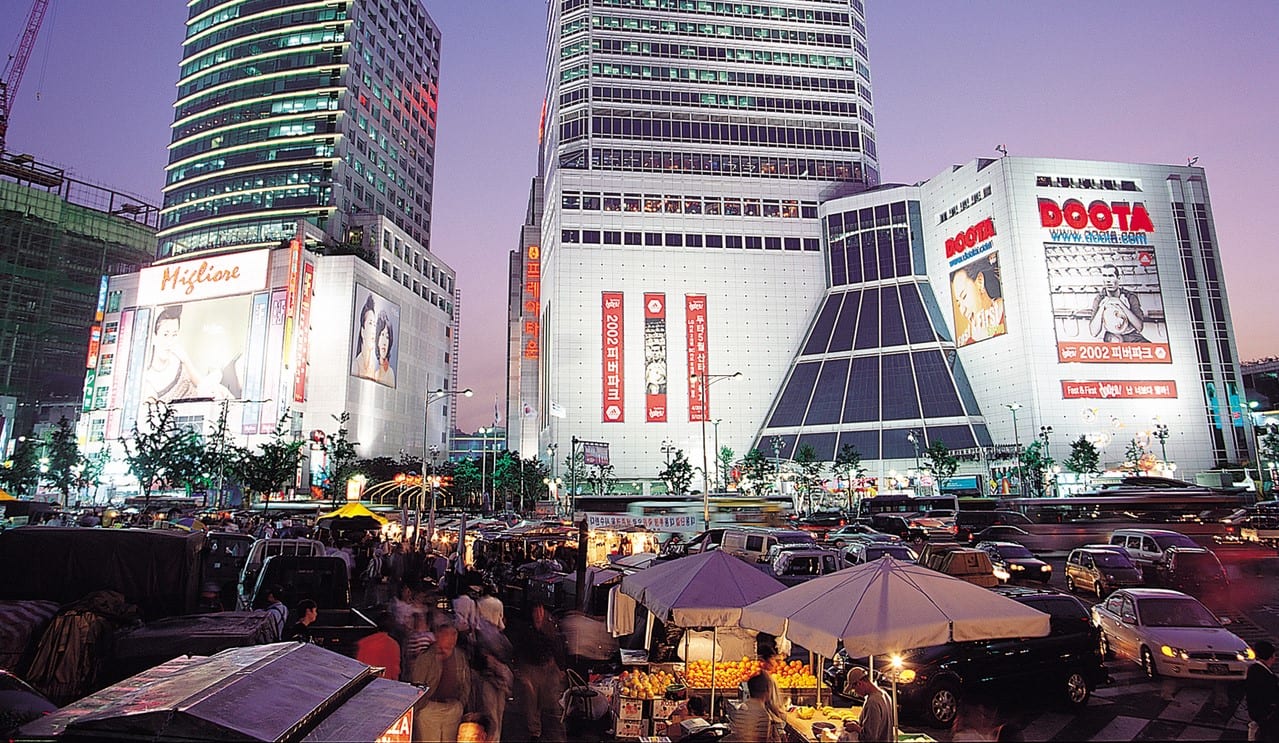
    Chinese travellers have emerged as one of the few bright spots for Korean department stores suffering from dull domestic consumption.

    The arrival of a new demographic of consumers has prompted an all-out fight to attract deep-pocketed clients, industry officials told Yonhap.

    Sales at department stores inched down 0.4 per cent on-year to 29.22 trillion won (US$23.69 billion) in 2015, Statistics Korea showed, mostly attributable to the Middle East Respiratory Syndrome (Mers) outbreak and rapidly rising online marketplaces.

    While consumption among locals has steadily slowed over the past years, major department stores in downtown Seoul saw growing sales among Chinese nationals.

    At Lotte Department Store in the famous shopping district of Myeongdong, sales by Chinese customers accounted for 18.1 per cent of the total, rising 6.8 per cent from a year ago.

    At the nearby Shinsegae Department Store, sales by Chinese customers rose 21.8 per cent in 2015 from a year ago, though the pace slowed from 131 per cent in 2014 and 87 per cent in 2013 in the wake of the Mers outbreak. The store did not release exact sales figures.

    Foreign luxury watch and jewellery brands topped their shopping list, while leading Korean fashion and cosmetic brands were also picked up by Chinese travellers.

    Among them, the Seoul-based luxury bag manufacturer MCM was the second-most selling brand by the Chinese, while sunglass brand Gentle Monster and Amore Pacific’s high-end cosmetic lineSulhwasoo were named as popular items.

    “While the Chinese mostly preferred foreign luxury brands and local cosmetic brands, a wider range of Korean products have been selling among Chinese customers,” said Park Young-hwan, a marketing official at Lotte Department Store.

    In response to the changing consumption trends, Korean department stores have launched a variety of promotional events through social networking services and invited China’s popular bloggers to embrace rich Chinese customers.

    Some stores have even assigned assistants for VIP customers to provide guidance while they shop. Others have offered limousines and pick-up services.

  • Studio City retail tenants revealed

    Studio City retail tenants revealed

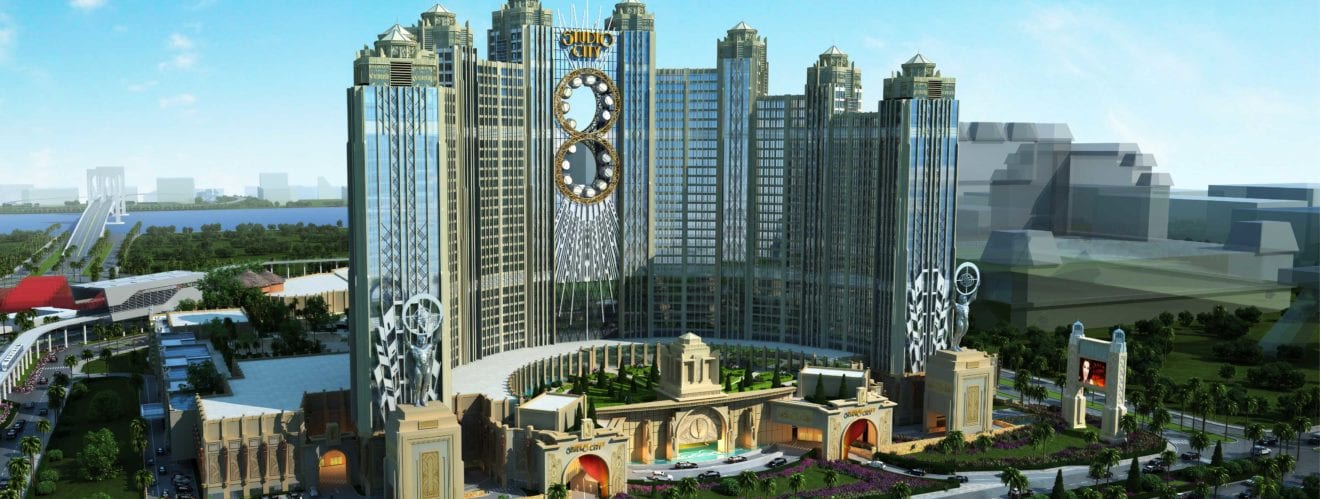
    Studio City and Taubman Asia, have revealed the lineup of fashion brands that will open inside The Boulevard at Studio City.

    A mix of fashion-forward labels and internationally-renowned luxury brands include Macau’s first Balmain, Macau’s first Belstaff, and Tom Ford’s largest store in Asia, amongst many others. The selection was assembled by Taubman Asia and Melco Crown Entertainment’s combined team of retail specialists to meet Chinese consumers’ increasing desire to express their individuality through high quality, expertly crafted clothing and accessories. Bespoke and personal services will be offered to ensure our shoppers take center stage.

    Taubman says The Boulevard at Studio City will bring “an unparalleled shopping experience” to Studio City.

    “Unlike any retail offering to be found in Asia, the unique 35,000 sqm ‘immersive’ retail entertainment environment brings shopping to life by ‘transporting’ visitors to high-energy street-scapes and entertaining them at every turn with featured streets and squares inspired by iconic shopping and entertainment locations, including New York’s Times Square and Hollywood’s Beverly Hills,” Taubman said in a statement.

    “At the futuristic Times Square Macau, inside The Boulevard at Studio City, a variety of entertainment from ‘virtual’ musicians to film stars will be shown through holographic projections.

    “Leveraging our global expertise increating extraordinary retail environments, and our exceptional relationships with the world’s leading brands, our talented team in Asia has brought together an exciting mix of brands for The Boulevard at Studio City,” said René Tremblay, president of Taubman Asia.

    “Our merchandising and management services are the industry standard for performance and excellence. We are thrilled to welcome these brands to our latest project and are committed to supporting them for the long term.”

    List of brands:

    Aeronautica Militare
    Balmain
    Bank of China
    Belstaff
    Boss
    Bottega Veneta
    Bulgari
    Cigar Emporium
    Coach
    Cosmos Food Station
    Din Tai Fung
    Dunhill
    Emporio Armani
    Fendi
    Girard-Perregaux
    Givenchy
    Glashutte Original
    Graff
    Gucci
    Hide Yamamoto
    Hublot
    ICBC
    Trattoria Il Mulino
    Image Digital
    IWC Schaffhausen
    Jaeger-LeCoultre
    Jaquet Droz
    kate spade new york
    Kenzo
    Longines
    McCafe
    McDonald’s
    MCM
    Michael Kors
    Montblanc
    Philipp Plein
    Piaget
    Prada
    Rainbow
    Rimowa
    Roberto Cavalli
    Saint Laurent Paris
    Shiki Hot Pot Restaurant
    Starbucks
    Tag Heuer
    T Galleria Beauty by DFS
    Tiffany & Co.
    Tom Ford
    UM
    Vacheron Constantin
    Valentino
    Van Cleef & Arpels
    Versace Collection
    Ermenegildo Zegna
    Zenith