Retail News CRM

Tag: Meal

  • HelloFresh Innovates with Recipe Partnerships: Turning Meal Kits into Powerful Marketing Platforms

    HelloFresh Innovates with Recipe Partnerships: Turning Meal Kits into Powerful Marketing Platforms

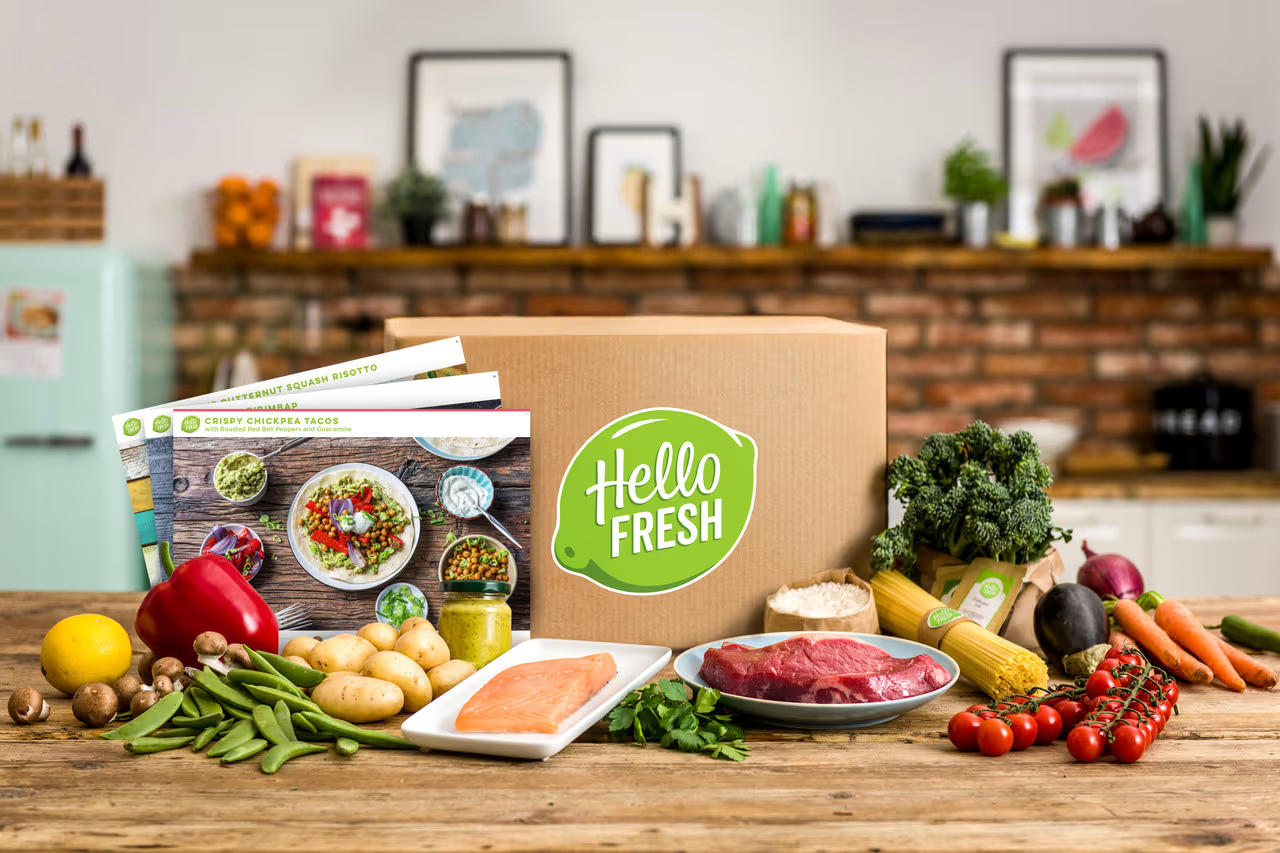
    HelloFresh, a renowned meal kit company, is innovating its service by transforming its packages into a platform for partner brands to interact with customers. Using a series of recipe integration campaigns, HelloFresh has collaborated with brands such as Birch & Waite and McCormick’s Cholula Hot Sauce to promote their products within the meal kit recipes. This strategy enables brands to engage with hundreds of thousands of customers in a natural and contextual manner, while also providing customers with new taste experiences and meal inspiration.

    Creating Mutual Value

    Andreas Dinkel, CMO and MD of HelloFresh ANZ, described the model as one that delivers significant value to both parties. “Our culinary experts work closely with each brand to craft recipes that highlight their product, ensuring that it is integrated seamlessly into the meal and not just an extra addition,” Dinkel stated. This approach gives partner brands a presence at dinner tables, providing a unique engagement opportunity during an intimate part of the day. Dinkel also noted that customers have expressed their delight at discovering unexpected items in their boxes.

    Originally established in Australia by former MasterChef contestant, Tom Rutledge in 2012, HelloFresh has become a significant player in the food and grocery industry. The company has quickly expanded, delivering millions of easy-to-prepare meals annually across five states and both territories. The company aims to provide an enjoyable cooking experience for customers, relieving the stress of meal planning and shopping.

    Recipe Integration Campaigns

    The collaboration with Birch & Waite focuses on its Green Goddess Dressing, featured in two recipes: The Parmesan Pork Cotoletta and the Cheesy Zucchini Fritters. The full-sized product is also available through HelloFresh’s add-ons menu, allowing customers to extend their gastronomic experience beyond dinner.

    Cholula Hot Sauce is another brand utilizing the concept. Its hot sauce is featured in six recipes over four weeks as part of HelloFresh’s Taste of Mexico campaign. Each campaign is promoted through various channels, including printed and digital recipe cards, CRM placements, organic social media posts, and flyers in delivery boxes.

    Enhancing Consumer Experience

    While the current campaigns are ongoing, Dinkel reported that previous recipe integrations have led to significant sales increases and boosts in brand awareness. “In one campaign, 65 per cent of customers were unfamiliar with the product until they received it in their meal kit, and over half went on to purchase it afterwards,” he said.

    Each campaign includes a detailed post-campaign report for the partner brand, providing valuable data on customer engagement, recipe ratings, and purchase intent. These insights can aid brands in refining their marketing and product strategies.

    Apart from the marketing benefits for brands, Dinkel mentioned that these collaborations also enhance HelloFresh’s offering. “We introduce customers to exciting new flavors and cuisines they might not otherwise try, making dinner a moment of discovery and inspiration instead of a chore,” he said.

    Looking ahead, HelloFresh plans to extend its collaboration model across its broader portfolio, including Youfoodz, EveryPlate, and HelloFresh New Zealand. Dinkel sees brand partnerships as a prime example of innovation in the grocery industry and is exploring ways to integrate non-food brands into the program.

    Questions & Answers

    How does HelloFresh’s partnership model benefit brands and consumers?
    HelloFresh’s unique partnership model allows brands to interact with customers in a natural and contextual setting. It provides an opportunity for brands to showcase their products through recipe integration in HelloFresh meal kits. On the consumer side, customers get to discover new flavors and products, making their cooking experience more exciting and enjoyable.

    How does HelloFresh plan to expand its brand partnership model in the future?
    In the future, HelloFresh aims to expand its collaboration model across its broader portfolio, which includes Youfoodz, EveryPlate, and HelloFresh New Zealand. The company is also exploring ways to integrate non-food brands into the program.

    What impact have the recipe integration campaigns had on consumer behavior?
    According to Andreas Dinkel, previous recipe integrations have led to significant increases in sales and brand awareness. In one instance, 65% of customers were unfamiliar with a product until they received it in their meal kit, and over half of them went on to purchase it afterwards.
  • Rice export prices reach 10-year high

    Rice export prices reach 10-year high

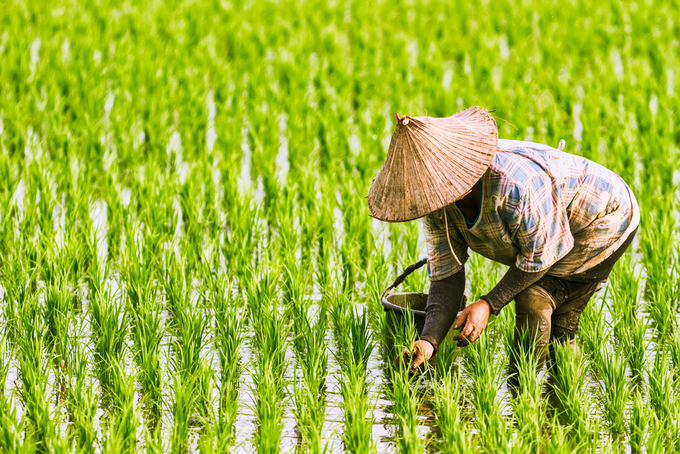
    The global decline of the rice supply and the impact of El Nino climate pattern have led to a sharp increase in the price of rice for export.

    Latest data from General Department of Vietnam Customs shows that in the first half of the year, rice exports reached more than 4.2 million tons and are valued at $2.26 billion, up over 21% in volume and 32% in value over the same period last year.

    The export price of rice in June reached an average of $650 per ton, up 9.4% compared to May and 20.8% higher than the same period last year.

    In the first six months of 2023, the export price of rice is estimated at $539 per ton, up more than 10% over the same period in 2022 and the highest of the past 10 years.

    According to the Ministry of Agriculture and Rural Development, the reason for the sharp increase is the decrease in supply. The emergence of El Nino has also forced many countries to increase rice purchases to stock up.

    The Philippines’ Department of Agriculture forecasts that El Nino will return and severely affect their domestic food production. Indonesia predicts that it may cause widespread drought in the country, so the July-August harvest for agricultural products may drop significantly.

    In the first five months of the year, rice exports to the main markets – Philippines and China, both grew strongly at double digits. In addition, rice exports to new markets such as Indonesia, Chile, Turkey, and Senegal recorded a surge from 1,100-16,000% over the same period last year.

    The Indian government is banning the export of all rice that is not Basmati (a popular rice in South Asia), as prices have been on the rise and they want to control inflation.

    Retail rice prices in New Delhi have increased by 15% this year, while the domestic average price has increased by 8%, according to India’s Ministry of Consumer Affairs, Food and Public Distribution.

    Vietnam Food Association and enterprises believe that if this ban is implemented, global rice prices will increase. In the near future, Vietnamese rice will not only benefit in price but also be favorable for exports.

    An enterprise based in Can Tho in Vietnam’s Mekong Delta said that export orders were abundant and the price of fragrant rice was increasing the most. This enterprise does not even have enough supply to meet the orders. It is forecast that the rice export market in the second half of the year will reach a peak value.

    To ensure domestic and export demand, the agriculture ministry has directed key rice production areas, especially the Mekong Delta, to actively cultivate and prioritize short-duration rice varieties as well as high-quality and fragrant rice varieties suitable for market demand.

    Vietnamese rice has been exported to 156 countries and territories, including many high-end rice markets.

  • Coles reshaping 200 stores around convenience

    Coles reshaping 200 stores around convenience

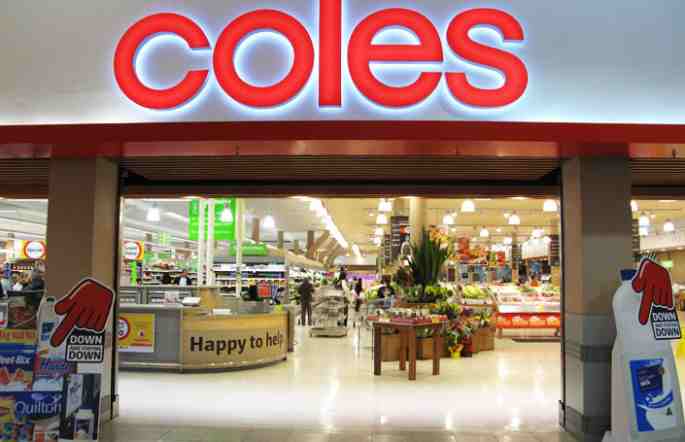
    Coles is ramping up its convenience strategy, with a plan to grow sales on the back of “food-for-now” and “food-for-later” products. As part of this strategy, the brand will convert around 200 Coles supermarkets to a more premium, convenience-focused format, as shift 200 lower-volume stores to a more value-centric format, while adding around 75 new product lines to its existing range for ready-to-eat meals – such as breakfast foods, curries, soups, roast vegetables and stir-fry kits.

    According to the report, Coles chief executive Stephen Cain sees an opportunity through this strategy to grow another billion dollars in sales over the next five years.

    “It’s high growth and it mainly happens outside supermarkets at the moment,” Cain told.

    “Some of it will come from other players in the convenience market, but because it’s value-added it’s also growing the market as well.”

    Cain previously told analysts that the brand was changing rapidly in the space, but was still lagging behind the competition.

    “We are growing our baskets, and we are growing our transactions. We believe that we can do a better job with the convenience customers, and we’re setting up the business to do that going forward,” Cain said.

    Coles’ focus on convenience is not surprising, given the number of partnerships it has forged with third parties, since splitting from former-parent company Wesfarmers in late 2018, to ensure customers can get its products how they want when they want.

    Deals with online marketplace eBay and meal-delivery service Uber Eats are other incentives for Coles to improve its food-for-now and food-for-later offerings by allowing several pillars of the business to utilize the expanded range.

    “Making life easier for our customers means enabling our customers to fulfill their shopping needs ‘anytime, anywhere’,” a Coles spokesperson said.

    “We know our customers’ needs are changing rapidly and we are evolving our offer accordingly.”

    The convenience market is growing rapidly in Asia Pacific, with the region having been named the “largest and fastest-growing” convenience market in the world in a report by GlobalData.

    According to GlobalData retail analyst Honor Strachen, the changes being seen in the region’s convenience offers, such as those outlined by Coles, have been improving store sales and profitability at a time that retail space is becoming more expensive, and margins are increasingly under pressure from inflation and discounting.

  • American burger chain Five Guys to open Restaurants in Singapore

    American burger chain Five Guys to open Restaurants in Singapore

    American burger chain Five Guys is to open in Singapore later this year.

    According to an unidentified F&B industry source, the chain also plans to open in Malaysia.

    The Singapore branch will be Five Guys’ second outlet in Asia, following the one which opened in Hong Kong last November.

    Founded in 1986, Five Guys runs more than 1500 outlets in America, Europe, and the Middle East. It also plans to expand into the UK.

  • HelloFresh to monetise Tasty Perks

    HelloFresh to monetise Tasty Perks

    HelloFresh has launched a new in-box sampling service called Tasty Perks, which allows brands to test new products on the meal kit company’s customers for a fee.

    The in-box advertising program creates a new revenue stream for HelloFresh and gives it additional insights into its customer base. For food and beverage brands, it presents an opportunity to bypass the supermarket shelf and reach customers in their kitchens.

    “Our in-box sampling breaks through the clutter of all other marketing forms because it enables customers to try new brands risk free,” David Williams, HelloFresh senior manager of loyalty and partnerships, said.

    “We generally ask for at least two samples per box to ensure the products get a change to resonate with our customers. To support, we also offer an in-box flyer and social media amplification as part of the package.”

    Customers are incentivised to complete a tailored questionnaire to gain their feedback on products, which HelloFresh’s data analysts can analyse.

    HelloFresh claims to have served 2.04 million active customers worldwide during Q4 2019.

    A HelloFresh spokesperson told this service is offered in other markets, but has been refined over the last six-months to give the best experience in Australia.

  • Shakey’s to buy Peri-Peri Charcoal Chicken chain

    Shakey’s to buy Peri-Peri Charcoal Chicken chain

    Philippines restaurant chain operator Shakey’s Pizza Asia is buying the Peri-Peri Charcoal Chicken brand.

    The firm filed details of the deal with Peri-Peri’s operator I-Foods at the Philippine Stock Exchange this week, although the transaction cost has not been released. A representative for the business said the price was not substantial relative to the firm’s market capitalisation, and that the acquisition will be financed by a combination of internally generated cash and debt, most likely to be completed by mid-year.

    The deal is expected to affect Shakey’s bottom line this year, but boost profits in the long run.

    Peri-Peri Charcoal Chicken operates 23 outlets in metropolitan Manila, 40 per cent of which are run under franchise agreements.

    “The brand now has a strong following and recently gained even more traction,” said Shakey’s president and CEO Vicente Gregorio, “evident in its strong same-store sales growth last year amidst the more challenging macroeconomic environment, and the amount of interest in new stores from potential lessors and franchisees.”

    “We are excited by the potential of Peri to scale,” added  Shakey’s chairman Christopher Po. “We expect it to be an important future growth driver for our fast casual chain restaurant business.”

    The firm also has plans to expand its core offering – US brand Shakey’s Pizza, for which the firm has perpetual rights in several broad territories, including most of Asia. It plans to open 20 new branches this year, which will see it operating 248 locations by next year.

  • Some eateries charging more for meal deliveries

    Some eateries charging more for meal deliveries

    Ordering in for dinner? You could be paying more than you bargained for. Some restaurants are charging higher prices for menu items on delivery service platforms such as Deliveroo and Foodpanda, with increases varying from 20 cents to several dollars.

    A check of 50 restaurants found nine that had higher menu prices on these platforms compared to in-house menus.

    Among them are major chains Crystal Jade Kitchen, Crystal Jade La Mian Xiao Long Bao, Nando’s and NamNam Noodle Bar.

    Rochor Thai, NamNam Noodle Bar and Verve Pizza said the mark-ups were necessary to cover packaging and commissions paid to the delivery services, which are as high as 37 per cent per order.

    Rochor Thai, which is partnered with Deliveroo, Foodpanda and UberEats, charges an extra 20 cents for deliveries.

    NamNam’s four outlets on Deliveroo include mark-ups ranging from an average of $1.50 to $10.90 for one of its pho items.

    Verve Pizza, which has three outlets – in Clarke Quay, Bukit Merah and Marina Bay – switched from doing its own delivery to partnering with Deliveroo a month ago, said Ms Karen Coldman, director and owner of parent company Verve Holdings.

    While some of its thin-crust pizzas are costlier by up to $2 to cover extra costs, “entry-level pizzas” are kept low to attract new customers.

    “We are competitively priced, and one of the cheaper ones out there,” said Ms Coldman, 39.

    Crystal Jade and Nando’s declined to comment when queried on the price discrepancies.

    PS Cafe, which was one of the earliest to sign on with Deliveroo when it launched here last year, does not mark up prices for deliveries.

    Said the group’s director of operations, Mr Michael Di Palma: “Overheads are a lot less for deliveries compared with dine-in guests, and we’ve always done takeaway so that cost has been built in for a long time.”

    Its eight cafes and Chop Suey outlets fulfil about 1,000 orders a week through Deliveroo.

    Delivery service providers said that menu prices are not under their purview, and that the commissions they charge restaurants are necessary to cover costs.

    UberEats said restaurants retain the bulk of what they charge customers for their menu items.

    Said a spokesman for Deliveroo, which has over 2,000 restaurant partners in Singapore: “The overwhelming majority of our restaurant partners offer the same prices on Deliveroo as they do in their restaurants, and we strongly encourage them to do so.

    “In a few exceptional cases, some restaurants decide to marginally increase prices to make up for the customary service charge that is added to the bill for on-site consumption.”

    To avoid confusion for customers, Foodpanda said it is updating all prices on its platform to include GST and will absorb the GST for its deliveries.

    This will bring it in line with competitors Deliveroo and UberEats, which include GST charges in menu items and exclude the $3 delivery fee from GST.

    Singapore Polytechnic marketing and retail lecturer Amos Tan said that with the increasing popularity and accessibility of food delivery services, restaurants must be careful not to damage their brands with inconsistent pricing.

    “From a consumer’s point of view, whatever deal a restaurant has with a service provider is not relevant to me. If they are going to charge more, they’d better give me back in value, such as with vouchers.”

    While the issue does not appear to be widespread, “if it escalates, not only will brands suffer, but service providers may lose the trust of customers”, said Mr Tan.

    Art therapist Caitlyn Sarkar, who orders from Deliveroo and Foodpanda at least once a week, said she was surprised to learn of the price difference.

    “I don’t mind paying the delivery fee, but if restaurants want to pass on costs to customers, they should be upfront because consumers assume they’re paying the same price as in the restaurant,” said Ms Sarkar, 33.

    She said: “If it’s hidden, it’s kind of tricking customers.”

  • AirAsia launches Santan Combo Meal

    AirAsia launches Santan Combo Meal

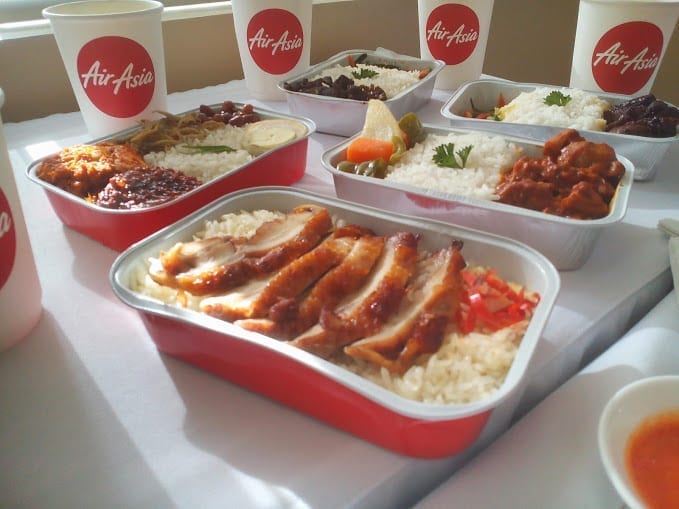
    AirAsia has launched its latest Santan Combo Meal, available for pre-booking, from RM10 on AirAsia Bhd (AK) flights and from RM15 on AirAsia X Bhd (D7) flights.

    In a statement today, AirAsia said the Santan Combo Meal has a selection of 15 meals ranging from local Asean delights to international cuisines.

    “Guests who pre-book the combo meals can choose from a selection that includes coffee (only available for flights above 90 minutes), carbonated drinks and mineral water,” it said.

    AirAsia Commercial Head Spencer Lee said guests would be happy to know that the new price offers a RM5 discount off the in-flight ticket price.

    “When they pre-book their meals online, not only they enjoy discount prices and have a wider selection of meals to choose from, but also have the privilege of being served first,” he said.

    Lee said among the new items on the menu was the festive Christmas treat of Southwest Stuffed Chicken Meal on AK flights for RM10.

    “This meal consist of roasted chicken breast stuffed with capsicum and onions and served with a special jalapeno cream sauce on a bed of roasted potatoes,” he said.

    Meanwhile, those travelling on D7 flights can enjoy the new combo meal of Grandma’s Chicken Pie for RM15, which is minced chicken baked with a layer of creamy mashed potatoes, complemented with broccoli and carrots.

    Guests can pre-book their meals up to 24 hours before their scheduled departure time on www.airasia.com via the Manage My Booking tab.