Tag: Medicines

  • Google delivery drones cleared for Australian Airspace

    Google delivery drones cleared for Australian Airspace

    A sister company of Google has been given the green light to launch drone delivery in Australia after years of test flights.

    The drone company Wing, owned by Google’s parent company Alphabet, was given permission this week to deliver takeaway food and drinks and over-the-counter medicines by drone to about 100 homes in Canberra.

    Wing, which has been trialing deliveries for the last 18 months, began testing its drones in Australia in 2014, but faced initial opposition from residents who complained about the noise.

    Although the drones were below legal noise limits, Wing developed a new, quieter model and said the feedback obtained during its trials had been “valuable” and it hoped to “continue the dialogue”.

    “We will continue to engage with the local community and stakeholders as we expand our service and are hosting community information stalls and delivery demonstrations in the serviceable areas over the next few weeks,” the company said in a statement.

    According to Wing, the delivery service will initially be available to a limited set of eligible homes in the suburbs of Crace, Palmerston and Franklin.

    “We expect to gradually expand to more customers in Harrison and Gungahlin in the coming weeks and months.”

    Australia’s Civil Aviation Safety Authority gave Wing permission to launch a commercial service after examining its safety record and operational plans.

    The drones will only be allowed to fly 11-12 hours a day and must be piloted, rather than fully automated.

    Wing’s initial launch partners include Kickstart Espresso, Capital Chemist, Pure Gelato, Jasper + Myrtle, Bakers Delight, Guzman Y Gomez and Drummond Golf.

    “We’re excited to connect with more local businesses in the Gungahlin area about how we can help them reach more customers faster, safer and more sustainably and encourage any local merchants who are interested in learning more to get in touch with us.”

    Wing had said that drone deliveries reduce traffic and pollution and can deliver goods in six to 10 minutes.
  • 7-Eleven Singapore offers medicine service

    7-Eleven Singapore offers medicine service

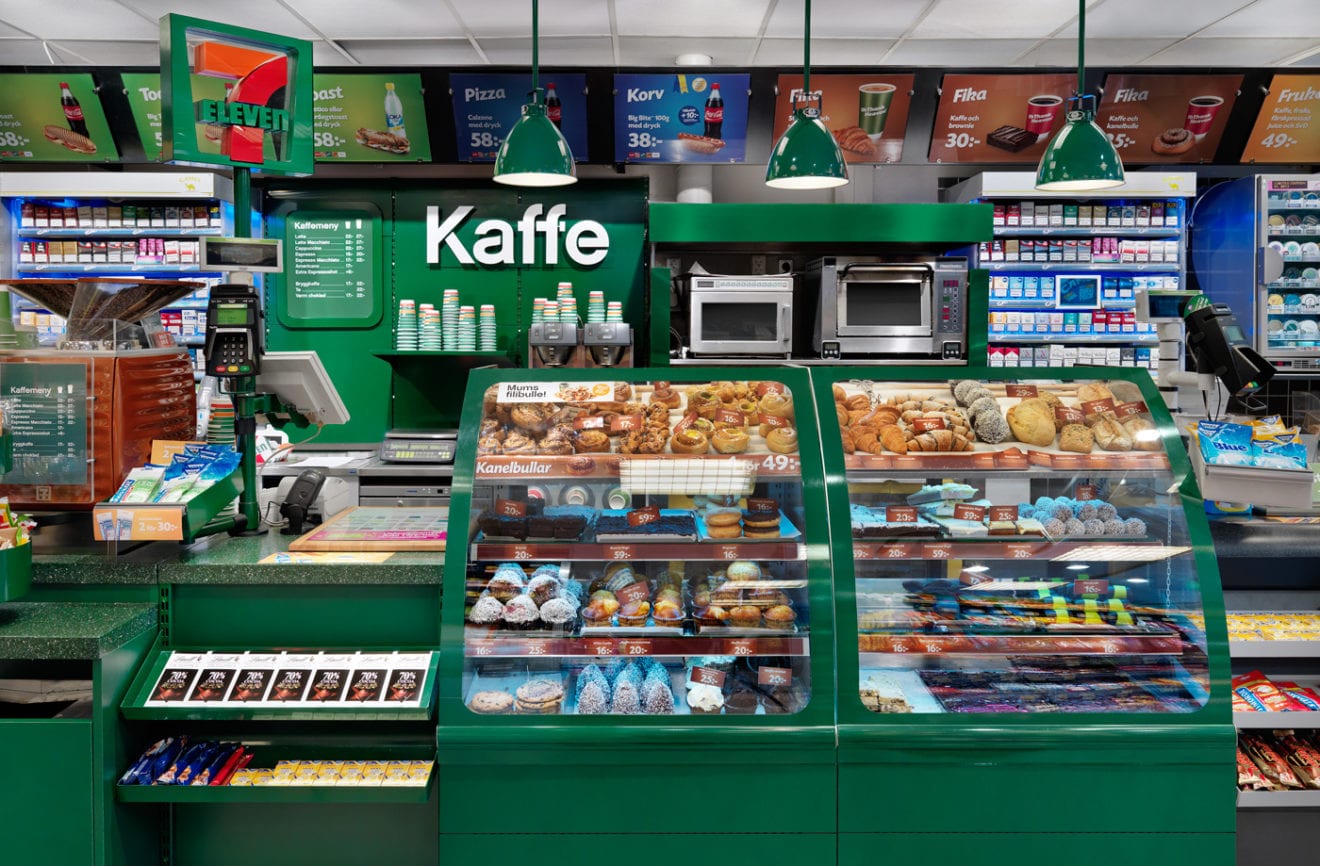
    Instead of visiting a polyclinic, select patients are now collecting their medicine at a 7-Eleven Singapore store.

    Available at 34 outlets, the service is being offered to chronic disease patients under the National Healthcare Group’s (NHG) chain of nine polyclinics, which pack the drugs for delivery to lockers in the patient’s preferred store.

    Patients receive a text message when their medicine has arrived, and access the lockers at any suitable time with a one-time code delivered to their mobile phones.

    Medicine is packed in tamper-proof bags, and if not picked up within 48 hours is sent back to the polyclinic.

    The 7-Eleven Singapore network is operated by Hong Kong-headquartered Dairy Farm International.

  • LANDBANK introduces mobile lending for medicines

    LANDBANK introduces mobile lending for medicines

    The Land Bank of the Philippines (LANDBANK) has introduced a new mobile lending program for the purchase of essential drugs.

    LANDBANK, a  government financial institution, has teamed up with branded generic drugs company RiteMed to expand the use of its electronic salary loans program.

    The LANDBANK Mobile Loan Saver (LMLS) launched in September 2014 and has since gained a large following among government employees, farmers and fishers, small and medium enterprises, overseas Filipinos and private sector employees.

    Under LMLS, customers can easily apply for a loan using their mobile phone and get quick credit decision from LANDBANK regarding their application. As of August 2016, total loans released under LMLS amounted to over 12 billion pesos.

    The RiteMed partnership will allow loan borrowers to allocate a portion of their approved net loan proceeds for the purchase of medicines. RiteMed will also make available a range of maintenance medicines at discounted prices.

    Medicines ordered via LMLS will be delivered for free in sealed packs to the concerned government agency or company office where the borrower is employed, within a week from the time of loan approval and release.

    “We understand the financial burden of high medicine costs on many Filipinos, which is why through this initiative, we hope to provide LMLS borrowers with access to affordable and quality medicines. This is yet another showcase of the endless possibilities in terms of financial technology and digital lending, especially as we hope to reach out and provide financial and other services to more Filipinos across the country,” said LANDBANK Officer-in-Charge and Executive Vice President Cecilia C. Borromeo.

    Started as an initiative in response to the Philippine government’s call for private companies to reduce the prices of essential drugs, RiteMed started manufacturing and marketing 20 off-patent, low-cost essential drugs that were 20% to 70% cheaper than their equivalent counterparts in 2002.

    Today, its product has grown to include almost 200 medicines for diabetes, hypertension, high cholesterol, infection, pain, kidney, gastro-intestinal, asthma and allergy, cough and colds and vitamins.

    Vincent Patrick Guerrero, general manager of RiteMed, said in a media statement that the company is optimistic that with the technology behind LMLS and the nationwide network of LANDBANK, they would be able to fulfill the objective of RiteMed to provide access to quality healthcare for all Filipinos.

  • Hong Kong retailer raided for illegal medicines

    Hong Kong retailer raided for illegal medicines

    Hong Kong police and Department of Health officials raided a retail shop in Cheung Chau on Monday for the suspected illegal sale and possession of unregistered pharmaceutical products.

    The DH says that during its routine market surveillance, it found suspected unregistered pharmaceutical products were being offered for sale at the shop.

    “Various products, including pain killers, cold and flu medicines, and cream, labelled in Japanese were seized in the operation. The products were labelled to contain ibuprofen, dihydrocodeine, fluocinolone and neomycin respectively.”

    According to the Pharmacy and Poisons Board of Hong Kong (PPBHK), these are not registered pharmaceutical products and Hong Kong registration numbers were not found on any of the product labels. Preliminary investigations have so far revealed that the products were sourced outside Hong Kong.

    A man aged 57 was arrested by police and charged with suspected sale and possession of Part I poisons, unregistered pharmaceutical products and antibiotics.

    The DH’s investigations are ongoing.

    “Use of unregistered pharmaceutical products may pose health threats to people as their safety, efficacy and quality are not guaranteed. Ibuprofen, dihydrocodeine and fluocinolone are Part I poisons. Inappropriate use of steroids like fluocinolone may cause serious side-effects, such as Cushing’s Syndrome with symptoms including moon face and muscle atrophy while inappropriate use of pain killers like ibuprofen without medical supervision may lead to gastrointestinal bleeding, and products with dihydrocodeine may cause nausea and vomiting.

    “Neomycin is an antibiotic and inappropriate use of antibiotics may lead to antibiotics resistance. Members of the public should not self-medicate without advice from healthcare professionals,” a spokesman for the DH explained in a statement.

    According to the Pharmacy and Poisons Ordinance (Cap 138), all pharmaceutical products must be registered with the PPBHK before they can be sold legally in Hong Kong. Part I poisons should be sold at pharmacies under the supervision of registered pharmacists.

    Illegal sale or possession of unregistered pharmaceutical products and Part I poisons are criminal offences. The maximum penalty for each offence is a fine of $100,000 and two years’ imprisonment. According to the Antibiotics Ordinance (Cap 137), illegal sale or possession of antibiotics is also a criminal offence. The maximum penalty for each offence is a fine of $30,000 and one year’s imprisonment.

    The DH renewed its warning to the public not to buy or use products of unknown or doubtful composition or from unknown sources.

    “People who have purchased and used the above products should consult healthcare professionals for advice. They may submit the products to the DH’s Drug Office at Room 1856, Wu Chung House, 213 Queen’s Road East, Wan Chai, Hong Kong, during office hours for disposal,” the spokesman said.