Tag: Mei.com

  • In Ratio Shanghai, robot can create the perfect drink

    In Ratio Shanghai, robot can create the perfect drink

    A retail concept harnessing the power of technology to deliver personalised coffee and cocktails has opened in China.

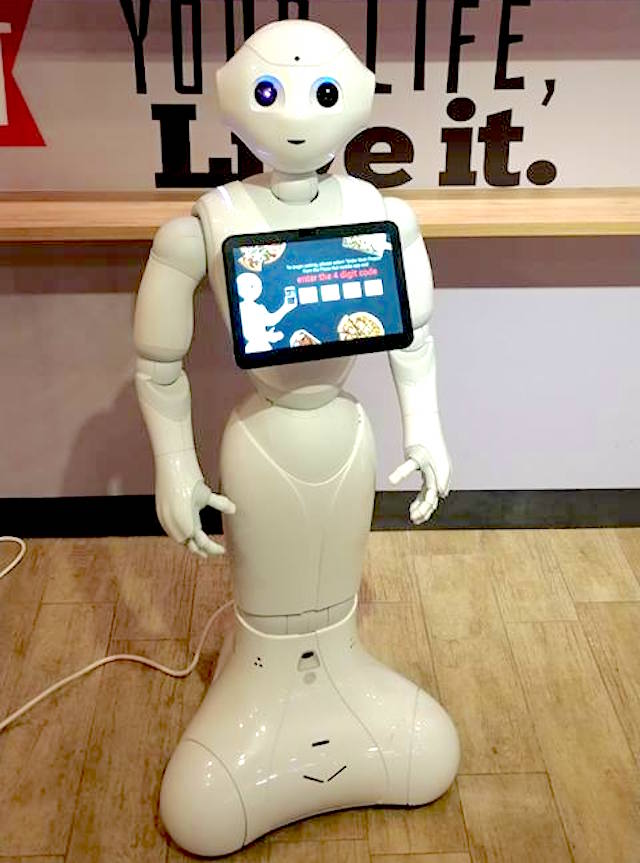
    Ratio uses robots to craft personalised espresso coffee during the day and cocktails at night.

    Launched with a pop-up store at Shanghai’s K11 Art Mall, the concept is about to find a permanent home at Raffles City, People’s Square. Dozens more stores are in the pipeline at hotels and co-working spaces in Asia.

    “With Ratio, bespoke drinks and service, previously available only at high-end hotels and lounges are now accessible to everyone,” says co-founder and chairman of Chinese luxury retailer Mei.com,Thibault Villet, who is a cornerstone investor in Ratio.

    “The Ratio experience is a journey towards self-exploration and it and empowers individuals to live brilliantly.”

    At ratio, drinks are made to order, in the exact ratio customers prefer. For example, a 1.2 shot of espresso in a cappuccino, or an extra strong 120ml bourbon in an Old Fashioned cocktail.

    Ratio uses science to come up with the perfect blends.

    “An individual’s sensory capacity for bitter, sweet, and umami is determined by genetics,” explains founder Gavin Pathross. “The distribution of taste buds is also genetically programmed. That’s why no two taste palates are identical.”

    Using robotic technology and software, Ratio has developed a system that can put together ingredients according to the exact ratio that will satisfy individual tastes.

    Harnessing the accuracy and consistency of a cobot – that’s short for “collaborative robot” – each drink is prepared precisely to order and speed; a latte takes less than one minute.

    Using AI, Ratio stores customers’ orders, learns their preferences and even makes recommendations during future visits.

    Pathross promises humans will not be replaced, however. “Cobots are just better than humans in performing repetitive work. They’re great at executing orders, freeing up our team of Ratiologists, assembled from Asia’s best baristas and mixologists, so that they can do what they do best – provide personalised service and have great conversation with our guests.”

    The team of Ratiologists Pathross has assembled have a combined 50 years of food and beverage industry experience.

    “We’re literally raising the bar on beverage service,” says chief Ratiologist Steve Teo.

    “Our team will help guests discover their individual preferences and customise their own Ratio. We want you to be particular about your G&T and select precisely 20 ml of lime and 60 ml of gin, for example. Bartenders elsewhere will be too busy to have that kind of conversation. That’s why Ratio is unique.”

  • Alibaba Says Its AI Copywriting Tool Passed the Turing Test

    Alibaba Says Its AI Copywriting Tool Passed the Turing Test

    Alibaba’s digital marketing arm Alimama has unveiled an artificial intelligence-powered copywriting tool.

    Tapping the huge pool of content on Alibaba’s e-commerce sites Tmall and Taobao, the AI copywriter uses deep learning and natural language-processing technologies learn from millions of top-quality existing samples to generate copy for products. Brands and advertisers can insert a link to any product page, and click the “Produce Smart Copy” button to see multiple copy ideas.

    Currently, the AI copywriter technology has passed the ‘Turing test’ and is capable of producing 20,000 lines of copy in a second, said Alimama. Brands using the new tool, such as Hong Kong-listed fashion chain Esprit and Texas-born clothing brand Dickies, can adjust the length and tone of their copy, such as dictating whether they want the tone to be “promotional, functional, fun, poetic or heartwarming.”

    The tool is used on average nearly a million times per day, by merchants and marketers on Alibaba-owned sites such as Taobao, Tmall, Mei.com (a fashion flash sale website) and 1688.com (Alibaba’s Chinese-language wholesale buying site).

    “For merchants, from today onwards, AI can take care of a portion of their copywriting needs. And it significantly changes the way [copywriters] work: They will shift from thinking up copy – one line at a time – to choosing the best out of many machine-generated options, largely improving efficiency,” Alimama said in a statement.

    As with design, copywriting involves a certain degree of repetitive, low-value work that can be made made more efficient, Alimama added. A single product might require up to 10 versions of copy for different ad formats, like posters, web banners, product pages and other special event pages.

    “All the content produced by the AI Copywriter is the result of applying deep learning models, trained with large volumes of quality content created by humans. Human creativity is the cornerstone for the machine, which isn’t able to replace the creativity of people,” said Christina Lu, GM of Alimama marketing. “AI for marketing… allows people to devote more energy to richly creative work.”

    “The AI copywriter is a really amazing tool,” said Shaozhang Ding, head of e-commerce for the Asia Pacific market at Esprit. “Based on a massive database of existing copy and advanced AI technologies, the tool can reduce the repetitive and tedious copywriting workload for our teams.

    The AI Copywriter is the latest in a suite of technologies Alimama has developed to assist small to mid-sized businesses on Alibaba’s e-commerce platforms, including a “smart banner designer” released in April that can resize and reformat promotional website banners with the slide of a mouse (drag a corner of the banner to change the shape of the box, and the system automatically reproportions the images and copy to fit the new format). In the same vein, Alibaba released an AI-powered video-editing tool for brands to generate – in less than a minute – 20-second videos to use for promotion on Taobao.

  • How to grow for Luxury brands

    How to grow for Luxury brands

    Luxury brands need to use new technologies and offer experiences for their customers, the second Luxury Society keynote event in Shanghai has been told.

    UCO Cosmetics CEO Arthur Zhang told the event that the early-stage eCommerce model of simply providing a platform for selling products online is dead.

    He said key technologies being experimented and improved upon in China include augmented reality, virtual reality and live-streaming.

    “The millennial generation in China, which already numbers about 300 million people, seeks experiences and emotional connection – they are not just bystanders,” DLG China partner/MD Pablo Mauron told the audience of more than 150 luxury-industry brand executives. “As a result, live-streaming has become a medium for them to express themselves.”

    He told how brands such as Maybelline, Montblanc and Swarovski are taking advantage of these new opportunities.

    Underlining the key message of the event that eCommerce is changing, CEO Thibault Villet of luxury fashion eCommerce platform Mei.com told how a live-streamed show in collaboration with TMall resulted in 65 per cent of the products featured quickly selling out.

    Meaningful data

    Social customer-relationship management (CRM) makes highly targeted messaging and engagement possible, the event was told by Four Seasons Hotels Asia Pacific director of marketing communications John Hamilton. He said the luxury hotel chain has been gaining meaningful data about its customers, which in turn has driven growth. In the past year, through trial-and-error and optimisation, the group has defined a CRM-led content strategy on WeChat.

    Celebrity and key-opinion-leader partnerships can make a big impact in China, said East Entertainment commercial director Qing Dai, who spoke of her experience of partnering luxury brands with appropriate celebrities. One of Easy Entertainment’s most successful was in linking up Cartier with singer/actor Lu Han.

    Baidu GM for East China Wan (Grace) Zhang said Cartier was the most-searched luxury watch brand among the generation born between 1990 and 2000, linked to Cartier’s collaboration with Lu Han.

    Other speakers at the event included Four Seasons Hotel Pudong (Shanghai) GM Arthur Ho, writer Casey Hall of Women’s Wear Daily, Digital Luxury Group founder/CEO David Sadigh and MD for China Pablo Mauron, Baidu senior project manager Di Fu and Sephora China digital manager Vanessa Qian.

    Attendees included representatives of Alexandre de Paris, Baume & Mercier, Bottega Veneta, Bulgari, Cartier, Chanel, Chaumet, Conde Nast, De Beers, Dior, Hublot, Loewe, LVMH, Marc Jacobs, Massimo Dutti, Michael Kors, Montblanc, Nars, Net-a-Porter, Nike, Sephora, Shiseido, Swarovski, TAG Heuer, Tiffany & Co and Vacheron Constantin.

    Luxury Society, published by Digital Luxury Group, is an online destination for luxury-brand executives covering digital and technology matters and with more than 40,000 members across 150 countries.

  • Mei.com & Alibaba Launch the TMALL Luxury Flash-Sale Channel with Star-Studded Live-Streamed Fashion Show

    Mei.com & Alibaba Launch the TMALL Luxury Flash-Sale Channel with Star-Studded Live-Streamed Fashion Show

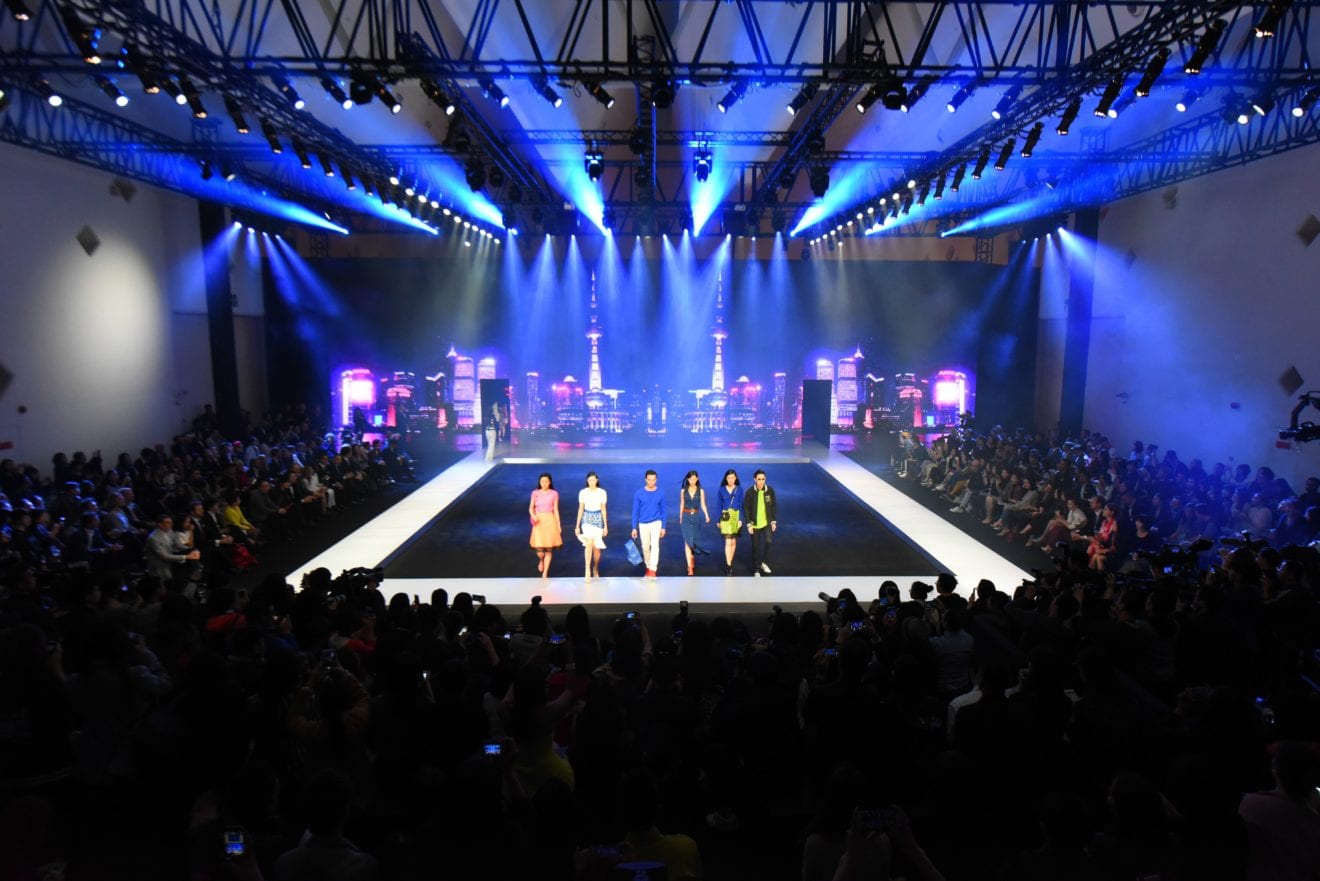
    A live-streamed fashion show featuring 42 looks has marked the launch of a luxury Tmall flash sales channel via app that makes the styles immediately available to shoppers.

    Alibaba Group’s B2C online marketplace Tmall.com has launched the channel through its mobile-phone app, allowing viewers of the live stream to “scan and buy” the runway looks.

    Soft-launched about three months ago, the Tmall channel is being managed by Mei.com, which since 2010 has run a website in China that provides a flash sales outlet for nearly 300 international luxury brands including Armani, Longchamp, Michael Kors, Tumi and Zegna, through exclusive partnerships.

    Mei.com CEO Thibault Villet with Olivia Palermo and Mei.com President Seamon Shi.

    Mei.com CEO Thibault Villet with Olivia Palermo and Mei.com President Seamon Shi.

    Alibaba invested an undisclosed amount in Mei.com in July, saying the site’s relationships with affordable luxury goods merchants would complement Tmall’s roster of high-end retailers such as Burberry, Coach and Hugo Boss. The new flash-sales channel gives Tmall.com shoppers direct access to discounted luxury goods from more than 3000 retailers and authorised distributors.

    “The launch of the channel will further the variety of brands on Tmall and offer China’s burgeoning middle class a one-stop shopping platform,” says Alibaba Group CMO Chris Tung.

    Millions of consumers across China watched the fashion show. It featured clothing and accessories, including 30 womenswear looks, 10 menswear looks, and a finale including two children’s looks.

    Actor Peter Sheng, famous for his role in the China web series Go Princess Go, made his runway debut in the show wearing a Carven suit. American socialite Olivia Palermo styled one of the runway looks and was a front-row attendee of the show wearing the look herself.
    Trendsetters and tastemakers attending the event also included singer Chris Lee and runway model and pop star Tia Ray, who also performed.

  • Luxury shoppers in China spending 28 per cent more per online purchase than in 2014, study shows

    Luxury shoppers in China spending 28 per cent more per online purchase than in 2014, study shows

    Unfazed by the country’s economic slowdown, luxury shoppers on the Chinese mainland have increased their purchases online as a range of e-commerce options provide attractive deals – from cosmetics and clothes to cars and property.

    That trend was uncovered from a joint survey of 10,150 luxury consumers in China by global professional services giant KPMG, online luxury retailer Mei.com and Chinese media firm Sina’s Nasdaq-listed micro-blogging service Weibo. The survey was called China’s Connected Consumers 2015.

    “The pace of change in today’s marketplace in China is taking retailers and brands by surprise,” Egidio Zarrella, the clients and innovation partner for China at global professional services giant KPMG, said on Tuesday.

    The new KPMG-led study found that the average spending by mainland luxury shoppers has increased 28 per cent to 2,300 yuan (US$362) for each single e-commerce purchase, up from 1,800 yuan average in last year’s survey.

    It also found that 45 per cent of respondents in the latest survey said they have bought many luxury items online.

    While only 1 per cent said they have bought domestic and overseas properties and cars online, about 50 per cent of those surveyed said they have not ruled out making those purchases online in the future.

    “China’s luxury consumers are looking for something beyond the physical shopping experience,” Zarrella said.
    “They are moving from just owning a luxury product to experiencing luxury, including gourmet dining, fine wines, private flights, bespoke safaris, luxurious travel tours, spa treatments, art auctions and an ever increasing range of investment services.”
    In a report early this year, management consulting firm Bain & Company estimated that China’s luxury market reached 115 billion yuan last year, down 1 per cent from the previous year, as Beijing cracked down on lavish spending by government officials.

    The country’s luxury market was largely expected to remain under pressure because of the slowing economy. Mainland China’s gross domestic product growth was exactly 7 per cent in the first and second quarters of this year, compared with close to 8 per cent last year.

    Zarrella, however, pointed out that e-commerce spending in the world’s second-largest economy shows a completely different picture.

    The survey, which had respondents from 90 Chinese cities, found an increase in the average amount spent on luxury purchases in most product categories.

    It showed that a higher amount was being spent on average for popular categories such as bags at 109 per cent, women’s apparel at 58 per cent and cosmetics at 18 per cent. There was also a significant increase in spending on categories such as watches at 126 per cent and jewellery at 65 per cent.

    The top-selling product categories in China’s e-commerce market are cosmetics, women’s shoes, bags and leather goods, women’s apparel and accessories.

    “Price is becoming less of a driver [for online sales],” said Thibault Villet, the chief executive at Mei.com. “But value remains important as customers are well informed about global prices since most of them travel.”

    The study found that Chinese luxury online shoppers prefer to buy on so-called online-shopping platforms, such as e-commerce giant Alibaba Group’s Tmall.com.

    “Tmall controls over 50 per cent of the total business-to-consumer e-commerce market in China,” Villet said.

    That preference was attributed to the multiple online merchants in such platforms, the extensive information on products and pricing, peer ratings of sellers, regular promotional activities and payment gateways like Alipay and Tencent Holdings’ Tenpay.

    Villet said Mei.com plans to open its own e-commerce platform dedicated to luxury goods by next year to better compete on the mainland.

    He said the exponential growth of smartphone adoption on the mainland has also helped boost mobile e-commerce purchases. “We expect Mei.com to be fully mobile by the end of 2016,” he added.

    Mobile e-commerce sales will account for more than half of online retail shopping in mainland China by next year, according to New York-based research firm eMarketer.

    It forecast mobile e-commerce would make up 10.9 per cent of all retail sales in the country next year and 55.5 per cent of online retail shopping as the sector grew to a record US$505.74 billion, up from an estimated US$333.99 billion this year.

    The government-backed China Internet Network Information Centre has reported the number of users who accessed the internet through mobile devices reached 594 million in June, up from 557 million in December last year, while the overall number of internet users rose to 668 million from 649 million.

    Andrew Taylor, a co-founder of Juwai.com, which connects Chinese buyers to overseas property, said mobile browsing by consumers in China was a major driver of brand awareness for his company.

    “We see that many of the more affluent customers who look for luxury properties use [Tencent’s instant messaging service] QQ and call us,” Taylor said.

    “The younger consumers contact us through [Tencent social mobile messaging platform] WeChat and Sina Weibo.”

    So-called online-to-offline activities is a trend that will continue. Zarrella said that physical stores have a role to play in triggering e-commerce purchases of luxury goods.

    “We see a growing number of online platforms launching pop-up shops in malls, or have tie-ups with physical stores to give buyers an opportunity to inspect these products,” Zarrella said.

    Thomas Crampton, the global managing director at Social@Ogilvy, the worldwide practice of marketing group Ogilvy & Mather involved in social media, said an online-only approach in China is not sustainable for brands.

    “At some point, each brand will need a face-to-face touchpoint,” Crampton said.

    “We helped an automotive brand, analyse, interpret and optimise the shopper journey,” he said as an example. “From a traditional purchase cycle of over 200 days, the brand managed to sell over 300 cars in a matter of three minutes through WeChat.”