Tag: Metcash

  • Metcash Battles Tough Trading Climate: Mixed Results and Strategic Market Gains Detailed in Interim Report

    Metcash Battles Tough Trading Climate: Mixed Results and Strategic Market Gains Detailed in Interim Report

    In the first half of the fiscal year, Metcash released a diverse range of results as the firm navigated a challenging trading period. The group’s revenue for the six months concluding on October 31 saw a slight increase of 0.1%, amounting to $8.5 billion. This figure rose to $9.6 billion, an increase of 0.4%, when charge-through sales were included.

    Segment Performance

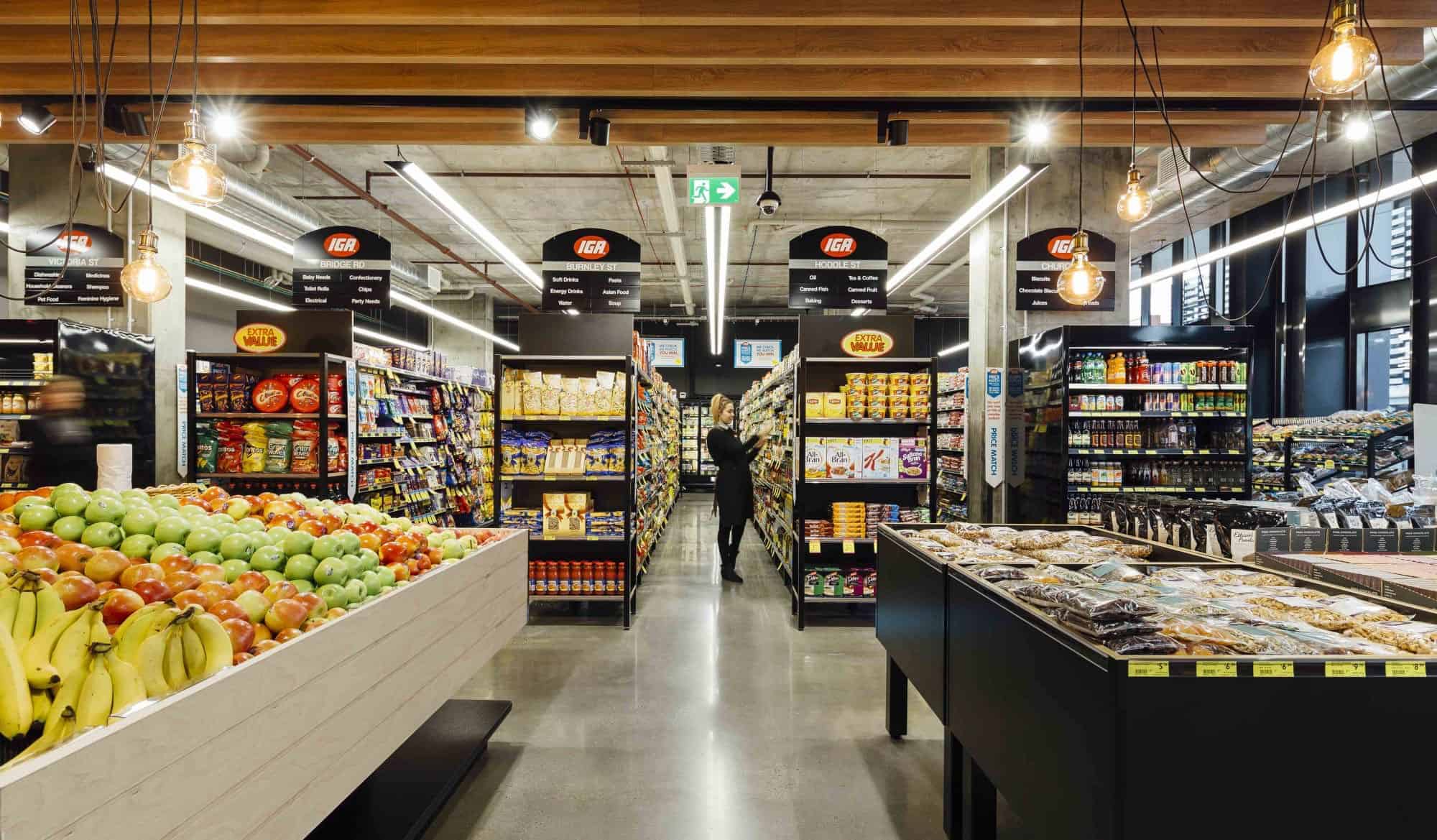
    Metcash’s food segment, with the exception of tobacco, witnessed a 7.2% surge, indicating growth in both its supermarket business (IGA) and foodservice and convenience operations (Campbells & Convenience and Superior Foods).

    However, when tobacco was included, food sales decreased by 0.8%. This decline in tobacco sales, which accelerated to 35%, was reportedly due to the implementation of new regulations in July.

    In the liquor sector, Metcash saw sales rise by 1.4%, reflecting a growth in market shares in Australian packaged liquor and a surge in wholesale sales to on-premise patrons.

    The hardware segment of the business also experienced growth, with sales rising by 2.4%. Similarly, Total Tools sales saw a 3% increase.

    Financial Outcomes

    Regarding the bottom line, the group’s EBITDA increased by 2% to $367.2 million. Contrarily, the underlying profit after tax witnessed a decline of 5.9%, amounting to $126.7 million. This decrease was due to a combination of lower hardware and liquor earnings, an increase in finance costs, and increased depreciation and amortization.

    Future Prospects

    Despite the challenging trading conditions, Metcash group CEO Doug Jones expressed satisfaction with the company’s results. According to Jones, the company has been making substantial progress in their strategy of extending through the value chain and ‘winning with independents’. This strategy presents opportunities to extend their addressable markets while also providing attractive margins.

    Jones went on to express optimism about Metcash’s future prospects, stating that the company is well set for continued success. He emphasized the company’s robustness, diversity, and resilience, as well as the considerable opportunities for accelerating growth.

    Questions & Answers

    What was the increase in Metcash’s revenue for the first half of the fiscal year?
    The revenue saw a slight increase of 0.1%, amounting to $8.5 billion.

    How did the new regulations in July affect Metcash’s tobacco sales?
    The decline in tobacco sales, which accelerated to 35%, was reportedly due to the implementation of new regulations in July.

    What is Metcash group CEO Doug Jones’s outlook for the company’s future?
    Jones expressed optimism about Metcash’s future prospects, emphasizing the company’s robustness, diversity, and resilience, as well as the considerable opportunities for accelerating growth.
  • Metcash Reports 5.1% Sales Increase Amidst Tobacco Sales Slump And Upcoming Marketing Campaign

    Metcash Reports 5.1% Sales Increase Amidst Tobacco Sales Slump And Upcoming Marketing Campaign

    Metcash, a prominent retail conglomerate, reported a notable 5.1% increase in group sales (excluding tobacco) for the 18 weeks leading up to August 31st this year. This growth coincides with the company’s plans to launch its first-ever cross-pillar marketing campaign, which is scheduled to impact over 3,000 bannered stores in the upcoming quarter.

    Uptick in Food Sales

    Metcash’s food division experienced an 8.6% growth in sales, with supermarket sales contributing to this increase with a 2.6% rise. This is largely owing to the company’s strategic focus on differentiated and localized offerings to consumers. However, the supermarket sector witnessed a significant slump in tobacco sales, with a larger than expected decrease of 32.1%. This drop is reflective of the company’s active efforts to diversify away from tobacco products.

    Convenience and Foodservice Sector Performance

    The convenience and foodservice division also demonstrated robust performance, with a sales surge of 29.5%. Within this sector, Campbells and Convenience reported a sales growth of 14.6%, while Superior Foods noted a 2.7% increase in sales.

    Liquor and Hardware Sales

    Metcash’s liquor division registered a modest growth of 1.5%, despite facing heightened competitive pressures and an influx of promotional activities from rivals. Concurrently, the company is nearing the conclusion of its acquisition process for Steve’s Liquor Warehouse Group.

    Meanwhile, the hardware department (IHG) reported a 2.2% sales growth, driven predominantly by the trade sector. Notably, builder’s hardware, building supplies, timber panels, and doors were the standout performers within this sector.

    Total Tools, however, only saw a minor 0.5% increase in sales, attributed to subdued trade activity and cost-of-living challenges. Nevertheless, the company’s network sales did witness a 3% growth.

    Questions & Answers

    **Why did Metcash’s supermarket segment experience a decline in tobacco sales?**
    The decline in tobacco sales is a result of Metcash’s strategic move to transition away from tobacco products due to increasing health consciousness among consumers.

    **What factors contributed to the growth of Metcash’s food division?**
    The growth in the food division can be attributed to Metcash’s focus on differentiated and localized offerings, which resonated with consumers’ preferences.

    **Why did Total Tools see only a marginal increase in sales despite the growth in Metcash’s hardware sales?**
    The marginal growth in Total Tools sales was due to subdued trade activity and cost-of-living challenges which impacted consumer spending. However, its network sales still managed to grow by 3%.

  • Metcash Reports Robust Financial Growth, Hits $17.3 Billion Group Sales Revenue

    Metcash Reports Robust Financial Growth, Hits $17.3 Billion Group Sales Revenue

    Metcash, a leading wholesale distribution and marketing company, has recently announced a robust financial performance for the current fiscal year. The company’s group sales revenue reached $17.3 billion, marking a 7.2 per cent growth compared to last year’s figure of $15.9 billion.

    Financial Performance Details

    The company’s underlying group EBITDA (Earnings Before Interest, Taxes, Depreciation, and Amortization) witnessed a considerable rise, going from $688 million to $737.8 million. Further, there was also a 10.1 per cent increase in its reported profit after tax as the figures moved from $257.2 million to $283.3 million.

    In terms of sector-wise performance, Metcash’s food division reported sales revenue of $8.8 billion, excluding tobacco sales. This substantial figure, which is a 20.8 per cent increase year-on-year, has been largely attributed to the growth of supermarkets and convenience stores, along with Metcash’s partnership with Superior Foods beginning this June.

    Sector-wise Breakdown

    Metcash’s liquor division also exhibited growth, with the revenue rising by 3.3 per cent, moving from $5.1 billion to $5.3 billion. This growth has been fuelled by the successful performance of all IBA brands under Metcash, including Cellarbrations, The Bottle-O, IGA Liquor, and Porters. However, this sector did see a minor setback as its liquor EBITDA decreased from $125.7 million to $123.5 million, marking a 1.8 per cent drop.

    Lastly, Metcash’s hardware division reported a revenue of $3.6 billion, indicating a 2.4 per cent increase. This growth can be attributed to Metcash’s acquisition of Total Tools.

    Questions & Answers

    What was the total group sales revenue reported by Metcash for the current fiscal year?
    The company reported a total group sales revenue of $17.3 billion.

    Which division of Metcash recorded the highest increase in sales revenue?
    Metcash’s food division recorded the highest increase in sales revenue, marking a 20.8 per cent growth year-on-year.

    What factors contributed to the growth of Metcash’s hardware division?
    The growth in the hardware division is largely due to the company’s acquisition of Total Tools.

  • Metcash appoints Kylie Wallbridge as liquor division CEO

    Metcash appoints Kylie Wallbridge as liquor division CEO

    Wholesaler Metcash has appointed Kylie Wallbridge as the new CEO of its liquor division, effective in March.

    Metcash’s liquor segment includes the Cellarbrations, IGA Liquor, and The Bottle-O brands.

    Wallbridge will replace John Barakat, who has been the acting liquor CEO since the early retirement of Chris Baddock due to health reasons.

    Currently, Wallbridge serves as the MD of Diageo in the UK. She previously served as the MD of Diageo in Japan.

    “Kylie is a proven business leader with a track record for delivering results. Her alignment to our purpose of Championing Successful Independents and her passion for people is evident through her strong relationships with both retailers and suppliers,” said Metcash CEO Doug Jones.

    “I have no doubt Kylie will be a great asset to the Liquor pillar and Metcash more broadly. We warmly welcome her to Metcash. I would also like to sincerely thank John for acting in the role following the retirement of Chris last October.”

  • Metcash to invest $70 million in new Vic DC

    Metcash to invest $70 million in new Vic DC

    Metcash, the Australian wholesaler and distributor for brands like IGA, Mitre 10, Foodland and more,  has today announced a new distribution centre (DC) planned for Truganina, Victoria alongside the release of its FY22 results detailing a rise in revenue and earnings.

    The approximately 115,000sqm DC will replace the company’s existing Laverton, Victoria facility and will cost Metcash around $70 million to set up, with $20 million scheduled to be incurred in FY23.

    Metcash, which signed a long-term lease with the Goodman Group (ASX: GMG) for the construction of the Truganina DC, says the facility will improve the competitiveness of its independent retailers in Victoria through delivery efficiencies and by providing them access to a wider range of products.

    The DC will house products for both MTS’ food and liquor pillars, and will be equipped with automation to suit the company’s retail network.

    “We are delighted to be able to announce this significant long term investment for our independent retailers in Victoria, which is a reflection of our continued focus on championing their success,” Metcash CEO Doug Jones said.

    “Supporting our decision to proceed was the success of our new DC at Gepps Cross in South Australia, which has been operational since December 2020, as well as strong growth in both our Food and Liquor pillars in Victoria and the recent renewal of a long term agreement to supply Foodworks stores.”

    The announcement coincides with the release of Metcash’s FY22 financial results, detailing an 18.6 per cent rise in underlying profit after tax to $299.6 million.

    In addition, earnings rose by 17.7 per cent to $472.3 million, while revenue grew by 5.9 per cent to $15.2 billion.

    On a statutory basis, MTS’ profit after tax was up by 2.7 per cent to $245.5 million which the company says was backed by strong sales and earnings in all divisions sustained by a shift in consumer behaviour.

    The large difference between underlying and statutory profit can be explained by $22 million for Project Horizon which includes refurbishing stores, expanding e-commerce and cutting costs, as well as $27.6 million in acquisition costs, primarily oriented towards the hardware division.

    Jones said he was pleased to present the FY22 results, his first as group CEO.

    “The results are outstanding, another record year, and represent continued progress on the exceptional performance in FY21,” Jones said.

    “The number of external challenges increased in the second half and our supply chain and retail operations, both our own and those of our retail partners, exhibited significant resilience and flexibility. There were more lockdowns due to the Omicron COVID variant, major supply chain challenges, flooding in South Australia, New South Wales and Queensland which resulted in supply route disruptions, and towards the end of the financial year challenges related to Russia’s invasion of Ukraine and lockdowns in China.

    “A strategic investment in inventory, the flexibility of our operations and the outstanding efforts of our people helped our retailers to keep their shelves stocked and continue serving their local communities through these challenges. A testament to our people and independent retailers is that our focus on keeping shelves stocked did not materially hinder the continued successful execution of our MFuture [growth project] initiatives.”

    Jones said the company’s retail networks in food, hardware and liquor performed well, with sales increasing approximately 3 per cent in the IGA retail network, 20.5 per cent across hardware (which includes Mitre 10, Home Hardware and Total Tools), and 8.7 per cent in the liquor network.

    “Importantly, retailers are increasingly reinvesting in their stores, further improving the quality of their network primarily through the various store upgrade programs we support,” Jones said.

    “We also further strengthened relationships with our independent retailers and were pleased to recently announce long term agreements to continue supplying Foodworks stores and Drakes Supermarkets in Queensland.”

    MTS says forward momentum going into FY23 has helped push group sales up 9 per cent in the first seven weeks of its new financial year commencing on 1 May, partly buoyed by the impact of inflation.

    “While elevated inflation has continued into 1H23, there is uncertainty over the level of inflation going forward, as well as how the impact of inflation and other cost of living increases may impact consumer behaviour in the retail networks of our pillars, and Metcash,” Metcash said.

    “We are continuing to work closely with our suppliers and retailers to help shoppers manage the impact of inflation by providing better value options through offering a wider range of products at competitive prices.”

  • Snickers unveils Creamy Peanut Butter bar in Australia

    Snickers unveils Creamy Peanut Butter bar in Australia

    Snickers has released its limited-edition Snickers Creamy Peanut Butter bar in Australia for the first time.

    The Snickers Creamy Peanut Butter bar is made with real peanut butter, silky smooth caramel and fresh ground peanuts, enrobed in the rich Snickers chocolate.

    Mars Wrigley Australia Marketing Director Ben Hill says the variation has been a smash hit overseas, and he’s excited for Australians to finally get their hands on the product.

    “We know how much our customers love the classic Snickers bar, with its satisfying layers of nougat, caramel, and the signature peanut crunch,” he says.

    “Now, thanks to this innovation in texture, our fans can get Snickers satisfaction in both crunchy and smooth – something that is sure to delight peanut butter fans of all kinds.”

    Snickers Creamy Peanut Butter is available in a 36g twin pack for RRP $2 from leading retailers including Woolworths, Coles, Metcash, 7 Eleven, Coles Express, BP, Ampol, ALDI and Big W.

  • Metcash shares hit by lost 7-Eleven deal

    Metcash shares hit by lost 7-Eleven deal

    Metcash shares have dropped more than 10 percent to a four-month low after 7-Eleven chose not to renew its contract with the wholesale food and beverage supplier when it expires in August.

    Metcash on Friday said its annual sales to 7-Eleven total about $800 million a year, mostly in lower-margin tobacco products.

    “Metcash was unable to reach an agreement with 7-Eleven on its supply requirements for the east coast, including delivery routes and scheduling,” the ASX-listed firm said.

    However, Metcash said it was still in talks to continue to supply 7-Eleven stores in WA.

    The blow is just the latest for Metcash, which in 2018 posted an impairment-driven loss of $149.5 million when Drakes Supermarkets declined to extend its SA contract after Metcash had announced plans to open a new purpose-built distribution center.

    At 1306 AEDT, Metcash shares were down 10.5 percent to $2.72.

  • Aldi takes more market share from Metcash

    Aldi takes more market share from Metcash

    German discounter Aldi is taking a bigger share of the $100 billion Australian supermarket sector as IGA and Foodland fall further behind, new figures show.

    Industry market researcher IBISWorld has analysed the supermarkets’ latest revenue figures and has found IGA and Foodland supplier Metcash has lost more ground as Aldi continues to successfully expand into WA and SA.

    IBISWorld’s latest report on the supermarket industry, released on Wednesday, says Metcash has a 7.5 per cent market share, while Aldi now has 8.6 per cent.

    A year ago Metcash had a 7.2 per cent share and Aldi was at 7.9 per cent.

    IBISWorld senior industry analyst Nathan Cloutman says while Metcash’s portion of the market has increased, it will continue to fall further behind Aldi.

    “The collective revenue from Metcash-supplied supermarkets has declined in 2016/17 and is expected to decline in 2017/18,” Mr Cloutman said.

    “Aldi is rapidly expanding in the industry, in particular the company’s move into WA and SA in 2016 has helped the company boost its market share recently.”

    Cloutman said Coles was also feeling the pressure from an expanding Aldi and a more buoyant Woolworths during the 2017 financial year.

    Woolworths continues to lead with 36.8 per cent of the market, while Coles has a 30.9 per cent share.

    The report said Metcash’s attempts to increase revenue through advertising and discounting, including matching the prices of Coles and Woolworths on a core basket of goods, have had “minimal success.”

    “The chain’s profit margins have declined over the past five years, as price discounting strategies have lowered profit margins across many of its stores,” IBISWorld said.

    Competition is likely to further intensify after the German supermarket chain Kaufland confirmed it will expand into Australia, and on expectations Amazon’s pending arrival will eventually include its online supermarket business.

    Other players in the sector include Costco, which has an estimated two per cent market share, Foodworks chain owner Australian United Retailers which accounts for 1.8 per cent and SPAR Australia with 1.5 per cent.

    IBIS reckons Woolies will continue to gain share over 2017-18, moving to 36.8 per cent of the total market compared to Coles’ 30.9 per cent and Aldi’s 8.6 per cent.

    “[Coles] is likely to invest strongly in prices in 2017-18, which should see its market share remain relatively stable,’ IBISWorld’s senior industry analyst Cloutman said.

  • Metcash accused of unconscionable conduct by supplier

    Metcash accused of unconscionable conduct by supplier

    Less than two months after Coles agreed to settle unconscionable conduct claims, Metcash is embroiled in a legal stoush with a major supplier who has accused the food and liquor distributor of demanding excessive rebates and payments.

    COFCO Distributors and Fasttrack Logistics, which are owned by a group of Indonesian businessmen, have accused Metcash of unconscionable conduct and using unfair tactics to force them to hand over more than AUD11 million in rebates and payments over the last six years.

    In a statement of claim lodged in the Federal Court in Sydney in December, COFCO said it had paid Metcash AUD10.36 million in rebates on sales of AUD39.24 million over the six years to 30 June, 2014 and had been forced to pay AUD395,275 for “overseas study tours” for Metcash staff.