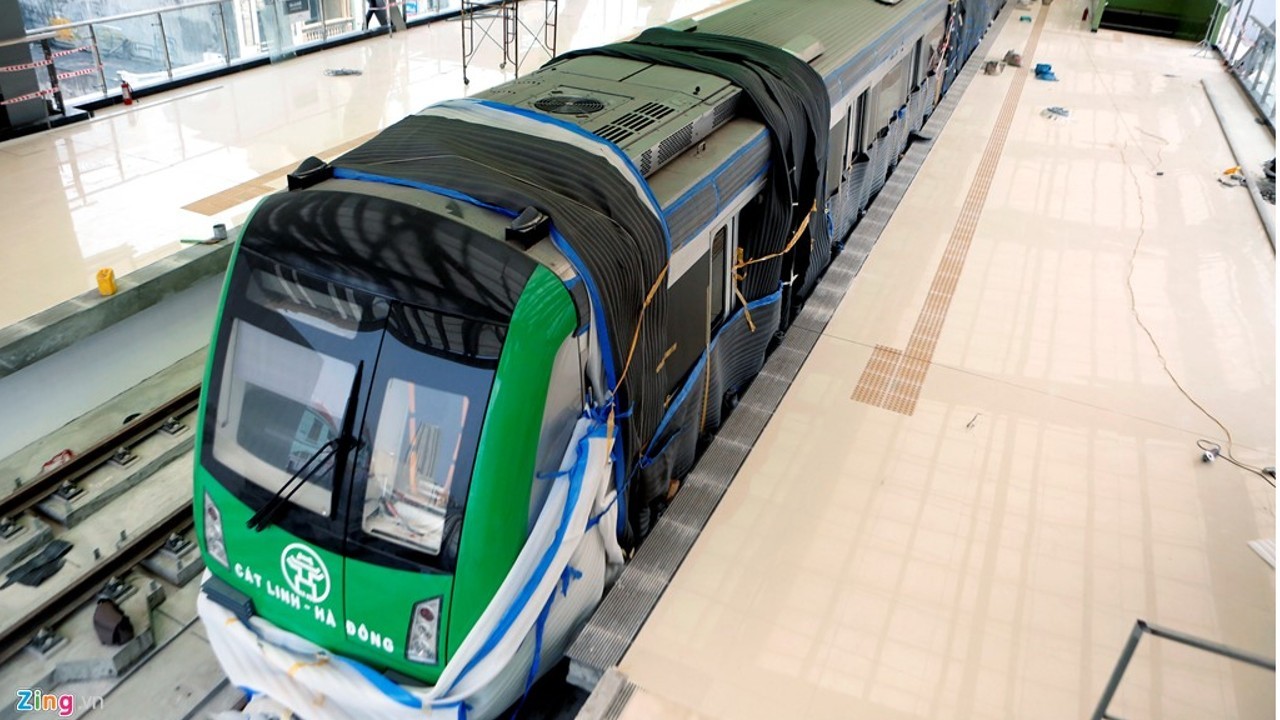
The Dai Dung Corporation, Construction Corporation No. 1 Joint Stock Company (CC1), and Hoa Phat Group have joined forces to form a partnership known as DCH, seeking the approval of the HCM City People’s Committee to participate in local urban railway projects as the general contractor for engineering, procurement, and construction (EPC).
Three Railway Lines on the Horizon
DCH aims to invest in three significant railway lines: Metro Line No. 2 (Ben Thanh – Tham Luong), the Thu Thiem – Long Thanh railway line, and the Binh Duong New City – Suoi Tien line. This ambitious initiative is poised to transform the landscape of urban transportation in Ho Chi Minh City.
Vingroup’s Bold Proposal
In a parallel move, Vingroup has set the stage for innovation by proposing a metro line that would connect the city center to Can Gio island district. This ambitious project, estimated at VND102.37 trillion (around US$4.09 billion), boasts a staggering 48.5 km route designed for speeds reaching 250 km/h—twice the speed of current undertakings—and aims for completion in just two years!
Fast-Tracking Urban Railways
The city’s Department of Construction reports that Vingroup’s investment model is a public-private partnership (PPP). After gaining municipal approval, the company is hastening the completion of investment documentation and conducting a pre-feasibility study. If everything aligns perfectly, construction could kick off in early 2026, making way for the first urban railway line fully funded by a private entity by 2028.
More Players Enter the Game
Chairman of the municipal People’s Committee, Nguyen Van Duoc, has disclosed that besides Vingroup, Gamuda Group and Vietjet are also eager to jump into the urban rail market, with plans for additional routes connecting the city center to the airport and other key locations.
Metro Ambitions for the Future
According to HCM City’s master plan for the period of 2021–2030, with eyes set on 2050, the metropolis is looking to develop 12 metro lines stretching over 600 km, linking Tan Son Nhat airport to urban areas and neighboring provinces. By 2035, the goal is to have seven lines operational, covering approximately 355 km with an estimated investment of US$40.2 billion.
Private Interest on the Rise
Prof. Dr. Vo Xuan Vinh, Director of the Institute of Business Research at the University of Economics Ho Chi Minh City, notes that following the issuance of Resolution 68 by the Politburo, private enterprises are becoming increasingly engaged in large-scale projects, ready to embrace the associated risks. This shift promises to revolutionize the pace of urban railway development in both HCM City and Hanoi, traditionally reliant on official development assistance (ODA).
New Mechanisms for Investment
Dr. Nguyen Quoc Hien, deputy head of the HCMC Management Authority for Urban Railways, emphasized the importance of developing specific legal frameworks to facilitate private investment in urban rail projects. He observed that successful PPP projects in places like Hong Kong, China, and South Korea often follow investment forms like Build-Transfer-Operate (BTO), Build-Transfer-Lease (BTL), or Build-Lease-Transfer (BLT). The absence of these models in existing resolutions suggests a need for innovative thinking in legal frameworks if we want to see a rapid transformation in the urban rail sector in Vietnam.
Questions & Answers
What is the purpose of the partnership between Dai Dung Corporation and others?
The partnership aims to work on urban railway projects in Ho Chi Minh City as the EPC general contractor.
What is Vingroup’s proposed metro line’s key feature?
Vingroup’s proposed line will connect the city center to Can Gio island with a remarkable speed of 250 km/h, expected to be completed in two years.
How many metro lines does HCM City plan to build by 2030?
The city plans to establish 12 metro lines, covering over 600 km, with seven lines targeted for completion by 2035.