Shoppers in their 20s in South Korea have become more prone to spending big on luxury items and services, emerging as a new consumption trend, according to industry data.
Mobile commerce company Tmon says the sales pattern over the past three months showed that purchases among young shoppers of luxurious products and high-end services in fashion, food and travel categories have significantly surged.
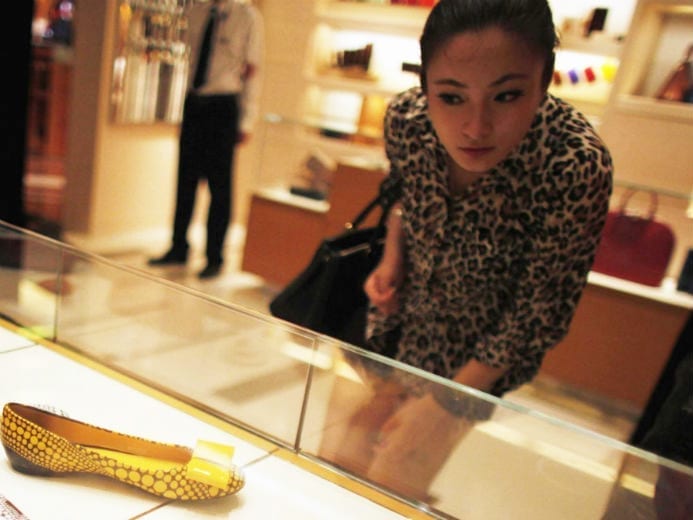
From 21 October 2017, Tmon’s overall sales of sneakers from luxury brands like Gucci, Golden Goose, Valentino and Alexander McQueen — which range price between 300,000 won (US$280) and 800,000 won — rose 66 percent, compared to the same period in the previous year.
The sales increase was particularly high among consumers in their 20s, soaring by 106 percent on-year.
Over the same period, hotel buffets, particularly dessert buffets, also logged a sales increase of 71 percent on-year among young consumers. The price of a hotel buffet in Seoul begins from 44,100 won per person.
The company said it had sold over 2,400 entries to such dessert buffets in just two months, portraying young shoppers’ interest in Instagram-worthy food spots.
“From luxurious goods to upscale brunch bites and private travel products, the tendency of consumers to focus on higher satisfaction is expected to continue throughout this year,” said Han Jae-yeong, Tmon’s chief strategy officer.
A similar trend can be seen in the popularity of Moleskine, a Milan-based luxury notebook company founded in 1997.
Its limited edition notebooks — some of which have been inspired by Lego, “Star Wars,” “The Simpsons” and “The Hobbit” — are typically priced from 30,000-40,000 won, but the notebooks quickly sell out.
“Consumers tend to find high quality and the brand value of Moleskine products worth spending their money on, which also gives them even a sense of ‘achievement’ when they purchase a limited edition, although it’s pricey,” said Yim So-young, a marketing manager for Moleskine in Korea.
“Korean consumers’ interest in limited edition goods and premium product lineups will only expand in the future,” she added.
And the trend is more marked among, while not limited to, the younger generation.
According to Lotte Home Shopping, sales of global premium home electronic appliances such as Blomberg dryers and Balmuda’s steam oven toasters have seen double-digit growth each year since 2015.
The company said such high popularity is attributable to premium brand products’ high performance and luxurious and sleek design, as well as brand awareness.
Swiss coffee maker Jura’s E7 automatic coffee machine receives at least 1,000 calls on order each time the product goes on air, the company said. The coffee machine costs nearly 1 million won.
Among Tmon’s travel products, sales are rising for luxurious accommodation in Japan, such as at ryokan, a type of traditional Japanese inn equipped with Japanese hot springs and private bathing facilities.
The most expensive ryokan are “Category A+++” which begin at 70,000 yen (US$640) per person. The price for average ryokan begin from 300,000 won per person. Until only recently, ryokan had been considered as accommodations primarily for middle-aged couples or family trips.
The company, however, said over the past three months, 20-somethings’ purchases of ryokan accommodations through packaged tours or individual trips had soared 166 percent on-year.
asIndustry watchers say the trend will likely last, as consumers continue to crave satisfactory experiences and pleasures.
“It is experience that many consumers now prefer, and it’s especially the dominant and preferred choice among those in their 20s, who want to experience the diverse range of the latest, satisfactory products and services,” said Jeon Mi-young, research professor at the Department of Consumer Science at Seoul National University, in an interview with a local daily.