Tag: miners

  • Pi miners anxiously await monetization

    Pi miners anxiously await monetization

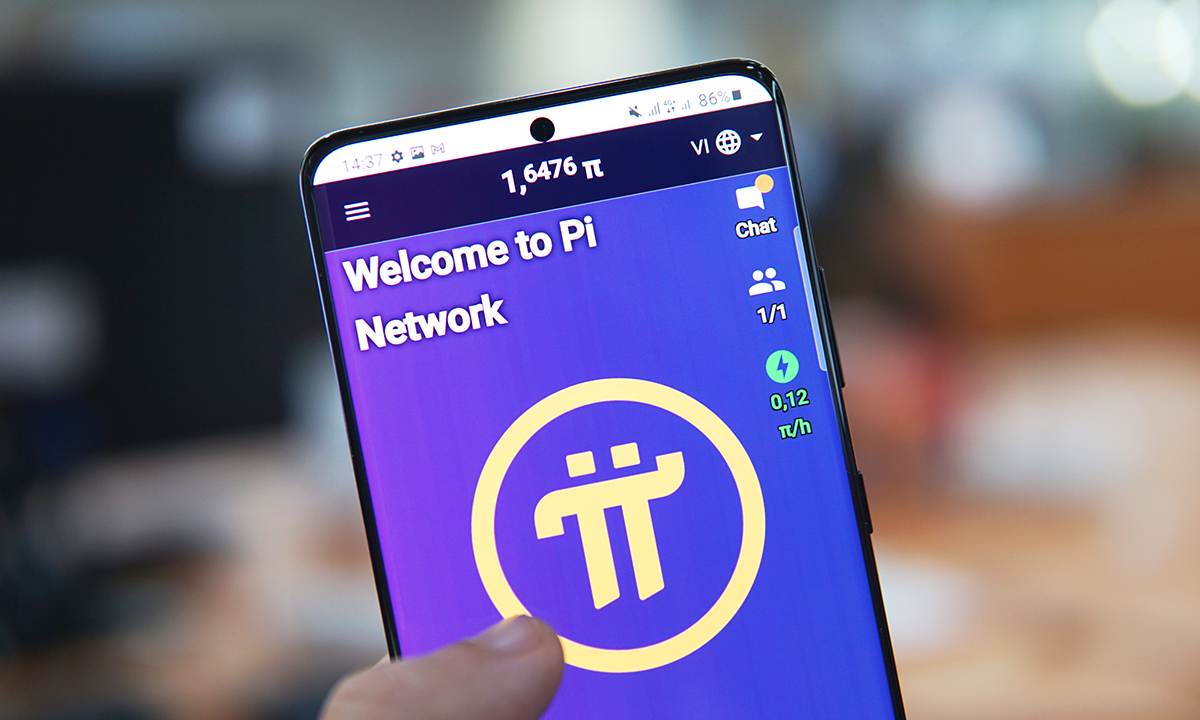
    Vietnamese people are expecting good money from cryptocurrency Pi following developer’s promise of a mainnet launch on June 28.

    The system is making steady progress towards transiting to launch by around Pi2 Day – June 28, the development team announced on the Pi Network app last Tuesday.

    Since Monday night, Pi miners in Vietnam have started to wait for the transition. Many claimed to be business owners and said they will accept the token as a payment method as soon as the coin can be exchanged.

    Pi and other cryptocurrencies are not legal tender in Vietnam, Dao Minh Tu, the deputy governor of the State Bank of Vietnam, has said.

    Huynh Tan of HCMC said he has signed in the app to earn rewards every day for the last three years.

    “I have joined the project since its beta stage. Now it is about to enter the mainnet stage, so I hope to be able to exchange Pi for money or something.”

    He said prices of thousands dollars is “very unlikely” as there are 100 billion tokens, but the ‘consensus price’ may be of any number.

    A poll on a Pi group found 75 percent of nearly 3,400 users believing in a ‘consensus price’ of US$6,700.

    “What will you buy first once each Pi token is worth thousands of dollars?”, a member asked on a Pi group with 100,000 members and attracted over 300 comments.

    Many said they intended to buy a house, a car or give away the money after selling the token.

    But investors will have to wait until developers allow them to transfer the token.

    Last year, Pi announced it had entered mainnet, but that will be split into two phases: closed and open network — the former allows user-to-user transactions, and the latter allows exchanging with other cryptocurrencies.

    Doubts

    Meanwhile, many are skeptical about the developer’s pledges.

    “There is no certainty in the statement, just a general announcement of mainnet launch around the Pi2 Day. They did the same thing last year, but there has yet been any development,” Anh Minh, a Pi miner said.

    Pi Network also made no announcement on its social media accounts on June 28 — an unusual move as most crypto projects constantly provide users new information during key phases.

    Over the last six months, the project has reduced mining rate, required users to lock up part of their token, and started the KYC (know-your-customer) process.

    Some users were allowed to exchange the token internally, but only as a demo.

    Up to date, the token cannot be exchanged with other cryptocurrencies, and mostly remain worthless.


  • Cryptominers unplug rigs as bottom falls out of market

    Cryptominers unplug rigs as bottom falls out of market

    Cryptominers are powering down operations, even selling equipment, as cryptocurrency prices continue to plummet. Nguyen Binh, a cryptominer in the southern Dong Nai Province, said his rigs can mine almost one Ethereum (around $2,000) a month, but hardly breaks even.

    “Electricity bills have taken away half of what I earned. With depreciation and operation and maintenance costs, I am losing money.

    “If prices of Bitcoin or Ethereum (the two largest cryptocurrencies) cannot recover in the next few months, more miners will have to shut down their machines.”

    He estimated that miners are losing 30-40 percent on selling graphic processing units, a key component in mining.Minh Nghia, administrator of a mining group, said some miners have disassembled their rigs to resell but are unable to find buyers despite falling prices.

    “Some told me they sold all their hardware and tokens but still cannot recoup their losses.

    “Financially independent miners can keep mining and wait until prices increase, but those who borrowed are finding themselves in hot water: They either sell their equipment and suffer losses or keep mining and cannot pay electricity bills and interest.”

    Experienced miner Tan Ha said many have unplugged their rigs.

    “GPUs, like other electronic devices, have a certain lifespan. It is not ideal to keep them running amid a plummeting crypto market, and so some miners choose to power down operations until prices recover.

    He said there is a high chance that prices might not recover for a long time.

    Bitcoin, the largest cryptocurrency by market cap, has fallen to $28,720 on May 18, the lowest in two years and down by half compared to its all-time peak of over $68,000 last November.

    Meanwhile, cryptocurrencies overall have lost nearly $800 billion in market value in the past month, according to data site CoinMarketCap, as investors fret about tightening monetary policy.

  • Bitcoin Mining Billionaire Ousts Co-Founder

    Bitcoin Mining Billionaire Ousts Co-Founder

    A power struggle at the world’s largest crypto mining start-up has resulted in the surprise ouster of one of its co-founders.

    Beijing-based Bitmain Technologies has fired co-founder and executive director Micree Zhan Ketuan, according to an internal memo sent to staff on Tuesday, which was seen by CoinDesk.

    His role will be taken over by Jihan Wu, who founded the firm with Zhan six years ago, and is now chairman of the board. Wu is Bitmain’s head of business, while Zhan led the company’s chip designing team. The pair were previously co-CEOs, but were replaced by Wang Haichao earlier this year.

    Bitmain’s co-founder, chairman, legal representative and executive director Jihan Wu has decided to dissolve all roles of Ketuan Zhan, effective immediately, the memo sent by Wu, headlined Important Notice said. Wu also warned staff not to take any instructions from Zhan or take part in meetings with him, threatening dismissal to those who violate the notice.

    Bitmain is a major manufacturer of bitcoin mining equipment, and the company grew along with the crypto-mining boom. The falling price of bitcoin resulted in a cash crunch and layoffs for the company.

    The firm was valued at $15 billion in a private funding round in 2018. In September 2018, the firm filed for an IPO in Hong Kong, in an attempt to raise $3 billion, but was unsuccessful.

    According to the IPO prospectus, Zhan was a major shareholder of Bitmain’s holding company, owning 36 percent, while Wu owned 20 percent.

  • Bitcoin rush: Miners on the rise with Vietnam set to regulate virtual currencies

    Bitcoin rush: Miners on the rise with Vietnam set to regulate virtual currencies

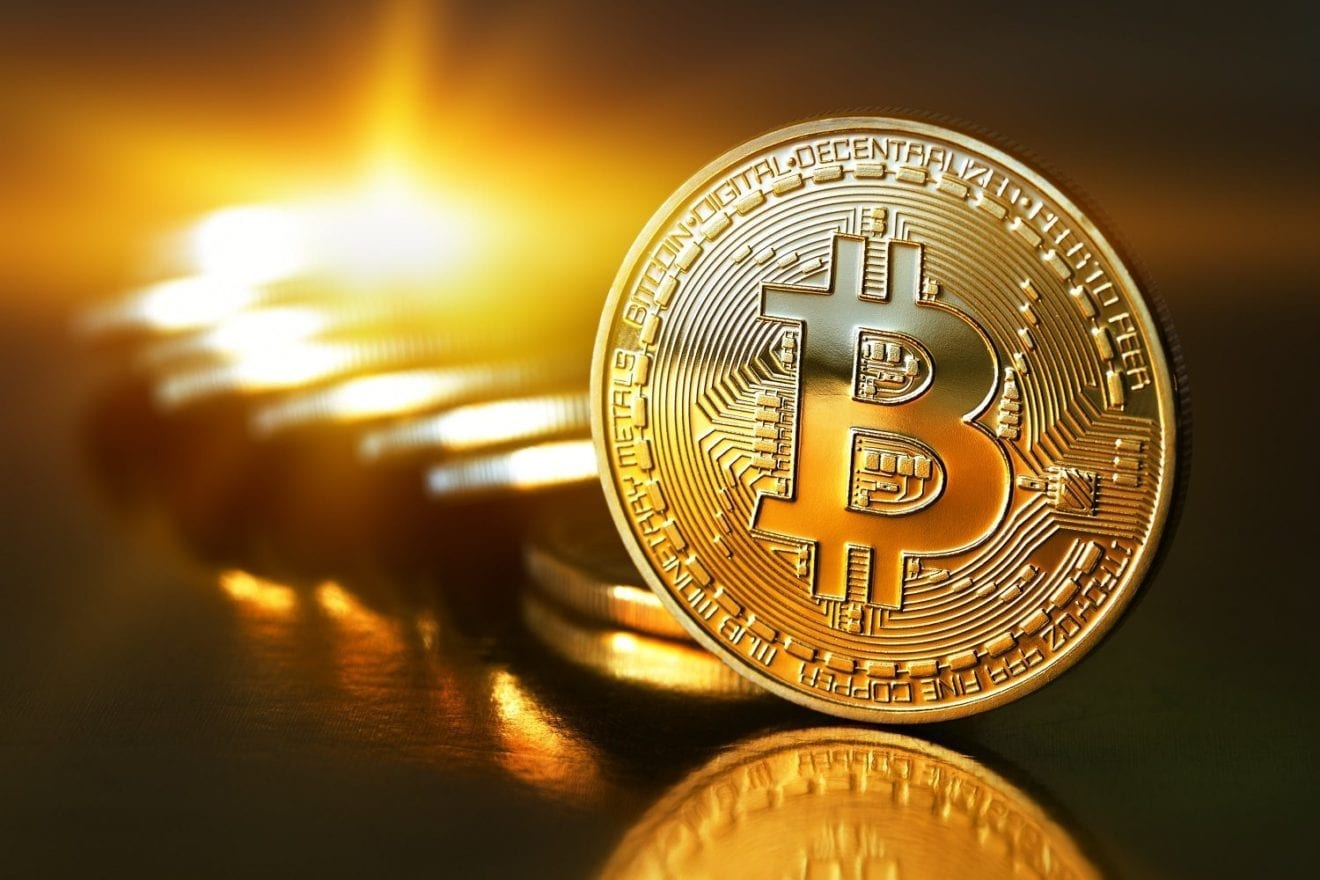
    The cryptocurrency reached an all time high of $4,700 this week, so if you’ve got a head for numbers…The demand for hardware to mine Bitcoins in Vietnam is on the rise following a government decision to develop a legal framework to manage digital currencies.

    Assigned ministries will have until the end of next year to complete the legislation, while tax policies for cryptocurrencies must be finalized by June 2019.

    As for now, Bitcoins remain illegal in Vietnam, according to the central bank. But that does not make the virtual currency any less attractive, and Vietnamese people have already started mining.

    The process of mining Bitcoins involves miners solving complex mathematical problems, and the reward is more Bitcoins generated and awarded to them.

    The participant who solves the puzzle first gets to place the next block on the block chain, a public ledger that records all Bitcoin transactions, eliminating the need for a third party to process payments, and claim the rewards.

    Miners verify transactions and prevent fraud, so more miners equals faster, more reliable and more secure transactions. According to current Bitcoin protocol, 21 million is the cap and no more will be mined after that number has been reached.

    Bitcoin has quadrupled in value since early this year, hitting a record high of more than $4,700 on Tuesday.

    Hardware for mining Bitcoins is now on sale on different sites in Vietnam for VND30-60 million ($1,300-2,600) per system. Each system usually has six to eight graphics cards.

    Two months ago, computer component providers in Vietnam started running out of graphics cards due to the increasing demand for Bitcoin hardware.

    Hai, the owner of a computer store in Hanoi’s Hai Ba Trung District, said he has earned up to VND200 million in revenue this month from selling hardware to Bitcoin miners.

    However, not many miners have been successful because Bitcoin mining is still a new concept in Vietnam, not to mention that the currency is not yet popular or legal.

    “Many of my customers do not understand how to mine for Bitcoins, so they have called it a day and sold the hardware back to me. Several others are leasing their kit out to new prospectors.”

    Miners are also facing fiercer competition and higher input costs. The average miner has to spend more than VND2 million each month on electricity, and the equipment can easily break because it has to run around the clock.

    Financial expert Nguyen Tri Hieu said investing in Bitcoins at this time is a bold move because miners may face legal action or risk going broke as it is possible that the latest price rise in Bitcoins is a speculative bubble.

    He said it would be better if miners had got involved when Bitcoin first appeared in 2009 to guarantee profits.

    In late May, nearly $4 billion was wiped off of the value of Bitcoin in just four days after a correction that saw the cryptocurrency’s price fall almost 19 percent to $2,260.

    The central bank has warned organizations and individuals in Vietnam not to invest in Bitcoin or conduct transactions in the currency, saying they would be taking a huge risk with no legal protection.

  • Surge in Coal Prices Buoys Miners’ Shares

    Surge in Coal Prices Buoys Miners’ Shares

    A recovery in coal prices in recent months has buoyed shares of local coal companies and returned confidence to a sector that has long struggled with low demand.

    Indonesia’s thermal coal benchmark price rose to $63.93 per metric ton in September — its highest in 17 months — continuing a five-month rally after bottoming out in May, according to the latest data compiled by the Ministry of Energy and Mineral Resources.

    China, traditionally Indonesia’s main coal market, has capped its domestic coal mining output, forcing electricity producers to start importing coal once more. Limited stocks from the main exporters, such as Australia and Indonesia — due to a prolonged wet season — also stoked the commodity’s price in the global market.

    Against that setting, shares of Bumi Resources, Indonesia’s largest coal producer, surged by as much as 23 percent this week after the Indonesia Stock Exchange (IDX) lifted a suspension on the company’s shares on Wednesday. The suspension began on June 30 after Bumi failed to submit its first-quarter financial report.

    NH Korindo Securities head research analyst Reza Priyambada said positive sentiment from the commodity’s price has buoyed even a debt-ridden company such as Bumi.

    Shares of state-controlled miner Tambang Batubara Bukit Asam, have risen 70 percent in the past five months. Indo Tambangraya Megah, the local coal mining unit of Thailand’s Banpu, rose 47 percent in the same period.

    However, Reza warned that in the longer term, miners’ share prices would depend on their own fundamental performance.

    “It all depends on how the coal miners are making their next moves. For example, extending or renewing their coal contracts, or diversifying their businesses,” Reza said.

    Indonesia’s coal production fell 14 percent to 241.1 million tons of oil equivalent last year compared to a year earlier, as demand from China and other markets decreased, according to the BP Statistical Review of World Energy 2016.

    For coal producers, the power sector is another business alternative to mitigate their losses from last year’s weak coal prices. The power sector is attracting several coal producers because the government wants to add 35,000 megawatts to the national power grid to boost investment.

    Adaro Energy, whose shares surged 164 percent so far this year, diversified its business from coal production to power generation. Construction of the company’s 2,000-megawatt coal-fired power plant in Batang, Central Java, has finally started and it is expected to generate $80 million per month for the consortium that built and operates it, when it starts operations in 2020.

    Coal will remain the main supply for power plants, which will eventually boost domestic consumption of the resource and provide long-term benefits to miners and producers.

    Oil and gas giant British Petroleum also noted that coal consumption in Indonesia — now the eight-largest coal user in the world — will continue to grow as most of the country’s power under President Joko “Jokowi” Widodo’s 35,000-megawatt program would come from coal.