Tag: mining

  • Bitcoin Tests $80,000 Level as IREN Beats Sales Targets

    Bitcoin Tests $80,000 Level as IREN Beats Sales Targets

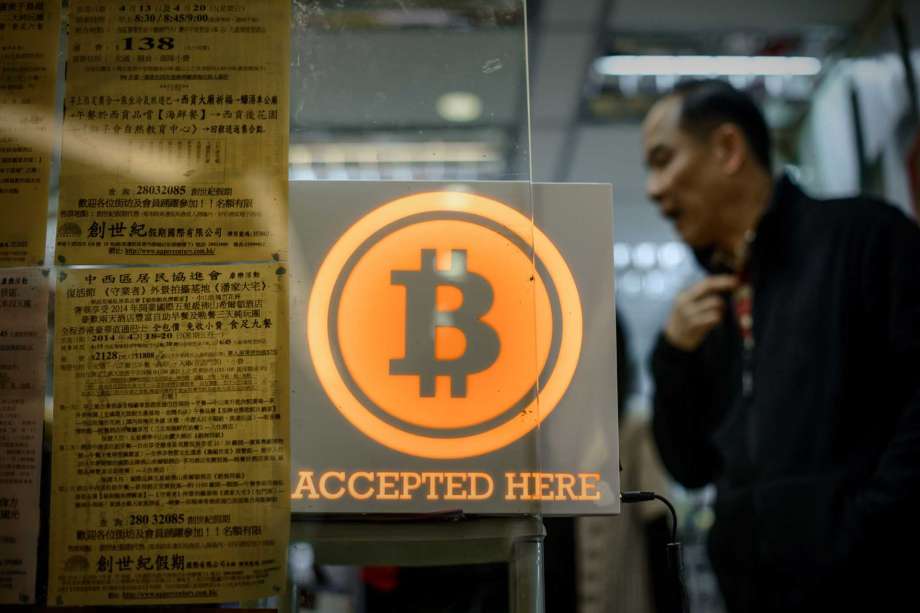
    Bitcoin traded near $80,000 on Thursday as institutional demand and momentum buying pushed the cryptocurrency to fresh highs.

    The rally lifted digital asset equities across global markets, led by data center operator IREN, which topped consensus revenue projections in its latest financial reporting.

    Mining revenue and market momentum

    Data center operator IREN reported sales above analyst estimates, driven by expanded power capacity and improved fleet efficiency across its facilities. Higher realized prices per coin lifted margins across commercial mining operations, offsetting rising global network difficulty.

    Trading desks across Singapore and Hong Kong reported steady buy orders from institutional funds throughout the session. Liquidations of short positions accelerated the advance once the asset broke past key resistance levels.

    Institutional demand in Asian trading hours

    Regional crypto exchanges recorded elevated turnover during Asian morning hours, tracking sustained inflows into exchange-traded spot products. The upward momentum created strong tailwinds for hardware suppliers, hosting providers, and infrastructure businesses linked to digital asset networks.

    Trading volume across major regional venues remains concentrated on spot books, with institutional desks watching whether capital sustains above the $80,000 mark through the weekly close.

  • Singapore Firm Partners China’s The9 for Cloud Crypto Mining

    Singapore Firm Partners China’s The9 for Cloud Crypto Mining

    Singapore Myanmar Investco (SMI) will develop a cryptocurrency cloud-mining platform with The9, according to a memorandum of understanding signed by the two sides.

    The mining business is expected to be launched in the fourth quarter of the year, subject to regulatory approval, SMI said in an announcement on Friday.

    Operations will be hosted in a range of facilities across Canada, U.S., Central Asia and the ASEAN region, and will cover a basket of cryptocurrencies inclusive of bitcoin (BTC), filecoin (FIL) and chia (XCH). This move follows SMI’s entering into a subscription agreement with The9 for new shares in SMI, which was announced in June.

    SMI also said it reached an agreement with Chinese cloud mining software-as-a-service company Nhash for technical and support services for five years, as well as an option to purchase up to 4,000 crypto mining machines.

    SGX-listed SMI is an investment and management company focused on Myanmar. In June, it announced its intention to pivot to cryptocurrencies and to diversify its core business to include gaming, digital entertainment and robotics.

    Originally an online gaming firm, Nasdaq-listed The9 pivoted into mining in January and started operations the next month. However, it has been facing regulatory headwinds in China, where it operates. Like other miners, The9 has been looking to shift operations abroad.

  • Beijing’s Crypto Crackdown Sends Mining Abroad

    Beijing’s Crypto Crackdown Sends Mining Abroad

    Cryptocurrency miners in China are shifting their operations to other markets abroad following Beijing’s latest crackdown.

    A committee from China’s State Council announced on Friday that it would crack down on crypto, specifically naming Bitcoin as a major concern.

    The government will crackdown on bitcoin mining and trading behavior, and resolutely prevent the transfer of individual risks to the society, said the committee led by Vice Premier Liu He.

    Although the statement stopped short of communicating or signaling an outright ban, miners in China – estimated to account for as much as 70 percent of global crypto supply – are already planning to shift their operations abroad.

    Huobi Mall, an arm of major cryptocurrency exchange Huobi, said over the weekend that it had suspended its custody business and is now contacting overseas service providers to export mini rigs in the future.

    Crypto mining pool BTC.TOP also announced the suspension of its China business over regulatory risks and its founder Jiang Zhuoer said that the firm will mainly conduct its crypto mining operations in North America in the future.

  • Bitcoin Mining Billionaire Ousts Co-Founder

    Bitcoin Mining Billionaire Ousts Co-Founder

    A power struggle at the world’s largest crypto mining start-up has resulted in the surprise ouster of one of its co-founders.

    Beijing-based Bitmain Technologies has fired co-founder and executive director Micree Zhan Ketuan, according to an internal memo sent to staff on Tuesday, which was seen by CoinDesk.

    His role will be taken over by Jihan Wu, who founded the firm with Zhan six years ago, and is now chairman of the board. Wu is Bitmain’s head of business, while Zhan led the company’s chip designing team. The pair were previously co-CEOs, but were replaced by Wang Haichao earlier this year.

    Bitmain’s co-founder, chairman, legal representative and executive director Jihan Wu has decided to dissolve all roles of Ketuan Zhan, effective immediately, the memo sent by Wu, headlined Important Notice said. Wu also warned staff not to take any instructions from Zhan or take part in meetings with him, threatening dismissal to those who violate the notice.

    Bitmain is a major manufacturer of bitcoin mining equipment, and the company grew along with the crypto-mining boom. The falling price of bitcoin resulted in a cash crunch and layoffs for the company.

    The firm was valued at $15 billion in a private funding round in 2018. In September 2018, the firm filed for an IPO in Hong Kong, in an attempt to raise $3 billion, but was unsuccessful.

    According to the IPO prospectus, Zhan was a major shareholder of Bitmain’s holding company, owning 36 percent, while Wu owned 20 percent.

  • Vietnam eyes green power, not to sacrifice environment for growth

    Vietnam eyes green power, not to sacrifice environment for growth

    The government Thursday reaffirmed Vietnam’s desire for a greener energy mix amid the risk of a power deficiency. Environment-friendly coal- and gas-fueled and renewable power plants would make up the mix. While Vietnam faces “obvious risks of an energy shortage in the coming years … it will not sacrifice the environment for economic growth,” Deputy Prime Minister Trinh Dinh Dung said in a meeting with the state-run Vietnam Electricity (EVN), the country’s largest power producer and monopoly distributor.

    Coal-fired power is vital to energy security, but “it must be clean,” he noted. Dung asked EVN to pioneer the use of modern technologies to reduce the environmental footprint of new coal-fired plants and handle the cinder and ash at existing plants.

    The country faces difficulty in increasing power generation since it has decided to put nuclear power on hold, many coal-fired plants are behind schedule and renewables could not be developed on a large scale due to “high costs” and transmission limitations.

    “Hydro power currently meets 40 percent of the country’s demand, but additional supply is almost impossible.

    “Our hydro power plant reservoirs, especially in the central region, are facing a serious water shortage, supply of coal for power development is erratic and gas supply is waning while power station projects for new supplies are being implemented slowly,” the deputy prime minister said.

    Dung said “EVN must also focus on investing in transmission systems to bolster the development of renewables.”

    The inadequate transmission system is now a bottleneck slowing down wind and power projects though a dramatically rising number of investors have shown interest in such projects following the recent increase in feed-in-tariffs (FITs).

    Dung also instructed the Ministry of Industry and Trade to hasten studies for the country’s investment in coal transshipment ports and regasification terminals to support development of gas-fuelled power, and quickly complete negotiations to buy power from overseas.

    He also asked EVN and other investors to speed up the delayed construction of major projects like Nhon Trach 3-4, O Mon 3-4, Tan Phuoc, Long Phuc 2-3, Quang Trach, and Quynh Lap.

    Vietnamese firms lack the resources for major projects while foreign loans are difficult to get due to government guarantee-related issues.

    The regional imbalance in power supply and demand is also a challenge. While the southern region accounts for more than half the demand (the north nearly 40 percent and the central region nearly 10 percent), power is being generated mainly in the north and central region (about 60 percent).

    To make it worse, the installation of transmission lines, both the main grid and branches, has been slow and failed to keep up with the pace of power generation, while negotiations to buy electricity from other countries have been going at a snail’s pace.

    The installed power capacity is around 48,000 MW. Under the revised Power Development Plan VII, a total of 60,000 MW is expected to be generated by 2020, with coal-fired plants accounting for 42.7 percent followed by hydropower (30.1 percent), gas-fired plants (14.9 percent), and renewables (9.9 percent).

    By 2030, the capacity will jump to 129,500 MW, with the ratios of coal and gas-fired power remaining almost unchanged, but renewables doubling to 21 percent.

  • Gas Malaysia ups natural gas tariff

    Gas Malaysia ups natural gas tariff

    Gas Malaysia Bhd has announced a higher average effective natural gas tariff for the non-power sector in Peninsular Malaysia at RM32.92 per MMBtu, which is 0.7% higher than the current RM32.69 per MMBtu. The revision will be effective from Jan 1, 2019 to June 30, 2019.

    The group told the stock exchange that the government has issued an instruction for the company to effect the natural gas tariff revision starting early next year.

    The average base tariff will be set at RM32.69 per MMBtu.

    Under the gas cost pass through (GCPT) mechanism, a surcharge of RM0.23 per MMBtu will apply to all tariff categories for the period beginning Jan 1 to June 30, 2019. This translates to an average effective tariff of RM32.92 per MMBtu.

    However, for Category A (Residential), the effective tariff rate fell 0.34% to RM23.72 from RM23.80 per MMBtu.

    Gas Malaysia said while the tariff revision has no material impact on its business operations, it is expected to contribute positively towards its financial position for the financial year ending Dec 31, 2019.

    To note, the government has prescribed the Incentive-Based Regulation (IBR) framework which sets the base tariff for a regulatory period of three years from January 2017 and allows changes in the gas costs to be passed through via the GCPT mechanism every six months.

    Gas Malaysia shares closed 0.74% or two sen lower at RM2.69 with 547,300 shares transacted.

  • Korea’s manufacturing and mining shipments up 7 percent

    Korea’s manufacturing and mining shipments up 7 percent

    Korea’s manufacturing and mining industry shipments increased in 2017, mainly due to growth in the electronics, refined petroleum and machinery sectors, a government report showed on Tuesday. Combined shipments by companies in the sectors with more than 10 employees reached 1,516 trillion won ($1.34 trillion), up 7 percent, or 99.7 trillion won, from the year before.

    The increase is attributable to a 14.6 percent year-on-year rise in electronics shipments and a 26.6 percent gain in shipments from local refined petroleum businesses during the one-year period, the agency said. The machinery sector posted a 19 percent year-on-year rise last year.

    Such gains offset losses in the shipbuilding and automaking sectors, it said.

    The report also said that the average shipments for manufacturing companies stood at 21.7 billion won last year, up 6 percent from 2016.

    It said value-added product deliveries by mining and manufacturing companies rose 8.1 percent, or 41 trillion won, in 2017 to over 547.7 trillion won.

    As of the end of 2017, there were 69,790 mining and manufacturing companies in the country employing 2.96 million people. This represents a slight fall from the year before.

  • Indonesia to Sell $4b in Bonds to Fund Freeport Purchase

    Indonesia to Sell $4b in Bonds to Fund Freeport Purchase

    State-owned mining holding company Indonesia Asahan Aluminium, better known as Inalum, sold bonds worth $4 billion in its first-ever US dollar bond deal on Thursday to fund the acquisition of a majority stake in the Grasberg copper mine in Papua.

    The deal came amid choppy global markets, rocked by trade concerns and slowing economic growth in Asia – including Indonesia – that have made it hard for emerging market borrowers to attract investor interest.

    The coupon on the bonds was lower than the initial guidance.

    Inalum sold a tranche of three-year bonds at a yield of 5.230 percent, five-year bonds at 5.710 percent, 10-year bonds at 6.530 percent and 30-year bonds at 6.757 percent, according to a copy of the term sheet for the sale.

    That compared with initial guidance ranging from 5.875 percent to 8 percent.

    Inalum sold $1 billion in three-year and 10-year bonds each, $1.25 billion in the five-year bonds and $750 million in the 30-year paper, according to the term sheet.

    The bonds were sold slightly below face value.

    Inalum will use the funds to buy shares in US mining giant Freeport-McMoRan’s Indonesian unit, which owns the mine.

    Freeport agreed in July to sell its stake to the government for $3.85 billion, ending a long-running dispute with Indonesia, which is seeking to gain greater control over its mineral wealth.

    The sale occurs during a period of market turmoil which has seen Asian issuers hit particularly hard as rising US interest rates have pushed up borrowing costs.

    The sale drew over $20 billion in investor orders, most of them from the United States.

    Asset managers and fund managers represented the bulk of investors, making up 78 percent to 86 percent of buyers.

    The bonds are expected to be rated BAA2 by Moody’s and BBB- by Fitch.

    There is some uncertainty around the Grasberg deal as the government said it is binding while Freeport and Rio Tinto said it is non-binding.

    The bond deal includes a clause that says the bonds will be redeemed at 101 percent of face value if the acquisition is not completed by June 30 next year.

    BNP Paribas, Citigroup and Mitsubishi UFJ Financial Group were the joint global coordinators for the deal.

  • Why Bitcoin Mining Is A Vital Aspect Of This Popular Cryptocurrency?

    Why Bitcoin Mining Is A Vital Aspect Of This Popular Cryptocurrency?

    Many people have heard about the term Bitcoin floating around, but fail to understand properly what it is. This article looks at what Bitcoin is, and dissects one of the most important processes associated with this cryptocurrency – Bitcoin mining.

    Bitcoin – A Brief Introduction

    Bitcoin is a form of digital currency, or a cryptocurrency. Bitcoin is unlike traditional currency as it has no physical tokens or coinage, and there is also no centralized control in the way that banks or the government dictate the exchange rates of dollars – although it is possible to exchange Bitcoin for physical currency and vice versa. Bitcoin uses blockchain technology where transaction data is stored on a public ledger visible to everyone. This helps improve security as Bitcoin transactions are encrypted as a further safety measure.

    Bitcoin was first developed and released in 2009, and since then the volume of Bitcoin circulating in the world has risen to huge levels. This is undoubtedly the most popular and widely known cryptocurrency available, and it is the digital currency that is most accepted as a form of payment in business.

    Bitcoin Mining – The Integral Cog Of This Cryptocurrency

    With traditional money, new currency such as banknotes and coins are simply produced by the government. This creation is regulated to avoid hyperinflation and the money is circulated into public use through various avenues.

    The creation of Bitcoin currency, however, is completely different and uses a process known as mining. Bitcoins are effectively created as a reward from the mining process. This mining process is based on what is known as the Bitcoin protocol. It states that a total of 21 million bitcoins will exist at some point in the future. Bitcoin mining effectively brings these potential bitcoins into existence and thus fills the quota.

    The actual mining process involves adding new transactional data to the Bitcoin blockchain ledger. In essence, the Bitcoin miners are enabling the bitcoin system to work by facilitating transactions. As a reward, they are granted Bitcoins. Whilst this may sound like an attractive and lucrative way to make some money and get involved in the Bitcoin phenomenon, there are several drawbacks to consider:

    – The mining process requires a powerful computer with large storage capacity

    – The mining process also uses a great deal of electricity

    – There are many other miners to compete against for the available Bitcoins

    – The mining rewards will slowly decrease as the number of Bitcoins in circulation increases

    As you can see, it is not just a simple case of setting a computer up and downloading the mining software! As Bitcoin starts to become more popular and talked about in the general public, the negative aspects of the mining process are also starting to rear their heads. More people are realizing about the huge power consumption required and the negative impact this is having on our environment.

    The consoling fact, however, is that eventually there will be no need for mining. Once all of the 21 million Bitcoins are mined, this operation will no longer have any value or requirement.

    Article and infographic created by the crypto specialists over at BTXchange.io.

     

  • Australia Eyes Indonesian Mining and Tourism

    Australia Eyes Indonesian Mining and Tourism

    Head Of the Indonesian Investment Coordinating Board (BKPM), Thomas Trikasih Lembong, predicted that Australia’s investment in Indonesia could increase up to USD 3 billion (around Rp 40 trillion) throughout the next three to five years. Most of Australia’s investment is predicted to be centered on the mining and tourism sector.

    “That’s the sum total of the projects we are trying to develop. Two-thirds will be in the mining industry and one-third in the tourism sector, lifestyle, and others,” Thomas said on Tuesday, March 7, 2017.

    Thomas explained that Australia’s has an exceptional mining industry. A number of the largest mining companies in the world is owned by Australia, such as EMR Capital, who purchased a gold and silver mine in North Sumatera, and Newcrest, who is currently operating the gold mine in North Maluku.

    In addition, Thomas said that the Indonesian government is really interested in cooperating with Australia in the tourism sector.

    “Many tourists from Japan, China, and Indonesia travel to Australia. They have great taste, management, and good designs. We need that in order to develop Indonesian tourism sector,” Thomas said.

    Currently, according to Thomas, Indonesian and Australian officials are committed to developing both countries’ tourism sector, especially coastal and maritime tourism. Thomas stated that Indonesia owns a varied number of islands and diving tourist destinations.

    “But we don’t have a maritime tourism industry, while Australia has a good reputation in yacht spots,” Thomas said.

    Australian Minister for Trade, Tourism, and Investment Steven Ciobo, stated that Indonesia could develop many tourist destinations in addition to Bali. Ciobo asserted that by having investments reeling in and the development of various infrastructures across regions, the number of tourists entering Indonesia can significantly increase.

  • Indonesia, Australia Cooperates on Mining Gold, Copper

    Indonesia, Australia Cooperates on Mining Gold, Copper

    National mining company PT. Aneka Tambang (ANTAM) and Australian mining company Newcrest Mining Ltd. are building a partnership in order to explore gold and copper potential in Indonesia.

    A statement released by the Australian Embassy on Sunday, November 6, 2016, mentioned that the collaboration document between both countries was signed by Indonesian Trade Minister Enggartiasto Lukita and Head of the Investment Coordinating Board Thomas Lembong in Sidney.

    Australian Ambassador to Indonesia Paul Grigson, who was present during the document signing, also welcomed the collaboration. “Two-way investment is a form of acknowledgment that both countries’ economics have many potential to offer,” Paul said.

    Indonesia and Australia have decided to raise economic issues in both countries’ bilateral partnership by reviving the Indonesia-Australia Comprehensive Economic Partnership Agreement (IACEPA), according to Grigson.

    “More investment means joint prosperity,” Grigson said, while adding that increasing investments will create new job opportunities for both countries.

    Indonesia-Australia partnership in the gold and copper mining sector has been established since late 2015 in the form of preliminary studies.

    The preliminary studies were later followed up with a joint exploration in Indonesia.