Tag: minister

  • Prime Minister Albanese Extends Petrol Price Relief for Australian Motorists Amid Middle East Crisis

    Prime Minister Albanese Extends Petrol Price Relief for Australian Motorists Amid Middle East Crisis

    The Australian government has announced plans to further alleviate the financial strain on motorists impacted by the ongoing conflict in the Middle East. The Prime Minister, Anthony Albanese, is expected to confirm that the nation’s petrol price relief measures will be extended.

    Australia, heavily reliant on imported fuel, has taken decisive action to mitigate the impact of soaring global oil prices on its citizens. In response to significant disruption to oil shipments via the Strait of Hormuz, the country reduced its petrol tax for motorists by half and slashed a levy for truck drivers in March. These interim measures, set to expire at the end of June, will now be prolonged for another month, offering some financial respite for drivers throughout July.

    Government’s Commitment to Economic Relief

    Prime Minister Albanese’s decision underlines the government’s commitment to providing economic relief to those affected by the international crisis. “We are cognizant of the continued pressures our citizens face,” Albanese noted in a pre-emptive statement, due to be publicly released soon. The extension of these measures offers a tangible reflection of the government’s efforts to support its citizens during these challenging times.

    Questions & Answers

    What measures has the Australian government taken to alleviate financial pressures on motorists?
    The government has halved the petrol tax for motorists and reduced a levy for truck drivers.

    Why were these measures introduced?
    These measures were introduced in response to rising global oil prices, caused by significant disruption to oil shipments via the Strait of Hormuz.

    Until when will these relief measures be available?
    Originally set to expire at the end of June, these measures will now be extended through the end of July.

  • Trade ministry encourages small, medium industries to utilize e-commerce

    Trade ministry encourages small, medium industries to utilize e-commerce

    Indoensias Ministry of Trade has said it has been encouraging small and medium industries (SMIs) to take benefit of online trade (e-commerce) to market their products.

    “We are pushing the small and medium industries to take their products to various e-commerce platforms. Websites like Tokopedia, Bukalapak, Blibli and Lazada are all local e-commerce platforms and we encourage the SMIs to use them,” the Minister of Trade, Airlangga Hartarto, stated in Jakarta on Tuesday.

    He hoped that once the SMIs start fully utilizing the e-commerce platforms, the industry will start expanding.

    The fourth industrial revolution era hinges on embracing the internet and integrating it with products and services, he added.

    The minister further explained that internet usage is now part of people’s daily lifestyle and it has now become integral to the industrial world also.

    “Germany began doing it in 2013. If we start this year, we will make sure that we are not left behind,” he remarked.

    Additionally, the Ministry of Trade also encourages professional vocational training to enhance the quality of human resources.

    The minister mentioned the importance of undertaking research and forging collaborations with universities in the industrial sector.

    Minister Hartarto also pointed to the progress made in basic materials, and highlighted the fact that natural energy resources cannot last forever.

  • Thai ICT minister resigns

    Thai ICT minister resigns

    Thailand’s ICT minister Uttama Savanayana has resigned as reports circulate that the ICT Ministry will be relaunched as the Digital Economy Ministry later this week.

    The Cabinet yesterday (13 September) approved Uttama’s resignation and appointed Deputy Prime Minister and Deputy Junta leader Air Chief Marshal Prajin Janthong as acting ICT Minister. The ICT Minister did not attend the cabinet meeting.

    Prime Minister and Junta leader General Prayut Chanocha said that the move was to pave way for the launch of the new Digital Economy Ministry but he refused to confirm if Uttama would be appointed to the new post or not.

    Local media have quoted unnamed sources saying that three people are in the running for Thailand’s first Digital Economy Minister – Incumbent Uttama, National Broadcasting and Telecommunications Secretary-General Takorn Tantasit and an unnamed “senior figure” in the finance ministry.

    However, General Prayuth said that Cabinet Secretariat Ampon Kittiampon, who was also rumoured to be in the running, was not in the picture for a ministerial post. Ampon shot to fame as cabinet secretariat when he quietly took the blame for the Single Gateway mass surveillance project that General Prayuth said was simply a clerical error by the person taking notes at the cabinet meeting.

    Takorn resigned from the NBTC last year with rumours that he wanted to become ICT Minister after the previous minister resigned. His resignation was later rejected by the NBTC board chairman Air Chief Marshal Thares Punsri and Uttama got the job.

    Uttama became the second ICT Minister appointed under the current military regime on 19 August 2015 succeeding Pornchai Rujiprapa. He was seen as part of a package deal to kickstart the economy that included Deputy Prime Minister Somkid Jatusripitak who was also Thaksin Shinawatra’s finance minister. Before the appointment Uttama was president of Bangkok University and Somkid was Chairman of the university board.

    However in one of his final tasks as ICT Minister Uttama has become embroiled in controversy in a $430 million (15 billion baht) rural broadband project by state owned telco TOT. The project is under investigation by the office of the auditor-general. On 10 September Uttama held a press conference saying the budget watchdog simply misunderstood things. The ICT Minister said that normal USO budget rules do not apply as it is not investment in telecoms, but rather the TOT project was about investing in the country’s competitiveness.

  • Former Thai ICT minister spends first night in jail

    Former Thai ICT minister spends first night in jail

    Former ICT Minister Doctor Surapong Suebwonglee is spending the night in jail after being found guilty of criminal malfeasance regarding an amendment to the Thaicom / Shin Satellite contract.

    The case, brought by the counter corruption commission, accused Surapong and former ICT Ministry Permanent Secretary Kraisorn Pornsutee and former Space Administration Bureau director Chaiyan Pungkiatpairoj (himself later permanent secretary) of illegally amending the concession to allow Shin Corporation to lower its shareholding of Shin Satellite from not less than 51% to not less than 40%.

    This materially changed the requisites in the concession contract as it would lessen the risk Shin Corporation had in Shin Satellite, and it could, though unlikely, open the way for the 60% of shareholders to get together to outvote concession holder Shin Corporation.

    Such a material change would have needed cabinet approval.

    The courts noted that while Surapong did submit evidence that he had asked the Thaksin Shinawatra cabinet for approval; and evidence that the attorney-general said he had the power to go ahead with the amendment whilst the cabinet approval was pending, Surapong had omitted one important detail.

    The former ICT Minister withheld information from the attorney-general that the cabinet secretariat had refused to table the amendment as it would have been a conflict of interest.

    Thaksin Shinawatra’s family and associates (driver, cook, and maid) still held a controlling stake in the company that bore his name at that time.

    Doctor Surapong was given a one year jail sentence beginning immediately and was led away to jail immediately after the verdict was delivered. The two others were given one year jail sentences, suspended for five years.

  • Direct India-Indonesia flights necessary to attract more Indian tourists

    Direct India-Indonesia flights necessary to attract more Indian tourists

    The Indonesian Tourism Ministry believes that direct flight from and to India could increase the number of Indian tourist arrivals in Indonesia.

    “The main challenge is direct flights as the existing ones are just transit flights from and to India,” Dody Prianto, assistant deputy director of the Tourism Ministry, noted here.

    Prianto was in Kolkata, India, for a roadshow to promote “Wonderful Indonesia,” the tourism brand of the country, at a hotel in the city, with the objective of attracting more tourists from India.

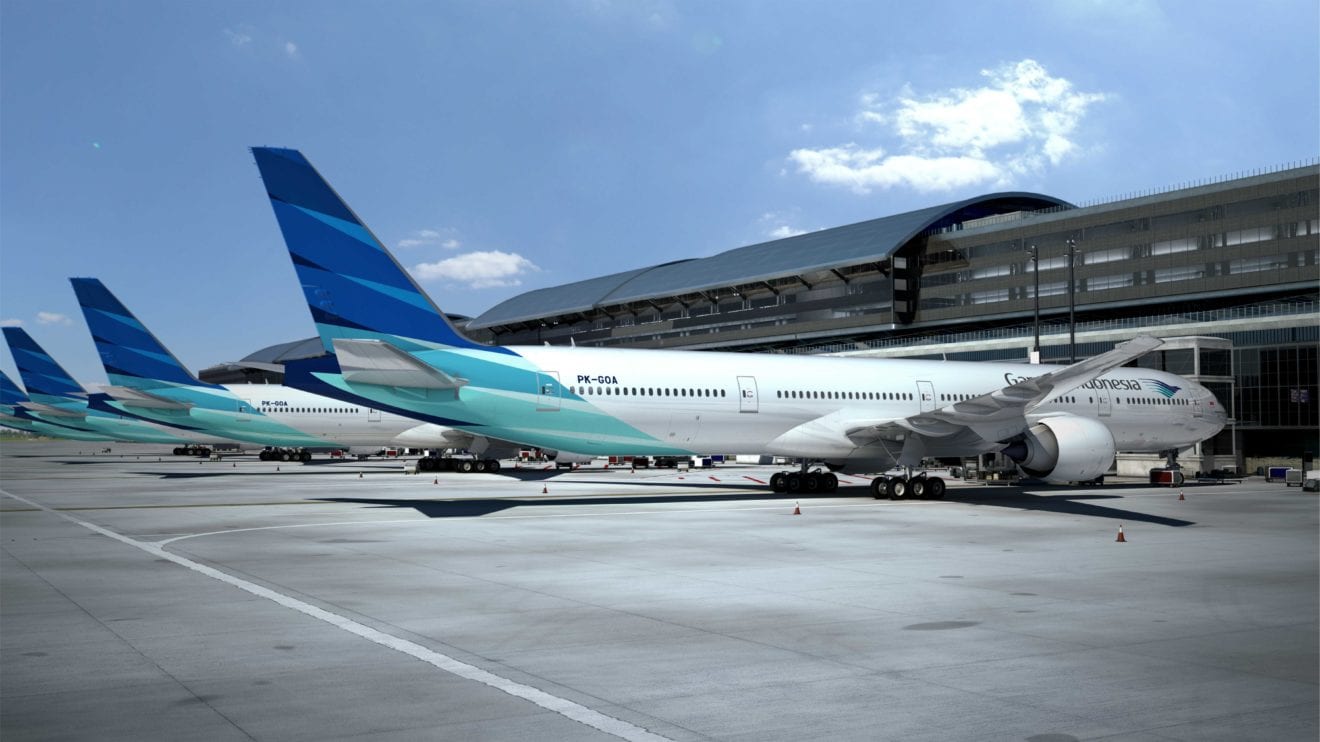
    He hoped airlines, such as Garuda Indonesia, would be interested in operating direct flights between India and Indonesia.

    To draw more Indian tourists to Indonesia, the ministry is intensifying tourism promotion to introduce other tourist destinations apart from Bali.

    He mentioned Sumatra as one of the interesting places for Indian tourists to visit as it is located near Singapore, and its culinary dishes bear similarities to those in Indonesia.

    The Tourism Ministry has set a target of attracting at least 350 thousand Indian tourists this year.

    “The target is quite high, but we are optimistic that it can be achieved,” Prianto stated.

    During the first semester of this year, a total of 185,911 Indian tourists had visited Indonesia, he said on the sidelines of a sales million event.

  • Thai PM grants regulator total immunity when censoring

    Thai PM grants regulator total immunity when censoring

    Thailand’s Prime Minister and head of the ruling Junta General Prayut has used Article 44 of the interim constitution, commonly known as the absolute power clause, granting total indemnity for the National Broadcasting and Telecommunications Commission when engaging in censorship for national security.

    Article 44 order 97/2557 grants the NBTC commissioners, NBTC secretary-general, NBTC staff and anyone appointed by the NBTC total indemnity from any criminal, civil or disciplinary action resulting from their actions when acting in good faith against those who are engaged in sedition, are a threat to national security, are disturbing the peace or those who are acting against the good morals of the country. However, an affected third party may still seek monetary compensation through the courts.

    The order came days after the NBTC lost a court case when it tried to silence a TV station that was loyal to the former regime of Thaksin Shinawatra.

    Meanwhile, Thailand’s state enterprise policy commission has agreed with the plans put forth by the ICT Ministry and ordered the two state telcos – CAT Telecom and TOT Corporation – to merge their data operations and transfer staff to three new companies within a year.

    Transmission and fiber networks will be under the National Broadband Network Company, Internet gateway and submarine networks will be merged under the Neutral Gateway Company and data centers will be merged under the IDC Company.

    This has not gone down well with the unions.

    CAT Union chairman Thaworn Poomtieng held a rally at CAT’s headquarters yesterday and issued a statement that the plan was drawn up only by the ICT Ministry and Deloitte without any input from CAT management and condemned the order to split up the state telco as dictatorial.

    Thaworn questioned whether the plan was actually to strengthen the state enterprise or if it was simply to sell it off.

    CAT acting President Surapan Meknavin said that he has not yet received any details of the plan from the State Enterprise Policy Commission and that in the past he has only had some high-level talks about reorganisation without going into any detail.

    The move has only added to a groundswell amongst Thailand’s netizens with many fearing the merged Neutral Gateway is simply the first step towards the rebranding of the much hated Single Gateway mass-surveillance project.

    ICT Ministry spokesperson Chatchai Khunpitiluck issued a statement that anyone still talking about the Single Gateway probably either had some misunderstandings or that they were purposefully distorting the issue in order to damage the country.

    Earlier Prime Minister and junta leader General Prayut Chanocha dismissed the numerous Prime Ministerial orders published on the Cabinet website referring to the Single Gateway mass surveillance project as a clerical error by someone who simply got his notes wrong.