Tag: Ministop

  • Korea Seven’s takeover of rival Ministop cleared by regulator

    Korea Seven’s takeover of rival Ministop cleared by regulator

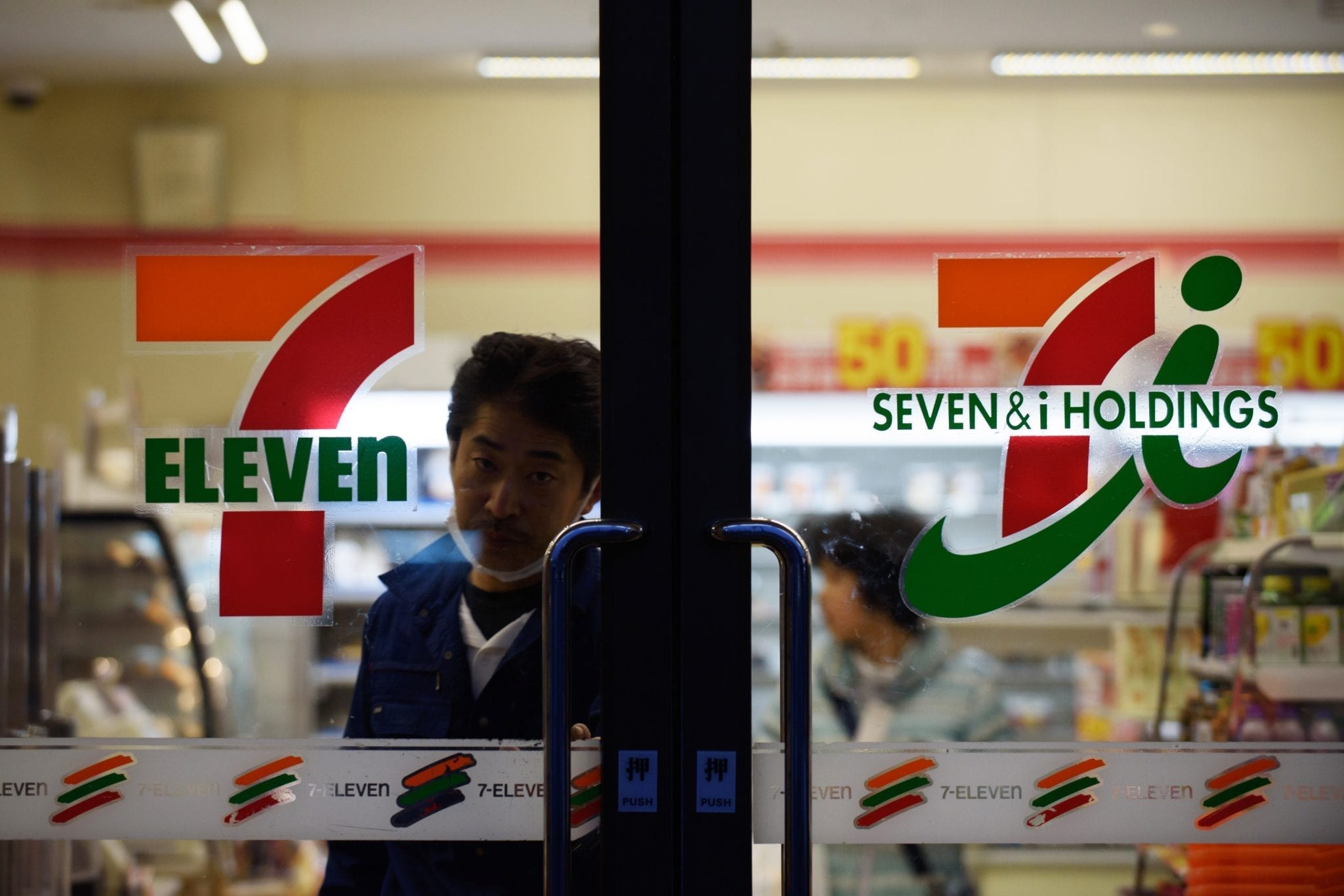
    South Korea’s antitrust regulator said Tuesday it has decided to approve a deal by Korea Seven Co., the operator of 7-Eleven convenience stores, to buy its smaller rival Ministop Korea Co.

    In January, the country’s retail giant Lotte inked a deal to acquire a 100 percent stake in Ministop Korea for 313.3 billion won (US$257 million). Korea Seven, an affiliate of Lotte, eventually bought Ministop Korea.

    The Fair Trade Commission (FTC) said it has given the green light to the deal, saying that the takeover is not expected to hamper market competition.

    South Korea’s convenience store market has been dominated by BGF Retail’s CU and GS Group’s GS25, with 7-Eleven, Shinsegae Group’s Emart 24 and Ministop being minor players.

    The FTC said its approval is expected to spur three-way competition in the market as the takeover will help Korea Seven cement its market status as the No. 3 player.

    Korea Seven operates around 11,170 convenience stores across the country.

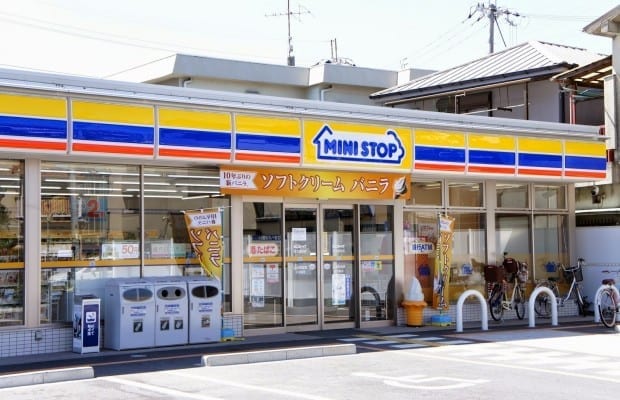
    Ministop is an affiliate of the Japanese retail group Aeon Group and opened its Korean operation in 1990 via a business tie-up with South Korea’s leading food maker Daesang. Ministop Korea runs around 2,600 convenience stores.

  • Lotte Group acquires Ministop South Korea

    Lotte Group acquires Ministop South Korea

    South Korea’s Lotte Group has agreed to acquire a 100% stake in Ministop Korea for 313.4 billion won ($263 million), the country’s fifth-largest convenience store chain, from Japan’s Aeon Co., Lotte said on Jan. 21.

    With the purchase in cash, Lotte’s convenience store operator 7-Eleven will be able to take on the two sector leaders —  CJ Group’s CU and GS Group’s GS 25, while further widening the gap with fourth-ranked Shinsegae’s E-Mart 24.

    “Competition is heating up in the quick commerce market for short-distance services, based on convenience stores,” said an official of the group’s holding company Lotte Corp.

    “We are now adding Ministop Korea’s 2,600 stores and 12 logistics centers to the list of our stores, which will expand our points of customer contact in the near term.”

    Lotte’s 7-Eleven runs 10,500 outlets nationwide. By comparison, CU boasts 14,900 stores, trailed by second-ranked GS 25 with 14,600 stores.

  • Daesang to sell Ministop stake to partner Aeon

    Daesang to sell Ministop stake to partner Aeon

    South Korean food manufacturer Daesang is reportedly exiting the convenience store business, selling its stake in the Ministop chain.

    A cut-throat industry in the territory, competition between players has become so intense that legislation is now in effect to forbid the opening of new convenience stores within 50 metres of existing outlets.

    Daesang’s withdrawal will likely result in the sale of its 20 per cent shareholding in the Ministop Korea brand to its Japanese partner Aeon, which attempted unsuccessfully to sell its own shares in the business last year.

    Insiders familiar with the transaction have revealed that talks between the partners are well-progressed and that the shares are likely to be transferred for KRW80–90 billion (US$70.8–$79.6 million).

    Daesang established Ministop with Aeon in 1997, but courted Aeon to purchase a majority stakeholding plus management rights to the business in 2003. The current transaction would remove Daesang from the business entirely, leaving Aeon with a 96.06 per cent stake of the country’s weakest contestant in the nationwide convenience-store playing field.

    Ministop achieved KRW2.6 billion ($2.3 million) in profits in 2017, compared with KRW13.3 billion ($11.76 million) in 2015.

  • Lotte’s Ministop deal falls through

    Lotte’s Ministop deal falls through

    The sale of convenience store chain Ministop fell apart as potential bidder Lotte and the Japan-based convenience franchise failed to agree on a price. The AEON Group of Japan, the largest shareholder of Ministop Korea, filed a notice on Monday that it has suspended the sale process to sell its full stake in the unit. The AEON Group owns a 76.06 percent share while Daesang Group, a Korean food conglomerate, has a 20 percent stake. Japan’s Mitsubishi holds 3.94 percent.

    Ministop Korea also notified its workers of the suspension, vowing to keep searching for a potential suitor.

    Executives from AEON and Ministop visited Seoul over the weekend to meet Shin Dong-bin, chairman of Lotte Group, which also owns 7-Eleven in Korea.

    The retail giant has been considered the likeliest buyer since it reportedly offered the highest price of around 400 billion won ($357.3 million).

    Other competitors include Shinsegae, which owns convenience store franchise Emart24, and Glenwood Private Equity, a local private equity firm.

    Ministop opened a bidding process back in November, but delayed selecting a preferred bidder.

    The introduction of a government regulation banning the opening of convenience stores within 80 meters (262 feet) of another store led to Ministop requesting a higher price, according to local media outlets.

    Ministop’s sale garnered attention from the beginning because it could impact the highly-competitive convenience store chain market in Korea.

    Ministop operates 2,500 stores across the country. If Lotte had succeeded in acquiring Ministop, it could have increased its number of stores from 9,500 to 12,000.

    CU runs the most stores, at 13,109, while the second player is GS25 with 13,018.

    Emart24 ranks fourth with 3,564 stores.

  • Ministop South Korea is for sale, rivals compete

    Ministop South Korea is for sale, rivals compete

    South Korean retail operators Lotte and Shinsegae are competing to buy the 21-year-old local subsidiary of Japanese convenience-store operator Ministop.

    Shinsegae and Lotte respectively own rival chains Emart24 and 7-Eleven and are both reportedly seeking to take full ownership of Ministop South Korea. Both companies see the deal as a means to grow their respective businesses in a market where convenience-store penetration has reached saturation point, limiting opportunities for organic network growth.

    7-Eleven currently operates 9535 stores across South Korea and Emart24 3413. The Ministop network numbers just 2535.

    Japan’s Aeon, which owns the Ministop brand, owns a majority 76 per cent of the South Korean business.

    Daesang group owns 20 per cent and Mitsubishi the balance. Aeon has appointed Nomura Securities to find a buyer for the business as it sees little future for the convenience store brand in South Korea, a highly competitive market. Instead, Aeon is looking to Southeast Asian markets for growth, including Vietnam, Thailand and Cambodia.

    Last year, Ministop South Korea sales totalled 1.18 trillion won (US$1 billion), ranking it fourth in revenue terms behind GS25, CU and 7-Eleven.

  • Profit dive leads Ministop to uncertainty

    Profit dive leads Ministop to uncertainty

    The future ownership of South Korea’s fourth-largest convenience store chain, MiniStop Korea, is uncertain with options under review.

    Parent Aeon Group of Japan is apparently tiring of falling profits from the chain and has appointed Nomura Securities to explore sale options, including a clean sale of its stake or attracting a strategic investor.

    With more than 2500 stores spread across South Korea, MiniStop’s sales reached 1.18 trillion won (US$1 billion) last year.

    In a statement issued this week, Aeon said: “Even though we are considering business tie-ups with other companies to improve corporate value, there are no concrete plans on selling off MiniStop Korea yet.”

    Aeon currently owns 76.06 per cent of MiniStop Korea with local Daesang Group holding 20 per cent and Japan’s Mitsubishi the remaining 3.94 per cent.

    Intense local competition is behind the decline in MiniStop Korea’s profitability, according to local industry sources. Profit plunged 23 per cent last year to 2.6 billion won (US$2.3 million). In 2015 the company achieved an operating profit of 13.2 billion won.

  • Ministop Korea denies rumors of closing shop

    He added that reports which said Ministop has selected Nomura Securities as deal manager to sell its Korean unit are untrue.

    Established in 1997, Ministop Korea is the fourth-largest player in the country. But recently the company has faced some difficulties doing business here. The number of Emart24 outlets has increased dramatically from 501 in 2014 to 3,236 as of June this year, outnumbering Ministop’s 2,346 outlets. Moreover, the Fair Trade Commission slapped it with a 234 million won (US$207,796) fine for signing illegal and unfair contracts with its suppliers.

    Emart24, the convenience store chain of retail giant Shinsegae, which is considered to be one of the likely candidates to acquire Ministop, also denied the reports, saying it is unrealistic.

    “Our operating system is totally different from Ministop. If we acquire the chain, we will have to adjust all the differences, which takes too much effort,” a Emart24 spokesperson said.

  • South Korean convenience stores to sell more own brand

    South Korean convenience stores to sell more own brand

    More South Korean c-stores are set to launch in-house products as local retailers move to attract more consumers with price competitiveness.

    E-Mart24, the convenience-store arm of South Korean retail giant Shinsegae, said it is planning to unveil its own private-label product within this year. Ministop Korea, operator of Ministop, is set to launch its own branded products in September.

    The moves are part of the companies’ broader efforts to find a breakthrough in the saturated South Korean c-store landscape. The size of South Korean convenience stores private-label product market is estimated at around 3.5 trillion won (US$3.15 billion).

    CU, South Korea’s largest convenience-store chain, operated by BGF Retail, released its own brand, Heyroo, in 2015, and GS25, another major convenience-store chain, joined the move with You Us in 2016.

    BGF Retail said sales of its private-label products rose 35.3 per cent year-on-year in 2016. Last year’s revenue was up 19.1 per cent from 2016.

    GS Retail, operator of GS25, said sales of its private-brand items accounted for 36.6 per cent of its total revenue in the first half of this year, excluding revenue generated from cigarettes and services. The company has around 2000 products under private label.

    Another major convenience store chain, 7-Eleven, said sales of its in-house products accounted for 35.9 per cent of this year’s total revenue as of Sunday. It currently has some 1500 products under its private brand.

    “The companies will be able to survive in this saturated market only if they manage to secure consumers who are highly loyal to their private label products,” an industry source said.

    The market size for convenience stores in South Korea surpassed 20 trillion won in 2016, up 18.6 per cent from the previous year, according to industry data.

  • Aeon Indonesia dumps Ministop c-store partner

    Aeon Indonesia dumps Ministop c-store partner

    Aeon Indonesia has ended its partnership with its local partner in the Ministop c-store chain.

    The move will result in Aeon exiting the market temporarily while it seeks a new business partner.

    According to local media reports, Aeon teamed with Bahagia Niaga Lestari (BNL) in 2012. But after four years, the joint venture has managed to open just six stores.

    Aeon has meanwhile been expanding its Ministop network across Vietnam, the Philippines and South Korea.

    Aeon says it is committed to Indonesia and hopes to form a new joint venture.

  • Aeon Vietnam opening second HCMC mall

    Aeon Vietnam opening second HCMC mall

    Aeon Vietnam will inaugurate its second shopping centre in Ho Chi Minh City, Aeon Mall Binh Tan, on July 1.

    Larger than Aeon Mall Tan Phu Celadon, which opened in early 2014, it has an total investment exceeding US$120 million and covers 4.6 ha. at the Hi-Tech Healthcare Park of Hoa Lam Shangri-La. It will have four floors and a basement, with a parking lot designed to accommodate 1500 cars and 4000 motorbikes at any one time.

    About 80 per cent of goods on sale at the mall, Aeon’s fourth in the country, will be made in Vietnam with the rest imported from Japan.

    A feature will be a photo-taking area for children and families, plus painting classes for children.

    Aeon targets 20 malls across Vietnam by 2020. The Japanese retailer owns 49 per cent of the Citimart store chain and 30 per cent of another local chain, Fivimart, and also runs Ministop convenience stores.

  • Ministop closing up shop in Indonesia for now

    Ministop closing up shop in Indonesia for now

    Japanese convenience store operator Ministop is pulling out of the Indonesian market, at least for the time being.

    The company announced Friday that it is terminating a franchise agreement with local retailer Bahagia Niaga Lestari, which wants to concentrate resources in other areas.

    The retailer is Ministop’s sole franchisee in Indonesia. So when the six franchise stores it operates there are closed, the country will have no Ministops.

    Ministop said it will search for a new partner and plan a return to Indonesia, since the convenience store market there has growth potential.

    Ministop had inked the franchise agreement with Bahagia Niaga Lestari in 2012 because Indonesia bars foreign companies from investing in retail stores with less than 400 sq. meters of floor space. The first Ministop in that country opened in June 2013.

  • Jetro helping convenience stores

    Jetro helping convenience stores

    Four major convenience store chains in Japan are teaming up with a government-related body to work on expanding their businesses overseas.

    FamilyMart, Lawson, Ministop and 7-Eleven Japan have formed a council with the Japan External Trade Organization (Jetro) to accelerate their establishment of branches overseas after the Trans-Pacific Partnership (TPP) goes into effect, reports the Sankei Shimbun.

    With the TPP easing restrictions on foreign distributors entering into the markets of partner countries such as Vietnam and Malaysia, the convenience stores hope to devise a system that will enable them to sell Japanese processed food products and commodities in overseas markets.

    Jetro’s task will be to work with foreign governments to resolve problems and collect relevant retail information. It will also help the convenience store chains find partner companies in Asian countries.

  • Indonesia retail Japanese convenience stores think small to survive

    Indonesia retail Japanese convenience stores think small to survive

    Japanese convenience store operators are shrinking the size of their outlets in Indonesia amid growing competition from local rivals. But the strategy of pursuing profitability over scale runs the risk of downsizing the companies out of the market.

    In Jakarta, the two leading local operators — Indomaret and Alfamart — have over 10,000 outlets each. Japanese rivals are finding it difficult to stay competitive with their traditional focus on larger shops, which often include cafes. To fight back, Lawson and Seven-Eleven Japan plan to increase the number of smaller stores in office and commercial buildings.

    During lunchtime in an office building in Jakarta, people form long lines to buy bento box lunches, bread products and other items at a Lawson outlet. A karaage, or deep-fried chicken, bento sells for 45,000 rupiah ($3.20). “It’s my turn to pick up lunch today,” said a female office worker as she carried a shopping bag full of food from the store.

    The outlet, which opened in August, is Lawson’s first small store in an office building. It is less than half the size of a typical Lawson shop in Indonesia and has only one row of shelves. Midi Utama Indonesia, the local retailer that runs the stores, has been considering such new locations as shopping malls and train stations, one official said.

    Lawson entered Indonesia in 2011 after granting Midi a license to operate its stores. The Japanese company was ambitious, with plans to open 10,000 outlets in the first 10 years. But in mid-2013, after having opened just 80 shops in the country, sluggish profits forced it to withdraw from Bali. Lawson cut the number from 60 to 50 in 2014. Today, there are only some 40 Lawsons in Indonesia.

    In the meantime, Indomaret and Alfamart have been steadily increasing their store networks. They have adopted some of the techniques brought in by Japanese rivals, such as in-store cooking and in-store cafes. Duskin, a Japanese housekeeping equipment company, chose Indomaret over Japanese players as its local partner to run Mister Donut when it entered the market this year.

    Following the money  

    With their limited number of stores, Japanese operators are finding it hard to continue offering the level of product and service quality associated with Japan while still turning a profit. As a result, they are betting on small outlets in commercial buildings to drive earnings. In explaining the shift, a FamilyMart official cited “the high income level of customers and the easy-to-predict demand structure.”

    FamilyMart plans to start opening stores in office buildings and upscale condominiums in 2016. Its existing 25 outlets are in stand-alone buildings or buildings shared with Japan’s Yoshinoya chain of gyudon beef bowl restaurants.

    Seven-Eleven Japan, the largest Japanese convenience store operator in Indonesia, is considering opening more small stores in train stations, commercial buildings and other busy locations, according to Modern Internasional, the operator of 7-Eleven stores there.

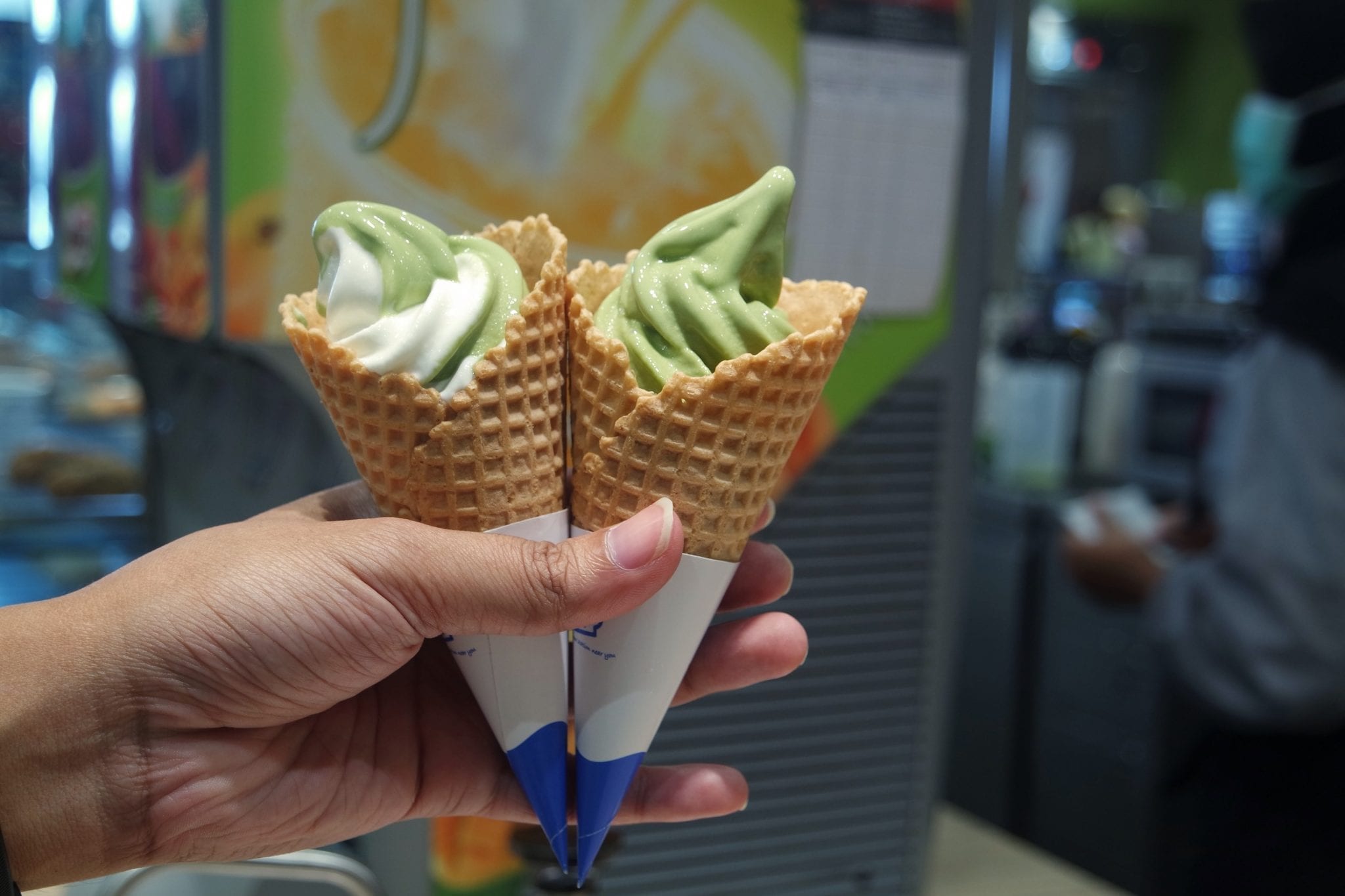
    Ministop, which has six Indonesian outlets, the fewest among Japanese companies, plans to cut costs by operating smaller stores and revamping its product lineup. For example, the matcha green tea-flavored soft ice cream it is promoting is selling three times as well as the chocolate flavor, the company said.

    According to Alfamart, Indonesia’s convenience store market grew about 13% by sales in the first nine months of this year. Though that is down from 19% in the same period last year, the growth is still significant compared with midsize retailers such as supermarkets, which saw 3.6% growth.

    Japanese players are not alone in their “go small” approach. Local operators are also increasing the number of smaller outlets in train stations and other facilities amid a shortage of space to build stand-alone stores, and also because of the difficulty in obtaining approval from authorities in the metropolitan area.

    With local rivals not only adding more stores to their already-large networks but also adopting strategies similar to those used by their foreign counterparts, the pressure on Japanese operators to find new ways to remain competitive will likely increase.

  • Five trends in Vietnam retailing

    Five trends in Vietnam retailing

    Vietnam’s retail market is set to grow by 8.4 per cent annually until 2020, making it one of the fastest-growing markets in south-east Asia.

    Against a backdrop of increased disposable income, rapid urbanisation and an appetite for change among younger shoppers, we take a look at five trends defining the marketplace for pan-Asian retailers right now.

    Confident investment

    January 2015 marked the first time non-domestic retailers could take full ownership of commercial property in Vietnam, following commitments made to the World Trade Organisation. Now, new trade agreements with Japan, Korea and the countries that make up the Association of South-East Asian Nations (ASEAN) look set to support further growth for international retailers in Vietnam:

    Tailoring the best of international retail

    Domestic retailers may have the advantage when it comes to local shopper knowledge but
    international retailers are drawing on their own strengths to help them compete.

    Dairy Farm, FamilyMart and Aeon have brought their expertise in loyalty schemes, private label and innovative marketing to their stores in the region.

    Other points of difference include appealing to busy office workers with a fast food to go counter (seen at Family Mart and B Mart) and bringing an international flavour to the in-store hot food offer (Aeon Mall).

    Alternative store concepts

    Many retailers have established themselves in Vietnam with a hypermarket presence in one of the major retail hotspots like Hanoi or Ho Chi Minh City.

    Lotte and hypermarket chain Aeon are appealing to families and experimental shoppers with department store formats that act as wider shopping and entertainment destinations. Aeon is also making its mark with a loyalty scheme that includes tailored offers for mums – such as birthday treats or discounts on baby care.

    In the convenience channel, Guardian is the first combined-format health, beauty and drugstore in Vietnam. The store is making waves with its clean layout, colourful signage, bold promotional activity and sales assistants offering a superior level of service.

    Product innovation for a changing market

    A new concept in Vietnam, private label is appealing to young, experimental shoppers thanks to its lower prices and alternative products.

    Aeon has introduced its TopValu private label range, which taps into the popularity of Japanese culture by offering authentic Japanese ingredients and home cooking kits. The retailer is now working with local suppliers to explore domestic production.

    An increasingly affluent middle class is also supporting demand for exclusive and imported novelties. Dairy Farm is well-known for attracting these shoppers with its packaged food, household, health and beauty ranges.

    Expanding to national coverage

    A priority for most retailers is to create a nationwide presence. Lotte has built a network of ten hypermarkets spanning six big cities across Vietnam, making them the first pan-Asian retailer to achieve such a spread of coverage. Meanwhile, Ministop (Aeon), Guardian (Dairy Farm) and Shop&Go are pushing their convenience format in retail hotspots.

    Major retailers are seeing good growth from their franchise models, making partnerships, mergers and acquisitions hot topics.

    Aeon has partnered with local retailers Citimart in the south of the country and Fivimart in the north. The domestic chains are helping Aeon speed up its expansion plans by using their existing store networks. In return, their own customers are benefitting from the retail giant’s private label ranges and investment in infrastructure.

  • Ministop Korea fined for squeezing suppliers

    Ministop Korea fined for squeezing suppliers

    South Korea’s antitrust watchdog has slapped a 114 million gained (US$103,100) wonderful on comfort retailer chain Ministop Korea for unfair commerce practices and ordered the corporate to take corrective motion.

    The penalty towards the native affiliate of Japan’s Aeon group, one of many largest retailers in Asia, comes after Ministop Korea abused its superior place to arbitrarily change contracts with its worth added community (VAN) corporations, the Truthful Commerce Fee (FTC) stated.

    A VAN firm facilitates digital knowledge interchange (EDI), akin to bank card approval and settlement.

    “Ministop unilaterally halted dealings with two native VAN corporations in February 2011 after they did not match a proposal made by one other agency that provided appreciable financial incentives to vary its community associate,” the FTC stated.

    Through the course of, the comfort retailer chain acquired financial advantages from the prevailing VANs that originally needed to take care of their contracts however later baulked when the demand turned extreme, it stated.

    The watchdog stated the 2 VANs had accepted the change to their contracts in September 2010, which required them to pay three.5 billion gained over seven years, however when Ministop Korea requested for the signing of a revised association simply 5 months later, they rejected the decision and had their contracts terminated.

    The FTC stated it has additionally requested state prosecutors to launch a legal investigation into the case.

    The watchdog stated the newest motion towards Ministop Korea will ship a warning to giant retail chains which were cited prior to now for exploiting VAN corporations.

    “The transfer ought to assist right unfair commerce practices within the EDI sector,” it stated.