
Tag: ministry of commerce

  • China Warns UK of Firm Retaliation over Electric Vehicle Tariffs

    China Warns UK of Firm Retaliation over Electric Vehicle Tariffs

    China’s Ministry of Commerce threatened countermeasures against Britain on Monday if London introduces import duties on Chinese electric vehicles. The warning follows British trade minister Anas Sarwar’s remarks confirming ongoing discussions with European partners over potential alignment with European Union tariffs of up to 45.3 per cent.

    Beijing urged the UK to follow World Trade Organization rules and maintain equal trade terms rather than copying Brussels. Automotive cooperation between both countries relies on complementary strengths, the ministry said in an official statement.

    “China will closely monitor the UK’s actions. If the UK insists on imposing restrictions on Chinese EVs, China will take firm countermeasures to safeguard the legitimate rights and interests of its industry,” the ministry said.

    London weighs European market access

    British officials are balancing domestic trade ties with European supply integration. London wants British manufacturers included in the EU’s Industrial Accelerator Act, a framework giving local production preferential access to public procurement programs.

    Exclusion from that initiative would penalize vehicle assembly operations across Britain. To secure access, EU negotiators asked London to align vehicle tariffs directly against Chinese carmakers, turning trade protection into an entry fee for European industrial policy.

    Retaliation risks for British exporters

    British Business Secretary Jonathan Reynolds acknowledged the friction in September, pointing out that the domestic automotive manufacturing base relies heavily on export markets. Any Chinese tariff retaliation would hit British luxury vehicle shipments hard, slicing into margins for premium brands that count China as their primary profit engine outside Europe.

    For Chinese original equipment manufacturers, losing tariff-free access to Britain would alter dealer pricing models and compress gross margins on mass-market models like the MG4 hatchback. Importers would have to absorb the cost difference or pass price increases to British car buyers, dampening EV adoption rates across consumer segments.

    The fallout from the 2024 duties

    Brussels imposed definitive countervailing duties on Chinese battery electric vehicles for five years in October 2024. Those levies added between 7.8 per cent and 35.3 per cent on top of standard 10 per cent baseline import duties, pushing total import taxes to 45.3 per cent for affected producers.

    Britain chose not to replicate those duties at the time, keeping its market open and becoming an essential European distribution hub for Chinese automakers. The European Commission subsequently urged London in September to eliminate that regulatory gap.

    Expansion plans continue regardless

    Chinese brands are pressing ahead with British retail distribution networks despite the regulatory dispute. Chery plans to introduce its iCar brand into the UK market under the name iCaur with the launch of the V27 in early 2027.

    That rollout will represent Chery’s fifth distinct brand trading in Britain. Whether those vehicles face standard import duties or double-digit countervailing penalties depends on the final terms London negotiates with Brussels over the coming months.

  • Thai Headline Inflation Rises to 2.82% in September Below Market Forecasts

    Thai Headline Inflation Rises to 2.82% in September Below Market Forecasts

    Thailand’s headline consumer price index rose 2.82 per cent in September from a year earlier, driven by higher fuel and food costs across the country.

    The annual increase stepped up from 2.53 per cent in August but fell short of the 3.06 per cent rise projected in a Reuters market poll.

    Data released by the Ministry of Commerce on Tuesday showed the headline print remained within the Bank of Thailand’s official target range of 1.00 per cent to 3.00 per cent. Core consumer prices, which strip out volatile fresh food and energy expenses, climbed 1.50 per cent year on year against a forecast of 1.54 per cent.

    Ministry adjusts full-year price band

    Nantapong Chiralerspong, head of the ministry’s Trade Policy and Strategy Office, told a briefing that headline inflation will accelerate further in the fourth quarter. Officials expect the pace of price gains in October to exceed the September reading as seasonal patterns and distribution costs take effect.

    Recent regional flooding will have only a minor effect on consumer pricing across agricultural supply chains, Nantapong said. Taking flood damage into account, the ministry narrowed its full-year 2026 inflation forecast to a range between 1.80 per cent and 2.20 per cent, compared with an earlier projection of 1.50 per cent to 2.50 per cent.

    Margin pressure across consumer retail

    For supermarket chains, convenience operators and food service groups in Thailand, the pickup in food and energy expenses tests gross margin buffers. Retailers face higher transport overheads while consumer demand remains sensitive to basket price increases at fresh markets and grocery aisles.

    Store operators that rely on imported staples or high-turnover packaged foods must absorb cost variations or risk losing volume to discount channels. The moderate core inflation rate indicates that underlying demand across discretionary categories is not overheating, limiting the pricing power of consumer brands.

    Central bank interest rate posture

    Subdued underlying price pressure gives monetary authorities room to support broader commercial activity without tightening borrowing costs abruptly. Higher retail lending rates would pinch consumer credit balances and stall store expansion plans for regional mall developers.

    The policy stance remains focused on stability as commercial lenders track household debt levels. Stable borrowing costs help mid-sized retail operators finance working capital and inventory requirements ahead of the peak year-end holiday shopping cycle.

    Monetary policy timeline

    Between January and September, headline consumer price inflation averaged 1.54 per cent across the Thai economy. That average sits in the lower half of the central bank’s target corridor, reflecting moderate price pressures over the first nine months of the year.

    Don Nakornthab, assistant governor at the Bank of Thailand, said last month that monetary policy is “very, very accommodative”. The central bank left its benchmark interest rate unchanged at 1.00 per cent during its monetary policy review in August.

    Rate setters at the central bank hold their next scheduled monetary policy review on October 28.

  • Cambodia Sets Retail Fuel Caps at 5,150 Riel for Gasoline and 5,650 Riel for Diesel

    Cambodia Sets Retail Fuel Caps at 5,150 Riel for Gasoline and 5,650 Riel for Diesel

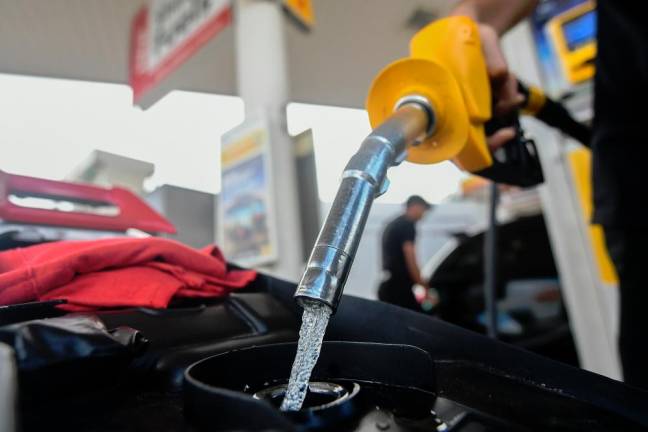
    Cambodia’s Ministry of Commerce set new retail fuel caps on October 1. The ceiling fixes regular gasoline at 5,150 riel per litre and diesel at 5,650 riel.

    Stations nationwide implemented the schedule at 1:00 PM. The rates run through October 11.

    Breakdown of the price schedule

    The adjustment covers Gasoline 92 alongside Gasoil 10ppm. State authorities calculate the figures using a formula tied to regional energy trading averages, updating domestic pump rates every ten days to reflect wholesale oil shifts.

    Subsidies remain in place to cushion consumers and commercial operators from international swings. The Ministry of Commerce said state support helps stabilise transport overheads while allowing retail networks to align station prices with global trends.

    Cost pressure across logistics and distribution

    Diesel at 5,650 riel per litre sets the baseline operating expense for freight hauliers, agricultural distribution networks, and inter-provincial bus operators. Heavy goods vehicles rely exclusively on gasoil. Any upward revision in the ten-day cycle feeds directly into wholesale delivery charges for packaged goods, fresh produce, and construction materials moving along national highways.

    Urban delivery platforms and motorcycle couriers bear the cost of 5,150 riel regular gasoline. In Phnom Penh and secondary urban hubs, last-mile couriers operating two-wheelers absorb these fuel expenses directly. That squeezes net margins across fast-food delivery and e-commerce fulfillment services.

    Supply chain impact for retail networks

    Fuel retailers operate within tight fixed margins under the mandatory price ceilings. Forecourt chains and independent operators must recalibrate point-of-sale software and physical pump displays across the country at every adjustment window. This prevents price gouging while stations manage terminal inventory bought at earlier wholesale rates.

    Importers and bulk storage operators face continuous cash-flow planning under the ten-day review mechanism. Rapid swings between cycles leave bulk distributors exposed to inventory holding risks whenever wholesale prices soften faster than retail ceilings update.

    Earlier pricing adjustments

    Officials carried out previous scheduled price revisions on September 11, August 11, and August 4. Those followed a drop in pump prices recorded in April after geopolitical tensions eased across international oil markets.

    Energy planners monitor international crude benchmarks ahead of the next window on October 11. The Ministry of Commerce will issue its subsequent ten-day fuel notification on that date.

  • Thai Exports Jump 21.6% in July on Surging Global Tech Demand

    Thai Exports Jump 21.6% in July on Surging Global Tech Demand

    Thai exports jumped 21.6 percent year on year in July, powered by surging international demand for artificial intelligence and technology hardware. Outbound shipments beat analyst expectations of a 17.75 percent increase, extending momentum from a 20.8 percent rise recorded in June.

    Data from the Ministry of Commerce showed imports surged even faster, climbing 36.7 percent during the month. That gap left Thailand with a monthly trade deficit of $3.61 billion, pushing the cumulative shortfall for the first seven months of 2026 to a record $34.35 billion.

    Tech demand fuels outbound shipments

    Shipments to the United States, Thailand’s largest export destination, increased 45.3 percent in July compared with the same month last year. Deliveries to China rose 15.2 percent. Across the first seven months of 2026, total exports gained 18.2 percent, following an overall expansion of 12.9 percent across 2025.

    Stronger tech orders prompted the Ministry of Commerce to raise its full-year export growth projection to more than 11 percent, up from an earlier target of 8 percent.

    Transshipment scrutiny and factory output

    The persistent gap between inbound and outbound volumes adds friction to Bangkok’s trade relationship with Washington. United States officials continue to monitor Thailand over transshipment risks, examining whether goods originating in China pass through Thai logistics channels to circumvent trade barriers. For regional supply chain operators, the expanding import volume shows how heavily Thai electronics and export assembly lines rely on foreign components.

    Domestic industrial activity showed modest recovery alongside trade flows. Thailand’s manufacturing production index rose 0.46 percent year on year in July, beating market expectations of a 1.0 percent drop and reversing a revised 2.4 percent decline in June.

    Factory output is now projected by the Ministry of Industry to expand 0.25 percent across 2026, trimmed from an earlier forecast range of 1.0 to 2.0 percent.

  • China retail sales to increase 10.7 per cent

    China retail sales to increase 10.7 per cent

    China’s retail sales, a key gauge of domestic consumption, is likely to post slower growth this year compared with 2014, commerce ministry said.

    Retail sales may expand around 10.7 per cent in 2015, Shen Danyang, spokesman at the Ministry of Commerce, told a news conference in Beijing today, without giving a reason. Retail sales rose 12 per cent last year.

    In the first 11 months of 2015, retail sales grew 10.6 per cent from a year earlier. In November, retail sales increased by an annual 11.2 per cent — the strongest monthly expansion this year.

    China’s external outlook remains gloomy. Chinese firms said global demand this year was worse than that during 2008-09 financial crisis, as per a recent survey by commerce ministry of more than 6,000 firms in 70 key industries.

    Subdued external demand, rising costs, slowing investment growth and the yuan’s appreciation have all weighed on China’s trade performance this year, Shen said.

    “Feedback from firms showed foreign trade was extremely difficult this year.”

    China’s net exports are likely to contribute around 12.3 per cent to the increase in the country’s GDP this year, he said, citing data from a research unit under his ministry.

    China’s trade remained weak in November with exports falling a worse-than-expected 6.8 per cent from a year earlier and imports tumbling 8.7 per cent.