Tag: Ministry of Trade

  • Nearly 59% of Indonesian Consumers Blend Online and Store Shopping

    Nearly 59% of Indonesian Consumers Blend Online and Store Shopping

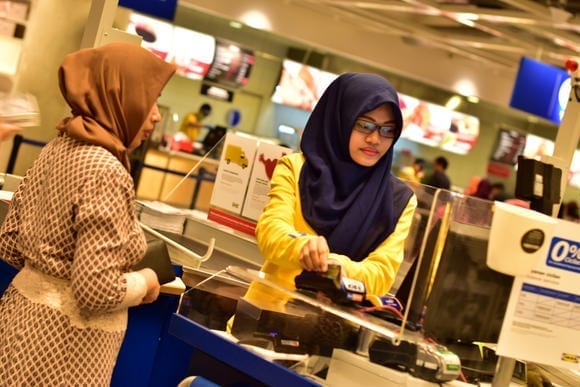
    Nearly six in 10 Indonesian consumers now mix digital and physical sales channels when shopping, placing growing pressure on retailers to connect physical stores with online platforms.

    A 2024 survey by MarkPlus, Inc. Found that 58.74% of consumers combine online and physical shopping, with 31.50% researching products online before buying in stores and 27.24% examining products in stores before purchasing online.

    “This phenomenon does not show that consumers are conflicted, but rather reflects a shopping pattern that is increasingly flexible and adaptive,” said Iqbal Shoffan Shofwan, director general of domestic trade at Indonesia’s Ministry of Trade.

    Regulatory Overhaul Lowers Digital Entry Barriers

    To keep pace with changing shopping routines, the Ministry of Trade updated national business classification rules to permit trading enterprises to run brick-and-mortar and digital outlets without securing separate e-commerce licences. Clarifications introduced earlier this year established direct operating guidelines for social commerce, open marketplaces, and direct-to-consumer websites, while rescinding old statutory clauses that confined conventional merchants strictly to physical shopfronts.

    For national supermarket operators, department stores, and mall operators across Java and Bali, this legal shift removes administrative friction. Retailers can now convert physical stores into collection points and stockrooms for digital orders without facing regulatory penalties or holding multiple operational permits.

    Independent operators and small vendors outside tier-one cities face a tougher operational reality. Higher shipping rates, erratic internet coverage, and mismatched stock registers across fragmented supply chains make channel integration costly for regional distributors.

    Software Integration Over Built-From-Scratch Systems

    Merchant technology adoption is splitting along capital lines. Big retail groups deploy transaction data to build bespoke automation systems, while neighbourhood vendors and independent outlets struggle with basic electronic inventory logs.

    Rather than pushing small businesses to build private artificial intelligence infrastructure, trade officials recommend using built-in algorithmic forecasting tools already packaged inside commercial point-of-sale systems and established e-commerce seller dashboards. These tools allow merchants to predict stock depletion, trim dead inventory, and prevent out-of-stock items without software engineering overhead.

    Supply chain integration between large conglomerates and informal traders is expanding the domestic wholesale reach. A government partnership in Jakarta and Manado linked 314 traditional kiosks into broader procurement systems, while an initiative with modern supermarket chains placed 96 regional goods from 20 provinces onto national retail shelves.

    SME Revenue Gains Through National Chains

    Data recorded in October 2025 by the Indonesian Retailers Association shows more than 694,000 small merchants supply national retail networks, generating roughly $1.5 billion (IDR27 trillion) in combined annual turnover. Ministry trade programmes are also preparing local suppliers for cross-border export standards, connecting vetted suppliers directly with international commercial buyers.

    For retail investors and regional brands, Indonesia’s hybrid retail path confirms that physical floor space remains essential, provided stores function as experiential showrooms and order collection hubs rather than stand-alone points of sale. The immediate focus for merchant groups shifts to the next phase of the Ministry of Trade’s logistics integration plan, which tracks whether lower transport costs can extend hybrid retail networks into outer island markets before the close of 2026.

  • Korea’s Chief Trade Negotiator Dismissed Amid Escalating US Tariff Pressure

    Korea’s Chief Trade Negotiator Dismissed Amid Escalating US Tariff Pressure

    South Korea’s chief trade negotiator, Yeo Han-koo, has been dismissed from his role. The Ministry of Personnel Management notified Yeo of his dismissal on Friday, according to officials. This decision occurs amid heightened pressure from the United States regarding tariffs and other bilateral trade issues.

    A Ministry of Trade, Industry and Energy official confirmed the dismissal but did not provide a specific reason. Despite speculation linking his departure to tariff negotiations between Seoul and Washington, a government official speaking to Yonhap News Agency stated that the dismissal was unrelated to these talks. Yeo himself addressed rumors of personal misconduct, calling them unfounded and threatening legal action against false reports.

    Mounting US Pressure

    The dismissal happens at a critical juncture for bilateral trade relations. The United States is pressing Seoul to accelerate its investment commitments under a prior tariff agreement. Also, there is an ongoing dispute concerning fines imposed on the US-listed e-commerce giant Coupang for a personal data breach.

    Just days before Yeo’s dismissal, on Thursday, US President Donald Trump signed a proclamation imposing new tariffs. These included a 15 percent levy on drones and their components imported from Korea, among other items. Yeo had previously served as trade minister under the Moon Jae-in administration and was reappointed in May 2025 by the Lee Jae Myung administration, playing a key role in trade discussions with Washington.

  • Tourists help Singapore Q3 GDP beat estimates

    Tourists help Singapore Q3 GDP beat estimates

    Singapore’s economy grew at a much faster clip in the third quarter than initially estimated, as an influx of visitors boosted the hospitality and retail sectors. The economy grew by 1.9 percent on-quarter between in the September quarter, compared with a 2.5 percent contraction in the preceding three months, the Department of Statistics said Wednesday.

    The advance estimate released last month showed the economy had eked out a 0.1 percent gain. The latest reading proves that the export-oriented island-state avoided a technical recession, which is typically defined as two successive quarters in which the economy contracted from the previous three months.

    The Ministry of Trade and Industry expects growth to be 2 percent for all of 2015 and it forecasts an economic expansion of between 1 and 3 percent in 2016. “While sectors such as finance and insurance and wholesale trade are expected to support growth, the manufacturing sector is likely to remain weak,” the Ministry of Trade and Industry said. “In China, there is a risk that ongoing reforms to rebalance the economy may falter, leading to a significant drop in demand.” The wholesale and retail trade sector grew by 5.3 percent on quarter between July and September , up from 1.1 percent in the second quarter.

    A pick-up in tourist arrivals underpinned faster growth in the transportation and storage and accommodation and food sectors, where output expanded by 5.9 percent and 12 percent respectively. On a year-on-year basis, Singapore’s economy also expanded by 1.9 percent, a shade lower than the 2 percent increase in the second quarter but higher than the 1.4 percent increase initially forecast.

    Still, the effects of a slowdown in China cast a pall on the manufacturing sector, where output slumped for the second quarter running, although the pace of the contraction slowed. Construction activity also cooled, falling 1.6 percent from the previous quarter after a feverish 13 percent increase in the second quarter.