Tag: mobile app

  • Chagee Adds Live Calorie Calculator to Mobile App in Thailand

    Chagee Adds Live Calorie Calculator to Mobile App in Thailand

    CHAGEE launched an in-app calorie calculator across Thailand on 5 October 2026. The tool gives beverage buyers real-time nutritional breakdowns for custom recipes starting from 4 calories per cup.

    It calculates instant shifts in calories, sugar, fat, protein, carbohydrates and caffeine. Values adjust whenever a customer changes cup sizes, switches between hot and iced preparations, or adjusts sugar levels.

    Real-time nutritional tracking in the ordering flow

    Customers access the tool directly inside the CHAGEE App by tapping the Calorie Calculator icon, picking a beverage category, and opening individual product specifications. The interface updates the total nutritional payload as options change before checkout. This removes guesswork from sweetened or dairy-based beverages.

    The release accompanies the chain’s “Sip Better, Feel Better” marketing push in the Thai market. Lowest-calorie options highlighted on the platform include Da Hong Pao, Osmanthus Green and Peach Oolong brewed teas starting at 4 calories. Milk tea options, including BO-YA Jasmine Green, Osmanthus Oolong and Da Hong Pao, start at 119 calories.

    “At CHAGEE, wellbeing is at the heart. That is why we are committed to providing transparent nutritional information. The ‘Calorie Calculator’ is more than just a tool that displays what is in your cup. It gives people the freedom to customize and choose beverages that best suit their individual needs and preferences, making every sip enjoyable while promoting their wellbeing every day.”

    Store promotions tied to athletic activity

    Alongside the digital rollout, CHAGEE Thailand introduced a physical activity promotion running from 5 to 11 October 2026. Customers receive tiered purchase incentives by showing recorded running or walking activity from smartwatches or tracking apps at store counters.

    A verified 5-kilometre log qualifies for a free drink size upgrade. A 10-kilometre distance yields a THB 30 discount, and a 15-kilometre log unlocks a buy-one-get-one voucher. The promotion applies across the network except at CHAGEE Mahanakhon 74 and Don Mueang Airport branches, with redemptions capped at three vouchers per person through the app.

    Pressure shifts across Southeast Asian tea retail

    Tea chains across Southeast Asia face stricter scrutiny over sugar content and caloric density. Regional regulators are examining beverage labelling standards while consumer habits change. Digital ingredient transparency allows premium tea operators to defend ticket sizes. It also counters perceptions that commercial milk tea is entirely indulgent.

    For mall landlords and competing beverage franchises, embedding health metrics directly into proprietary ordering apps shifts footfall toward operators with robust digital ecosystems. Brands lacking unified digital ordering and dynamic recipe databases face higher barriers in retaining health-oriented consumers.

    Expansion beyond regional milk tea benchmarks

    This Thai app update follows regional product variations across Southeast Asia, including brand collaborations and seasonal market entries in Malaysia and Indonesia. Building functional digital tools into the ordering loop deepens customer lock-in within the loyalty program.

    Under the broader promotional schedule running through 15 October 2026, CHAGEE is distributing double loyalty points on Mondays. The company is also offering 30 per cent discounts on second drinks within curated low-calorie bundles, and allowing CHA Members to redeem accumulated points for fitness and Pilates sessions.


  • Spotify’s rebranded Locker Room mobile app rolling out globally as Greenroom

    Spotify’s rebranded Locker Room mobile app rolling out globally as Greenroom

    Locker Room is the mobile app developed by Betty Labs, a studio that’s been acquired by Spotify a few months ago. Originally, Locker Room was an invitation-only social platform dedicated to sports fans, but after being bought by Spotify, the app’s goals have been expanded to accommodate music lovers too.

    More importantly, the app has been renamed to Greenroom and released to more than 135 markets around the world. The new app is now available in its new form on both Android and iOS devices, and here are some of the new features added after Spotify’s acquisition:

    • New app branding (aka Greenroom) and a new overall look and feel
    • The ability for any user to host or participate in live rooms
    • A way to join Greenroom using your Spotify log-in info
    • A new onboarding experience that puts users’ interests front and center
    • Recording capabilities so you can complement your on-demand content with live conversations
    • Chat controls to ensure the best possible experience

    According to Spotify, more new programming to the platform spanning music, culture, and entertainment topics will be added to the app on top of the sports content the previous Locker Room app has been known for.

    In its current state, Greenroom is meant to optimize interactivity and deep connections between participants in live rooms, as well as make it easier for artists to keep in touch with their fans.

  • Swiggy India now opens Stores to deliver everyday needs

    Swiggy India now opens Stores to deliver everyday needs

    India’s food ordering and delivery platform Swiggy Tuesday said it has launched ‘Swiggy Stores’ moving beyond its core food delivery segment to provide access to consumers items across multiple categories. The company will deliver from these stores “in categories such as fruits and vegetables, kiranas and supermarkets, florists, baby care, health and supplements among others,” Swiggy said in a statement.

    With the launch of these stores, Swiggy wants to become the one-stop delivery app that enables access to every store in the city, it added.

    “Today’s announcement takes Swiggy to categories beyond food, where we hope to deliver the same level of delightful experiences to consumers for their everyday needs,” Sriharsha Majety, CEO, Swiggy said.

    It is the first milestone in Swiggy’s vision to elevate the quality of life for the urban consumer by offering unparalleled convenience, he added.

    Swiggy Stores will give its merchant-partners unmatched access to a combination of core assets to reach more existing and new customers, the statement said.

    For the delivery partners this will give them access to an additional avenue for income, it added.

    Founded in 2014, Swiggy currently connects consumers to over 60,000 restaurant partners across more than 80 cities.

  • India’s Zomato to convert 40 pc of delivery fleet into power-assisted bikes in 2 years

    India’s Zomato to convert 40 pc of delivery fleet into power-assisted bikes in 2 years

    Online restaurant guide and food ordering firm Zomato Monday said it is planning to convert 40 percent of its delivery fleet into power-assisted bikes in two years. Currently, the company has over 5,000 cyclists operating across 12 cities in India, with the majority of the fleet being in Delhi-NCR, Zomato said in a statement. The company provides food delivery services in 150 cities across the country with a last-mile delivery fleet of 1.5 lakh partners, it added.

    “We are working closely with our vendor partners to raise the scale of e-cycle adoption and aim to convert 40 percent of our fleet to power-assisted bikes within the next two years,” Mohit Gupta, CEO – Food Delivery Business, Zomato said.

    The company aims to build a future that creates more tangible value and leaves a lesser carbon footprint, he added.

  • Apps race to attract customers with sweet deals

    Apps race to attract customers with sweet deals

    E-wallets, food-delivery and online shopping apps are offering a range of Tet (Lunar New Year Festival) promotions to widen their customer base. On January 21, e-wallet cashless payment platform MoMo experienced a temporary freeze of its network shortly after launching a promotion that gives customers a chance to receive gifts when using the app to send money.

    Shortly after the promotion was launched, MoMo recorded an additional 500,000 downloads and registrations of its app, forcing the platform to upgrade its capacity immediately.

    At the time of the freeze, MoMo reported a record of over 1 million customers who had logged on at the same time for a chance to receive something from MoMo’s pool of gifts worth over VND100 billion ($4.32 million).

    About 2 days later, ZaloPay, another e-payment platform also entered the race by encouraging users to make deposits, payments and money transfers to receive bonus points and redeem vouchers from a pool of VND10 billion ($431,995).

    The promotion heat has also spread to the food delivery industry, where Grab, the Singaporean-based ride hailing and food delivery app, has announced its expansion to an additional 12 provinces and cities, to make “food ordering easier during Tet“.

    Tet, or Lunar New Year Festival, will be celebrated from February 2-10 this year.

    Demi Yu, GrabFood regional director for Thailand, Malaysia, Vietnam and Philippines, revealed that the number of GrabFood orders increased has increased 25 times since it was launched in Vietnam last October.

    “With our extensive driver partner network, we’ve been able to lower average delivery time to 20 minutes in central Hanoi and HCMC, making us the fastest food delivery service in Vietnam,” she said.

    A survey published by Vietnamese market research firm GCOMM earlier this month showed that 99 percent of those surveyed said they used online food ordering services at least 2-3 times per month. 39 percent said they ordered through these apps 2-3 times a week.

    According to this survey, the 6 most popular apps are GrabFood, Foody, GoFood, Lala, Vietnammm and Lixi. However, because of the fierceness of competition, just a few days before the study was announced, Lala withdrew from the food delivery market to focus on providing software solutions to restaurants.

    “Demand for delivery is growing in Hanoi and HCMC. I think in the next 5 years, it will thrive in the 10 largest cities. There are about 100,000 delivery orders each day in HCMC and Hanoi combined, whereas there was virtually no demand for this service 3 years ago.

    The delivery market is now worth $500 million, but is expected to grow to $2 billion in 5 years,” said Luong Duy Hoai, founder of GHN, a courier service with over 7,000 staff.

    According to a recent report by South Korean commercial giant Lotte, the number of orders and visits by online shoppers rose by 80 percent and 200 percent respectively in 2018.

    Kim Kyou Sik, general director of Lotte.vn, the group’s online outlet, said: “Late 2019 will be a major battle for all e-commercial sites to establish market share. We aspire to become one of Vietnam’s top 4 e-commerce sites by the end of the year.”

    According to research by Nielsen Vietnam, with 53 percent of the population using the Internet, nearly 50 million numbers registered on smartphones, most online shoppers being from 25-29 years old, the e-commerce market in Vietnam is full of potential despite growing at 22 percent per year.

    The e-Conomy SEA 2018 report by Google and Singaporean investment firm Temasek also revealed that e-commerce, along with three other areas, namely online advertising, online travel and ride hailing dominate Vietnam’s Internet economy.

    In 2018, the Internet economy had an estimated total worth of $9 billion. Earlier this year, the two companies collaborated in a report which revealed that gross merchandise volume of Vietnam’s Internet economy amounted to 4 percent of its GDP.

  • ​Vietnam’s FastGo eyes US, Brazil expansion

    ​Vietnam’s FastGo eyes US, Brazil expansion

    Vietnamese ride-hailing company FastGo plans to enter the U.S. and Brazil this year as it seeks to quickly expand overseas. Its CEO Nguyen Huu Tuat said that he is keen to compete with other ride-hailing apps in foreign countries. “Our investors are located in the U.S. and Brazil, that’s why we have chosen those places as the next markets,” he said without disclosing who they are.

    The announcement comes a month after it expanded into Myanmar. FastGo now has over 1,000 partner drivers in Yangon and Tuat wants to have 2 million users in Myanmar this year.

    But the company wants to expand even faster to other markets this year, with Indonesia, where ride-hailing Go-Jek is based, being the first location.

    “We plan to start operating in Jakarta in March, and will also expand to Singapore this year,” Tuat said.

    The investors want the company to “go global as soon as possible,” he said to explain the rapid expansion plans.

    The company hopes to raise $50 million in the second round by June this year possibly from investors in South Korea and the U.S., he said.

    “Grab and Uber might have deep pockets, but FastGo wants to grab market share by offering better options to customers.”

    FastGo does not collect commissions from drivers but instead charges them an amount of money if they earn a minimum amount per day. FastGo also claims to not increase fees during rush hour but allows users to tip drivers.

    It became Vietnam’s first home-grown ride-hailing app last June and now has 40,000 drivers in 12 cities and provinces.

    FastGo last August received $3 million from Vietnamese fund VinaCapital Ventures, according to reports.

  • Singaporean ride-hailing startup TADA launches in Vietnam

    Singaporean ride-hailing startup TADA launches in Vietnam

    Singapore-based tech firm Mass Vehicle Ledger (MLV) launched its ride-hailing app TADA in Ho Chi Minh City Monday. HCMC is the third Southeast Asian market that the firm is entering after Singapore and Cambodia. Instead of billing commissions from drivers like other major players Grab and Go-Viet, the app aims to profit off advertising as well as fees from B2B (business to business) partners that participate in their ecosystem.

    This ecosystem will operate on blockchain technology to store records such as payments and vehicle maintenance, and will engage transport-related companies such as traditional taxis, insurance, repair services, and car dealers.

    Kay Woo, the South Korean founder of MLV, said that among its current partners are Lotte Rental, a rental company of cars and equipment belonging to South Korean conglomerate Lotte Group, local insurance provider PTI and local taxi firm Vinataxi.

    The app will also not offer promotions like its rivals.

    “They throw promotions everyday but this won’t last forever, and prices will eventually go up. We focus on stability, and without commission our prices will be lower.”

    The MLV founder revealed that over 2,000 drivers had signed up with the company. After HCMC, the firm plans to expand the app to Hanoi and Da Nang.

    TADA plans to get 25,000 drivers to register this year but has no plans to join the motorcycle segment in the near future.

    Currently, MVL is registered as a technology company in Vietnam. Operations manager Peter Nguyen explained that because it does not charge drivers, it is only a technological solution. However, the company is willing to comply with transport tax and regulatory guidelines should they apply, he said.

    TADA, which means “let’s ride” in South Korean, opened in Cambodia just last month, and in Singapore in July 2018.

    MVL Technology Co., Ltd, formerly known as MVL Foundation Pte. Ltd, was founded in March 2018 in Singapore by Kay Woo.

    It aims to connect different sectors in the car industry.

    TADA has over 25,000 registered drivers and made more than 970,000 trips in the last 6 months.

    Vietnam’s ride-hailing market has seen new entrants after Uber’s departure early this year, including Vietnamese firm FastGo, GoViet – a subsidiary of Indonesia’s Go-Jek, Aber, Be Group, and the latest, TADA.

    Grab, which counts Chinese ride-hailing firm Didi Chuxing and Japan’s SoftBank Group Corp among its backers, had 175,000 drivers and bikers in Vietnam as of last September and is the most prominent player in Vietnam after it pushed out Uber.

    Rival GoJek entered Vietnam last August, eyeing to grab a share of the fast-growing market. Vietnam has 95 million people, most of whom use smartphones.

    A number of local taxi companies in Vietnam have come together to compete against ride-hailing firms, Grab has been in a legal battle for more than a year with local taxi firm Vinasun Corp.

  • SK Telecom announces plan to take on KakaoTalk

    SK Telecom announces plan to take on KakaoTalk

    SK Telecom introduced a new messaging service on Tuesday in an attempt to compete with Korea’s dominant chat app, KakaoTalk. The new service will look a lot like Apple’s iMessage. Users won’t have to download a separate app. It is offered to SK Telecom subscribers only. Messages will be sent on data networks. Group chat and check whether your message has been read will also be offered.

    Later in the year, SK Telecom promises more features so that users can share mobile gift coupons and transfer money. These are all services already offered by KakaoTalk.

    SK Telecom is trying to make its service competitive by offering freebies. Transfers of picture or video files of less than five megabytes will be free from data charges. It is also running promotions through June that will allow sharing of files up to 100 megabytes for free.

    The carrier is also preparing to launch a dedicated message service targeting business customers within the first half of this year.

    That service is based on Rich Communication Services (RCS), a communication protocol developed by the Global System for Mobile Communication Association better known as GSMA, to replace SMS messages.

    The telecom said it is planning on making the message service compatible for customers of different carriers in Korea.

    In December, KT introduced a message service dubbed Chatting based on the same RCS specifications. Basic features are identical for the two services, but they differ in some features depending on what telecom a person uses.

    Last year, KT promoted a chatting bot service on the new message service. Simple inquiries about the company’s products and services could be handled by the chat bot. In the future, it is planning to linking shopping services to the chat bot.

    Luring customers away from KakaoTalk will not be easy. Chat app users are resistant to change because all their friends use the same app.

    In the initial stage, SK Telecom’s chat service will only be offered to owners of Samsung Electronics’ flagship smartphones Galaxy Note9, S9, S9+. By February, Galaxy Note8, S8, S8+ users will also get in through an update.

    The upcoming Galaxy S10 smartphone will come with the RCS-based message app pre-installed.

  • Kakao’s carpooling app goes live in beta test

    Kakao’s carpooling app goes live in beta test

    Kakao’s carpooling service was introduced Friday for beta testing and will be officially rolled out Dec. 17. The start of the service comes after months of battling fierce opposition from local taxi services. They staged a strike on Oct. 18, two days after the IT company started accepting applications from carpool drivers.

    With the beta service, the Kakao T mobile app, a platform for all of Kakao’s mobility services from taxi hailing to navigation, was upgraded to enable the “Carpool” button on its main screen. The beta service will not be accessible to everybody.

    “The beta service is aimed at increasing the stability of the technology and collecting opinions,” Kakao said in a statement. “For that reason, it will only be offered to some users.”

    The selection of testers will be random and independent of age and location. Anyone upgrading the Kakao T app Friday will see the new “Carpool” button, but only the selected users will be able to input words in the destination box. Those who weren’t selected will see an image with the words “This service will launch soon.”

    The base fare is set at 3,000 won ($2.68) for the first 2 kilometers (1.24 miles), the same as for regular taxis. After that point, the fare will increase proportional to the driving time and distance. The company did not disclose details, but a spokesman said the cost will be equivalent to around 70 to 80 percent of regular taxi fares.

    Kakao’s carpool drivers are allowed to offer carpooling services twice a day at any time of the day. The twice-a-day rule is due to the domestic law that limits carpooling to commuting purposes. More than 50,000 drivers who met Kakao’s requirements have been selected so far.

    A government-led task force composed of lawmakers from the ruling Democratic Party, public officials and taxi companies met Friday to discuss carpooling. Executives from Kakao Mobility, the affiliate in charge of the IT company’s transportation services, decided to launch the same day,

    Kakao acquired the Luxi carpooling app in February and completed preparations for its service later in the year.

    The official launch was postponed previously as the task force failed to reach an agreement on the service’s details, including the fare and limits on use. During a task force meeting held Thursday, some government officials opposed Kakao’s request to release the service that same day, demanding more time to find common ground.

    Korea has been a difficult place for carpooling. Uber closed down its service in 2014, and Seoul’s local government questioned the legality of carpooling app Poolus in 2017.

  • H&M Upgrades U.S. Web Site And Mobile App

    H&M Upgrades U.S. Web Site And Mobile App

    H&M has launched a new e-commerce site and mobile app for customers in the US and introduced a slew of new features and services aimed squarely at converting younger consumers.

    The fast fashion giant now allows customers in the US to pay for items online via PayPal and return online orders in-store for free.

    It also offers new shipping options, live chat and visual search, as well as tools to rate and review online orders and scan items in-store to check additional sizing and colour options online.

    Later this year, H&M said it will launch a ‘find in store’ tool to enable customers to locate an item in their nearest H&M.

    The site and app will also feature user-generated-content tagged with #HMxME in an inspiration gallery.

    A statement from H&M cited the rapid digitalisation of the fashion industry and the new opportunities it has created.

    “H&M is accelerating its transformation to take advantage of these opportunities to create a seamless and enjoyable shopping experience online, on your mobile device and in our physical stores,” the statement said.

    The online site has been updated with all the new features, but to see the changes reflected in the mobile app, users on need to delete the old app and download the new version for iPhone and Android.

    The changes come on the heels of H&M’s new sizing structure, which was introduced earlier this year to better reflect the North American industry standard and to be in line with the customer expectation in the market.

  • Saigon cab firm takes on Uber with unexpected weapon: grapefruit

    Saigon cab firm takes on Uber with unexpected weapon: grapefruit

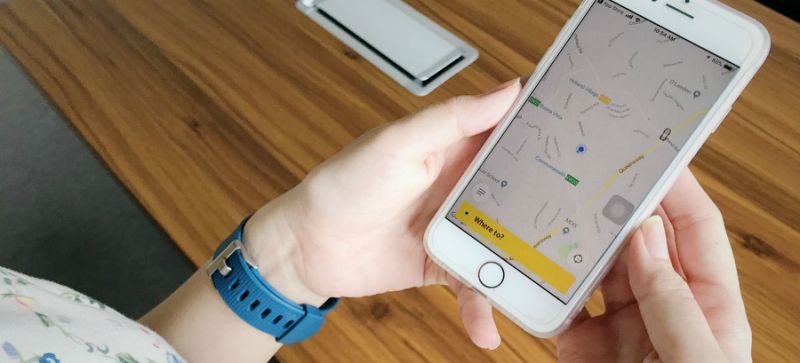
    With Uber and other app-based car-hailing services becoming increasingly popular in Vietnam, one local taxi firm has decided to improvise in order to give its drivers a competitive edge.

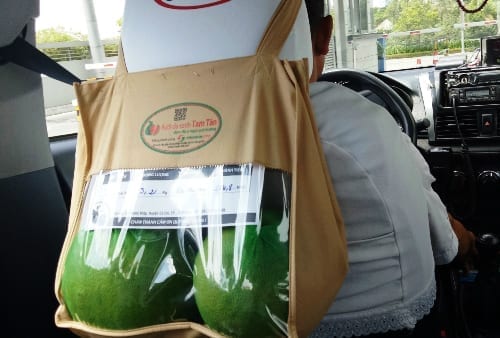
    Vinasun, the country’s second biggest taxi firm, has found a way to boost its drivers’ incomes by turning 800 cabs in Ho Chi Minh City into mobile grapefruit stalls.

    A kilogram of pomelo, a green-skin grapefruit, sells for VND64,000 ($2.81)

    “Drivers receive a bonus for selling large quantities of fruit,” a driver said.

    The taxi operator typically keeps 80 percent of the revenue from its grapefruit business and awards the remaining 20 percent to the drivers, said executive officer Ta Long Hy.

    Vinasun drivers are making on average between $2 and $4 a day from selling grapefruit, he estimated, adding that the best sellers can add up to $17 to their daily incomes.

    Since ride-hailing companies like Uber and Grab appeared on the scene, traditional taxi drivers have seen their incomes rapidly plunging.

    Traditional taxi companies have been lobbying the government for a lower VAT levy to allow them to compete with cab-hailing apps. The government has, however, turned down the request saying there’s no grounding to claim traditional taxi companies have to pay higher taxes and fees than their ride-hailing competitors.

    Uber and Grab cut into at least 10 percent taxi operators’ revenue last year in Ho Chi Minh City, the local association of taxi companies estimated.

    The number of private minicabs, mostly offering transportation services via car-hailing apps, has reached 20,000 in Ho Chi Minh City, twice as many as the number of traditional taxis.

    Last year Vinasun, which has around 6,000 cabs and operates chiefly in Ho Chi Minh City, launched a counteroffensive against the ride-hailing menace: its own app.

    Passengers using Vinasun’s ride-hailing app can easily recognize their minicabs with a ‘Vcar’ logo, Vinasun’s luxury version. They will be offered the option to fix the price at the beginning of a journey rather than rely on the taxi meter, according to Vinasun.

    Vinasun Group, which has been listed on the Ho Chi Minh City Stock Exchange since 2008, made VND4.3 trillion in revenue ($189 million) last year, down 6 percent from 2015.

  • Mobile app usage growth shows signs of slowing

    Mobile app usage growth shows signs of slowing

    The mobile apps industry managed to achieve growth throughout last year, but signs suggest that usage growth is slowing down, according to Yahoo unit Flurry.

    Over the last year, the Flurry footprint grew to track more than 940,000 applications, across 2.1 billion devices, in 3.2 trillion sessions. In this context, app usage is defined as a user opening an app and recording what Flurry calls a “session”, as well as the amount of time spent in the application.

    Compared to the year prior, overall app usage grew by 11% and time-spent in apps grew by 69%. In previous years, all app categories had grown in tandem. However, this year the story is different.

    Mobile apps started eating their own, with session and time-spent growth in some app categories occurring at the expense of others. While Messaging and Social applications drove year-over-year session grow at 44%, the Personalization category gave up a staggering 46% in session usage. This steep decline in usage can be attributed to diminishing value for users of these products.

    In 2016, time spent in Social and Messaging apps grew by a strong 394% over the previous year, proving to be the driver that helped mobile achieve its year-over-year time-spent growth of 69%.

    This is a result of consumers using their social and messaging apps as their voice and video calling utilities, as well as the phenomenon Flurry calls Communitainment. With news and magazines sessions down 5% and Music, Media and Entertainment up only 1%, it’s safe to say that Social has absorbed the media industry.

    Business and Finance (up 43% in time-spent) and Sports (up 25% in time-spent) categories were immune to growth decay because they are intrinsically centered around mobile activities and rely on real time data.

    Gaming, the app category formerly known as “the darling of the mobile industry” saw time-spent decline by 4% year-over-year. Users are increasingly comfortable paying their way through games, with the mobile gaming industry seeing a strong increase in revenues according to Apple’s latest App Store report. Additionally, gaming remains a hit-driven industry.

    This year’s first “hit”, Pokémon Go, faded relatively fast, as consumers lost interest in the game, only returning for marquee holiday events. Another notable hit, Super Mario Run, was released too late in the year to make a difference for the overall engagement numbers.

  • Hogan Lovells launches mobile app for doing business in Indonesia

    Hogan Lovells launches mobile app for doing business in Indonesia

    Hogan Lovells (in association with Dewi Negara Fachri & Partners) has launched an innovative new app called “How To Indo” to help businesses navigate the legal landscape when doing business in Indonesia.

    The app will change the way that anyone doing, or considering doing, business in Indonesia can access relevant legal guidance.

    Anyone with an Apple or Android device will be able to access key guides on what you need to know about doing business in Indonesia. From M&A and infrastructure transactions to Hogan Lovellsfinancing arrangements, from restructuring and insolvency to managing a dispute, these guides cover the key legal issues in doing business in Indonesia.

    Mark Cooper, Corporate Partner, Singapore said:

    “We hope that this innovative product leads the way in helping clients to navigate the regulatory landscape in Indonesia and makes it easier for them to take informed business decisions.”

    The app is available to download today:

    Click here to download the Apple version.

    Click here to download the Android version.

  • SingTel suspends mobile app after user detail leak

    SingTel suspends mobile app after user detail leak

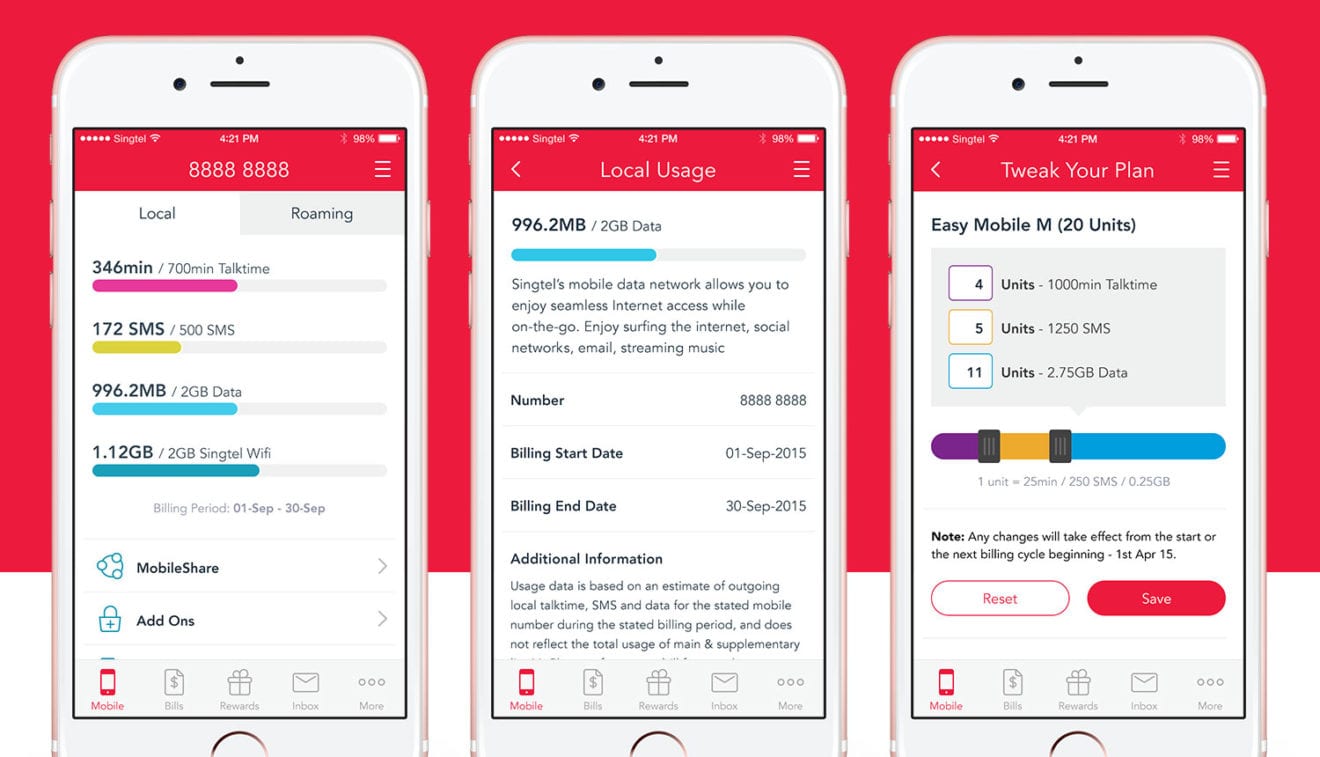
    SingTel was forced to temporarily suspend the functions of its mobile app after a software glitch resulted in users viewing the personal information of another account.

    Customers logging into the My Singtel app were able to view and the personal details of a different customer, and to modify the data field under account information to add their own messages.

    Multiple users reported encountering this glitch over social media, with a number expressing concerns that their account details had been compromised.

    SingTel suspended access to the app, commenting in a statement that the glitch exposing the customer information only affected one account.

    The statement added that SingTel is still trying to get in touch with with the customer to apologize or explain.

    As of Midday yesterday most functions of the app had been restored, but not the bills, rewards and e-appointment features.

    The company insisted that this is an isolated incident and ensured customers that their account security had not been compromised.

  • AirAsia launches all-new mobile app

    AirAsia launches all-new mobile app

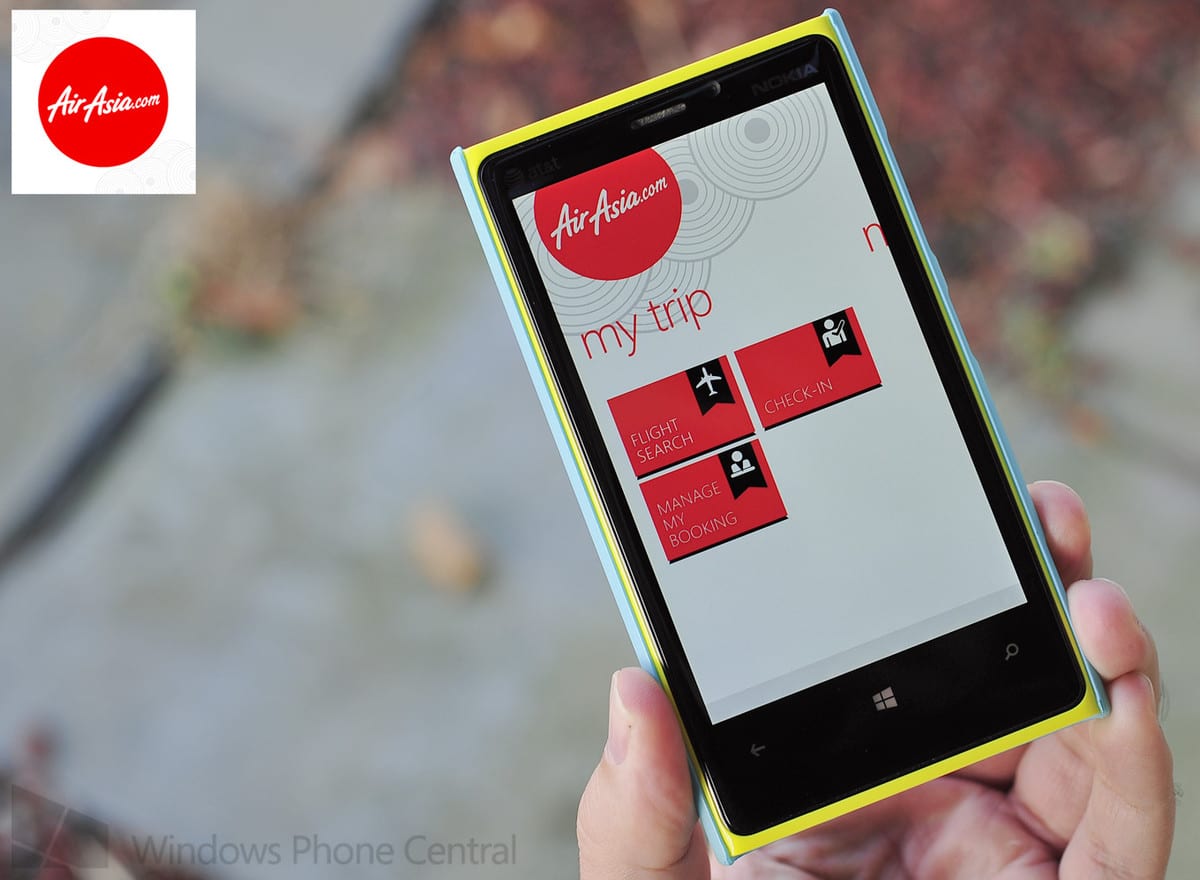
    AirAsia has launched its all-new mobile application offering innovative new features, smoother functionality and an improved interface to provide guests with an enhanced and seamless flying experience.

    In a statement today, AirAsia said its mobile app has been nominated as the “World’s Leading Low-Cost Airline App’ at the upcoming World Travel Awards.

    AirAsia Group Chief Commercial Officer Siegtraund Teh said the company constantly invests in technology and innovation to make flying easier and more enjoyable for guests.

    “There have been over nine million downloads of the AirAsia mobile app on both iOS and Android platforms, and we hope that more people will discover the convenience of our new and improved mobile app,” he said.

    The new app’s features include “Add to Calendar”, which automatically links upcoming flights to the calendar; faster and simpler flight booking process; and improved mobile check-in and Manage My Booking experience where guests can easily include various add-ons to their flight bookings.