Tag: mobile apps

  • SingPost Trials Digital Stamps from 62 Cents for Domestic Mail

    SingPost Trials Digital Stamps from 62 Cents for Domestic Mail

    Singapore Post launched a public trial for digital stamps on Oct 8, allowing consumers across Singapore to send domestic mail using unique codes purchased through its mobile app.

    Postage costs 62 cents for standard regular mail and 90 cents for standard large envelopes, sold in minimum purchases of five stamps valid for 24 months. Users no longer need physical stamps or labels.

    How the digital code system works

    Buyers purchase stamps in the app and write the generated alphanumeric code on the top-right corner of standard envelopes or postcards. They can drop the mail into any street posting box, post office counter, or residential letterbox return slot.

    For the trial running until April 6, 2027, SingPost is discounting five-stamp regular sets to $1 from $3.10. Five-stamp sets for large mail cost $1.50 during the promotional window. Accounts are limited to one discounted purchase each.

    Sorting automation and optical recognition

    Handling handwritten codes shifts operational pressure onto sorting centers. The trial tests optical character recognition scanners on live mail volumes. SingPost will calibrate sorting accuracy across different handwriting styles.

    Gan Heng, head of customer experience at SingPost, said:

    “Digital stamps remove that barrier entirely.”

    Digital postage applies strictly to domestic basic mail, including letters, postcards, and printed paper items. Alongside the scanning trial, SingPost added collectible digital graphics to the app. Users unlock commemorative designs, such as a 61st National Day theme and a Fullerton Building graphic, every 15 purchases.

    Network adjustments across residential hubs

    This trial links with the operator’s residential collection rollout completed in September. Dubbed SingPost@MyBlock, that project converted letterbox return slots across more than 20,000 residential buildings into collection points for outbound letters and small parcels.

    Postal operators across the Asia-Pacific region face declining letter volumes as corporate billing and consumer correspondence move online. SingPost cuts the overhead of running stamp vending machines and retail counter queues by digitising postage, while keeping its collection network active.

    Next steps in the rollout

    Neighborhood infrastructure expanded after first-quarter operating profit rose 55.2 per cent to $4.1 million on cost cuts in core delivery units. Connecting app payments to automated sorting machinery forms the next stage of the overhaul.

    A four-day public show at SingPost Centre in Paya Lebar runs through Oct 11 to demonstrate the scanning workflows. The trial will gather consumer feedback through the mobile application until the test period closes on April 6, 2027.


  • Southeast Asian Shopping App Installs Jump as Singapore and Indonesia Lead Gains

    Southeast Asian Shopping App Installs Jump as Singapore and Indonesia Lead Gains

    Shopping app downloads across Southeast Asia surged in the first half of 2026, led by a 67 per cent jump in Singapore.

    Average session duration in Singapore expanded 58 per cent over the same period as regional platforms stepped up user acquisition spending.

    Data from mobile analytics firm Adjust shows Vietnam recorded a 42 per cent rise in e-commerce application installs alongside a 21 per cent gain in session length. Indonesia registered a 36 per cent increase in installs and a 62 per cent jump in session time. Malaysia saw downloads rise 14 per cent and sessions increase 38 per cent, while Indian app installs climbed 37 per cent against a 42 per cent increase in sessions.

    Platform Spending and Acquisition Battles

    Shopee, Lazada and TikTok Shop are competing directly for user traffic across the region, channeling higher advertising budgets into external media channels including YouTube. Shopee has maintained quarterly revenue expansion of nearly 50 per cent, but escalating logistics requirements and higher sales expenses continue to weigh on operating budgets.

    Fulfillment across fragmented island networks and developing road corridors keeps shipping expensive across Southeast Asia. Those operational complexities earlier prompted Amazon to halt regional expansion plans beyond Singapore.

    Usage Gaps Behind Western Markets

    Actual time spent inside shopping apps across Asia remains lower than the global average despite the sharp uptick in downloads. North American shopping apps logged a 46 per cent increase in installs and a 26 per cent rise in session length over the same timeframe, holding higher total engagement per user.

    RetailNews Asia tracking shows marketplace operators are now focused on closing that engagement deficit as consumer acquisition costs rise heading into the final quarters of 2026.

  • KDDI Launches Paid Consumer AI Assistant Buffmee in Japan

    KDDI Launches Paid Consumer AI Assistant Buffmee in Japan

    Japanese telecom operator KDDI launched Buffmee, a consumer artificial intelligence assistant that charges JPY 980 a month for verified search and study tools. The service runs on Google Cloud and restricts query answers exclusively to curated materials from licensed book publishers, magazines and specialized databases.

    Unlike general-purpose chatbots that scrape the open internet, Buffmee functions as a closed ecosystem where users can cross-check answers directly against partner citations. The platform targets daily consumer queries across education, cooking, sports, parenting, business and personal finance.

    Curated data over open web searches

    KDDI designed the app to address rising consumer frustration with unverified AI search results and hallucinations. Partner publishers provide copyrighted and premium texts to the platform, gaining a controlled digital distribution channel while KDDI secures proprietary content for its model.

    Users interact through structured shortcuts and dedicated buttons designed to reduce prompt writing. The software includes tools for text summarisation, data analysis, image generation, daily planning, test problem creation and digital flashcards.

    Freemium tiers and study tools

    The service operates on a two-tier pricing structure. The free tier caps usage at 100 chat sessions and 10 image generation requests per day, while the JPY 980 (USD 6.50) monthly subscription removes all volume limits. KDDI is offering the premium tier free for the first year to build initial consumer adoption.

    Asian telecom operators are increasingly shifting from commodity network access into branded consumer digital services to defend average revenue per user. While regional peers in Southeast Asia and South Korea have focused primarily on enterprise AI contracts and customer care automation, KDDI is taking subscription software directly to retail mobile subscribers through curated publisher partnerships.

    KDDI will track conversion rates as early adopters reach the end of their 12-month free promotional period and transition onto the standard monthly billing cycle.

  • TikTok plans to expand in Vietnam

    TikTok plans to expand in Vietnam

    Short-form video hosting service TikTok is planning to step up its Vietnam operations, targeting a wider Vietnamese customer base. TikTok, a product of Bytedance, a Chinese software company headquartered in the U.S., offers a short video sharing application, 15 seconds per video for basic accounts. It’s initial content is primarily lip syncing, dancing, or recording with fancy stickers and other effects.

    The TikTok app has quickly attracted the attention of many young people, particularly at school age, but is yet to appeal to older adults.

    Diep Que Anh, national director of communications for TikTok Vietnam and other emerging markets, said that the application is trying to “age” its content to widen its user coverage.

    It has to do this before it can become an advertising platform that can satisfy the demands of its client brands, some experts and industry insiders have said.

    Not revealing specific numbers, Que Anh estimated that Vietnamese users spend an average of 28 minutes per day on TikTok. Its prime time, when the app sees the highest traffic in the country, is 6 p.m.-8 p.m. every Friday and Saturday.

    The platform is still in its ad-free phase. “There have been brands who have approached us regarding advertising, but we do not intend to monetize our service at the present time,” Que Anh said, adding that they were waiting for the market to mature.

    TikTok has opened its first representative office in Ho Chi Minh City with around 70 employees. Que Anh said this number will continue to grow to several hundred employees.

    “After just one year, Vietnam has become our biggest market in Southeast Asia,” she said.

    According to Que Anh, TikTok now covers Singapore, Thailand, Indonesia, Malaysia and the Philippines.

    The Telegraph reported that in October, after receiving an additional $3 billion in capital from firms led by Softbank, KKR & Co and General Atlantic, Bytedance boosted its valuation to $75 billion, officially surpassing Uber to become the most valuable technology startup in the world.

    The Telegraph and many other newspapers call Bytedance a Chinese tech firm, although Que Anh noted TikTok’s headquarters is in Los Angeles, the U.S., and that its products are already in 150 markets.

    TikTok’s strength in the global advertising market is growing rapidly. According to Google’s ‘Best of 2018’ list, TikTok is the only social networking application named in User’s Choice Awards App of the year, while Facebook, Instagram or Youtube are no longer in the list.

    Some reports estimate that the global audience for this app this year is about 500 million.

    In Vietnam, the most successful content trend of the year – the 2018 AFF Cup, resulted in more than 120,000 videos released on the event, which attracted 54.8 million views.

  • Hong Kong mobile apps firms face serious talent shortage

    Hong Kong mobile apps firms face serious talent shortage

    Facing talent shortage and increased operational costs, nearly half of mobile apps development firms in Hong Kong need to turn down their business deals or outsource services to overseas, according to a recent survey conducted by the Wireless Technology Industry Association (WTIA).

    The WTIA’s Hong Kong Mobile Apps Industry Survey, conducted by Hong Kong Productivity Council (HKPC), interviewed 124 app development companies firms between May 8 and June 5 this year.

    According to the survey, 33% of the companies said they are facing a serious shortage of manpower with technical talents such as programmers, coders and engineers being the most difficult to fill.

    “There is a major talent shortage not just on the technical side, but also in sales,” said Wendy Alison Yung, executive director at WTIA.

    Another key challenge is an increase in operational costs, with a majority (86%) of the companies saying facing increasing pressure from high staff costs while 55% from office rental.

    To address the issues of talent shortage and increased operational costs, 42% of the companies said they have to use outsourced services, with domestic companies being the most popular choice (69%), followed by firms in mainland China (25%) and other countries or regions (21%).

    Despite these challenges, the survey found that the mobile app industry in Hong Kong is getting mature with a better business prospect.

    For one, the number of respondents with an annual revenue of HK$500,000 ($64,000) grew by 28%. At the same time, the number of companies in deficit reduced by 14%. These figures suggest a better business environment and prospects for a growing in the smartphone app industry, Yung said.

    Meanwhile, the number of companies operating for six or more years has drastically increased from 22% last year to 50% this year, while startups have also become considerably more well-established with an increase in founders aged 25 and above (23%) and in founders with five or more years of work experience (13%).

    Business applications (57%) tops the most popular app products this year followed by e-commerce applications (26%). Over four-fifths (82%) of the respondents allocated resources to R&D and product development in the previous year, with the average amount at over HK$2.1 million.

    Following the global success of the popular augmented reality (AR) game “Pokemon Go” and the introduction of NFC e-payment services in Hong Kong, the survey showed that AR and NFC are the most popular technologies being adopted in mobile apps in the city.

    According to the survey, 22% of mobile apps created feature AR in 2017, up from 9% the previous year, while adoption of NFC has increased to 21% this year from 10% in 2016.

  • Mobile apps collecting alarming amounts of data

    Mobile apps collecting alarming amounts of data

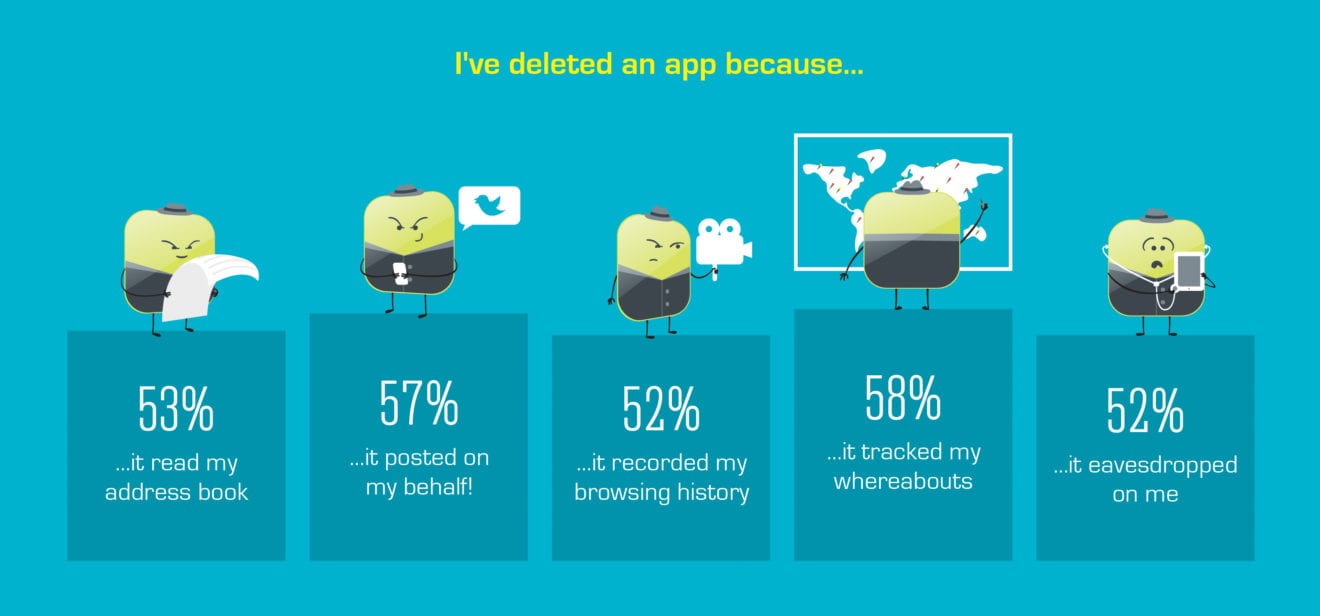
    More than half of mobile applications are collecting “alarming” quantities of data, a new study indicates.

    Hewlett Packard Enterprise’s HPE mobile application security report 2016 analyzes scans of more than 36,000 iOS and Android mobile apps, and reveals the impact of increasing data collection.

    As mobile applications become more prevalent in the work environment, it’s essential that organizations understand the security vulnerabilities of mobile applications and implement mobile security best practices and policies required to protect today’s digital enterprise. Adversaries are shifting their focus to mobile platforms, with more than 10,000 new Android threats discovered per day in 2015, and an iOS malware growth rate of more than 230%.

    “Modern mobile applications are collecting, transmitting and storing a wide range of data that often is not necessary to the application’s function, and can cause significant financial and reputational damage if a vulnerability is exploited,” said Jason Schmitt, vice president and general manager, HPE Security Fortify at Hewlett Packard Enterprise.

    “With attackers’ growing interest in mobile, it’s critical that developers build security into applications from the onset, and organizations take a proactive approach to data security to better protect both personal and corporate data.”

    Not all apps need to track your location

    A majority mobile applications track your location, but not all of them need to. More than 50% of the scanned applications accessed geolocation data. This can create serious privacy implications in the event of an attack, as an attacker can gain access to the physical location of otherwise anonymous, unsuspecting users.

    While it makes sense for a traffic application to track location, the study found that more than 70% of education applications on iOS did as well. This is disturbing as education applications are often marketed towards children.

    The report also found that calendar data was accessed by more than 40% of the iOS games and more than 50% of the iOS weather apps scanned. Calendar data can be particularly sensitive, detailing not just when business meetings take place, but also the topics and invitees.

    Ad and analytics frameworks are commonplace in application development, with more than 60% of applications scanned using these frameworks. A framework that is misconfigured – or insecure to begin with – could be storing or transmitting a significant amount of highly specific and potentially sensitive data about users.

  • Asos Mobile Apps in China Go Live

    Asos Mobile Apps in China Go Live

    In a first for the UK’s largest independent online fashion and beauty retailer, ASOS has launched mobile apps for iPhone, iPad and Android to the Chinese market.

    Developed using retail technology specialist Red Ant’s award-winning RetailOS mobile commerce accelerator, the apps are:

    • Fully transactional mobile app designed specifically for the 700 million-strong Chinese smartphone user market
    • Feature rich and fully shoppable with hybris commerce platform and Alipay
    • Features include Catwalk for all products, access to personal profiles, wish lists and Chinese social sharing

    Red Ant’s CEO Dan Mortimer said: ‘As the UK continues to forge stronger and more profitable business relationships with China, we are delighted to be the mobile partner of choice in the Far East for one of the world’s most successful and reputable online retailers. The local knowledge and expertise of our team on the ground in Asia has been invaluable in developing an app which makes the most of the commercial opportunities presented by the world’s biggest mobile market.’

    ASOS’ General Manager – China, Daniel Jenks, said: ‘ASOS is dedicated to delivering the best possible experience to our customers in China, and the launch of our apps, backed by Red Ant’s expertise, is a significant step towards ensuring they receive a high-quality, mobile-first service which meets all of their needs in an increasingly sophisticated marketplace. We’re delighted with the results so far and in the space of a few weeks, app downloads and sales have exceeded our expectations to form a substantial mix of our sales.’

  • Korean cellular carriers open unified app retailer

    Korean cellular carriers open unified app retailer

    South Korean cellular carriers have opened a unified app retailer for his or her smartphone customers, as a part of an effort to bolster their presence within the rising app content material sector dominated by two app giants: Google and Apple.

    The One Retailer is a consolidated cellular model of KT‘s Olleh Market; T Retailer operated by SK Planet, the platform arm of SK Telecom; and U+ Retailer by LG Uplus.

    It’s out there for a smartphone consumer by way of a model improve of the prevailing app market on the handset.

    An app developer can now promote their product on the app market by importing the product solely as soon as on the One Retailer, whereas up to now they needed to register it individually on the prevailing app shops.

    The requirements for creating an app have additionally been harmonised so app creators gained’t have to make totally different apps for every app retailer, the cellular carriers stated.

    The launch of the One Retailer got here two months after saying the plan to combine the web content material market that had been run individually by every telecom firm.

    In accordance with market watchers, cellular carriers felt the necessity to be a part of forces for the app content material sector towards Google’s Android market and Apple App Retailer which have dominated the native app enterprise.

    In response to the newest knowledge by the Korea Cellular Web Enterprise Affiliation, Android is estimated to have taken up 51.eight per cent of the app market in Korea value roughly four.5 trillion gained (US$four.06 billion) as of end-2014, adopted by Apple’s 31.three per cent. The mixed share of native app platform suppliers solely stood at 13 per cent.

    The Korean cellular carriers hope the One Retailer will create new alternatives for native app builders, in addition to cellular shoppers, to take pleasure in numerous and certified content material based mostly on a extra handy and higher consumer expertise.

    About 1.7 million smartphone customers are anticipated to go to the One Retailer each month, the cellular carriers stated. They didn’t give particulars on the variety of apps registered with the unified market.

  • 11Street Malaysia launched purchasing app

    11Street Malaysia launched purchasing app

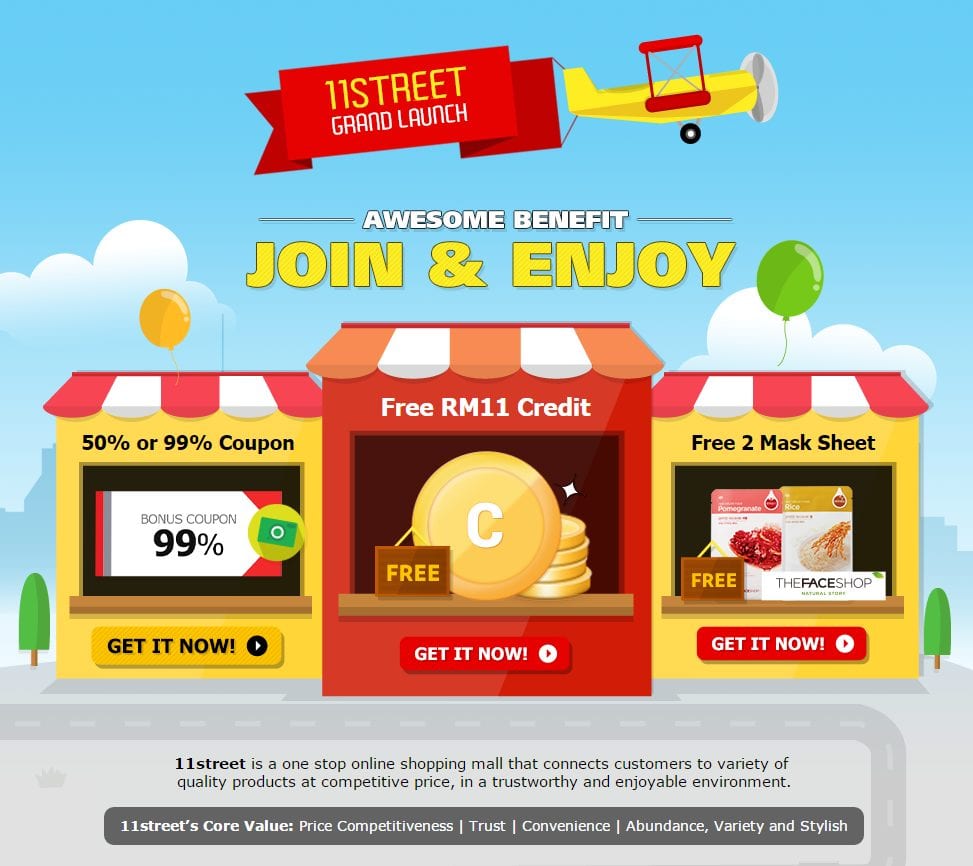
    11street, Malaysia’s latest eCommerce participant, has launched an app to help on-line buying by way of iOS and Android smartphones.

    11street’s CEO, Hoseok Kim stated that the brand new cellular app is the corporate’s newest dedication to ship “a reliable and handy on-line purchasing expertise to Malaysian shoppers”.

    “11street is rising exponentially in Malaysia and quick turning into one of many prime three largest on-line marketplaces with greater than 350,000 product listings you could now view seamlessly utilizing Apple and Android units.

    “Malaysia leads the world in smartphone utilization and it is among the solely 5 nations worldwide to make use of their smartphones greater than computer systems as the first gadget for accessing the Web.”

    Kim stated to be ‘cellular first’ clearly an organization needed to have a user-friendly on-line buying app to raised accommodate the seemingly growing cellular consumers.

    He stated 11street’s cellular app is optimised to reinforce customers’ on-line purchasing expertise based mostly on the expertise the corporate had gained in offering eCommerce providers in Korea and different markets.

    “The important thing differentiator of 11street’s cellular app is its broadly collaborative-curated content material that permits shoppers to entry the recent promoting services a lot simpler, particularly on the ‘Surprising Offers’ part, which provides a Lowest Worth Assure.

    “General, with a nicely categorised and extra intuitive interface, shoppers can navigate and discover out what they love at 11road effortlessly at anytime, anyplace.”

    11street’s cellular app can also be constructed to simply accept bank cards and financial institution transfers upon purchases. Customers can view their membership advantages, examine their order standing, and make the most of their low cost coupons whereas buying on-the-go.

    “11street will constantly improve its cellular apps’ providers to supply higher consumer expertise as immediately greater than 50 per cent of visitors to 11road is from cellular units.”

    Kim concluded: “From the general e-commerce market perspective, it’s plain that mobile-commerce will flourish and we anticipate to see extra shoppers go browsing to 11street by way of cellular units to buy on-line.”