Tag: mobile banking

  • Indonesia’s BRI Signs Partnership Agreement With Alipay

    Indonesia’s BRI Signs Partnership Agreement With Alipay

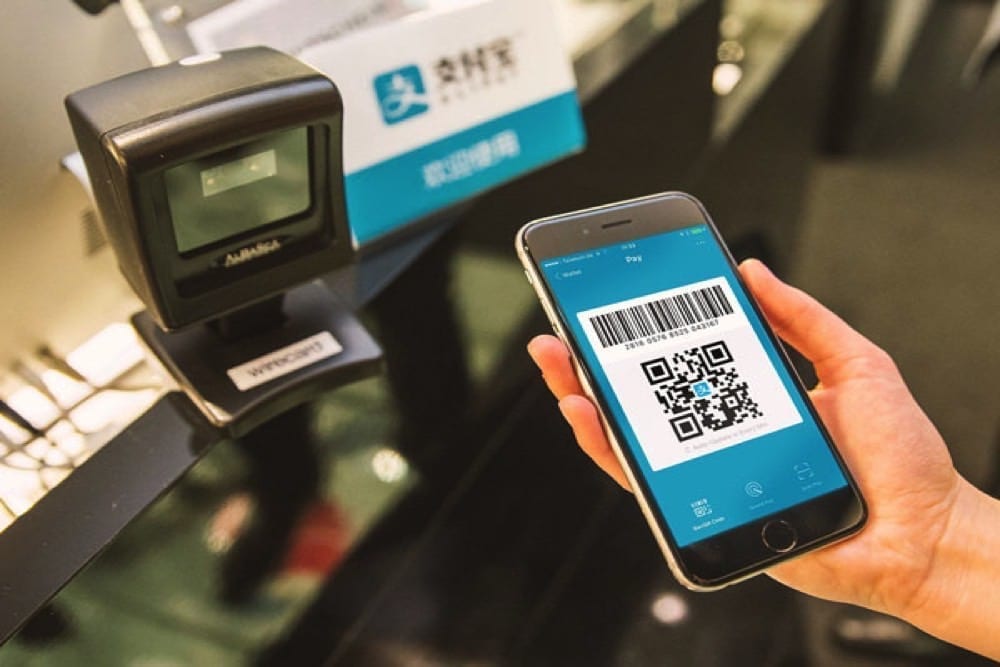
    Bank Rakyat Indonesia, Indonesia’s biggest state-owned lender, started the year with key strategic announcements, including an alliance with Chinese payment platform Alipay and plans to acquire a local insurance company and a small lender. BRI signed a memorandum of understanding with Alipay, a subsidiary of Chinese technology giant Alibaba, on Thursday to secure an opportunity to serve the growing number of Chinese tourists visiting Indonesia.

    “As China has its own payment system, we must be able to facilitate their [Chinese tourists’] needs. This move is aimed at supporting the country’s tourism industry,” Handayani, consumer director at BRI, said after an extraordinary shareholder meeting on Thursday.

    He said there are several matters that must still be discussed, including the acquisition of a permit.

    “We are currently integrating the business operation. We are now developing the IT system [for the service],” Handayani said, adding that the payment service will be launched in tourism areas, such as Bali, first.

    About 2 million Chinese tourists visited Indonesia between January and November last year, representing a 14 percent increase from the corresponding period in 2017.

    Insurance Company

    In addition to the partnership with Alipay, the lender has also set aside Rp 1.5 trillion ($105 million) this year to acquire an insurance company focused on covering property damage. BRI currently only has a life insurer, BRI Life.”This year, we want to have an insurance company. We are going to have a complete service in the financial industry,” BRI president director Suprajarto said.

    He said BRI was still observing the market and exploring several candidates before making a choice. The acquisition is slated for completion in the first half of this year, he added.

    Suprajarto said the acquisition of a general insurer would take precedence over the plan to acquire a small lender.

    This is because the Financial Services Authority (OJK) has asked BRI to acquire a lender in the categories BUKU I (banks with core capital below Rp 1 trillion) or BUKU II (banks with core capital between Rp 1 trillion and Rp 5 trillion).

    “It requires a large amount of funding, so we are now focusing on organic growth [instead of acquiring another lender],” Suprajarto said.

    BRI posted Rp 23.5 trillion in net profit in the first nine months of last year, which was 15 percent higher than the same period in 2017, thanks to a 17 percent surge in loan growth to Rp 809 trillion between January and September.

    BRI Appoints Deputy President Director

    BRI also announced the appointment of Sunarso as deputy president director and the dismissal of Jeffry J. Wurangian as commissioner and Kuswiyoto as director of corporate banking.Handayani said the changes were subject to approval by central bank.
  • Mobile banking to have nearly 3b users by 2021

    Mobile banking to have nearly 3b users by 2021

    Juniper Research predicts that by 2021, nearly 3 billion users will be using retail banking services on smartphones, tablets, PCs and smartwatches, up 53% from 2017.

    The new research titled “Retail Banking: Digital Transformation & Disruptor Opportunities 2017-2021” also predicts that usage will continue to rise as consumers increasingly opt for banks offering the convenience of rapid, multi-channel digital services. This means that banks will need to focus on providing a more frictionless digital experience to their customers, especially if they are to remain market leaders.

    According to Juniper while traditional banks have so far remained a step behind in delivering innovation and maintaining their competitive edge against new Fintech players, the situation is gradually changing.

    “Technology is currently the big differentiator for all types of banks; including traditional banks and the so-called challenger banks. Investments in banking technology reached record levels in 2016 and traditional banks are expected to focus on digital transformation initiatives”, added research author Nitin Bhas.

    Juniper predicts that in 2017, big banks will acquire challenger players including tech-startups and digital-only banks, and this will further accelerate the rollout of traditional players’ digital strategy.

    Juniper’s Digital Transformation in Banking Readiness Index analyzed leading global tier-1 banks to evaluate their digital transformation readiness scores and highlight their respective positioning within the digital innovation roadmap.

    Its list of leading banks for digital transformation include Banco Santander, Bank of America, Barclays, BBVA, BNP Paribas, Citi, HSBC, JP Morgan Chase, RBS, Société Générale, UniCredit and Wells Fargo.

    Juniper says these banks are progressing rapidly towards the final stages of digital transformation with heavy investments, have excellent digital portfolios, and are already witnessing significant cost savings.

  • Mobile Banking Users in Indonesia Remains Low

    Mobile Banking Users in Indonesia Remains Low

    Research institute Microsave reported that only 0.73 percent of cellphone users in Indonesia have utilized online financial services.

    “The figure is lower than those of Malaysia with 5.79 percent and Cambodia with 2.73 percent,” Microsave Country Development Senior Manager Grace Retnowati said on Wednesday, October 12, 2016.

    Grace revealed that the number of SIM card users in Indonesia stands at almost 200 million. At least 20 percent of them are cellphone users.

    “Mobile device utilization for financial services remains low, although the Internet network coverage has reached 90 percent,” Grace added.

    In addition, Grace pointed out that only 36 percent of Indonesian people own bank accounts.

    “The awareness level for mobile banking services is only 0.3 percent,” Grace went on.

    According to Grace, the digital financial literacy is important for middle-class and low-income people.

    “The digital financial services are expected to boost the annual GDP by US$3.7 trillion in 2025 or six percent when compared to the conventional financial services,” Grace said.

    Grace suggested that payments made via smartphone would reduce the cost of financial services by 80 to 90 percent.

    “The cost efficiency will allow financial institutions to provide low-cost services,” Grace said.

  • More than half on online viewing done on mobile devices

    More than half on online viewing done on mobile devices

    Mobile devices, for the first time, now account for more than half of all online viewing, and compares video engagement between iOS versus Android users, according to the second-quarter 2016 Global Video Index from Ooyala.

    The report continues a quarterly analysis of the growth of programmatic trading, as well as highlights how subscription services can reduce churn.

    Findings show that heavy users visit advertising video-on demand (AVOD) news sites 37% more during the work week than on weekends, according to the second-quarter.

    These “power users” also prefer computers to consume content for longer periods, compared to the average user who uses a mobile phone.

    As for AVOD entertainment sites, power users watch 17% more content on Thursdays and Fridays than Monday through Wednesday, and 37% more than on Saturday and Sunday.

    Also, for subscription VOD (SVOD) entertainment sites, 76% of power users visit two to three days a week, with peak viewing occurring Friday and Saturday. Mondays see the least traffic from power users.

    In transaction-based VOD (TVOD) sites, power users produce the slowest traffic early in the week, but on the weekend stream about 13 times more content than during the week.

    For the first time, mobile devices now represent more than half of all online viewing, reaching nearly 51%. This is a 15% increase from one year ago and 203% from 2014.

    Smartphones made up 43% of all video views, a 10% increase from one year ago, while tablets made up the other 8%, which is a 51% increase from the same time period.

    “The findings in the report further manifest the utmost importance of having a proper analytics solution that gives granular insight into your video business,” said Belsasar Lepe, Ooyala co-founder and SVP of products and solutions.

  • DBS taps digital platform to grow retail banking operations

    DBS taps digital platform to grow retail banking operations

    DBS launched a “mobile-only bank” and said it aims to garner 5 million customers and a deposit base of Rs50,000 crore over the next five years

    On Tuesday, DBS launched a “mobile-only bank” and said it aims to garner 5 million customers and a deposit base of Rs.50,000 crore over the next five years. Named digibank, the DBS mobile application will allow individuals to access a wallet at first and then open a savings deposit account with the bank. The balance in the account will earn 7% interest per annum.

    “We are going to focus outside our affluent banking base and we hope to be a mass consumer banker through this product. We hope to get 5 million customers over the next 3-4 years through digibanking,” said Piyush Gupta, chief executive officer at the bank. Currently, DBS Bank has 35,000-45,000 customers in India, according to Surojit Shome, head of India operations for the bank.

    DBS Bank isn’t the only one to board the digital bandwagon. Large Indian banks such as State Bank of India, ICICI Bank Ltd, HDFC Bank Ltd and Bank of Baroda are building digital channels with an aim to garner new customers and serve existing ones better.

    The rush for digital dominance comes even as 11 payments banks are preparing to launch their operations. These banks will have the infrastructure and technology to provide digital banking from day one.

    Among the most popular digital channels is the use of the smartphone for transactions. Transactions on mobile phones in India have surged in recent months owing to large value transactions being concluded on smartphones by corporate clients besides an increase in retail transactions, Mint reported on 28 March. Data from the Reserve Bank of India (RBI) show that on a year-on-year basis, the amount transacted in December 2015 rose more than fourfold to Rs.49,029 crore from the Rs.11,323 crore transacted a year ago.

    India is estimated to have about 220 million smartphone users in 2015 and a February report by networking solutions firm Cisco forecast this would jump to 651 million by 2019.

    Gupta of DBS said the bank’s digital offering stands out because of an inbuilt dynamic security system that takes away the need for one-time authentications and a natural language interface that allows customers to use voice commands to transact.

    Mobile banking products of most banks require the customer to enter a one-time password to conclude any transaction.

    For the initial authentication of a new customer, DBS has tied up with Coffee Day Enterprises Ltd that runs the Cafe Coffee Day outlets. A customer will be required to carry an Aadhaar or a PAN card to a Cafe Coffee Day outlet and, using a biometric system, will be allowed to open an account.

    Meanwhile, DBS Bank will continue to expand its branch network to service corporate clients and small and medium enterprises, Gupta said. The bank has 12 branches in India and has applied to RBI to move to a wholly-owned subsidiary structure. “The application is pending and we have been told it may take 12-18 months to process. We have not received any negative feedback though,” Gupta said. The bank’s Indian assets form only 5% of its total book. Gupta said the bank is hoping for double digit growth in its India balance sheet.

    The bank will leverage its digital platform to build a retail loan book of Rs.10,000 crore over the next five years. “Right now, we are launching digibank mostly on the liabilities side. We will introduce investments and, later, loans, over the next few months,” said Gupta.

    “If you look at some of the global stories, the broad perspective is that a bank starts excelling in certain things when it begins to focus in some areas. Digital-first banks such as some in the US like Atom Bank, they channelize all their energies into one thing as opposed to existing Indian players who will continue to focus on traditional branch banking and in addition give digital services,” said Vivek Belgavi, partner and leader of financial services technology at PwC.

    Belgavi added that new companies would largely focus on untapped segment such as individuals who do not visit a branch as a target for their digital banking.

    “It is a classic disruptor strategy. It will go after segments which are under-served. There is a segment that does not visit branches and because they don’t visit branches they expect a superior experience; if this is not catered to, this is what the disruptors will focus on,” he said.


  • OCBC launches banking app for Apple Watch

    OCBC launches banking app for Apple Watch

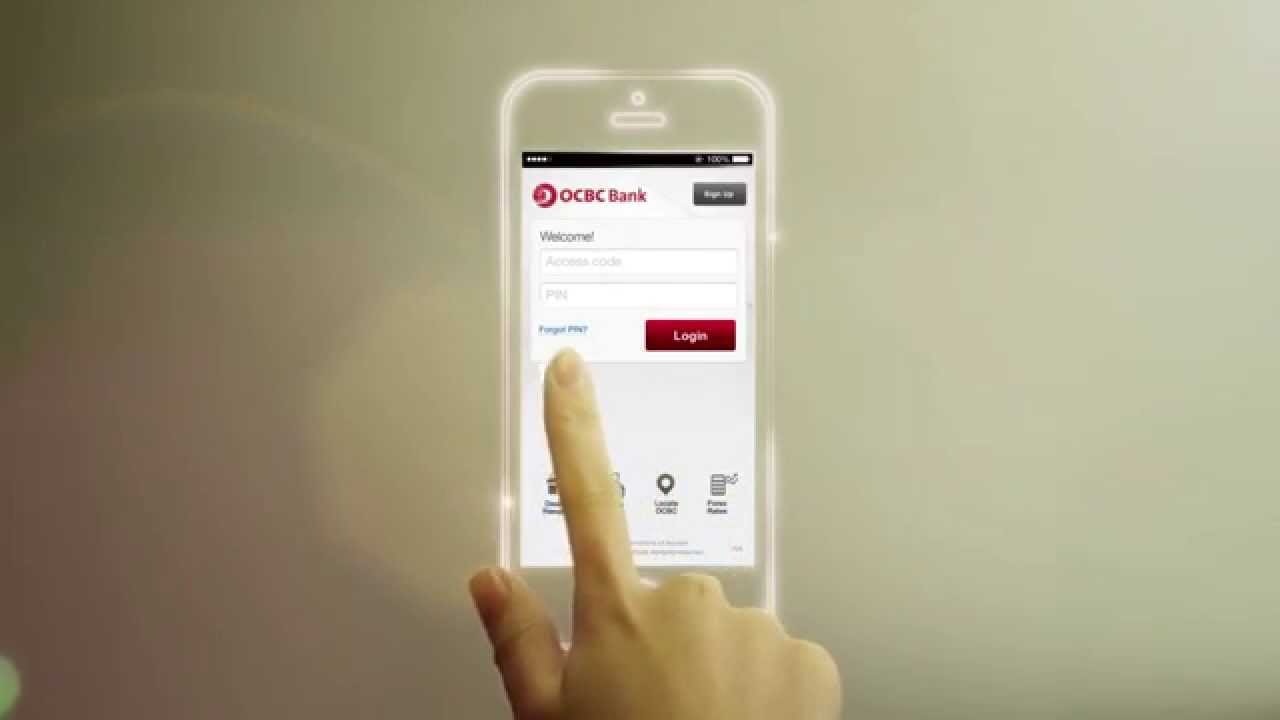
    Singapore’s OCBC Bank has launched a new mobile banking app designed for the Apple Watch.

    With the app, users can have instant access to their personal banking information, including the full list of their balances – bank accounts, cards and investments, recent transactions, and the location of the nearest OCBC Bank branch or ATM, on their Apple Watch.

    Customers must first perform a one-time activation on their OCBC iPhone mobile banking app before using the Apple Watch app. Once activated, account information and recent transactions can be viewed on Apple Watch, without the need to login to mobile banking.

    This service is available for customers using mobile devices such as iPhone 5, iPhone 5S, iPhone 6, iPhone 6 Plus, iPhone 6S or iPhone 6S Plus operating on iOS 9 and Apple Watch devices running on WatchOS2.

    The service can only be activated on a single pair of Apple Watch and iPhone devices at one time and all account numbers displayed on the watch are partially masked with only the last four digits revealed. No information is stored on the phone or watch and for security purposes, customers can choose to set a passcode on their Apple Watch.

    Market intelligence firm IDC estimates the worldwide wearable device market will reach a total of 111.1 million units shipped in 2016, a strong 44.4% increase from the 80 million units shipped in 2015. By 2019, the five-year compound annual growth rate (CAGR) of wearable devices would be 28%, with Apple smart watch devices taking the lion’s share of the market.

    “Smartwatches represent the next generation of personal mobile devices, and our Apple Watch app will offer the convenience, security and choice that customers demand when it comes to everyday banking on-the-go,” said Aditya Gupta, OCBC Bank’s Singapore head of e-business, said.

    “We are confident the Apple Watch app will be a big hit with our fast-growing number of customers who are mobile and digitally-savvy.”

  • Singapore banks warn of new malware targeting mobile banking users

    Singapore banks warn of new malware targeting mobile banking users

    The Association of Banks in Singapore on Tuesday (1 December) warned consumers of a new malware that has been targeting mobile banking customers using Android smartphones.

    In a press briefing, ABS director Ong-Ang Ai Boon said that since September “about 50” people have fallen victim to the malware, which poses as an Android software or WhatsApp application update and accesses users’ online banking accounts to make unauthorised purchases.

    In the latter, a pop-up ad encourages consumers to tap it and download a “new” version of the program or risk losing access to the service. After downloading the “update”, the app will prompt the customer to input confidential information such as credit card details.


     Phone screenshots of how consumers were prompted to perform application updates, which resulted in their smartphones being infected by malware. Photo: The Association of Banks in Singapore
    Phone screenshots of how consumers were prompted to perform application updates, which resulted in their smartphones …

    Current victims have lost up to a few thousand dollars from fraudulent online purchases made by cyber criminals, said Ong-Ang.

    She disclosed that many of the purchases were made to overseas websites. A fraudulent purchase of budget airline tickets was made in one case.

    Investigation into these scams is still ongoing by the banks affected and the police, she added.

    “The weakest link is the consumer, if they are not careful. You must be vigilant. Don’t download unauthorized apps, don’t go to illegitimate sites and don’t simply click on any URL which you are not aware of. Because once you do that, you compromise your handphone,” Ong-Ang noted.

    ABS advised consumers to take the following precautions: secure your smartphone with a password, install system updates to get the latest security features, install applications from trusted sources such as “Google Play”, only click on hyperllinks from messages and emails from a trusted source, and visit your bank’s website for more information.

    According to the banking association, major retail banks in Singapore have seen an increase of mobile banking customers from 1.5 million in 2013 to 2.4 million in 2015.

  • Banks exploring plan for money transfers using mobile numbers

    Banks exploring plan for money transfers using mobile numbers

    Monetary Authority of Singapore (MAS) managing director Ravi Menon revealed the initiative yesterday as he underlined the progress that Singapore has made towards becoming a smart financial centre.

    Speaking at the closing of the Sibos banking industry event yesterday evening, he said banks involved in Fast and Secure Transfers (Fast) are studying a “mobile addressing system” for the service, which was launched in March last year to allow near-instant interbank fund transfers and payments.

    “This means you will be able to make payments through Fast as long as you know the payee’s mobile number,” Mr Menon said.

    Also, the Association of Banks in Singapore (ABS) aims to standardise retail point-of-sale (POS) terminals, he added.

    “Our vision is a unified POS – a single terminal, preferably mobile, that can read all kinds of cards.”

    If implemented, the new Fast mobile system would greatly streamline digital transfer services.

    Several apps – including DBS Bank’s PayLah, OCBC’s Pay Anyone and United Overseas Bank’s Mobile Cash – have been rolled out by banks here to allow a user to transfer money to another using a mobile number, but these apps typically still require set-up and account information.

    ABS director Ong-Ang Ai Boon confirmed that five banks, including the three local ones, started initial discussions on the concept last month. “The whole thing is still in a very nascent state,” she said.

    “We are constantly looking for ways to improve productivity and efficiency for both the industry and consumers, but it will take time for us to make sure it is affordable and does not compromise on security.”

    A local bank source told The Straits Times the new service is likely to involve a central registry pegging phone numbers to accounts.

    This would mark a great step forward for Singapore banks, which are already active in digital and mobile initiatives.

    Mr Menon also suggested that the industry go one step further and develop an all-in-one addressing system – which would mean “being able to pay someone through Fast using also the payee’s e-mail address, social network or other proxies”.

    OCBC Singapore e-business head Aditya Gupta noted that Pay Anyone already allows that, although account information is also required of recipients.

    He said: “If the new addressing system can help make payments more seamless, this would be a good way forward.”

    The central bank has committed $225 million over the next five years to boost financial sector technologies, Mr Menon said.

    Another common standard in the works is the unified POS – ABS has made more progress in this area than with the mobile addressing system, Mrs Ong said.

    Meanwhile, achieving seamless data sharing is also a key thrust for ensuring greater cost efficiency for banks and regulators.

    Mr Menon said MAS is considering using application programming interfaces to streamline regulatory data submissions by the industry.

    “Our vision is for data to flow seamlessly in both directions between systems in the financial institutions and MAS,” he stressed.