Tag: mobile phone

  • Smartphone shipments will grow thanks to 5G

    Smartphone shipments will grow thanks to 5G

    It’s no big secret that the smartphone market has gone through an extended rough patch in the last few years, but as repeatedly predicted in 2019 by multiple research firms, global shipments should get a healthy boost in 2020 largely thanks to the advent of 5G.

    While the world’s first 5G-enabled handsets came out last year, scarce availability, high prices, and perhaps most importantly, slow network rollouts made it essentially impossible for their sales numbers to count for much in the grand scheme of things. Of course, Gartner’s top analysts expect the status quo to be gradually altered, as the overall market share of 5G smartphones could rise from 12 percent in 2020 to as much as 43 percent “by 2022”, and finally, more than 50 percent in 2023.
    In other words, at least one in two smartphones shipped worldwide just three years down the line should be able to achieve those vastly improved 5G download speeds envisioned by both device manufacturers and mobile network operators. Hopefully, Verizon will manage to cover more than small portions of dense metropolitan areas with its 5G network “built right” by then, while T-Mobile may or may not close its highly publicized Sprint merger in these next few years.
    Keeping the focus on the immediate future, it’s definitely worth highlighting that Gartner doesn’t expect global mobile phone shipments to grow by a large margin this year compared to 2019. The latest forecast calls for a modest 1.7 percent hike to 1.77 billion units, followed by a tiny decline predicted for 2021 and a bigger one in 2022, when sales could drop as low as 1.75 billion units.
    Otherwise put, the overall market boost generated by the spread of 5G-capable handsets will be short-lived, but at least the sales total is not forecasted to fall as abruptly as it did in the last couple of years. When looking at phones and computers together, the situation is unsurprisingly a bit bleaker, as the PC market is expected to continue shrinking through 2022 after unexpected progress of 0.6 percent reported for 2019 compared to 2018.
  • Mobile phone market recovers

    Mobile phone market recovers

    Mobile phone sales, which did not see the usual spike during last month’s festive season, seem set to surge in the run-up to Lunar New Year.

    “During Christmas and Western New Year, sales remained the same as in previous months, but the situation has improved and we expect sales to double from now through Lunar New Year,” Đoàn Văn Hiểu Em, mobile phone director of Thế Giới Di Động, was quoted as saying in the Thời báo Kinh tế Việt Nam (Việt Nam Economic Times) newspaper.

    Mai Triều Nguyên of Mai Nguyên in HCM City said December was for long the best month for mobile phone sales.

    “This year December sales were not high because the market did not have any striking product.

    “Besides, this year the western and Lunar New Year are so close to each other, and people were preoccupied with wrapping up their work that sales of everything, including mobile phones, were at a standstill.”

    According to FPT Shop, Iphone 7 and Iphone 7 Plus are the two top selling products followed by Galaxy J5 Prime.

    Iphones are also the bestsellers in smaller stores.

    At Thế Giới Di Động, the country’s largest telephone retailer, used Iphones top sales in terms of numbers though in terms of turnover Galaxy J7 Prime and Oppo F1s account for 60 per cent.

    At Di Động Việt, Iphones, Galaxy J7 Prime and Oppo F1s top sales while other brands are not in great demand.

    Refurbished and second-hand Iphones at good prices are in demand this season. A used Iphone 6 Plus 64 GB is offered at VNĐ8.8 million (around US$400), a price at which customers cannot get a luxury phone.

    Nguyên warned: “Customers should be careful when buying secondhand products. They should choose prestigious shops and check the product carefully before buying.”

  • Can’t do without your mobile device? You’re not alone

    Can’t do without your mobile device? You’re not alone


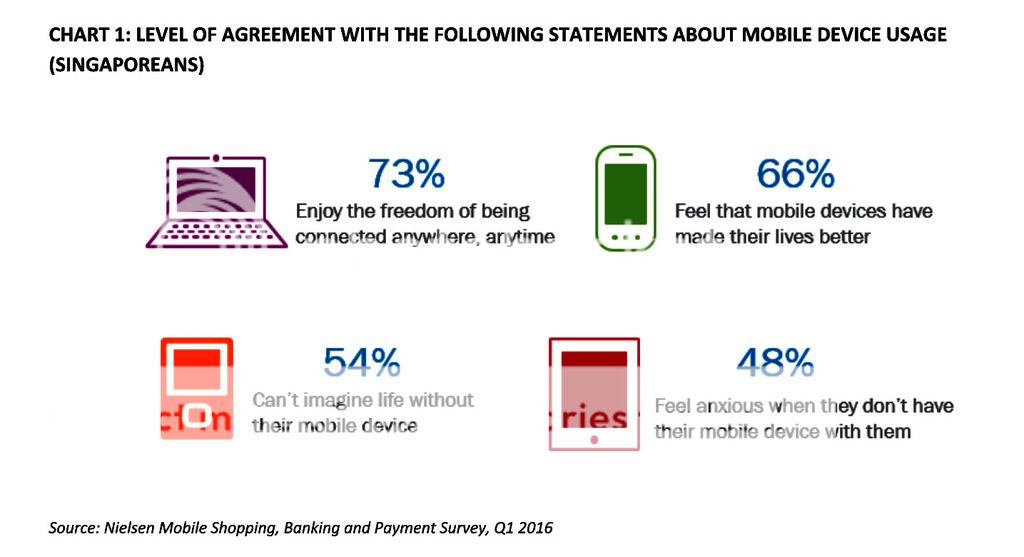
    Market research agency Nielsen on Monday says that some 54% of Singaporeans cannot imagine life without their mobile devices and 48% feel anxious without them.

    In addition, Nielsen found that 73% of Singaporeans enjoyed the freedom of being connected anywhere, anytime, while 66% strongly or somewhat agreed that their mobile device had bettered their lives.

    The findings were from a poll of more than 30,000 online respondents in 63 countries, in Nielsen’s latest Mobile Shopping, Banking and Payment Survey. This included 493 respondents from Singapore.

    Nielsen says the proliferation of technology and need for connectivity in their lives has revolutionised the world of retail, and changed the way consumers shop and buy online, as well as perform banking transactions.

    “Mobile devices… are shaping and defining the consumer’s approach to retail and banking, empowering them to demand a more custom tailored experience according to their taste and preferences,” says Joan Koh, managing director, Nielsen Singapore and Malaysia.

    “The need for connectivity and value of convenience has never been greater among Singaporeans,” she adds.

    Some 62% of Singaporeans have used their mobile devices to look up product information when shopping and 54% have used their mobile devices to compare prices.

    Close to half, or 49% of consumers, have used their mobile device to research on a product or service within the last six months.

    In addition, some 32% have used their mobile devices to purchase a product or service, and 31% have booked movie tickets, flight tickets or hotel stays through them.

    “The adoption of mobile devices has disrupted the path to purchase of traditional retail channels,” says Koh. “Businesses need to continue to leverage on digital and social media platforms to supplement traditional formats such as television and print media to drive consumer engagement.”

    Growth in access to cashless payments is estimated to lead to US$10 trillion in additional consumer spending over the next decade, according to estimates from The Demand Institute, which is jointly operated by Nielsen and The Conference Board.

    Nielsen says consumers are also adopting digital tools to monitor their spending and manage their finances.

    “We are seeing an uptrend in the adoption of mobile-banking activities,” says Anil Antony, executive director of consumer insights at Nielsen Singapore. “This is further girded by the fact that retail banks are increasingly going digital with their processes and driving automation.”

    Some 41% of Singaporeans say they had checked a bank account balance or a recent transaction in the past six months, while 37% have paid a bill using their mobile device.

    In addition, 36% of respondents have transferred money between bank accounts, and 26% have transferred money using their mobile device directly to another person.

  • ‘Energy drink’ for your mobile phone

    ‘Energy drink’ for your mobile phone

    EVER get that sinking feeling when the last of the battery drains from your mobile phone while in the middle of something? What makes it worse is that you haven’t got your power bank with you, and there’s not a plug point in sight! Now, a cute-looking product called MoBeeGo – a one-time mobile phone charger may just be the answer you have been waiting for.

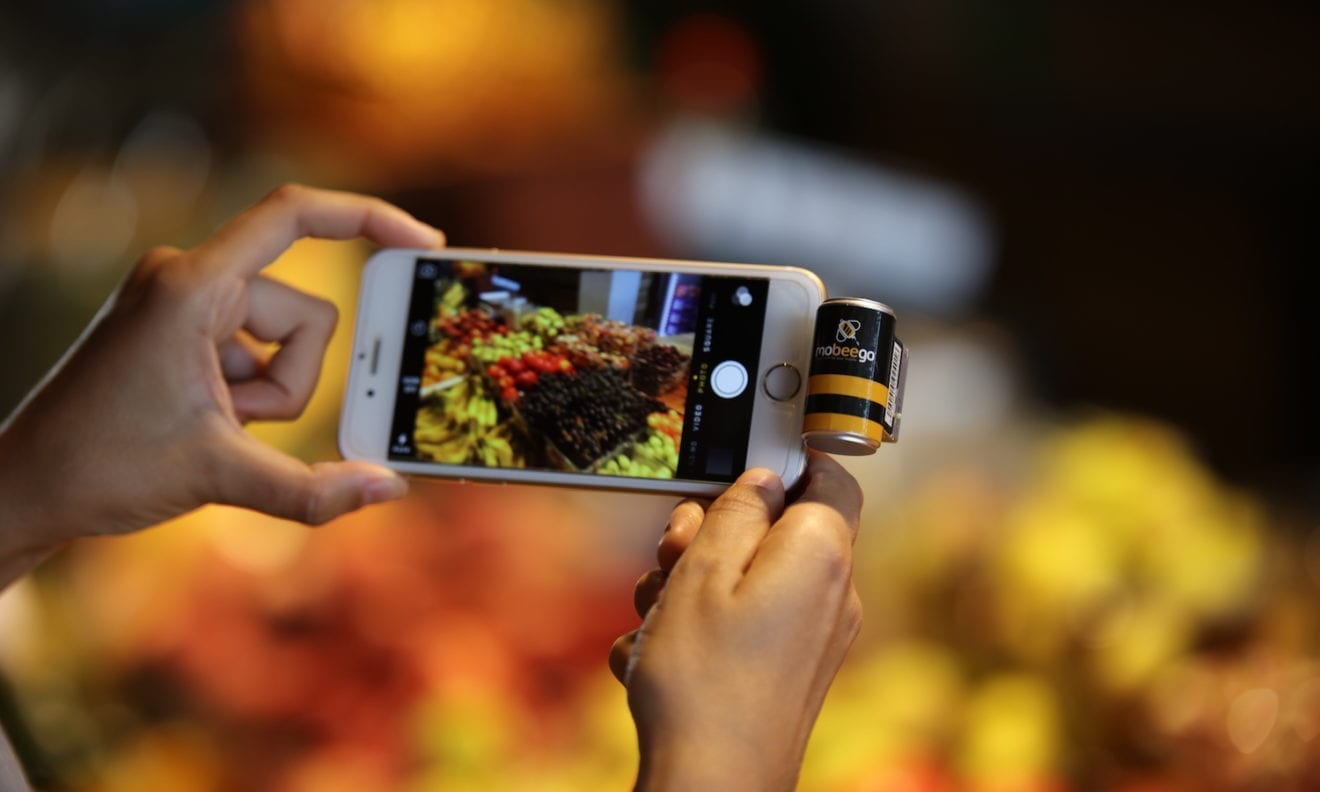
    The cute black and yellow miniature barrels are able to juice up your dying mobile phones for another four hours maximum. Produced by NASDAQ-listed Life Clips Inc, MoBeeGo is an innovative one-time charger that does not require any pre-charging nor the use of cumbersome cords. Brought in to Malaysia by Kelvin Hun and Edric Foong, the founders of Veloster Technology, a local company that specialises in cutting-edge devices and technological gadgets, MoBeeGo is designed with two elements.

    One is a re-usable ultra-compact adapter – there are separate ones available for Google Android and Apple iOs smartphones – that connects to the phone’s charging outlet. The second element is the battery can (shaped to look like a can of an energy drink) or charging unit, which is mounted onto the adapter that attaches to the phone. The charger is tiny and can be easily stored in pockets, purses, and bags. The battery has a 10-year shelf life, enabling consumers to keep them on hand for prolonged periods.

    According to Hun, the battery is hardy enough to withstand extreme temperatures of up to minus 12 and still be able to function well. That’s certainly good news for those planning to travel to cold places this winter. He also added that MoBeeGo is intended to offer convenience and safety, and to be an immediate solution to complement the busy lifestyle of today’s mobile consumers who often carry multiple devices at a time. “With today’s busy lifestyle, we rely heavily on our mobile devices to keep us connected to the world around us.

    Whether we are searching for places to eat on our mobile or playing games during our commute, today’s mobile apps consume lot of power from your devices. The problem lies in trying to squeeze a full day’s worth of power into such mobile devices. Hence, MoBeeGo is designed with ease of use in mind and lets you charge instantly when you need it – anytime and anywhere,” said Hun. The charger and battery is easily available from local stores from next week onwards.

    In the meantime, Veloster Technology is planning to further expand the network of stores where MoBeeGo can be made available. “We are thrilled to have myNEWS as the first convenience retail chain for our award-winning charger. We look forward to expanding our distribution network to even more stores and new markets such as check-out counters in pharmacies, grocery stores, cafes, magazine kiosks, shopping malls, airports and other places where people shop in the near future. So the next time you are running low on battery, just grab a can from the stores, plug it in and go!” said Hun.

    MoBeeGo batteries are recyclable. MoBeeGo is currently sold in 14 countries including Canada, United Kingdom, Malaysia, France and Russia. It recently received an Honourable Mention on the Red Dot Design Award: Product Design this year. The Red Dot Design Award is an international product design and communication design prize awarded by the Design Zentrum Nordrhein Westfalen in Essen, Germany.

  • SmarTone debuts Flexi-switch for mobile plans

    SmarTone debuts Flexi-switch for mobile plans

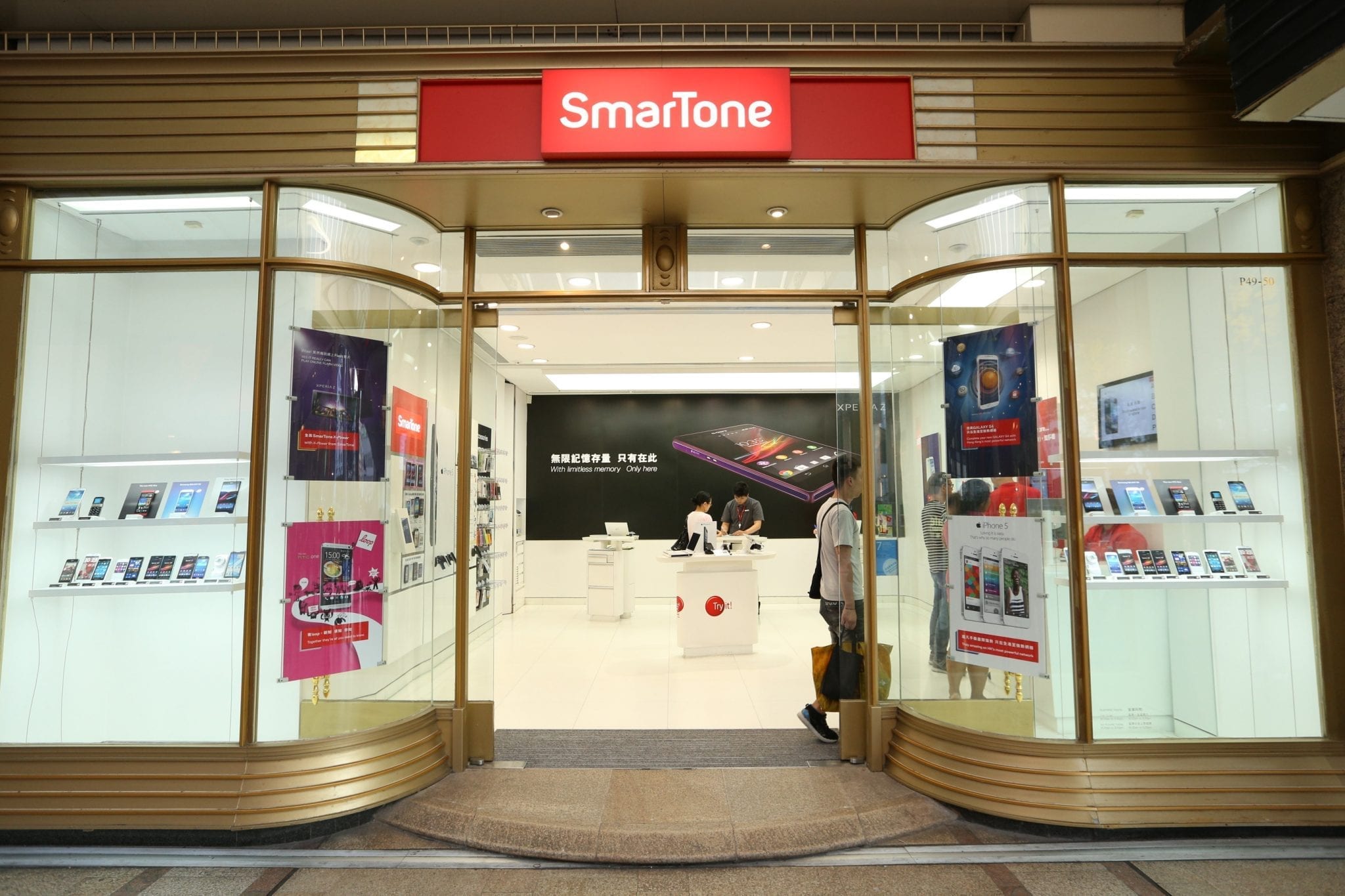
    Hong Kong’s SmarTone has unveiled a new brand campaign which includes introducing the ability for customers to change mobile plans during an initial trial period.

    SmarTone’s new Flexi-switch service will allow customers to trial their mobile plan for a three month period, and change their plans in line with their data usage needs once during this trial period.

    Customers will be able to either upgrade or downgrade their plans based on their experiences during those first months.

    Flexi-switch has been introduced as part of SmarTone’s new “We’re for Smiles” campaign, as a component of the TrueCare series of services designed to address customer needs.

    Other newly-introduced TrueCare services are a free service that allows customers to rent powerbanks from SmarTone stores if their smartphones run out of batteries while on the go, a free screen replace service and the anti-cyberattack software service ST Protect.

    “At SmarTone, we have always focused on understanding our customers’ needs in order to provide them with the most relevant services,”  SmarTone head of marketing and sales Josephine Lim commented.

    “From our recent consumer research, we observed that a lot of Hong Kong consumers prefer quality customer service and flexible service plans.”

  • Sim Lim Square scammers jailed

    Sim Lim Square scammers jailed

    Crooked retailers have been served a warning after a judge jailed four Sim Lim Square scammers.

    The freelance salesmen worked for the collapsed Mobile Air mobile phone shop for notorious conman Jover Chew Chiew Loon have been sent to jail for between four and 14 months for their part in duping customers of a proven $16,147 between April and October last year.

    Chew goes to trial next week.

    According to a Straits Times court report, the four convicted are Koh Guan Seng, 38, (14 months); Kam Kok Keong, 31, (11 months); Lim Hong Ching, 34, (six months); and Kelvin Lim Zhi Wei, 32 (four months).

    The newspaper reports they would lure unsuspecting customers with attractive pricing for new phones, then add hidden charges to extort additional cash from the customers. Such charges included bogus extended warranties

    Mobile Air is the store featured in footage which went viral on social media last November showing a Vietnamese tourist who used his life savings to buy his girlfriend a new phone begging for a refund after he could not pay an extra $1000 demanded for a ‘warranty’ before he could take the phone away.

    District Judge Toh Yung Cheong said that while they had been trained in how to dupe customers, the four convicted had made conscious decisions to offend.

    “In committing the offences, they behaved like thugs rather than sales assistants and they must bear personal responsibility for their conduct,” he said.

    Prosecutors said the victims were mostly foreigners on low wages and with limited English skills – thus easy targets for the conmen.

    The judge noted their actions had caused wider harm by damaging the reputation of Singapore as a tourist and shopping destination, apart from the impact on Singapore’s retail industry.