Tag: mobile wallet

  • Cashless services explode in Vietnam

    Cashless services explode in Vietnam

    Vietnam’s central bank says the value of cashless transactions more than doubled over the first three quarters of 2018. The Department of Payments at the State Bank of Vietnam reported a strong rise in payments over electronic channels between January and September, compared to the same period last year. Accordingly, the value of online payments rose by 18.3 percent, while transactions over mobile apps and e-wallets rose by 126 percent and 161 percent respectively.

    The number of transactions over Internet, mobile and e-wallet channels also rose 33 percent, 30 percent and 28 percent respectively.

    “Mobile payment is becoming a new trend with the rise of technologies such as QR codes, contact and contactless payments, and the tokenization of card information,” said Nghiem Thanh Son, deputy director of the department.

    The first months of 2018 saw the number of users and the value of transactions through electronic channels such as online, mobile and e-wallets rocket at many banks.

    At Sacombank, statistics show that as of October, the number of registrations for online banking reached over 1.3 million accounts and for mobile banking 1.1 million accounts. The total value of transactions per month through both channels exceeded VND108 trillion ($4.63 billion).

    For VietinBank, the country’s second largest lender by assets, the number of internet banking users in the first half of this year surged 114 percent over the same period last year to a total of 1.5 million accounts and VND44.26 trillion ($1.90 billion) in total transaction value.

    Its mobile banking users also reached 1.5 million, engaging in transactions totalling VND64.35 trillion ($2.76 billion) between January and June.

    Over 7 million people are using digital services provided by MBBank. The average transaction value per month reached VND27.4 trillion ($1.17 billion), with digital transactions making up approximately 2.6 million out of 3 million total monthly transactions seen at this bank.

    Nguyen Hoang Minh, deputy director of the State Bank’s HCMC branch, noted that the number of online banking customers has seen average annual increase of 20 percent in recent years.

    Minh said that in order to continue developing non-cash payment channels, credit institutions should pay attention to linking their cashless systems with the public sector, specifically in areas like health, education, payroll and utilities.

    Cashless services should also expand to include online payment options for public services like buses, trains and other smart urban solutions, he said.
  • Korea’s convenience stores to use mobile payments more

    Korea’s convenience stores to use mobile payments more

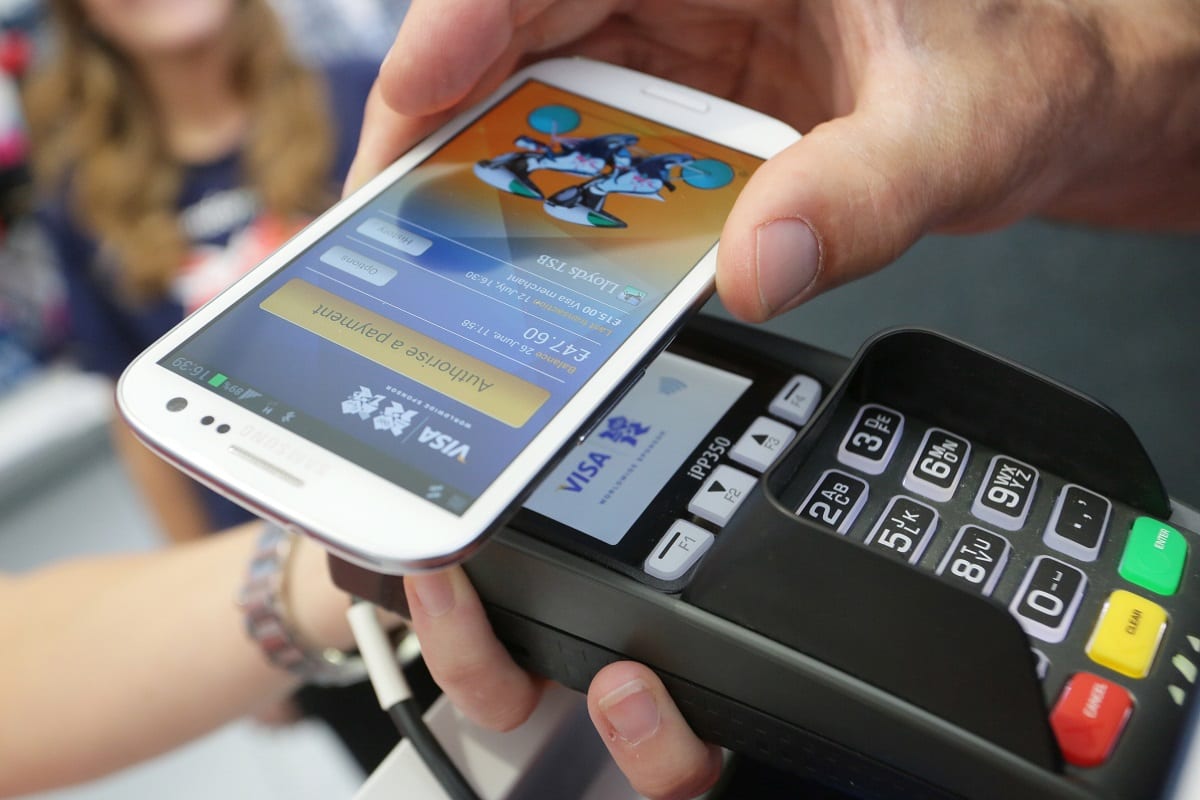
    Mobile payments at South Korean convenience stores have more than doubled this year thanks to the greater use of smartphones and the expansion of mobile settlement services. South Korea’s top convenience store chain CU said the number of so-called easy mobile payments at its outlets soared 121.5 per cent year on year in the first 10 months.

    Convenience chain operators in Asia’s fourth-largest economy adopted the easy mobile payment system in 2011, but the service only started to take off last year.

    The percentage of mobile payments out of total settlements at convenience stores expanded to 3.5 per cent this year, compared with 1.9 per cent last year and just 1 per cent in 2015.

    “The number remains in the single-digit range, but the easy mobile-settlement system has been growing at an exponential pace,” a CU spokesperson said.

    Currently, CU allows customers to use Samsung Electronics’ Samsung Pay and 19 other payment tools at its stores.

    Samsung Pay accounted for 85.5 per cent of CU’s mobile settlements during the January-October period, followed by Kakaopay with 4 per cent and LG Pay with 2.8 per cent.

    Industry sources said retailers in South Korea have been ramping up efforts to develop their own mobile payment platforms as more tech-savvy consumers turn to their smartphones to make mobile payments at South Korean convenience stores.

    Some seven in 10 South Koreans are known to own a smartphone, the fourth-highest smartphone penetration rate in the world.

  • Momo becomes first Vietnamese Fintech 100 firm

    Momo becomes first Vietnamese Fintech 100 firm

    Vietnam’s mobile, electronic wallet and payment application Momo is among the top 100 innovative fintech companies in the world. This is the first time a Vietnamese firm has broken into this special group, positioned 84th. Momo is also in the “Emerging 50” category, which includes newer companies that are at the forefront of innovative technologies and practices.

    Its products help customers in Vietnam make nationwide cash transfers, pay more than 100 types of bills, recharge mobile phone accounts, settle personal loans, and purchase services like software licenses and online game cards, airline and movie tickets, etc.

    The company’s payment system partners with 24 domestic banks and foreign payment networks, including JCB, MasterCard, and Visa.

    A judging panel comprised of senior partners from H2 Ventures and KPMG decided the final composition of the Fintech100 list.

    H2 Ventures is a global thought leader in fintech venture capital investment while KPMG is a global network of independent member firms offering audit, tax and advisory services.

    Companies were ranked based on total capital raised, rate of capital raising, location and degree of sub-industry disruption and the judging panel’s subjective rating of the degree of product, service, customer experience, and business model innovation.

    Other newcomers to the list include Argentina, Bahrain, Colombia, Czech Republic, Indonesia, Jordan, Malaysia, Myanmar, United Arab Emirates, and Thailand.

    Leading the ranking this year are China’s Ant Financial, the world’s largest third-party payments platform, JD Finance, a digital technology company and Singapore’s ride hailing firm Grab.

  • OVO lead in Cashless Payment Race in Indonesia

    OVO lead in Cashless Payment Race in Indonesia

    Lippo-backed cashless payment service OVO has announced a partnership with Tokopedia, Indonesia’s largest e-commerce platform. OVO said in a statement on Wednesday that the deal would help it cement its position as the country’s largest mobile payment platform in terms of transaction volume and reach.

    “The partnership will add Tokopedia’s close to 80 million active monthly users to OVO’s existing userbase of 60 million. It will also add more than 4 million Tokopedia merchants to what is already a market-leading merchant network, covering malls, smaller retailer, as well as GrabFood partners and Kudo agents,” the company said in the statement.

    OVO has been partnering with online-based ride-hailing service Grab since December last year, while also targeting brick-and-mortar shops and restaurants across Indonesia.

    “We see this landmark partnership as a validation of our strategy to enable payments for all Indonesian companies, both online and offline. Cash is a very difficult habit to break and consumers will only switch to cashless if it’s easier and safer than cash,” said Harianto Gunawan, director of enterprise payments at OVO.

    OVO chief executive Jason Thompson said the company expects a surge in new users and additional transactions from the e-commerce platform.

    “We have a very bullish outlook as we close out 2018. Having established ourselves as the No. 1 mobile payment platform by transaction volume, this partnership with Tokopedia and our push into e-commerce will further accelerate our growth,” Thompson said.

    The company said OVO is now available in 90 percent of shopping malls across the country, offering cashless payment options to customers at hypermarkets, department stores, coffee shops, cinemas, parking operators, hospital chains and food and beverage outlets.

    It has also set a target to expand QR-code payments to 100,000 small and medium enterprises by the end of this year.

    OVO’s online-to-offline business comprises its partnerships with Grab and Kudo, a service that allows individual agents to sell digital products, such as phone credit, tickets or insurance, to customers. Kudo currently has about 1.7 million agents in its network.

    OVO said its latest deal with Tokopedia would allow it to reach 93 percent of districts in Indonesia currently served by the e-commerce platform. It also plans to secure more deals with other e-commerce platforms.

  • WeChat Pay to be ready in 7-Eleven, Guardian Singapore

    WeChat Pay to be ready in 7-Eleven, Guardian Singapore

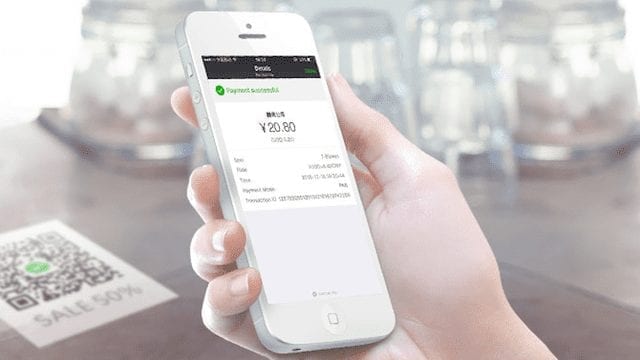
    Customers of 7-Eleven, Cold Storage and Guardian stores in Singapore will soon be able to pay for purchases using WeChat Pay. The owner of the two retail chains, Dairy Farm Group, has worked with NETS to enable visitors from China and Chinese nationals based in Singapore to use the service from November 1.

    WeChat Pay is currently being trialled at the 7-Eleven and Guardian stores at Changi International Airport and some stores in key tourist destinations in the Orchard and Chinatown districts.

    According to the Singapore Tourism Board, visitors from China increased by almost 13 per cent, from 2.8 million in 2016 to 3.2 million last year. The partnership between Dairy Farm Singapore and NETS together with WeChat will enable Singapore’s largest multi-format retailer to better cater to the growing number of China visitors, by offering visitors a convenient way to pay when they shop in Singapore.

    Head of merchant services at NETS, Alvin Seck, said working with payment partners like WeChat and retailers like Dairy Farm Group enables NETS to roll out new payment services for consumers quickly while minimising adoption costs for merchants.

    “With this partnership, 7-Eleven and Guardian in Singapore along with Cold Storage and Giant can just make use of its existing NETS uPOS terminals to accept WeChat Pay, in addition to NETS, QR, NETS FlashPay, credit and debit payments.”

    To use WeChat Pay for payments, users simply need to scan the NETS QR code on the NETS uPOS terminal.

    Dairy Farm Singapore’s regional finance director, Tom van der Lee said this latest payment mode service is part of the multi-format retailer’s digital-transformation journey in line with the government’s ‘Smart Nation’ drive.

    “More customers are adopting cashless payments, thanks to easier and faster payment transactions with the uPOS terminal plus the convenience of the wide array of payment options to choose from across our Cold Storage, Giant, 7-Eleven and Guardian stores. Cold Storage alone has seen cashless payment increase by 6 per cent and at Guardian by 3 per cent since Dairy Farm Singapore installed 1800 unified NETS POS terminals last year – the single largest deployment by retailer here.”

  • Mobile wallet spending set to grow 32% in 2017

    Mobile wallet spending set to grow 32% in 2017

    Global mobile wallet spending is on track to grow nearly 32% in 2017 to reach $1.35 trillion, a new study from Juniper Research predicts.

    Although at the moment transactions are concentrated in China and East Asia, the research firm predicts that brands such as PayPal and Apple wallets which can be used both instore and online means that wallets will increasingly become the default payment mechanism in other markets.

    The study found that mobile spend is currently concentrated in China and East Asia owing to the success of Alipay and WeChat.

    The report claims that PayPal’s choice to use a HCE (Host Card Emulation) NFC solution to enable POS payments is a key disruptive moment in the wallet wars. It also attributes Paypal’s future mobile wallet success to the on-going success of its social payments subsidiary Venmo.

    Research author Dr. Windsor Holden noted that “Network operators remain wedded to offline payments based on an NFC SIM card, at a time when more agile competitors are deploying integrated HCE wallets that also enable online usage.”

  • CIMB launches mobile wallet app for cashless payments

    CIMB launches mobile wallet app for cashless payments

    CIMB Bank Bhd has launched a lifestyle mobile application, CIMB Pay that provides combine secure cashless payments with deals and offers.

    This enables the bank’s seven million customers to experience faster, easier and more secure payments at over 1,800 contactless terminal-enabled merchants nationwide as well as search nearby location-based real-time deals.

    Group consumer banking chief executive officer Samir Gupta said the launch of CIMB Pay further strengthens its suite of digital offering, reaffirming CIMB’s position as a customer-centric bank with cutting-edge technology in the region.

    “We are proud that CIMB Pay is the first mobile wallet app that enables consumers to not only make cashless payments, but also allows them to take advantage of lifestyle deals.

    “Combined with the ability to store cards issued by both Mastercard and Visa, CIMB Pay is the leader among similar apps,” Gupta said in a statement, adding the initiative also supports Bank Negara’s move to go cashless.

    On the app’s security features, Gupta noted that security and privacy are at the core of CIMB Pay and that all card details were tokenised with no information stored on the devices.

    “Users will also be required to authenticate transactions either using the mobile fingerprint or a six digit PIN,” he added.

    In the meantime, Gupta said more functionalities will be added onto CIMB Pay in the first quarter of 2017, including simplified online payment and express checkout solutions powered by Mastercard’s Masterpass.

    With Masterpass, shoppers will be able to use their CIMB Mastercard debit or credit card along with the shipping information saved on the mobile app to complete online transactions.

    Customers can make payments by simply tapping their phone on any contactless terminal based on Near Field Communication technology.

    The app also has an in-built notification system that alerts customers on nearby contactless terminals and flash deals.

    CIMB Pay can be downloaded on Google Play for NFC-enabled smartphones running on Android 4.4 and above.

  • Security is key for mobile wallet adoption in Thailand

    Security is key for mobile wallet adoption in Thailand

    Whether paying with contactless cards or mobile wallets, Thais prioritize security over convenience and are more likely to use contactless payment methods when they know strong security measures are in place, according to a recent study conducted by Visa.

    The Visa Mobile Wallet and Contactless Study found that the majority of Thais (82 percent) believe security is more important than convenience when it comes to mobile and contactless payments.[1] With accelerated growth in financial technology (FinTech), public and private sectors are grappling with ways to increase consumer confidence in electronic payments, particularly when it comes to transactions carried out on mobile devices.

    The average Thai spends around 160 minutes a day on their mobile devices.[2] By the end of 2016, it is estimated that around 20 million people will own smartphones in Thailand, a figure expected to rise to 24.8 million by 2019.[3] Although internet access and mobile device ownership among Thais are on the rise, uptake of mobile financial services has been gradual, partly due to Thai consumers being unaware of advancements in cyber security, and technology. 

    Suripong Tantiyanon, Visa Country Manager, Thailand said: “Based on our study, the more secure the mobile payment experience is, the more willing Thai consumers will be to use it. We’re confident this cautious yet optimistic attitude, coupled with Visa’s multilayered approach to security, will drive the uptake of mobile transactions in Thailand.” 

    The Visa study, independently conducted by YouGov on behalf of Visa, examines Thais’ attitudes towards mobile and contactless payments alongside those of other Southeast Asian markets, namely Singapore and Malaysia. It finds that the three biggest fears in mobile wallet security are hacking of mobile phone (73 percent), theft of mobile phone (65 percent) and getting charged for unintended purchases (63 percent). 

    “Among the respondents, only 39 percent said they would consider using third-party mobile wallets. But within this particular group of potential adopters 74 percent are already aware of how encrypted tokens eliminate the risk of personal data theft,” added Mr. Suripong.

    Visa Token Service (VTS) ensures mobile and contactless payments are secure as well as convenient. VTS replaces cardholder information, such as account numbers and expiration dates, with a unique digital identifier (a “token”) that can be used for payment, via a user’s mobile wallet, without exposing the cardholders’ more sensitive account information.

    Tokenization hides consumers’ confidential account information during digital transactions, making digital payments more secure. According to the study, approximately 55 percent of Thais are familiar with VTS, with awareness highest among those that are also familiar with mobile wallet technology.

    Just under half of Thais (46 percent) believe paying with a mobile device is as safe as with physical cards; a figure likely to increase in the future, as people become more familiar with advancements in Visa’s mobile payment systems. 

    Three in five Thais (61 percent) believe that one day they will no longer need to carry a card or cash and will instead be able to use their mobile wallets for everyday spending.

    “Once Thais become familiar with innovative security measures, such as encrypted tokens, they are much more likely to use mobile and contactless payments more regularly,” said Mr. Suripong.

  • M1 will launch Apple Pay in Singapore

    M1 will launch Apple Pay in Singapore

    The operator will allow its customers to use the mobile payment service to make purchases at M1 Shop outlets and branches.

    Apple has meanwhile revealed it has extended the reach of Apple Pay to include holders of credit and debit cards issued by five banks in the country – DBS Bank, OCBC Bank, POSB Bank, United Overseas Bank (UOB) and Standard Chartered Bank.

    The five banks combined account for more than 80% of credit and debit cards issued in the country.

    Apple Pay, which launched last month in Singapore, was previously only available to holders of credit cards issued by American Express in the nation.

    The service is currently available in six markets – Australia, Canada, China, United States, United Kingdom and Singapore, with planned launches for Hong Kong and Spain this year.

    The service can be used on Apple’s iPhone SE, iPhone 6s, iPhone 6s Plus, iPhone6, iPhone 6 Plus and Apple Watch devices for payments at physical retail outlets.

    Banks are likely hoping Apple Pay transactions will increase adoption of contactless payments and eat into a chunk of the small payments pie currently dominated by cash transactions.

    OCBC Bank Singapore is offering its credit and debit card customers a 3% rebate for Apple Pay transactions island-wide in the first month of activation, with a cap of up to S$15 ($11).

    UOB is meanwhile aiming to lift the S$100 transaction limit for contactless payments at all its POS terminals island by the end of next year. The limit has been removed from 2,000 of the bank’s 10,000 terminals so far.

    Figures from a recent MasterCard study have revealed an appetite for digital wallets among consumers in the Asia Pacific, with 19.5% using such wallets, a two-fold increase from two years ago.

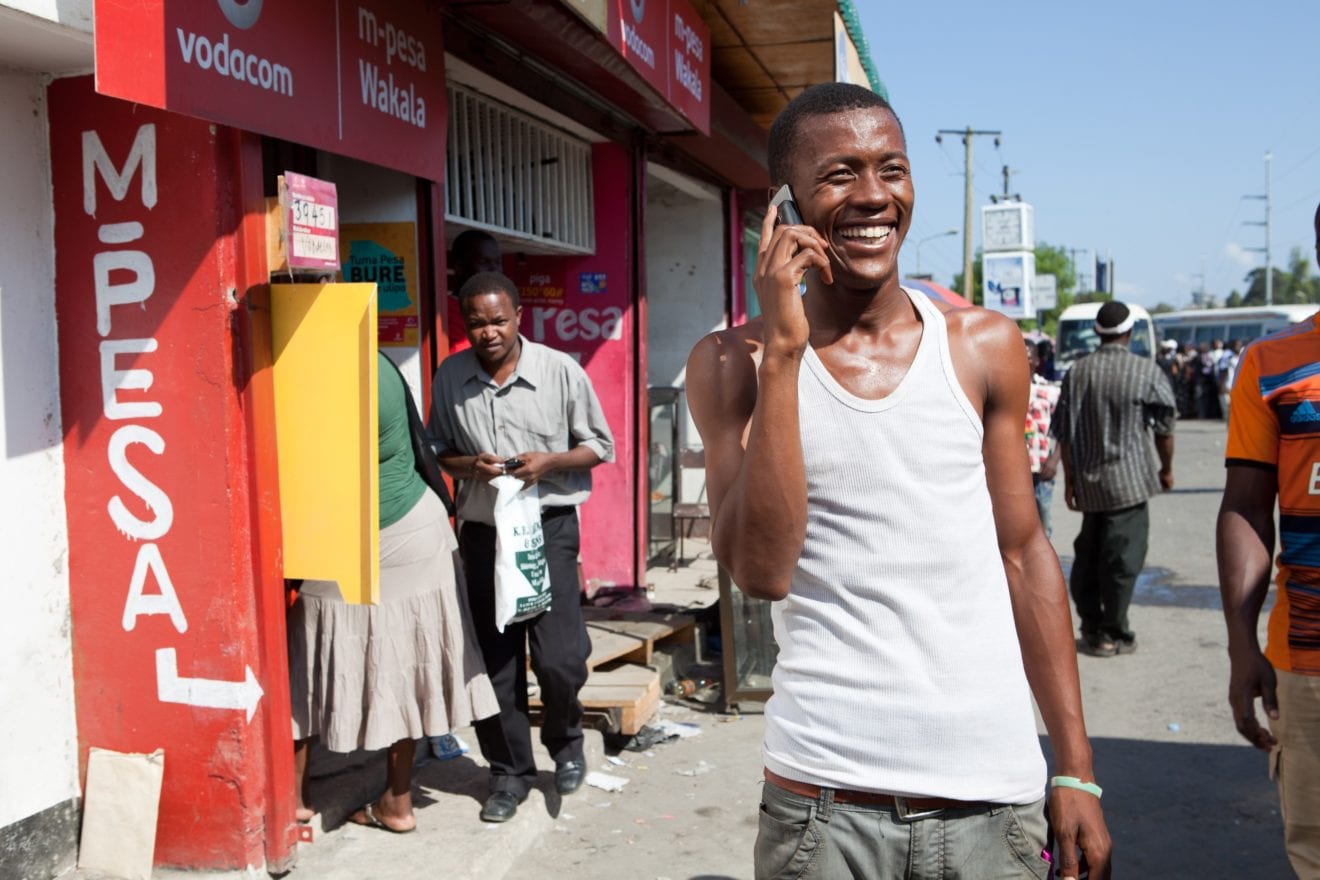
  • Vodafone’s M-Pesa surpasses 25m active users

    Vodafone’s M-Pesa surpasses 25m active users

    Vodafone has announced that its M-Pesa mobile money service now has more than 25 million active customers.

    Across the M-Pesa footprint in Africa, Asia and Europe, active M-Pesa customers increased by 27.1% to 25.4 million for the 12 months ending in March.

    Vodafone offers M-Pesa in 11 countries, having most recently launched in Albania and Ghana. The service debuted in 2007 in Kenya and Tanzania.

    M-Pesa is also available in India, South Africa, Afghanistan, Mozambique, Lethoso, the Democratic Republic of Congo and Romania.

    In India, Vodafone recently launched an M-Pesa smartphone app to allow customers to pay for goods on Ebay, as well as taxi fares and train tickets on India’s national railways.

    Over the past 12 months Vodafone has entered a series of deals with partners to allow for cross-border and cross-service transactions using M-Pesa.

    These include global agreements with the international money transfer hubs TransferTo and MFS, as well as an arrangement to allow direct-money transfer between M-Pesa and users of MTN Mobile Money in seven East African countries.

    “I am delighted and proud that M-Pesa has reached the 25 million active customers milestone,” Vodafone group director of mobile money Michael Joseph said.

    “M-Pesa continues to expand, evolving beyond traditional money transfers to encompass savings and loans, payment of salaries and benefits, settlement of utility bills and school fees and to enable vital health and agricultural solutions.”

  • Singapore’s StarHub adds support for Apple Pay

    Singapore’s StarHub adds support for Apple Pay

    Singapore’s StarHub has introduced the ability for its customers to use Apple Pay for secure mobile payments.

    When customers use a credit or debit card with Apple Pay, the actual card numbers are not stored on the device, nor on Apple servers.

    Instead, a unique Device Account Number is assigned, encrypted and securely stored in the Secure Element on the device. Each transaction is authorised with a one-time unique dynamic security code.

    “Digital commerce is fast catching on with Singapore consumers, and we want to be at the forefront of enriching our customers’ lifestyles using technology,” StarHub’s head of business strategy Yeong Mun-Ling said.

    “Being among the first Apple Pay-enabled merchants in Singapore, we are pleased that customers can now conveniently tap to pay at StarHub Shops using their iPhone and Apple Watch,” said Yeong.

    In stores, Apple Pay works with iPhone SE, iPhone 6s, iPhone 6s Plus, iPhone 6, iPhone 6 Plus and Apple Watch.

    Online shopping in apps accepting Apple Pay can be authorized with the touch of a finger with Touch ID.

  • Mobile money service launched in Bangladesh

    Mobile money service launched in Bangladesh

    Financial inclusion in Bangladesh just took a stride closer to reality with the launch of a new international remittance receiving service via a partnership between MasterCard, Western Union, bKash and BRAC Bank.

    The new service enables bKash’s registered customers to use their mobile phones to receive remittances from abroad directly into their bKash accounts.

    A subsidiary of BRAC Bank and a joint venture between BRAC Bank and Money in Motion LLC of USA, bkash serves the low income masses of Bangladesh to achieve broader financial inclusion by providing services that are convenient, affordable and reliable.

    With 70% of the population living in rural Bangladesh many of whom have no access to formal financial services, it is also the eight largest receiver of international remittances in the world. Under 15% of Bangladeshis are connected to the prescribed banking system whereas over 68% have mobile phones.

    World Bank South Asia Financial Inclusion Index 2014These phones are not only devices for talking, but can be used for more useful and difficult processing tasks. bKash was conceived primarily to use these mobile devices and the universal telecom networks to extend financial services in a protected manner to the under-served distant population of Bangladesh.

    By using the new service, bKash’s registered customers can receive remittances from every Western Union send market and channel directly into their bKash account, 24 hours a day.

    MasterCard’s Matthew Driver said: “This relationship is another step towards achieving our global commitment to make the financial system accessible to 500 million more people by 2020. Working with companies such as bKash and Western Union is crucial to taking advantage of the latest technology; digitizing money transfers and supporting financial inclusion efforts in the South Asia region and worldwide. The choice, flexibility and convenience of this new bKash service will help to expand financial inclusion to some of the most remote parts of this thriving nation.”

    Western Union’s Jean Claude Farah said international money transfers over mobile phones will accelerate financial inclusion in Bangladesh where there are currently more mobile phones than there are customers with bank accounts.

    In 2011, the Bangladesh Bank, the country’s central bank, issued the Mobile Financial Services (MFS) Guidelines and mandated that the model where MFS must be bank-led but also clearly indicated that partnerships with mobile operators must be forged to reach customers. The first two MFS providers to emerged as leaders early on were BRAC/bKash and Dutch Bangla-Bank/DBBL.

    Like many parts of developing Asia, financial inclusion is part of the government via the central bank’s strategic plan, aimed at ensuring these products meet the needs of the traditionally underserved segments of society. Among the services on priority list include expanding access to financial services to women, poor and rural populations; and formalizing financial services by promoting registered transactions.

  • WeChat launches mobile wallet service in Hong Kong

    WeChat launches mobile wallet service in Hong Kong

    WeChat has launched its payment service WeChat Pay in Hong Kong, including the new Wallet in-app payment feature.

    Wallet allows WeChat users to connect their MasterCard or Visa credit cards with their accounts to allow them to pay for products and services without having to exit the WeChat app.

    Users will be prompted to create a six digit PIN that must be input before any payment is authorized.

    Wallet currently supports payment for tickets, transportation services and travel products, and more product and service categories will be added soon.

    WeChat has partnered with local merchants to offer Hong Kong users exclusive promotions and campaigns over the messaging service.

    “We are so excited to bring WeChat Pay, a new mobile experience that allows users to pay on the go in the simplest way, to Hong Kong,” commented Norman Tam, head of the Hong Kong and Taiwan office of WeChat owner Tencent‘s international business group.

    “Customized for Hong Kong users, WeChat Pay provides a seamless and secure payment experience to users while providing our partners with the benefit of a direct connection to WeChat’s massive community that other payment platforms cannot provide. This is truly a triple-win for us all.”