Tag: Mobileye

  • Intel set to roll out 100 self-driving cars

    Intel set to roll out 100 self-driving cars

    Silicon Valley giant Intel on Wednesday (Aug 9) announced plans for a fleet of self-driving cars following its completion of the purchase of Israeli autonomous technology firm Mobileye.

    A day after closing the US$15 billion deal to buy Mobileye, which specialises in driver-assistance systems, Intel said it will begin rolling out fully autonomous vehicles later this year for testing in Europe, Israel, and the US.

    The fleet will eventually have more than 100 vehicles, according to Intel.

    The testing in real-world conditions “provides immediate feedback and will accelerate delivery of technologies and solutions for highly and fully autonomous vehicles,” said Mobileye co-founder Amnon Shashua, who is to run the unit for Intel.

    “Our goal is to develop autonomous vehicle technology that can be deployed anywhere.”

    The Intel test fleet with include various types and makes of vehicles, and capitalize on Mobileye expertise in computer vision, mapping and sensing.

    Intel, which has been expanding beyond its core of computer chipmaking, is keen for its technology to be an engine powering self-driving systems across the spectrum of vehicle manufacturers.

    “We want to enable automakers to deliver driverless cars faster while reducing costs,” Shashua said.

    Intel said the vehicles would offer “level 4” autonomy, which under industry standards represents a “high” level of autonomy just below the fully automated level 5.

    Most major automakers and several other technology firms have been stepping up efforts on autonomous driving in recent years, contending these systems will eliminate the vast majority of road accidents. Apple has a testing permit in California.

    German luxury carmaker Daimler and auto parts supplier Bosch have announced plans to work together to create completely driverless cars in the next few years.

    US-based Tesla boasts that all its models are built with the hardware for self-driving in event regulators five the technology a green light.

    US car rental giant Avis Budget earlier this year announced it will team up with Waymo on the self-driving cars being tested on Arizona roads.
  • Mobileye in deal with Nissan to create maps for self-driving cars

    Mobileye in deal with Nissan to create maps for self-driving cars

    Israeli autonomous vehicle technology firm Mobileye said on Tuesday it forged an agreement with Nissan Motor to create next generation maps to enable safe self-driving cars.

    The deal comes after a successful trial last year that culminated in Mobileye’s mapping technology being used in Nissan’s recent autonomous vehicle demonstration in London.

    “We now have significant commitments from multiple global automakers to generate and share data from camera-equipped ADAS (advanced driver-assistance systems) vehicles,” said Mobileye Chairman Amnon Shashua, adding the results will add to a global road map that is a critical feature of self-driving autos.

    Mobileye, which also is collaborating with German automaker BMW, is in the process of being acquired by Intel, which last month agreed to buy the company for $15.3 billion in a deal that promises to escalate the arms race among the world’s carmakers and suppliers to acquire autonomous vehicle technology.

  • Delphi, Mobileye to use Intel chip for self-driving car system

    Delphi, Mobileye to use Intel chip for self-driving car system

    Auto parts maker Delphi Automotive and Israeli technology firm Mobileye NV will put an Intel Corp chip at the heart of their joint effort to produce self-driving vehicles by 2019, the companies said on Tuesday.

    The move is a boost for the world’s largest semiconductor maker, which is also working with German luxury car maker BMW AG and Mobileye on self-driving technology, but has not been able to extend its broader chip dominance into the fast-emerging autonomous vehicle market.

    Companies from Alphabet Inc’s Google to Uber Technologies and Tesla Motors are vying to put autonomous vehicles on U.S. roads, which could radically reshape transportation across the country.

    Intel will provide a “system on chip” for autonomous vehicle systems that Delphi and Mobileye are developing together, Glen De Vos, Delphi’s vice president of engineering, told Reuters.

    UK-based Delphi is talking with established automakers and new or niche vehicle companies, such as manufacturers of commercial vehicles, interested in automating vehicles, De Vos said.

    The system Delphi and Mobileye are developing would likely come to market first in a commercial vehicle operating in a limited area, such as an airport shuttle or a ride-hailing service, DeVos said.

    Delphi is testing autonomous driving technology in vehicles in Singapore. By the end of this year, Delphi hopes to choose a city in the United States to launch a test fleet of self-driving cars during 2017, De Vos said. The company is also looking for test site in a European city.

    “We are looking at Pittsburgh and Boston and a couple of others,” De Vos said. Pittsburgh is where ride services company Uber is testing its own self-driving vehicles.

    Delphi and Mobileye will stage a demonstration of their self-driving vehicle system at the Consumer Electronics Show in Las Vegas in January, De Vos said. That system will use current, electromechanical laser imaging technology, or LIDAR, that is too expensive for use in consumer vehicles, he said.

    Delphi is also working with Quanergy Systems, a maker of solid-state LIDAR systems, De Vos said.

  • BMW to develop driverless car technology with Intel, Mobileye

    BMW to develop driverless car technology with Intel, Mobileye

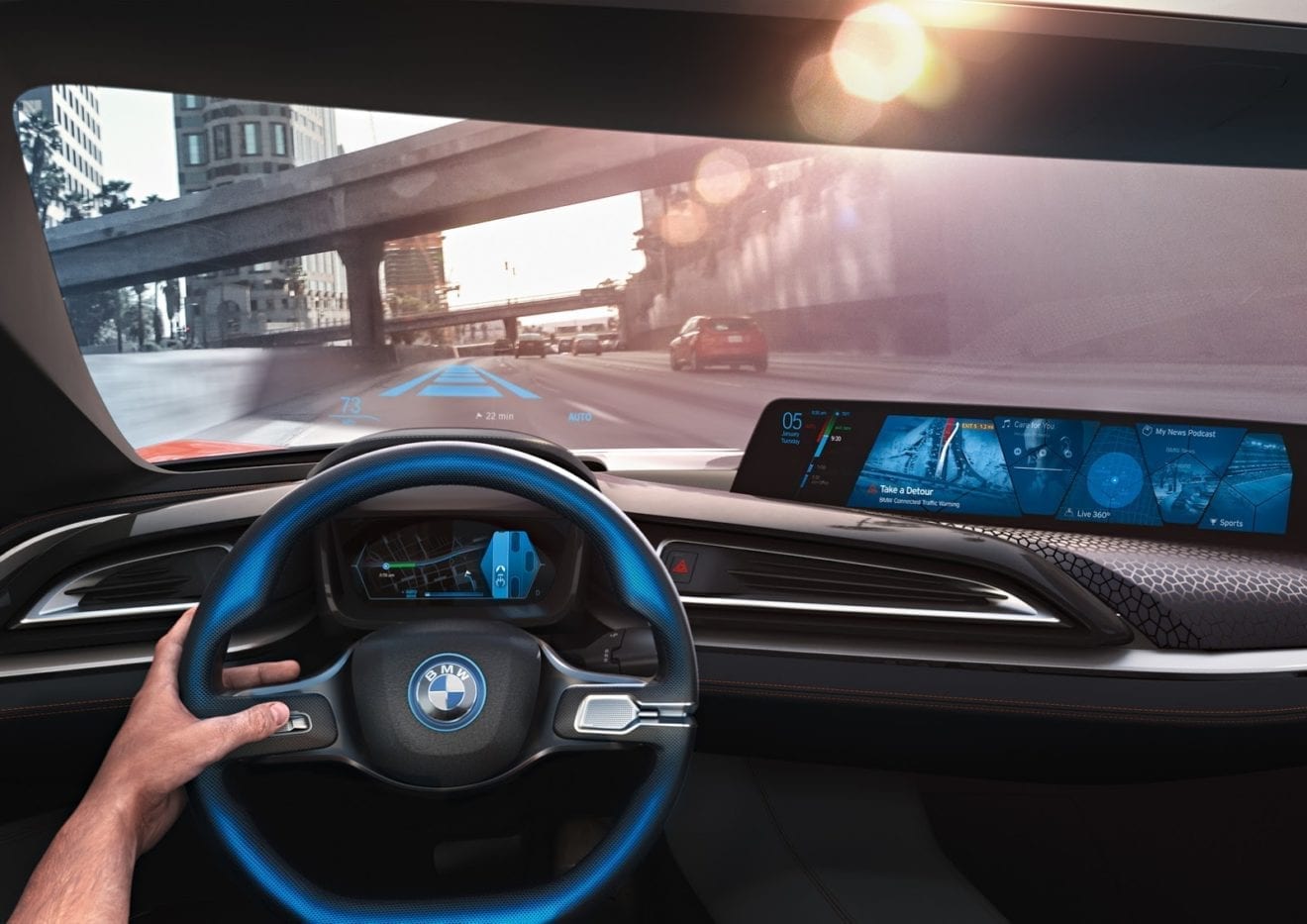
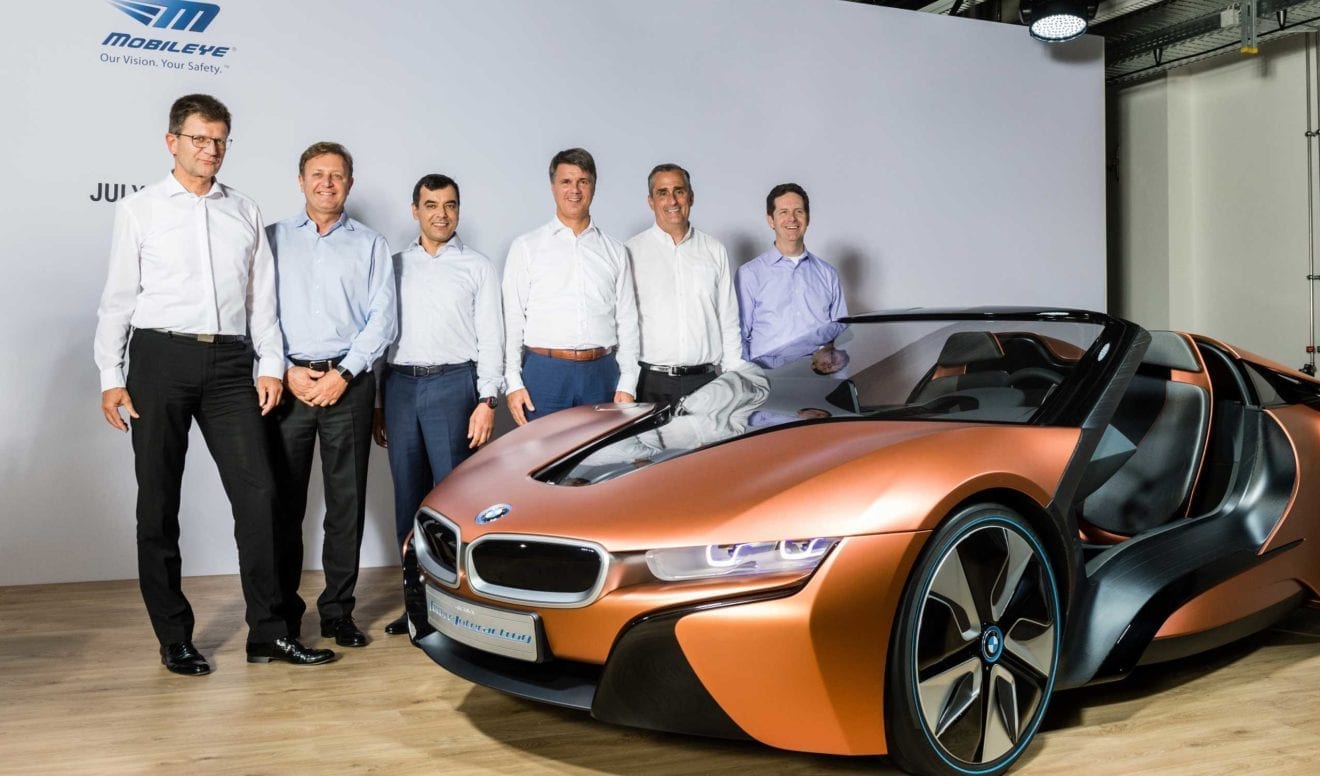
    BMW is teaming up with Intel and Mobileye to develop new technology for the auto industry that could put self-driving cars on the road by around 2021.

    The alliance highlights a shift in the dynamics of research and development in the car industry, which until recently saw automakers largely dictating terms for suppliers to manufacture their proprietary technologies at specified volumes and prices.

    Now carmakers are increasingly striking up partnerships with technology firms using open technology standards, seeking to harness their expertise in areas including machine learning and mapping as they race against Silicon Valley companies such as Google, Tesla and Apple to develop driverless vehicles.

    “Highly autonomous cars and everything they connect to will require powerful and reliable electronic brains to make them smart enough to navigate traffic and avoid accidents,” Intel Chief Executive Brian Krzanich said on Friday at a joint news conference announcing the alliance.

    The three companies said their new platform would be made available to multiple carmakers and they expected vehicles with highly and fully-automated driving would be brought into mass production by 2021. It is too early to say which other carmakers would join the alliance, BMW Chief Executive Harald Krueger said at a news conference on the outskirts of Munich on Friday.

    Sophisticated cruise control systems already enable “hands off” driving as cameras and computers allow cars to automatically brake, steer and accelerate in traffic at low speeds. But drivers are required to stay in control.

    Now BMW, Intel and Mobileye will develop cars with even higher levels of automation described as “eyes off,” “mind off,” and “driver off”. This requires much more computing power and software know-how, forcing traditional carmakers to collaborate more closely with technology specialists.

    Both industries see huge revenue opportunities in the market for autonomous vehicles, although it is unclear how many drivers will be prepared to relinquish control and how quickly laws will be put in place to allow fully autonomous vehicles on the roads.

    But creating common technology standards would help all manufacturers update their vehicles faster, Intel Chief Executive Brian Krzanich said. “That will be critical for advancing the safety aspects of this.”

    A common approach to standards will also make it easier for regulators to understand and approve the roadworthiness of a vehicle while still leaving enough scope for individual car manufacturers to customize their cars, Mobileye Chairman Amnon Shashua said.

    Beyond technological hurdles there are legal questions over who is responsible when a crash occurs. On Thursday, the driver of a Tesla Model S car, operating in Autopilot mode, was killed in a collision with a truck in the United States, prompting an investigation by federal highway safety regulators.

    When asked about the crash, BMW CEO Harald Krueger said: “The accident is very sad …. We believe today the technologies are not ready for series production,” he added, explaining the alliance had not forecast that until 2021.

    “For the BMW group, safety comes first,” he said.

    As part of the new alliance, Intel, the world’s largest computer chip maker which has been looking to expand into the automotive electronics market, will supply the microprocessors – or central processing units – to control an array of sensors.

    Auto camera and software maker Mobileye will supply its Road Experience Management (REM) technology and make its latest EyeQ5 chip available to be deployed on Intel computing platforms.

    The three companies said they would demonstrate their technology in a prototype in the near future.