Tag: MODA OPERANDI

  • Moda Operandi launches Store in China

    Moda Operandi launches Store in China

    Fashion-discovery platform Moda Operandi has appointed Ming Yang as the firm’s new MD for China.

    While Moda Operandi has served the Chinese customer for years, Ming’s appointment represents Moda’s official entry into the region. She will build a strategy, operations, marketing, and personal styling programs from Shanghai.

    “Ming’s experience successfully shaping major US and UK-based retail brands to fit the needs of the Chinese luxury consumer is unparalleled,” said CEO of Moda Operandi Ganesh Srivats. “At Moda, we’re committed to becoming part of the local fabric in China, building our China operation from the ground-up, and ultimately being the pre-eminent luxury fashion platform for Chinese consumers. Ming has just the experience to get us there.”

    Ming will be Moda Operandi’s first employee in China, growing the company’s Shanghai team and overseeing all of Moda Operandi’s business strategy and operations in Mainland China.

  • Millionaires are showing off their money in a new way

    Millionaires are showing off their money in a new way

    The definition of luxury is evolving, and the change applies to not only what people are spending money on, but how they’re doing it. “In the last few years, we have seen the crystallization of two luxury worlds: one which focuses on an encyclopedic choice of luxury products available at a click; another which is doubling down on the experience mantra,” the global ultra-high-net-worth intelligence firm Wealth-X said in its 2019 handbook, which examines the spending habits and preferences of people whose net worth is between $1 million and $30 million.

    That shift coincides with an era in which people are choosing to display their wealth differently than previous generations did.

    This is an era where brands like Goyard— a two-century-old Parisian company that eschews any type of advertising but represents the pinnacle of luxury for the world’s elite — and investments like education, security, and privacy are the chosen trappings of the world’s wealthiest people.

    Still, luxury fashion is booming, and it partially has to do with how it is consumed.

    Technology has left nearly no industry unchanged, and luxury is no exception.

    “Mass-market principles have worked their way into luxury and are disrupting the market,” Mike Phillips, Wealth-X’s vice president of marketing and communications said. “Now you can be selling something — and there might be only one made — but it’s on an app.”

    Whereas previously the ultimate luxury shopping experience might have included shutting down an entire store for a top spender, that person now has access to the same goods with the increased convenience of an app.

    Phillips said apps and sites like Net-a-Porter, Farfetch, and Moda Operandi that sell designer clothes, shoes, and accessories had capitalized on this trend as a new generation of wealthy shoppers emerges.

    “When it comes to wealthy millennials or Gen Xers, there are still instances where they are seeking an immersive brand experience at a brick-and-mortar store,” Phillips said, “but at other times they may want to avoid that more traditional pomp and circumstance and opt for the ‘Seamless’ option.”

    “Younger generations are less likely to be staunch loyalists to a single brand when compared to their parents and grandparents,” Phillips said. “They’re more likely to try something new if it speaks to their personal values and passions.”

    In this way, experiences may not be outright replacing the role of brands in wealthy people’s lives, but they are augmenting the significance of and consideration that goes into buying a particular brand.

    “More and more,” Phillips said, “the wealthy are evaluating a brand in terms of: What mission does this brand represent? How does it contribute to the greater good … If I choose to purchase this product, what does that say about me and my values?”

    And entire industries are developing or adjusting services to cater to this customer interest too. Wellness is increasingly regarded as a modern embodiment of luxury, and accordingly, an array of spas and studios offering treatments like cryofacials, weeklong retreats, and vitamin IV drips are delivering those experiences.

    Exclusivity and personalization also play important roles in the way luxury experiences are marketed. Customers do not want just any experience — they want a unique one tailored to them.

    Both of those preferences can clearly be seen in the hospitality industry, where high-end hotels are remembering their guests and tweaking their experiences with personalized touches. Other hotels, meanwhile, are fulfilling guests’ appetites for exclusivity by making their most luxurious or expensive rooms “invisible” and available only to well-connected clients who heard about the room by word of mouth.

  • Moda Operandi eyes China showroom

    Moda Operandi eyes China showroom

    Luxury fashion marketplace Moda Operandi is planning to open a showroom in China as it targets growth in Asia. The US-headquartered company, which allows customers to pre-order looks directly from designers immediately after their runway show, has appointed former Burberry and Tesla executive Puja Clarke in a new role as senior VP of fashion buying and e-commerce.

    Since achieving success with its pre-order concept – which has a flip side of helping fashion brands assess consumer reaction to its new collections – the e-commerce company has been evolving into a broader fashion marketplace.

    Next year Moda Operandi will open its first brick-and-mortar store in China in a city yet to be disclosed.

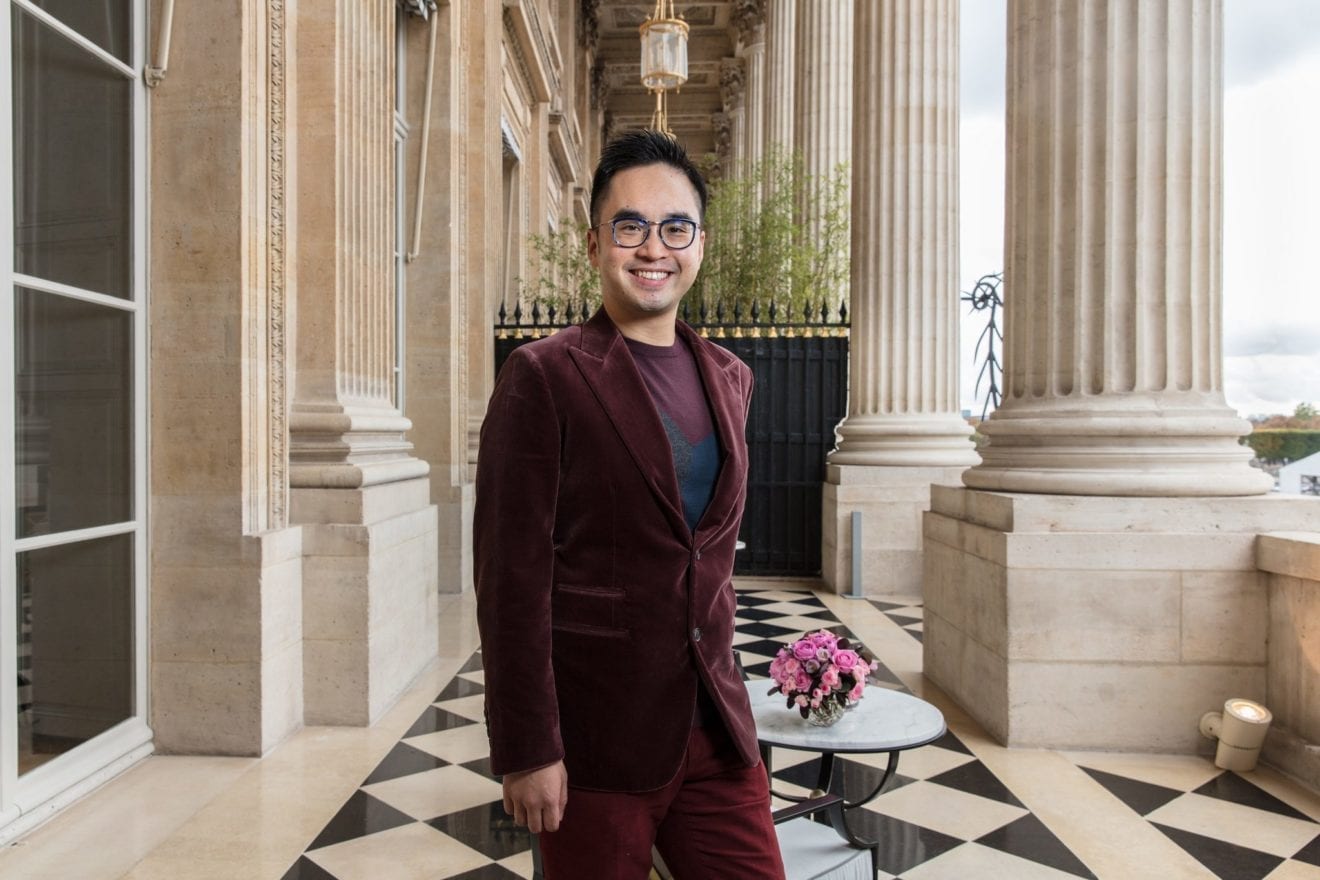
    The rapid expansion of the company has been helped by a US$165 million investment round last year, led by the Hong Kong-based  founder of K11 and C Ventures, Adrian Cheng.

    Clarke said in an interview with Glossy that new shopping behaviours and digital platforms are especially prevalent in China, where Moda’s customers generally aren’t interacting through a website. Instead, a Chinese shopper might buy a $500,000 necklace on an app, and consumers are more familiar with buying through live video sessions and chat platforms, than websites. She predicts this style of shopping will become more common all over the world in the future.

    “The customer knows what she wants, and the ones that listen will have productive, successful businesses,” Clarke said. “A younger designer can get a lot of people whispering in their ear about what they want to do with the collection, but [the Moda customer] is putting her deposit down, she’s favorite-ing – there are so many data points that can tell a designer whether something is great.”

    International markets comprise one-third of Moda Operandi’s sales with Asia the largest region ahead of the Middle East. While the company’s average order value is about $1400, Clarke said that number “skyrockets” in China.

  • Adrian Cheng plans China rollout for Flont, Moda Operandi, and Bandier

    Adrian Cheng plans China rollout for Flont, Moda Operandi, and Bandier

    Cheng, who has bought stakes in publications, luxury retailers and fashion tech companies over the last decade, is bankrolling fine jewellery rental service Flont’s expansion into dozens of malls owned by Chow Tai Fook, his family’s conglomerate.

    He is also funding luxury e-commerce play Moda Operandi’s planned showroom and a store for upscale athleisure retailer Bandier.

    Flont, Moda and Bandier will all open locations in Hong Kong by the end of 2019, in Cheng’s planned 3 million-square-foot Victoria Dockside mall development.

    The venture capitalist has stakes in the three companies through his C Ventures fund, a six-month-old investment vehicle for millennial-centric brands. Cheng said he wants to serve as the bridge between Western retailers and Chinese consumers. He’s also bought stakes in technology companies that help US and European players expand into the Asia-Pacific market, and is eyeing US media firms that would appeal to Asian audiences.

    “The reason we have access to all these deals is because we’re not just going to give them the money. We get the Asia rights and we help them strategically expand,” Cheng said. “There are a lot of hurdles [for Western businesses] going into China, because it’s a new rule of game, a new ecosystem and a new way of thinking.”

    Despite a slump in 2016, Chinese luxury consumption grew by 15 percent last year to a market size of $24 billion, in part due to the country’s aggressively growing middle class, according to a December Bain report.

    “Luxury consumers are willing to pay premiums in China [because of] the sheer size of the market,” said Ricardo Rubí, partner at retail consultancy Simon-Kucher, adding that there is still very low market share penetration for luxury brands in China as compared with other countries.

    Flont’s expansion in Asia is funded by a $12 million joint-venture led by Cheng through C Ventures and Chow Tai Fook. The rental service will open a members’ lounge in Hong Kong in September, and a second location in Shanghai. At least 50 Flont service counters will follow in Chow Tai Fook malls by the end of 2019.

    Moda Operandi, which raised $165 million in a December funding round led by Cheng and private equity firm Apax Partners, will be opening a brick-and-mortar location in Hong Kong in the third quarter of 2019. According to chief executive Deborah Nicodemus, Asian customers make up 8 percent of Moda’s total sales. She expects the number to exceed 20 percent in “very short order,” she said. Following the Hong Kong opening, Moda is looking to expand to Shanghai and Seoul as part of its five-year international plan.

    Bandier, in which Cheng invested in October, will also have a presence in China, as will Beautycon, the beauty festival company and online hub that Cheng bought a stake in around the same time.

    Bandier chief executive Neil Boyarsky told BoF that the location in Hong Kong will be the start of the brand’s potential rollout in China.

    “There’re other properties that we’re exploring in several cities. Definitely Shanghai would be the next one,” he said. “Being in China was part of our long-term framework, but that was accelerated based on the partnership we’ve developed with C Ventures.”

    Plans for Beautycon are less definitive, as the company is still in negotiations to debut in China, according to Cheng.

    While most of his holdings cater directly to consumers, Cheng is also interested in technology companies that provide omnichannel solutions, which allow retailers to sell to customers both online and in physical stores. One of his latest investments is an e-commerce platform, D1M, according to sources familiar with the matter. The sources said LVMH is among D1M’s customers.

    About 600 million people in China participated in its $500 billion sharing economy in 2016, as reported by the Chinese government. Chinese millennial consumers are especially receptive to rental platforms like Flont, Cheng said, because their habits are primed for change in the coming decade, as more of their disposable income will go toward family and parenting. “Millennials will grow older and need to support their parents, and the idea of ownership will change,” he said.

    The 39-year-old entrepreneur, who created C Ventures to address the demands of millennials and Gen Z consumers, said he’s investing in companies that recognise younger shoppers’ preference for unique items and personalised content over broader trends. This set of criteria is why Cheng invested in e-commerce companies like Moda Operandi and Galore magazine.

    Cheng added he is now seeking to buy stakes in media companies, and said he was recently in Los Angeles exploring entertainment companies.

    Already, C Ventures backs Dazed Media, the British company that publishes Dazed magazine and AnOther, as well as Skybound Digital, an entertainment platform that caters to fandoms.

    Having a stake in such publications will help build the fund’s online-offline “ecosystem,” he said. For instance, an online magazine like Dazed could host a pop-up shop or themed party that feature products supplied by Moda or Bandier.

    “We’re trying to connect all the dots,” he said, pointing to additional investments in the pipeline. “We have big ones coming up.”