Retail News CRM

Tag: Monetary Authority of Singapore

  • More protection to be offered to wealthy Singapore investors

    More protection to be offered to wealthy Singapore investors

    Wealthy investors in Singapore may soon be able to choose to be covered by the same protections as retail investors under proposals from the Monetary Authority of Singapore (Mas).

    First announced by the regulator in September 2015, Mas intends to table amendments to the legislation in Parliament by the fourth quarter of 2016, reports Bloomberg. If passed, the changes would come into force in 2017.

    Current framework

    Under Singapore’s current law, it is assumed that wealthy (accredited) investors are better informed and have greater means to protect their own interests. Therefore, banks are exempt from having to provide as much information about financial products as they would to retail investors.

    Accredited investors

    Currently, an individual with personal assets exceeding S$2m (£1.1m, $1.5m, €1.3m) or an annual income of at least S$300,000 is classified as an accredited investor. The ‘opt-in’ regime proposed by Mas would require those meeting accredited investor status to make a conscious decision to be treated as such, with the full knowledge of the lower level of regulatory protection afforded to accredited investors.

    Investors opting to be treated as accredited investors would sacrifice the benefits of stronger regulatory safeguards to have easier access to a wider range of complex and risky products.

  • Singapore consumer prices post biggest drop in 5 years

    Singapore consumer prices post biggest drop in 5 years

    Consumer prices in the Republic fell 0.8 per cent in August, the biggest year-on-year drop since November 2009.

    The decline, which came after a 0.4 per cent fall in July, was mainly due to the lower cost of private road transport, according to a joint news release from the Ministry of Trade and Industry (MTI) and the Monetary Authority of Singapore (MAS) on Wednesday (Sep 23).

    The cost of private road transport fell by 2.9 per cent in August after a decline of 0.1 per cent in July, as a result of the high base a year ago when Certificate of Entitlement (COE) premiums for cars saw a sharp increase, as well as a one-year road tax rebates for petrol vehicles.

    Accommodation cost declined by 2.9 per cent following the 2.8 per cent drop in the previous month, reflecting the continued softening of the housing rental market, MTI and MAS said.

    Services inflation edged down to 0.5 per cent from 0.6 per cent in July, while the cost of retail items fell by 0.6 per cent, mainly due to lower clothing and footwear prices. Food inflation was 1.9 per cent, unchanged from the previous month.

    Core inflation, which excludes the cost of accommodation and private road transport, fell to 0.2 per cent from 0.4 per cent in July, reflecting lower services and retail goods inflation, the news release said.

    “MAS Core Inflation and CPI-All Items inflation could rise towards the end of the year and are expected to pick up further in 2016, as the effects of the budgetary measures and the drag from the past fall in global oil prices dissipate on a year-ago basis,” it said.

    For 2015 as a whole, core inflation and CPI are projected to come in at the lower half of the forecast range of 0.5 to 1.5 per cent and -0.5 to 0.5 per cent, respectively.


  • MAS outlines new safeguards for retail investors

    MAS outlines new safeguards for retail investors

    Retail investors will enjoy a boost in protection with new rules for investments linked to gold and other physical assets. The enhancements also allows flexibility for accredited investors (AIs) to decide on the level of regulatory protection they want to be entitled to.

    The enhancements to its regulatory framework for safeguarding investors’ interests were announced by the Monetary Authority of Singapore (MAS) on Tuesday. They take into account feedback received on its consultation paper published in July last year.

    AIs include individuals whose net personal assets exceed S$2 million or whose income in the preceding 12 months is not less than S$300,000.

    MAS said that consumers should enjoy the regulatory safeguards for non-conventional investment products that are similar to existing capital markets products. The non-conventional investment products – previously not in MAS’ regulatory scope – will be regulated either as debentures or investment funds, depending on their features.

    Precious metals buy-back arrangements involving gold, silver and platinum with guaranteed buy-back at an agreed price will be regulated as debentures. This is because they are widely regarded as financial assets and are commonly used as collateral for such arrangements.

    Collectively-managed investment schemes intended for retail investors will require authorisation from MAS and be restricted to investments in securities or other assets that are liquid (for example precious metals), or have stable income-generating ability such as completed real estate.

    Arrangements that exist before the legislative changes will not be affected, unless additional funds are raised from retail investors after the new laws are in place.

    In the high net worth space, (AIs) will have the option to benefit from the stronger and full range of regulatory safeguards available to retail investors.

    As part of the changes, financial institutions will have to treat new customers who are AI-eligible as retail investors by default, unless the customers choose to “opt-in” to AI status. The latter could be those who wish to retain their easier access to a wider range of complex and risky products.

    For existing AIs, FIs can continue to treat them as AIs, unless they choose to “opt-out” of AI status to benefit from the full range of capital markets regulatory safeguards available to retail investors.

    Mr Lee Boon Ngiap, assistant managing director, capital markets, MAS, said that while the regulatory measures will strengthen regulatory safeguards for retail investors, they are “not a substitute for investor responsibility”.

    “All investments carry risk, so investors should buy only products that they understand and have a level of risk that they are comfortable with. In addition to seeking advice from regulated financial advisers, we encourage investors to visit the MoneySENSE website, which has a wealth of financial educational information to help investors manage their money and better understand financial products,” he said.

    MAS is still reviewing feedback on the remaining proposal to introduce a framework to rate retail investment products on their complexity and risk, and will issue a separate public response later.

  • Banks, insurers to face new rules when selling at malls, public places

    Banks, insurers to face new rules when selling at malls, public places

    As financial institutions (FI) jostle to get a bigger share of the consumer dollar by sending their salespeople to hawk everything from credit cards to insurance and investment products at shopping malls, MRT stations and other public places, the Monetary Authority of Singapore (MAS) has stepped in to minimise the risks to consumers from such aggressive marketing tactics.

    In a consultation paper released today (July 23), the financial regulator proposes `Market Conduct Guidelines’ setting out safeguards that FIs — including banks, non-bank credit card and charge card licensees, insurance companies, capital markets and financial advisers — are required to implement while marketing their products and services at retail outlets and public places.

    “These proposals seek to strike a balance between allowing FIs flexibility with their marketing and distribution activities, while safeguarding consumers’ interests when they purchase financial products at retailers and public places,” said Mr Lee Boon Ngiap, assistant managing director of capital markets at the MAS.

    He emphasised that the regulator does recognise the importance of such marketing initiatives as a part of the FIs’ business models. The proliferation of such practises could lead to problems including harassment of consumers, confusion over the roles of the FI and the retailer, enticing consumers to purchase unsuitable products, buying financial products in an unconducive environment and mishandling of monies collected, the MAS said.

    Under the proposals, FIs will have to notify the MAS of their marketing and distribution activities at retailers and public places on a quarterly basis so that the regulator is able to monitor the situation more closely and tailor its supervisory approach accordingly.

    The MAS also proposed that the board and senior management of FIs be accountable for ensuring proper controls over their marketing campaigns at such places. FIs are also expected to call back customers roped in at public places before or within the free-look or cooling-off period to ensure they have understood the insurance and investment schemes they purchased. FIs must regularly conduct mystery shopping and site visits to ensure that their representatives adhere to the required standards and guidelines.

    The proposals complement existing rules and practises, and ensure consistency and alignment of standards across the financial industry, the MAS said, referring to existing guidelines that most FIs already have in place.

    Mr Antony Eldridge, financial services leader at business consultancy PwC Singapore said: “Given innovations in marketing and distribution techniques used by FIs, these proposals should not be unexpected. In fact, the proposals should also help to protect FIs in Singapore from getting caught in the kind of hugely costly scandals that have hit a number of overseas institutions.”

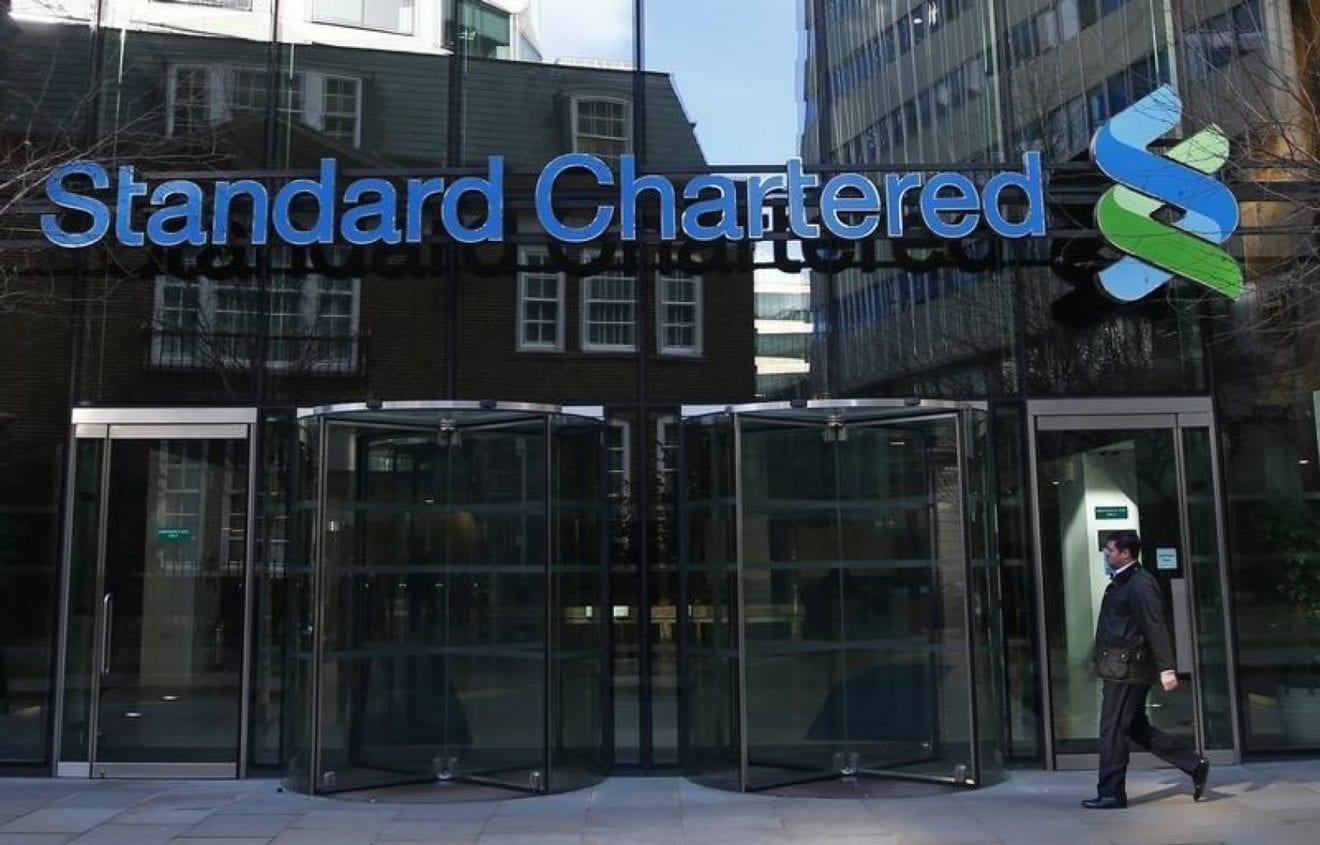
    Mr Rajan Raju, head of retail clients at Standard Chartered Bank Singa­pore, said: “The initiative is about responsible selling, treating customers fairly, and ensuring a robust process for the marketing of financial products and services. Treating customers fairly remains a key priority for us at Standard Chartered.”

    The Life Insurance Association of Singapore said its members are aligned with the MAS in safeguarding consumers’ interests. The implementation of numerous initiatives such as compareFIRST, balanced scorecard and Direct Purchase Insurance products are some examples of the industry’s efforts to ensure that consumers are well-informed and given flexibility in managing their portfolios to meet their protection, savings and investment needs, LIA added.

    The public consultation will close on Aug 24.