Tag: money laundry

  • Vietnam Police Uncover $39 Million Money Laundering Scheme Utilizing AI Facial Recognition Technology

    Vietnam Police Uncover $39 Million Money Laundering Scheme Utilizing AI Facial Recognition Technology

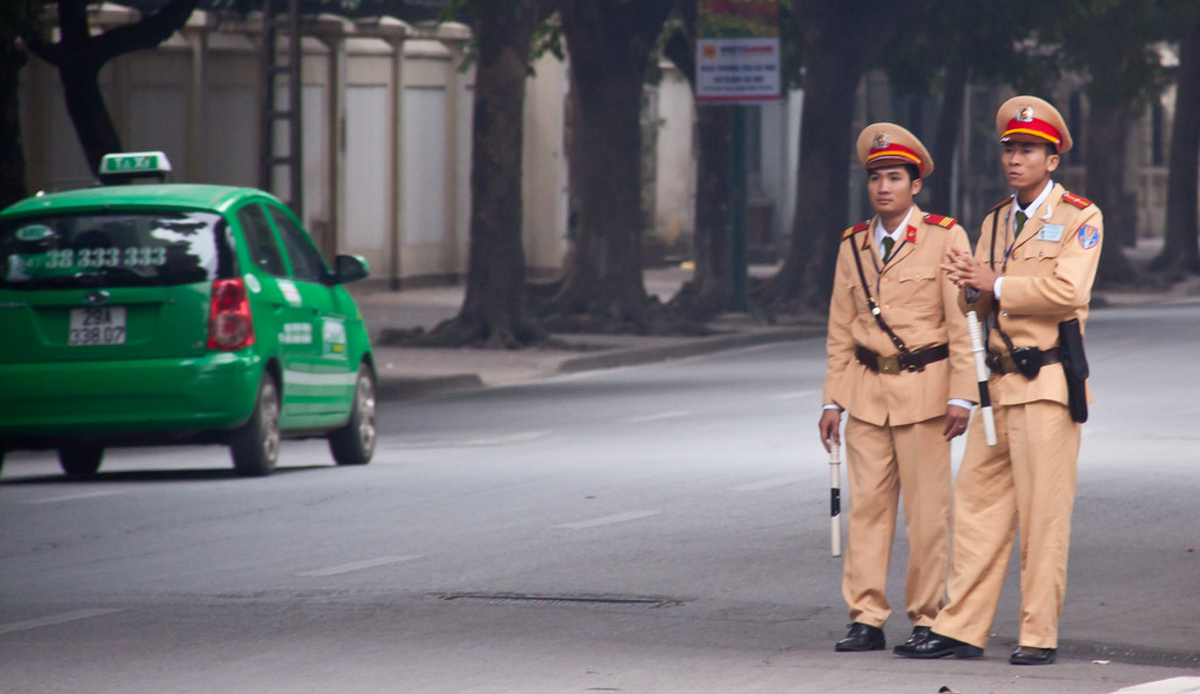
    The recent police operation has shed light on a sophisticated money laundering scheme involving advanced technology, with authorities apprehending a 14-member gang in Hanoi and neighboring Ninh Binh Province. Allegedly, this group laundered a staggering VND1 trillion (approximately US$39 million), ingeniously using artificial intelligence to circumvent biometric security systems at banks.

    Illegal Gambling Under Investigation

    In a statement released on Thursday, Ninh Binh police announced that 13 individuals, spearheaded by 46-year-old Pham Hong Chuyen from Hanoi, are currently under investigation for orchestrating illegal gambling activities. Among them, seven are facing formal inquiries for their involvement in money laundering—a twist that introduces a layer of high-tech intrigue to traditional criminal practices.

    What sets this case apart is its novelty; it marks the first documented instance in Vietnam where AI-generated face scans were employed for illicit money laundering purposes.

    A Game of Deception

    Chuyen revealed to investigators that he had been recruited by an individual from Taiwan to help launder the funds amassed through a gambling website that has been operational for years. This platform, targeting Vietnamese players, astonishingly registered over one million accounts within just the first four months of this year, amassing VND1 trillion in gambling stakes.

    To clean this substantial cash flow, Chuyen had local individuals open bank accounts in their names. These unwitting participants were required to submit a 30-second video of their faces—a digital snippet that Chuyen then manipulated to create fraudulent AI-generated face scans. In Vietnam, to transfer VND10 million or more, individuals must scan their faces, a requirement that Chuyen cleverly leveraged to operate multiple accounts without the account holders’ awareness.

    In a swift response, police have frozen around 1,000 bank accounts believed to be linked to this web of deception. Chuyen’s syndicate is estimated to have laundered over VND1 trillion from September of last year to April this year.

    Now, one can’t help but wonder: as technology continues to evolve, so too will the creative tactics of those looking to exploit it. Will banks need to up their security game to stay ahead?

    Questions & Answers

    **Why did the gang use AI for money laundering?**
    They utilized AI to generate fake face scans to bypass biometric security measures, allowing them to operate multiple bank accounts without the knowledge of account holders.

    How much money was allegedly laundered by the gang?
    The group is believed to have laundered over VND1 trillion, which equates to approximately US$39 million.

    What are the consequences for those involved?
    Thirteen individuals are under investigation, with several facing serious charges related to illegal gambling and money laundering, potentially resulting in severe legal repercussions.

  • Singapore’s Crazy Rich Money Launderers

    Singapore’s Crazy Rich Money Launderers

    If anyone thought that Credit Suisse’s collapse would prove fatal to the Swiss finance hub should take a look at what is going on in the city-state right now.

    Singapore and its financial hub have been in the throngs of an unbelievably large money laundering scandal since the middle of August. It relates to billions of dollars in criminal proceeds that Chinese businesspeople shamelessly used to flaunt a flagrant lifestyle with luxury cars and property by using and washing cryptocurrencies.

    This all happened over the course of a few years until ten suspects were arrested by authorities last month, some of whom had been previously listed as wanted in China.

    The case is beginning to make larger waves this week. It is coming to light that more people are involved than previously thought while the volume of money laundered is reaching almost $1.5 billion. Most of the proceeds are from illegal gambling junkets in Asia that were reinvested in any luxury imaginable.

    A line of banks has been involved including Singapore’s domestic institutions DBS, OCBC, and UOB. Internationally, Citi and Deutsche Bank have been caught up in it as well and all are working closely with authorities in the city-state. At this point, all remain innocent until proven otherwise. Other banks, including the Swiss, are working to figure out internally whether the case involves a selected number of people or whether this is a large-scale scheme that could involve them as well, as a number of them have indicated.

    It is actually remarkable that all of this didn’t happen much earlier given Singapore’s reputation of having the strongest rules worldwide when it comes to the prevention of money laundering and other financial crime. Ostensibly, there is a big gap between what the authorities indicate and reality. This is also not something that has just come up now.

    Singapore was heavily involved in the large-scale 1MDB scandal when billions of funds were siphoned out of the Malaysian government development fund called 1Malaysia Development Berhad (1MDB, image above) through a number of banks –including Swiss ones. That case led to the factual end of the large Ticino-based Banca della Svizzera Italiana (BSI) and Falcon Private Bank in Switzerland.

    If that was enough, Singapore has also been in the middle of other nefarious schemes, including that of Germany’s Wirecard debacle as well as the criminal activities of commodities trader Hin Leong Trading.

    All this indicates that these are not isolated instances and finance professionals in Singapore are now in agreement that the finance hub has become a victim of its own success.

    Much of this is linked with efforts in recent years to be highly attractive to foreign investors, assets, and high-net-worth individuals with their family offices. Even though this was all done in parallel with more stringent AML rules, it still created an ideal environment for Chinese VIPs, institutions, and money to make their way here.

    That led to a massive influx of individuals, particularly following the pandemic and the introduction of a more stringent compliance regulatory framework in China. This has led to massive price inflation that is proving even more problematic for its citizens, particularly regarding the levels of property rents.

    That put the city-state on a risky path that is starting to have consequences and is beginning to hurt its reputation. Many wealthy individuals who have moved here in recent years fear that the case will damage Singapore’s reputation.

    The scale of the current scandal is incomparable. Authorities have confiscated more than 100 properties worth well over $500 million. Other impounded assets include Bentleys and Rolls Royces, whiskey collections, Hermes handbags, and Patek Philippe watches.

    Most of the money is allegedly from illegal gambling rackets in the Philippines and China. Authorities are accusing one of those arrested of buying an apartment in 2019 on Orchard Road, one of the city’s main shopping streets, for over $15 million. It was a so-called good-class bungalow or a two-floor 1,400 sq.m villa in one of the best areas in a highly built-up urban area in what is an extremely densely populated city.

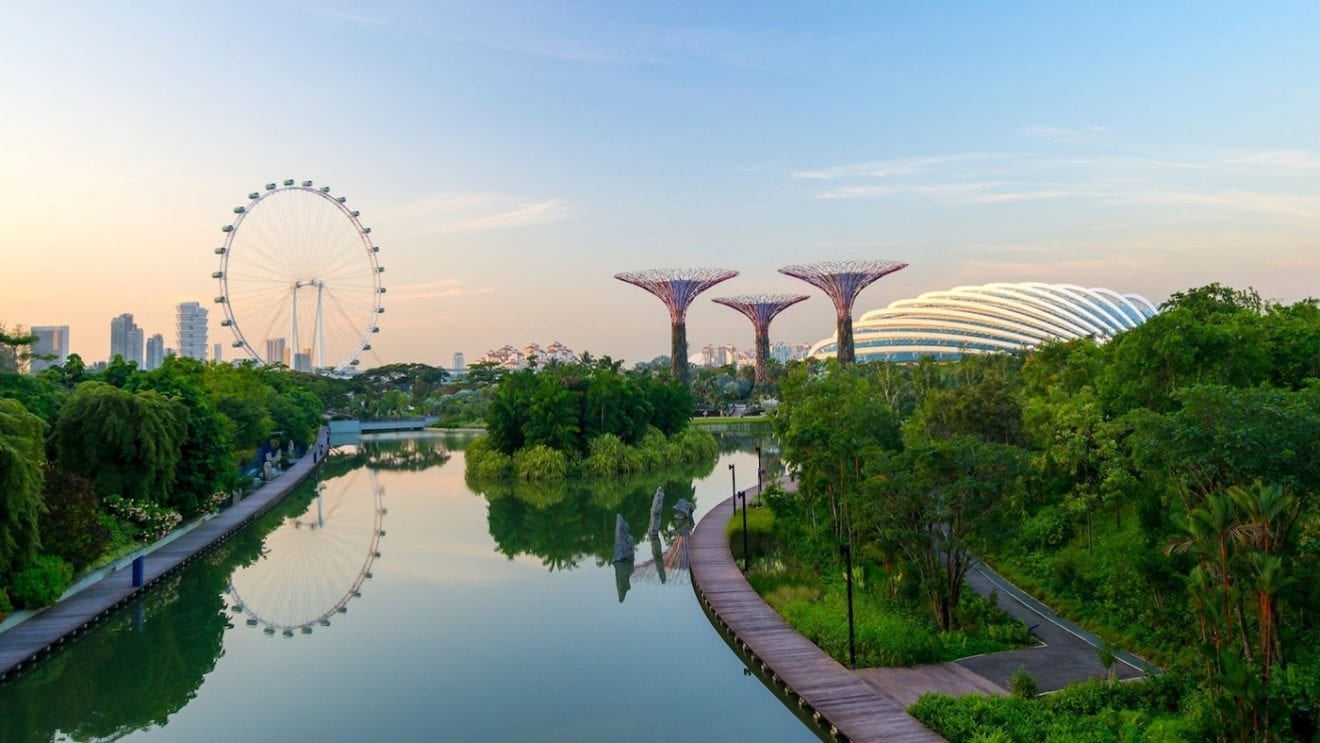
    Another favorite spot for those who were recently arrested was Sentosa. Seven properties have been frozen on the quasi island-condominium complex for the high net worth, which is also a tourist spot with a golf course and several amusement parks, including Universal Studios. It also has a large marina where you can see any number of luxury yachts berthed, some of them from Caribbean tax havens.

    The scandal poses numerous problems for Singapore. The government is intent on keeping the different ethnicities in the city-state in harmony and this doesn’t help. Shameless displays of wealth and privilege, particularly if they are linked with crime, could easily breed resentment. On the other hand, the case could also raise suspicions about other high-net-worth families that have settled down here in recent years.

    It is likely a coincidence that the internationally renowned head of the Monetary Authority of Singapore (MAS), Ravi Menon, announced his decision to retire at the end of 2023 this week. At the same time, the affair sheds a dark light on a body that had been trying to be the global poster child when it came to fighting financial crime.

    Given that, it is somewhat surprising that Menon, who has served in a public capacity for 36 years and was elected for another two-year term just seven months ago, is throwing in the towel now.

    There are many indications that Singapore will be dealing with the case for an extended period of time. Further developments could continue to erode the city’s attractiveness and reputation. Dubai is likely to be a clear beneficiary of that, as it has been experiencing a boom since the start of the Ukraine war given that it does not uphold the current Western sanctions regime against Russia.

    This means that it is an ideal time for Switzerland to focus on developing its financial sector with a certain confidence, particularly given the collapse of Credit Suisse earlier this year and the subsequent creation of a new, stronger UBS.
  • Hong Kong Customs Arrest $400 Million Money Laundering Family

    Hong Kong Customs Arrest $400 Million Money Laundering Family

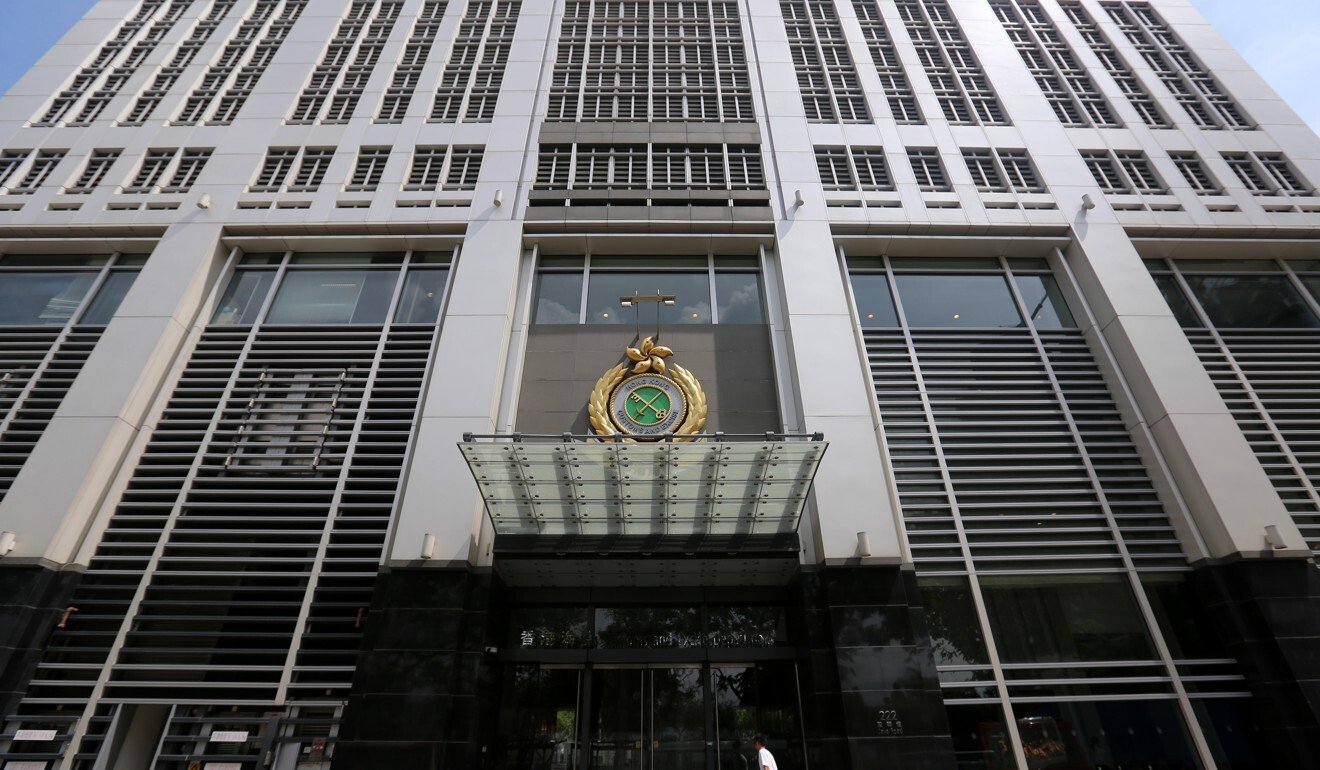
    Parents, three children, and a money exchange owner were arrested by Hong Kong customs over alleged money laundering of nearly $400 million.

    Investigations first kicked off in 2018 after a tip-off from a bank and since then, the family made 6,000 «suspicious financial transactions» involving more than HK$3 billion ($387 million) through over 100 accounts from nine banks, according to Hong Kong customs authorities.

    The arrested include the parents, aged 58 and 62; the eldest son, 34; a second son, 30, who works at the money changer involved; a daughter, 25; and a 60-year old owner of the money changer. The latter suspect has been arrested and his money exchange license suspended due to suspicions over alleged transactions with the family totaling $22 million despite reporting just $3.9 million.

    According to investigators, the family had around $3.9 million in assets – half in bank accounts and another half in two properties – but a monthly income of just around $9,000.

    The assets held by this family are not commensurate with their profiles and backgrounds,» said the syndicate crimes investigation bureau’s senior superintendent Mark Woo Wai-kwan. We suspect this family has a hidden income which may be the crime proceeds from assisting money laundering.

    Woo said the funds had come from unknown sources or shell companies and the family’s assets have since been frozen.

    Investigators currently believe that the family had helped other syndicates launder crime proceeds for a cash reward.

    According to Woo, investigations about the funding source and illegal activities are still underway but there are indications that third party individuals or shell company owners involved were from mainland China.

    Money launderers in Hong Kong face a maximum penalty of 14 years in prison and a $650,000 fine.

  • Money laundering all too easy in Vietnam?

    Money laundering all too easy in Vietnam?

    On February 16, the Hanoi People’s Court will resume a trial over corruption and money laundering charges against Vinashin Ocean Shipping Co., Ltd. (Vinashinlines).

    In this trial, defendant Giang Van Hien (67, Ho Chi Minh City) has been charged with helping his son and former director of sales at Vinashinlines Giang Kim Dat (born 1977) to embezzle more than VND259.5 billion ($11.4 million). More specifically, to evade the authorities, Dat told Hien to open 22 foreign currency bank accounts to keep the embezzled money.

    Dat used this money to invest in domestic real estates and transfer it abroad. Investigators have verified the sources of these assets and either froze or seized 40 domestic real estate properties, including lands, apartments, villas as well as properties in Singapore and apartments in the UK.

    Money laundering is not a new crime in Vietnam, but prosecution has been challenging because of difficulties in proving the offender or the crime. Speaking to reporters on the sidelines of National Assembly meetings, Senior Lieutenant General Le Quy Vuong, Deputy Minister of Public Security, said the Giang Kim Dat case is a classic graft and money laundering case.

    In the Penal Code of 1999, this crime was defined in Article 251 as “laundering money and/or property obtained through the commission of crime,” but it was not until the modified Penal Code of 2009 that the term “money laundering” came into official use.

    The legal framework exists, but enforcement has been difficult. Experts said money laundering charges have been rare.

    Explaining this, Dr Dao Le Thu, director of the comparative legal research centre of Hanoi Law University, said the main reason was the difficulty in following the money trail. This is because financial transactions in Vietnam do not follow international standards and cash still plays a key role in the economy.

    Besides, regulations are still limited in several ways: there are no charges for self-laundering or for commercial entities, or the fact that the term “money obtained through crimes” in the penal code has not seen further clarification. Whereas other countries might categorise crimes by source or severity, Thu added.

    Article 324 of the 2015 Penal Code has defined money laundering behaviours more clearly  as “disguising the legal origin of the money or property obtained through one’s own criminal activities or that one knows to be obtained via another person’s criminal activities.” Therefore, proving money laundering could be easier than it used to be. However, the 2015 Penal Code’s entry into effect has been postponed.

    Item 1, Article 3 of Decree 74/2005/ND-CP dated June 7, 2005 on “prevention of money laundering” explains the concept of money laundering as the behaviour of individuals or organisations seeking to legitimise money or property through activities such as:

    • Joining directly or indirectly in a transaction involving money or property obtained through criminal activities

    • Acquiring, capturing, transiting, converting, transfering, transporting, using and cross-border transporting money or property obtained through the commission of crime

    • Investing in a project, a work, contribute capital to a business or find other ways to cloak or disguise or impede verification of origin, the true nature or location, the process of moving or ownership for the money or property obtained through the commission of crime