Tag: Mongolia

  • Lotteria to debut in Mongolia

    Lotteria to debut in Mongolia

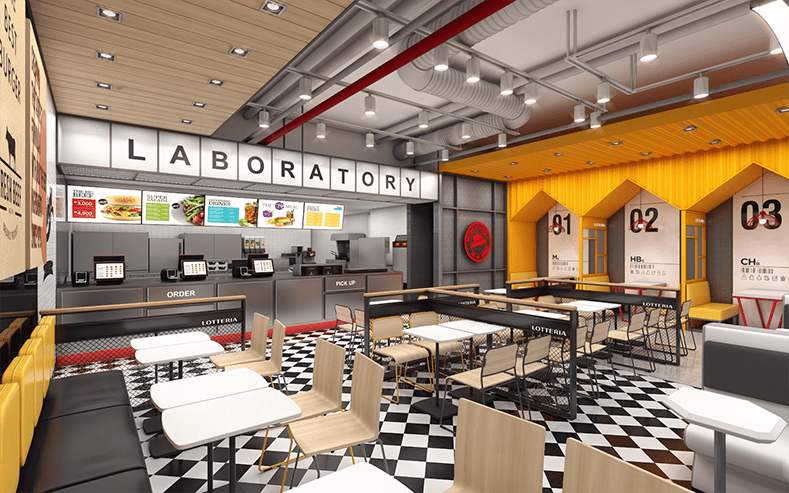
    Korean conglomerate Lotte is launching its fast-food chain Lotteria in Mongolia.

    The brand’s restaurant franchise unit, Lotte GRS, will open its first location in the capital city of Ulaanbaatar and increase outlets to 10 over the next four years. The move follows an agreement with Mongolian restaurant and theatre operator Eugenetek Mongolia, which has signed on as master franchisor.

    A spokesperson for Lotte GRS said the flagship store’s prime location within the city’s commercial district, together with Mongolia’s young population and local enthusiasm for Korean culture, should contribute to the success of the new restaurant.

    Lotte GRS has previously expanded into China, Vietnam, Indonesia, Myanmar and Cambodia with its Lotteria chain as well as its Angel-in-us cafe franchise.

  • Japanese restaurant chain Pepper Lunch to launch in Mongolia

    Japanese restaurant chain Pepper Lunch to launch in Mongolia

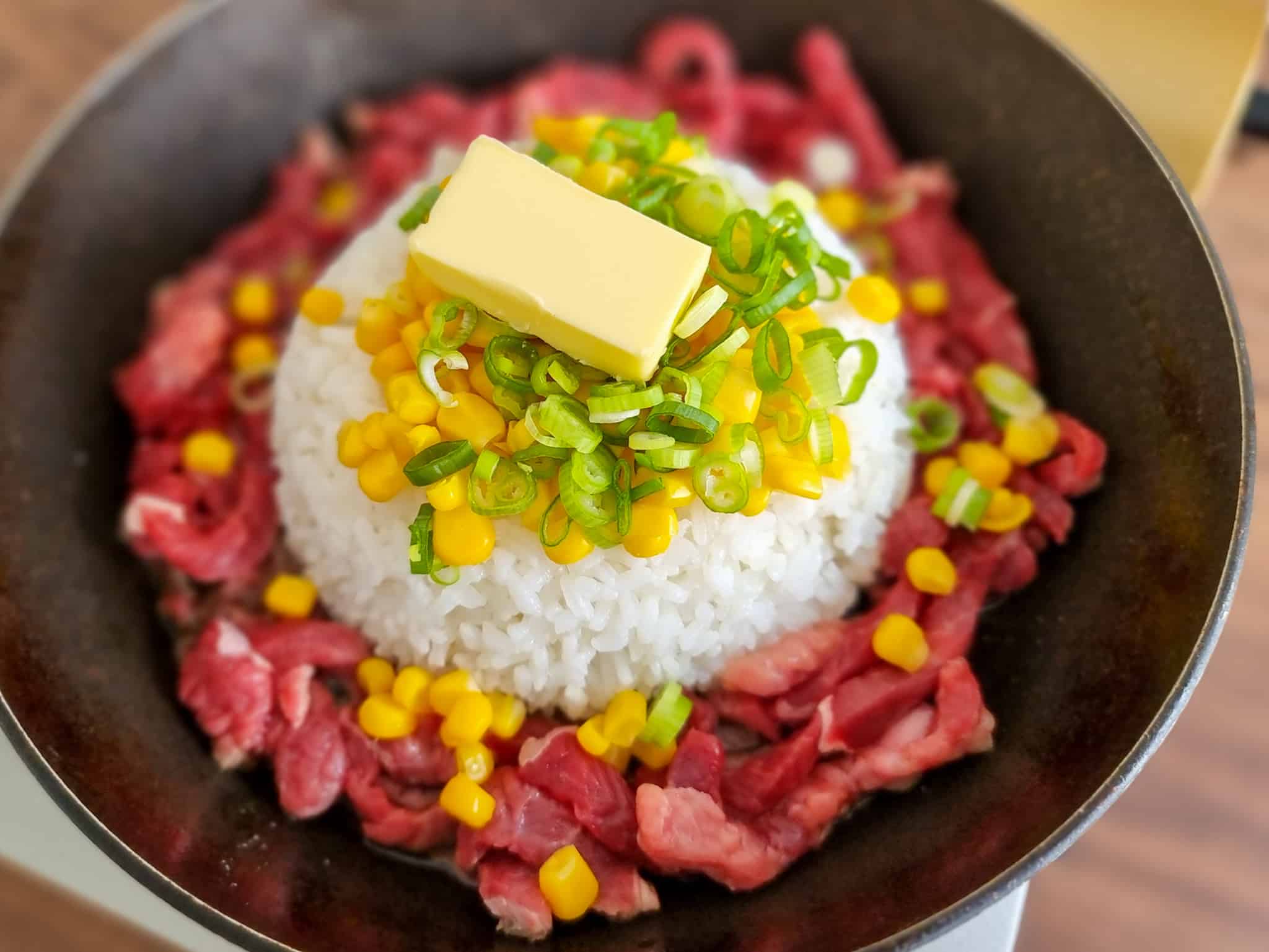
    Japanese restaurant chain Pepper Lunch plans to open its first store in Mongolia next year, as part of its global expansion strategy.

    The brand has signed a franchise deal with local distributor Bluemon Group, making Mongolia its 17th country.

    “We signed a master franchise agreement with our Mongolian franchise partner yesterday,” Yuto Tago, global CEO of Pepper Lunch wrote on his LinkedIn account.

    “I cannot wait to see the first restaurant opening next year!”

    Pepper Lunch is a DIY casual eating concept with more than 400 locations around Japan, Asia, and Australia. Founded by a trained chef, Kunio Ichinose, the restaurant focuses on premium steaks, pasta, and cheese curry rice.

    Pepper Food Service sold the Pepper Lunch franchise to J-Star Investment Fund for US$79 million in 2020.

  • South Korean burger chain Mom’s Touch to expand into Mongolia

    South Korean burger chain Mom’s Touch to expand into Mongolia

    South Korean chicken burger chain Mom’s Touch&Co. said Tuesday it inked a master franchise agreement with Mongolia’s Foodville Farm LLC, in its first steps to enter the central Asian country.

    Foodville Farm is an independent company established by the local franchise operator Monbakery LLC to expand the Mom’s Touch brand in Mongolia. The company operates the South Korean coffee franchise Caffe Bene and bakery chain Tous les Jours in the Asian country.

    The South Korean chicken burger franchise said it has decided to enter Mongolia due to the country’s rapid economic growth, a relatively young population and a growing interest among Mongolians in Korean food, and products from K-pop and the broader Korean Wave.

    Experts said the Korean Wave generated by K-pop and TV dramas could turn fans in foreign countries into active consumers of South Korean products.

    Mom’s Touch’s first Mongolian restaurant is set to open in the first half of this year. The company plans to add more than five stores by the end of the year, it said.

  • Mongolia to Take Digital Development to a New Level

    Mongolia to Take Digital Development to a New Level

    At Asia Tech Singapore 2022, HE Bolor-Erdene Battsengel, State Secretary, Ministry of Digital Development and Communications, Mongolia, took to the stage to share her views on the changing roles of women in tech with fellow guest panellists.

    Digital governance is a key agenda for many countries. What have been some initiatives rolled out?

    Mongolia aims to build a digital nation. In this context, a number of basic system and structural changes have been made. For example, to accelerate digital transformation, the former agency named Communication and Information Technology Authority was reorganized this year into the Ministry of Digital Development and Communications. E-Mongolia platform has successfully launched an integrated e-government system. The E-Mongolia academy has also been established to further develop, improve and maintain the E-Mongolia System. The fundamental laws of digital governance, such as the Law on Public Information, the Law on Digital Signatures, the Law on the Personal Data Protection, and the Law on Cyber ​​Security, have also been approved by the Parliament of Mongolia.

    Mongolia implemented the e-Mongolia platform a couple of years ago to digitalize public services. Can you tell us about the progress of this initiative and how this has impacted the lives of Mongolians?

    We first introduced the E-Mongolia system on 1 October 2020. The main achievement is that today, it has become a large system that includes 656 services from 61 government organizations. In total, more than 12 million services have been provided online through this system. The system currently has 1.3 million users. That means one-third of the adult population uses the E-Mongolia platform. A total of 656 most demanded public services can be obtained from this system, from applying for a driver’s license to applying for a passport. Features such as offering services based on customer behavior have recently been added.

    Mongolia is a vast and one of the least densely populated countries in the world. Can you tell us how this has been a challenge for 5G adoption and what is the 5G journey like so far?

    Our country has approved a policy to introduce 5G networks in 2020. In 2021, 5G pilot tests were successfully conducted twice. This year, the Ministry of Digital Development and Communications and the Communications Regulatory Commission are preparing the spectrum management for the introduction of 5G in Mongolia. In addition, mobile operators are preparing to invest in 5G. It has also successfully completed a 5G readiness assessment with the support of the International Telecommunication Union (ITU).

    Our country has a large territory and a sparsely populated region. This situation poses the biggest challenge when building a 5G network. In other words, the investment for establishing a 5G network will require a lot. In addition, 5G requires more robust fiber optic infrastructure. The next big challenge is a small, but highly competitive market. For instance, Mongolia has more than 3 million citizens served by 5 mobile operators.

    What are some plans in the pipeline for the Ministry of Digital Development and Communications of Mongolia?

    As I mentioned, our country aims to become a digital nation. The government has announced that information technology is one of the priorities of the economy. The Ministry of Development was implemented within the government, and the Parliamentary Standing Committee on Innovation and Digital Development was established. Our ministry has also approved a digital nation strategy. The strategy has six sub-objectives: digital infrastructure, e-governance, cybersecurity, digital literacy and inclusion, innovation and production, and national development accelerator.

    As I have said before, we have passed laws to accelerate the nation’s digital development to a new level. Emphasis will be placed on the implementation of these laws and the approval of compliance regulations.

  • SLA Digital partners with Unitel on direct carrier billing in Mongolia

    SLA Digital partners with Unitel on direct carrier billing in Mongolia

    SLA Digital has announced a new partnership with Unitel Group, a Mongolian telecommunications company, with Unitel naming SLA Digital as their managed service provider for carrier billing.

    As part of the relationship, SLA Digital will also be able to offer digital content providers access to Unitel’s other payment options including IPTV payments, Toki E-Wallet and payments made via U-Point, their points-based loyalty program.

    Kevin Drayne, CEO at SLA Digital commented: “We are delighted to be working with Unitel to enable seamless and secure payment experiences for their customers through carrier billing. We see this relationship as a real opportunity to bring more to Unitel and their customers, by offering a vast range of digital content and entertainment with new convenient ways to pay.”

    The partnership means Unitel will be able to effortlessly introduce new digital content to customers from SLA Digital’s expanding client portfolio. Likewise, digital content providers can connect to Unitel’s mobile subscribers, and expand into this region, through a simple integration process.

    Kevin continued: “Our direct connection with Unitel Mongolia will allow our existing and new digital content partners to easily connect to the mobile operator and make the most of all the payment options available. We hope that more content and more ways to pay will lead to greater choice and satisfaction for Unitel customers.”

  • Tealive parent Loob Holding eyes on IPO

    Tealive parent Loob Holding eyes on IPO

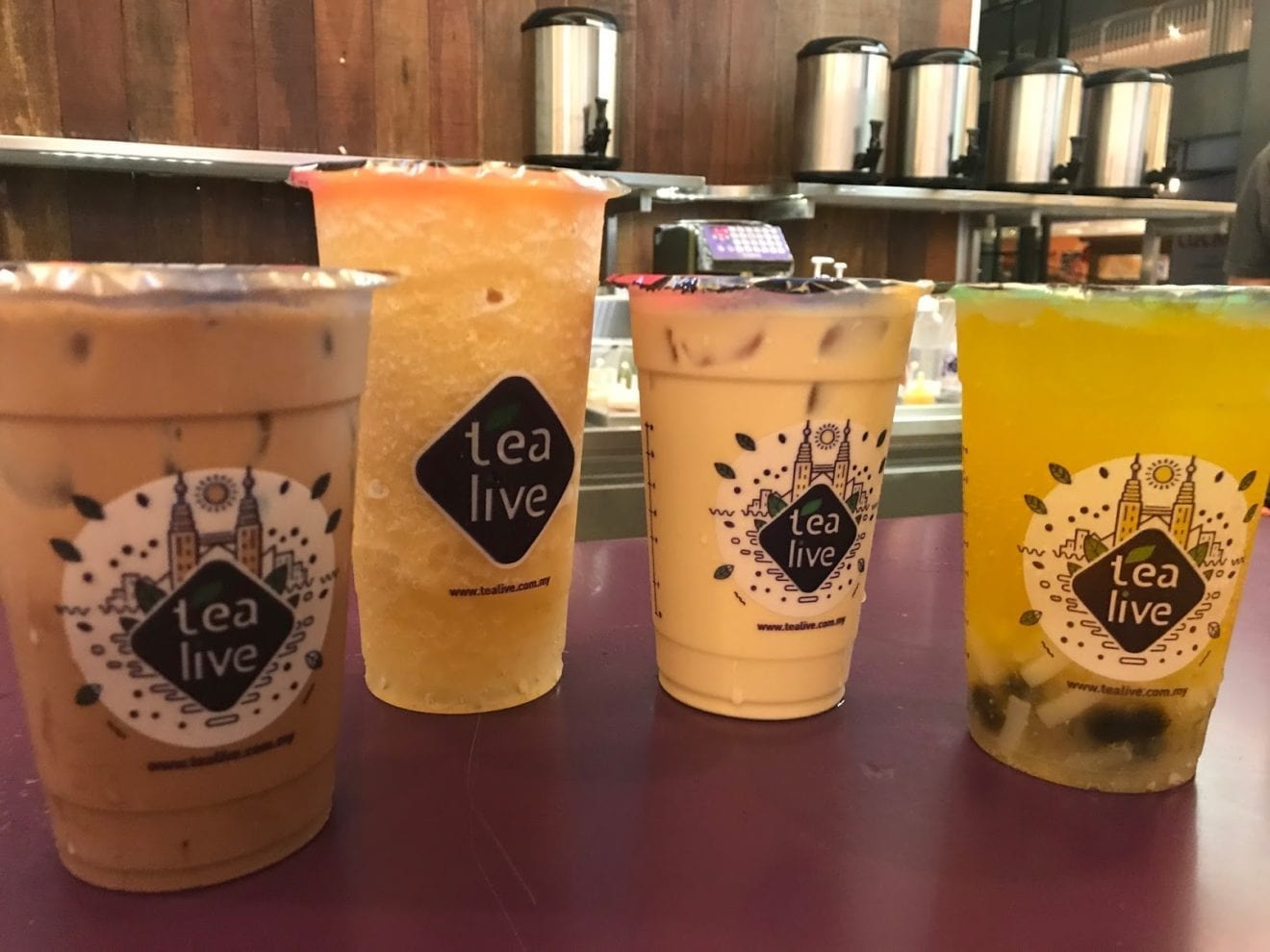
    Tealive parent Loob Holding, is planning an IPO to fund ‘aggressive expansion’. The company is looking to open 1000 Tealive stores in 15 countries by the end of next year.

    Along with another 150 new outlets in India by 2024.

    China is still its focus market, with 500 more outlets to come after first outlet opened last November.

    Tealive has more than 200 outlets in its home market, seven in Vietnam, two in China, and one in Australia. About one third of these are operated by franchisees.

    Loob Holding CEO Bryan Loo said the company is building relationships with potential business partners in Japan, Indonesia, Myanmar, Mongolia, and the UAE, while Singapore is also in its expansion plan.

    Apart from Tealive, Loob also runs F&B franchises in Malaysia, including Gindaco, Croissant Taiyaki, Define:food, Define:burgers and Ko Ko Kai.

  • JD stores open in Beijing and Mongolia

    JD stores open in Beijing and Mongolia

    Chinese online retail giant JD has opened two new innovative stores at Beijing Capital International Airport (BCIA) and Hohhot East Railway Station in Inner Mongolia. In a move to further expand the firm’s “boundaryless retail” strategy, the JD travel retail stores use the e-commerce company’s latest retail technology in order to make it easier and more enjoyable for travellers to purchase on the go. The openings add airports and railway stations to JD’s offline retail offerings, which already include convenience stores, supermarkets, and partnerships with hotels.

    Located in the departure lounge of Terminal 3 at BCIA for the next three months, JD’s pop-up store will offer popular travel items such as daily necessities, clothing, mobile accessories, beauty products, and bags and suitcases. The store uses JD’s smart store technology to understand how customers interact with products as well as which products to offer them. The integrated JD Zu Chongzhi platform can analyse customer behaviour and traffic flow, such as generating heat maps, in order to assist with product selection and inventory management, ensuring smooth store operations.

    “[Stocked] with items popular among travellers, the new shop will not only offer the products they want to buy most on their journeys – it will also allow them to personally experience what shopping of the future will be like, brought to them by China’s largest and most innovative retailer,” a spokesperson for BCIA said.

    The 100sqm unmanned Hohhot East Railway Station JD travel retail store opened in partnership with China Railway Express. It also makes the most of JD’s technological capabilities, with features such as facial-recognition payment and smart vending machines. Later, the store will make use of a Mini Program in WeChat so that customers can choose to buy on the spot and take their purchases with them, or shop online and have them delivered to a convenient location.

    JD Logistics and China Railway Express have been cooperating in logistics transportation since 2014, and have worked together to help facilitate the JD Luxury Express “white glove” delivery service as well as fresh food delivery via high-speed rail.

    “Many of our customers enjoy shopping while traveling and we’re determined to make sure they benefit from the convenience of JD wherever they are,” JD’s GM of social e-commerce and retail innovation, Bing Zhang, said.

    The new JD travel retail stores in Beijing and Inner Mongolia will provide them with a truly seamless experience that is unrivalled anywhere”.

  • E-mart opens 2nd store in Mongolia

    E-mart opens 2nd store in Mongolia

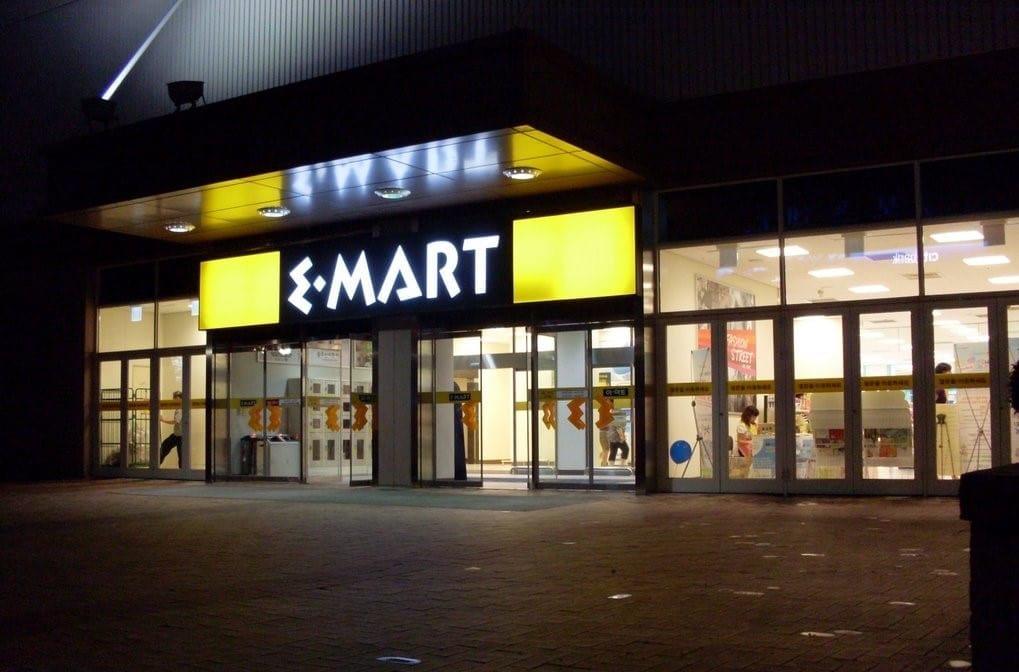
    Mongolia recently got its second E-mart, the discount chain of Korean retail giant Shinsegae.

    Unlike the first store, which has its own building, the second store is renting 5,000 square meters on the first and second floors of the Solo Mall in western Ulaanbaatar.

    The new store sells 12,000 types of goods, with Korean products accounting for 30 to 40 percent. Four out of 10 Korean products at the store are supplied by small and medium enterprises, according to E-mart.

    After signing a contract in July 2016 with Sky Trading, the local distribution unit of Mongolian retail giant Altai Group, E-mart entered the Mongolian market as a franchise receiving royalties for teaching the know how of running the stores.

    The first store posted 42 billion won (US$37 million) in sales IN 2016, 140 percent higher than expected. It chalked up 8.4 billion won from sales of Korean products.

    E-mart attributed the results to the good quality and fresh ingredients of Korean products, because most Mongolian consumers had been unable to buy such products before.

    “Among 20 supermarkets in Ulaanbaatar, E-mart is the only one that offers almost all kinds of products,” a company official said. “The store has attracted middle-class customers.”

    E-mart said it has sent Korean workers to the second store. They are attracting Mongolian customers with rice rolls, pork belly and chicken based on Korean recipes. The store also sells pizza, which has begun winning popularity among Mongolian consumers.

    The company said it also plans to sell sashimi for Mongolian customers who have not been able to taste fresh fish because of the country’s landlocked location.

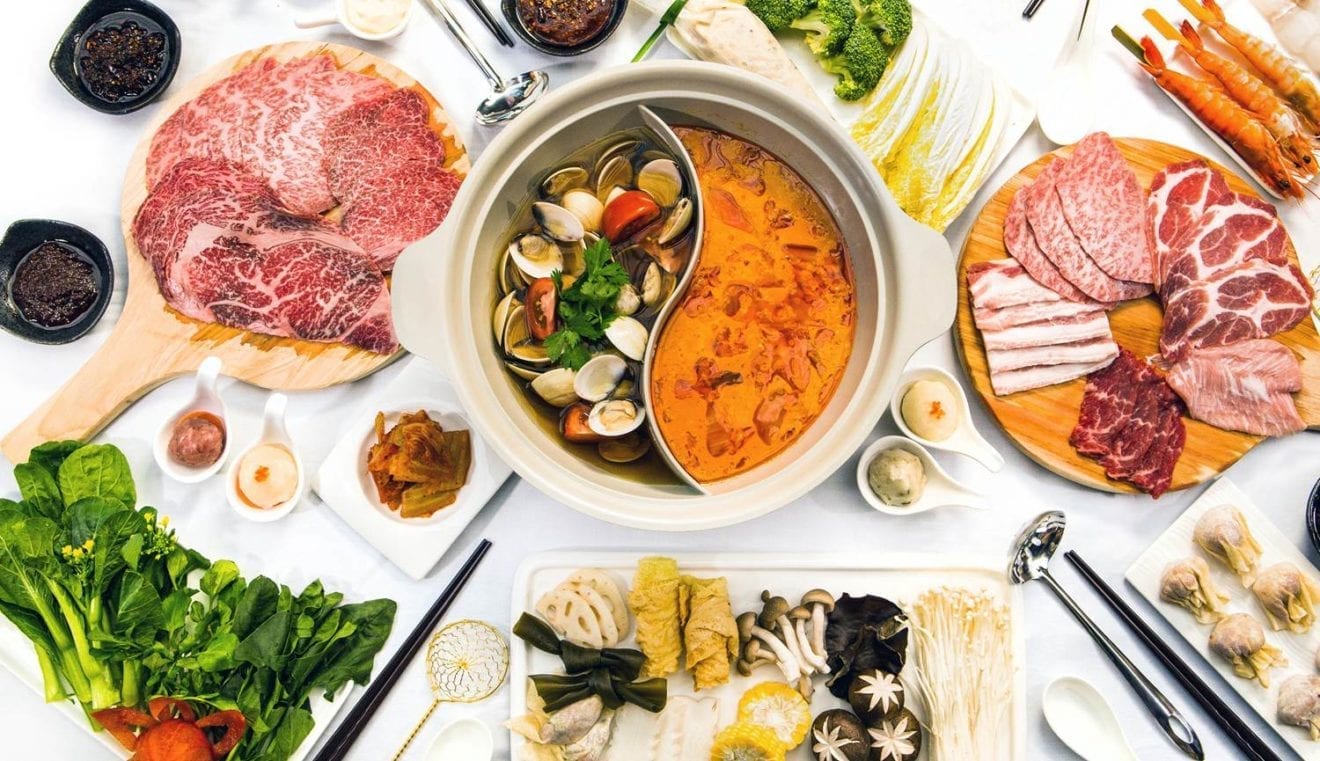
  • Mongolian Hot Pot Coming to Phnom Phen

    Mongolian Hot Pot Coming to Phnom Phen

    Little Sheep Hot Pot, a Yum Brands Inc. company, yesterday signed a partnership agreement with HGB Food Industry Co. Ltd. to bring its Mongolian hot pot restaurant to Cambodia.

    HGB Food Industry is a subsidiary of private local investment company HGB Group, which focuses on the domestic automobile industry, food and retail goods.

    Little Sheep’s director of field operations Aileen Wu said the company would bring good quality food to the Kingdom through its cooperation with HGB Food Industry.

    “The partnership between Little Sheep Hot Pot with HGB Food Industry Co., Ltd. to step into the Cambodian market with branches of new restaurants is aimed at bringing fun and the delicious hot pot of Mongolia to Cambodia with many new branches,” she said, adding that they would be located in downtown Phnom Penh.

    HGB Food Industry representative Austin Tan said that the restaurant would bring healthy food to Cambodian people.

    “The market here shows high potential for the demand of healthy food. That’s why we are preparing to enter the market,” he said.

    Little Sheep Hot Pot began operations in 1999 with its first restaurant in Mongolia. In the past 17 years, the company has expanded to 300 branches in 110 countries. Yum Brands, which owns KFC, Taco Bell and Pizza Hut, bought the Mongolian hot pot chain in 2012.

    HGB Group is the sole-appointed distributor in Cambodia for Rolls-Royce Motor Cars, Bentley Motors, Mazda, Kia, Kawasaki and Harley-Davidson motorcycles.

    HGB Food Industry Co., Ltd. is a leading food and beverage distributor and retailer of quality imported food and beverages. The company has been operational in this field for eight years and is a preferred supplier of beverages to hotels and resorts, restaurants, cafes and retail stores in Cambodia.

  • First Tous les Jours Mongolia store opens

    First Tous les Jours Mongolia store opens

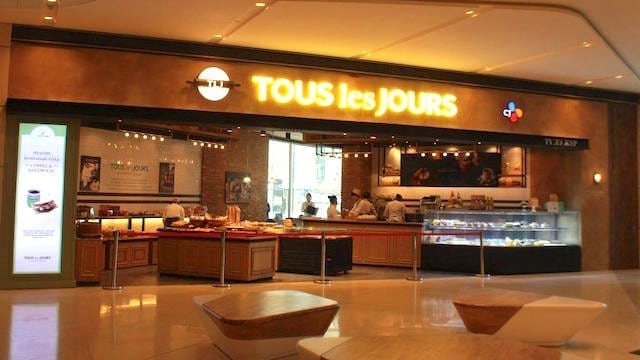
    Korean bakery Tous les Jours has opened its first stores in Mongolia as it broadens its Asian footprint.

    Two Tous les Jours Mongolia shops have opened in Ulaanbaatar in what the company sees as another step in its plan to become a global bakery brand.

    Tous Les Jours Mongolia 2

    Besides Mongolia, the brand’s parent CJ Foodville has 270 Tous les Jours stores in seven countries: Cambodia, China, Indonesia, Malaysia, the Philippines, the US and Vietnam.

    It is the first international bakery to open in Mongolia, where K-pop has amassed a considerable following, raising the profile and acceptance of Korean brands in general – especially music, food and fashion.

    Tous Les Jours Mongolia 3

    A local master franchise has been appointed to lead the brand’s roll-out

    The Korea Times reports that the company’s first Mongolian store in downtown Ulaanbaatar opened on October 31, drawing more than 2000 customers and generating over US$8600 in sales.

    A CJ Foodville spokesman said Tous les Jours opened its second shop at the Shangri-La Mall this week, attracting twice the number of customers it expected.

    tous-les-jours-mongolia

  • DHL Introduces Multimodel Mongolian Connection

    DHL Introduces Multimodel Mongolian Connection

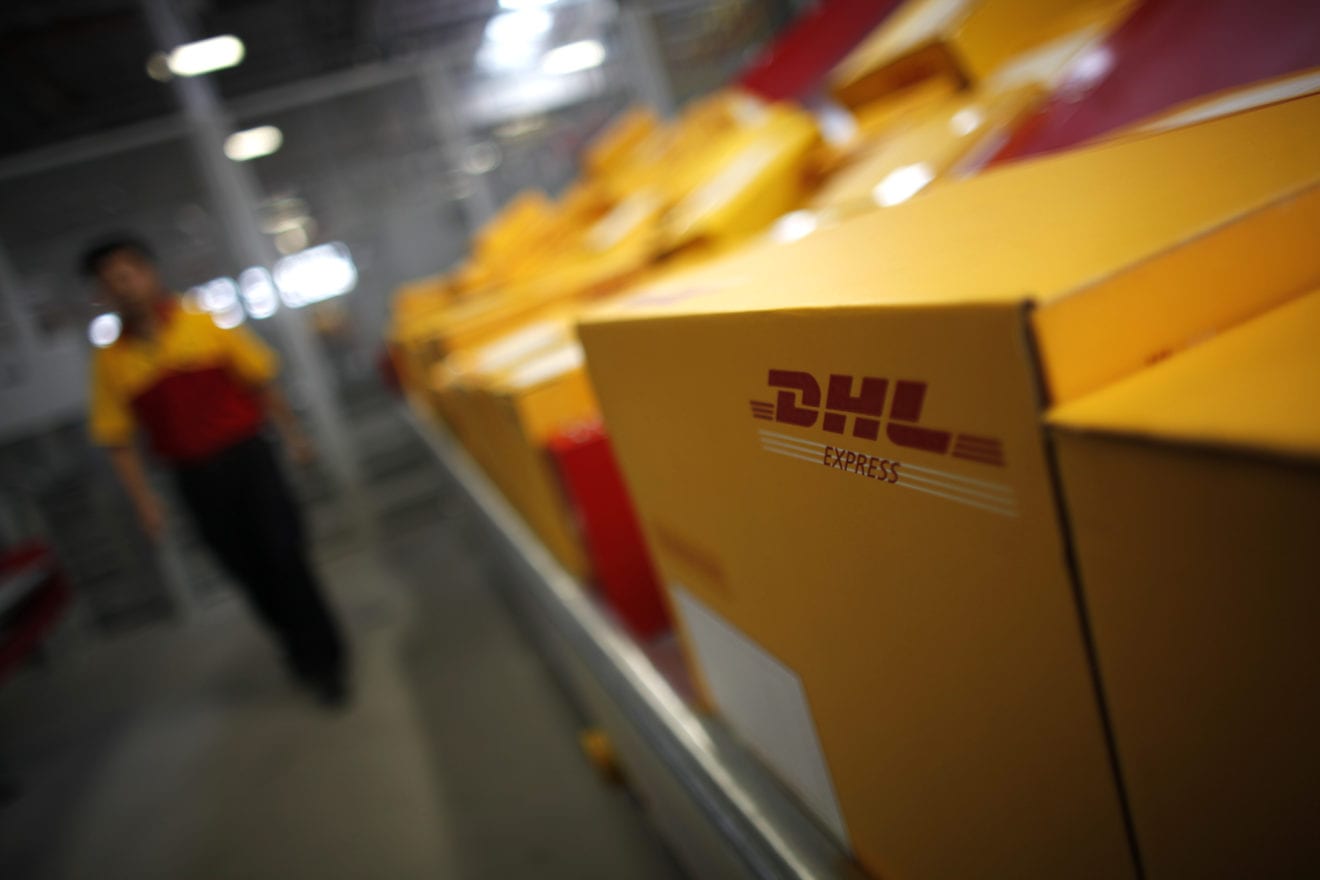
    DHL Global Forwarding has launched road and multimodal freight services linking Mongolia to Europe and the US.

    The new road connection to continental Europe has a transit time of less than 20 days and passes through Russia and Belarus. It supports different business sizes by offering both full truck load and less-than-truck load options.

    “Mongolia’s economy is rebounding from the mining downturn, further building on its status as the world’s second-largest cashmere producer and a food and agricultural export hub,” said Kelvin Leung, CEO of DHL Global Forwarding Asia Pacific. “With Mongolian businesses gaining a growing slice of global market share, supported by an increasingly solid network of regional free trade agreements, Mongolia’s dominant trading partners also stand to gain from increases in domestic consumption of foreign goods.”

    The new service is aimed at the movement of goods such as furniture, medicines wine into Mongolia, and exports such as mining spare parts, cashmere products and all-terrain bikes.

    The new multimodal connection with the US offers full container load and less-than-container load options. With a transit time of as few as 18 days, it passes from the US by air to South Korea, by ocean to China and then by rail and road to Mongolia.

    “The new road freight and multimodal services provide both small businesses and large enterprises with an especially cost-effective and timely way of testing demand and establishing consistent trade between both markets,” said Charles Kaufmann, CEO of North Asia and head of value-added services at DHL Global Forwarding Asia Pacific. “As the only international logistics provider with a local presence in Mongolia, DHL enables overseas exporters to gain a head-start in accessing the ‘Wolf Economy’ as it continues its path to the front of the pack.”

    Goods expected to be transported into Mongolia include watches, coffee machines and motorcycles, while exports include aviation spare parts, camel wool and rally cars, according to DHL.

  • Spar International Expands to Mongolia

    Spar International Expands to Mongolia

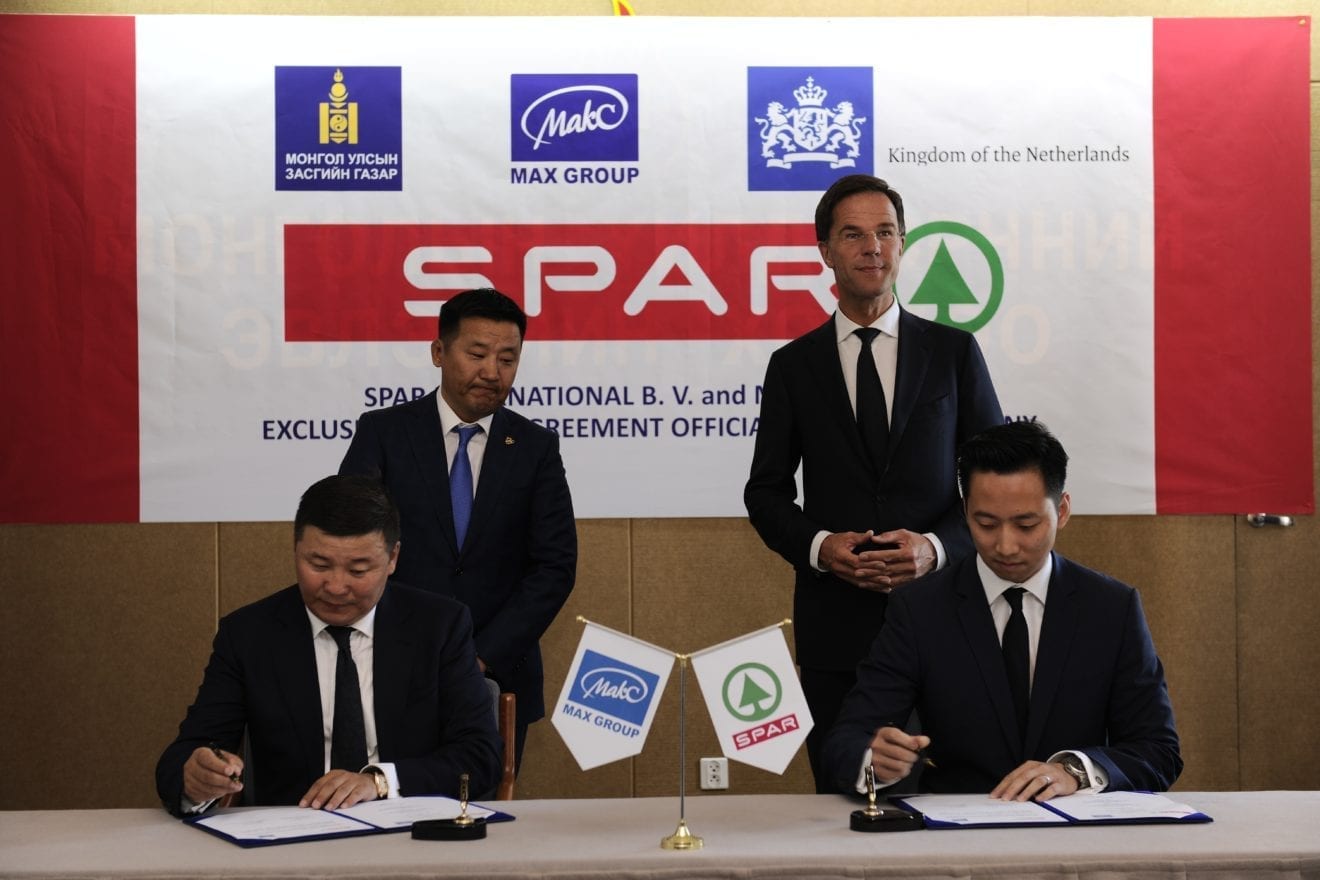
    SPAR, the world’s largest food retail voluntary chain, has announced a new partnership with conglomerate Max Group LLC, to open its first stores in Mongolia. The partnership, which will see up to 60 SPAR-branded multi-format stores in Mongolia by 2020, was made at an official signing ceremony which took place during the visit of the Dutch Prime Minister, Mark Rutte, to Mongolian capital Ulaanbaatar. 

    Max Group is one of Mongolia’s leading retailers operating the existing chain of Max Food Supermarkets.  The new partnership will see these stores transfer to the SPAR brand, and the opening of new SPAR supermarkets from 2017 onwards. The Netherlands-based SPAR International reported global retail sales in 2015 of €33 billion from over 12,100 stores across four continents. Mongolia brings to 43 the number of countries where SPAR has operations globally.

    Prime Minister Rutte was visiting Mongolia to attend the 11th Asia-Europe Meeting (ASEM) Summit and to promote trade with the Netherlands in the region. Speaking at the signing of the contracts between SPAR and Max Group, the Prime Minister Rutte, said, “It is greatly encouraging to see a company like SPAR, which started as a partnership of Dutch retailers and wholesalers more than 80 years ago, helping bring retail best practice to the Mongolian marketplace.”

    SPAR International Managing Director, Tobias Wasmuht said “SPAR is delighted to be launching in Mongolia in partnership with the Max Group.  We see Mongolia as a dynamic and rapidly developing consumer market with a growing demand for modern world class food retail. We are highly confident that we can build on our strong presence in the region by leveraging our scale with the SPAR operations in neighbouring Irkutsk, Russia and Inner Mongolia, China. This collaboration combined with our modern retail formats, supply chain and international sourcing as well as investing in the training and development in people locally will act as a significant support structure for the growth and development of SPAR in Mongolia. I would like to take the opportunity to thank the Ministry of Foreign Affairs of the Netherlands who were instrumental in facilitating the partnership between SPAR and the Max Group.” 

     Max Group LLC is a family business established in the 1990s which has a wide variety of operations and business interests including supermarkets, fast food restaurants, department stores, real estate, precious metal mining and is the country’s largest dairy producer and milk bottler. Max Group LLC already employs over 2,500 people in Mongolia. Max Group President, Ganbaatar Dagvadorj said “Bringing the words leading retail chain, SPAR, to Mongolia is not just beneficial to Max Group it is a big opportunity for Mongolia as well and I am very excited about this partnership. Max is dedicated to bringing the SPAR’s commitment to excellence in fresh, passion for quality, outstanding service and exceptional value to consumers in Mongolia.”

  • Profit falls as QKL Stores buys market share

    Profit falls as QKL Stores buys market share

    QKL Stores  a regional supermarket chain in Northeastern China and Inner Mongolia, has announced improved sales, but lower profit in the second quarter.

    Zhuangyi Wang, chairman and CEO, said the company had boosted its promotional activities in existing stores to strengthen its competitive position.

    Second quarter sales rose 9.2 per cent to US$56.4 million and gross profit decreased 4.3 per cent to $9.1 million.

    “The decrease in gross profit relative to net sales was due to competitions arising from the increasing challenge from the online shopping that have significant pricing pressure on our selling of high margin products.”

    Wang said QKL plans to slow down the pace of its new store openings this year.

    “Currently, we expect to open two new supermarket stores this year. We maintain confidence in our strategy of strengthening our store presence in Tier 4 and 5 cities in northeastern China as well as in our core region of operation around Daqing where the majority of our older stores are based.”

    Based in Daqing, QKL Stores sells a broad selection of merchandise, including groceries, fresh food, and non-food items, through its 40-odd retail supermarkets, hypermarkets and department stores; the company also has its own distribution centers that service its supermarkets.

    “As QKL expands its market presence in northeast China, we are uniquely positioned against our local competitors through our large product offering, strong supplier relationships, efficient distribution network and state-of-the-art IT system,” said Wang.

    “We are comfortable with our opportunities in the second half of the year and believe we’ll see an improvement in operating expenses and net result from the current quarter.”