Tag: moon

  • Nissan Unveils Lunar Rover Prototype

    Nissan Unveils Lunar Rover Prototype

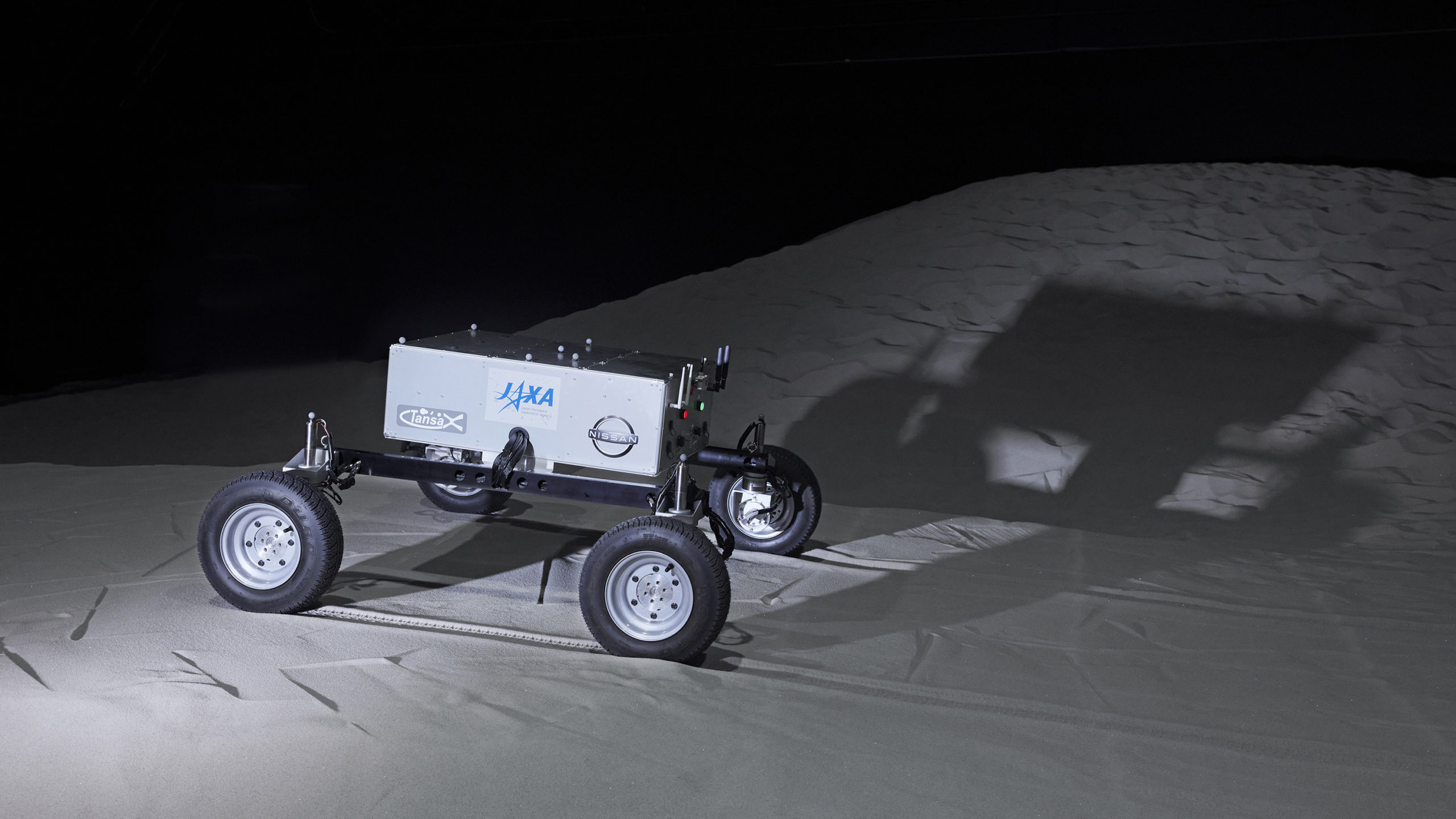
    Nissan unveiled a lunar rover prototype jointly developed with the Japan Aerospace Exploration Agency (JAXA). The JAXA Space Exploration Innovation Hub Center is conducting research on lunar rovers for space exploration. Nissan has been working with JAXA on driving the controllability of the rovers since January 2020.

    A lunar rover must be able to traverse the Moon’s powdery, rocky and undulating terrain and be energy efficient. Furthermore, energy sources for operating vehicles in space are limited. Nissan’s research applies the motor control technology it has developed through its production of mass-market electric vehicles such as the LEAF as well as the e-4ORCE all-wheel control technology featured on the all-new Ariya electric crossover. In particular, it is e-4ORCE that is boosting the lunar rover’s performance over tricky terrain.

    Nissan has focused on the development of stable driving performance that enables customers to drive their cars with greater confidence. Nissan’s e-4ORCE technology precisely controls all four wheels independently, providing the driver with confidence in various conditions.

    In its joint research with JAXA, Nissan is evolving e-4ORCE technology to improve its performance in sandy terrain and other harsh conditions. When cars are driven in sand their wheels frequently spin and dig in, impeding progress. A high level of driving skill is required to avoid getting stuck. To meet this need, Nissan has developed driving-force controls that minimize the amount of wheel spin in accordance with surface conditions.

    Through the joint research, Nissan aims to contribute to the technological evolution of automotive technology and space exploration technology by sharing know-how gained from test-vehicle development and combining it with JAXA’s knowledge of rover research

  • Inmarsat joins effort for telecommunications and navigation systems for lunar missions

    Inmarsat joins effort for telecommunications and navigation systems for lunar missions

    Inmarsat, the world leader in global, mobile satellite communications, will be a key member of a new consortium led by Telespazio to study the development of a satellite navigation and communications network that supports future missions to the Moon. Funded by the European Space Agency (ESA), this project will explore creating a single system that would serve all lunar missions, drastically reducing the cost of each trip that would no longer need its own infrastructure to be developed. The system would provide connectivity and navigation to both crewed and uncrewed missions.

    Project Moonlight is ESA’s program to explore, with industry, how to develop telecommunications and navigation systems to support future planned lunar missions. An industry consortium will study how a future Lunar Communications and Navigation Satellite (LCNS) constellation could work. This study will research demand from potential users and build a business case for future development of the system. The study will also provide a technical concept for the LCNS that fits within this overall business case.

    Within the consortium, Inmarsat will be responsible for researching and collating the requirements from potential users of the system, in both the public and private sectors, who have lunar ambitions. In addition, Inmarsat will design the LCNS ground segment.

    “Providing communication and navigation capabilities around the Moon is a major challenge, both technically and commercially,” said Yasrine Ibnyahya, Senior Director, Advanced Concepts and Technologies at Inmarsat. “But I strongly believe that the expertise and assets from Inmarsat and our partners can solve this challenge in the most efficient and cost-effective way. Communications and navigation are both core capabilities of Inmarsat’s Earth operations in orbit and on the ground, so it is only natural that we expand our reach and leverage our know-how beyond our planet to the Moon.

    “This lunar project is only the first step to unlock future opportunities. It can become the hub to facilitate human space exploration, further technology developments and perhaps access to new resources.”

    Because missions could rely on this dedicated telecommunications and navigation service, they would also be lighter. This would create space to allow more scientific instruments or other cargo to be carried.

    Science Minister Amanda Solloway said: “People all over the world will be hugely excited by the upcoming missions to the Moon – and I’m proud that it is UK space companies who are leading the way in making these become a reality. Britain’s expertise in navigation and telecommunications is second to none and this first of its kind commercial service – spearheaded by some of the UK’s most innovative businesses – demonstrates our ambition for the UK to become a world- leading space nation.”

    An accurate and reliable telecommunications and navigation service would also enable missions to land anywhere on the Moon. Rovers and other lunar installations could be operated from Earth. Radio astronomers could set up observatories on the far side of the Moon.

    Nick Shave, Vice President of Strategic Programmes for Inmarsat Global Government, said: “Project Moonlight opens up multiple possibilities to accelerate and diversify lunar exploration. It’s not inconceivable that, alongside vital operational uses, this satellite network could also provide a critical welfare service, such as allowing astronauts to relax by sending WhatsApp messages home from the Moon or even catching up on Netflix in orbit. The Inmarsat team is very excited to get to work engaging with potential users of the system, to use their insights and our expertise to deliver a strong recommendation to ESA so that this once in a lifetime opportunity can be delivered for all humankind.”

    ESA has awarded funding to the consortium to cover the next stage of project development over 17 months and industry has also contributed to the project.

    Large mission integrator Telespazio is the prime for this project with TAS the nominated satellite manufacturer.

    Inmarsat participated in the initial phase 0 of this project in 2018 and 2019, performing a preliminary feasibility analysis of a Lunar Communication and Navigation System with ESA and partners. The company is now involved in the deeper analysis as part of the Moonlight initiative.

    Upon completion of this 17 month study phase, ESA will then review the study to inform how to implement the next stage, including satellite and ground segment procurement, in late 2022.

  • Japan Billionaire Launches Recruitment for Moon Travel

    Japan Billionaire Launches Recruitment for Moon Travel

    Japnese billionaire entrepreneur Maezawa Yusaku is once again tapping into the public sphere to further his personal pursuits, this time for the recruitment of co-travelers in a trip around the moon.

    Eight crew members will be chosen for a private SpaceX flight around the moon in 2023, according to the founder of Japanese digital retail giant Zozo in a video posted on Twitter.

    Including Maezawa himself, the six-day trip will involve 10 to 12 people in total. Screening of applicants kicks off on March 21 with the final interviews and medical check targeted for May.

    According to Maezawa, the crew members will be selected based on how they use the trip to «push the envelope» in their respective fields and their willingness to support fellow crew members.

    Maezawa added that he was looking for people of all backgrounds and that that he hoped they would make the trip «fun» together.

    This is not the first time that the high-profiled Maezawa has attracted public interest.

    Last year, he randomly selected 1,000 of his Twitter followers to donate more than $9,000 each to test for actual boosts in happiness from monetary gains. In 2017, he paid $110.5 million for 1982 Jean-Michel Basquiat painting Untitled – an amount that broke his last record set in May 2016 for a mother untitled Basquiat valued at $57 million.

  • NASA awards Nokia a $14.1 million contract to build a 4G LTE network on the Moon

    NASA awards Nokia a $14.1 million contract to build a 4G LTE network on the Moon

    If you’re planning on taking a trip to the Moon in the near future to escape the madness of this planet, we have some good news and some bad news. The good news is that Nokia has been awarded a $14.1 million contract from NASA to build the first 4G network on the Moon. The bad news is that for now, the Moon will not have 5G service. NASA’s current plans call for a sustainable human presence on the Moon by 2028. Elon Musk’s SpaceX, Jeff Bezo’s Blue Origin, and a company named Dynetics will develop the human landers that will deliver humans to the Moon.

    In late 2022, Nokia Bell Labs will “build and deploy the first ultra-compact, low-power, space-hardened, end-to-end LTE solution on the lunar surface.” Nokia will integrate the network into Intuitive Machines’ lunar lander and when deployed, the network will self-configure to produce the first LTE system on the Moon. The network isn’t being made just so astronauts can use TikTok. Nokia says, “The network will provide critical communication capabilities for many different data transmission applications, including vital command and control functions, remote control of lunar rovers, real-time navigation and streaming of high definition video. These communication applications are all vital to long-term human presence on the lunar surface.”

    Nokia says that its LTE network is perfect for any activity that astronauts might need it for including “voice and video communications capabilities, telemetry and biometric data exchange, and deployment and control of robotic and sensor payloads.” The lunar LTE network is designed to survive the harsh conditions of the launch and the landing on the moon. NASA says that “the system could support lunar surface communications at greater distances, increased speeds, and provide more reliability than current standards.”

    If you’re bummed out that connectivity on the Moon is limited to 4G, don’t fret. Nokia says that it will work on developing space applications for 5G connectivity. Imagine how fast you’ll be able to download Apollo 13 on your 5G handset to prepare for your space flight to the Moon. The manufacturer is the second-largest networking equipment supplier to Huawei.

    In its blog post, Nokia says “As a market leader in end-to-end communication technologies for service provider and enterprise customers globally, Nokia develops and provides mission-critical networks adopted by airports, factories, industrial, first-responders, and the harshest mining operations on Earth, for automation, data collection and reliable communications. By deploying its technologies in the most extreme environments, Nokia Bell Labs will validate the solution’s performance and technology readiness level, and further, optimize it for future terrestrial and space applications.”

  • Japan’s Moon Exploration Vehicle To Be Called Lunar Cruiser

    Japan’s Moon Exploration Vehicle To Be Called Lunar Cruiser

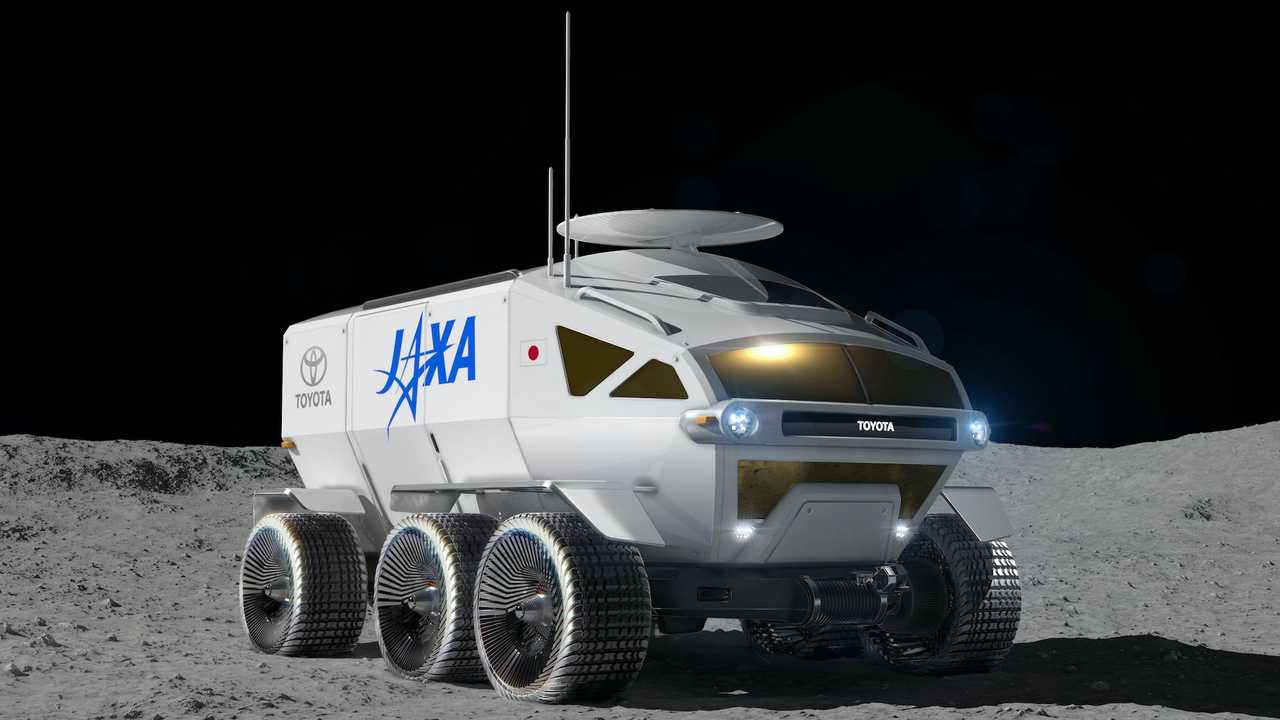
    The Japan Aerospace Exploration Agency (JAXA) and Toyota announced the name of its manned pressurized rover which is currently under joint research. It will be nicknamed the Lunar Cruiser, which we think is a very ‘Toyota’ name. JAXA and Toyota previously announced and have been conducting joint research on a manned, pressurized lunar rover that uses fuel cell electric vehicle (FCEV) technologies.

    The nickname Lunar Cruiser was chosen because of the familiar feeling it offers the people involved in the development and manufacture of the vehicle prototype as part of the joint research project as well as the familiarity it will provide the general public. The name, which references the Toyota Land Cruiser SUV, was decided upon based on the quality, durability, and reliability expected of the pressurized lunar rover

    JAXA and Toyota signed a joint research agreement to work on a manned pressurized lunar rover last year, on June 13, 2019, with an expected launch date in the latter half of the 2020s. Together, they are working to manufacture test parts for each technological element, and the prototype rover itself, during this fiscal year (FY2020). The work involves the use of simulations to confirm power and heat dissipation performance while driving, the manufacture and assessment of prototype tires, and the use of virtual reality and full-scale models to consider the layout of equipment in the cabin of the Lunar Cruiser.

  • Forever New Building Ouit Presence in North America

    Forever New Building Ouit Presence in North America

    Australian retailer Forever New is ramping up its presence in North America, with plans to launch a standalone website in the US, sell through major department stores, including Bloomingdales and Nieman Marcus, and open two new stores in Canada.

    The news, announced on Monday, is the latest sign of Forever New’s global aspirations. The brand has formed a string of partnerships with retailers around the world, including Asos and Next in the UK, Zalora in Singapore and Zalando in Europe, and last year, it revamped its website to better serve international customers.

    “Forever New has a unique product offering and our handwriting is not only relevant to the markets in the Southern Hemisphere but also in the Northern Hemisphere. We offer a real point of difference,” Carolyn Mackenzie, managing director of Forever New, told Inside Retail.

    Focus on third-party expansion

    According to Mackenzie, the retailer’s presence in the Canadian market over the last few years has sparked interest from American retailers.

    Forever New, which trades as Ever New in North America, appears to have four bricks-and-mortar stores in Canada – three in the Vancouver area, and one in Toronto. The retailer plans to open a second store in Toronto a new location in Calgary this year.

    The retailer started selling in the US market via Nordstrom.com in 2018, and on Monday, it announced it will launch a standalone website in the coming months. It will also launch offline in Bloomingdales and Nieman Marcus department stores, and expand its online presence via Nordstrom, Lulus, South Moon Under and Amazon.

    Mackenzie said the privately-held business is currently focusing its efforts on third-party and digital expansion, but that it may open standalone stores in the US in future.

    “Being an agile and fast-moving business means there is always the possibility…” she said.

    Broader transformation underway

    The ramp-up overseas is just part of the multi-faceted transformation currently underway at Forever New.

    In late 2018, it overhauled its global e-commerce platform to make the online shopping experience more seamless, and in 2019, it unveiled two first-to-market digital initiatives: a reserve-in-store option and visually-similar product recommendation tool.

    It has also launched a new high-end store concept designed by Hecker Guthrie, featuring terrazzo tiled floors, brushed brass detailing and fluted glass panels.

    “[T]he new store concept embodies the feminine signature of the brand,” Mackenzie said, calling it “the perfect backdrop to the brand’s distinctive designs and prints”.

    Next up for Forever New? More inclusive sizes.

    “Following on from the success of Forever New Petite and to ensure the accessibility of Forever New for all, we’re planning on expanding our category offering with ‘Forever New Curve’,” Mackenzie said.

    “Stay tuned for more details on these exciting initiatives.”