Retail News CRM

Tag: more

  • More Yogurt: Popular Chinese Beverage Chain Set to Debut in Singapore with Fresh-Made Treats

    More Yogurt: Popular Chinese Beverage Chain Set to Debut in Singapore with Fresh-Made Treats

    China-based yogurt chain, More Yogurt, is set to make its entrance into the Singaporean market. The addition of a new outlet, opening on January 30, marks the latest in a series of expansion efforts. The company, which boasts annual sales of over 21 million cups, has chosen Suntec City as the strategic location for its first Singaporean store.

    More Yogurt is known for its innovative take on yogurt, offering a range of beverages prepared fresh daily in-store. Each drink comprises naturally fermented yogurt cultures, paired with an assortment of fresh fruits and nuts.

    As part of its introductory activities in Singapore, More Yogurt will be presenting the first 100 cups of yogurt free of charge on the day of its grand opening. This generous gesture aims to attract and engage new customers, providing them with a taste of More Yogurt’s unique offerings.

    Questions & Answers

    What is the unique selling point of More Yogurt?
    More Yogurt differentiates itself by providing fresh-made yogurt drinks, which are prepared in-store daily using naturally fermented yogurt cultures and a variety of fresh fruits and nuts.

    When and where is More Yogurt’s new Singaporean outlet opening?
    The new outlet in Singapore is set to open on January 30 at Suntec City.

    What is the introductory offer from More Yogurt in Singapore?
    As part of their launch in Singapore, More Yogurt will be giving away the first 100 cups of yogurt for free on the opening day.

  • Skoda Celebrates 25 Years In India With Limited Edition Octavia Rs Launch

    Skoda Celebrates 25 Years In India With Limited Edition Octavia Rs Launch

    Skoda Auto India is celebrating its 25th anniversary with the launch of the highly-anticipated Skoda Octavia RS. The performance saloon will be available in limited quantities and will be brought to the Indian market through the Completely Built-Up (CBU) route. The vehicle is priced at Rs 49.99 lakh (ex-showroom) and has been much sought after by Indian auto-enthusiasts, building on its legacy since its debut in 2004.

    The Launch Statement

    Ashish Gupta, Brand Director of Skoda Auto India, expressed his excitement at the launch of the Octavia RS. He emphasized the overwhelming response the car has received and its ability to ignite the passion of driving enthusiasts across India. As Skoda celebrates 25 successful years in India, its commitment to delivering world-class cars is stronger than ever, and the RS badge stands as a testament to this. Gupta further expressed excitement to welcome a new generation of enthusiasts into the Skoda family, building on the strong legacy that defines the brand.

    Performance Features of Skoda Octavia RS

    Beneath the hood, the Octavia RS boasts a 2.0 TSI turbocharged petrol engine that delivers peak power output of 265 Hp and max torque of 370 Nm. This power is delivered to the wheels through a seven-speed DSG automatic transmission, enabling the car to accelerate from 0 to 100 kmph in a mere 6.4 seconds. The top speed is electronically limited at 250 kmph.

    Design Features of Skoda Octavia RS

    The Octavia RS embodies Skoda’s bold design aesthetics, featuring full LED Matrix headlights, LED tail lamps with dynamic indicators, and sleek black styling elements. With its 19-inch Elias anthracite alloy wheels and low-profile 225/40 R19 sports tyres, the car exudes an unmistakably sporty, aggressive stance. The Octavia RS combines sleek proportions with practicality, offering segment-leading boot capacity and five vibrant colour options.

    Interior Features of Skoda Octavia RS

    The interior of the Octavia RS strikes a harmonious balance between sportiness and luxury. It features Suedia/Leather upholstery with red contrast stitching, sports front seats with advanced adjustability, heating, and massage functions along with ambient lighting. Customers will also benefit from three-zone climate control, wireless charging, and a state-of-the-art infotainment system compatible with Android Auto and Apple CarPlay.

    Safety Features of Skoda Octavia RS

    The Octavia RS is equipped with state-of-the-art safety features including Adaptive Cruise Control (ACC), Autonomous Emergency Braking (AEB), Lane Assist, and Intelligent Park Assist. The car also includes 10 airbags, a 360-degree Area View camera, ISOFIX child seat mounts, a Head-Up Display, and advanced driving stability systems.

    Warranty

    In line with all Skoda models, the Octavia RS comes with an industry-leading ownership package, including a 4-year/100,000 km warranty.

    Questions & Answers

    What is the price of the Skoda Octavia RS?
    The Skoda Octavia RS is priced at Rs 49.99 lakh (ex-showroom).

    What is the top speed of the Skoda Octavia RS?
    The top speed of the Skoda Octavia RS is electronically limited at 250 kmph.

    What safety features does the Skoda Octavia RS offer?
    The Octavia RS comes equipped with state-of-the-art safety features including Adaptive Cruise Control (ACC), Autonomous Emergency Braking (AEB), Lane Assist, and Intelligent Park Assist, among others.

  • Singapore’s Public Transport Fares To Rise, Offset By Lower Monthly Pass Costs And Transport Vouchers

    Singapore’s Public Transport Fares To Rise, Offset By Lower Monthly Pass Costs And Transport Vouchers

    Singapore’s adult commuters will soon face a 9-10 cent (0.07-0.08 USD) increase in their public bus and train fares per trip, corresponding to an overall public transport price increase of 5%.

    Rising fares from December 27

    Starting from December 27, the base fares for bus and train journeys for adults will increase by 9 cents for journeys up to 17.2 kilometers and by 10 cents for longer trips, according to a statement by the Public Transport Council (PTC) on Tuesday.

    Changes for concessionary card holders

    Fare changes will also affect concessionary card holders, including students, seniors, people with disabilities, and low-wage workers with workfare transport concessions. For these categories, the fare will increase by 3-4 cents for journeys longer than 3.2 kilometers, while fares for shorter trips will remain the same.

    PTC specified that more than a third of all concessionary trips, equating to around 450,000, are 3.2 kilometers or less. These short journeys are typically for commuting to school, work, or local amenities.

    Cash fares on public buses to rise

    Cash fares for public buses will likewise increase; adults will see a 20-cent rise, seniors and people with disabilities will face a 10-cent increase, and students will have a 5-cent increase. The council noted that fewer than 1% of all public transport trips are paid in cash.

    Express bus services fares to increase

    Fares for express bus services, which provide faster commuting options from residential areas to city centers and primary job hubs at higher rates than standard buses, will also see an increase. Adult passengers will pay an additional 49-50 cents per express bus trip, while passengers from concessionary groups will face a 20-24 cent increase. Cash fares for these services will rise by 60 cents per journey.

    Despite the increases, this year’s overall fare increase is less than the 6% and 7% increases experienced in 2024 and 2023, respectively.

    Reduced prices for monthly travel passes

    In an effort to support regular public transport users, the cost of monthly travel passes will decrease by 5% from December 27. The revised prices will be S$122 for adults, S$55 for seniors and people with disabilities, and S$92 for low-wage workers with workfare transport concessions. This discount is expected to benefit approximately 155,000 passengers, according to the council.

    Additionally, the government plans to issue S$60 public transport vouchers to households earning up to $1,800 per person per month to help offset the impact of the fare hikes. These vouchers can be used to top up fare cards or to purchase monthly passes.

    Questions & Answers

    When will the new fare rates take effect?
    The new fare rates will start from December 27.

    Who will be affected by the fare increases?
    The fare increases will affect adult commuters, concessionary card holders (including students, seniors, people with disabilities, and low-wage workers), and users of express bus services.

    What measures are being taken to ease the impact of fare hikes?
    To mitigate the impact of the fare hikes, the government will issue S$60 public transport vouchers to eligible households. Additionally, the price of monthly travel passes will be reduced by 5%.

  • Tesla Unveils Affordable Model Y And Model 3 Variants: High Performance Meets Budget-friendly

    Tesla Unveils Affordable Model Y And Model 3 Variants: High Performance Meets Budget-friendly

    Tesla has recently unveiled a new line-up of affordable versions of their popular Model Y and Model 3 vehicles. Going by the names of Model Y Standard and Model 3 Standard, these models are designed to offer a more budget-friendly option for consumers, in an attempt to bolster sales and strengthen Tesla’s position in a highly competitive marketplace. These entry-level models are targeted at a wider demographic, aiming to appeal to those who may not have previously considered a Tesla due to the traditionally high price point. Alongside the introduction of these new models, Tesla has also rebranded the Long Range versions of these vehicles under the Premium label. Currently, these new models are only available in the US market.

    The Tesla Model Y Standard

    The Tesla Model Y Standard brings a few changes from its other variants, including the removal of the light bars seen on the front of the higher-end models. This new, more affordable version also features 18-inch wheels. While the panoramic sunroof that is a feature of the higher-end Model Y variants is absent from this model, the color options have also been limited to just three: white, black, and grey.

    This model lacks a few of the “luxury” features seen in its counterparts: the second-row screen, heated rear seats, and it comes with manual steering and side mirrors, as well as a 7-speaker setup instead of the 15-speaker unit seen on the other models.

    However, performance has not been compromised, with the new affordable Model Y variant powered by a 69.5kWh battery capable of producing 300hp and delivering a range of 517 km on a single charge.

    The Tesla Model 3 Standard

    The Tesla Model 3 Standard also features 18-inch wheels as standard, with the option to upgrade to a 19-inch set. This model comes in a standard grey color, with customers having the option to choose a black variant for a premium price.

    On the inside, this model lacks the rear touchscreen unit seen on other variants, but it does retain the panoramic sunroof found on the other Model 3 versions.

    This model shares most of its configuration with the Model Y Standard, including the same 69.5 kWh battery pack, which claims to deliver a range of 517 km. However, the new variant is slightly slower than the Model 3 Premium RWD, achieving 0-100 kmph in 5.8 seconds.

    Despite their reduced-priced cost and the omission of several sophisticated exterior and interior features, both the Model Y and Model 3 Standards retain Tesla’s core digital features, such as the 15.4-inch central touchscreen, Autopilot, and Sentry Mode, among others.

    The Model 3 Standard has now positioned itself as Tesla’s most affordable sedan, with a new price point of around USD 36,990, a drop of nearly USD 5,000 from its previous starting price. The new Model Y Standard is priced at USD 39,990 in the US market.

    Questions & Answers

    What key features have been changed in the new Tesla Model Y and Model 3 standard variants?
    Some luxury features have been removed or downgraded in these models to make them more affordable. These include removal of the light bars, panoramic sunroof and second-row screen in the Model Y Standard, and the rear touchscreen unit in the Model 3 Standard.

    What is the performance capability of the new cheaper variants?
    Both the Model Y and Model 3 standard variants are powered by a 69.5 kWh battery pack that can deliver a range of 517 km on a single charge. The Model 3 Standard can do 0-100 kmph in 5.8 seconds.

    Are the Tesla Model Y and Model 3 Standard models still equipped with Tesla’s basic digital features?
    Yes, despite their lower cost, both models still include key Tesla digital features, such as a 15.4-inch central touchscreen, Autopilot, and Sentry Mode.


  • Samsung Strengthens Global Audio Dominance With Strategic Acquisition Of Prominent Audiophile Brands

    Samsung Strengthens Global Audio Dominance With Strategic Acquisition Of Prominent Audiophile Brands

    Samsung, through its subsidiary Harman, has further solidified its standing in the global audio market following the acquisition of a number of prominent audiophile brands. This move builds on the Korean corporation’s already robust audio portfolio, which was boosted by an $8 billion deal to acquire Harman in 2016.

    Notable Acquisitions

    Samsung has significantly deepened its footing in the global audio industry by acquiring a host of legendary brands, including Bowers & Wilkins, Denon, Marantz, Polk, and others. These brands were acquired when Harman purchased Sound United, previously the consumer audio wing of Masimo. This move follows a significant legal payout by Masimo to Apple, amounting to $250.

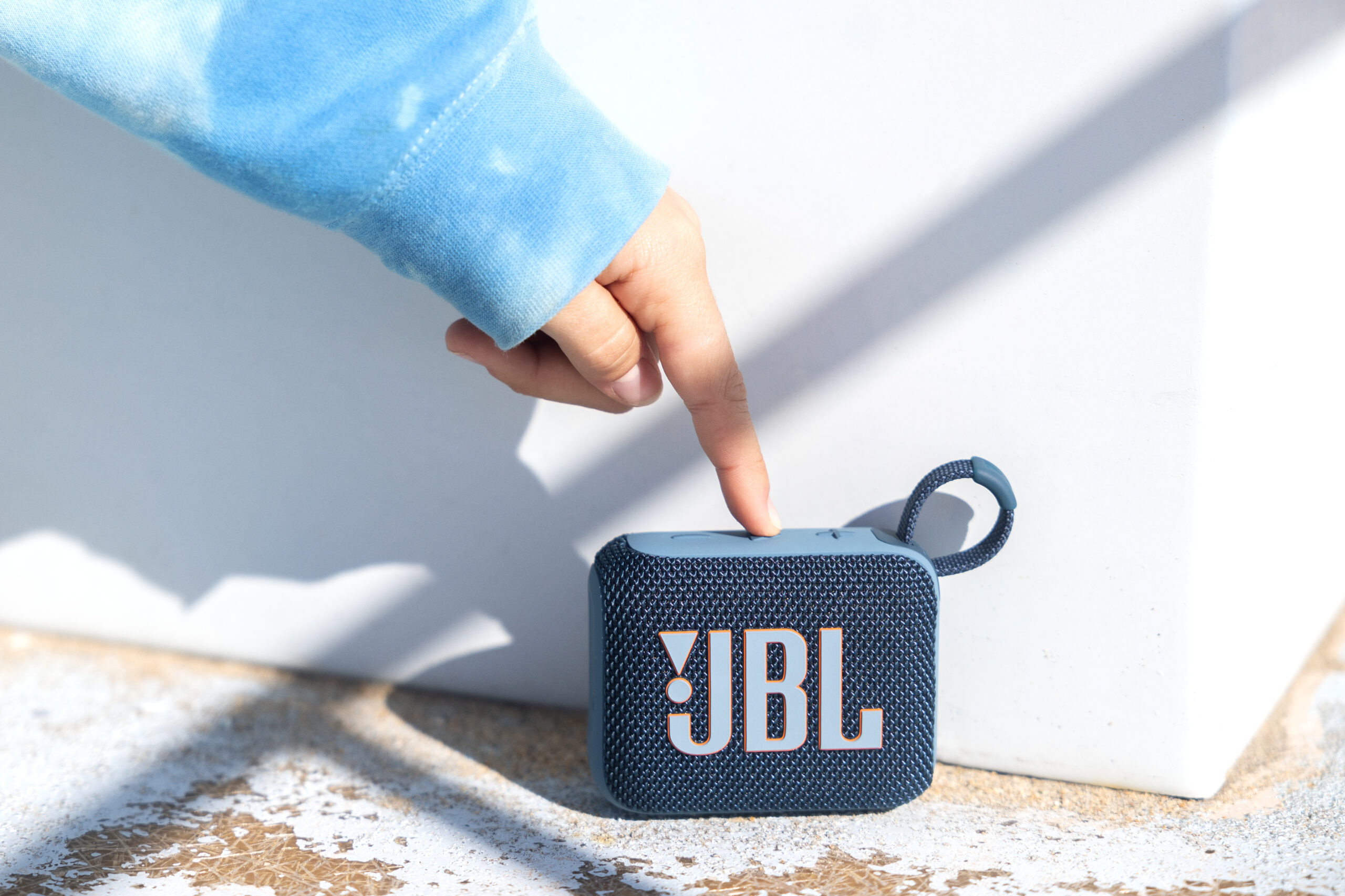
    The acquisition, valued at $350 million and initially announced in May, is set to further enhance Samsung’s already impressive audio brand offerings. Prior to this deal, Samsung, via Harman, owned such popular brands as Harman Kardon, JBL, and AKG. The purchase of Sound United is referred to as a “strategic milestone” by Harman.

    Impacts on Samsung’s Products Line

    While the acquisition of Sound United is undoubtedly significant, it is unlikely to bear immediate changes in Samsung’s product line. For instance, consumers shouldn’t expect to find a Bowers & Wilkins speaker or headphones included with the Galaxy S26. Sound United will continue to function as a standalone business within Harman’s lifestyle division. The intent behind this arrangement is to allow each audio brand to maintain its distinct identity.

    Despite the preservation of individual brand identities, the newly acquired brands will have access to Harman’s resources to facilitate growth and expansion. Concurrently, Harman anticipates leveraging the expertise and talent that will be introduced via Sound United. This approach mirrors Samsung’s strategy with Harman, which operates autonomously.

    The Preference for Convenience Over High Fidelity

    While there is potential for Samsung to enhance its phone audio capabilities and dive deeper into mobile hi-fi, the overall market trend leans towards convenience. The majority of consumers prefer the comfort and ease of listening to compressed audio from streaming services via Bluetooth. This trend, which appears to have overcome the demand for high fidelity audio, is unlikely to change in the foreseeable future.

    Questions & Answers

    What brands did Samsung recently acquire?
    Samsung’s subsidiary, Harman, recently acquired several prominent audio brands, including Bowers & Wilkins, Denon, Marantz, Polk, and others through the purchase of Sound United.

    What impact will this acquisition have on Samsung’s product line?
    The acquisition is not expected to bring immediate changes to Samsung’s product line. Sound United will operate as a separate business under Harman’s lifestyle division, and each audio brand will retain its unique identity.

    What is the current trend in the audio market?
    The current trend in the audio market leans towards convenience, with most consumers preferring to listen to compressed audio from streaming services via Bluetooth. This trend seems to have overtaken the demand for high fidelity audio.

  • Google’s Ai Age Verification Expands, Sparking Privacy Concerns

    Google’s Ai Age Verification Expands, Sparking Privacy Concerns

    Google expanded its AI verification tool for YouTube users in August to a select few accounts. Recently, the tech giant has started to implement this AI age verification to an increasing number of accounts.

    Google Enforces Age Verification for More Users

    In February, Google declared its intention to trial an AI tool designed to ascertain if YouTube users were under the age of 18. Initially, this tool was intended for a “small group” of users, but the company subsequently announced plans to roll it out more broadly. It appears the time for wider implementation has arrived, as YouTube users with restricted accounts have been congregating on the r/youtube subreddit to voice their objections to being asked to verify their age.

    Subreddit users have posted screenshots of a pop-up alert that appears overlaid on videos on mobile and tablet apps, and the web version of YouTube. The alert informs users that certain account settings have been modified and provides an option for age verification.

    Google’s AI Guesses User Ages

    In a support article, Google clarified that the AI-fueled system employs different signals to assess if a user is younger than 18. Some of the factors the system takes into account include the user’s activity and the duration of the account. Interestingly, some users have reported that the pop-up alert has appeared on accounts older than 18.

    If the AI determines an account is being used by someone under the age of 18, YouTube enforces various restrictions, including blocking access to age-restricted videos, adjusting video recommendations, and only serving non-personalized ads.

    Google states that users have the option to verify their age if the AI’s age estimate is incorrect. Verification methods include producing a government ID or selfie or using a credit card. Currently, users in the US, UK, Australia, and Canada are impacted, but it is expected that Google will expand the system’s coverage to other countries.

    The Privacy Debate

    Most people, particularly those under 18, know how simple it is to create an online account and falsify their age. While children may disagree, there’s a valid reason to limit their access to various online content, including some potentially distressing videos on YouTube. For this reason, the concept of utilizing an AI system to estimate if an account is being used by a child can be seen as a positive move.

    However, online age verification is a controversial topic from a privacy perspective. Anonymity was a fundamental aspect of the early web, but it’s now increasingly challenging to keep one’s real identity separate from their online persona. This is just one of several reasons why individuals may have reservations about sharing their ID with Google or other major tech companies.

    Questions & Answers

    What is the purpose of Google’s new AI tool for YouTube?
    Google’s AI tool was designed to identify whether YouTube users are under the age of 18 and impose appropriate restrictions to protect minors from harmful or inappropriate content.

    How does Google’s AI tool verify a user’s age?
    The tool uses various signals such as user activity and account longevity to determine an estimated age. If the AI’s guess is incorrect, users can verify their age using a government ID, a selfie, or a credit card.

    Does the introduction of this AI tool pose a privacy concern for users?
    Online age verification is a contentious issue from a privacy perspective. It’s becoming increasingly challenging to maintain online anonymity, meaning the requirement to share identification with tech giants like Google is a cause for concern for some users.

  • Revolution In Audio Broadcasting: Expanding Auracast’s Compatibility And Real-world Applications

    Revolution In Audio Broadcasting: Expanding Auracast’s Compatibility And Real-world Applications

    In March, we introduced our readers to a Bluetooth technology known as Auracast. This innovative feature, designed for Bluetooth Low Energy (LE), empowers a singular audio source, such as a phone, to transmit a high-quality audio stream to a limitless number of Bluetooth receivers in proximity. Instead of the traditional one-to-one Bluetooth connection (e.g., your smartphone to a pair of Bluetooth earbuds), Auracast transforms your device into a broadcasting station capable of delivering a one-to-many signal.

    Auracast Support for Hearing Aids

    Six months ago, Google initiated support for hearing aids using Auracast with the release of the Pixel 9 series. This support featured several preset settings tailored to assist those who have hearing problems. Recently, Google expanded this list to include Sony headphones among the hearing aids and earbuds compatible with Auracast. Other notable inclusions in this list are the JBL Tour One M3, the Samsung Galaxy Buds 3 Pro, and the Sennheiser Accentum True Wireless.

    Phones with Auracast Capability

    Among the smartphones equipped with the ability to utilise Auracast for audio broadcasting are the Google Pixel 8 and later models, the Samsung Galaxy S23, S24, and S25 series, and the Galaxy Z Fold 5, Z Fold 6, and Z Fold 7. Certain Xiaomi and Poco phones unavailable via U.S. carriers are also outfitted with Auracast support.

    Practical Applications of Auracast

    Auracast proves to be particularly useful in public places, such as airports and train stations, where public announcements are common. It also offers a solution for shared listening experiences, like when you want a nearby friend to hear a song you’re enjoying. Instead of sharing an earbud, a practice some might find unsanitary, Auracast lets you transmit the song directly to your friend’s headphones, earbuds, or even a compatible hearing aid.

    Users can also share their audio with members of a nearby group equipped with compatible Bluetooth devices. Simply scanning a QR code or tapping their phone using Google’s Fast Pair allows these group members to tune into the broadcast.

    At present, this feature is available only on certain phone models and Bluetooth-enabled audio devices.

    Questions & Answers

    What is Auracast?
    Auracast is a feature for Bluetooth Low Energy (LE) that allows a single audio source to broadcast a high-quality audio stream to an unlimited number of Bluetooth receivers nearby.

    Which phones are compatible with Auracast?
    Phones that are compatible with Auracast include the Google Pixel 8 and later models, the Samsung Galaxy S23, S24, and S25 series, and the Galaxy Z Fold 5, Z Fold 6, and Z Fold 7. Certain Xiaomi and Poco phones also support Auracast.

    Where could Auracast be useful?
    Auracast could be particularly useful in public places like airports and train stations, where public announcements are common. It’s also handy for shared listening experiences, allowing you to broadcast a song you’re listening to a friend’s headphones, earbuds, or even a compatible hearing aid.

  • Apple’s Possible Shift To Esim-only Iphones: Impact On Global Connectivity And Travel

    Apple’s Possible Shift To Esim-only Iphones: Impact On Global Connectivity And Travel

    Apple’s smartphones in the United States have not had a SIM card slot since the release of the iPhone 14. Instead, these devices have supported a mix of physical and eSIM technology. However, a recent rumor implies that Apple may soon discontinue the physical SIM card tray for the iPhone 17 in additional countries.

    Retail staff at Apple Authorized Resellers throughout the European Union are required to undergo training related to eSIM technology. Those in the know have disclosed that the deadline for course completion is Friday, September 5.

    Significant Event on the Horizon

    Just four days after this deadline, Apple is set to host its “Awe dropping.” event on Tuesday, September 9. The tech giant is anticipated to unveil the iPhone 17, iPhone 17 Pro, and iPhone 17 Pro Max, along with a new slim model potentially dubbed the iPhone 17 Air.

    Yet, this shift may not be confined to the European Union. The training material is accessible to European retail staff via Apple’s SEED app. This platform is utilized by employees of official Apple Stores and Apple Authorized Resellers globally, and it is not exclusive to Europe.

    Adapting to New Technologies

    It would be logical for Apple to roll out this change to other countries, particularly given the rumors circulating over the past year. Speculation that the iPhone 17 Air may be too thin to accommodate a SIM card slot began as early as last October. There have also been suggestions that the change could apply to the entire iPhone 17 range across all markets.

    However, it is probable that Apple will maintain the physical SIM option in certain countries, including China. Although iPhones in most countries support both eSIM and physical SIM, in China and a few other markets, they offer dual SIM with two physical cards.

    Notably, other tech companies are also following this trend. Google recently launched the eSIM-only Pixel 10 in the US, while Samsung’s Galaxy S25 offers a mix of eSIM and physical SIM support, including in the US. However, in some regions outside of the US, Samsung’s phones feature dual physical SIMs, and the Pixel 10 integrates both physical and eSIM technologies.

    Travel and Connectivity

    As a global traveler, having a variety of connectivity options is beneficial, therefore losing the physical SIM slot could be disappointing. While purchasing a local SIM can be cheaper and more convenient, there are a variety of international eSIM services that can sometimes offer more affordable and convenient options for travelers. Here’s hoping that Apple will continue to offer both options in my region.

    Questions & Answers

    Why is Apple potentially moving away from physical SIM cards?
    It is rumored that Apple may be entertaining this notion in order to make devices thinner and more streamlined, thereby improving the user experience.

    Will all countries lose the physical SIM option on the iPhone 17?
    While it seems likely that more countries will be affected by this change, it is currently unclear if this will be a global shift. Some regions, such as China, may continue to have the physical SIM option.

    How will the lack of a physical SIM card impact travelers?
    While the absence of a physical SIM card could initially prove inconvenient, the rise of international eSIM services could provide an alternative, and potentially more affordable, option for travelers.

  • Nestlé Expands Maggi Seasonings To Uk And Malaysia Amid Rising Global Air Fryer Trend

    Nestlé Expands Maggi Seasonings To Uk And Malaysia Amid Rising Global Air Fryer Trend

    In a strategic move to capitalize on contemporary culinary trends, global consumer goods conglomerate Nestlé has launched its renowned Maggi seasonings in the United Kingdom and Malaysia this year. This step is part of a wider global expansion strategy for the popular brand.

    Modern Cooking Trends

    Nestlé’s decision to introduce Maggi seasonings to new markets is a calculated response to the rising global popularity of air fryers, particularly in the United States. The company’s CEO, Laurent Freixe, has noted that nearly two-thirds of American households now use air fryers as part of their daily cooking routines. Nestlé’s expansion aims to cater to this shift in consumer lifestyle and preferences.

    New Air-Fryer Range

    The first range of products that Nestlé will bring to these new markets includes air-fryer recipes for chicken and vegetable wraps. These will feature a variety of flavors, such as ‘Cheesy’, ‘Paprika & Garlic’, and ‘Tex Mex’ for the chicken wraps, and ‘Fajita’, ‘Street Taco’, and ‘Kebab’ for the vegetable wraps.

    Prior and Future Launches

    The UK and Malaysia launches follow the brand’s earlier entry into the markets of Mexico and Chile. These new markets will also benefit from Maggi’s online platforms, which offer a range of air-fryer recipes that consumers can easily replicate at home.

    In a previous collaborative effort, Nestlé Professional and the KitKat team launched the first chocolate beverage maker, proving the company’s constant innovation in the food and beverage sector.

    Questions & Answers

    What is Nestlé’s reason for launching Maggi seasonings in the UK and Malaysia?
    The launch is a strategic move by Nestlé to cater to the rising popularity of air fryers in home cooking, particularly in the US.

    What products will Nestlé introduce in these new markets?
    Nestlé will introduce a range of air-fryer recipes for chicken and vegetable wraps with a variety of flavors.

    Has Nestlé launched Maggi seasonings in other markets before?
    Yes, prior to the UK and Malaysia launches, the Maggi brand was introduced in Mexico and Chile.

  • Korean shoppers buy more eco-produce, but prices remain a hurdle

    Korean shoppers buy more eco-produce, but prices remain a hurdle

    Increasingly, consumers in South Korea are choosing eco-friendly agricultural products, but a key obstacle to wider adoption remains: high prices. This was revealed in a recent government survey.

    The Ministry of Agriculture, Food and Rural Affairs disclosed that 76.8% of the participants in the survey reported having bought eco-friendly produce at least once over the previous year. This marks a slight growth, 0.6 percentage points, compared to 2024.

    The main reasons consumers gave for choosing eco-friendly produce were perceived safety (39.5%) and family health (31.1%). Environmental protection also influenced their decision (13.6%). Taste and quality were not as important, with only 4.8% and 3.1% naming these factors, respectively.

    Yet, the higher cost of such products remains a significant deterrent. Of those who did not buy eco-friendly products, 65.1% stated that the higher prices, in comparison to conventional alternatives, dissuaded them.

    The most commonly bought items were strawberries, tomatoes, mushrooms, and leafy vegetables. Most consumers (68.1%) made these purchases at large supermarket chains. However, online purchasing has been steadily increasing, particularly through early morning delivery services, making up over 35% of transactions in 2025.

    Even with the increased interest from consumers, the market experienced a drop in overall sales. In 2024, the number of online and offline retailers selling eco-friendly products increased to 6,099, yet total revenue decreased by 158.3 billion won to 2.04 trillion won. Certified organic product sales also fell by 81.3 billion won to 904.5 billion won. The majority of retailers blamed the decline on dampened consumer sentiment due to continuing economic uncertainty.

    As a countermeasure, the ministry plans to introduce initiatives such as production subsidies and promotional discounts to lower the cost of eco-friendly foods. “We are dedicated to reducing the price obstacle through consumer incentives and production support to expand the eco-friendly food market,” says Kim Jung-wook, Director of Agri-Food Innovation Policy at the ministry.

    Questions & Answers

    What are the primary reasons South Korean consumers choose eco-friendly produce?
    The main reasons are perceived safety and family health.

    Why do some consumers avoid buying eco-friendly products?
    High prices compared to conventional alternatives are the main deterrent.

    What steps is the Ministry of Agriculture, Food and Rural Affairs taking to support the eco-friendly food market?
    They are planning to introduce initiatives such as production subsidies and promotional discounts to make eco-friendly foods more affordable.

  • Australia More Telecom acquires Powercom Pacific

    Australia More Telecom acquires Powercom Pacific

    More Telecom announced its acquisition of national internet and phone provider, Powercom Pacific, substantially increasing the company’s SME customer base. More Telecom is one of Australia’s most successful and longest-running NBN providers with a sister retail business, Tangerine Telecom.

    Powercom Pacific owns several brands including Powercom, Montimedia and QTelecom and all customers will be migrating to More Telecom.

    All Powercor Pacific staff will be moving with the business and maintain ongoing employment with More.

    More Telecom General Manager, Andrew Branson, said the acquisition strengthens the More business which is expanding in both customer numbers and product offers.

    “The More business consistently seeks exciting expansion opportunities and with Powercom, we identified a business with complementary cultural and business models.

    “The Powercom customer base consists of long term, loyal, small business owners who want excellent service and we are confident we can deliver on this front,” said Branson.

    More Telecom has also expanded its SME reach via the launch of other business services such as More Payments and More Bookkeeping.

    More Telecom has also invested in building a strong business offering a full white label solution to other telcos and IT firms and has become Australia’s top white label NBN provider.

    The More Telecom and Tangerine Telecom business model works on a B2B/B2C business model delivering more efficiency and faster speeds due to the balanced bandwidth loading between the business peak hours during the day and the consumer peak hours during the evening.

  • Amazon, Samara Capital buy India’s retail chain More

    Amazon, Samara Capital buy India’s retail chain More

    Samara Capital, a private equity company, has teamed with Amazon to buy Indian grocery retailer More from Aditya Birla Retail.

    While the value of the deal has not been disclosed, it is reported a person close to the transaction putting it at around ₹4,200 crore (US$584 million).

    It is believed Amazon’s stake in the business will be capped at 49 per cent to comply with Indian foreign investment regulations. The balance will be held by Samara Capital, which is an Indian entity founded by former Citigroup executives.

    Amazon has already committed US$500 million to build its food retailing business in India, where it sees massive opportunity for growth.

    Analysts say that by investing in More, Amazon can build both online and offline food retailing operations simultaneously and find ways to marry the two. But it faces intense competition from Walmart which spent $16 billion acquiring Flipkart in a deal completed last month.

    More operates more than 500 supermarkets and 20 hypermarkets, ranking it fourth among Indian grocery retailers.

  • More men shop Korean department stores

    More men shop Korean department stores

    Department stores were once considered the ‘exclusive domain of women’ in many Asian countries.

    However, in Korea the ranks of men who enjoy shopping at luxurious stores are increasing.

    In addition, as more women are turning to overseas direct purchases or online shopping malls, Korea’s retail giants are attracting male shoppers by increasing hobby supplies and custom-made suits.

    According to Lotte Department Store, the proportion of male shoppers increased to 27 per cent this year, up four percentage points from 2010. Compared to the 26 per cent recorded at the end of last year, it rose by one percentage point in just three months. Sales of accessories for men more than doubled over the past five years.

    The Korean department store attributed the increase in male shoppers to a surge in male interest for cosmetics and clothes, as well as a renewed focus on enjoying hobbies and leisure activities.

    To cater to a growing number of male shoppers, the retailer has introduced stores that specialize in male apparel and accessories.

    Lotte opened “Curiosity of Renoma,” a hobby shop selling selected kidult products last December at its premium outlet in Gwangmyeong, and the shop is selling 150 million won worth of products monthly. At its Avenuel World Tower branch, it set up a camera shop named ‘el Camera’ selling cameras and related accessories to attract male shoppers interested in photography.

    Meanwhile, at its Jamsil branch, it opened a custom-made suit shop called “IFG”, which offers various suits priced from 300,000 won to 1,500,000, won and targets male shoppers aged 30 to 60.

    An official at Lotte said: “We plan to continue to expand stores specialising in products for men since we believe their potential buying power is huge.”