Tag: motorcycles

  • Pakistan Fuel Marketers Add 96 Retail Stations Across Country

    Pakistan Fuel Marketers Add 96 Retail Stations Across Country

    Oil marketing companies across Pakistan expanded their fuel retail forecourts during 1QFY27, commissioning dozens of new petrol pumps despite national targets aimed at electric vehicle adoption. Market leader Pakistan State Oil completed 37 new retail sites during the three-month period, lifting its nationwide network to 3,727 stations, the largest footprint in the country.

    Wafi Energy Pakistan Ltd added 54 new Shell retail sites and nine electric vehicle charging locations during the first nine months ending Sept 30. The sustained commercial buildout indicates that forecourt operators continue betting on rising petrol demand over official electrification goals.

    Under the Auto Policy 2026-31, the government aims to make 30 per cent of all new vehicles electric by 2030. Yet distributors on the ground are responding to daily road traffic anchored by petrol-powered two-wheelers and 660-1,000cc cars, which remain the primary mobility choice for consumers navigating weak public transit networks.

    Network Expansion Along Freight Corridors

    Attock Petroleum commissioned five new retail outlets during the quarter while decommissioning six underperforming locations under a network optimisation programme. Its operational network counted 816 stations on September 30, including 46 company-owned, company-operated sites.

    Private distributors are chasing traffic along newly built highways, bypasses and motorways linking northern transit points. Forty-eight licensed distributors maintain active operations across the country out of 50 permits issued by regulators. Forecourt operators focus investments on high-throughput intercity arteries where commercial vehicle flow guarantees daily volume.

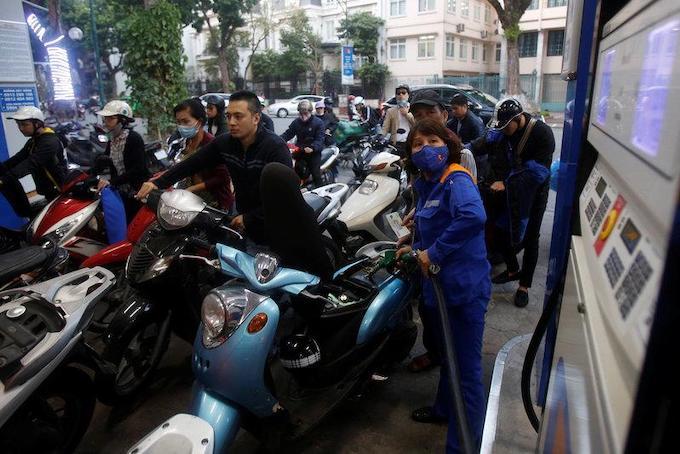
    Commuters rely on personal two-wheelers because metropolitan transit systems remain patchy and overburdened. When petrol prices fluctuate following international supply shocks, consumers turn to smaller displacement engines rather than abandoning combustion models entirely. That consumer preference shields forecourt retailers from sudden drops in fuel transactions.

    Slow Build for Charging Hubs

    Electrification investments remain modest additions to existing forecourt footprints. Pakistan State Oil installed chargers in Faisalabad and Multan during the quarter, bringing its charging network to 16 locations nationwide.

    Attock Petroleum activated highway charging points at the Dandiwal Service Areas on the M-4 Motorway through a venture with Hubco Green. The distributor also installed a heavy-duty charger at a company-owned site in Islamabad with Huawei Technologies Pakistan and AE Power Energy, with plans to equip 13 more stations.

    Forecourt operators argue that gas stations represent poor locations for battery recharging. Globally, drivers of electric bikes and passenger cars recharge at homes, apartments and commercial shopping centres rather than sitting at roadside forecourts. State pressure to add chargers at petrol stations therefore runs against natural consumer refuelling habits.

    Motorcycle Volumes Sustain Forecourt Footfall

    Vehicle fleet economics heavily favour gasoline distributors. The country holds 30 million motorcycles, five million cars and 10 million rickshaws on its roads, with no statutory retirement policy requiring old combustion engines to be scrapped after decades of use.

    Between 50 and 60 per cent of two-wheelers rely on petrol. Local assembly plants turned out 442,179 motorcycles during July and August, up from 321,788 units in the prior-year period. Assembly reached 2.416 million two-wheelers in fiscal 2026, compared to 1.692 million in fiscal 2025.

    Electric alternatives gained ground from a low base, with electric two-wheeler sales rising to 240,000 units in fiscal 2026 from 60,000 units in fiscal 2025. Passenger car sales for the first quarter of fiscal 2027 reached 41,872 units, climbing from 29,318 units a year earlier, even as purchases of larger sport utility vehicles, pickups and vans dropped to 8,608 units from 12,949.

    Attock Petroleum plans to install charging hardware across 13 additional retail locations as oil marketing companies monitor whether state regulators will force further capital spending into commercial charging hubs.
  • Vietnam Mobility Show Returns to Hanoi in December with 100 Test Drive Models

    Vietnam Mobility Show Returns to Hanoi in December with 100 Test Drive Models

    Hanoi hosts the Vietnam Mobility Show on Dec. 5 and 6 at the Vietnam Exhibition Center in Dong Anh District. Dozens of vehicle manufacturers and component suppliers will attend.

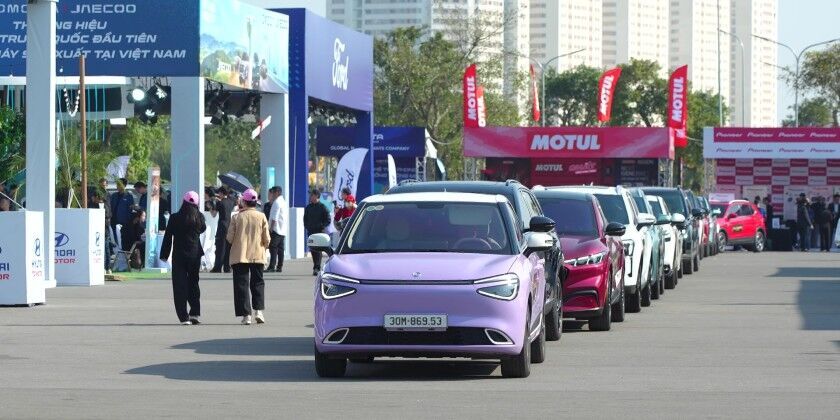
    Organizers expanded the showroom floor to accommodate nearly 100 test-drive models. The runs will cover dedicated obstacle courses and public roads, targeting end-of-year vehicle buyers.

    Expanding Floor Space and Green Technology

    Electric vehicles and sustainable transport platforms sit at the core of the 2026 main hall. Established legacy automakers in Vietnam will share floor space with debuting domestic brands. Exhibits feature consumer electric models, commercial vans, and electric two-wheelers.

    Instructors will oversee test runs in the outdoor pavilion. The layout allows buyers to test steering response and emergency braking on closed tracks before driving onto open roads.

    Aftermarket Retail and Seasonal Purchasing

    The schedule places the event directly ahead of the peak Lunar New Year shopping window. Vehicle registrations in Vietnam typically peak during this period. Dealerships and distributors plan exclusive discounts and direct financing packages to secure sales on site.

    Inside the aftermarket pavilion, parts manufacturers, detailing suppliers, and accessory distributors will introduce new lines for the replacement market. Regional exhibitions have shifted from passive product shows into transactional retail hubs. Retailers use them to clear inventory before year-end accounting deadlines.

    Motorsports Arena and Family Features

    Beyond retail displays, a motorsports arena will feature roughly 300 privately owned sports cars, supercars, and custom tuning builds alongside imported performance vehicles. Drivers will stage drifting demonstrations and motorcycle stunt sessions across both days.

    Family activities include the Carlympic Family Run, children’s road-safety circuits, and central-stage lifestyle workshops. Food vendors and interactive consumer pavilions will fill out the surrounding grounds.

    Tracking Attendance and Electric Vehicle Adoption

    Attendance at the December 2025 edition reached 60,000 visitors and featured more than 20 automotive, motorcycle, and accessory brands. Regional supply-chain partners continue to invest in Vietnam’s passenger vehicle sector as consumer demand rises for electrified city transport and suburban utility vehicles.

    Ticket sales and floor reservations open ahead of the Dec. 5 kickoff. Brands will monitor conversion rates as a gauge for early 2027 vehicle sales.

  • Pakistan Raises Import Duties on Tyres and Motorbike Parts to Protect Local Industry

    Pakistan Raises Import Duties on Tyres and Motorbike Parts to Protect Local Industry

    Pakistan raised additional customs duty on imported tyres and motorcycle components on Thursday. The tariff on certain bike parts climbs to 31 per cent to shelter domestic manufacturers.

    Cabinet members on the Economic Coordination Committee lifted the additional customs duty on locally manufactured radial tyres and motorcycle components from 4 per cent to 11 per cent. Rates on motorbike parts imported by local assemblers surged from 11 per cent to 31 per cent.

    Finance Minister Muhammad Aurangzeb presided over the Islamabad meeting. The committee altered statutory regulatory order SRO 693(I)/2006 on the recommendation of the Revenue Division. These tariff hikes follow the first quarter of the fiscal year and coincide with a staff-level agreement with the International Monetary Fund.

    Higher tariffs on tyres and motorcycle components

    Imported parts that compete with local suppliers face direct penalties under the new structure. Components brought in by vehicle assemblers take the steepest hit, jumping 20 percentage points to 31 per cent. Finished radial tyres and replacement parts now carry an 11 per cent levy.

    Revenue Division documents confirm the amendment to SRO 693(I)/2006 targets imports where domestic manufacturing capacity already exists. Officials structured the differential to push assemblers toward local supply contracts over foreign procurement.

    Vehicle assemblers across the country have long relied on imported knock-down kits from China, Japan and Southeast Asia. The wider tariff gap raises landed costs on foreign parts. Assemblers must now absorb the higher expenses or negotiate domestic purchasing contracts.

    Protectionist shelter for domestic assemblers

    Component vendors gain a protected customer base in a volatile retail market. Two-wheelers dominate urban transport in Karachi, Lahore and Rawalpindi. Consequently, motorbike parts rank among the largest consumer replacement categories in Pakistan.

    Motorcycle manufacturers must now speed up vendor localisation programmes. Assemblers that failed to build local supply networks over the past decade face immediate cost disadvantages. Competitors with higher domestic parts content will hold an edge.

    Retail buyers will feel the impact quickly at motorcycle repair shops and tyre dealerships. Importers of Japanese and Chinese radial tyres must raise wholesale prices or lose ground to domestic tyre makers in Punjab and Sindh.

    Credit guarantees and small business funding

    Credit guarantee measures accompanied the tariff decisions. The State Bank of Pakistan designed a structure to expand lending to small suppliers and the agricultural sector. The scheme provides 20 per cent first-loss coverage on loans to small enterprises, alongside 10 per cent coverage for medium industries and small farmers.

    Risk-sharing under the programme will flow through Agency Financial Institutions, connecting non-banking lenders and microfinance firms to state guarantees. The committee also amended the Second Supplemental Trust Deed of the Credit Guarantee Trust Fund. That step expands a housing finance facility created for the Prime Minister’s Mera Pakistan Mera Ghar initiative.

    Total supplementary grants cleared during the session reached Rs57.85 billion across 11 allocations. Within that sum, the Small and Medium Enterprises Development Authority secured Rs2 billion to execute its corporate plan.

    Restructuring state retail and infrastructure

    Industries and Production Division officials secured Rs11.329 billion to shut down the state-owned Utility Stores Corporation. The state retail chain operated thousands of discount grocery outlets nationwide. The closure forms part of a wider push to rationalise state enterprises.

    Infrastructure spending took up the rest of the major allocations. The Public Private Partnership Authority received Rs8 billion for project delivery. Meanwhile, the Ministry of Railways received Rs10 billion for the Thar Coal Rail Connectivity Project, linking domestic coal reserves to power stations and industrial buyers.

    Export Development Fund balances will also be invested in government securities to earn sovereign yields on idle trade funds. Revised customs tariff schedules take effect immediately across all major customs ports.

  • Honda and Onitsuka Tiger Debut Concept Motorcycle and Apparel in Milan

    Honda and Onitsuka Tiger Debut Concept Motorcycle and Apparel in Milan

    Honda and Japanese fashion brand Onitsuka Tiger have launched a collaboration to bring together motorcycles and fashion, debuting a concept motorcycle and apparel line in Milan on September 23, 2026.

    The centerpiece is the Onitsuka Tiger Honda Mid Sports Concept motorcycle, which held its world premiere during Onitsuka Tiger’s Spring/Summer 2027 show at Milan Fashion Week. Based on a mid-displacement sports model, the bike features Tiger Yellow as its base color, bold black stripes on both sides, and black wheels with Tiger Yellow accents and both brands’ logos.

    Onitsuka Tiger also unveiled footwear and apparel incorporating Honda’s motorcycle Wing Mark emblem, with designs inspired by motorcycle culture.

    Translating Mobility Into Apparel Foot traffic

    For fashion labels in high-rent urban corridors across Asia and Europe, mobility collaborations offer an avenue to younger male consumers who shop apparel less frequently. Through the deal, Onitsuka Tiger gains access to Honda’s motoring heritage. It applies that industrial brand equity directly to footwear and street apparel.

    Honda is using European fashion runways to reach demographics outside traditional dealership networks. The automaker wants to broaden city rider adoption. Instead of relying solely on speed and engineering metrics, it is packaging two-wheelers as lifestyle design objects.

    Shared Industrial Roots in Postwar Japan

    Both enterprises trace their origins to postwar industrial expansion in Japan. Honda was founded in 1948, and Onitsuka Tiger started in Kobe in 1949. Each business expanded globally over seven decades by anchoring manufacturing in specialized product engineering.

    The Milan presentation linked those corporate histories through physical product design. Staging the bike during the September 22 to 28 fashion calendar put mechanical hardware directly before international department store buyers and fashion media.

    Commercial Pipeline and Product Rollout

    Retail distribution details, production timelines, and pricing brackets for the co-branded footwear and apparel collections align with the Spring/Summer 2027 commercial cycle. Neither manufacturer has disclosed dealership availability or road-homologation plans for the Mid Sports Concept motorcycle.

  • BMW Motorrad Pursues Partnerships with Indian and Chinese Rivals

    BMW Motorrad Pursues Partnerships with Indian and Chinese Rivals

    BMW Motorrad is pursuing collaboration with motorcycle manufacturers in India and China as European and Japanese brands face growing pressure from lower-cost Asian rivals.

    Markus Flasch, chief executive of the German automaker’s motorcycle unit, outlined the strategy in Tokyo as traditional manufacturers adjust to shifting global competition.

    Pressure from lower-cost producers

    European and Japanese motorcycle brands face a more demanding market environment as Indian and Chinese builders scale up output with lower pricing structures. Flasch said brand prestige, heritage and manufacturing quality continue to carry equal weight with consumers alongside price competitiveness.

    Cooperation across key markets

    Working directly with regional manufacturers gives established global brands access to local production scale and competitive cost bases in key Asian territories. Flasch indicated that maintaining technical standards and premium positioning remains central to the group’s response to rising competition across developing two-wheeler markets.

    BMW Motorrad is now evaluating operational alignments as domestic players in India and China accelerate their own product rollouts and international expansion.

  • After Flipkart, Royal Enfield Begins Selling 350 CC Motorcycles On Amazon

    After Flipkart, Royal Enfield Begins Selling 350 CC Motorcycles On Amazon

    Royal Enfield, a well-known motorcycle manufacturer, has recently made its entry into the online retail sector by offering its motorcycles for sale on Flipkart. Advancing its ventures in the e-commerce domain, the company has now disclosed its collaboration with Amazon India. This partnership expands consumers’ options for purchasing the company’s 350 cc range of motorcycles directly from these platforms.

    The array of motorcycles now accessible on Amazon includes the Royal Enfield Classic 350, Hunter 350, Bullet 350, Meteor 350, and Goan Classic 350. This offering mirrors the company’s previous approach with Flipkart, which excluded the more costly and larger models such as the Himalayan 450, Guerrilla 450, Scram 440, and the 650 cc range, including models like the Continental GT650, Interceptor 650, among others.

    Partnership Benefits

    Royal Enfield has communicated that its partnership with Amazon India will yield flexible payment options, thereby simplifying the process for customers to acquire a motorcycle. At present, these models are available in five cities, specifically Ahmedabad, Chennai, Hyderabad, New Delhi, and Pune, via a dedicated Royal Enfield brand store on Amazon.

    The company assures that deliveries and after-sales services will be handled by the dealership chosen by the customer in their city. Besides motorcycles, the online store also presents a range of accessories, riding gear, and merchandise. This step follows the company’s previous collaboration with Flipkart, which catered to customers in Bengaluru, Gurugram, Kolkata, Lucknow, and Mumbai.

    Questions & Answers

    What does Royal Enfield’s partnership with Amazon India entail?
    This collaboration enables the company to offer its 350 cc range of motorcycles directly on the Amazon platform. It also provides flexible payment options for customers.

    Which models are available through this online offering?
    The range includes the Royal Enfield Classic 350, Hunter 350, Bullet 350, Meteor 350, and Goan Classic 350.

    What additional services does Royal Enfield provide to online customers?
    In addition to delivering motorcycles, the company also offers after-sales services to be handled by the chosen dealership in the customers’ city. The online store features a variety of accessories, riding gear, and merchandise.

  • Domestic motorcycle market remains challenging in 2024

    Domestic motorcycle market remains challenging in 2024

    Motorbike sales volumes in the first quarter of 2024 reached 603,745 units, down 4.88% from the previous quarter and 11.5% lower year-on-year.

    This sales level is equivalent to around 15 years ago, indicating a prolonged gloomy period for the industry.

    Vietnam remains the world’s leading motorbike market, with over two-thirds of adults owning two-wheeled vehicles.

    However, motorbike sales have been declining and manufacturers need to be nimble in order to respond to new demands, according to industry insiders.

    The Vietnam Association of Motorcycle Manufacturers (VAMM), which includes major brands like Honda, Yamaha, Suzuki, Piaggio and SYM, dominates the market.

    Motorcycle sales in Vietnam peaked at 3.25 million vehicles in 2019, but declined to 2.71 million in 2020 due to the Covid-19 pandemic.

    Last year, the decline in VAMM’s motorbike sales had slowed, but only reached 2.51 million vehicles, about 16% lower than the previous year. All major segments, including scooters and manual motorcycles, saw significant declines, with the under 50cc category decreasing by 28.4%.

  • Motorbike dealerships offer steep discounts in post-Tet sales

    Motorbike dealerships offer steep discounts in post-Tet sales

    Dealerships are slashing the prices of numerous motorbike models to stimulate demand in the quiet post-Tet (Lunar New Year) season.

    Standard Honda Vision models are on sale for VND30 million (US$1,218.2) at some dealerships, down VND1-2 million from before the Tet holiday, which ran from February 8 to 14.

    Notably, all versions of the Honda Winner X have had their prices cut by VND3-5 million to VND31-36 million, nearly 35% lower than their suggested retail price of VND46-50 million.

    The 2023 Yamaha Exciter 155 VVA is currently subject to a VND5 million discount, while the Suzuki Raider and Satria have had their prices reduced by VND3-5 million at some showrooms.

    Dealerships are eager to offer more discount to boost sales and get rid of remaining inventory.

    The steep price cuts are necessary to spur demand as the motorbike market is usually inactive in the first quarter, especially after the Tet holiday.

    The market has also slowed in general as sales of motorbike decreased by 16.21% from 2022 to 2.51 million units last year, according to the Vietnam Association of Motorbike Manufacturers.

    The downtrend continued in January, with Honda Vietnam reporting motorbike sales of 227.560 units, down 0.8% from the previous month.

    Despite the slumping sales, Vietnam is still the second largest motorbike consumer in Southeast Asia, according to data recently published by market intelligence firm MotorCycles Data.

  • Triumph Motorcycles India Increases Prices Of Select Models

    Triumph Motorcycles India Increases Prices Of Select Models

    Triumph Motorcycles India has increased the prices of the Street Triple R and the Rocket 3 range in India by up to ₹ 1.05 lakh. The Street Triple R is now priced at ₹ 9.15 lakh, the Rocket 3 R is now priced at ₹ 19.35 lakh and the Rocket 3 GT is priced at ₹ 19.95 lakh. All prices are ex-showroom. In the last few months, Triumph has had multiple launches in India such as the Trident 660, Triumph Tiger 850 Sport, the updated Bonneville range and the updated Street Twin. Additionally, the company’s upcoming launches are the 2021 Street Scrambler and the Scrambler 1200 range

    The Triumph Street Triple R gets a price hike of ₹ 31,000 while the Rocket 3 R gets a significant price hike of ₹ 85,000. The Rocket 3 GT gets the biggest price hike of ₹ 1.05 lakh, on its previous ex-showroom, price. The Triumph Tiger 900 range is likely to get a price increment as well. The Street Triple R gets the same 765 cc in-line 3-cylinder engine as the Street Triple RS, but the power and torque outputs are slightly different. The R makes 116 bhp at 12,000 rpm and 77 Nm of peak torque at 9,400 rpm while the RS makes 121 bhp and 79 Nm of peak torque. The steering geometry is slightly different of the Street Triple R, which gets a different rake and trail.

    The Rocket 3 and the Rocket 3 R get the 2,500 cc in-line triple-cylinder, liquid-cooled engine, which is actually the biggest two-wheeler production engine in the world. It makes a massive 165 bhp at 6,000 rpm and 221 Nm of peak torque at 4,000 rpm. The torque output is also the highest of any production motorcycle in the world.

  • Saigon to pilot public electric motorbike service

    Saigon to pilot public electric motorbike service

    The HCMC Transport Department will launch a public transport service using electric motorbikes at the end of this year. The service is part of a memorandum of understanding (MoU) signed last week between the department and Grab Vietnam, the local unit of Singapore-based ride-hailing firm.

    Under the agreement, the two parties will jointly roll out the electric motorbike service to support the city’s public transportation system in downtown areas, then consider expanding it throughout the city by the end of next year.

    They are also considering an electric bike rental service in the near future.

    Grab Vietnam will also share its data with the department, including the journeys of all vehicles registered with its ride-hailing technology, in order that the latter can create a traffic database.

    This database will allow the department to analyze, simulate and predict traffic on each route, and in turn, coordinate with Grab’s fleet to come up with solutions addressing the city’s current traffic constraints, the MoU said.

    Providing this additional mode of public transport aims to limit the use of personal vehicles, reduce congestion, and limit environmental pollution, department director Tran Quang Lam said.

    HCMC, the country’s largest metropolis with 13 million people, has around 7.8 million motorbikes and about 750,000 cars, according to the city’s police department. Car registrations in the city increased 15 percent in the first six months, while motorbikes 6 percent, according to the transport department.

  • JK Tyre Launches Blaze Rydr For Premium Indian Motorcycles

    JK Tyre Launches Blaze Rydr For Premium Indian Motorcycles

    JK Tyre has announced the launch of the new ‘Blaze Rydr BR43′ tyre for premium motorcycles in India. These are new radial tubeless tyre and the company will be offering them in size 140/70-17 and will be targeted towards performance-oriented riders. The Blaze Rydr tyre comes with rigid shoulder design for better grip, cornering stability and a specialized tread pattern for better traction and smart water channelling. The company says that the tyre is best-suited for customers who are riding in the cities and highways.

    Vikram Malhotra, Marketing Director, JK Tyre & Industries said, “We develop products that enhance our customers’ driving and riding experience. We have entered the two-wheeler tyre segment recently and the response from the market has been very encouraging. The Blaze Rydr BR43 is another addition to fulfill the requirements of higher CC motorbike riders and we are confident that it will further improve the riding experience of customers. This further reinstates our commitment to meet the emerging needs of the market and introduce tyres that help to maintain pace with changing market requirements.”

    The new tyre comes with advanced cross over groove pattern for enhanced performance and is developed with superior tread rubber. Furthermore, the new Blaze Rydr tyres have been tested in rigorous condition to check for superior ride and handling, and it’s 100 per cent run-out tested against vibration and wobbling as well. The company says that the tyres were even tested on the race tracks by professional riders to determine speed, precision and consistency, and claims that they will allow the riders to experience a comfortable ride with total control.

    JK Tyres has also announced that the complete Blaze two-wheeler range of tyre range comes with a lifetime warranty against manufacturing and non-manufacturing defect under terms and conditions.

  • Evoke Motorcycles Unveils New Electric Power Cruiser

    Evoke Motorcycles Unveils New Electric Power Cruiser

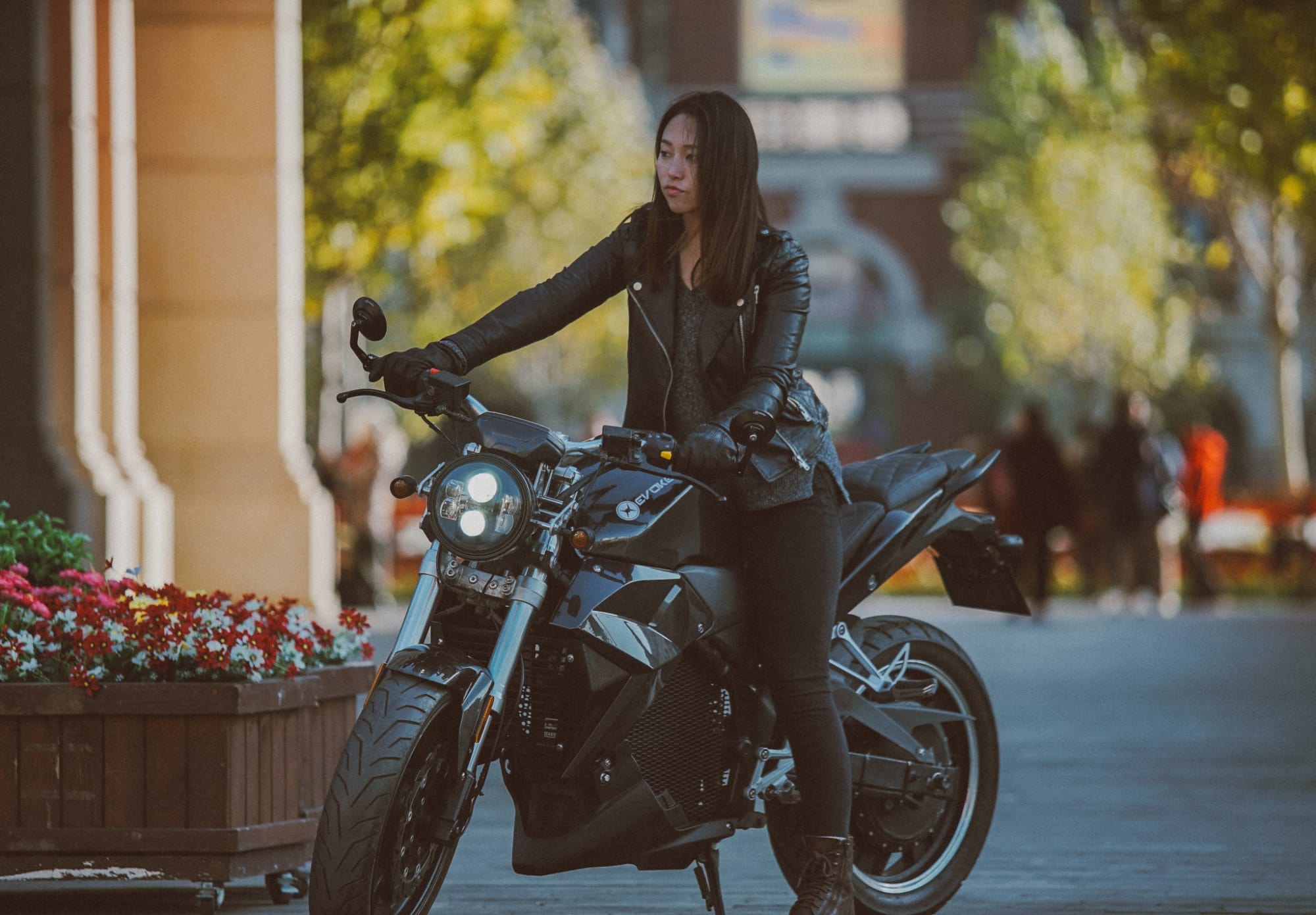
    Evoke Motorcycles, a Beijing-based electric motorcycle manufacturer, has unveiled a new electric power cruiser, called the Evoke 6061. The name is derived from the “Twin Plate Frame” which uses precision laser cutting process from solid T6-6061 aluminium billet pieces. The rear swingarm uses the same twin plate design and sports dual coil-over rear shocks. The Evoke 6061 employs a 120 kW (160 bhp) motor with a chain final drive, and provides over 272 Nm of torque. While the company hasn’t revealed the top speed of the 6061, it says that the new motor and batteries offer a higher top speed than the previous 130 kmph with Evoke’s Urban Series electric motorcycle.

    What is also unique is that Evoke will be using its latest Gen 2 battery modules which are capable of attaining a 0-80 per cent charge in just 15 minutes. The Evoke 6061 will be packing 6 of these batteries for a combined 15.4 kWh of energy capacity. But fast charging and the six battery packs will also mean the need for a good heat management system.

    So far, there’s no word on actual range of the batteries, but most estimates put city range in the region of 300 km on a single charge. Evoke Motorcycles intends to have the 6061 on the road by June 2019, so it’s not very far from where we will can see how the bike eventually performs, although there’s no word yet on if the 6061 will be introduced in India. What is confirmed though is that Evoke Motorcycles is planning to make its debut in India. Evoke also has two models, the Urban S and Urban Classic in its portfolio, but for the Indian market, an all-new entry-level electric motorcycle is expected to be launched.

  • Royal Enfield Classic & Thunderbird Range Get Optional Alloy Wheels

    Royal Enfield Classic & Thunderbird Range Get Optional Alloy Wheels

    Chennai-based motorcycle maker, Royal Enfield has added alloy wheels as an optional accessory for the Classic and Thunderbird range of motorcycles. The alloy wheels are priced at ₹ 10,000 for a pair and can be purchased at any of the brand’s 800+ dealerships across the country. The black with chrome finished nine-spoke alloy wheels are the same ones that are already offered on the Thunderbird X series, and will seamlessly integrate with the original tyres, tubes and brakes, replacing the stock spoked wheels that are offered with all Royal Enfield offerings.

    The alloys are compatible with any of the Royal Enfield Classic and Thunderbird range of motorcycles

    Compatible with the Royal Enfield Classic 350 and 500, as well as the Thunderbird 350 and 500, the front alloy wheel measures at 19-inch while the rear is an 18-inch unit. The alloys come with a warranty period of two years, and the bike maker’s lists the installation time at 105 minutes. The new alloy wheels not only add to the visual appeal of the motorcycle but also bring the convenience of tubeless tyres, which are easier to repair, in case of a puncture.

    Given the fact that Royal Enfield motorcycles tend to be one of the most customisable motorcycles out there, offering factory-backed accessories is a smart move from the manufacturer. This should also help reduce the use of substandard alloys that are available in the market that tend to break easily with a simple bump or thud. It’s a safety risk afterall, putting the rider and pillion’s life in danger.

    In addition, Royal Enfield is expected to roll out alloy wheel options for the Interceptor 650 as well in the coming weeks. The alloy could sport a different design while prices are likely to be in the same vicinity. Both the front and rear wheels are 18-inch spoked-units on the Interceptor 650 and Continental GT 650, and come shod with Pirelli tyres.

  • Minister wants increase in exports of motorcycles

    Minister wants increase in exports of motorcycles

    The countrys motorcycle industry has recorded a leapfrogging increase in production over the past several years, but the industry is still a minor player in export, Industry Minister Airlangga Hartarto has said.

    “The countrys production of motorcycles has increased 800 percent in the past three years but exports averaged only 300,000 units year,” the minister said here on Thursday.

    Motorcycle sales in Indonesia averaged 6 million units a year that means exports are only 5 percent of the domestic sales, he said.

    Airlangga said currently the country had 90 million units of motorcycle on the street or more than one third of the population of around 250 million.

    The number shows that motorcycles have become the main alternative of public transport in the country, he said.

    Growing demand for transport service has contributed to the expansion of motor vehicle industry including motorcycle industry in the country, he said.

    In the past five years , motorcycle industry in Indonesia has grown significantly with production averaging more than 7 million units per year.

    The industry ministry said it is optimistic the rising trend would continue in the coming several years.

    Airlangga said with the increase, the countrys position as the third largest producer of motorcycle in the world after China and India would not change.

    He said motorcycle industrialists need to expand research and development to keep pace with the market requirement domestically and internationally.