Tag: movement

  • Kathmandu Australia joins B Corp movement

    Kathmandu Australia joins B Corp movement

    Kathmandu on Tuesday announced it has become a certified B Corporation, making it the biggest B Corp in Australia and New Zealand.

    B Corps are for-profit businesses that meet the highest standards of social and environmental performance, public transparency and legal accountability.

    Started in the US in 2006 as a way to raise awareness of purpose-driven businesses by giving them a recognizable seal of approval, there are now more than 3000 B Corps worldwide, and more than 300 in Australia and New Zealand, which is the fastest-growing region per capita for B Corps.

    Local retailers with B Corp certification include Outland Denim, Etiko, Koala, GlamCorner, Bellroy, Flora & Fauna, KeepCup, Good Day Girl, Koskela, Arndsorf and Kester Black.

    The addition of Kathmandu to this list reflects a shift in the way many large companies view sustainability – no longer as a niche topic confined to the CSR team, but rather a core value that permeates every part of the business.

    “Sustainability is part of Kathmandu’s DNA  and is integral to our entire operation, from our supply chain to our materials and products and our operational footprint,” Xavier Simonet, Kathmandu’s CEO, said in a statement.

    To receive B Corp certification, organizations need to earn a certain number of points on the B Impact Assessment, an online tool that asks around 200 questions in five key areas: governance, workers, community, environment, and customers.

    The tool is administered by B Lab, a nonprofit with locations in 26 countries, which sets the global standards, awards B Corp certification and advocates for the adoption of ‘benefit company’ status at a state level.

    In the US and other countries, businesses can register as a ‘benefit company’, which means they are legally required to consider the impact of their decisions on all stakeholders, such as employees, suppliers and the planet, not just shareholders. This locks in their purpose, no matter who owns or runs the company.

    Benefit companies currently have no legal status in Australia, though B Lab Australia and New Zealand is actively campaigning for an opt-in legal form to be introduced through a minor amendment to the Corporations Act.

    This issue will become more critical as publicly listed companies like Kathmandu join the B Corp movement.

    T2, which is owned by Unilever, is also in the process of becoming a B Corp, and B Lab Australia and New Zealand is taking the opportunity to encourage other big businesses to get on board.

    “Kathmandu’s announcement as New Zealand’s first B Corp-certified multinational retail business, and Australasia’s biggest B Corp, is a significant milestone for Australia, New Zealand and the wider B Corp movement,” Andrew Davies, CEO of B Lab Australia and New Zealand, said in a statement.

    “Certification is open to all sizes of business, and we are seeing increasing interest from large corporations across the world, Kathmandu’s certification sends an important signal for other big businesses to follow in their lead.”
  • Kering leads the way to gender diversity

    Kering leads the way to gender diversity

    French luxury goods giant Kering has received a prize for its high level of female representation on its board. The company has made gender equality one of its corporate priority and has, this week, been chosen to receive the “Most Feminine Board of Directors” award.

    Handed out by the European Women on Boards along with Ethics & Boards, Kering was selected among the 200 largest companies of the Stoxx Europe 600 index based on the percentage of women on the boards as well as the presence of women serving as chief executive officer or chair of the executive board.

    The company, which owns a range of high-end labels including Saint Laurent, Bottega Veneta and Pomellato, launched a leadership and diversity program in 2010 with the aim of increasing access for women to leadership positions.

    Kering has also committed to reaching gender parity and pay equality at all levels by 2025.

    French companies are leading the way on gender diversity and Kering is a great model setting an example for the rest of the world to follow.

    Indeed, more than half of the group’s managers are women while they constitute 64% percent of the board and 33% of its executive committee.

    François-Henri Pinault, Kering’s CEO, also announced that the company would be doubling the budget of the Kering Foundation, aimed at tackling violence against women.

    Kering is also partnering with Michelle Obama for the French leg of her blockbuster tour for her memoir titled “Becoming.”

  • Chanel to stop using exotic skin in its collection

    Chanel to stop using exotic skin in its collection

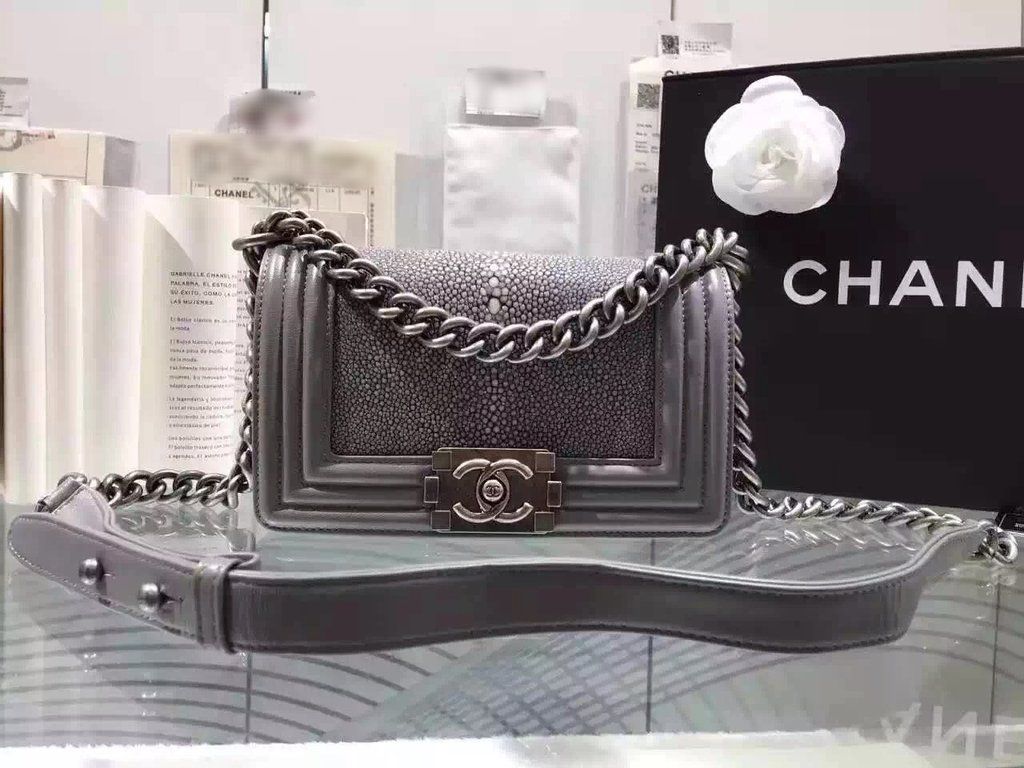
    Ahead of its pre-fall 2019 Métiers d’Art show in New York’s Metropolitan Museum of Art, Chanel has said it will “no longer use exotic skins in [its] future creations”. The exotic skins in question include crocodile, lizard, snake, stingray and fur, of which Chanel uses very little.

    The decision is down to the fact it is becoming increasingly difficult to source skins that meet the house’s quality and ethical standards. “There is a problem of supply and that was not Chanel’s business anyway,” Bruno Pavlovsky, president of Chanel fashion and president of Chanel SAS, commented. “We did it because it’s in the air, but it’s not an air people imposed to us. It’s a free choice.”

    The brand’s attention will shift to the research and development of materials and leathers generated by “agri-food” industries.

    “The future of high-end products will come from the know-how of what our atelier is able to do,” Pavlovsky continued. It will, however, take time for existing goods containing exotic skins to leave Chanel’s distribution network entirely.

    Chanel is the first luxury brand to join labels, including Asos, Nike, H&M, Puma, Arcadia Group and L Brands, which have already banned exotic skins from their product offering.

    The likes of Armani, Coach, Versace, Michael Kors, Gucci, Burberry and John Galliano have pledged to halt the use of fur, however, they have not made the leap to include skins in their entirety.

  • All Starbucks in Korea to get paper straws from yesterday

    All Starbucks in Korea to get paper straws from yesterday

    Starbucks Korea is stocking all 1,225 of its stores nationwide with paper straws in a bid to cut down on its plastic usage. Starting last Monday, Starbucks began stocking all of its stores with white paper straws, which it found during trials to be more popular than green ones. The paper straws will also be coated with soy oil both inside and outside in response to customer complaints that its original trial straws were too flimsy.

    Starbucks trialed paper straws at 100 stores in Seoul, Busan and Jeju Island over the last two months.

    Though all stores now have paper straws, some branches will continue to offer customers plastic ones until they deplete existing stocks.

    Additionally, on Monday Starbucks began stocking all of its stores with plastic cup lids that don’t require straws. These special lids, which resemble those used with hot drinks that come in paper cups, will be provided for take-out orders of regular cold drinks. Paper straws and regular lids will be provided for specialty cold drinks like Frappuccinos and drinks topped with whipped cream that are difficult to drink without straws.

    “We developed the plastic cup lids to minimize disposable waste consumption and also offer an alternative to customers who prefer drinking without straws,” said a Starbucks spokesman.

    Starbucks will also remove the straws and stirring sticks it previously left out for customers and instead place them behind counters and only provide them on request. It will replace all plastic stirring sticks with wooden ones as well.

    Last year, Starbucks Korea used 180 million plastic straws, nearly enough to circumnavigate the earth if laid end-to-end.

    “With the adoption of paper straws we will be able to prevent consumption of at least 180 million plastic straws from next year,” said a Starbucks spokesperson.