
Tag: MPLS

  • Singapore’s LTA Partners With Nokia, Hitachi To Boost Rail Surveillance And Operational Efficiency

    Singapore’s LTA Partners With Nokia, Hitachi To Boost Rail Surveillance And Operational Efficiency

    The Land Transport Authority (LTA) in Singapore is taking the initiative to upgrade its rail infrastructure’s video transport and CCTV network. The project is being launched in partnership with Nokia and Hitachi Rail, and its primary goal is to boost real-time monitoring, enhance safety for commuters and bolster operational efficiency.

    Impacts of the Upgrade

    The initiative will focus on over 50 train stations, employing Nokia’s fiber-based Optical LAN and IP/MPLS solutions to bolster high-resolution video surveillance across the city’s railway system. The system, which caters to in excess of 3.65 million passengers per day, stands to benefit greatly from the enhanced surveillance capabilities.

    Nokia’s Optical LAN technology features robust optical network units (ONUs) and optical line terminals (OLTs) that can offer speeds up to 25 Gbps. When compared with traditional copper-based LAN infrastructure, this system utilizes about 70% less cabling and approximately 40% less power. These factors contribute to increased efficiency and sustainability. The deployment’s IP/MPLS component will provide dependable backhaul connectivity to the LTA’s centralized Operations Control Center, thus enabling efficient transport of live video data. This will lead to improved network reliability and quicker response capabilities.

    Stuart Hendry, Vice President of Enterprise Sales for Network Infrastructure at Nokia Asia Pacific, highlighted the importance of the project. He noted that fiber is being used to connect critical systems, including those responsible for monitoring transportation hubs worldwide. Ensuring a highly available, reliable, and secure real-time surveillance system is critical to the safety of those utilizing Singapore’s transit lines daily. The partnership with Hitachi Rail allowed Nokia to deliver a comprehensive solution for LTA, ensuring they had the necessary video capacity for their extensive CCTV surveillance and broader network operations for years to come.

    Nokia has stated the upgraded system will enhance the capacity and reliability of the LTA’s surveillance network and allow for future expansion as bandwidth and monitoring needs increase.

    Other Railway Project Improvements in Asia

    In addition to the Singapore project, various other improvements are being made to railway projects across Asia. One major project in Malaysia will see YTL Communications leading a significant fiber optic project. Meanwhile, in Indonesia, another project is being implemented to ensure high-speed railway safety and efficiency.

    Joaquim Santos, Vice President of Integrated Communication and Supervision Solutions (ICS) at Hitachi Rail, expressed satisfaction with the collaboration. He stated that the project is part of Hitachi’s ongoing relationship with the LTA and will play a crucial role in upgrading the transport infrastructure.

    Questions & Answers

    What is the primary goal of this upgrade project?
    The primary goal is to boost real-time monitoring, enhance safety for commuters and bolster operational efficiency.

    What are the technical specifications of the upgrade?
    The upgrade will employ Nokia’s fiber-based Optical LAN and IP/MPLS solutions which can offer speeds up to 25 Gbps. This will allow for efficient transport of live video data and improved network reliability.

    What is the significance of this upgrade for Singapore’s railway network?
    This upgrade will enhance the capacity and reliability of the LTA’s surveillance network and allow for future expansion as bandwidth and monitoring needs increase. This will contribute to the safety and efficiency of the rail network.

  • Indonesia’s FiberStar extends collaboration with Huawei

    Indonesia’s FiberStar extends collaboration with Huawei

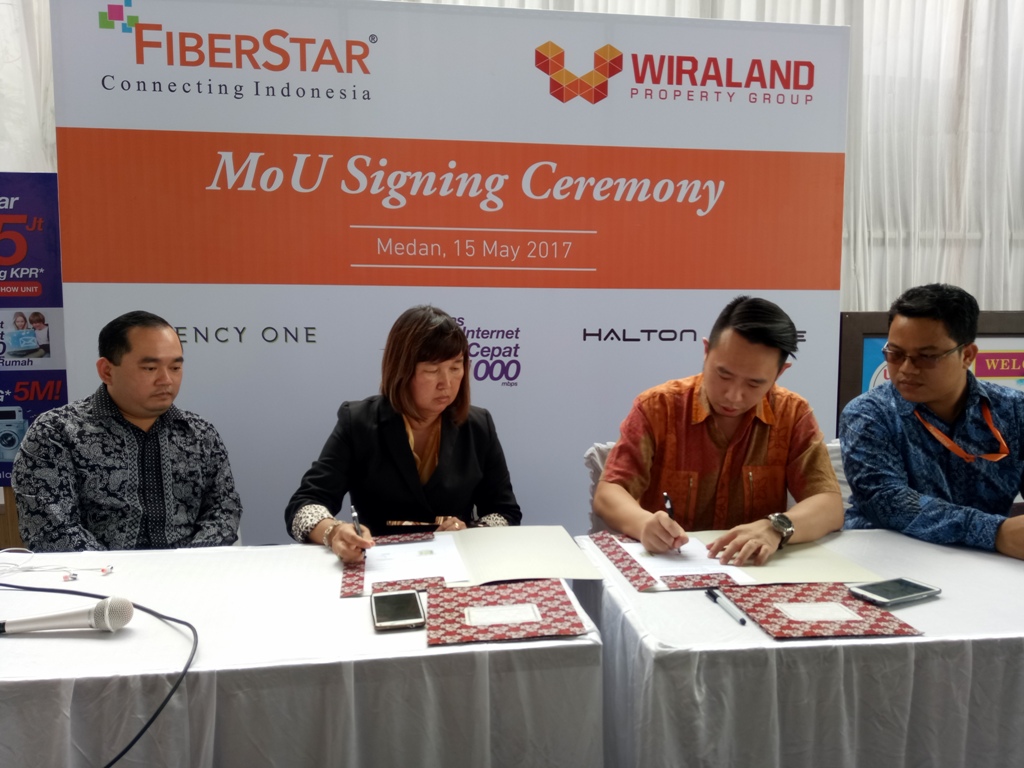
    Indonesia’s FiberStar has signed an agreement with Huawei to jointly expand high-speed fiber network services in the market.

    FiberStar recently partnered with Huawei to build a 1Tbps backbone DWDM network linking Jakarta with Surabaya. The network consists of submarine and terrestrial cables that form a ring network with a total length of more than 3000 kilometers.

    Building on this cooperation, the companies signed a memorandum of understanding at the Huawei ISP Summit Asia Pacific 2019 in Bali to strengthen collaboration in the field of fixed networks and data centers.

    FiberStar co-founder and director Thomas Dragono said Huawei shares the company’s vision for the digital transformation of Indonesia.

    “Being the pioneer of Indonesia’s neutral infrastructure service, and considering Huawei’s advancement in the optical communications field, we have both decided to explore a deeper and stronger partnership,” he said.

    “The consensus on the advantages of optical network technologies and evolution trends are the basis of cooperation between both parties. We will leverage the advanced DWDM and MPLS technology to expand the coverage of networks in Indonesia, and further facilitate the growth of the digital economy in Indonesia.”

    FiberStar was established in 2014 as a subsidiary of Indonesia’s biggest conglomerate the Salim Group.

    The company is Indonesia’s biggest carrier-neutral infrastructure provider, offering coverage to 92 Indonesian cities across the nation’s main islands including Sumatra, Java, Bali, Kalimantan, and Sulawesi.

  • Indosat Ooredoo picks Nokia for IP/MPLS upgrade

    Indosat Ooredoo picks Nokia for IP/MPLS upgrade

    Indosat Ooredoo has contracted Nokia to upgrade the Indonesian operator’s IP/MPLS network to meet fast-growing demand for fixed and mobile broadband services.

    Indosat Ooredoo is deploying a 100GbE IP/MPLS network as part of a three-year network transformation program.

    Nokia will provide a solution that includes its Nokia IP Anyhaul for Indosat’s mobile transport network, paving the way for its upgrade to 5G. The network will also carry services including metro Ethernet for consumer broadband and enterprise data services.

    The first year of the network upgrade project will concentrate on Jakarta, Jabodetabek and the rest of Java.

    “Indosat Ooredoo started an ambitious three-year program to transform our network to achieve the best customer experience, which will provide video-grade 4G coverage to more than 90% of Indonesia’s population,” Indosat Ooredoo CTIO Dejan Kastelic said.

    “The IP/MPLS network upgrade that we are undertaking with Nokia is aimed at providing a solid foundation for the network transformation, particularly in the most densely populated area of the country.”

    He said upgrading the company’s existing IP/MPLS network with a new Nokia network processor will help the operator both meet the growth in subscriber demand, while keeping capex costs down by extending the life of existing assets.

  • Nokia providing IP/MPLS for Malaysia’s first MRT line

    Nokia providing IP/MPLS for Malaysia’s first MRT line

    Nokia has announced it has provided a mission-critical communications network for Malaysia’s first Mass Rapid Transit line.

    The company has supplied the network to systems integrator LG CNS as part of the project to provide railway operational support on the new SBK (Sungaii Buloh-Kajang) line.

    Nokia is providing an IP/MPLS network capable of providing scalable Layer-2 and Layer-3 VPN services for various railway sub-systems. The company is also providing its Network Services Platform for end-to-end network and services management.

    The northern section of the SBK line launched in December, and the southern and underground sections are due to be operational by the end of July.

    Once complete, the line will cover 51km and serve the 1.2 million residents in and around Malaysian capital Kuala Lumpur.

    “Nokia’s IP/MPLS solution for railways is designed to address railway operators’ demanding requirements in terms of performance, reliability and, most importantly, safety,” Nokia head of global enterprise and public sector for APAC Stuart Hendry said.

    “We are pleased to play such an important role in helping ensure safe, on-time and connected journeys for Kuala Lumpur’s residents.”

  • Tata Comms to provide MPLS WAN for Air France-KLM

    Tata Comms to provide MPLS WAN for Air France-KLM

    Europe’s second largest airline Air France-KLM has handed Tata Communications a multi-million dollar deal to provide next-generation network connectivity to 170 sites.

    Tata Communications will provide Air France-KLM with an MPLS WAN in the Middle East, Africa and Asia Pacific, supported by the operator’s global subsea cable network.

    The multi-year contract will see Tata Communications roll out a fast, intelligent network which will power Air France-KLM’s mission-critical systems, including passenger check-in, flight operations and departure control applications, as well as corporate programs in the Middle East, Africa and Asia Pacific.

    Air France-KLM, which carried 87.4 million passengers in 2014, is the first major European airline group to move away from the legacy networks widely used in the airline industry.

    Tata Communications’ global network – which today connects more than 300 locations for leading airlines worldwide – will enable Air France-KLM to offer a range of digital services in regions that have been identified by the International Air Transport Association (IATA) as the future growth drivers of the industry.

    Currently eight of the ten fastest growing airline markets are located in Africa. By 2034, IATA expects 1.3 billion passengers to touch China – up from 850 million at present – and India is set to see an additional 260 million passengers. Europe will act as key transfer hub to these emerging markets, with 1.4 billion passenger journeys in 2034 – nearly 600 million more than today.

    “Investing in emerging markets and cutting-edge digital technologies is at the heart of our growth strategy. We’re introducing a range of innovative services, such as travel apps for smartwatches, to provide a seamless, personalized travel experience for our tech-savvy passengers,” Air France-KLM CIO Jean-Christophe Lalanne said.

    “Tata Communications’ global next-generation network will act as the foundation for these services in the Middle East, Africa and Asia Pacific, empowering us take customer service to the next level and capitalize on the huge growth opportunities that these markets offer.”