Tag: mrt

  • Benoy completes design work of Jewel Changi

    Benoy completes design work of Jewel Changi

    International architecture and design firm Benoy has completed work on the interiors for Singapore’s new airport shopping centre, Jewel Changi.

    Opening its doors on April 17, the new 137,000sqm space connects three of Changi Airport’s current four terminals, making it easily accessible to the public and passengers. With more than 65 million passengers passing through Changi Airport last year, Jewel is designed to establish a new airport typology as a destination promoting community, commerce and entertainment.

    “We are incredibly proud of the work we have done for Jewel,” said Benoy director and head of Singapore studio Terence Seah. “We’ve created a dynamic environment that becomes a unique place for travellers and residents alike. This addresses the important question of place making in the aviation context.

    “In the process too, Jewel has enhanced the Changi experience. We are confident that other cities will be inspired to rethink the future of airports.”

    Benoy has drawn its capacities in retail, mixed-use, hospitality and leisure to deliver an experience-led destination for the city, offering a renewed sense of place for locals and visitors in connecting the city to the airport. The interiors navigate the many interfaces between aviation facilities and the retail centre.

    Celebrating the natural light offered by the forest valley at Jewel’s core, the retail design enables visitors to experience the vastness of the open space and the intimacy of nature throughout their elliptical journey of the building, reinterpreting the traditional sense of the commercial space.

    The expanded Terminal 1 also offers new pedestrian linkages to other terminals and the MRT via Jewel, improving connectivity and accessibility for all.

  • Nokia providing IP/MPLS for Malaysia’s first MRT line

    Nokia providing IP/MPLS for Malaysia’s first MRT line

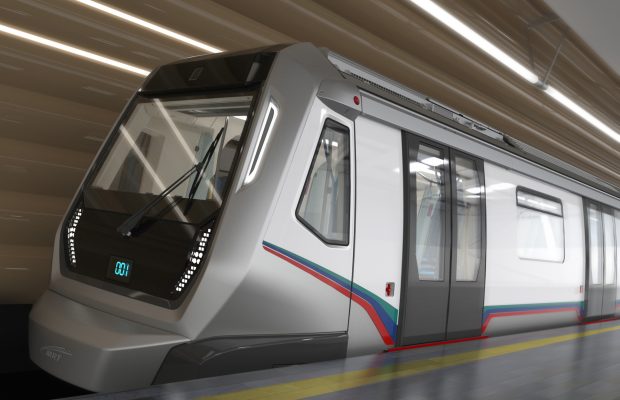
    Nokia has announced it has provided a mission-critical communications network for Malaysia’s first Mass Rapid Transit line.

    The company has supplied the network to systems integrator LG CNS as part of the project to provide railway operational support on the new SBK (Sungaii Buloh-Kajang) line.

    Nokia is providing an IP/MPLS network capable of providing scalable Layer-2 and Layer-3 VPN services for various railway sub-systems. The company is also providing its Network Services Platform for end-to-end network and services management.

    The northern section of the SBK line launched in December, and the southern and underground sections are due to be operational by the end of July.

    Once complete, the line will cover 51km and serve the 1.2 million residents in and around Malaysian capital Kuala Lumpur.

    “Nokia’s IP/MPLS solution for railways is designed to address railway operators’ demanding requirements in terms of performance, reliability and, most importantly, safety,” Nokia head of global enterprise and public sector for APAC Stuart Hendry said.

    “We are pleased to play such an important role in helping ensure safe, on-time and connected journeys for Kuala Lumpur’s residents.”

  • Indonesia offers Japan Jakarta-Surabaya rail project

    Indonesia offers Japan Jakarta-Surabaya rail project

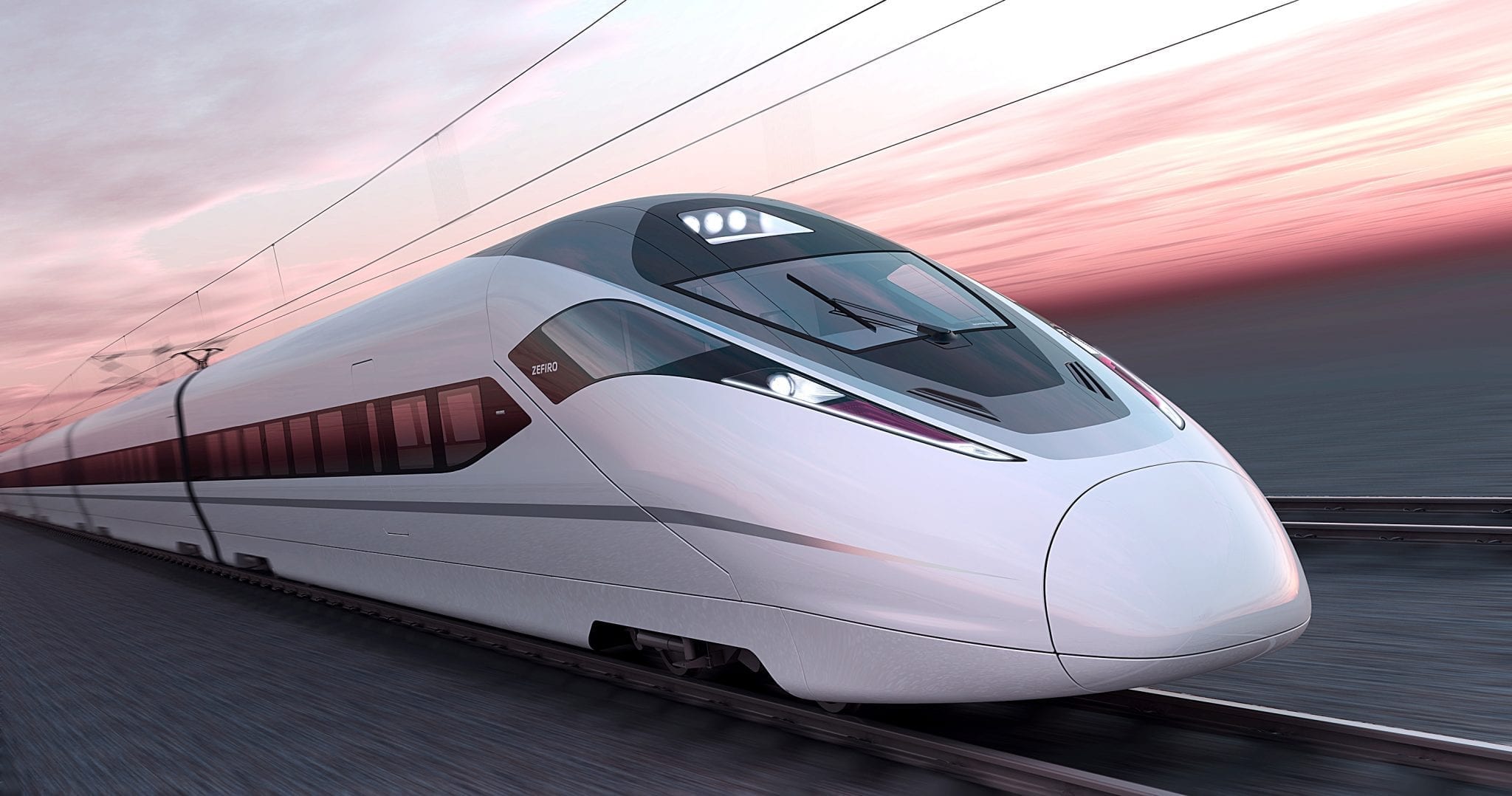
    Indonesia has officially offered Japan the opportunity to take part in the semi high-speed rail construction project connecting Jakarta to Surabaya in East Java, a senior minister said.

    Coordinating Maritime Affairs Minister Luhut Binsar Pandjaitan delivered the official letter offering the project to the Japanese government during his working visit to Tokyo on Friday, according to a statement released by the ministry’s office.

    “Personally, I am sure Japanese technology is suitable for this project,” he said in the statement released on Friday. The semi high-speed railway would have trains running between 180 and 200 kilometers per hour and would shorten the travel time between Jakarta and Surabaya to 3.5 hours, Luhut added.

    The government planned a double track railway so that it could be utilized to support the transfer of containers in dry port between Jakarta, Semarang and Surabaya.

    Should Tokyo accept the offer to work on the project, Luhut further said he hoped that Japan would implement technology transfers with Indonesia and comply with the country’s regulations that prioritized the use of Indonesian-made products.

  • Kuala Lumpur MRT retail spaces up for grabs

    Kuala Lumpur MRT retail spaces up for grabs

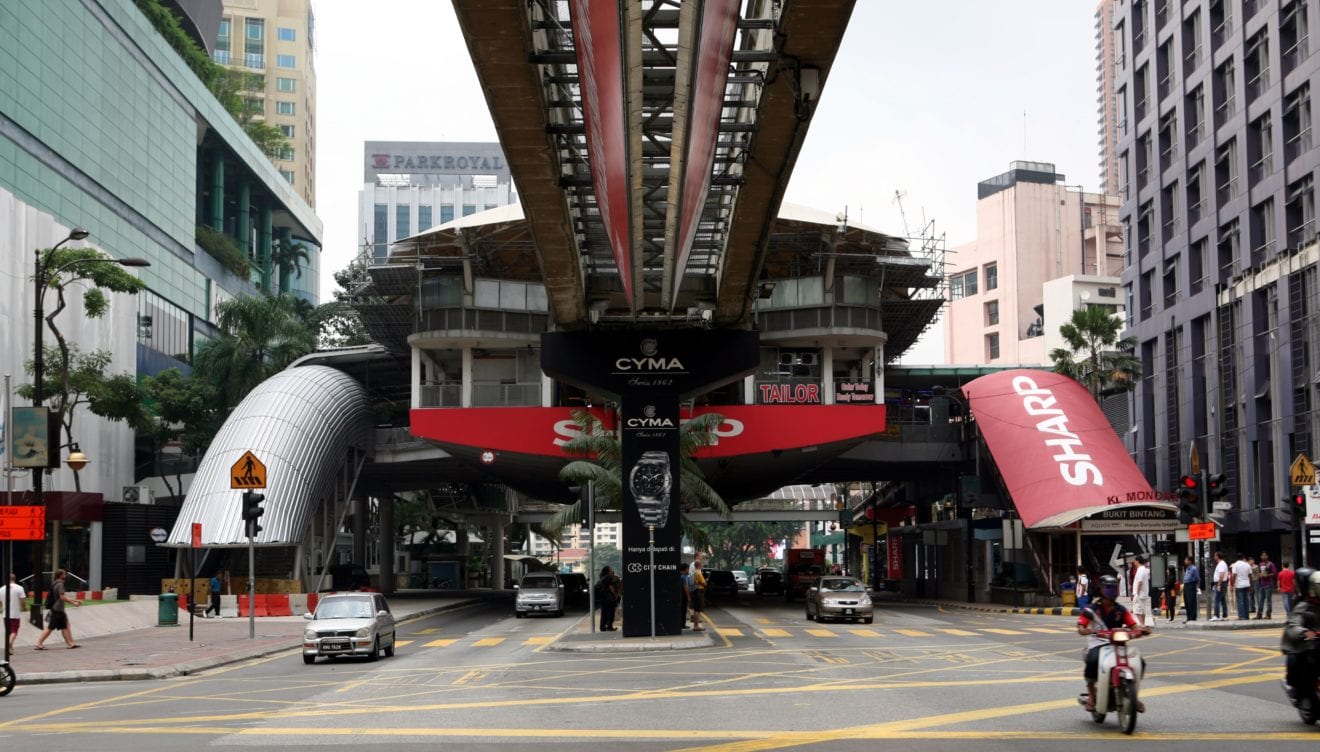
    Kuala Lumpur MRT retail spaces – 41 spots at 21 stations – have been put to tender.

    The Mass Rapid Transit Corp (MRT Corp) says proposals and bids for the spaces, on the upcoming MRT Sungai Buloh-Kajang line, must be submitted by April 18.

    Commercial land management director Datuk Haris Fadzilah Hassan says the company hopes to announce successful applicants by the end of June.

    About 30 per cent of the units have been set aside for indigenous entrepreneurs, and Haris says the company is seeking retailers for the balance who have “exciting business ideas and services, suitable for commuters with fast-paced mobility and urban lifestyle”.

    Small and local businesses are encouraged to apply, and more retail spaces will become available in the future.

    The Sungai Buloh-Kajang line will open near the end of this year.

  • 1987: Year of market crashes and MRT rollout

    1987: Year of market crashes and MRT rollout

    WHAT do household terms Black Monday and the Mass Rapid Transit (MRT) have in common? They both originated in 1987, a remarkable year that saw the worst – and best – of the Singapore stock market, as well as the historic rollout of the Republic’s first MRT service.

    On Oct 19, stock markets around the world collapsed. Billions of dollars were wiped out following a record selloff on Wall Street. The Dow Jones Industrial Average nosedived 508 points or 22.61 per cent to 1,738.74, its largest one-day percentage decline.

    The Straits Times Index (STI) was not spared, shedding 170 points or 12 per cent to 1,223.28, its biggest one-day tumble in local stock market history. Using the percentage drop in the STI as a crude measure, over S$15 billion – “enough to build three MRT projects” as detailed in the BT report – was obliterated from the market’s capitalisation.

    This was ironic because just a week later, the first section of the MRT – the North South Line between Yio Chu Kang and Toa Payoh – started operations. In ways that were unimaginable before, this brand-new transport mode dramatically transformed the retail landscape in Singapore.

    Banks, pharmacies and shops selling gifts, jewellery and electronics became the first to dominate retail space at MRT stations. They wanted to capture the “tremendous traffic” (as Guardian Pharmacy called it) of thousands of office workers who took the trains for work and shopping downtown.

    Speaking of tremendous, something else happened that year. On July 7, the Singapore bourse breached the 1,300- mark for the first time in the history of the stock market. The STI added 28.87 points to close at 1,316.15, by virtue of blue chips and good-quality stocks such as F&N, OCBC, DBS and Singapore Press Holdings.

    Unfortunately, that stock market euphoria did not live out the remaining months of 1987 as Black Monday struck. That catastrophic market crash in fact inspired the development of trading curbs, or circuit breakers that would allow stock exchanges to temporarily halt trading in instances of exceptionally large price declines.


  • Taxi services with apps  springing up like mushrooms

    Taxi services with apps springing up like mushrooms

    Taxi services equipped with booking applications are springing up like mushrooms in Indonesia as people are seeking more reliable means of transportation amid the country’s poor public transportation facilities.

    GrabTaxi, Uber or even the newly established ojek (motorcycle taxi) app Go-Jek are rapidly spreading in the country’s major cities.

    Nadiem Makarim, founder and CEO of the Go-Jek app, said that he came up with the idea to establish Go-Jek in 2011 out of his own need for fast and reliable transportation and also courier services in the capital city.

    The company, which was first established to serve Jakarta commuters, has quickly expanded its services and is now also available in Bandung, West Java; Denpasar, Bali; and Surabaya, East Java.

    “The expansion is based on the city’s traffic jam level, the supply of ojek drivers and the city’s economic level since our users are from the middle and upper-middle class,” he told The Jakarta Post. “We are planning to further expand our presence in other cities across the country, but we cannot mention the names of the cities just yet,” he continued.

    Since Go-Jek launched its mobile app in January this year, its number of ojek partners increased from 1,000 to 10,000 amid rising demand. The app itself has been downloaded 650,000 times since it was launched, Nadiem said.

    The marketing head of Malaysian company GrabTaxi’s Indonesian representative office, Kiki Rizki, similarly said that the company’s presence in Indonesia was aimed at tapping the rising demand for safe and reliable transportation in the country’s main cities.

    “We see a similar transportation problem in big cities across Southeast Asia. Residents basically need public transportation that can offer security, convenience and speed, which is what we offer at GrabTaxi,” Kiki told the Post.

    She said that the GrabTaxi service — which incorporates thousands of selected drivers from five leading taxi fleets in the country and assigns available taxis to nearby commuters using mapping and location-sharing technology — was now available not only in Jakarta but also in Surabaya and Padang in West Sumatra.

    The application displays the identity of the driver, the license plate of the taxi that will pick up the passenger and its estimated arrival time.

    “By using this application, customers don’t have to worry about being ripped off by taxi drivers, as they can monitor their journey and be informed of the driver’s identity,” she said.

    The company also decided to launch GrabBike, which is similar to the Go-Jek service, last month, and had since accommodated more than 1,000 ojek drivers, Kiki said.

    Similarly, one of its global competitors, Uber, also does not operate its own fleet. While GrabTaxi partners with official taxi drivers, Uber partners with licensed chauffeur-driven limousine or rental car companies. The operation has been, however, criticized by the city administration regarding its legality.

    According to the Castrol Stop-Start Index examining traffic conditions in 78 cities and regions around the globe, Jakarta ranked as the city with the highest number of stops and starts with an average of 33,240 per driver per year.

    East Java’s Surabaya was also included on the list, with the fourth-highest stop-start average, reaching 29,880 per year.

    Jakarta currently has one rail-based form of public transportation, a commuter train operated by PT KAI.

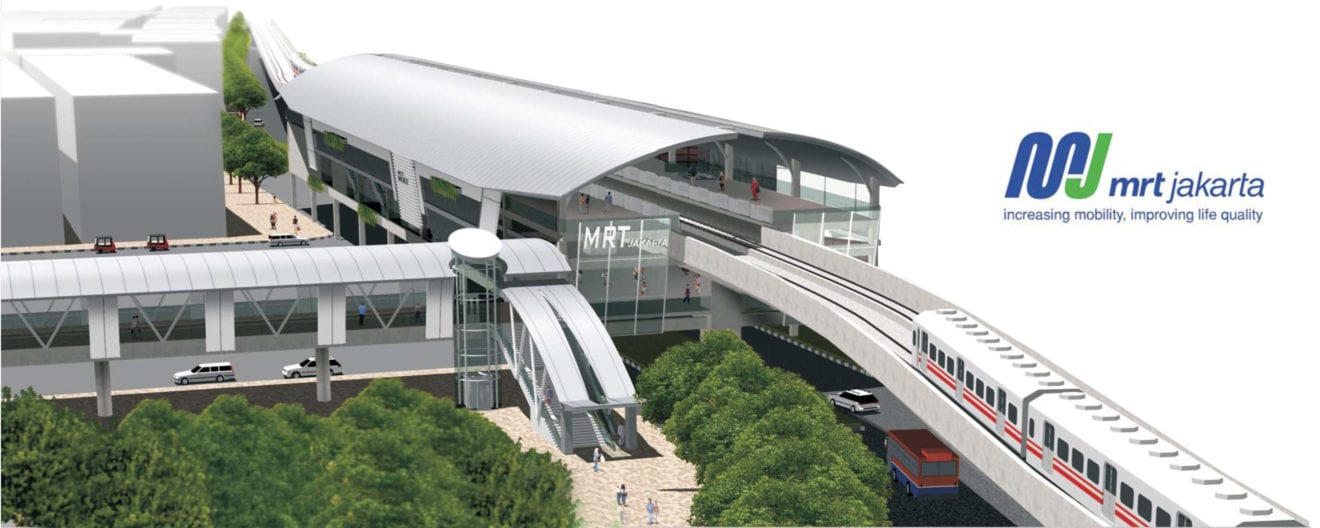
    While the government is currently constructing an MRT system in Jakarta and will soon start the construction of a tram system in Surabaya, little attention has been given to improving city bus management. Metromini and Kopaja minibuses in Jakarta, for instance, are currently owned and operated by private owners, without a united management system.

    Transportation Ministry spokesperson Julius Andravida Barata, however, said that the ministry would not legitimatize motorcycles as public transportation, saying that there were no safety requirements regulating motorcycles to serve as a means of public transportation.

    “The ministry will not regulate ojek because motorcycles don’t meet the standards for proper public transportation, but we also can’t deny that these mobile applications are emerging based on demand from the public,” Julius said.

    “The ministry, in cooperation with the city administration, will try its best to improve city transportation so the public can have reliable public transportation that meets safety standards,” he continued, citing that the management of public transportation, however, was the responsibility of the city
    administration.

    From the total Rp 64 trillion allocated for the ministry in the revised 2015 state budget, the ministry allocated less than 10 percent or Rp 6.07 trillion for the directorate general of land transportation.

    Julius said that the ministry would provide 1,000 buses for Damri and state-run city bus companies (PPD) across the archipelago this year, which, according to him, was part of the government’s support for city transportation.