Tag: msci

  • Why there is no need to wait for a stable market before launching Shenzhen-Hong Kong stock

    Why there is no need to wait for a stable market before launching Shenzhen-Hong Kong stock

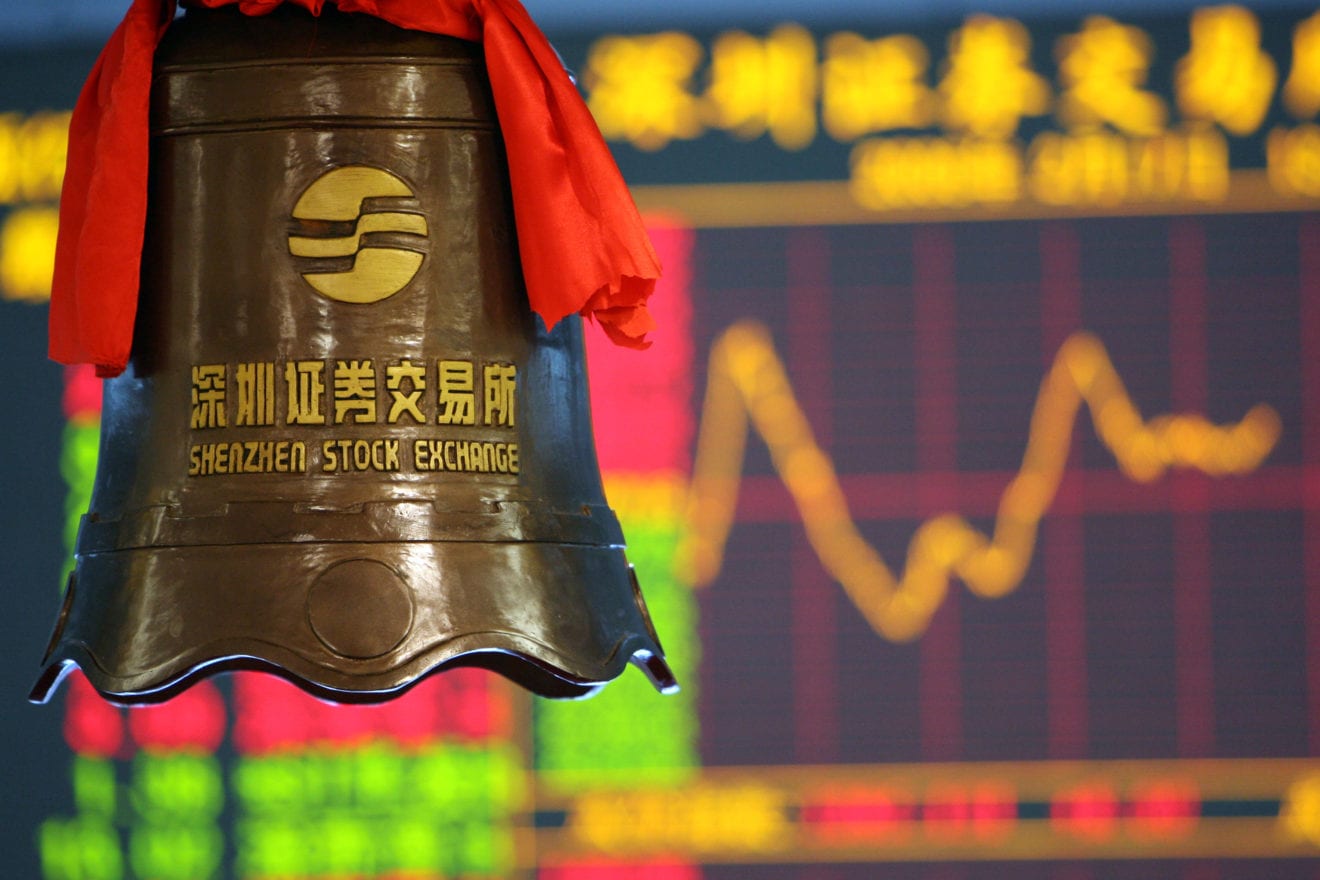
    Beijing should not wait for the market to stabilise to launch the Shenzhen-Hong Kong stock connect scheme and should introduce it as soon as possible to help attract more capital inflow to the mainland China.

    Hong Kong Exchanges and Clearing chairman Chow Chung-kong said last Thursday, on the first trading day of the Year of the Monkey, that the long-awaited stock connect scheme between the Hong Kong and Shenzhen stock markets would definitely be launched but it would need to wait for the stock market to stabilise.

    After the Hang Seng Index lost more than 700 points on Thursday in the biggest fall on the first trading day of a Lunar New Year since 1994, brokers interpreted his remarks as meaning the scheme would be launched in the second half of this year at the earliest.

    But that would not be appropriate because any broker will tell you investors like to trade when the markets have big movements instead of in quiet markets. Even in a falling market, people like to buy when the share prices drop to more reasonable levels.

    It should be left to investors and not the regulators to decide when it is appropriate to enter the market

    As such, the mainland regulator should launch the new scheme whenever the platform and regulatory measures are ready and not when the market is stable. It should be left to investors and not the regulators to decide when it is appropriate to enter the market.

    Then there’s the capital flow issue. The depreciation of the yuan, which dropped more than 5 per cent against the US dollar last year and is expected to fall further this year, has led to many mainlanders rushing to buy US dollar or Hong Kong dollar investment products and life insurance policies to hedge their risks.

    The launch of the Shenzhen-Hong Kong stock connect would not worsen the situation because most mainland investors have accounts in both the Shanghai and Shenzhen stock markets. Investors who want to trade Hong Kong stocks could already have done so by trading via the Shanghai-Hong Kong stock connect.

    The launch of the Shenzhen-Hong Kong stock connect would, however, open a new leg and new market for northbound trading – with international investors able to trade Shenzhen-listed companies in addition to Shanghai A shares.

    A recent survey by the Hong Kong Investment Funds Association found international investors were interested in the Shenzhen stock markets because it is home to many potential high growth companies. Retail brokers in Hong Kong would also like to see Hong Kong investors allowed to trade Shenzhen stocks because it would boost their commission income.

    That means the launch of the Shenzhen-Hong Kong stock connect is likely to result in new capital inflow to mainland China from both international fund houses and Hong Kong retail investors.

    More importantly, many fund managers believe that a precondition for A shares to be added to MSCI’s benchmark emerging markets index is giving them the ability to trade in the Shenzhen stock market.

    MSCI said in June last year that its decision to defer the inclusion of A shares in its global emerging market benchmarks for a second year reflected lingering investor concerns over market accessibility.

    If Beijing allows the Shenzhen-Hong Kong stock connect to be launched soon, it would boost the chances of A shares being included in MSCI indices. And that would lead to more exchange traded funds buying A shares, further boosting capital inflow.

    There is really no need to wait for the market to stabilize before launching the Shenzhen-Hong Kong stock connect.
  • India’s Worst-to-First Phone Stocks Show $18 Billion Well Spent

    India’s Worst-to-First Phone Stocks Show $18 Billion Well Spent

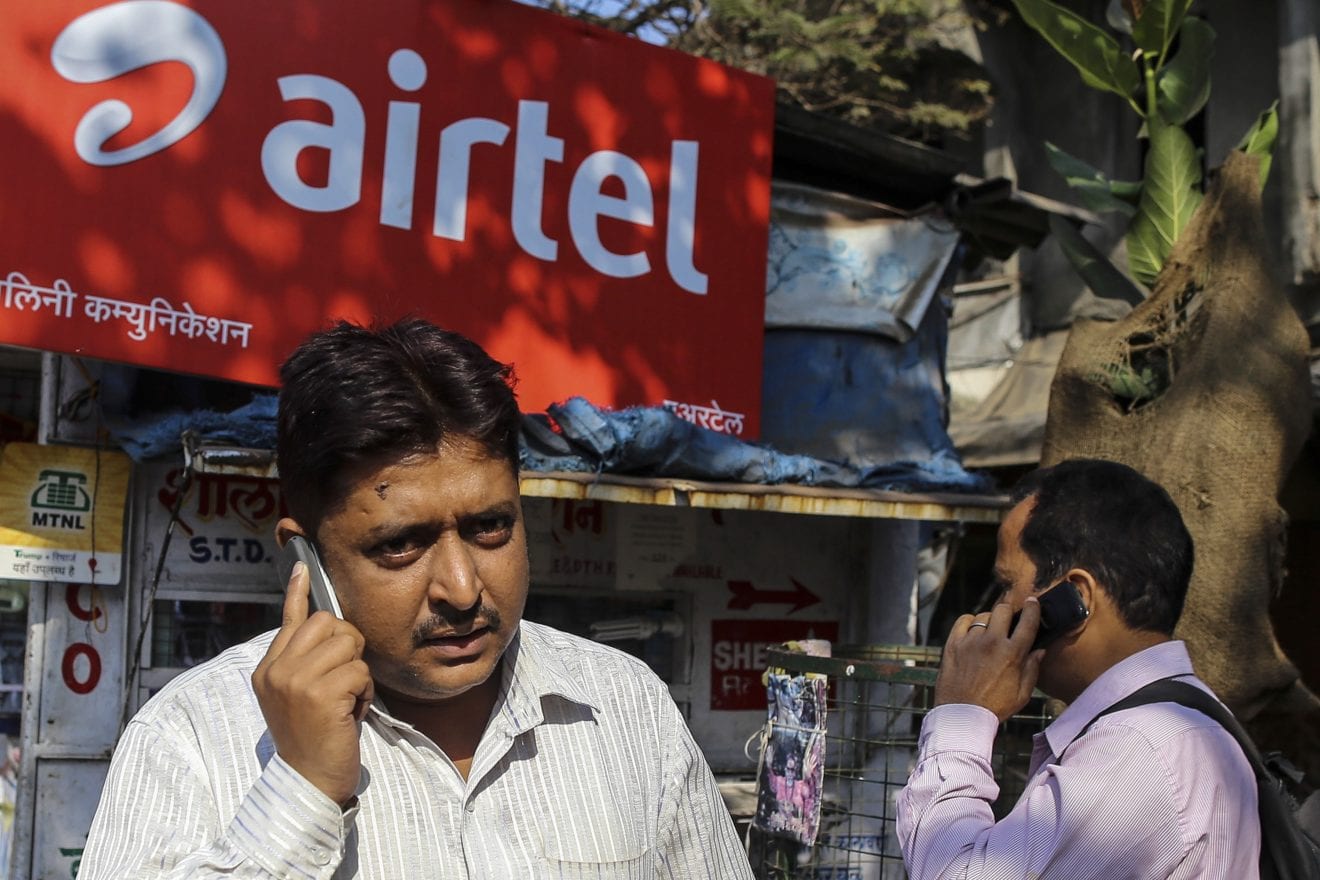
    India’s mobile-phone companies are paying a record 1.1 trillion rupees ($18 billion) to keep their networks running. It’s money well spent, if the stock market is any guide.

    The MSCI India Telecom Services Index has rallied 14 percent from this year’s low on March 9, the only gain among 10 industries, after losing 67 percent in the preceding decade. Local funds have increased holdings to the highest in 11 months, while BNP Paribas Asset Management’s top-performing Indian stock fund is bullish on the industry.

    Bharti Airtel and Idea Cellular are rallying on optimism the expense of securing spectrum for 20 years will pay off as the world’s second-largest wireless market grows. Net incomes at the two companies have climbed at least seven times faster than the broader market over the past six quarters as smartphones costing less than $200 spur a jump in mobile-data use.

    “In this desert of no earnings growth, telecom companies are the only ones whose profits are growing,” Anand Shah, the chief investment officer at BNP Paribas Asset Management India, which has $2.1 billion under management and advisory, said in an interview in Mumbai on April 29. “We’ve just scratched the surface as far as data is concerned.”

    Sensex retreat

    Money managers have been piling into telecom companies amid a weakening outlook for other industries. The S&P BSE Sensex, one of Asia’s best performing stock indexes in 2014, tumbled to a six-month low on Thursday amid growing concern about Prime Minister Narendra Modi’s ability to push through economic reforms.

    Spending on the wireless spectrum was 68 percent higher than the base price set by the government, according to auction results released March 26. Bharti, Idea and the UK’s Vodafone Group Plc retained airwaves that were up for renewal while also gaining spectrum that enables them to boost fourth-generation offerings.

    “Your costs are fixed for the next 20 years even as the market continues to grow,’” Ajay Srivastava, a managing director at Dimensions Consulting, said by phone from Gurgaon, near New Delhi. “The industry is an oligopoly and the players have realized the Indian market is big enough to be shared among the three or four players.”

    Reliance Jio

    Competition from billionaire Mukesh Ambani’s upstart operator Reliance Jio Infocomm may complicate the ability of carriers to raise rates in a market where calls cost less than one cent a minute, according to Birla Sun Life Asset Management.

    Reliance Jio, set to start service later this year, has been buying airwaves since 2010.

    “We’re not positive on the sector,” Mahesh Patil, the co-chief investment officer at Birla Sun Life, which has $17.5 billion in assets, said in an interview in Mumbai.

    Smartphone apps that allow free messaging and voice calls also threaten to eat into carriers’ revenue from traditional calls and texts, according to Kotak Institutional Equities.

    “We have no clue of the distraction that could come in the form of technology,” Sanjeev Prasad, the Singapore-based co-head and senior executive director at Kotak, said in an interview with Bloomberg TV on April 15.

    The BNP Paribas Equity Fund, which held 16 percent of its assets in Bharti and Idea on March 31, has beaten 87 percent of its peers since Jan. 1, with a 3.2 percent gain, data compiled by Bloomberg show. The fund has returned 44 percent in the past 12 months. Local funds held 1.8 percent of their assets in phone companies at the end of March, the most since April 2014, data from the market regulator show.

    Greater Internet access and rising smartphone ownership make the carriers a proxy for India’s consumer market, Dimensions’ Srivastava said. Data revenue for Bharti and Idea will grow at least 40 percent annually through March 2017, Mumbai-based brokerage ICICIdirect said in a April 30 report.

    “The telecom industry has a terrific matrix emerging,” Srivastava said. “Buy, close your eyes and just keep it.”