Retail News CRM

Tag: mujji

  • Muji’s Expansion in China: Winning Over Consumers with Localization Strategy

    Muji’s Expansion in China: Winning Over Consumers with Localization Strategy

    In 2005, Muji, the Japanese lifestyle retailer, established its first store in Mainland China at one of Shanghai’s prime retail destinations, Nanjing West Road. Today, 20 years later, the company has adopted a subtler growth approach in China. Despite making adjustments to its store network, including closing some retail locations as part of its standard optimization, Muji’s focus remains on expansion, localisation, and fostering a deeper engagement with customers.

    China is currently Muji’s largest foreign market with over 400 stores. The brand’s growth strategy in the region is increasingly focusing on local product development, flagship store experiences, and the integration of online and offline retail.

    Muji’s Strategic Approach

    According to Shu Wu, a board member and CMO, China, the focus is not only on launching more stores but also ensuring that the brand remains relevant as Chinese consumer behaviour transforms.

    “Muji strives to be a fundamental brand for a superior lifestyle,” Wu stated. She highlighted that the brand’s intention is to support a lifestyle that is both materially and spiritually rich while using as few resources as possible. The brand’s philosophy is centred around the ‘Power of Nature’ concept, which manifests in the production of goods from natural materials and minimal disturbance of nature, resulting in a sustainable and truthful lifestyle for everyone.

    Moreover, Wu emphasized that expressing this philosophy in China requires a stronger local connection. She stated, “In the local market, while staying true to this positioning and approach, Muji places even greater emphasis on local connections. With respect for Chinese nature, culture, and society, we continue to deepen our roots here.”

    Competitive Stance and Digital Growth

    In an increasingly competitive market with brands such as Miniso and other lower-cost alternatives, Muji’s approach is not to compete solely on price. Instead, the company focuses on reinforcing product quality, purpose, and relevance.

    Furthermore, as the brand continues to invest in physical stores, China’s digital ecosystem has become a significant part of its overall retail strategy. Wu revealed that e-commerce now accounts for more than 20% of Muji’s total sales in the local market. The company views online and offline channels as complementary, enhancing the consumer experience instead of competing with each other.

    Muji sees its next stage of growth in China as less about defending its existing position and more about adjusting its global brand philosophy to a changing local market.

    Questions & Answers

    What is Muji’s growth strategy in China?
    Muji’s growth strategy in China focuses on expansion, localisation, and fostering deeper engagement with customers. The company aims to stay relevant as Chinese consumer behaviour transforms.

    How is Muji competing in an increasingly competitive market?
    Muji’s approach to competition is not to compete solely on price. Instead, the company focuses on reinforcing product quality, purpose, and relevance.

    What role does digital growth play in Muji’s strategy?
    Digital growth plays a significant role in Muji’s strategy. With e-commerce accounting for over 20% of Muji’s total sales in the local market, the company views online and offline channels as complementary, not competitive. The brand aims to enhance the customer experience across all platforms.
  • Experience Authentic Kyoto Lifestyle at Muji’s New Hotel Concept, Muji Base, Launching this May

    Experience Authentic Kyoto Lifestyle at Muji’s New Hotel Concept, Muji Base, Launching this May

    Muji, the renowned Japanese lifestyle retailer, is set to launch a hotel in Kyoto, a city well-known for its rich historic and cultural heritage. The grand opening of this hotel, christened Muji Base Kyoto Kiyomizu, is slated for May 20th.

    Location and Renovation

    The newly established hotel can be found at the gateway to the historic Kiyomizu-dera Temple, a famed landscape and UNESCO World Heritage site in the city. A former 40-year-old building, previously known as the Amenity Hotel Kyoto, was renovated to create this 18-room hotel. The makeover included a preservation of the building’s original exterior.

    Offerings and Amenities

    Guest rooms, showcasing Muji products and furniture, also integrate art by local artists. Additional amenities include a utility room equipped with a water server, washing machine, dryer, and iron. The hotel’s ground floor features a lounge that serves Ogawa Coffee.

    Unlike the Muji Hotel in Ginza, Muji Base follows a new concept, situating itself in local neighborhoods rather than bustling urban areas. This positioning allows guests the opportunity to immerse themselves in the authentic local lifestyle and culture.

    Local Experiences

    Beyond the exploration of Kiyomizu-dera, the hotel has curated several community-based experiences for its guests. These include the practice of kintsugi, an art form that employs gold in the repair of broken pottery, traditional tea shops and gift stores, bathhouses, and outlets selling freshly made tofu. The hotel also facilitates participation in water-related purification rituals at temples.

    To aid in their exploration of the area, guests are provided with a ‘walking basket’ that contains maps, water bottles, and other essential items.

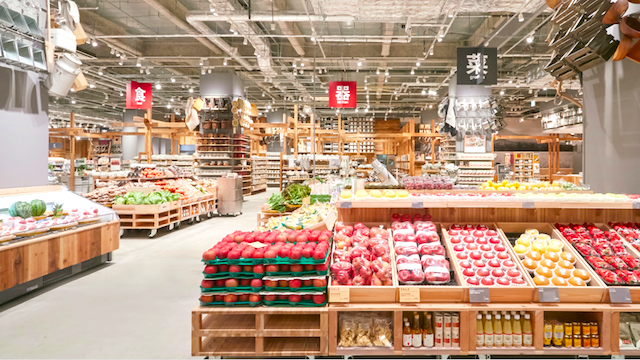
    The hotel is conveniently located approximately 15 minutes by car from Muji’s large format store in Kyoto. Here, guests can explore a vast selection of product offerings which, in addition to the brand’s standard lineup, includes an array of food items such as fresh vegetables, meat, fish, pre-prepared meals, and groceries.

    Booking and Rates

    Room rates at Muji Base Kyoto Kiyomizu start at 20,200 yen (US$128) per night. Reservations can be made via the hotel’s website.

    Questions & Answers

    Where is Muji’s new hotel located?
    The new hotel, Muji Base Kyoto Kiyomizu, is located in the city of Kyoto, at the entrance to the historic approach to Kiyomizu-dera Temple.

    What unique experiences does the hotel offer?
    The hotel offers guests the opportunity to involve themselves in several community-based experiences such as kintsugi, traditional tea shops and gift stores, bathhouses, and outlets selling freshly made tofu.

    How can room reservations be made?
    Reservations can be made directly through the hotel’s website.

  • Muji’s Mega Store: A New Jewel in Bangkok’s Retail Throne Dominates Southeast Asia Market

    Muji’s Mega Store: A New Jewel in Bangkok’s Retail Throne Dominates Southeast Asia Market

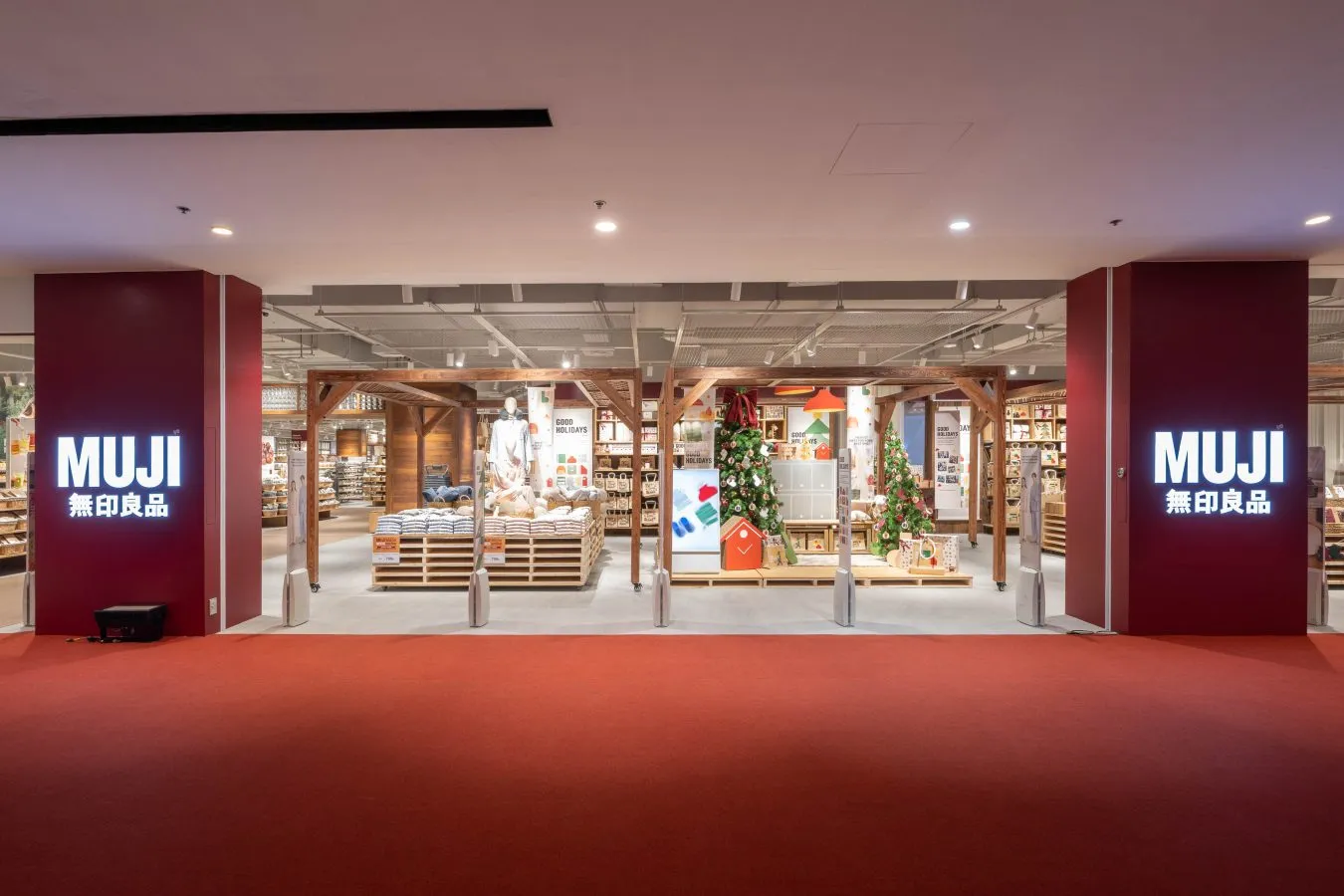
    Ryohin Keikaku, the parent company of Muji, recently unveiled its 40th and largest store in Southeast Asia, located in the bustling heart of downtown Bangkok. This 3,270sqm retail space represents a significant milestone for the company and is part of the new wave of flagship stores that Muji is planning to launch globally, including one in Paris next year.

    The New Muji Flagship Store

    The newly minted Muji store in Central World, Bangkok, boasts a wide frontage that welcomes customers to a variety of shopping experiences. It is designed to take advantage of the natural inclination of customers to navigate stores in a counter-clockwise direction, starting with a comprehensive stationery section.

    The store offers a wealth of products in a clear, systematic fashion. Customers can browse through household items, men’s and women’s clothing, health and beauty products, furniture, kitchenware, and even food and snacks. The layout is clean, functional, and well-organized – a hallmark of Muji’s ‘wa-ke’ philosophy centered around careful materials selection, craftsmanship, and simple packaging.

    One of the key features of this flagship store is its large health and beauty department, filled with a variety of aroma and fragrance products. This is part of Muji’s strategic plan to strengthen its health and beauty business, upgrading its skincare department into a core product category across all its stores.

    Adding to the overall shopping experience, the store also includes a dedicated space for workshops and exhibits named ‘Muji Atelier’. And to enhance customer service, the store employs multilingual staff who are always ready to assist shoppers.

    More Than Just a Flagship Store

    The new Muji store’s launch is part of a larger retail renaissance. The mall owner, Central Pattana, embarked on a significant re-leasing project after the seven-level Isetan department store vacated the premises in 2020. The new tenant mix includes popular American food chains, a mini-department store, a children’s play concept, and a Japanese food court.

    The redesigned mall also features a premium Japanese supermarket stocking more than 10,000 imported products and a small restaurant. The mall’s upper levels are now home to Muji, Japanese furniture retailer Nitori, and the Japanese bookstore Kinokuniya. This has not only revived the space but also created a sustainable rental income for the mall operator.

    Muji’s Global Expansion

    The ambitious Bangkok store is just one part of Muji’s broader expansion strategy. By August 31, the company had opened 1412 stores domestically and internationally, marking an increase of 107 from the previous fiscal year. Of these, 47 were outside Japan, taking the total number of international stores to 729. The company plans to open another 96 stores in fiscal 2026, with the majority set to be in China and Southeast Asia.

    The company’s successful expansion strategy resulted in a considerable boost to its revenues, which rose to US$5.1 billion, marking an 18.6 per cent increase from the previous year. Operating revenue in Japan rose by 20.9 per cent, accounting for almost 60 per cent of the total revenue.

    In line with the company’s global strategy, Muji aims to increase the presence of its Japanese merchandise in its international stores to about 80 per cent, focusing not only on health and beauty products but also on daily essentials and innerwear made from natural materials.

    Questions & Answers

    What is special about the new Muji store in Bangkok?

    The new Muji store in Bangkok is not only the 40th store in Thailand but also the largest in Southeast Asia. It is meticulously designed, taking into consideration customer behaviors and shopping patterns. The health and beauty department is one of its highlights, reflecting Muji’s strategy to strengthen this segment.

    What is the ‘wa-ke’ philosophy mentioned in relation to Muji?

    The ‘wa-ke’ philosophy is Muji’s guiding principle, emphasizing careful selection of materials, craftsmanship, and simple packaging. This philosophy influences the design, layout, and product range of Muji stores.

    What is Muji’s global expansion strategy?

    Muji’s global expansion strategy includes increasing the number of its stores both domestically and internationally, with a particular focus on Southeast Asia and China. The company also aims to enhance its overseas representation of Japanese merchandise to about 80 per cent.

  • Muji Singapore opens Large store at The Jewel

    Muji Singapore opens Large store at The Jewel

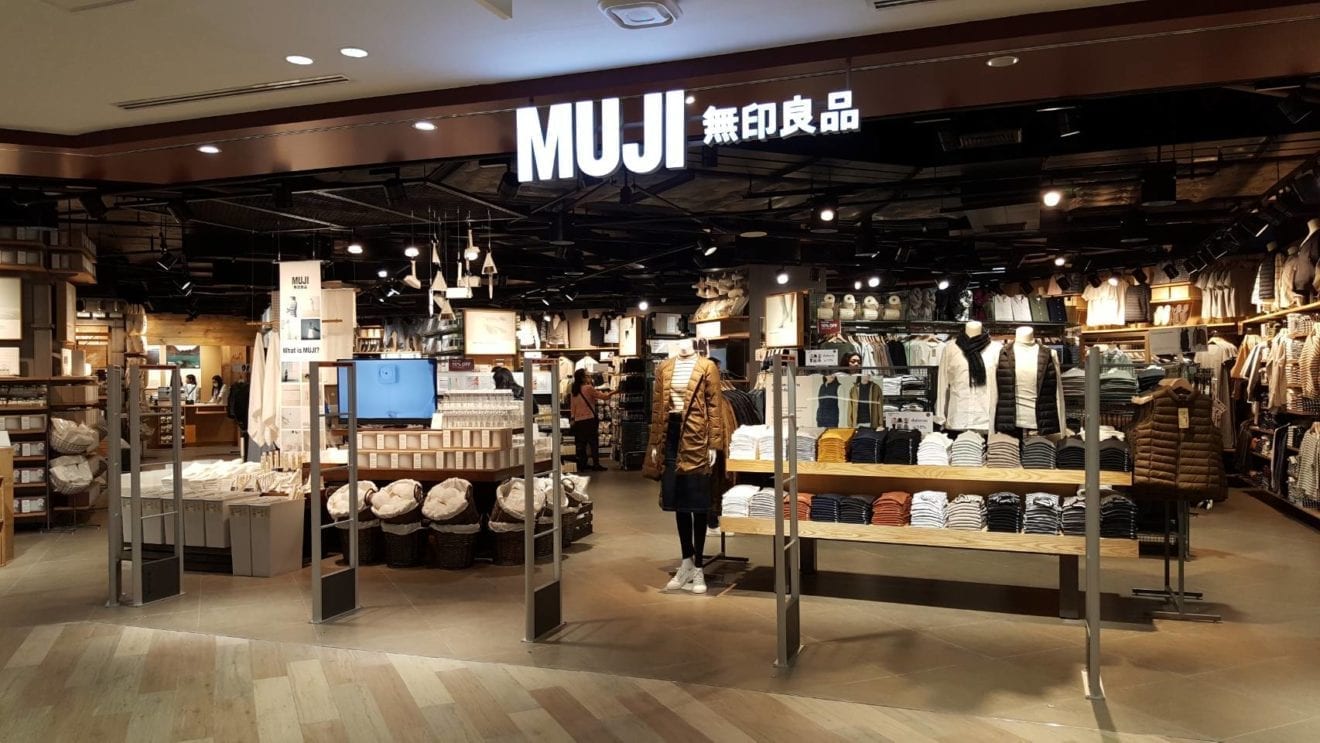
    Muji Singapore has opened a two-storey store at Jewel Changi. The 12th outlet of the popular Japanese minimalist brand houses more than 4000 products and an 88-seat Cafe&Meal dining area.

    The product range includes apparel, furniture, kitchenware, toiletries, stationery and food items.

    Designed by Tokyo-based design company Super Potato, the store also offers the largest range of Muji’s fitness line, the Walker series.

    The store also features an interior-advisory service, available to recommend customisable solutions to customers.

    Muji Singapore chose Jewel Changi as its newest location to showcase the ‘world of Muji’ to Southeast Asian customers.

    Naoki Kadoike, MD at Muji Singapore and Malaysia, expects about 40 per cent of customers will be tourists, the remainder locals.

    “When I was posted here in January, I realised how similar Singaporeans are to the Japanese. People are very conscious of having a good lifestyle and there is a common understanding of Muji’s philosophy,” Kadoike said.

    Meanwhile, Muji Singapore plans to introduce the Muji Passport app, providing local customers with information about the brand and promotions, along with weekly newsletters.