Tag: musinsa

  • Musinsa Opens 100Th Store as Offline Foot Traffic Surges

    Musinsa Opens 100Th Store as Offline Foot Traffic Surges

    South Korean fashion platform Musinsa will open its 100th store on Wednesday in Seoul, crossing 100 million cumulative physical visits five years after launching its brick-and-mortar operations.

    The debut of Musinsa Beauty Seongsu takes the company to 93 domestic stores and seven international outlets. Factoring in four Champion brand stores acquired in 2025, Musinsa operates 104 locations across its wider corporate portfolio.

    Domestic store foot traffic across 75 sites increased 92 per cent year on year between January and October. Customer counts at eight flagship Musinsa Store units climbed 84 per cent during the same ten-month window, while visits to the private-label Musinsa Standard chain grew 49 per cent.

    Foreign Card Volumes Reshape Prime Districts

    International tourists now drive a substantial portion of sales at core Seoul flagships. Foreign credit card transactions accounted for 52 per cent of all purchase orders at Musinsa Store branches in Seongsu, Hongdae and Myeong-dong.

    At Musinsa Standard outlets within those same tourist hubs, foreign card payments generated 42 per cent of completed orders. The physical network functions as an offline export channel, converting inbound tourist traffic into cross-border consumers without direct overseas distribution overhead.

    Chinese Outlets Anchor Regional Footprint

    Overseas expansion remains focused on mainland China. Musinsa entered the market with two Shanghai stores last December, followed by five additional sites across Shanghai, Hangzhou and Shenzhen this year.

    Physical storefronts in mainland China operate alongside the company’s multi-brand digital marketplace, serving as regional customer acquisition nodes. Store additions reached 31 locations in 2025 and 40 units during the current year, covering multi-brand apparel, beauty lines, and curated homeware concepts under the 29CM banner.

    Landlord Pressures and Regional Retail Dynamics

    For rival department stores and traditional fashion distributors, Musinsa’s transition from digital native to high-density physical operator alters leasing terms in tier-one retail districts. Multi-brand spaces that assemble independent designer labels siphon foot traffic directly from legacy department store floors, particularly among shoppers under 35.

    The risk shifts to commercial lease overhead if foreign foot traffic dips or consumer discretionary budgets contract. Operating high-street real estate in overseas tier-one cities requires consistent inventory turnover that domestic online data modeling cannot entirely insulate against local retail slowdowns.

    Five Years from Online Community to Multi-Chain Network

    Musinsa began offline trading in 2021 after operating strictly as an online community and digital storefront. Rapid square-footage additions over the past two years reflect a deliberate strategy to absorb brand merchandise into company-controlled physical points of sale.

    Exporting this model tests whether Korean multi-brand apparel curation commands identical pricing power outside the domestic market. The company plans to extend its physical presence into Japan and Southeast Asia after completing its Chinese rollout.

    “We plan to expand our overseas stores beyond China into Japan and Southeast Asia, bringing the offline retail model established in Korea to global markets,” a Musinsa official said.

    Musinsa will add six more physical stores before the end of the year, taking its operating base to 110 locations.
  • Shinsegae Acquires Lotte Centum City as Busan Inbound Spending Tops W1 Trillion

    Shinsegae Acquires Lotte Centum City as Busan Inbound Spending Tops W1 Trillion

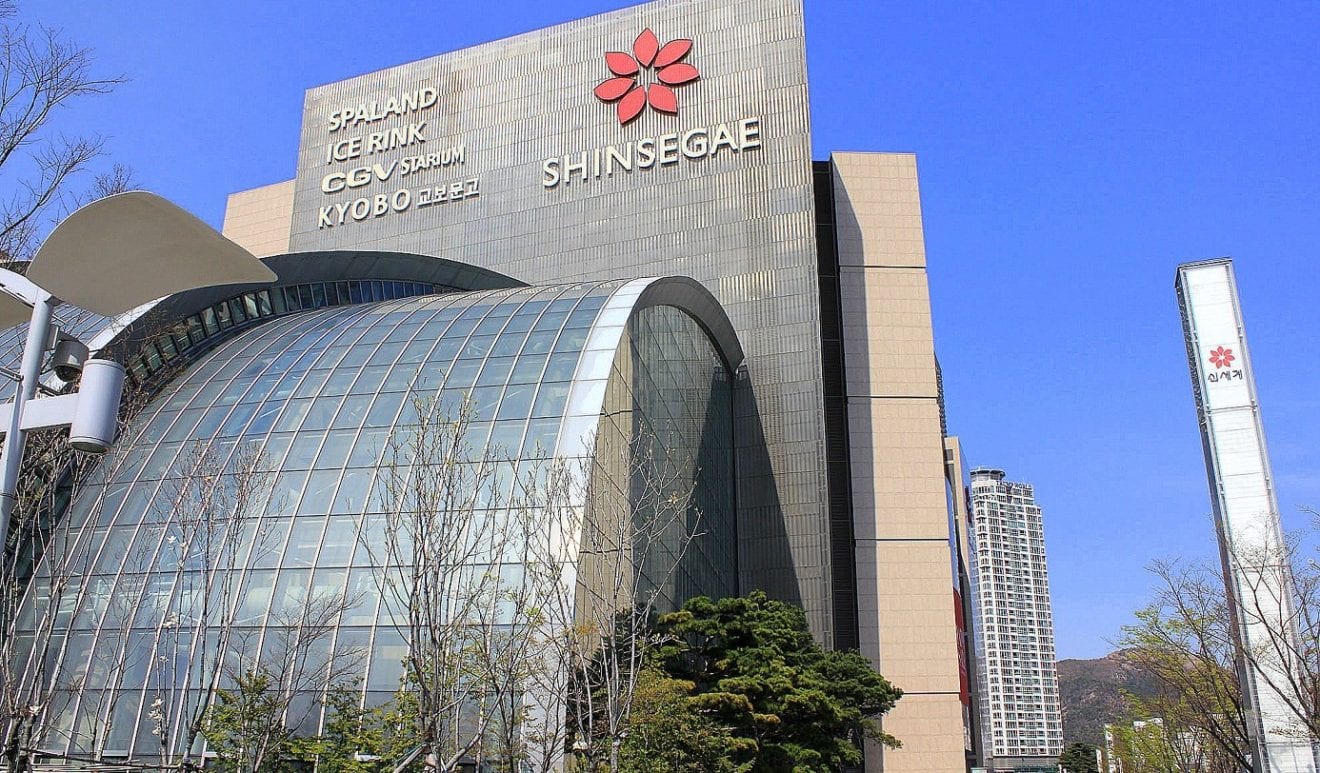
    In late October, Shinsegae announced an agreement to acquire Lotte Department Store’s Centum City branch in Busan after foreign tourist spending in the metropolitan area surpassed 1 trillion won ($745 million) through September.

    The transaction gives Shinsegae control of two contiguous commercial plots in the coastal Haeundae district. The group intends to absorb its direct competitor’s declining asset into a broader mixed-use complex anchored by its existing flagship development.

    Shinsegae Centum City generates more than 2 trillion won in annual gross merchandise value, ranking as the top-selling department store outside the capital region. In contrast, annual revenue at Lotte’s adjacent branch contracted from a historical peak exceeding 300 billion won to approximately 130 billion won by 2023. Shinsegae plans to physically integrate both structures with its neighbouring mall and a vacant parcel designated for luxury hospitality, office space and private residences under the unified moniker Shinsegae Town.

    Lotte Reallocates Capital Across Busan Network

    Lotte is using the proceeds from the Centum City disposal to fund asset renovations across its four remaining stores in the city. Capital will flow directly into its Seomyeon flagship and Lotte Mall Dongbusan, both of which generated rising turnover over the past year. Lotte Department Store is designating its Gwangbok branch in the historic downtown core for incoming international travellers, while assigning its Dongnae outlet to domestic neighbourhood shoppers.

    The Seomyeon flagship recorded 1.2 trillion won in sales last year, supported by an influx of overseas diners. Food and beverage expenditure by foreign visitors at the branch surged 120 percent year on year between January and October.

    Retail traffic across regional South Korea is diverging sharply from historical domestic patterns. In the first nine months of the year, passenger arrivals at regional airports expanded 37 percent to roughly 3.24 million, according to data from Korea Airports Corp. Inbound passenger growth at gateway airports serving the capital area reached 17.3 percent over the same period. By late October, national foreign visitor arrivals had already eclipsed the annual record set in 2025.

    Specialty Chains Build Regional Destination Stores

    Specialty chains are deploying independent capital programs outside Seoul to capture this traffic directly at arrival points. Health and beauty operator CJ Olive Young allocated 123.8 billion won this year to open or refit 43 large-format stores outside the capital region. In Busan, the chain opened a fish market-themed outlet in Millac-dong, merchandising cosmetics and food in display crates, while expanding its Nampo-dong location into its largest store outside the Seoul metropolitan area.

    Olive Young expanded into heritage tourism corridors as well, opening a store in Gyeongju last month featuring a traditional hanok tiled roof and site-specific merchandise. Domestic eyewear label Blue Elephant mirrored that layout, adding a hanok-style storefront in Gyeongju in July alongside new locations in Busan and Jeju Island.

    Apparel platform Musinsa is tracking similar geographic shifts through its physical footprint. Foreign card transactions at its Seomyeon store in Busan reached approximately 30 percent of total sales, representing an 11 percentage point increase from a year earlier. Across the company’s eight regional stores outside greater Seoul, combined sales rose roughly 44 percent over the same period. Following the launch of a Musinsa Standard store in Changwon last month, 10 of its 44 standard offline stores now operate outside the capital region.

    Consolidation Shifts Landlord use Outside Seoul

    For department store operators and commercial landlords, Shinsegae’s acquisition of a competing asset directly next door changes the competitive balance in southern South Korea. Rather than fighting a war of attrition for luxury concessions against an adjacent landlord, Shinsegae eliminates duplicate operating costs and absorbs Lotte’s footprint to expand tenant floorplates. RetailNews Asia sees this as a defensive consolidation: prime brand principals increasingly demand massive, unified destination spaces before committing flagship boutique allocations outside Seoul.

    Lotte’s counter-strategy carries operational execution risks. Distributing capital across four dispersed properties requires four distinct tenant mixes to prevent internal cannibalisation between Seomyeon, Dongbusan, Gwangbok and Dongnae. If international tour groups fail to sustain foot traffic at the older downtown Gwangbok location, Lotte risks holding depreciating square footage while Shinsegae monopolises the coastal luxury trade at Haeundae.

    Earlier Footprint Steps Lead to Haeundae Showdown

    The Busan consolidation follows a multi-year contest between the two retail groups in Seoul’s central tourist district. In Myeong-dong, Shinsegae linked surrounding properties to its flagship to build a dedicated campus for high-spending overseas shoppers, while Lotte renovated its main town store with youth-oriented cultural installations.

    The regional pivot accelerated after Musinsa demonstrated the commercial viability of tier-two retail streets. The fashion platform launched its first non-capital Standard store in Daegu in 2023, converting digital audience data into physical street traffic before expanding into Changwon.

    Attention now turns to municipal planning reviews for the physical bridge linking the two Centum City buildings, and to Olive Young’s remaining fourth-quarter store launches, which will determine how much of its 123.8 billion won regional capital budget translates into active selling space before the year closes.

  • Musinsa Deepens Ties with Zozo Ahead of IPO

    Musinsa Deepens Ties with Zozo Ahead of IPO

    South Korean fashion platform Musinsa expanded its partnership with Japanese peer Zozo on October 16, opening a joint pop-up store in Seoul to build cross-border revenue ahead of an initial public offering.

    The temporary Zozotown retail space inside Musinsa’s Seoul shop gives the Japanese marketplace immediate offline visibility while testing consumer demand for Japanese apparel labels.

    International growth remains vital for the company to achieve its target valuation benchmarks before listing shares on public markets.

    Cross-Border Offline Merchandising

    The Seoul installation introduces curated Japanese brands from Zozotown directly to Musinsa’s domestic shopper base. Both companies structured the tie-up to share platform infrastructure and cross-sell independent labels across borders.

    Physical pop-ups provide quick feedback on fit, price tolerance, and category demand without requiring long lease commitments. Musinsa hosts the floor space, managing store traffic and point-of-sale execution while Zozo supplies the product mix.

    Valuation Demands and Regional Expansion

    Domestic apparel growth in South Korea faces immediate limits from demographic declines and plateauing consumer expenditure. For Musinsa, securing international scale outside its home base provides the volume necessary to meet valuation benchmarks when filing listing documents.

    Rival platforms across Asia have hit limits when attempting solo expansions into neighboring markets with established incumbents. By teaming up with Zozo rather than opening standalone Japanese storefronts or launching competing logistics networks, Musinsa sidesteps the customer acquisition costs that dragged down other regional fashion marketplaces. Zozo secures reciprocal access to South Korean fashion shoppers, a demographic increasingly drawn to Japanese streetwear.

    Building Up to Public Markets

    Musinsa previously focused on digitizing domestic streetwear labels and scaling its private label lines in South Korea. The company opened physical flagship locations in Seoul to bridge online commerce with brick-and-mortar foot traffic before extending that model to international partners.

    Zozo has sought regional growth outside Japan to counter aging domestic consumer profiles and intensifying competition from fast-fashion retailers. The joint pop-up in Seoul builds on earlier bilateral promotional tests between the two operators.

    Listing Timeline and Cross-Selling Metrics

    Musinsa’s next formal disclosure will show whether international channel sales can offset slower domestic fashion volume. Underwriters preparing the listing plan will scrutinize the percentage of gross merchandise value sourced outside South Korea before setting the IPO timetable.

  • Musinsa Helps 15 Korean Fashion Brands Enter China via Shanghai Pop-Up

    Musinsa Helps 15 Korean Fashion Brands Enter China via Shanghai Pop-Up

    South Korean fashion platform Musinsa is helping 15 domestic apparel brands enter China through a dedicated pop-up store at Shanghai’s Jing An Kerry Centre. The temporary retail space drew more than 10,000 visitors between Aug. 21 and Sept. 21.

    Running through Nov. 30 on Nanjing West Road, the initiative covers product certification and in-store sales operations. Backed by South Korea’s Ministry of Trade, Industry and Energy alongside the Korea Trade-Investment Promotion Agency, the project aims to reduce costs and hurdles for small and midsize brands entering the market.

    State backing and regulatory clearance

    Participating labels include Lookast, Lebah, Tillaidie, and RSSC. Musinsa selected brands based on local demand and consumer preferences, assisting them with Chinese product standards required for local distribution and managing on-site sales.

    Small apparel exporters face steep barriers in mainland China, where localized testing, labeling rules, and import certifications routinely stall foreign market debuts. Handling store staffing and inventory management centrally removes upfront capital expenditure for the labels, letting them test mainland consumer appetite without signing long-term commercial leases.

    Testing demand on Nanjing West Road

    Securing prime frontage at Jing An Kerry Centre places these emerging Korean names beside established global luxury flagships. The high-traffic shopping corridor gives independent streetwear and contemporary labels immediate exposure to Shanghai’s core fashion demographic.

    Foot traffic numbers indicate solid curiosity, but footfall does not guarantee recurring wholesale orders. Chinese consumer spending across mid-tier fashion remains selective, and domestic Chinese streetwear brands have taken market share by responding to local trends faster than overseas competitors.

    The platform approach across Asian markets

    Musinsa’s export model shifts financial risk away from single designers and turns the platform into a consolidated distributor. The company is replicating this physical playbook across the region, pairing its domestic roster with localized retail partners, as seen in Southeast Asia where its Musinsa Standard private label partnered with ACx Retail to enter the Philippines.

    For commercial landlords, the arrangement provides a rotating roster of trending Korean brands without the lease default risks tied to single-label tenants. For the fashion brands, the structure caps downside exposure while testing whether Chinese shoppers will buy beyond short-term novelty.

    Anfu Road pipeline and next steps

    The Kerry Centre project builds on Musinsa’s permanent footprint in Shanghai. The company opened a flagship retail space on Anfu Road in December, which serves as a dedicated launchpad for Korean apparel labels seeking Chinese distribution.

    That location has already hosted individual pop-ups for brands including Ronron, Sculptor, and Stand Oil. Accessories label Find Kapoor starts a monthlong residency at the Anfu Road store on Oct. 30, while the Jing An Kerry Centre multi-brand show runs until Nov. 30.

  • Musinsa Seeks 10 Trillion Won Valuation in Listing as Beauty and Overseas Bets Mount

    Musinsa Seeks 10 Trillion Won Valuation in Listing as Beauty and Overseas Bets Mount

    Musinsa filed a listing application on Sept. 7 that values the South Korean fashion e-commerce platform at up to 10 trillion won ($7.2 billion).

    That target sits well above the 5.5 trillion won implied by unlisted market trades. It also nearly triples the 3.5 trillion won figure secured during a 2023 funding round. To justify that price to institutional investors, the platform is expanding beyond online apparel into physical beauty retail while opening stores across key Asian markets.

    Recent earnings show the cost of that transition. Revenue reached a record 822 billion won in the first half of the year, following nearly 1.5 trillion won across all of last year. Operating profit fell 11.2 per cent to 52 billion won over the same six-month stretch. Store expansion, raw material costs and distribution logistics drove up overheads.

    Beauty Push Challenges Olive Young

    Musinsa is leaning on its pool of 16 million registered fashion users to fuel cosmetics sales. Over 80 per cent of Musinsa Beauty buyers previously purchased apparel on the platform. That gives the company a ready customer base without typical retail startup acquisition costs.

    Beauty inventory expanded from roughly 800 brands in 2021 to about 2,500 brands by August. Transaction value in the category jumped 1,340 per cent over the same three-year stretch. Sourcing includes Chinese makeup brands Into You and AZTK alongside domestic labels.

    Taking on CJ Olive Young represents an uphill fight for domestic market share. CJ Olive Young operates an extensive nationwide store network that dominates South Korean health and beauty retail. To differentiate its shelves, the platform is focusing on niche labels, medical tourism lines and dermocosmetics tailored for post-procedure skincare.

    Offline Footprint and Flagship Formats

    Physical store performance provides an early test for the retail crossover. In western Seoul’s Hongdae district, a pharmacy-grade beauty flagship generated 250 million won in gross sales across its first three days. Women accounted for 76 per cent of transactions. International visitors made up nearly 60 per cent of buyers.

    Inside the Musinsa Megastore in Seongsu, the country’s largest single fashion and cosmetics retail format, beauty transaction value increased 20 per cent in August compared to April. A second dedicated beauty branch will open in Seongsu in November. That launch puts the store in direct competition with Olive Young N Seongsu.

    Landlords and distributors gain a high-traffic tenant capable of drawing younger shoppers who bypass traditional department stores. Still, physical retailing alters capital requirements. Leases and store fit-outs shift the business from an asset-light marketplace into a capital-intensive brick-and-mortar operator with higher fixed liabilities.

    China Rollout Leads Global Push

    Overseas expansion forms the second leg of the listing pitch. China serves as the primary testing ground. The company aims to operate more than 100 stores there by 2030. It currently runs one multibrand store and four Musinsa Standard locations in Shanghai, where shoppers under 30 make up more than 85 per cent of sales.

    Southern China expansion starts on Oct. 31 with stores at Shenzhen’s One Avenue commercial complex. In Taiwan, the target is 15 stores within five years, focused on the private-label Musinsa Standard range. Distribution partnerships are also in place across Malaysia, Vietnam, Indonesia and the Philippines.

    Export sales across digital channels are growing quickly from a low base. The cross-border Global Store platform, serving 13 markets, reported a 143 per cent lift in second-quarter transaction value. First-half export revenue rose ninefold to 37.2 billion won. Even so, the overseas subsidiary Musinsa Shanghai has not yet reached operating profitability.

    Margin Squeeze Tests Listing Thesis

    Growth limits at home explain the transition from a 2001 online sneaker community into a regional omnichannel chain. South Korean apparel platforms face limited runway once domestic user numbers peak. Moving into beauty offers a standard way to defend growth.

    Public market investors face margin dilution risks. Sourcing private-label inventory and signing multi-year leases in tier-one Chinese cities requires sustained cash commitments. Those fixed overheads can erode operating margins during retail downturns.

    Past valuations relied on high-margin marketplace commissions from independent domestic streetwear brands. As the revenue mix shifts toward owned inventory and physical shopfronts, working capital needs will expand significantly.

    Upcoming milestones will test whether the company can maintain revenue momentum while turning foreign outposts cash positive. Key checkpoints include an Osaka pop-up show in October, the Shenzhen store debut on Oct. 31, and the Seongsu beauty flagship opening in November.

  • Asung Daiso Approaches 5 Trillion Won in Sales on Budget K-Beauty Surge

    Asung Daiso Approaches 5 Trillion Won in Sales on Budget K-Beauty Surge

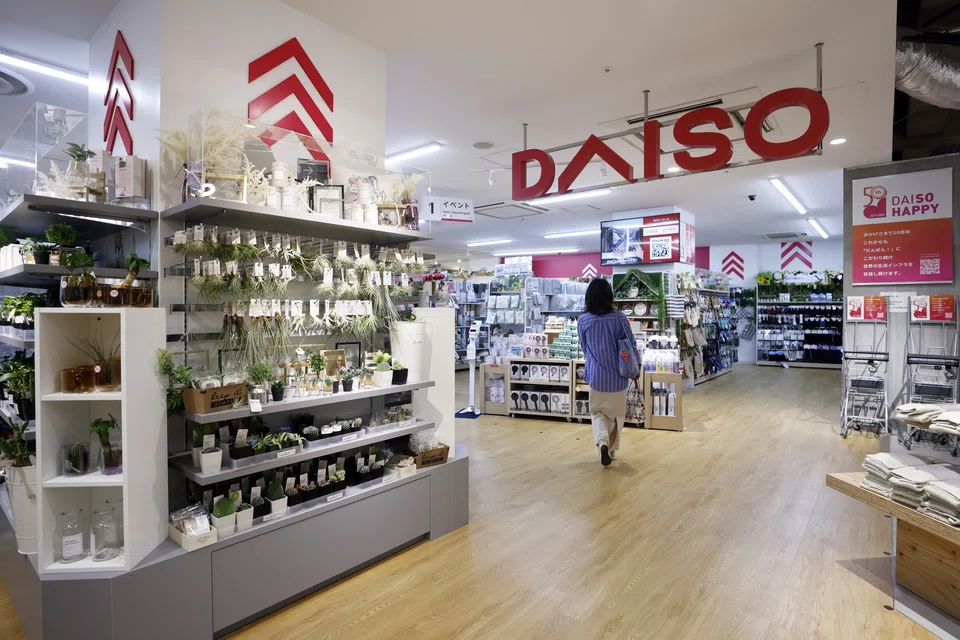
    Asung Daiso is nearing 5 trillion won ($3.7 billion) in annual revenue in South Korea. Overseas tourists are flocking to its downtown outlets for low-cost cosmetics and travel essentials.

    Total sales reached 4.54 trillion won last year, up from 2.6 trillion won in 2021. Growth came from a strict 5,000-won price ceiling alongside dedicated skincare and makeup lines.

    Foreign card transaction values doubled year-on-year across the first eight months of 2026. That followed overseas card spending growth of 130 percent in 2023, 50 percent in 2024 and 60 percent in 2025, led by central tourist locations.

    Expanding From Seven Brands to 170

    Its beauty catalogue grew from seven brands and roughly 120 stock-keeping units in 2022 to approximately 170 brands and over 1,900 products this year. Category sales jumped 50 percent in 2022, 85 percent in 2023, 144 percent in 2024 and 70 percent in 2025.

    Every item across the store network sells for between 500 won and 5,000 won. To meet that retail cap, major cosmetics manufacturers supply modified formulations and smaller unit packages.

    Daiso merchandizers have excellent taste in selecting products of high enough quality that can meet the customer’s expectations while keeping them at very low prices.

    Cosmetics now rank as the single highest-selling category at the Myeongdong Station store in central Seoul. Dedicated space on the second floor captures footfall from inbound Asian and Western travelers.

    Rivalry With Olive Young and Musinsa

    That cosmetics push challenges health and beauty leader CJ Olive Young and fashion platform Musinsa. Olive Young built a nationwide network around mid-tier and prestige domestic skincare. Musinsa opened a beauty-dedicated store in Seoul’s Hongdae district to draw younger apparel shoppers.

    The retailer targets the bottom tier of that market entirely for itself. Its 5,000-won price ceiling captures entry-level consumers and tourists buying small jars, sheet masks and serums as low-risk souvenirs.

    Margin compression remains the primary risk. Fixed dollar-store price caps during prolonged supply-chain inflation force suppliers to cut packaging costs to the bone, leaving little buffer if raw ingredient prices climb.

    First Beauty-Only Format in Eastern Seoul

    In August 2026, Daiso opened its first beauty-dedicated store near Konkuk University in Gwangjin-gu, eastern Seoul. The outlet replaces traditional homeware and hardware aisles with shelf space for personal care, cosmetics and accessories aimed at university students and local residents.

    Five consecutive years of top-line expansion made that test possible. Annual revenue climbed from 2.95 trillion won in 2022 to 3.46 trillion won in 2023 and 3.97 trillion won in 2024 before breaking past 4.5 trillion won.

    Management is now tracking full-year 2026 revenue against the 5 trillion won threshold while evaluating whether to replicate the Konkuk University format across other tourist-heavy metro stations in Seoul and Busan.

  • Musinsa Opens Hongdae Beauty Flagship as Daiso Expands Low-Priced Cosmetics

    Musinsa Opens Hongdae Beauty Flagship as Daiso Expands Low-Priced Cosmetics

    Musinsa opened its first standalone four-storey beauty flagship in Seoul’s Hongdae district. The store stocks 600 cosmetics labels alongside a licensed pharmacy counter.

    That launch follows a 30 per cent jump in beauty sales at discount retailer Daiso between January and August. Non-traditional operators are carving up South Korea’s cosmetics retail market.

    Above ground, the Hongdae site stocks skincare, makeup, and health lines from brands such as Rovectin, S.Nature, and LBB. In the basement, Musinsa partnered with Onnuri Pharmacy to run Beauty Onnuri Pharmacy. The counter pairs regulated pharmaceuticals with active dermocosmetics containing polydeoxyribonucleotide (PDRN) and tranexamic acid. Pharmacists staff the counter directly. They provide multilingual consultations for foreign tourists and young domestic shoppers.

    Customers can shop more efficiently in one building, with relatively high-performance skincare products concentrated at the pharmacy on the basement floor.

    Daiso cuts into the sub-5,000 won segment

    At the opposite end of the pricing spectrum, discount chain Daiso opened a 66.12-square-metre specialist store near Konkuk University in Seoul. It dedicates 80 per cent of shelf space to beauty products. Daiso caps all item prices at 5,000 won ($3.70). The store targets university students, office workers, and tourists.

    Several low-cost formulas have sold out repeatedly across Daiso’s network after viral social media attention. Top sellers include Mommy Care’s Sea Grape Skin Pack and VT Cosmetics’ Reedle Shot lines. Daiso avoids direct competition with prestige brands. Instead, the discounter relies on volume sales and high turnover among young shoppers seeking alternatives to high-street beauty chains.

    Online lift and store conversions

    Physical flagships serve primarily as discovery hubs for fashion platforms like Musinsa. They feed digital marketplaces. When Musinsa opened a beauty zone on the second floor of its Seongsu Mega Store, sales in that section increased 20 per cent between April and August. Digital sales for approximately 500 beauty brands listed on Musinsa’s online platform rose 35 per cent in the three weeks following the Seongsu opening.

    Legacy health-and-beauty specialists face immediate pressure along Seoul’s retail corridors. Fashion e-commerce leaders are building multi-brand flagships. Meanwhile, dollar-store operators capture everyday replenishment spend. Traditional middle-ground retailers face squeezed margins and rising customer acquisition costs.

    Earlier retail formats laid the groundwork

    Both retailers tested formats before committing to dedicated spaces. Musinsa spent the past year running shop-in-shop beauty sections and curated brand zones before taking the Hongdae building. Daiso expanded supplier partnerships with domestic cosmetics manufacturers for exclusive budget lines, then converted standalone retail space near university transport hubs.

    Industry attention turns to the autumn shopping season. Retailers will track whether Musinsa’s pharmacy concept can sustain tourist spending volumes, while monitoring Daiso’s inventory levels for viral formulations across its national network.

  • Musinsa: Powering Korean Fashion Invasion in China with Dual Tmall Presence

    Musinsa: Powering Korean Fashion Invasion in China with Dual Tmall Presence

    South Korean fashion marketplace, Musinsa, is advancing its business strategy in China by launching on Tmall Global, the cross-border e-commerce platform owned by Alibaba Group. This step builds upon Musinsa’s initial foray into the Chinese market last year through the domestic Tmall marketplace. This dual-platform presence gives Musinsa the advantage of permeating both the local Chinese e-commerce ecosystem and the cross-border shopping channel.

    Musinsa’s aim is to assist small and mid-sized Korean fashion brands who have traditionally encountered high barriers to China’s market entry, such as regulatory complexity, logistical hurdles, and the high costs associated with establishing local operations. By leveraging the platform model, these brands can sell their products directly to Chinese consumers without the need to establish a local entity. Musinsa is also in a position to extend comprehensive services to participating brands. These services include platform integration, logistics coordination, marketing, and customer service.

    Content-Led Curation Strategy and Promotional Initiatives

    Musinsa is adopting a content-led curation strategy to introduce Korean fashion trends to Chinese consumers. Alongside this, the company is outlining various marketing initiatives. These include co-branded campaigns with Tmall Global, promotional events, and livestream shopping activations.

    Musinsa had already made headway into the Chinese market through a joint venture with Anta Sports, establishing Musinsa China to expand through both online and offline channels. The company launched its flagship store on Tmall last year, introducing its modern basic casual wear brand, Musinsa Standard, as well as Musinsa Store.

    A representative from Musinsa China stated that the opening of the online flagship store was the first step towards introducing competitive emerging Korean brands to China’s younger generation. The representative also indicated that Musinsa would utilize its vast experience in the fashion industry and localization strategies to quicken the global expansion of K-fashion.

    Questions & Answers

    What is Musinsa’s plan for the Chinese market?
    Musinsa plans to aid small and medium-sized Korean fashion brands in accessing the Chinese market by providing a platform for them to sell directly to Chinese customers.

    What services is Musinsa offering to participating brands?
    Musinsa is providing comprehensive services including platform integration, logistics coordination, marketing, and customer service.

    What is Musinsa’s strategy to promote Korean fashion trends in China?
    Musinsa is adopting a content-led curation strategy to introduce Korean fashion trends to Chinese consumers and is planning various marketing initiatives such as co-branded campaigns with Tmall Global, promotional events, and livestream shopping activations.

  • Matin Kim in Partnership with Musinsa Launches Flagship Store in Tokyo’s Fashion Hub

    Matin Kim in Partnership with Musinsa Launches Flagship Store in Tokyo’s Fashion Hub

    Matin Kim, a renowned fashion brand from South Korea, is set to expand its presence in Japan with the inauguration of a flagship store in Tokyo. The move is a part of the brand’s continuing collaboration with Musinsa.

    A New Addition to Tokyo’s Fashion Scene

    The upcoming store will be situated in Harajuku, a neighborhood widely known for its vibrant fashion culture. Spanning two floors, the outlet will occupy roughly 195 square meters. Slated to open its doors on April 26th, the new location marks Matin Kim’s third establishment in Japan, following the successful launches in Shibuya and Nagoya.

    Unlike its previous outlets located in shopping malls, this new store stands out as Matin Kim’s first standalone store in the country. The brand perceives this as a significant progression and intends to utilize the venue as a platform to exhibit its unique identity and innovative approach to fashion design.

    Offering an Enhanced Shopping Experience

    Apart from showcasing its extensive array of regular products, the store will feature Matin Kim’s latest Spring/Summer 2026 collection and exclusive limited-edition items. Additionally, the brand plans to enrich the customer experience by hosting a variety of experiential events and other engaging activities.

    Matin Kim, a portfolio brand of Hago Haus, a premier brand incubator in South Korea, currently boasts approximately 70 stores at both domestic and international locations.

    In November of 2024, Matin Kim entered into an exclusive agency agreement with Musinsa for the Japanese market. This led to the opening of its first permanent store in Japan at Miyashita Park in Shibuya, Tokyo, in April last year.

    Questions & Answers

    What is unique about Matin Kim’s new store in Tokyo?
    The new store, located in the Harajuku district, is the brand’s first standalone store in Japan. It will also serve as a showcase for the brand’s identity and creative vision.

    What can shoppers expect at the new Matin Kim store?
    Shoppers can look forward to a wide range of products, including Matin Kim’s latest Spring/Summer 2026 collection and exclusive limited-edition items. The store will also host experiential events and other activities to enhance the shopping experience.

    What is Matin Kim’s history in Japan?
    Matin Kim entered the Japanese market in November 2024, in partnership with Musinsa. The brand opened its first permanent store in Japan at Miyashita Park in Tokyo’s Shibuya in April the following year. The Harajuku store is the brand’s third in Japan.

  • Musinsa in Race for Hoka’s South Korean Distribution Rights Amid High Competition and Growing Market Demand

    Musinsa in Race for Hoka’s South Korean Distribution Rights Amid High Competition and Growing Market Demand

    South Korean fashion and lifestyle company, Musinsa, is said to be currently in discussions to obtain the local distribution rights for Hoka, a well-known performance footwear brand. The talks are reportedly taking place with Deckers Outdoor Corporation, the American parent company of Hoka, as Musinsa seeks to handle the brand’s import and distribution within South Korea.

    Interest From Major Fashion Groups

    Musinsa is not alone in its interest in the brand. Other notable fashion companies, such as Shinsegae International and LF Corp, are also rumored to be considering placing their bids. This interest underscores the intense competition for the distribution rights of Hoka within the domestic market.

    Scrutiny Over Hoka’s Current Distribution

    Hoka’s current distribution within Korea has fallen under public scrutiny due to allegations of misconduct by the CEO of its current local partner, Joyworks & Co. This has resulted in significant public backlash. Whilst Deckers has not formally announced any changes or terminations to its current distribution arrangement, these developments have led to speculation that the company might be reconsidering its local strategy.

    Increasing Demand for Hoka in South Korea

    Hoka’s footwear has been experiencing growing demand amidst a surge in participation in outdoor activities and running in South Korea. The brand’s shoes have been gaining popularity amongst consumers focused on performance and lifestyle shoppers alike.

    Musinsa’s Expansion Strategy

    Musinsa’s interest in Hoka fits perfectly into its wider expansion strategy. Last year, Musinsa established a presence in the Chinese market through a joint venture with Anta Sports, leading to the creation of Musinsa China. This move was aimed at supporting growth across both online and offline retail channels.

    Questions & Answers

    What is the current status of Hoka’s distribution within South Korea?
    Hoka’s current distribution within South Korea, managed by Joyworks & Co, has recently come under public scrutiny due to allegations of misconduct by Joyworks & Co’s CEO.

    Who is interested in obtaining the domestic distribution rights for Hoka?
    South Korean fashion and lifestyle company Musinsa, along with other major fashion groups such as Shinsegae International and LF Corp, have expressed interest in acquiring the distribution rights.

    What is driving the growing demand for Hoka in South Korea?
    The increasing participation in outdoor activities and running in South Korea is driving the growing demand for Hoka’s footwear. The brand’s shoes are gaining popularity amongst performance-focused consumers and lifestyle shoppers.

  • South Korean Fashion Retailer Musinsa Teams Up With Anta Sports To Expand Into China

    South Korean Fashion Retailer Musinsa Teams Up With Anta Sports To Expand Into China

    Musinsa, a fashion retailer from South Korea, has recently expanded its operations into China, thanks to a collaboration with Anta Sports. By creating a joint venture known as Musinsa China, the two companies aim to stimulate growth in both online and physical store outlets. Majority ownership (60%) of the joint venture will be held by Musinsa, while Anta Sports will possess the remaining 40%.

    Advancing Korean Fashion in China

    Musinsa currently collaborates with over 1500 brands on its platform and intends to use this new venture to assist Korean designer labels in making their debut in China. According to Musinsa’s CEO, Joonmo Park, this alliance merges Musinsa’s knowledge of fashion with Anta’s expertise in retail and brand management.

    Park enthusiastically shared his vision for the partnership, stating that it would utilize diverse retail channels to provide Chinese consumers with unique brand experiences. He expressed eagerness to captivate young consumers in the vibrant Chinese market.

    Roles and Responsibilities

    The implementation of Musinsa Standard, the retailer’s private-label line, and the Musinsa Store will be managed by Musinsa China. Meanwhile, Anta Sports will oversee strategic and financial aspects of the venture through its representatives on the joint venture’s board.

    Co-CEO of Anta Sports, Wu Yonghua, believes that the agreement aligns perfectly with Anta’s ‘Single-Focus, Multi-Brand, and Globalisation’ strategy. He stated their intention to integrate sportswear with fashion-forward design to better cater to the preferences of China’s younger generation.

    Anta Sports aims to use its value chain capabilities and successful ‘Brand + Retail’ operating model to empower Musinsa China. The goal is to deliver standout, style-conscious products to consumers interested in sports and lifestyle.

    The business transaction is set to be finalized by the end of the month, subject to approval from regulatory bodies.

    Questions & Answers

    What is the purpose of the partnership between Musinsa and Anta Sports?
    The partnership aims to advance the growth of both online and offline channels in China by creating a joint venture, Musinsa China.

    How does this partnership fit into Anta Sports’ business strategy?
    The collaboration aligns with Anta’s ‘Single-Focus, Multi-Brand, and Globalisation’ strategy, allowing them to integrate sportswear with fashion-forward design to cater to China’s younger generation.

    Who will oversee the operations of this new venture?
    Musinsa China will manage the implementation of Musinsa Standard and the Musinsa Store, while Anta Sports will handle strategic and financial oversight through its representatives on the board of the joint venture.

  • Musinsa : Online shop creates offline opportunities

    Musinsa : Online shop creates offline opportunities

    Online fashion retailer Musinsa held a presentation to introduce its newly opened Musinsa Studio and announce its goal of reaching a total sales volume of 1 trillion won (US$902 million) by 2020 in Dongdaemun, central Seoul.

    Musinsa, Korea’s largest online fashion retailer, was founded in 2001 as a fashion message board where users shared fashion tips and photos with one another and developed into a small online shopping outlet in September 2004 after it gained popularity among young Korean fashionistas. Its sales volume reached 30 million won last year and is estimated to make a total of 42 billion won by the end of 2018. There are currently around 3,500 different brands that sell their products through Musinsa, with the number growing daily.

    On June 15, Musinsa Studio opened its doors, taking up four floors of the Hyundai City Outlet Dongdaemun branch and offering space to small fashion-related companies. Musinsa has always focused on its online business, and this is the company’s first big step out into offline retail. Many in the fashion industry have taken note that Musinsa didn’t build an offline store, but rather an open studio for smaller, younger businesses to grow.

    “We believe that the two most important things for Musinsa are the brand and the customers,” said Seo Seung-wan, head of the business development team. “So instead of building an offline store, which would limit our communication with customers only through that particular branch, we decided to open up a space for brands [that sell their products on Musinsa] and their customers. The brands [that sell through Musinsa] have grown along with us through the years. So we don’t just sell their things. We are also building an ecosystem with them.”

    Small businesses, even one-person start-ups, can rent a studio space for a minimum of three months, during which the occupants may use the many facilities provided by the company, including the meeting rooms, seminar rooms, free repair service, photography studio and discounted parcel service. Businesses that entered the space early this summer represent a diverse range of talent, from fashion designers and textiles developers to film producers who create fashion-related content.

    The two basement floors contain storage rooms, photo studios and parcel services that occupants can use. “The cost for a box for delivery is set at 3,000 won all across Dongdaemun,” said Lee Ji-hye, a manager of the studio. “Here, we have a staff from CJ Logistics who takes care of all the deliveries everyday at half that price. The doors of the packing zone lead straight out into the parking lot, cutting time and money.”

    The 13th floor houses the brands and an office for the Musinsa customer service team, which Seo emphasized is part of Musinsa’s communication strategy. “We had 20 staff members on the customer service team, but the new office can hold up to 200. Communication is the one thing that we hold most sincerely at Musinsa, so that customers start to believe they don’t have to shop anywhere else. Rather than having an offline store, we can communicate with more customers this way.”

    Through all these means, Musinsa hopes to maintain its position as No. 1 in Korea and further develop into Asia’s biggest online fashion business. “Everything that we do is focused on providing customers with the best experience in online shopping and fashion, and it will always stay that way,” said Seo.

    To celebrate the official opening of the studio, Musinsa is holding the first offline Musinsa Market on the 12th floor on August 29 from 11 a.m. to 6 p.m. Get off at Dongdaemun History and Culture Park station.