Retail News CRM

Tag: MVNO

  • Turbocharging Malaysia’s Connectivity: The MVNO Market Boom and its Potential in 2030

    Turbocharging Malaysia’s Connectivity: The MVNO Market Boom and its Potential in 2030

    The mobile connectivity market in Malaysia is at full capacity. By the beginning of 2025, there were approximately 43.3 million mobile connections, representing about 121% of the country’s population. Amid this scenario, mobile virtual network operators (MVNOs) serve as significant value creators, unlocking new market segments, introducing differentiated offerings, and ultimately enhancing mobile connectivity throughout Malaysia.

    The Prospect of MVNOs in Malaysia

    According to recent industry reports, the size of the Malaysian MVNO market was approximately $0.8 billion in 2025, and it is projected to reach $1.06 billion by 2030, growing at a compound annual growth rate (CAGR) of 5.75% during the forecast period (2025-2030).

    The continual transition towards a dual-wholesale 5G model has eliminated the unclear pricing that previously hindered the growth of virtual operators, providing a new impetus for the MVNO market in Malaysia. Operators are now resorting to cloud-native operational support systems/business support systems, eSIM-only distribution, and satellite-terrestrial convergence to venture into new markets and reduce operational costs.

    Increased digitization in the enterprise sector is consequently enlarging the average revenue per user in the business-to-business (B2B) market. Simultaneously, ultra-low-cost prepaid plans have boosted subscriptions on the consumer side. Government initiatives like JENDELA are keeping infrastructure expansion on track, reaffirming the possibility for the Malaysian MVNO market to sustain moderate compound growth throughout the decade.

    Regarding deployment models, cloud accounted for 70.51% of the revenue in 2024, with a forecasted CAGR of 10.14% through 2030. As for operations, reseller and light MVNO formats held a 62.33% share in 2024, but full MVNO structures are predicted to grow at a CAGR of 19.19% through 2030.

    Successful Model for Malaysia

    An MVNO offers mobile services to customers by leasing the network capacity from an existing mobile network operator (MNO), thereby eliminating the need for owning infrastructure. This approach presents several advantages in Malaysia:

    – MVNOs facilitate market entry for new service providers, encouraging existing MNOs to innovate their strategies, satisfy niche market needs, foster competition, and provide consumers with more choices.
    – As 4G improves and 5G is introduced, MNOs with extra network capacity can collaborate with MVNOs to utilize this surplus, thus helping them recover some of the costs associated with building and maintaining their networks.

    This year, MVNOs have gained considerable traction in Malaysia. In particular, CMLink, an MVNO by China Mobile International Limited (CMI), was launched on the Maxis network in Malaysia, allowing CMI to offer services like “one card, multiple numbers” and data sharing between China and Malaysia. This demonstrates how MVNOs can cater to cross-border and traveler markets.

    Impact on Connectivity and Market Dynamics

    The growth of MVNOs in Malaysia impacts the broader connectivity ecosystem in several ways. By allowing new and specialized brands to enter the market, MVNOs can cater to groups that are often overlooked, whether due to location, age, or service needs. More competition in the market gives consumers more options and compels MNOs to offer better prices, unique packages, and improved customer service.

    For MNOs, collaborating with MVNOs enhances returns on their network investments. For example, U Mobile’s 5G network already covers 54.9% of populated areas, with higher coverage in urban areas. This ensures optimal utilization of the network’s capacity and supports investments in further coverage and new services.

    Looking Ahead: Key Points to Consider

    For MVNOs to realize their full potential in Malaysia, the industry needs to concentrate on a few crucial areas:

    – Wider Wholesale Access and Fair Pricing: MNOs need to continue expanding open and transparent wholesale access to enable more MVNOs to thrive in Malaysia.
    – Consistent Network Experience: Regulators and the industry must ensure that MVNO customers receive the same service quality as MNO customers, especially during peak times.
    – Sustainable Differentiation: MVNOs offering more than just basic plans, like value-added, niche or cross-border services, are more likely to succeed.
    – Targeting Underserved Regions: MVNOs can help bridge the connectivity gap, particularly in rural Malaysia, using a shared infrastructure model.
    – Regulatory Support: The government and regulatory bodies can aid MVNOs’ growth by simplifying licensing and endorsing consumer-friendly policies.

    In conclusion, by leveraging the established infrastructure of major network operators, Malaysian MVNOs are expanding connectivity to underserved demographics, reducing costs, and sparking innovation in niche segments. This diversification enhances competition and consumer choice, aligning with the national connectivity goals outlined in the Malaysia Digital Economy Blueprint (MyDIGITAL), which targets near-universal connectivity by 2030.

    Questions & Answers

    What is the projected growth rate of the Malaysian MVNO market?
    The market is expected to grow at a compound annual growth rate (CAGR) of 5.75% from 2025 to 2030.

    What impact do MVNOs have on the mobile connectivity market in Malaysia?
    MVNOs facilitate market entry for new service providers, stimulate competition, provide consumers with more choices, and help MNOs recover some of the costs of building and maintaining their networks.

    What are some key areas the industry needs to focus on for MVNOs to realize their full potential in Malaysia?
    Key focus areas include wider wholesale access and fair pricing, ensuring consistent network experience for MVNO customers, enabling sustainable differentiation in MVNO offerings, supporting MVNOs in targeting underserved regions, and offering regulatory support.


  • Unlocking Connectivity: The Rising Impact of MVNOs on Malaysia’s Mobile Market

    Unlocking Connectivity: The Rising Impact of MVNOs on Malaysia’s Mobile Market

    The Malaysian mobile connectivity market is thriving with approximately 43.3 million active cellular mobile connections, a figure that represents a remarkable 121% of the country’s total population. Mobile Virtual Network Operators (MVNOs) play a crucial role in this bustling market by offering unique services, unlocking fresh demographics, and ultimately widening the scope of mobile connectivity throughout the country.

    The Growth Prospects of MVNOs in Malaysia

    The Malaysian MVNO market demonstrated significant growth in 2025, reaching a value of USD 0.8 billion, and it is projected to hit USD 1.06 billion by 2030. This estimate is based on a Compound Annual Growth Rate (CAGR) of 5.75% during the forecast period of 2025 to 2030.

    The recent shift towards a dual-wholesale 5G model has helped fuel this growth by eliminating previous pricing ambiguities that hindered the growth of virtual operators. Strategies such as implementing cloud-native OSS/BSS stacks, using eSIM-only distribution, and employing satellite-terrestrial convergence are being utilized by operators to penetrate new markets and reduce operational costs.

    As digitalization increases in the commercial sector, the average revenue per user in the business-to-business (B2B) segment has grown. On the consumer front, the proliferation of ultra-low-cost prepaid plans has led to a spike in subscriptions.

    Government programs like JENDELA bolster the infrastructure expansion and confirm the Malaysian MVNO market’s ability to sustain mid-single-digit compound growth throughout the decade.

    In terms of deployment models, cloud technology contributed to 70.51% of the revenue in 2024 and is predicted to register a CAGR of 10.14% until 2030. On the operations front, reseller and other light MVNO formats held a 62.33% share in 2024. However, full MVNO structures are tipped to expand at a CAGR of 19.19% until 2030.

    MVNOs: A Winning Strategy for Malaysia

    MVNOs offer mobile services to customers by leasing network capacity from an existing Mobile Network Operator (MNO), rather than owning its own infrastructure. This business model has several benefits for the Malaysian market:

    MVNOs enable new service providers to break into the market, fostering competition among established MNOs to innovate and cater to niche markets. As a result, consumers benefit from increased options.

    As 4G connectivity improves and 5G becomes more widespread, MNOs with surplus network capacity can partner with MVNOs to utilize this excess capacity, thereby offsetting some of the costs associated with building and maintaining their networks.

    In August 2025, China Mobile International Limited (CMI) partnered with Maxis to launch CMLink, CMI’s MVNO, in Malaysia. This partnership allowed CMI to offer services such as the “one card, multiple numbers” feature and data sharing between China and Malaysia, catering to students and professionals who frequently travel between the two countries.

    In October 2025, U Mobile entered a five-year wholesale access agreement with a new MVNO, Eastel, enabling Eastel to use U Mobile’s 4G and 5G networks for data, calls, SMS, roaming, and number portability.

    The Impact and Future of MVNOs in the Malaysian Market

    The rise of MVNOs in Malaysia is shaping the wider connectivity ecosystem. By facilitating the entry of new and specialized brands into the market, MVNOs can reach demographics that are often underrepresented.

    Increased competition in the market benefits consumers by offering them more choices and prompting MNOs to provide better prices, unique bundles, and superior customer service.

    For MNOs, collaborating with MVNOs helps maximize returns on their network investments.

    The Malaysian Communications and Multimedia Commission supports network sharing, encouraging the sharing of infrastructure. Under this model, MVNOs can add value by introducing new services to lower-income or hard-to-reach groups using the same networks.

    Looking ahead, the industry needs to ensure wider wholesale access, fair pricing, consistent network experience, sustainable differentiation, focus on underserved regions and regulatory support for MVNOs to thrive in Malaysia.

    Questions & Answers

    What is the projected growth for the Malaysian MVNO market by 2030?
    The Malaysian MVNO market is expected to reach USD 1.06 billion by 2030, growing at a CAGR of 5.75% during the forecast period (2025-2030).

    How are MVNOs contributing to the growth of the mobile connectivity market in Malaysia?
    MVNOs are contributing to the growth of Malaysia’s mobile connectivity market by unlocking new customer segments, introducing unique propositions, and facilitating broader mobile connectivity across the country.

    What are the key areas of focus for the Malaysian MVNO industry to reach its full potential?
    For MVNOs to reach their full potential in Malaysia, the industry needs to focus on wider wholesale access, fair pricing, consistent network experience, sustainable differentiation, targeting underserved regions, and gaining regulatory support.

  • Mobile virtual network operators hold 1% market share

    Mobile virtual network operators hold 1% market share

    With over one million subscribers, the country’s three mobile virtual network operators, who piggyback on large telecom companies, have a market share of 1%.

    iTel, Reddi and Local do not have their own infrastructure or radio frequencies and instead pay to use VinaPhone, Viettel, MobiFone, Vietnamobile, or Gtel’s.

    iTel, which depends on VinaPhone’s infrastructure and frequencies, has one million subscribers, according to the Ministry of Information and Communications.

    It reported revenues of VND442 billion ($18.4 million) this year, 4.5 times the whole of last year’s, and profits of VND28 billion.

    Reddi, which has nearly 50,000 subscribers, saw sales of VND15 billion. It had losses of VND27.8 billion and VND55.9 billion in 2020 and 2021.

    Local, which launched its services in mid-2022, focuses on providing low-cost data packages, which are preferred by young people.

    In April Digilife Vietnam Digital Services Company received a mobile virtual network operator’s license but has yet to begin offering services.

    Such companies focus on attracting customers interested in large data packages at reasonable charges such as workers, students and foreign tourists.

    Vietnam had nearly 120 million mobile phone subscribers, including some 93.7 million using smartphones, according to the ministry.

  • M1 Onboards ZΩH as New MVNO Partner

    M1 Onboards ZΩH as New MVNO Partner

    M1 has announced ZΩH as its latest Mobile Virtual Network Operator (MVNO) partner. As a telecommunication service offering from enterprise network and ICT provider Lifeway Singapore, ZΩH will leverage M1’s advanced mobile network infrastructure to offer mobile services specifically to enterprise customers.

    ZΩH provides a diverse range of mobile and data roaming plans to corporate as well as SMEs. For M1, the collaboration gives it access to ZΩH’s customer base and enables the telco to expand its reach within the enterprise ecosystem.

    “M1 is proud to be the platform of choice for MVNOs in Singapore. We are delighted to be hosting ZΩH’s services on our network and ensuring that their customers are able to receive excellent coverage, reliability and speed. With our 5G roll-out, we look forward to supporting ZΩH’s enterprise customers and bringing state-of-the-art features to them,” said Alen Ng, head, corporate development, M1.

    “Partnering with M1 is an exciting step forward for Lifeway Singapore, to broaden customer reach and footprint as well as to improve customer experience in today’s digital world. Beyond that, the partnership gives us an opportunity to provide exciting offers and innovative bundles to meet customers’ specific needs,” added head of sales & marketing, Chris Loh, Lifeway Singapore.

    M1 continues to support MVNOs with new and unique value propositions that add to the telco industry’s overall development and infrastructure. M1 is the first telco in Singapore to establish a series of successful partnerships with MNVOs, beginning with Circles.Life in 2015 and more recently with Changi Recommends, MyRepublic and Geenet, enabling the MVNOs to deliver quality network services and experience.

  • MVNO Google Fi cuts its pricing for unlimited data

    MVNO Google Fi cuts its pricing for unlimited data

    Originally known as Project Fi, Google Fi debuted in April 2015 and was offered by invitation to owners of the Nexus 6. A year later, the Pixel and Pixel XL were added and in February 2018, the service was rebranded as Google Fi.
    Google Fi is an MVNO (mobile virtual network operator) which means that while it does offer you wireless service, Google Fi itself does not own any cell towers and pays for the right to use network capacity from T-Mobile and U.S. Cellular. The carrier you will be using on Google Fi at any given time is the one offering a stronger signal at your current location.
    Pricing changes are being made to Fi’s service tiers except for the Flexible plan. With that plan, you pay $10 for each GB of data used and $16-$20 for unlimited calls/text (depending on the number of people on the plan).
    While pricing hasn’t changed for this plan, you can now get “unlimited calling within Canada and Mexico at no extra cost.” Previously, calls from the U.S. to Mexico and Canada were free but by replacing the word “from” to “within,” Google has expanded coverage for Fi users. Allowing subscribers to make unlimited calls within Canada and Mexico is now offered on all three plans (Flexible, Simply Unlimited, and Unlimited Plus) although you’ll pay $10 for each GB of data used on the Flexible plan.
    The Simply Unlimited plan (which is such a Googley name for this tier of service) is celebrating its first birthday with a nice price cut. It is designed to be an affordable unlimited plan for those who like to use plenty of data but don’t like the idea of paying for it. It also doesn’t include a lot of the extras that Google Fi offers to entice you to join its premium service.
    For four or more lines of Simply Unlimited, you now will pay $20 per subscriber each month, down from $30. For three lines, you’ll now pay $25 per subscriber each month, also down from $30. Two lines are now $40 per subscriber each month (down from $45) and the monthly price for a single line has been sliced to $50 from $60.
    Simply Unlimited includes unlimited data in the U.S., Canada, and Mexico with data speeds throttled to 2G (256 kbps) after consumption of 35GB of data, up from 22GB. The plan includes 5GB a month of hotspot tethering.
    Google Fi has also lowered the pricing on its most premium plan which it calls Unlimited Plus. For four or more lines, the price of this plan has been reduced to $40 per subscriber each month from $45. Three lines are now priced at $45 per subscriber per month, down from $50. Two lines are priced at $55 per month for each subscriber (down from $60), and a single line will cost $65 monthly, down from $70.
    With the Unlimited Plus plan, subscribers now receive 50GB of high-speed data which can be employed for hotspot tethering and used internationally. Data can be used on tablets and other devices besides a phone, and there is 100GB of Cloud Storage using Google One. Calls from the U.S. are free to over 50 destinations, and data while traveling outside of the U.S., Canada, and Mexico is free in over 200 destinations.
    Regardless of which plan you choose, Google Fi delivers:
    • Unlimited calls & texts.
    • No contracts or activation fees.
    • Built-in VPN and spam blocking.
    • Contact controls & data budgets.
    • 24/7 customer support.
    And to celebrate the updated pricing, you can save up to $500 on the purchase of certain handsets. If you bring your own phone, you will get a Fi bill credit of $100 if you subscribe or add a line.
    While Google Fi does support the majority of Android handsets, iPhone users will only see 4G data speeds if they subscribe to the MVNO.


  • Google Fi users are now eligible for the traditional year-end gift

    Google Fi users are now eligible for the traditional year-end gift

    If you’re a new Google Fi subscriber, you’re probably not aware that the MVNO typically offers gifts to its customers at the end of the year. Although this time around the rewards isn’t as exciting as it was in the previous years, you’ll still get something. Also, it’s always the gesture that counts, not the value of the gift.

    Starting today, Google Fi users with active service as of December 15, 2021, are eligible for a $10 Play Store credit. Of course, your account must be in good standing to qualify for the offer. Also, one thing worth noting is the Fi for Googlers accounts are not eligible for the $10 Play Store credit.

    According to Google Fi, the offer ends January 5, 2022, but customers can redeem it by January 12, 2022. The promotion is aimed at US residents only and requires Google Pay and Google Fi accounts.

    Once you add the $10 Play Store credit to a Google Payments account, you must use it on Google Play by June 30, 2022, otherwise, you’ll lose it.

  • South Korea to release low-cost 5G through MVNO mobile data plans

    South Korea to release low-cost 5G through MVNO mobile data plans

    South Korea’s Ministry of Science and ICT has announced plans to release low-cost 5G mobile data plans to raise the competitiveness of the country’s 5G market.

    The ministry reported that tariffs will be announced, with mobile data rates offered by mobile virtual network operators (MVNOs) priced below those offered by the country’s major carriers SK Telecom, KT and LG Uplus.

    According to data from the Ministry of Science and ICT, 5G subscribers in South Korea totaled at 13.66 million in February, nearly doubling from just 792,118 subscribers from the previous month. The top carrier, SK Telecom, had 6.35 million 5G subscribers.

  • Going into 5G, don’t forget security

    Going into 5G, don’t forget security

    For years telco revenues as measured in Average Revenue Per User (ARPU) have been on a decline. As consumers and business acquire a taste for broadband and mobile broadband connectivity, operators are pressured to offer bigger and faster pipes and to do so more cheaply lest competition from OTTs and mobile virtual network operators (MVNO) take home the bacon. We have reached a point where telcos are finding themselves becoming almost exclusively connectivity vendors– what some call “the pipe business”.

    As Gunter Reiss, vice president of strategy at A10 Networks, tells it, that a lot of operators want to get out of being labeled a telco – a connectivity provider.

    He cites the comment made by Johan Johan Wibergh, chief technology officer at Vodafone: “We want to become a technology provider. We want to become a service provider to the enterprise community.”

    Based on what we understand about 5G technology, this may just be what the industry is praying for. Some believe that 5G features like network splicing, enhanced mobile broadband, ultra reliable low latency communications and massive machine type communications, are all geared towards the performance requirements of enterprises.

    To date, a number of telcos in Asia and around the world are making significant investments in 5G with the intent to target enterprise opportunities. One area that has always lagged when it comes to understanding and planning for is around security.

    At the 2019 Total Security Conference, a chief security officer speaking at a panel noted that “if you want to stay secure from cyber threat, then stay out of the internet.” However, the reality is that the internet has become so embedded into everyday living and business that it would be a business suicide if any business stays out of it.

    So for telcos, the challenge is building infrastructure, including 5G-based connectivity solutions, that appeal to the risk appetite of their enterprise customers.

    In an exclusive with Telecom Asia, Reiss opens up to the threats and opportunities operators must face as they rise to the 5G challenge.

    Given that operators will need to invest more around security as part of their 5G rollout. How do they monetize in these investments?

    Gunter Reiss: There are two ways:

    First, every operator has to protect their own infrastructure because the system is their bread and butter.

    Secondly, we see a lot of operators today starting to offer managed security services to enterprises. Cloud providers are doing the same thing.

    Instead of buying a DDoS appliance directly for your premises, you want a DDoS service – literally just buying it as part of your connectivity, or part of any of the other specific IoT services you would buy from a mobile operator. You would add the security services on top of it.

    This is why service providers and mobile operators in the 5G world will finally become a true service provider and partner to the enterprise community.

    This is how they will monetize their investments, including security.

    As operators near 5G rollout, what remains their biggest concern?

    Gunter Reiss: That would be – “How can we protect our mobile infrastructure?”

    It’s the same as what they have now with 4G – just with 5G, they realize that they have more points to protect. If you think about it in 4G it was the GI-LAN infrastructure they just needed to protect – and it doesn’t scale. Scale requirements just weren’t there.

    But what we see now, they have to protect the peer points. They have to protect the mobile edge – this is what they are building the architecture for. That’s the conversations we have with them.

    There is another aspect – our latest DDoS weapons report revealed more than 23.5 million DDoS weapons all around the world. The largest number is more than 6 million in China, followed by 3 million in the US. And as you go into each country, we can actually highlight how many DDoS weapons there are. This is important for operators because this is a proactive defense of your infrastructure.

    So that’s basically how we help these operators to protect the infrastructure. And again, it doesn’t really matter if they’re on 4G right now. They are realizing that they have to protect the infrastructure. They have to start planning, investing and allocating budgets for the protection of the mobile infrastructure along the journey to 5G.

    You don’t want to wait and suddenly say, “Now that I’m launching 5G, it’s time for me to adjust my security architecture or infrastructure, and how I deal with connectivity suppliers.”

    As operators look to harness the non-traditional business opportunities presented by 5G, including areas like Smart Cities, what should I be looking at as an operator?

    Gunter Reiss: What you should look at is in order to support – ultimately as an operator – you need to increase your ARPU, you want to sell more services.

    Now, particularly then with 5G, you need to build relationships with the various industries from smart cities, to governments, to hospitals, to whatever industry it is. And, of course, in that way, industry explosion of the IoT endpoints – depending on what data you trust – up to 35 billion over the next years.

    When you take all that into consideration, you have to protect your infrastructure all the way, obviously, to where the IoT endpoints get connected, and as a consequence you need a comprehensive security architecture.

    And the only way to really be able to manage the scale requirements is with Intelligent Automation.

    And this is where you leverage machine learning algorithms, any AI type of capabilities and analytics to get more visibility about your network and your application environment in order to really be able to secure your infrastructure. The complexity is just getting that much larger than what these operators are dealing with today.

    This is basically the straightforward message I try to explain to them.

    It’s not about how cyberattacks will come through the internet anymore. They come through those peering partners, and they come directly from the IoT devices which get weaponized from the phones. So, you have to have protection right away at the mobile edge.

    And for this, you need to leverage automation capabilities.

    As activities around 5G accelerate in 2019, what’s your expectation?

    Gunter Reiss: 5G is still in its early stage. I think we will see over the next 12 months a lot more operators commercially launching 5G services with various used-cases.

    And I would say that at least within this year, we’ll see between 20 and 30 mobile operators launching new commercial services around the world.

    But 2020 is going to be, I think, that big push where more operators will come with 5G commercial services. And this, from an A10 perspective, is the opportunity. We are working with a lot of them already right now under 4G virtualization developments and securing the 4G virtualized and NFV type of environment.

    Now that they are future proof and ready, from a scale perspective, to take that all the way into this full 5G architecture.

    As I mentioned before, for some time, we will see a hybrid type of 4G / 5G network architecture. Then some of those early adopters will go out with the 5G standalone, network architecture.

    Even if the operator is not launching 5G yet in 2019, they’re already working and starting to work with us on their plans towards 5G and how to protect that infrastructure. This is why we are super thrilled and excited about it.

  • NOW Telecom details “NVNO” model

    NOW Telecom details “NVNO” model

    The Philippines’ NOW Telecom has introduced a new model aimed at partnering with small and medium sized businesses to deliver wireless broadband services to individual areas.

    The company’s new NOW Virtual Network Operator (NVNO) model will see the operator partner with SMEs and even individuals to bring NOW’s fixed wireless broadband technology to a particular area.

    The SMEs will be given exclusive distributorship rights over the broadband services in the given areas, which could be an office building or a local village area.

    NOW plans to enter five year business partnerships under a revenue sharing model. The business partner would be responsible for selecting the area, selling the product, marketing and installing the service and ensuring payment by subscribers.

    NOW’s Fiber in the Air service is a fixed wireless broadband internet service that provides guaranteed broadband internet for enterprises with a capacity of 2.4Gbps.

    To be selected, business partners will have a local business in the area and a strong local influence.

  • Vietnam gets its first MVNO Provider

    Vietnam gets its first MVNO Provider

    Indochina Telecom has become the first MVNO in Vietnam, operating on the VinaPhone network. The operator is initially introducing services for workers in industrial parks in nine provinces and cities.

    Indochina Telecom has been attempting for over a decade to launch MVNO services in Vietnam, the report states. The company had initially failed to negotiate an MVNE deal with Viettel, but has secured one with VinaPhone, the mobile subsidiary of VNPT.

    The company plans to introduce a variety of packages tailored to different groups and user segments, and will cooperate with Vietnam’s mobile network operators to negotiate the best deals.

    Indochina Telecom’s introductory package provides unlimited under 20 minute within network and 30 minute out of network calls for 77,000 dong ($3.31) per month.

  • Google Fi, the next carrier?

    Google Fi, the next carrier?

    If you are satisfied with your current phone but would prefer to switch carriers, hybrid MVNO Google Fi has a deal for you. First, some explanation. Google Fi uses two million Wi-Fi hot spots to bring you service. When you are out of Wi-Fi range, your phone checks to see which of the three 4G LTE networks that Fi supports (T-Mobile, Sprint and U.S. Cellular) has the strongest signal at the moment, and connects you to it. Doing this allows Google to keep Fi’s prices down.

    Now, let’s talk about the free month of service that Google Fi is offering to those bringing their compatible phone and number to the MVNO from another wireless provider. The offer is available from now through March 24th, and a list of supported handsets can be found here. You must sign up for a full service plan (not just data) and the phone must remain activated on Fi for 30 consecutive days.

    A week after activating your phone on Fi, you will get an email confirming the credit, which will show up on the following invoice. The credit that Google gives you will cover “a single subscriber’s unlimited talk and text, data usage, and taxes and fees for one month.” The offer is limited to one per person, or six per group plan and requires Google Payments and Google Fi accounts.

    Something else to consider, is that you cannot change your phone while in the aforementioned 30-day period. One Fi subscriber had problems with the Samsung Galaxy phone he moved over to the MVNO and could not dial out about 90% of the time. He bought a Fi compatible LG handset, and while it worked without a hitch, Fi denied him the free month.

    Google Fi costs $20/month for unlimited domestic talk and text for one person ($15 additional for each added subscriber up to a total of six), unlimited international texts, and access to cellular coverage in over 200+ countries. High-speed data costs $10/GB each month, but once you hit 6GB, the rest of the month is free. This means that for an individual, the monthly bill cannot exceed $80 (before taxes and fees) or $205 for a family of four. But there is a catch. Once you consume more than 15GB of data in one month, your data speed is throttled until the next billing cycle begins. Or, you can decide to continue receiving high-speed data by paying $10/GB for any amount of high-speed data you use over 15GB in the same month.

  • MyRepublic signs MVNO agreement with StarHub

    MyRepublic signs MVNO agreement with StarHub

    Singapore fiber ISP MyRepublic has formed an MVNO agreement with StarHub to support its intention of launching mobile services.

    The agreement will allow MyRepublic to provide mobile services despite failing to win the auction for Singapore’s fourth telco license.

    Announcing the agreement, MyRepublic said it was encouraged to continue with its mobile ambitions by the strong response to a request for registrations of interest during its HetNet Mobility Trial in Jurong.

    We made a promise and we want to stand by that promise,” Myrepublic CEO Malcolm Rodrigues said.

    “We promised that MyRepublic would bring a better kind of mobile service to Singapore, and we believe we can still do that. And we definitely want to thank our friends and supporters for believing in us.”

    The company has been building an MVNO platform in the cloud in advance of the launch of mobile services.

    MyRepublic has revealed plans to target its mobile services at younger and more technology savvy Singaporeans. The company said it plans to launch the services “very soon.”

    MyRepublic has also previously announced plans to pursue MVNO operations across its other operating markets of Australia, Indonesia and New Zealand.

  • Symbio launches sub-wholesale MVNO service

    Symbio launches sub-wholesale MVNO service

    Australian wholesale telecoms operator Symbio Networks has launched an innovative new sub-wholesale MVNO offering allowing the activation of new SIMs within seven seconds of order placement.

    Through an agreement with Australia’s largest mobile operator Telstra, Symbio Networks will provide a service providing 4G coverage of 95% and combined 4G and 3G coverage of 98.8% of Australia’s far-flung population.

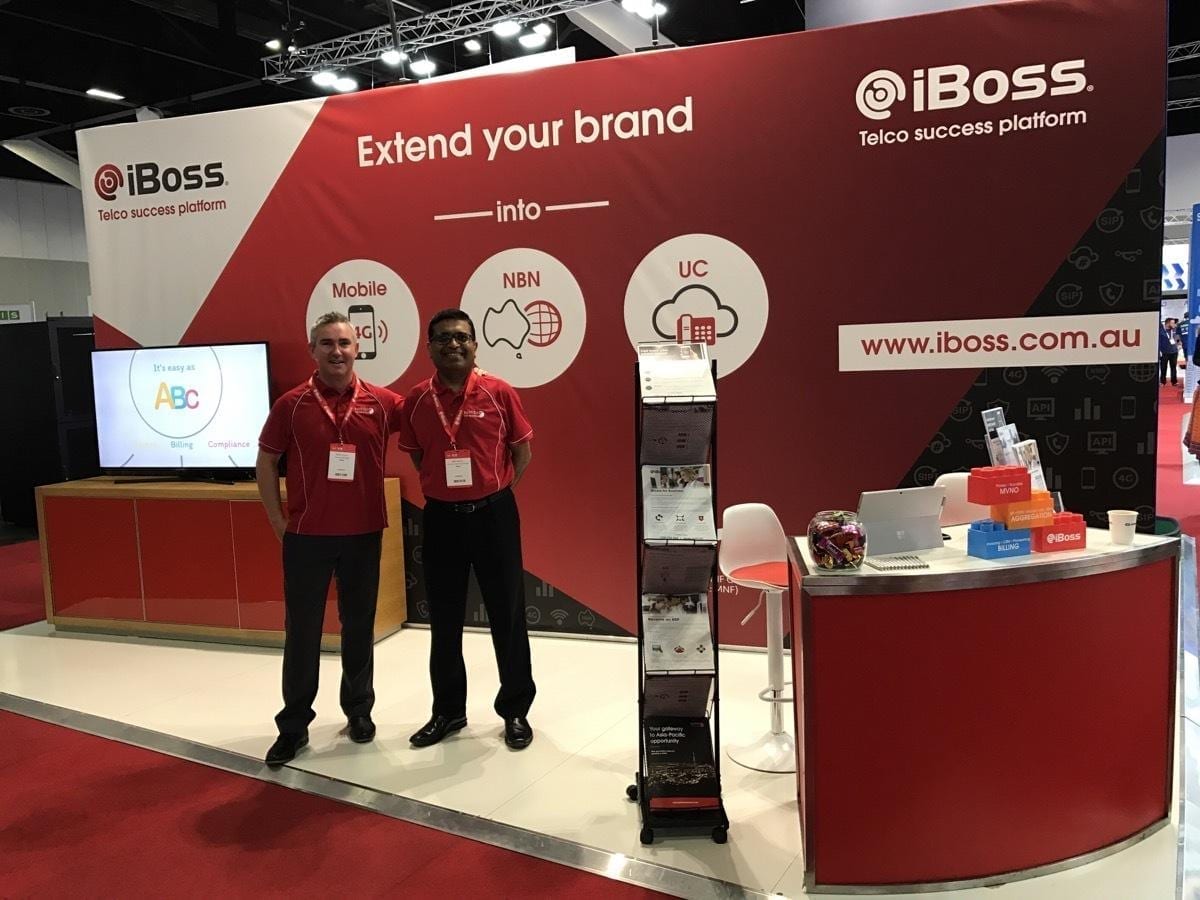
    The service will use Symbio’s iBoss platform to allow new mobile players to go to market in four weeks and activate SIMs in seconds.

    The white label service will allow customers to manage their own billing and communications with customers. Symbio also offers a conventional agency model iBoss MVNO service for customers which do not want to handle their own billing.

    Symbio said it has already signed up a number of new mobile players, including ISP Aussie Broadband.

    “Symbio and [parent company] MNF Group have a proven track record of delivering innovative, first to market solutions for our customers,” MNF Group CEO and co-founder Rene Sugo said.

    “While our agency MVNO offer has been welcomed by wholesale customers, we also found that there was a growing demand for services through a sub-wholesale model. This new MVNO offer will give our customers unprecedented control over their own consumers when it comes to billing and communication; we simply deliver the SIM card and the 4G mobile coverage.”

  • NTT Com launches MVNO eSIM pilot in Japan

    NTT Com launches MVNO eSIM pilot in Japan

    Japan’s NTT Communications has launched the nation’s first pilot of embedded SIMs (eSIMs) for connection and remote provisioning for MVNOs.

    The operator said it has built an environment for remote SIM provisioning on its MVNO platform in Hong Kong supporting both M2M and consumer devices.

    NTT Com will now launch verification tests in Japan in light of the GSMA’s efforts to promote the standardization of eSIMs for M2M and consumer models.

    Embedded SIMs can be remotely rewritten or changed for specific purposes without needing to replace the card. This can support providing customers with access to preferred mobile networks while traveling overseas and reduce the influence of overseas communication restrictions such as permanent roaming prohibitions.

    Updates or overwrites can be sent over the air through an operator’s subscription manager server (the M2M model), or can be set up to download a profile on receiving a request from the consumer, such as after selecting a mobile service and plan (the consumer model).

    The trial will involve verification of both methods of remote provisioning, as well as the evaluation of embedded technologies that could be combined with eSIMs to enable functionalities including secure communications, NTT Com said.

  • HKBN profit falls 66% in 1H17

    HKBN profit falls 66% in 1H17

    HKBN has reported a 66% decline in net profit for the first quarter of 2017 to HK$46 million ($5.9 million), due in part to investments associated with the operator’s entry into the mobile market as an MVNO.

    But revenue grew 25% to HK$1.53 billion as the company accelerated growth in both its residential and enterprise businesses.

    HKBN said that since the beginning of the financial year, the Hong Kong operator’s residential focus has shifted from subscriber to revenue growth.

    The company traded off a slowdown in broadband net additions – to 21,000 from 38,000 in the same quarter a year earlier – for an improvement in ARPU to HK$192 from HK$166 over the same period.

    Residential revenue accordingly grew 5% year-on-year to HK$941 million, with HKBN increasing its market share to around 37.6% by end-December, from 37.2% as of August 31.

    Enterprise business revenue meanwhile more than doubled to HK$569 million, as a result of the HK$650 million acquisition of New World Telecom (NWT) in March last year. HKBN recorded 1,000 enterprise net additions to take its total base to 51,000, while ARPU was flat at HK$1,467.

    “This interim results mark the beginning of our quad-play harvest,” HKBN CEO William Yeung said.

    “We have a monthly billing relationship with over 870,000 broadband households, representing over one-third of Hong Kong households. We will continue to leverage this to expand from our double-play centric business on broadband and fixed voice to quad-play, which includes OTT and mobile service offerings.”