Retail News CRM

Tag: Myer

  • Myer turns up the tech scene this Christmas

    Myer turns up the tech scene this Christmas

    Myer once again has launched a technology-fuelled Christmas campaign, with this year’s campaign including a bluetooth-enabled stocking and online hub where Aussie kids can write a letter to Santa, create a wish list (which parents can share with friends and family) and track the whereabouts of Santa on Christmas Eve.

    The “Christmas is where we are” campaign launched on Sunday with a TV spot featuring “Sally”, a girl who is worried how Santa will find her, since her family has decided to go camping over Christmas.

    Myer, together with creative agency Clemenger BBDO, answered that question with its Myer Global Positioning Stocking, a $34.95 bluetooth-enabled stocking that can be paired with a mobile device via the Myer Connect app.

    Once connected, users can access an interactive map where they can create a wish list, which can be shared with friends and family, write a letter to Santa and track Santa’s whereabouts on Christmas Eve.

    The campaign follows Myer’s first foray into tech-fuelled Christmas ads, with its “Naughty or Nice” baubles last year. Customers could connect the $20 baubles via the Myer app and see if they glowed red or green, depending whether they were on Santa’s naughty or nice list.

    The baubles reportedly sold out in 11 days, according to Ad News, and Clemenger BBDO said it would look to use the data gathered through the campaign for re-marketing.

    The launch of 2019 campaign is just the beginning of Myer’s Christmas push, according to chief customer officer Geoff Ikin.

    “You will see over the coming weeks our Christmas campaign come to life – with the launch of our Giftoriums, Santalands and iconic Christmas windows – which positions Myer as the one-stop-shop for Christmas this year,” he said in a statement.

  • Myer revamps homewares offer in the Sydney flagship store

    Myer revamps homewares offer in the Sydney flagship store

    Myer on Friday opened the doors to a refurbished homewares and electronics department in its Sydney CBD store.

    The new floor contains 20 shop-in-shop concepts from leading brands, including Scanpan, Le Creuset, Delonghi, Breville, Riedel, Fissler, Salt & Pepper, Maxwell & Williams, and Coles & Mason, as well as the world’s largest shop-in-shop from Dyson.

    “We are so thrilled with the new homewares department, with it’s modern and easy to navigate shop-in-shop format,” Alison Muir, the general manager of Myer’s Sydney store, said.

    According to Myer’s general manager for home and entertainment, Dean Austin, the floor has the largest choice of homewares in Sydney’s CBD.

    The new offering comes as the department store retailer sheds “unprofitable” brands, such as Apple, which it stopped selling in May, as part of a broader turnaround.

    The department store managed to pull back a modest improvement during FY19, its first year under chief executive John King, despite shifting consumer behavior.

    While total sales fell 3.5 percent to $2.99 billion, and comparable sales fell 2.9 percent, the business managed to reduce its expenses by roughly $33 million over the year in rent and wages.

    This focus on more profitable sales led to a net profit after tax of $33.2 million; 2.2 percent up on the year prior.

  • Cost-cutting, focus on profitable sales drive ‘modest improvement Myer

    Cost-cutting, focus on profitable sales drive ‘modest improvement Myer

    Myer saw a “modest improvement” in its first full year under CEO and managing director John King’s turnaround plan, despite challenging trading conditions in the second half which tempered some of the department store’s first-half gains.

    Most of the improvement came from reduced costs, primarily rent and wages, rather than an increase in sales, with roughly $33 million cut out of the business over the year ended June 30, 2019.

    Total sales fell 3.5 percent year on year to $2.99 billion in FY19, and comparable-store sales were down 2.9 percent.

    Excluding sales in Apple products, which Myer exited in May, comparable store sales were down 1.3 percent. Both total sales and comparable store sales fell at roughly the same rate as they did in FY18.

    An increased focus on profitable sales, including a shift in the sales mix away from concessions and towards Myer ‘exclusive brands’, contributed to an improvement in operating gross profit margin 38.85 per cent, up 65 basis points year on year. Operating gross profit was $1.2 billion, down 1.9 per cent year on year.

    Excluding implementation costs and individually significant items related to redundancies and lease provisions, Myer posted a 7.2 percent improvement in earnings before interest, tax, depreciation, and amortization.

    Net profit after tax was up 2.2 per cent year on year to $33.2 million.

    King made it clear during an earnings call with analysts and investors that the department store is sticking to the customer-first plan he laid out last September.

    “We will continue to focus on the customer, we’ll continue to deliver against this plan in the best interest of our customers and shareholders,” King said on the call on Thursday.

    “The plan we started is a plan we’re delivering against today, and will be the plan we’ll be delivering against in the coming months.”

    King also announced the appointment of Tony Carr as the company’s new executive general manager of supply chain. Carr was previously head of logistics at ASOS.

  • Myer implementing new payment options in-store

    Myer implementing new payment options in-store

    Department store Myer will be implementing buy now, pay later service Afterpay in-store in 2020, in an effort to incentivise the 2.7 million active Afterpay customers to visit its retail locations.

    “Our customers have responded positively to the Afterpay offering since we launched it online in April 2017,” Myer general manager for financial services Spencer May said.

    “We now look forward to extending provisions of buy now, pay later services for our customers, with both Afterpay and humm in-store from late 2019.”

    The decision comes amid Myer’s customer-first turnaround strategy, in which it seeks to bring customers back in-store by transforming the in-store customer experience, expanding the retailer’s ‘Only at Myer’ offering, and improving its online channel.

    The plan seems to have started off on the right foot, having led to a 3.1 per cent increase in net profit after tax in the first half of FY19 to $41.3 million, according to Myer chief executive John King.

    In-store is a growing segment for Afterpay, accounting for about 20 per cent of total ANZ underlying sales for the 5 months to May 2019, compared to 15 per cent over the first half of FY19.

    Additionally close to a quarter of the service’s new customers are being driven by in-store, rather than online, sales.

    Myer has been contacted for comment.

    According to UBS analyst Ben Gilbert, the impact of implementing buy now, pay later services drives an incremental increase in sales, as customers that did not necessarily have the ability to purchase at that store are now able to.

    However, this growth in sales tends to stabilise after 12 to 18 months.

    “The emergence of buy now, pay later has been a key driver of both traditional and online retail,” Gilbert said.

    “Growth largely reflects a shift to online, with retailers telling us buy now, pay later offers can make up over 50 per cent of online sales.”

    UBS estimates that buy now, pay later providers Afterpay and Zip accounted for approximately 16 per cent of incremental discretionary retail growth in the first half of FY19.

    Gilbert does raise the possibility that these extra sales have been brought forward, creating a risk to profit forecasts as customers buy early.

    “While we have some concerns, we note large retailers have largely cycled this in their online sales, momentum has continued and retail sales are holding up better than feared, with (early) post-election feedback on trade positive,” Gilbert said.

    “As a consequence we are becoming less concerned, and see an opportunity now to potentially try to negotiate better terms on the buy now, pay later options.”

  • Myer keeps Westfield Belconnen store Open

    Myer keeps Westfield Belconnen store Open

    Myer has announced it will keep its Westfield Belconnen, ACT store open, after stating in 2017 that it would close this year, due to a new lease agreement with Scentre Group.

    The agreement will see the stores’ scope narrowed, dropping from 3 floors to 2, over 12,000sqm of retail space and will be refurbished with the aim of creating a stronger retail experience and attracting a number of new and exclusive brands.

    “This is great news for our loyal customers, team members and, importantly, for the local team members,” Myer chief executive John King said in a statement.

    “This is an example of Myer’s customer-first plan in action, where we are looking to work collaboratively and constructively with landlords to reduce space, improve our stores and, most importantly, to enhance our range and brands for our customers.”

    The customer-first strategy, as put forward by King last year as a way to turn around the department store’s fortunes, involves three key priorities: transforming the in-store experience for customers, expanding the ‘Only at Myer’ range of brands, and improving the business’ online offering.

    The strategy proved to be profitable for the business during the first half of FY19, with Myer unveiling a 3.1 percent growth in net profit despite sales falling 2.8 percent, which King attributed to a move away from discounting and an increased focus on improving store profitability.

    The department store notes that the refurbishment of its Westfield Belconnen store is the first announcement through this new strategy regarding store direction, with more to come, and demonstrates the strong partnership it shares with Scentre Group.

    “Myer offers an important range of products and services that our customers want and expect and refurbishment of the Belconnen store will be welcomed by all,” Scentre Group chief executive Peter Allen said.

    “Myer’s reduced floorspace will allow us to introduce other retail partners to Westfield Belconnen which will further enhance the overall customer experience at the center.”

  • Myer axes 50 management staff and fresh marketing lead

    Myer axes 50 management staff and fresh marketing lead

    Myer has cut a further 50 positions from its store management and store support team, including group general manager of marketing Andrew Egan. The cuts are the second round of large scale lay-offs for the department store in the last eight months, with over 30 executive positions cut last August, in order to reduce costs and barriers between the business and its customers – bringing the total number of executives lost within the last year in the realm of 80.

    “We have to place the customer first, in every decision we make and every action we take,” a Myer spokesperson said.

    “From doing a thorough review of our entire store management structure and a further review of the store support office… as a result of this, a number of administrative and management roles will be leaving the business to align our structure more closely with our customers.”

    No customer facing team members have been affected by the cuts.

    According to the spokesperson, this will enable the business to operate in a more efficient manner, improving the financial performance and shareholder value delivered.

    Myer recently posted a rise in net profit for the first half FY19, increasing 3.1 per cent to $41.3 million, signalling that the brand’s customer-first turnaround strategy has some legs.

    The retailer improved store layouts over the half-year, and launched the ‘My Store’ marketing campaign, which chief executive John King said had been received well by customers.

    Despite this, Egan, who led the launch of the ‘My Store’ campaign, as well as the department store’s recent Christmas campaign, has been let go in this recent round of lay-offs.

    “We thank Andrew for his contribution to Myer and particularly to our marketing and advertising team,” the spokesperson said. “We wish him all the best for the future.”

  • Promising signs of change at Myer

    Promising signs of change at Myer

    Myer’s move to reduce discounting and cut operating costs, while focusing on online sales and exclusive brands, had a positive impact on earnings in the first half of FY19, driving a 3.1 per cent increase in NPAT and 99bps improvement in gross margin. But some remain sceptical that these changes will be enough to drive long-term growth.

    “Despite a better-than-expected result [in the half], the long-term outlook for Myer remains challenging,” Bryan Raymond, Citi analyst for retail and gaming, said in a report released to investors on Wednesday evening.

    Further cuts to the cost of doing business – which Myer achieved primarily through ‘rostering efficiencies’, essentially fewer staff hours, in the first half – could negatively impact like-for-like sales going forward, Raymond said.

    The reduction in discounting could also hamper like-for-like sales growth, especially as the timing of state and federal elections this year is expected to dampen consumer sentiment.

    In a call to investors on Wednesday, Myer CEO John King said the retailer had removed four weeks of discounting from its calendar during the first half and plans to do the same in the second half, which he acknowledged would result in a “lumpy” topline for the year. But he said this was necessary to return the business to profitable growth.

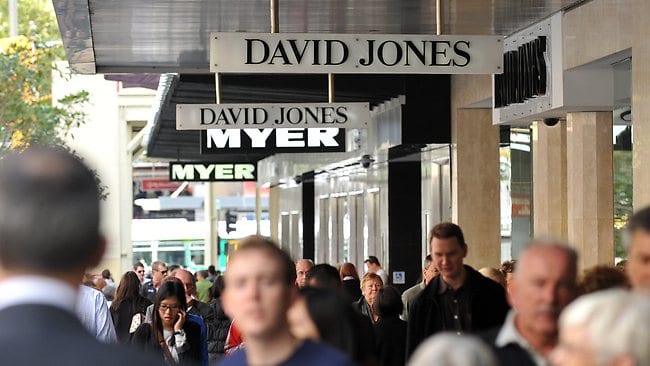
    While the reduction in discounting has led to an improvement of 99bps in Myer’s gross profit margin for the half, Raymond warned the uptick could ease, if Myer’s rival David Jones starts discounting to clear excess stock. Worryingly, Raymond noted that David Jones’ inventory per sqm has increased 26 per cent over the past two years.

    At the same time, however, many of the ‘Customer First’ changes King outlined on Wednesday were implemented just five months ago, and their full impact won’t be measured or felt for some time.

    For instance, King said the company is in the process of moving online order fulfilment from back-of-house in department stores to a centralised distribution centre, which he said would allow the retailer to increase the range of items it sells online, improve order fulfilment speed and increase its selling area in stores. This project is not expected to be completed until next year.

    Another significant change that is still in progress is the reduction of physical floor space across the network. This will see Myer hand back entire floors in some stores to landlords, and shrink certain categories and expand others. King on Wednesday said the shape of the business will change as it reduces its physical selling area and rapidly expands a central online business.

    King expects to have more information about which stores will be downsized or rationalised in September.

  • Customer-first strategy turns out profitable for Myer

    Customer-first strategy turns out profitable for Myer

    Myer CEO John King’s turnaround plan passed its first real test on Wednesday when the retailer reported a 3.1 per cent year-on-year increase in net profit after tax in the first half of FY19 to $41.3 million.

    While total sales fell 2.8 per cent to $1.67 billion and like-for-like sales fell 2.3 per cent in the half, King told investors he was not concerned, since the company has stopped chasing sales growth for the sake of it and is focused on increasing store profitability and growing online moving forward.

    Online sales were up 18.6 per cent in the half to $151.2 million, buoyed by a strong Q2, in which Myer did over $10 million in online sales over Cyber Weekend and had its biggest online sales day ever on Boxing Day.

    Operating gross profit margin improved 99bps to 38.5 per cent in the half, thanks to a renewed focus on exclusive brands. The company revealed that it is in the process of introducing more than 20 exclusive-to-Myer brands, most of which are international brands.

    The department store noted a 1.3 per cent improvement in its cost of doing business in the half, which it attributed in part to the rollout of a new workforce management system, which has improved its ability to roster employees to meet customer demand.

    EBITDA improved 4.9 per cent to $113.6 million.

    “This result demonstrates the positive customer response to a number of initiatives from our Customer First Plan, particularly during the all-important Christmas and Myer sale periods,” King said in a statement on Wednesday.

    The turnaround plan, which King announced last September, is based on three key priorities: transforming the customer experience in-store, expanding the company’s ‘Only at Myer’ brands and categories and offering value for money and improving Myer’s online offering.

    The retailer implemented a number of customer-centric initiatives in the half, including improving store layouts and localising merchandise in 23 stores in the network, and relaunching Myer’s ‘MyStore’ campaign, which King said has been well received by customers.

    Myer also launched a new website in October, which King said performed well during the major online shopping events in the half. The retailer is now looking to increase the number of products it offers online, which will enable it to reduce its selling area in certain centres, and to move the fulfilment of online orders from stores to a centralised distribution centre.

    In a call to investors on Wednesday, King said there is still a lot of room to cut costs and improve profitability by reducing the size of certain bricks-and-mortar stores in the network and improving the range and service in stores.

  • Myer Expects Lower Profits

    Myer Expects Lower Profits

    Myer has warned that its fourth quarter profits may be impacted by lower sales on its winter ranges following an unusually warm start to the cold season.

    The struggling department store said on Wednesday that its third quarter sales declined by 2.7 per cent to $635.3 million, ahead of analyst expectations.

    Sales declined 3.1 per cent on a comparable store basis for the 13 weeks to 28 April,  an improvement on the 3.6 per cent decline experienced in the second quarter.

    Citi analysts had expected Myer’s third quarter sales of $621 million and a comparable sales decline of 3.5 per cent.

    But executive chairman Garry Hounsell threw a cloud over fourth quarter profit on Wednesday, saying that unseasonably warm weather had impacted winter sales.

    “In February we announced a renewed focus on product, price and customer service, which delivered encouraging results during March,” he said.

    “However, as reported by a number of other retailers, the unseasonably warm start to winter has impacted sales, particularly in winter apparel, shoes and accessories, which may impact profit in the fourth quarter,” he said.

    Hounsell gave no specific guidance on Wednesday but analysts are concerned that if earnings fall too far Myer could be at risk of breaching its banking covenants.

    Myer has been in talks with lenders in recent months to negotiate terms on a new debt facility after booking a $515 million write down in March.

    Critical shareholder Solomon Lew has expressed concern that Myer is in a precarious financial position in relation to its covenants.

    The warmer start to Winter has impacted ragtraders across the country over the last few months, spurring elevated levels of discounting heading into June that has put pressure on margins.

    Hounsell said in March that he was pushing staff to “trade the business harder” and was taking a number of steps to improve the competitiveness of the business, including more discounting.

    Citi analyst Bryan Raymond said Myer had delivered a credible third quarter result in a challenging environment.

    “LFL sales momentum has not meaningfully improved, but is not getting worse, despite a headwind from weather,” he said.

    Citi said Sydney average temperatures in April were four degrees above 2017 and the long term average, while Melbourne and Brisbane were two degrees above 2017 and the average in April.

    It was also announced that incoming chief executive and managing director John King is due to start in his new role on 4 June, following the approval of his visa.

    “John has already visited many stores, talked to team members and customers and understands the significant task at hand in turning around the business,” Hounsell said on Wednesday.

    King will replace departed chief Richard Umbers, who left earlier this year amid declining sales that Myer has yet to turnaround.

    Myer’s year-to-date sales were down 3.4 per cent as at 28 April to $2.35 billion, while comporable store sales were down three per cent.

    Third quarter online sales increased by 49.4 per cent to $35.9 million. Online year-to-date sales were up 49 per cent to $141.1 million.

    Citi said online sales are now around six per cent of Myer’s total sales, estimating that bricks and mortar LFL sales fell by five per cent in the third quarter, marginally better than the first half (-5.8 per cent).

    “The continued strong performance in our online business is pleasing and we will continue to invest in growing this business,” Hounsell said.

    Myer has forgone an investor briefing for its third quarter results, and announced on Wednesday that from the start of FY19 it will no longer provide quarterly sales updates to the market.
  • Myer’s reputation suffers and on the way back

    Myer’s reputation suffers and on the way back

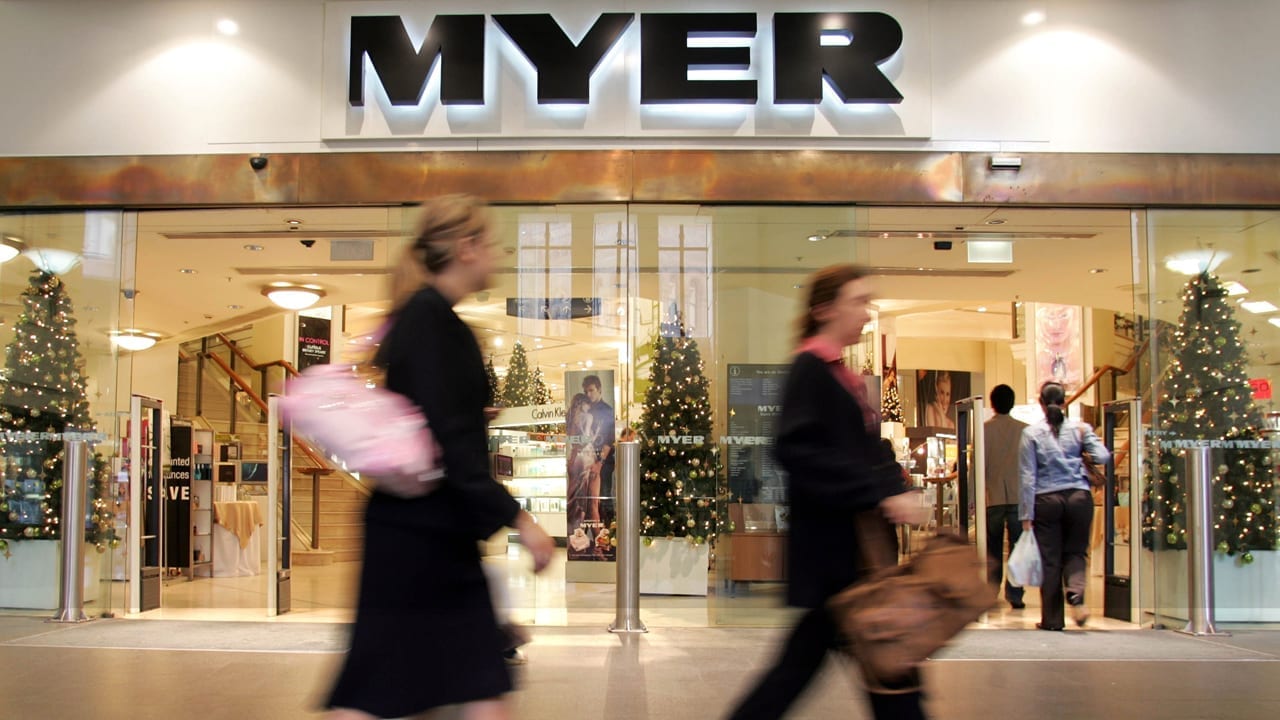
    In 2009, when former Myer CEO Bernie Brookes listed the department store on the Australian stock exchange, Myer was ranked as one of the top 10 most reputable companies in Australia.

    Today, of the 60 companies ranked on the Australian Corporate Reputation Index, it is ranked 45th.

    The Reputation Institute’s Index, the 2018 edition of which was released yesterday, has tracked a steepening decline in how consumers view the beleaguered department store chain relative to other Australian businesses.

    Myer ranked in the top 10 Australian companies on the index from 2008-2012, but in tandem with its ailing trading performance had dropped to 22nd last year, a result that has again worsened with the largest contraction in points on the index.

    It comes just a month after the retailer incurred a $515 million write down on the value of its brand names and goodwill, reflecting the erosion of the iconic business in recent years.

    Consumers were clear on what Myer was lacking – it ranked 60th on the individual measurement of innovation in 2018.

    “These results indicate that Myer has not met the challenge of adapting to the changing demands of consumers and an increasingly competitive landscape,” Reputation Institute ANZ managing director Oliver Freedman said.

    Just under 6000 Australian consumers were surveyed in late February/early March for the index, which encompasses Australia’s top 60 companies by revenue.

    JB Hi-Fi was once again the top ranked retailer on the index, despite its rank falling from 3rd to 6th in 2018 as airlines such as Virgin, Qantas and rank one business Air New Zealand surged.

    German entrant Aldi maintained its position at rank 9, well above Wesfarmers at rank 20 (19th in 2017) and Woolworths, which improved from rank 26 in 2017 to rank 22 in the latest index.

    Myer’s reputational woes are worsening, but it still fares better than 7-Eleven, which failed to change its rank in 2018 and remains at 58th on the overall measurement, above Telstra and News Corp Australia.

    Freedman said that the overall results indicate that Australian companies are bucking the trend in relation to how consumers are viewing reputation.

    “Globally, the Reputation Institute is seeing a trend of nationalism, where local consumers rank local companies higher in terms of overall reputation,” he said.

    “However, Australia is veering from this pattern, with our top 10 containing a mix of Australian and international companies, showing even those organisations headquartered overseas can make an impact locally with good leadership, a strong product and community involvement among other measures.”

  • Myer shares soar after new reports

    Myer shares soar after new reports

    Myer’s share price has shot up 8.7 per cent in early Friday trading as reports swirl that rival David Jones is considering acquiring the department store.

    Reports this morning in The Australian cite the confidence of market sources that DJs parent Woolworths Holdings is looking seriously at a potential acquisition given Myer’s current market value of around $300 million.

    The South-African based retail business recently booked a $712 million write down on the value of DJs, which it acquired in 2014 for $2.15 billion, but is thought not to have been soured on the prospect of investing additional capital in Australia’s department store sector, given the opportunity to significantly increase its scale.

    But a spokesman for Woolworths Holdings told AAP the rumours were untrue and the company had no plans to buy Myer.

    “These rumours have no basis,” he said.

    “We are not considering an acquisition of Myer and there have been no discussions regarding an acquisition with advisers or between the two companies.”

    Should an offer be made Myer’s largest shareholder Premier Investments, chaired by retail veteran Solomon Lew, could present as a thorn in Woolworths’ side.

    It would not be the first time, Lew held out on the Johannesburg-listed business over its DJs acquisition in 2014, buying up 10 per cent of the company’s shares before the deal, selling at a premium.

    Myer’s share price closed at 35 cents on Thursday evening, but by 11:40 AEST on Friday was trading at 38 cents.

  • Rescued retailers’ employees finally paid out

    Rescued retailers’ employees finally paid out

    Administrators for rescued retail chains Marcs and David Lawrence have paid out all employees affected by the company’s transition to new ownership.

    Deed administrator Rodgers Reidy said M. Webster Holdings, which formerly traded as Marcs and David Lawrence, paid a distribution to the employees of the company representing payment in full of employee entitlements.

    “While many current employees were re-employed by FFS Retail, a subsidiary of Myer, when it purchased the assets, those employees who were not re-employed have now been paid their entitlements in full,” said Andrew Barnden of Rodgers Reidy.

    “We have been working closely with Myer to transition the assets to FFS Retail in a seamless manner.

    “In the new year we expect to pay a distribution to the unsecured creditors of the company, which will finalise the successful sale and restructure of the company. We also understand that many former suppliers have also benefited from the sale through ongoing trade.”

    Myer salvaged the Aussie fashion duo from liquidation in April.

    The fashion retailers, which are two of Australia’s best-known labels, had employed about 1130 staff in Australia and another 42 in New Zealand across their 52 stores, 11 outlets and 140 concessions, until entering administration in February.

  • Myer drops sales targets this year

    Myer drops sales targets this year

    Myer is committed to dedicated clearance floors in its department stores despite major shareholder Solomon Lew fuming that the old stock would be more at home in a Salvation Army op shop.

    Myer executive Tony Sutton told investors at Wednesday’s strategy day that the clearance floors represented a foray into the $4.6 billion “off-price” retail market.

    Sutton said off-price was about selling wanted brands at significant discounts, a strategy that has brought success to the likes of DFO and US retailer TK Maxx.

    “We see this as a new potential market for Myer and sits adjacent to Myer’s current proposition,” Sutton said.

    The commitment flies in the face of Myer’s promises earlier this year to move away from heavy discounting.

    Sutton, the executive general manager for stores, said sales for the eight Myer stores piloting the clearance floors over the past six weeks had been positive.

    Sales in the last full financial year dropped 2.3 per cent across the eight stores, but – excluding online sales – they had risen 3.7 per cent since clearance floors were introduced.

    Sutton said clearance floors had helped US department stores such as Nordstrom boost their sales.

    But Lew – the chairman of major shareholder Premier Investments – has been critical of the clearance floors, saying in September the apparel was up to three years old and belonged “in the Salvation Army”.

    Meanwhile Myer has dropped the sales targets it set as part of its much-vaunted turnaround plan after unveiling another weak set of figures to investors.

    Chief executive Richard Umbers said average sales growth above three per cent between 2016 and 2020 was no longer achievable at the department store chain because of stiff competition and weak consumer spending.

    But the chief executive said on Wednesday his co-called ‘new Myer’ turnaround plan remained sound despite a 2.8 per cent decline in first-quarter sales.

    “Two years ago when we released the New Myer strategy we did not anticipate the extent of deterioration in market conditions,” Umbers told investors at a strategy day.

    “Our ambition of three per cent sales growth seemed appropriate at the time but it doesn’t seem appropriate now.”

    Umbers acknowledged it was longer than expected to turn the business around, but said that did not mean it was wrong to focus on young shoppers, popular brands, concessions and targeted closures.

    “A tough external environment cannot be a reason to slow down or stop investment for the long term,” he said.

    Myer said it would now measure performance against sales per square metre growth, although it has roughly halved that target to “more than 10 per cent” until 2020.

    Umbers’ previous target for growth in earnings to outpace that in sales has also been scrapped.

    Umbers said the retailer was now focused on what he indicated would be a more meaningful second quarter including the spring racing and Christmas trading periods.

    Lew was quick to respond following yesterday’s strategy update and release of its quarterly results, noting Myer has “left the strategy in place despite the very clear evidence that it has failed.”

    “Premier also notes the improvement in Big W’s sales performance announced yesterday for the same period,” the company said in a statement.

    “Today’s announcements by Myer are final proof that Garry Hounsell is unelectable as chairman of Myer. Hounsell has promised to deliver more of the same failed new Myer strategy, and he will now reward the Myer management team for taking the company backwards.”

    Lew – who heads up the parent company of Smiggle and Peter Alexander – is leading a campaign to overhaul the department store retailer’s board.

    The retail veteran also commented on Myer’s turnaround strategy, in which Myer chairman-elect Hounsell had previously said was beginning to show “green shoots” of recovery.

    “I only see weeds, no green shoots,” said Lew.

  • Myer ‘disappointed but unsurprised’ by Premier Investments

    Myer ‘disappointed but unsurprised’ by Premier Investments

    Department store retailer Myer has responded to the broadside delivered by veteran and chairman of Premier Investments yesterday, asserting its “disappointment”.

    Yesterday, Premier released a statement which ruled out making a takeover offer for Myer and again reiterated that it will be monitoring the Myer “strategy day” on November 1 “very closely”. Premier again called upon the company to announce its current sales and profits for the Q1 period “so the market is fully informed when assessing the strategy.”

    Myer chairman Paul McClintock said the annoucement was “disappointing, but unsurprising”.

    “We have attempted to engage in constructive dialogue with Premier for many months, but regrettably this has not been possible,” he said.

    McClintock said Myer’s board had considered Premier’s “informal proposal” to appoint three nominee directors, but rejected it on the basis of a potential conflict of interest, “given Premier and its associates’ status as one our largest suppliers and competitors.”

    “The Myer board continues to support the new Myer strategy and recommends that shareholders vote in favour of all resolutions, including the election of three directors put forward by the board,” he said.

    Incoming Myer chairman Garry Hounsell and former Qantas director will step into the new role when McClintock retires next month.

    Myer has also announced the appointment of JoAnne Stephenson to its board as a non-executive director.

    Premier said it will vote against the appointment of all directors proposed in Myer’s Notice of Meeting, including Hounsell.

  • Myer welcomes Android and Apple pay on new credit card

    Myer welcomes Android and Apple pay on new credit card

    Myer has become the first Aussie retailer to launch Android Pay and Apple Pay on a Visa card, in a move that the department store retailer says accelerates its commitment towards digital.

    Launching this month, the card is issued by Macquarie Bank and supplied by Visa payment technology. It allows shoppers to access smart phone digital wallets and designed to make it easier to track and manage spending through the Myer credit card app.

    The new card is also now the only way for customers to earn Myer one shopping credits on eligible credit card purchases.

    “The card will provide our customers with an easier way to pay and reward them for their loyalty,” said Richard Umbers, Myer CEO and managing director.

    “We are delighted with our partnership with Macquarie and Visa which will further accelerate the growth of Myer’s digital capability.”

    The head of Macquarie’s Banking and Financial Services Group, Greg Ward, said the finance firm had offered credit cards directly and through white label arrangements for “many years” and that the Myer partnership was the “latest step in supporting innovative digital banking solutions for Australians.”

    Stephen Karpin, Visa’s group country manager for ANZ and the South Pacific, said digital technology is driving “new and imaginative commerce experiences” within retail, and that “how people pay is at the heart of these experiences.”

    It’s the second tech-related launch embarked on by Myer in recent weeks, after the department store retailer dipped its toes into radio frequency identification technology, with a six to eight week trial.