Retail News CRM

Tag: MyRepublic

  • MyRepublic Debuts Cloud-Native Platform-as-a-Service Under MyRepublic Digital

    MyRepublic Debuts Cloud-Native Platform-as-a-Service Under MyRepublic Digital

    MyRepublic has announced the launch of its platform-as-a-service spin-off company, MyRepublic Digital. The spin-off, helmed by industry veteran Jason Ong, aims to simplify and productize digital transformation for telcos and aspiring digital brands worldwide.

    MyRepublic Digital launches with its flagship product, Encore, a cloud-native, all-digital platform pre-built with industry-best practices and BSS/OSS features. The spin-off’s parent company, MyRepublic, began ten years ago when its founders envisioned the need for an asset-light, lean and agile telecommunications provider.

    Malcolm Rodrigues, CEO and co-founder, MyRepublic Group, said, “With network disaggregation and nationalization becoming commonplace worldwide, there is a growing need for operators to pivot away from infrastructure-based models and digitalise. We developed the playbooks, expertise and digital services to do that when we built MyRepublic, and today we see the culmination of a decade’s worth of effort with the launch of MyRepublic Digital.”

    Jason Ong, CEO of MyRepublic Digital, said, “I am excited to join the MyRepublic team. As a group, we have a proven business model that would help unlock value in any telecom business and are now ready to help other similar companies do likewise. Our proven Encore digital platform and expertise are core to our capabilities, and we are ready to showcase these to potential clients.”

  • MyRepublic targets service industry with Cisco Meraki

    MyRepublic targets service industry with Cisco Meraki

    Singapore-based ISP MyRepublic has launched a new complete networking solution for the services industry in collaboration with Cisco Meraki.

    The new MyRepublic Connected Business solution is designed to meet the end to-end needs of companies in the retail, food and beverage and hospitality sectors.

    MyRepublic will assume the role of both consultant and solutions provider to help design and deliver a network that meets a company’s specific requirements.

    MyRepublic Connected Business can provide solutions including high-performance wireless networking, secure firewall services, as well as traffic and use analytics to provide insight into the network.

    The platform provides central management and connection of wireless access points, security cameras, VoIP phones, network switches and other devices connected to the network.

    “MyRepublic understands many of the challenges facing businesses in the retail, hospitality and F&B sectors,” MyRepublic CEO Malcolm Rodrigues said.

    “Our customers want and need solutions that are not just innovative, but streamlined and hassle-free. MyRepublic Connected Business is exactly that, and we are excited to work with a well-established partner like Cisco Meraki to resolve these challenges.”

  • MyRepublic gets $52m funding injection

    MyRepublic gets $52m funding injection

    Singapore-based ISP MyRepublic has secured a S$70 million ($51.9 million) investment to pursue further regional expansion and establish MVNO operations.

    The investment from the Makara Innovation Fund will be used to expand the company’s geographical footprint and further develop its platform, MyRepublic CEO Malcolm Rodrigues said.

    “We have been developing our proprietary cloud platform for the past five years, which has enabled us to deploy a single operational platform across countries and break industry records by turning EBITDA-positive within two years of entering each new market,” he said.

    “The investment will supercharge the platform’s development, support our aggressive growth path to expand our regional footprint within a record-breaking timeframe and deliver an even wider range of services.”

    Possible new markets include Malaysia, Philippines, Vietnam, Myanmar, Thailand, Cambodia and Sri Lanka, he said.

    As part of this expansion drive, the company is pursuing launching MVNO operations in each of its four current operating markets – Singapore, Australia, Indonesia and New Zealand.

    MyRepublic had initially been planning to commence MVNO services in Singapore only by the end of this year, but due to its expanded ambitions launch plans will be held over to the first quarter of 2018.

    MyRepublic is meanwhile targeting MVNO launches in Australia and Indonesia by the middle of next year.

  • MyRepublic signs MVNO agreement with StarHub

    MyRepublic signs MVNO agreement with StarHub

    Singapore fiber ISP MyRepublic has formed an MVNO agreement with StarHub to support its intention of launching mobile services.

    The agreement will allow MyRepublic to provide mobile services despite failing to win the auction for Singapore’s fourth telco license.

    Announcing the agreement, MyRepublic said it was encouraged to continue with its mobile ambitions by the strong response to a request for registrations of interest during its HetNet Mobility Trial in Jurong.

    We made a promise and we want to stand by that promise,” Myrepublic CEO Malcolm Rodrigues said.

    “We promised that MyRepublic would bring a better kind of mobile service to Singapore, and we believe we can still do that. And we definitely want to thank our friends and supporters for believing in us.”

    The company has been building an MVNO platform in the cloud in advance of the launch of mobile services.

    MyRepublic has revealed plans to target its mobile services at younger and more technology savvy Singaporeans. The company said it plans to launch the services “very soon.”

    MyRepublic has also previously announced plans to pursue MVNO operations across its other operating markets of Australia, Indonesia and New Zealand.

  • Telcos must transform service delivery: MyRepublic CIO

    Telcos must transform service delivery: MyRepublic CIO

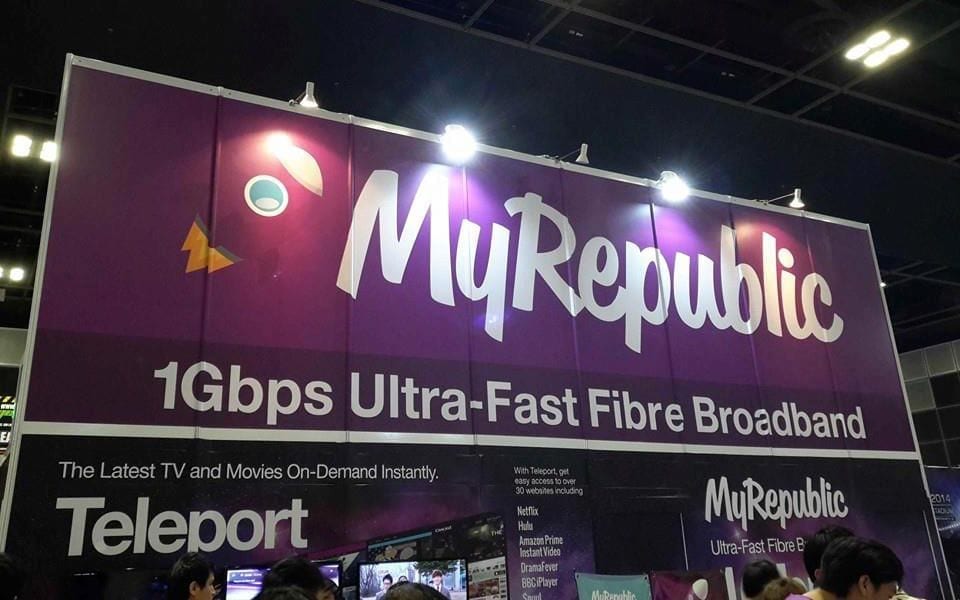
    Founded in 2011, MyRepublic is best known for being the first ISP in Singapore to launch 1Gbps broadband plans at mass-market pricing. Seen somewhat as a disruptor, the Singaporean brand is now active in 4 markets in the region. Within the next two years, the company has plans for an IPO and already has teams actively looking for partnership opportunities for four further expansions. Potential sites include Cambodia, Myanmar, Malaysia, Philippines and Thailand.

    Eugene Yeo, Group CIO at MyRepublic, has been a part of the company since its earliest days, and started coding when he was in his early teens, he told Enterprise Innovation in an exclusive interview. But “rather than go to university and get a degree in IT, which I felt was not going to value add, I felt that I wanted to foray into something different,” he revealed. Yeo attended SMU to study business administration, which allowed him to learn about managing business, running an organization, and growing a team.

    Early adopters of cloud

    “We are firm believers of using IT as a strategic tool to make sure our company remains innovative and a disruptor, staying ahead of everyone,” said Yeo. “As we grew the company over the last 5 years, we realized that there was a huge potential. The way we do things is very different from the incumbents,” said Yeo. “Embracing open source, embracing technologies out there to help us become more agile and efficient …we realized that there’s huge value in them and that there’s potential to grow the business into something much bigger.”

    As a firm believer of utilizing IT to stay ahead of the competition, MyRepublic adopted cloud technology even before the idea of cloud infrastructure gained wide traction. This significantly differed from other telcos that had invested heavily in legacy infrastructure, according to Yeo.

    They also developed their own business support systems (BSS) and operations support systems (OSS), believing this to be a move critical to their agility as a company. MyRepublic originally adopted public cloud for their BSS and OSS stack, but placed network-critical applications on traditional VMs in their data centers.

    Eventually, their infrastructure evolved to be cloud native. Yeo highlighted: “We really wanted to move to a hybrid cloud infrastructure across the organization and leverage an on-premise private cloud to supplement our public cloud strategy.”

    MyRepublic started their first on premise cloud in Australia, and have now brought it across to their centers in Singapore and Indonesia, moving all core network applications onto the on-premise cloud. Setting their foundations in cloud allowed MyRepublic to scale flexibly and expand rapidly into new markets – taking fewer than 60 days for their Australia and New Zealand markets.

    “Because we already had our foundation set with cloud, for us to be able to scale from 300 thousand [cutomers] to a million to 5 million isn’t really a big challenge”, said Yeo. “Even though we are a fairly young company, we believe in continuous improvement, and we’re actually embarking on our own transformation program internally. We’re embarking on what we call a customer experience transformation within the entire organization – to make sure that customer-centric culture is right at the root of MyRepublic.”

    Emphasis on open source

    Apart from being a firm believer in the cloud, Yeo is also a staunch supporter of open source, and partnered with RedHat to deploy OpenStack earlier this year.

    MyRepublic’s open source journey started when they introduced their engineers to the open source community to kick-start their understanding on how the technology worked, what potential challenges might be faced, and the general sentiment of the community through feedback. MyRepublic started with three engineers – but now with a team of 70 – 80 engineers, Yeo believes the time has come to contribute heavily back to the community.

    “We would have never got to the first version of our software without open source – from open source databases, to open source libraries, workflow engines etc. These actually helped us get to the next level faster,” said Yeo.

    With internet giants likes Facebook and Google being very active in the open source community, there has been massive ratcheting up of input into the open source space over the past few years. To this, Damien Wong, Vice President and General Manager, ASEAN, Red Hat, added: “Innovation is still happening in the proprietary space. I don’t think open source is the only way of innovation, but I think that it has gained such momentum that it cannot be ignored by any organization.”

    The evolving telco industry

    Arguably, the telco industry is traditionally one of the most conservative industries when it comes to innovation, disruption and transformation, Yeo believes. With disruptive technologies such as cloud, open source, 5G, machine learning, and IoT looming on the horizon, the telco industry is transforming to keep up with the times.

    Traditional means of texting and calling are a thing of the past, replaced by alternative platforms – such as WhatsApp, Telegram, and Facebook Messenger – powered by mobile data. The rise of smartphones and the power to consume applications also changes the needs and requirements of customers. In the telco space, it is apparent that telcos are trying to move from being communication service providers to becoming digital service providers.

    “You want services provided by the service provider to be intelligent, relevant, affordable, and accessible – all those attributes have to be there. With all the technologies that have evolved and been created… I think it is quite clear that telcos are moving from hardware-based infrastructure to software-based infrastructure for reasons of agility,” said Wong. “Moving forward, we are going into 5G, and people who can capitalize on that 5G infrastructure are going to be extremely successful.”

    In the shorter term – over the next 3 years or so – telcos need to become very efficient in the way that they deliver their services, according to Yeo. Connectivity is going to become a utility like water or electricity. “It’s not about optic fiber, mobile SIM, etc – people don’t care. In the end, they just want to be connected. That’s really the value proposition and the demand from the consumers. They just want connectivity in the fastest and most affordable way, and don’t care how you deliver it to them. Telcos need to understand that and know how to create the efficiency in that space,” he said.

    “We are moving to the data world, and data is money,” said Yeo. “There will come a day where you don’t need to pay for a SIM card, because your data will already pay for that connectivity. Telcos’ business models have to evolve – I see that telcos are going to start moving towards monetizing the data that they get, figure out how best to innovate using that data, and then use that data to fund the growth of the business.”

  • MyRepublic planning IPO by end-201

    MyRepublic planning IPO by end-201

    Singapore-based MyRepublic is gearing up to conduct an IPO by the end of next year, and use the funds to expand its operations to cover at least 10 countries in the next five years.

    In a media briefing, MyRepublic said it is currently exploring listing on the Singapore, Hong Kong and/or Australian stock exchanges.

    MyRepublic is meanwhile planning an entry into the Singapore mobile market in the fourth quarter and expects to subsequently expand its mobile operations to other parts of the region by next year onwards.

    The company is likewise planning to launch TV services in the region, bcoming a quad-play provider.

    MyRepublic currently operates in Singapore, Indonesia, Australia and New Zealand, and is evaluating expanding to Myanmar, Sri Lanka, Vietnam, Myanmar, the Philippines, Thailand, Cambodia and Malaysia. By June, the company reached 200,000 broadband subscribers across the region.

    The company leverages NBN rollouts in the markets with strategic deployment of passive infrastructure to remain infrastructure agnostic and enable rapid expansion at a low cost of market entry.

    MyRepublic said it can enter a new market in 60 days and launch new products in three months. The company has entered a new market every year since 2014 and turns ebitda-positive within two years of entering each new market.

    At the briefing MyRepublic also denied reports that the company is pursuing an acquisition of Singapore’s M1. While the operator has put in a bid, it is not pursuing the acquisition, the company said, noting that while M1 is a traditional telco, MyRepublic is an “internet platform company.”

  • MyRepublic, TPG to bid for Singapore mobile license

    MyRepublic, TPG to bid for Singapore mobile license

    Singapore’s Infocomm and Media Development Authority has pre-qualified ISP MyRepublic and Australian telecoms group TPG Telecom to participate in an auction for a fourth mobile license.

    MyRepublic and TPG will bid for a 60-MHz lot of spectrum in the 900-MHz and 2.3-GHz bands, in an auction expected to be complete by the end of the year.

    A third applicant for the auction, airYotta, has been disqualified for failing to meet the required pre-qualification criteria.

    The auction will be followed by a general spectrum auction open to existing mobile operators M1, Singtel and StarHub, as well as the winner of the new entrant auction. This second auction is expected to commence in the first quarter of next year.

    MyRepublic is a fiber-based ISP with a solid presence in Singapore, and a growing regional reach. The company recently arranged to launch broadband services with speeds of up to 100Mbps in Australia over the national broadband network (NBN), and also has operations in New Zealand and Indonesia.

    TPG Telecom is Australia’s second largest fixed line ISP and largest MVNO. The company has been steadily expanding through acquisitions and organic growth.

    Singapore MVNO Circles.Life has announced it “ welcomes IMDA’s on-going efforts to support competition in the telco space.”

    Circles.Life entered this year as a digital telco and has been aiming to disrupt the market with innovative offers for data-savvy customers, and looks forward to further disruption if a new entrant arrives in the market, the company said in a statement.

  • Singapore’s MyRepublic launches in Australia

    Singapore’s MyRepublic launches in Australia

    Singapore-based ISP MyRepublic will launch in the Australian market later this month over the national broadband network (NBN), as part of the company’s ongoing regional expansion.

    MyRepublic will launch an unlimited data service at the fastest NBN speeds available in that area at the single price of A$59.99 ($46.10) per month.

    Unlimited data plans are still relatively rare in the Australian market due to a lack of competitive fixed-line infrastructure, even as the NBN wholesale network is progressively deployed.

    MyRepublic Australia managing director Nicolas Demos said the company plans to differentiate by offering the best speeds possible with unlimited allocations.

    “It is time to educate Australians on the value of quicker speeds without the restrictions of data caps,” he said.

    “Australia has the 48th fastest average internet connection speed in the world. Over 80% of Australian customers on the NBN are currently running on speeds similar to ADSL technology. We will deliver customers the best speed they can get – at their location – with our unlimited plan offer with local support at a fair price.”

    MyRepublic was founded in 2011 and was the first company is Singapore to offer 1Gbps broadand services for under S$50 ($36) per month. The company has been pursuing regional expansion, and has so far also launched services in New Zealand and Indonesia. At home, the company is vying to become Singapore’s fourth mobile operator.

  • Three apply for Singapore’s fourth cellco auction

    Three apply for Singapore’s fourth cellco auction

    Singapore’s MyRepublic has been joined by Australian ISP TPG Telecom and the recently-formed airYotta in submitting bids to become Singapore’s fourth mobile operator.

    The three companies have submitted expressions of interest in participating in an upcoming new entrant spectrum auction.

    MyRepublic has been clear in its intentions of bidding for the license for some time, but TPG Telecom is a surprise entrant.

    The new airYotta meanwhile has been formed by former executives from Consistel subsidiary OMGTel, which had previously expressed an interest in taking part in the auction but had not done so by the deadline.

    In a statement airYotta said it is backed by a fund fully financed by an investor dedicated to wireless ventures, and plans to deploy Singapore’s first LTE-A Pro network if its bid is successful.

    MyRepublic meanwhile aims to deploy a “pre-5G” network using HetNet technologies such as small cells, to help improve speeds, connectivity and latency.

    In a stock market filing, TPG confirmed it has applied to take part in the auction.

    “If TPG successfully prequalifies it will be able to bid for 2 lots of 2×5 MHz of 900-MHz spectrum and 8 lots of 5MHz of 2.3-GHz spectrum,” the company said.

  • Singapore’s MyRepublic denies reports of funding woes

    Singapore’s MyRepublic denies reports of funding woes

    MyRepublic’s CEO has rejected reports that the company is having difficulty raising funds required to make a bid to become Singapore’s fourth mobile operator, calling the claim “a bold-faced lie.”

    Malcolm Rodrigues told us that the company has already lined up $130 million worth of the $250 million in funding needed to roll out a network.

    Rodrigues was responding to a report stating that the company’s latest financial statement casts doubts onto whether the operator can afford to become a mobile operator.

    The report alleged that it had received a copy of the unlisted operator’s balance sheet that shows that MyRepublic lost S$9.36 million ($6.96 million) in Singapore last year, and has so far raised no funds required for the rollout.

    But Rodrigues denied this claim, asserting that the company has a loan facility for half the required amount, and expects DBS Group and Goldman Sachs to help the operator finish its fundraising for the mobile bid by the end of July.

    MyRepublic will be competing against Consistel, through subsidiary OMGTel, which has reportedly lined up at least S400 million worth of the S$1 billion in funding it plans to commit if it wins the mobile license.