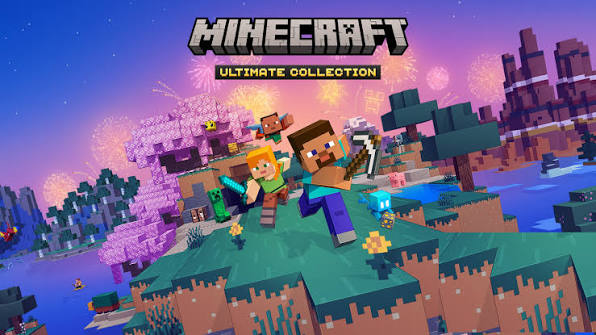
University students in Japan are using the popular video game Minecraft to educate children about the appearance of Hiroshima and Nagasaki before the atomic bombings of August 1945. These workshops aim to help participants grasp the scale of loss and destruction caused by the nuclear attacks.
Misaki Katayama, a 27-year-old graduate student at the University of Tokyo specializing in peace education, initiated these two-day workshops in Hiroshima and Nagasaki in 2023. The program targets elementary school students from fourth to sixth grade, tasking them with digitally rebuilding the pre-bombing cityscapes.
Rebuilding History Through Gaming
Participants utilize historical maps, photographs, and video footage to reconstruct significant areas within Minecraft, a game renowned for its block-building virtual environment. For instance, a workshop held in Hiroshima on August 4 and 5, 2023, saw students meticulously recreate the district where Hiroshima Peace Memorial Park now stands, including a temple and a kindergarten that were once part of the bustling neighborhood.
Katayama’s inspiration for the project arose six years ago after an atomic bomb survivor (hibakusha) recounted an elementary student’s comment, “It was lucky that the atomic bomb was dropped on a park.” This statement highlighted a critical gap in understanding, as the student was unaware that the park site was once a vibrant, densely populated area. Katayama noted that as time passes, it becomes increasingly challenging for people to visualize the pre-bombing cities.
Understanding Loss and Reality
The workshops are structured to offer a comprehensive learning experience. On the first day, students gather historical information, plan their reconstructions, and build the cityscapes in Minecraft. This activity allows them to experience how long it takes to build a city and how quickly it can be destroyed. The second day transitions to a more somber reflection, where participants view images of hibakusha immediately after the bombing and listen to survivor testimonies. This segment helps them understand the stark reality of the attacks and their transformative impact.
While digital technology can significantly broaden understanding of historical urban environments, Katayama acknowledges the challenge of ensuring participants remain focused on the educational objective rather than merely the game’s building aspect. She mitigates this by beginning workshops with a moment of silence for atomic bomb victims, emphasizing the gravity and respect required for the subject matter. Katayama believes these digital tools can stimulate imagination and encourage deeper reflection on the atomic bombings and the lives affected.