Tag: name

  • Aldi Revamps Us Private Labels: Unveils Namesake Branding To Enhance Customer Experience

    Aldi Revamps Us Private Labels: Unveils Namesake Branding To Enhance Customer Experience

    Aldi has recently introduced its inaugural namesake brand, featuring new packaging showcasing the Aldi name on its own private labels in the United States. This strategic move is designed to increase the visibility and recognizability of the supermarket chain’s private brands by providing them with packaging that either displays the Aldi logo or bears the endorsement “Aldi Original”.

    A Modern Shopping Experience

    According to Aldi’s CEO, Atty McGrath, the update to the products’ aesthetic is a significant step in their ongoing mission to modernize and streamline the shopping experience. “Our new product design gives consumers another compelling reason to choose our products first after nearly five decades of leading the standard in private branding,” McGrath explained.

    The vast majority of Aldi’s product range, over 90%, consists of private labels. Many of these brands will be rebranded with the Aldi name. Meanwhile, other well-known brands like Clancy’s, Simply Nature, and Specially Selected will undergo a brand refresh and be endorsed as “Aldi Original” products.

    Incorporating Customer Feedback

    Some items will also take on customer-coined nicknames, such as “red bag chicken”, in a tribute to the company’s loyal consumer base. Aldi’s Chief Customer Officer (CCO), Scott Patton, noted that the company found immense inspiration from its customers during this branding refresh process. “Our customers already refer to our private labels as ‘Aldi brands’, so we’re thrilled to formally acknowledge them with a visible and trustworthy name,” Patton said.

    The rollout of the new branding has already commenced, and Aldi anticipates that every product will feature either the Aldi name or updated packaging in the near future.

    However, an Aldi spokesperson clarified that this rebranding initiative is exclusive to Aldi in the United States, and there are currently no plans for Aldi Australia to implement the same branding across its product line.

    Questions & Answers

    What is the main goal of Aldi’s rebranding strategy?
    Aldi’s rebranding strategy aims to increase the visibility and recognizability of the supermarket chain’s private brands by featuring the Aldi name or “Aldi Original” endorsement on their packaging.

    How will Aldi’s product range be affected by this rebranding?
    The majority of Aldi’s product range, which is made up of over 90% private labels, will see many of these brands rebranded with the Aldi name. Other well-known brands will undergo a refresh and be endorsed as “Aldi Original” products.

    Is this rebranding initiative applicable to all Aldi stores worldwide?
    No, this rebranding initiative is currently exclusive to Aldi in the United States. Aldi Australia has confirmed that it has no plans to implement the same branding across its product line.
  • Eg Group Eyes Billion-dollar Divestment Of Australian Service Station Network

    Eg Group Eyes Billion-dollar Divestment Of Australian Service Station Network

    EG Group Plans to Divest Australian Service Station Network

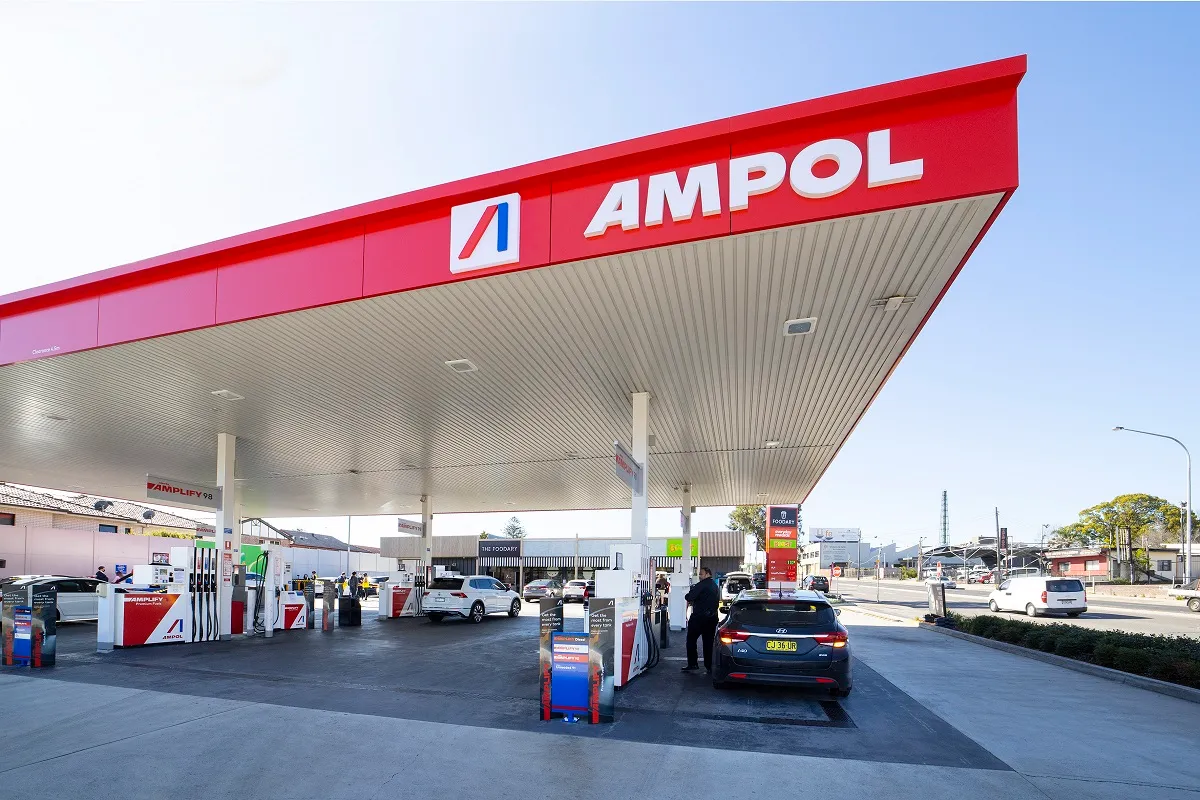
    UK-based EG Group is planning to divest its EG Ampol service station network in Australia. Ampol, EG Group’s wholesale supplier, is considered the most likely purchaser.

    EG Group acquired 540 fuel convenience sites from Woolworths in April 2019 for $1.73 billion. The company is now reportedly looking to sell its Australian division to mitigate losses and withdraw from the marketplace.

    Insiders report that EG Group and its advisors are in confidential discussions with prospective buyers regarding a sale valued at over $1 billion.

    Ampol as the Probable Buyer

    Ampol, EG Group’s wholesale supplier, has surfaced as the possible buyer, given that the service station chain bears its name. Ampol has been delivering fuel to the business under a long-standing commercial agreement dating back to the time when Woolworths was the proprietor.

    Over the years, Ampol has made several acquisitions, including Milemaker in Melbourne, Gull NZ, SeaOil and Z-Energy in New Zealand.

    EG Ampol’s Performance

    As of the end of the previous year, EG Ampol had 517 locations. Its annual sales had fallen 6.4% to $4.24 billion.

    EG Group has shut down marginally profitable or loss-making sites. The retail fuel volumes industry-wide have also witnessed a decline as more drivers shift towards hybrid or electric vehicles.

    Another significant player in the sector is Viva Energy, which acquired fuel and convenience store chain operator OTR Group for $1.22 billion last year.

    Questions & Answers

    What is EG Group planning for its EG Ampol service station network?
    EG Group is reported to be planning to sell its EG Ampol service station network in Australia.

    Who is the most likely purchaser of this network?
    Ampol, EG Group’s wholesale supplier, is considered the most likely purchaser of the network.

    What has been the impact on the retail fuel volumes industry-wide?
    The retail fuel volumes have declined across the industry as more motorists shift towards hybrid or electric vehicles.

  • Facebook has a new corporate name and vision

    Facebook has a new corporate name and vision

    As expected, Facebook today announced a new corporate name. Earlier today during the Facebook Connect event, the company said that it will now be known as Meta. Keep in mind that the website and the app will not have a new name and will still be known as Facebook.

    CEO Mark Zuckerberg said that the Facebook name isn’t a valid reflection of what the company does now and said that Facebook is only one of its products. “We are a company that builds technology to connect. Together, we can finally put people at the center of our technology. And together, we can unlock a massively bigger creator economy.”

    The executive added that “But over time, I hope we are seen as a metaverse company.” A metaverse is “a virtual-reality space in which users can interact with a computer-generated environment and other users.”

    In a blog post disseminated today, Zuckerberg wrote, “The next platform will be even more immersive — an embodied internet where you’re in the experience, not just looking at it. We call this the metaverse, and it will touch every product we build.”

    Zuckerberg added, “The defining quality of the metaverse will be a feeling of presence — like you are right there with another person or in another place. Feeling truly present with another person is the ultimate dream of social technology. That is why we are focused on building this. In the metaverse, you’ll be able to do almost anything you can imagine — get together with friends and family, work, learn, play, shop, create — as well as completely new experiences that don’t really fit how we think about computers or phones today.”

    In the blog, the beleaguered executive writes about a future where you can teleport as a hologram and arrive at your office without a commute. Or attend a concert, or even visit your parents without losing the time it takes to travel and deal with traffic. Many of the things that are part of the physical world right now could end up being holograms in the future such as “your TV, your perfect work setup with multiple monitors, your board games and more — instead of physical things assembled in factories, they’ll be holograms designed by creators around the world.”

    According to the Facebook co-founder, “You’ll move across these experiences on different devices — augmented reality glasses to stay present in the physical world, virtual reality to be fully immersed, and phones and computers to jump in from existing platforms. This isn’t about spending more time on screens; it’s about making the time we already spend better.” He repeated a comment made in his original founder’s letter: “We don’t build services to make money; we make money to build better services.”

    That last comment may not be sincere. Recently, Facebook whistleblower Frances Haugen said that the company would rather make money than change its algorithm and make the world a safer place. Haugen stated, “Facebook makes more money when you consume more content. People enjoy engaging with things that elicit an emotional reaction. And the more anger that they get exposed to, the more they interact and the more they consume.”

    Zuckerberg appears to realize the need for change, and not just changing the company’s name. He says that privacy and safety need to be built into the metaverse from the beginning. And from now on, the company will be metaverse first instead of Facebook first. Eventually, you won’t need to have a Facebook account to use the company’s other services. He says, “As our new brand starts showing up in our products, I hope people around the world come to know the Meta brand and the future we stand for.”

    By the way, for you Facebook stock traders, the company’s stock symbol will change from FB to MVRS.

  • Name change for AirAsia Group

    Name change for AirAsia Group

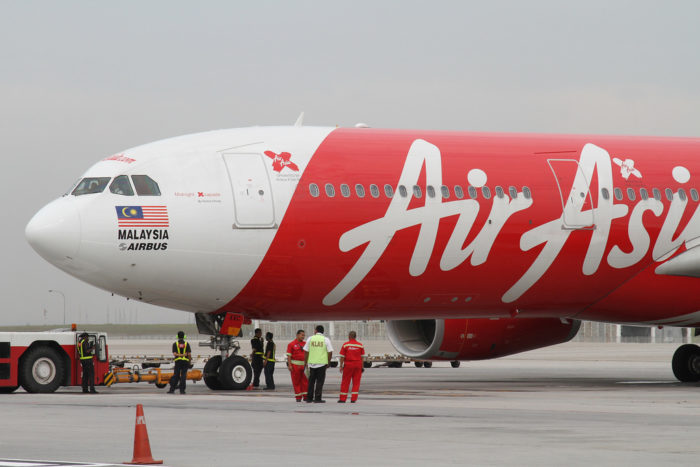
    As AirAsia’s holding company for the airline group has been officially renamed AirAsia Aviation Limited, a move that illustrates the ongoing transformation into a digital travel and lifestyle services group,

    Bo Lingam, who was formerly president (airlines) for the AirAsia Group, takes over as Group CEO of AirAsia Aviation Limited, overseeing the four airlines (AirAsia Malaysia, AirAsia Philippines, AirAsia Thailand, and AirAsia Indonesia).

    AirAsia Group Berhad (AAGB) is the investment holding company for the eight digital portfolio companies that leverage data and technology. AAGB’s portfolio includes AirAsia Aviation, the AirAsia Super App, cargo and logistics venture Teleport, BigPay financial services, the edutech arm AirAsia Academy, engineering company Asia Digital Engineering, ground services division GTR and the restaurant chain and food group called Santan.

    Group CEO of AirAsia Aviation Limited Bo Lingam said: “We have spent the past 18 months reviewing every aspect of the operation to ensure that our airlines will return stronger than ever before. In Malaysia, we already see huge pent-up demand for air travel since the government’s recent announcement of the resumption of interstate travel on 11 October. We are operating over 60 daily flights to 16 key leisure destinations, and more frequencies and routes will continue to be added in response to significant consumer demand.

    “Progress is also underway in our other airlines in Thailand, Indonesia, and the Philippines as services are resuming in line with accelerated vaccination rates and the easing of travel restrictions in our key markets.”

  • Deadly virus could force Tata to rebrand new car

    Deadly virus could force Tata to rebrand new car

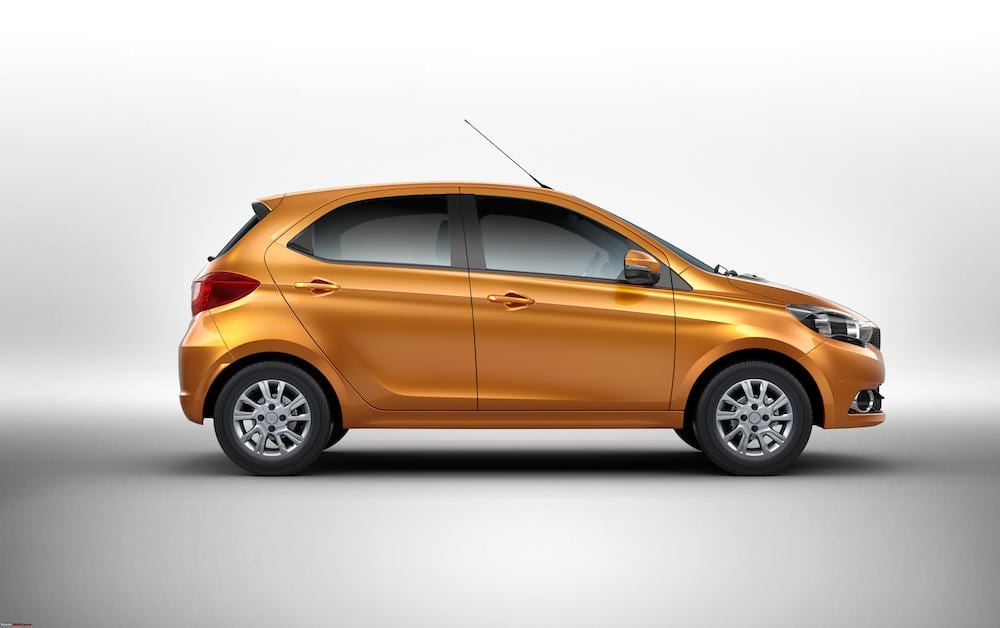
    It’s a bad time to be called Zica – even if it’s a car we are talking about and not the deadly virus that’s gone global. Zica is a new hatchback from Indian carmaker Tata’s stable, while the mosquito-borne virus that has gone global is called Zika. But who cares about spelling when they both sound the same?

    Such is the panic over the similarity that Tata is reviewing the name –  even though its origins are innocuous enough. Zica is short for “zippy car.” But no amount of shouting that from the rooftops can help now, it seems.

    “The decision to name our car happened many months back when we could not have foreseen any of the recent events. In view of the recent developments, we are now evaluating the situation,” Minari Shah, Tata’s head of corporate communications was quoted.

    Rebranding is often undertaken by corporates for better impact. For instance, Hutbitat, a big data real estate search engine for Australian properties, rebranded to Homekoala after realising that people had trouble understanding the original name and remembering it thereafter.

    Sometimes when a business expands into new markets or domains, a company’s original name may begin to feel ill-suited.

    Startups like Near and Inshorts were called AdNear and News in Shorts before they shed the first words in their names. Few may remember that real estate portal CommonFloor, which was recently acquired by online classifieds site Quikr, was once called Apna Ilaka (“Our Neighborhood” in Hindi). Rebranding obviously worked well in these cases and the new names stuck.

    But the Tata Zica seems to have been caught off guard by the virus.