Tag: NASA

  • Huawei’s breakthrough Petal Search app helps users install content banned by the U.S.

    Huawei’s breakthrough Petal Search app helps users install content banned by the U.S.

    You might remember that back in May, we told you about Huawei’s plan to work around the manufacturer’s inclusion on the U.S. Commerce Department’s Entity List. The U.S. put the company on this list because it considers the firm to be a national security threat. Placed on the Entity List, Huawei is not allowed to access its U.S. supply chain which means that it cannot license the Google Mobile Services version of Android. It also means that Google’s Android apps like Search, Maps, YouTube, the Play Store, Drive, and Gmail can not be installed on a Huawei phone. Most of Google’s apps are banned in China anyway, so only the international variant of the company’s phones are impacted.

    The Entity List placement also means that Huawei cannot work with U.S. firms including app developers. So Huawei’s phones, both inside and outside China, do not give users a selection of popular U.S. based apps to use. For example, in Huawei’s own AppGallery Android app distribution platform, you won’t find apps like Amazon, Snapchat, Speedtest.net, and AccuWeather. But as we pointed out in May, Huawei developed a new search engine called Petal Search. Petal Search will not only list “daily weather forecasts and top news; live sports scores and schedules; video, image, and music searches; and financial news and stock market updates.” When it comes to travel, it will “search millions of hotels worldwide and book rooms; and check flights and travel info for top global destinations.” Petal Search will also “look up local services and businesses with comprehensive directories.” But that isn’t the exciting cool feature.

    When you open up Petal Search and tap in the name of an app, the search engine looks for the one that you have in mind. If it finds the title in the AppGallery, it will be installed on your Huawei handset. If Petal Search can’t find a listing, it will search for it on third-party app stores. If it finds the app, a simple tap of the Install button will handle the task of downloading it on your phone.

    When we first heard about Petal Search, we told you that the idea behind it was to help Huawei customers find and install apps that are blocked due to the U.S. ban. These include Google’s own Android apps and U.S. developed social media and entertainment apps. And now, according to Forbes, Petal Search has become a full-service search engine as well. Petal even got some promotion during last week’s unveiling of the new flagship Mate 40 series.

    With the U.S. continuing to be offended by Huawei’s will to survive, the company could end up having to leave the smartphone industry and concentrate on providing an ecosystem to other phone manufacturers. Huawei created its own Mobile Services ecosystem that has over 700 million users, a 32% annual gain from last year. More importantly, the number of app developers registered by Huawei has risen 76% year-over-year to 1.6 million. This is of major importance because the larger the number of developers working on content for HMS, the more of a challenge Huawei becomes to other phone manufacturers.

    The main challenge that Huawei has at the current time is finding a foundry that can produce cutting-edge chips without using American-made technology. Back in May, the U.S. Commerce Department changed its export rules preventing foundries like TSMC from shipping chips to Huawei without a special license issued by the U.S. Recently it was discovered that the Chinese manufacturer ordered 15 million units of its 5nm Kirin 9000 chipset but received only 8.8 million of them. The new export rule started to take effect on September 15th.
  • NASA awards Nokia a $14.1 million contract to build a 4G LTE network on the Moon

    NASA awards Nokia a $14.1 million contract to build a 4G LTE network on the Moon

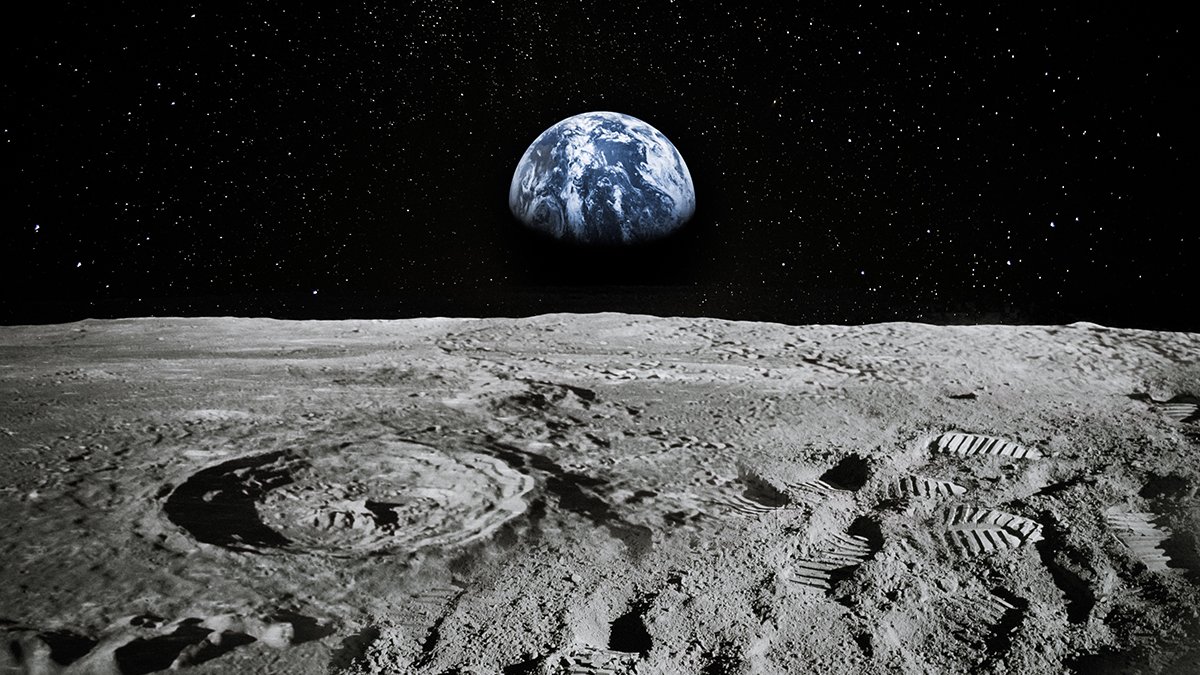
    If you’re planning on taking a trip to the Moon in the near future to escape the madness of this planet, we have some good news and some bad news. The good news is that Nokia has been awarded a $14.1 million contract from NASA to build the first 4G network on the Moon. The bad news is that for now, the Moon will not have 5G service. NASA’s current plans call for a sustainable human presence on the Moon by 2028. Elon Musk’s SpaceX, Jeff Bezo’s Blue Origin, and a company named Dynetics will develop the human landers that will deliver humans to the Moon.

    In late 2022, Nokia Bell Labs will “build and deploy the first ultra-compact, low-power, space-hardened, end-to-end LTE solution on the lunar surface.” Nokia will integrate the network into Intuitive Machines’ lunar lander and when deployed, the network will self-configure to produce the first LTE system on the Moon. The network isn’t being made just so astronauts can use TikTok. Nokia says, “The network will provide critical communication capabilities for many different data transmission applications, including vital command and control functions, remote control of lunar rovers, real-time navigation and streaming of high definition video. These communication applications are all vital to long-term human presence on the lunar surface.”

    Nokia says that its LTE network is perfect for any activity that astronauts might need it for including “voice and video communications capabilities, telemetry and biometric data exchange, and deployment and control of robotic and sensor payloads.” The lunar LTE network is designed to survive the harsh conditions of the launch and the landing on the moon. NASA says that “the system could support lunar surface communications at greater distances, increased speeds, and provide more reliability than current standards.”

    If you’re bummed out that connectivity on the Moon is limited to 4G, don’t fret. Nokia says that it will work on developing space applications for 5G connectivity. Imagine how fast you’ll be able to download Apollo 13 on your 5G handset to prepare for your space flight to the Moon. The manufacturer is the second-largest networking equipment supplier to Huawei.

    In its blog post, Nokia says “As a market leader in end-to-end communication technologies for service provider and enterprise customers globally, Nokia develops and provides mission-critical networks adopted by airports, factories, industrial, first-responders, and the harshest mining operations on Earth, for automation, data collection and reliable communications. By deploying its technologies in the most extreme environments, Nokia Bell Labs will validate the solution’s performance and technology readiness level, and further, optimize it for future terrestrial and space applications.”

  • NASA-linked perfume recreates the ‘smell of space’

    NASA-linked perfume recreates the ‘smell of space’

    A new perfume backed by a kickstarter campaign is inspired by NASA astronauts’ descriptions of the smell of space.

    According to a Designboom feature, Eau de Space – developed by chemist and Omega Ingredients founder Steve Pearce – is a perfume based on the scent developed decades ago for astronauts in training to prepare them for extraterrestrial experiences beyond the atmosphere.

    The original formula is based on reports from returned astronauts, who described the smell of space as “seared steak, raspberries and rum” and “a bitter kind of smell in addition to being smokey and burned … like a smell from a gun, right after you fire the shot”.

    The formula for the scent has been a closely-guarded secret for years.

    The scent developers partnered with leading perfumers to create “a fragrance that sparks curiosity while leading to an increased interest in Stem (science, technology, engineer, mathematics) students grades K-12”, according to the feature.

    Pearce has hinted that the team’s next project will be to release a scent inspired by the smell of the moon…

    Here’s a cool video release to promote the new fragrance…

  • Google Earth Timelapse Finally arrives on Mobile

    Google Earth Timelapse Finally arrives on Mobile

    The zoomable time-lapse video feature that allows Google Earth users to see how the planet’s surface has changed in the last 35 years, Google Earth Timelapse is now available on mobile. The Mountain View company has just announced it has released a new update that adds two additional years of imagery, as well as mobile support and visual improvements to make exploring more user-friendly.

    Besides being able to see how various parts of the Earth have changed in the last 35 years, Google Earth Timelapse allows more in-dept geospatial analysis since it includes more than 15 million satellite images coming from the US Geological Suvey/NASA Landsat and European Sentinel programs.

    Naturally, Google Earth Timelapse is available tablets as well, not just on smartphones. Apparently, mobile browsers would disable the ability to autoplay videos, which is absolutely mandatory for Timelapse. However, Chrome and Firefox have reinstated support for autoplay (sound muted), which is why Google was able to add mobile support with the latest update.

    Along with support for mobile, Google also added the new Material Design to Timelapse, which features simple, clean lines and clear focal ares to make is easier for usersd to navigate Google Earth Timelapse’s huge imagery database. Also, a new “Maps Mode” toggle is now available for mobile users to enable them to navigate the map using Google Maps.

  • LOL launches digitally customisable fashion platform Cozmic Lab

    LOL launches digitally customisable fashion platform Cozmic Lab

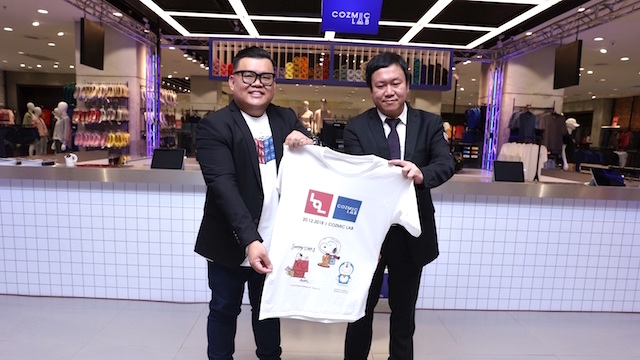
    Malaysian apparel brand LOL has launched an innovation platform called Cozmic Lab. The concept is a collaboration between LOL and Brother, an international printing and imaging technology brand. “Moving beyond the ready-to-wear apparels, Cozmic Lab offers customers an exciting, cost-efficient and environmentally friendly avenue to co-create or customise their own apparel,” said Joey Chong Yan Kit, CEO of Super Gem Resources, the parent of LOL.

    Using digital technology, customers are able to select the apparel’s design, quality, quantity, types and location to collect the final product. And budding entrepreneurs are invited to create their own fashion products using Cozmic Lab.

    “We are bringing a unique blend of fashion and technology to LOL fans,” said Chong.

    “Blending fashion and technology is a global trend and being a fashion-forward brand, LOL believes that Cosmic Lab is a powerful way for us to connect to our customers and engage them through a distinct, innovative and customisable way to shop and experience our brand.

    “Cozmic Lab is also revolutionising the way fashion retail brands do business; we are inviting other entrepreneurs to use the platform to create their very own range of products,” Chong added.

    Exclusive collaborations

    Cozmic Lab has a series of designer and international brand collaborations to enable customers to create apparel unlike anything currently available at LOL. Iconic characters and brands like Doraemon, Peanuts, Sega’s Sonic and Nasa will be among more than 200 visuals customers can choose from – and people can also upload their own creation.

    The Brother digital garment printer takes just one minute to print one item of apparel. Selected footwear and accessories can be custom printed as well.

    Cozmic Lab is available now at the LOL store in IOI City Mall in Putrajaya, and will be opening at LOL stores in Sunway Pyramid, Sunway Velocity, Berjaya Times Square and Paradigm Mall Johor Bahru, this month.

    Fast-growing LOL was founded in November 2015 as a joint venture between Superb Apparel Supply and Parkson Retail Asia. In June this year, the founders acquired Parkson’s 70 per cent stake in the company.

    Currently, LOL has more than 200 employees and 15 stores across Malaysia, including 10 in the Klang Valley, two in Johor Bahru, two in Sarawak and one in Melaka. It plans to open five more next year, most in the Klang Valley.

  • DFS partners with kid’s Make-A-Wish charity

    DFS partners with kid’s Make-A-Wish charity

    For the second year running, DFS Group is partnering with Make-A-Wish International (www.worldwish.org) this December in its #JoyToYourWorld charity campaign to help children fighting life-threatening medical conditions by granting their special wishes.

    Jay Frame, DFS Group’s Vice President Corporate Communications and CSR said: “We are thrilled to partner with Make-A-Wish International for the second year in a row and share the goodwill of our customers, employees and partners to help these children’s wishes come true.”

    The retailer says that crowdsourcing and social media combine in this charity campaign and DFS customers can help to grant wishes by following @DFSOfficial and liking posts tagged with #JoyToYourWorld. DFS says that for every #JoyToYourWorld post that receives 1,000 ‘likes’, it will donate to Make-A-Wish International to help grant up to nine wishes to children around the globe.

    Coinciding and honouring DFS’ 55th anniversary, an equal 55 celebrity ambassadors are supporting this year’s campaign, including past DFS campaign spokespeople Godfrey Gao, Ming Xi, Caroline de Maigret and Perry Liu.

    DFS says: “The mission of Make-A-Wish is to grant the wishes of children with life-threatening medical conditions to enrich the human experience with hope, strength and joy. Since its inception in 1980, Make-A-Wish has collectively granted the wishes of more than 350,000 children in nearly 50 countries. Each wish that comes true inspires these seriously ill children to persevere against their illnesses.”

    Make-A-Wish International President and CEO Jon Stettner said: “We are proud to renew our partnership with DFS and its ambassadors this holiday season to help grant even more wishes to deserving children facing serious illnesses. It’s through the support of partners like DFS and its customers around the globe that make these life-changing wishes possible.”

    Amongst those children DFS helped to grant wishes to last year around Asia was Evan, an eight-year-old from Hong Kong battling acute lymphoblastic leukaemia. He wanted to be an astronaut and lift off was duly granted when he attended NASA’s Space Camp in Alabama, US.

    Then there was Mostafa, a 17-year-old from Japan suffering from congenital biliary atresia and pancreatic cancer. He wanted to be a racing car driver and his wish came true when he sat in a Ferrari 138 driven by two-time Formula 1 champion Fernando Alonso.

    This year, DFS and Make-A-Wish International will grant wishes to children like Wang-yau, a nine-year-old boy from Hong Kong battling spinal muscular atrophy who wishes to travel abroad, or Joanna, a 10-year-old girl from Singapore in treatment for medullablastoma, who wishes to become a pastry chef.

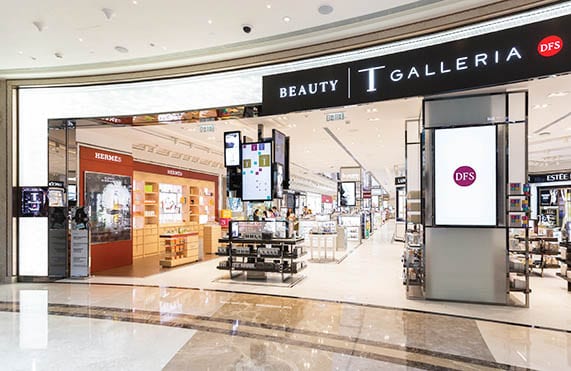
    As part of all this, DFS Group is generously encouraging customers to help out with donation boxes placed within its T Galleria by DFS stores worldwide. These will be available at its 11 T Galleria outlets in Hong Kong (3), Macau (4), Singapore, Auckland, Okinawa and Hawaii as well as its DFS Gallerias in Cairns and Sydney.

    In addition – and again celebrating DFS’ 55th anniversary – 55 celebrity ‘ambassadors and influencers’ have signed up this year to help support the #JoyToYourWorld Campaign. These include famous actors, models, make-up artists, photographers, a princess, an athlete, photographers, fashion bloggers, singers and many more.