Tag: Naver

  • NAVER Unveils NAVER Ventures in Silicon Valley to Elevate Global Startup Investments

    NAVER Unveils NAVER Ventures in Silicon Valley to Elevate Global Startup Investments

    South Korea’s NAVER Corp. is making waves in the tech world with the launch of NAVER Ventures, its new global investment arm based in Silicon Valley. This initiative aims to support early-stage startups in North America and turbocharge the company’s global innovation strategy.

    Expanding Horizons with Innovation

    This venture builds on NAVER’s prior experience through its successful D2 Startup Factory (D2SF), which has already nurtured numerous tech startups, enabling them to scale their operations internationally. The formation of NAVER Ventures comes hot on the heels of the company’s 2023 acquisition of Poshmark, a U.S.-based social commerce platform, reinforcing its ambition to stretch its reach beyond Asia.

    Investing in the Future

    Focusing on strategic investments in artificial intelligence, digital content, and next-generation technologies, NAVER Ventures has already made headlines with its debut investment in TwelveLabs, a video AI startup celebrated for its cutting-edge machine learning capabilities in video understanding and search. This move is part of NAVER’s broader strategy to sharpen its competitive edge in the AI arena.

    Face-to-Face with Innovation

    NAVER’s founder and chairman, Lee Hae-jin, CEO Choi Soo-yeon, and President of Investments Kim Namsun recently ventured to Silicon Valley for crucial meetings with investors, engineers, and entrepreneurs. On June 5, the company hosted an engaging networking event titled “Venturing NAVER’s Next Chapter” to unveil its vision for global collaboration and innovative growth.

    A Bright Future Ahead

    Under Kim Namsun’s leadership, NAVER Ventures is set to finalize its setup by the end of June. The new unit will not only provide valuable capital but also strategic guidance to high-potential startups striving to enhance their global footprint. As a titan of the internet, NAVER boasts impressive sales of KRW 10.74 trillion (USD 7.5 billion) in 2024 and ranks among Korea’s top 15 companies by market capitalization. With a global portfolio that includes LINE, Webtoon, SNOW, and ZEPETO, NAVER’s operations extend across North America, Japan, and Europe. It seems this company isn’t just surfing the wave of innovation—it’s riding it to new heights!

    Questions & Answers

    What is NAVER Ventures? NAVER Ventures is a global investment arm based in Silicon Valley, designed to support early-stage startups and accelerate NAVER’s global innovation strategy.

    What areas are NAVER Ventures focusing on for investments? The new investment arm will primarily focus on artificial intelligence, digital content, and next-generation technologies.

    Who is overseeing NAVER Ventures? Kim Namsun, the President of Investments, will oversee NAVER Ventures as it aims to empower startups aiming for global expansion.

  • South Korean conglomerate Naver acquires fashion platform Poshmark

    South Korean conglomerate Naver acquires fashion platform Poshmark

    Naver, the South Korean search giant, announced it plans to acquire secondhand apparel marketplace Poshmark for $1.2 billion in cash. The deal values publicly traded Poshmark’s shares at $17.90 — a 15% premium over today’s closing price — and the companies expect it to close by Q1 2023, subject to approval by Poshmark stockholders and “the satisfaction of certain other customary closing conditions.”

    Assuming the transaction goes through, Poshmark will become a standalone subsidiary of Naver led by CEO Manish Chandra and Poshmark’s current management team. It’ll continue to operate under its existing brand, Naver says, and maintain its staff, user base and headquarters in Redwood City, California.

    In a press release, Naver and Poshmark lay out several arguments as to why the deal makes sense for both parties. By acquiring Poshmark, Naver plans to combine the service’s growing social shopping platform, where users buy and sell used apparel, with its “technological prowess” and existing communities, like the online forum Naver Café. As for Poshmark, it stands to benefit from Naver’s image recognition and search technologies, which Naver says will allow the shopping platform to offer new discovery and recommendation experiences that let users find apparel by searching colors, designs and materials and identify where to find products by scanning clothes using their smartphone cameras.

    Naver also touts its robust ad-serving and payments infrastructure, averring that Poshmark will be able to leverage it to better analyze sales statistics and serve international customers. The long-term plan is to, with Naver’s backing, grow Poshmark’s business into additional developed markets in Asia and elsewhere where Naver has significant holdings — in part by integrating some of Naver’s live shopping services with the Poshmark platform. At the same time, Poshmark will help Naver establish a stronger U.S. foothold inclusive of the stateside properties the tech giant already owns, like digital comics portal Webtoon Entertainment and online story platform Wattpad.

    Naver optimistically predicts the acquisition could grow Poshmark’s annual revenue “beyond” 20% and save the company $30 million in annual run rate within two years. That’s doubtless taking into account expansion in the market for online “re-commerce,” which is estimated at $80 billion in the U.S. alone and is expected to grow by 20% annually to $130 billion by 2025, according to Activate Consulting data cited by Naver.

    Poshmark CEO Manish Chandra said in a press release:The opportunity to join forces with Naver — one of the world’s leading and most innovative and successful internet companies — is a testament to the strength of our brand, operating model and what we’ve built over the last decade with our talented team and amazing community. Our industry continues to evolve at a rapid pace, and we are excited to continue to lead the future of shopping by providing our community with an unparalleled experience that is simple, social, fun and sustainable. This is a highly compelling opportunity for our employees, who will benefit from being part of a larger, global organization with shared values and complementary strengths. This transaction also delivers significant and immediate value to our shareholders. Longer term, as part of Naver, we will benefit from their financial resources, significant technology capabilities and leading presence across Asia to expand our platform, elevate our product and user experiences and enter new and large markets. I look forward to partnering with Naver as we take our company into its next phase of growth.

    Naver CEO Choi Soo-Yeon said in the same release:The combination will create the strongest platform for powering communities and re-fashioning commerce. Poshmark is the definitive brand for fashion in the U.S. that provides a social network for buying and selling apparel. Naver’s leading technology in search, AI recommendation and e-commerce tools will help power the next phase of Poshmark’s global growth. Poshmark is a natural fit for our business — our two companies share a common set of values and vision around content, community and empowerment. Bringing Naver and Poshmark together will immediately put us at the forefront of creating a new, socially responsible and sustainable shopping experience designed around sellers of all sizes and interests — from individual and influencer sellers to professional sellers, brands and specialty boutiques — and a large, loyal and highly engaged social community. We are excited to work closely with Manish and his talented team to create lasting value for all our stakeholders.

    Poshmark’s exit comes over a decade after its founding in 2011. Chandra — alongside Tracy Sun, Gautam Golwala and Chetan Pungaliya — started the company in Chandra’s garage, funding it partially with the proceeds from the sales of Chandra’s previous company, social shopping startup Kaboodle, to Hearst. They settled on a simple business model: Akin to eBay, users pay Poshmark a fee when they make a sale.

    Prior to its listing on the Nasdaq at a valuation of over $3 billion (and reaching as high as $7 billion), Poshmark raised more than $160 million in venture capital from VC firms including Temasek, Menlo Ventures, GGV Capital and Mayfield.

    Poshmark claims to have over 80 million registered users. But despite that large potential customer base, the company has performed unpredictably in recent years, reporting a loss of $44.4 million for 2021 after raking in a $25.2 million profit in 2020.

    Etsy acquired fashion resale app Depop for $1.62 billion last year, a startup which competed with Poshmark. Meanwhile, shares of The RealReal are down 93% from its IPO in 2019, while ThredUp, which went public two months after Poshmark, has fallen 87%.

  • Naver leads US$80m financing round in Carousell

    Naver leads US$80m financing round in Carousell

    South Korean online platform Naver has invested in Singaporean classified-ad service Carousell.

    The US$80 million investment was made by a consortium led by the firm that includes other Korean investment businesses Mirae Asset-Naver Asia Growth Fund and NH Investment & Securities.

    The completed transaction will elevate Carousell’s value above $900 million and reflects the increased importance of e-commerce in the region, especially following the influence of the coronavirus pandemic.

    “The last six months have been challenging for all,” said Carousell co-founder and CEO Quek Siu Rui. “It’s inspiring to see how the Carousell community is making the best out of a challenging situation, helping those in need and rallying each other on.

    “Their stories of how Carousell has been essential to them to make ends meet and afford what they need during this global health crisis reminds us to keep heads down focused in serving our community.”

    Naver’s technologies will be of service to Carousell’s focus on making online trading simpler and more effective, personalizing search and recommendations for millions of listings and users.

  • Line Friends Enters Hollywood

    Line Friends Enters Hollywood

    Global character brand Line Friends opened its second and largest official US store last Saturday.

    The new Los Angeles store on Hollywood Blvd, which offers interactive photo zones and signature character merchandise, attracted more than 18,000 visitors on opening weekend. It features a large-scale retail space with a wide array of photo zones and Instagram-ready displays.

    “As we continue to win the hearts of millennials all over the world, we are excited to have successfully opened our second and biggest Line Friends store in Hollywood, the intersection of pop culture and tourist attractions,” read a statement issued by the company.

    “As part of Line Friends’ growing global presence, the Hollywood store is a key milestone for the company in diversifying its business, aiming to be a global creative studio and continuing to expand into the US market.”

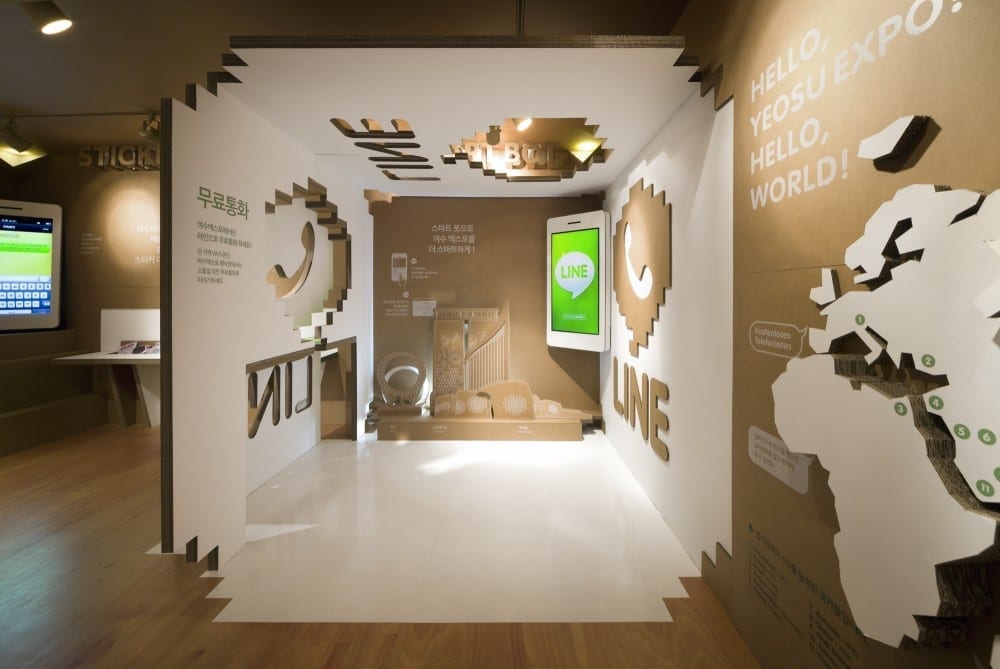
    Line Friends features characters which were originally created for use as stickers for the mobile messenger application Line, by Naver, and its 200 million active users worldwide. With Brown & Friends at its heart represented by Brown Choco, Cony and Sally as signature characters, the company is continuously creating and introducing new Intellectual Properties like BT21 and Roy6, in addition to Running Man and Usamaru.

    The Los Angeles store comes after the successful 2017 opening of the Line Friends flagship store in Times Square – which more than 300,000 locals and tourists visited during opening week – and the Line Friends pop-up store in Hollywood last year, which drew more than 15,000 visitors.

  • Naver’s Latest Move and the Rise of New Payment Methods in Japan

    Naver’s Latest Move and the Rise of New Payment Methods in Japan

    Trends come and go in the retail world, but one which undoubtedly appears to be here to stay is the shift in how consumers now choose to pay for goods and services.

    Physical cash has played an important part in retail for decades, but a recent announcement involving South Korean internet firm Naver has put a spotlight on how new payment methods are becoming increasingly common in Japan.

    Mobile payments system

    Earlier this month it was confirmed that the company has launched a mobile payments system which can be used in Japanese stores. According to the Korea Herald, the Naver Pay service now features a tool known as Cross-Border, which allows people to make payments via a QR code on their smartphone or tablet.

    Naver Pay chief Choi Jin-woo told the media outlet that the move was the company’s “first step” into Japan and was based around providing a “convenient service” to customers wherever they are.

    While it is thought that the move will help Koreans travelling to the country, the announcement is also arguably another sign of the major changes being seen in how people pay for different items across the world.

    Going cashless

    A huge number of countries have embraced the idea of going cashless by using new payment methods, with the likes of Canada, Sweden and the UK thought to be among those leading the way.

    The types of services which have made the move possible include Google Pay, Apple Pay and, of course, the likes of PayPal. The latter is thought to have a total user base of 277 million accounts, with 255 million of those being consumers.

    Many businesses have worked hard to keep up with the consumer appetite for new payment options, and evidence of this can be seen in a range of sectors. For example, Amazon Pay allows people to use payment methods linked to their Amazon account to pay for services on other sites. In addition, this site offering Japanese NetBet casino games gives users a chance to make deposits via a range of means including Neteller, Skrill, Entropay and Trustly. Companies like Subway and Expedia have even flirted with cryptocurrency in the past too.

    Set for growth

    According to payment technology provider InComm, it is thought that around 20 per cent of all payments in Japan are currently made with methods other than cash, and it is thought that the government is keen to boost this further in the next six years. When did the organization reveal this? In an announcement that it had partnered with DFS to launch barcode payment solutions in the country.

    The world of payments is undoubtedly changing, and it will be fascinating to see whether all of the innovations emerging in Japan will ultimately mean the country rises up the rankings when it comes to going cashless. In addition, it will be vital that retailers can stay on top of these trends to ensure they can continue to meet consumer demand.

  • Visa and LINE pay to partner on next-generation fintech solutions

    Visa and LINE pay to partner on next-generation fintech solutions

    Visa (NYSE: V), the global payments leader, and LINE Pay Corporation, operator of digital wallet and fintech services on the LINE messaging app, today announced a strategic partnership that will see them create new financial services experiences for their collective user bases of millions of consumers and merchants worldwide[1].

    The two companies will collaborate across multiple areas, including:

    • Everyday consumer payments: LINE’s 187 million global monthly active users will be able to apply for a digital Visa card from within the LINE app, and over time, add any of their existing Visa cards to make seamless payments from their mobile phone.  The companies will also offer consumers additional and enhanced experiences like integrated loyalty programs and tailored offers and new payment capabilities for users when they travel overseas.
    • Solutions for merchants: Through Visa, LINE Pay consumers will be able to use LINE Pay branded capabilities at Visa’s 54 million merchant locations worldwide, enabling them to take advantage of LINE Pay offers and services. They will also be able to see these transactions in their LINE Pay digital wallet, even where LINE Pay is not directly accepted. In addition, Visa and LINE Pay will collaborate on ways for merchants to interact with the LINE Pay service as well as LINE Pay digital wallet, supporting the continued growth of globally interoperable payments.
    • Fintech services: LINE Pay and Visa will develop new experiences based on blockchain that enable B2B and cross-border payments and alternative currency transactions.
    • Marketing: Ahead of the Tokyo 2020 Olympic Games, Visa and LINE Pay will partner on exclusive marketing campaigns and promotions to contribute to Japan’s acceleration towards a cashless society in the lead-up to and after the Olympic Games.

    Messaging apps are a fast-growing frontier in digital commerce, as consumers look for more of their everyday tasks, like payments, to be integrated with the apps where they’re spending more of their time. As consumer preferences shift further towards a single app from which they can do everything – transfer money, make an online purchase, pay bills, book travel, and order food – LINE Pay and Visa’s partnership will make that seamless experience a reality for millions of users while ensuring LINE Pay and Visa further drive the expansion of globally interoperable, open-loop payments.

    This new partnership extends the existing relationship between Visa and LINE Pay, which includes co-branded LINE Pay Visa cards in Taiwan and to be launched later this year in Japan.

    “The Visa co-brand program that currently serves 2.3 million customers in Taiwan is one of Visa’s fastest-growing programs globally,” said Chris Clark, Regional President, Asia Pacific, Visa.  “We are excited to extend this momentum to a range of new solutions in more markets around the world.  As the LINE Pay team continue to enhance the utility of the LINE messaging application for consumers’ everyday lives, we are impressed by the potential of LINE’s distribution power and consumer loyalty to further drive the growth of the global, open-loop payments ecosystem to benefit all players on our network – consumers, merchants, and issuing and acquiring banks.”

    “LINE Pay is more than just a payment method. As we transition to a cashless society, LINE Pay is focused on delivering added value to LINE’s users around the world and business partners,” said Youngsu Ko, CEO of LINE Pay and LINE’s Fintech Company. “With Visa’s global network and infrastructure, LINE Pay users will be able to enjoy the advantages of that innovative, worldwide network.”

    As payments move away from traditional plastic cards into smartphones, connected devices, and other digital formats, Visa is working with its partners around the world to enable new consumer experiences that are based on digital cards and extending its network to collaborate with new players. This includes the Visa fintech fast-track program, which makes it quicker and easier to build and deliver new commerce experiences on Visa’s payments network.

  • LG and Naver agree to work together on guide robot

    LG and Naver agree to work together on guide robot

    LG Electronics and portal operator Naver Wednesday agreed to jointly develop an advanced guidance robot based on the high-tech mobility platform. LG Electronics and Naver’s R&D subsidiary signed a memorandum of understanding (MOU) to collaborate on research and development of robot technology, expanding on their discussions made during the recent Consumer Electronics Show (CES) in Las Vegas.

    Under the agreement, the two Korean companies will explore ways to adopt Naver’s integrated location and mobility solution eXtended Definition & Dimension Map (xDM) in LG’s guide robot called Air Star to upgrade its function.

    The xDM platform is an advanced mobility technology that can be used in both indoor and outdoor settings and accurately analyzes location data in real time.

    “Based on LG Electronics’ know-how in artificial intelligence (AI) and autonomous driving, we will combine Naver’s software platform in our robots to provide differentiated value for our customers,” Roh Jin-seo, the head of the robotics business at LG Electronics, said during the signing ceremony at Naver Labs in Seongnam, south of Seoul.

    Naver debuted its AI and other robotic technologies during this year’s CES, drawing attention from industry officials around the globe.

  • Naver to open up TV service, take on YouTube

    Naver to open up TV service, take on YouTube

    Local IT giant Naver announced plans Thursday to make its Naver TV service an open platform where anybody can freely upload videos, pitting it in direct competition with YouTube. The company said it would apply the change during this year’s first half. Originally, only people with more than 300 subscribers on other video platforms were permitted to create a channel on Naver TV.

    Unlike YouTube, considered the playground of individual creators, most traffic at Naver TV is to come from short videos from TV shows uploaded by broadcasting or cable channels, like TvN or JTBC. Lowering the bar is intended to draw in the legions of individual creators who have begun to emerge in Korea over the last two years.

    “Naver TV was originally focused on offering video from TV for users that flow in via our search engine,” said a company spokesperson.

    “We gradually had small- or mid-sized studios upload web dramas or famous beauty creators joining our platform and by that experience we learned the patterns of how original content is consumed. Now we want to make it accessible to more creators.”

    Last week, Naver lowered the bar to 100 subscribers and simplified the process required to set up a channel, as a first step to earn feedback and find areas that need improvement before fully opening the door to everyone.

    As a strategy to boost users, Naver is devising a compensation system to reward creators according to their performance. Channels with more than 300 subscribers and whose videos were played for more than 300 hours will be offered the choice to roll advertisements.

    Naver CEO Han Seong-sook publicly stressed the importance of online videos multiple times last year, expressing a will to develop that sector.

    “The internet market is rapidly restructuring to be centered on videos – Naver will also invest more in line with this change,” she said in a conference call in July, pointing out how the younger generation no longer spends time on portal sites or social networks, but on video platforms.

    Naver’s traditional strengths are not in video but other services, such as its search engine, blogs and online communities. Regardless, the company has invested in its video services. Apart from Naver TV, its other main video service is V LIVE – a platform via which K-pop idols can host live streamed videos with fans. Around 70 to 80 percent of users at V LIVE are based overseas.

    “Instead of running a single platform like YouTube, our direction at the moment is to divide platforms according to usage and optimize the service that fits their respective purposes – V LIVE for fans and Naver TV for general creators,” said the Naver spokesman.

  • Naver says it’s not interested in opening an internet bank

    Naver says it’s not interested in opening an internet bank

    Naver said Monday that it has no plans to launch an internet-only bank, shutting down rumors that the IT giant might open the country’s third such bank after K bank and Kakao Bank. “Although we have reviewed [joining] the internet-only bank business, we decided against it and will not attend the information session regarding internet-only bank licenses on Wednesday,” said a Naver spokesperson.

    “This is the decision we made after giving a lot of thought into whether Naver can be competitive when the domestic internet-banking environment is already so well established and existing internet-only banks K Bank and Kakao Bank are doing well.”

    The announcement comes as a surprise to the industry as Naver has been hailed as one of the likeliest candidates to qualify for a banking permit. Last month, financial authorities announced that they would grant internet-only bank licenses to up to two companies this May in an effort to boost competition in the banking industry. The information session, organized by the Financial Supervisory Service and Financial Services Commission, comes as part of the government’s effort to facilitate the application process.

    Despite government initiatives, however, no major company has yet to directly express an intention to apply for a bank license.

    Game developer NHN Entertainment and booking and shopping platform Interpark – which led a failed effort to apply for a permit in 2015 – have also said they don’t plan on pursuing internet-only banks.

  • LG and Naver are teaming up to make robots better

    LG and Naver are teaming up to make robots better

    LG Electronics and Naver are cooperating on the development of robotic capabilities.

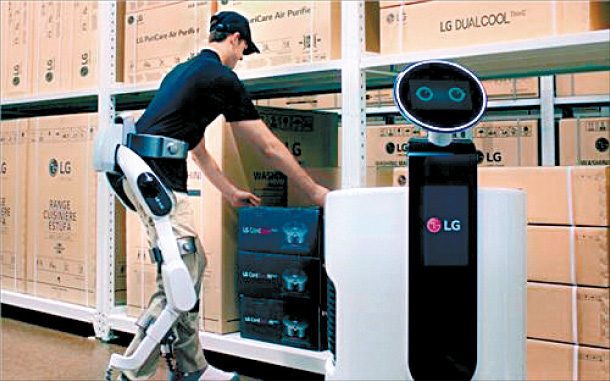
    Their first project will use Naver’s mapping and navigation technology to improve the functionality of LG’s CLOi GuideBot.

    LG’s guiding robot is currently in operation at Incheon International Airport. It escorts travelers to certain destinations within the facility.

    Naver Labs, the research and development arm of the Korean internet portal company, said its eXtended Definition & Dimension Map (xDM) solution will enable LG robots to self-drive indoors even when equipped with low-end sensors.

    The solution integrates Naver’s mapping, navigation and positioning technology to support various location-based services, such as augmented-reality walking navigation and autonomous driving, according to the company. Naver hopes to improve this by using big data collected by LG robots.

    The two companies said they will gradually expand collaboration to other areas of robot development after the first project. The agreement was reached during the Consumer Electronics Show (CES) in Las Vegas and announced Thursday. Both LG and Naver demonstrated their latest robot technologies at the exhibition.

    “One of our biggest achievements during CES was to reach an agreement with LG,” said Seok Sang-ok, head of the robotics team at Naver Labs. “With LG, we will find ways to develop technologies that improve lives.”

    LG has already announced other deals at CES, including a plan to work with Microsoft on autonomous car technology development and an agreement with Apple to source television programming.

  • Naver Labs, Qualcomm to team up on future tech

    Naver Labs, Qualcomm to team up on future tech

    Naver Labs and Qualcomm will work together on future technology like robotics and self-driving vehicles, the local IT company said on Tuesday. The two companies signed an agreement on Monday to combine their knowledge and expertise.

    U.S.-based Qualcomm is a well-known manufacturer of semiconductors and telecommunications solutions. Naver Labs is an affiliate of Korea’s largest portal site and is currently working on a wide array of location-based technology solutions like autonomous driving, mapping and navigation using augmented reality.

    Naver Labs said it hopes to apply Qualcomm’s latest chips and solutions to its high-tech products. The first products developed by the two companies will be unveiled at next year’s Consumer Electronics Show in Las Vegas in January.

    “We plan to offer full technology support for the successful development of Naver Labs’ products and services,” said Jim Cathey, Qualcomm’s president for the Asia Pacific and India regions.

  • Naver says its Green Dot is the future of searching

    Naver says its Green Dot is the future of searching

    Naver’s iconic green search bar may one day be a thing of the past – at least in the mobile app.

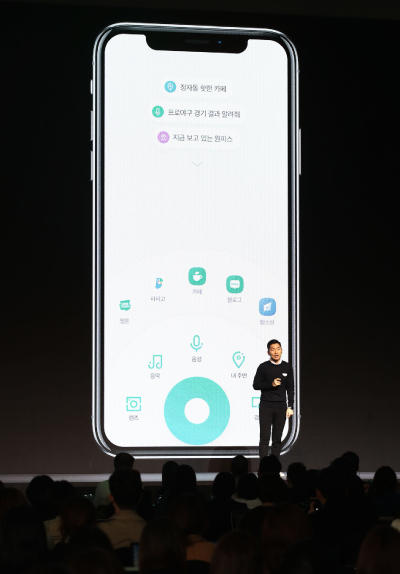
    Korea’s most popular portal site is experimenting with a new tool called the Green Dot that allows users to search for information not only by text, but also by voice, location and photos.

    The Green Dot was first unveiled last month. It is what the company calls an “interactive search” button located at the bottom of Naver’s app.

    When touched, the button opens a small window that offers various search functions like voice recognition, music recognition and recommendation on trending restaurants and bars nearby. The user can also add short-cuts to frequently used Naver services, from blogs to shopping.

    “Naver’s green search bar was developed at a time when searching online through PCs was about keywords and being linked to [web pages with] text information,” said Kim Seung-eon, the portal giant’s design head, at the Naver Design Colloquium held Friday in Dongdaemun, central Seoul. The annual event invites Naver designers to share their strategies and design insight.

    “But now with mobile, [portals] aren’t just about new information; we listen to music, reserve restaurants and use services that are closely linked to our daily lives. There are so many usages now and ways to input information. The Green Dot integrates all these; it’s the start of a new way to search and connect.”

    Kim added that the Green Dot will be the new design identity of Naver and a core function related to services coming in the future.

    The portal giant also shared the results of its first page overhaul on its mobile app.

    Last month, Naver introduced a new first page of its mobile app that left out news and trending keywords, leaving nothing but the search bar, weather information and the Green Dot.

    Its explanation was that the change was purposed to put a larger emphasis on searching, which accounts for 60 percent of why users turn on the Naver app. The change was available as a beta service.

    According to Naver, some users felt that the blank space was awkward, but the beta service had also showed meaningful results: the amount of time users spent on the app increased 15 percent and the number of searches rose 20 percent.

  • Naver unveils cutting-edge location tech for smarter mobility

    Naver unveils cutting-edge location tech for smarter mobility

    From indoor navigation using augmented reality to ultra-high definition mapping technology for autonomous driving, South Korean internet giant Naver is developing a range of location-tracking technologies it believes will form the backbone of new offline services in the future.

    Some of these technologies were unveiled Thursday at Naver’s annual developer’s conference Deview 2018 held in Seoul, organized to showcase the Korean portal site operator’s future tech development direction each year.

    Stressing “location” as the most important cue for context in a physical space, Naver Chief Technology Officer Song Chang-hyun said Naver’s in-house research lab is developing and testing out an array of location and mobility-based technologies that will serve as the backbone of new, real-world services
    “If technology can fix mobility problems in the physical space, it will inevitably lead to the development of new services. And the underlying platform technology for any location and mobility problem is mapping,” Song said in a keynote speech during the conference.

    In line with this vision, Naver plans to open source the Naver Maps Enterprise application programming interface to developers next month. The soon-to-be-free mapping API includes including point of interest data and navigation data, which most smaller ICT firms find difficult to build and maintain.

    The Korean internet giant also introduced for the first time the eXtended Definition & Dimension Map, or xDM, platform which includes high-dimension mapping, localization and navigation technologies to guide people and self-driving vehicles in not just outdoor, but also indoor settings.

    For instance, Naver utilized its xDM platform to build an AR navigation system that guides people through indoor spaces without GPS access, using just a smartphone camera. On a smartphone, walking direction signs and messages would be overlaid on top of real-life pathways as captured by the camera.

    The company also showcased the latest updates in its robotics technology development, which had taken center stage at last year’s Deview conference.
    This service is slated to debut soon, via a partnership with Incheon Airport. This week, Naver signed a memorandum of understanding with the airport’s operator to launch an indoor AR navigation app that would guide airport passengers to their respective destinations inside the airport.

    “We plan to open source our xDM platform in the form of API and SDK so that they can be used for various location-based service development and mobility research in the future. We plan to continue improving xDM so it can grow into Korea’s top location and mobility platform,” Song said.

    In addition, Naver Labs is developing technologies for self-driving cars, including a high-definition map that combines high-definition aerial maps and mobile mapping devices to build intricate, real-time maps even in crowded urban centers where GPS access is partly blocked out.

    M1, an autonomous indoor mapping robot that creates intricate 3D maps while moving by laser-scanning its surroundings with a 360-degree camera, and Around, a self-driving robot that navigates itself by accessing M1’s mapping data via the cloud, are undergoing commercialization procedures via a partnership with Hyundai Heavy Industries Holdings.

    Aircart, an electric book cart equipped with a module that amplifies human power to make pushing the cart significantly easier, is preparing for commercial deployment at local libraries in partnership with Samsong Caster.

    Naver’s robotics lab is also continuing research and development efforts with Seoul-based Korea Tech Co. to develop robotic cable-driven arms with humanlike sensitivities called Ambidex. Weighing just 2.6 kilograms, the robot’s core motors are placed near the torque and transfers power down to the lower arms and fingers via flexible, lightweight cable wires.

    Looking ahead, Naver plans to showcase its fleet of robots at the Consumer Electronics Show in Las Vegas in January next year, marking its first-ever attendance at the global electronics conventio

  • Kakao to spin off e-commerce unit for expansion

    Kakao to spin off e-commerce unit for expansion

    South Korean mobile messaging platform Kakao is spinning off its e-commerce unit for further expansion.

    The new organisation will be Kakao’s largest spin-off, worth about KRW510.3 billion (US$458.6 million) by December. It will take over the operation of the Kakao Gifts, Shopping, Kakao Style and Kakao Farmer services.

    Kakao has also made plans to acquire global e-commerce firms and has expressed being open to securing additional funds through its spin-off.

    A spokesperson for the company said: “We are indeed open to securing additional investments after the process is completed. But at the moment we do not have any specific plans.”

    Kakao’s e-commerce business is weak in comparison with industry leader Naver, achieving only one seventh of the sales of its competitor. Its messenger service, conversely, remains dominant in its market.

  • Naver to contribute 99 billion won to venture capital fund

    Naver to contribute 99 billion won to venture capital fund

    Naver is contributing 99 billion won ($88 million) to a 100 billion won venture capital fund devoted to fostering and investing in start-ups, the top internet portal announced Tuesday.

    The fund is being launched by TBT, a venture capital firm founded by Lee Ram, a former CEO of Camp Mobile, a mobile app development subsidiary that merged earlier this year with Naver. TBT is coughing up the remaining 1 billion won to create TBT Global Growth No. 1 Investment Cooperative. The fund is meant to find and support companies with growth potential in the global market.

    TBT was established at the end of August by Lee and another executive with capital of 2 billion won.