Retail News CRM

Tag: networking

  • Maxis Berhad Pioneers Quantum Safe Networking In Malaysia, Bolstering Data Security For Businesses

    Maxis Berhad Pioneers Quantum Safe Networking In Malaysia, Bolstering Data Security For Businesses

    Maxis Berhad (Maxis), Malaysia’s leading telecommunications company, has introduced the country’s inaugural Quantum Safe Networking (QSN) solution, primarily targeting government agencies and businesses. This cutting-edge security feature has been launched through Maxis Business – the company’s business-to-business branch – and was developed in collaboration with Nokia. The managed service offers data encryption directly at the optical layer.

    Securing Critical Information Against Quantum Computing Threats

    The QSN solution ensures the significant protection of critical data against possible risks linked to future quantum computing. It empowers businesses to prosper in the era of artificial intelligence (AI) and cloud technology. The introduction of this solution was made at the Cyber Digital Services, Defence and Security Asia 2025 event, hosted by Maxis Business.

    The aforementioned event was held at the Malaysia International Trade and Exhibition Centre (MITEC). Here, Maxis Business showcased an exhibition titled ‘Building Tomorrow’s Security Today,’ featuring the QSN solution, along with other innovative network monitoring solutions, real-time field visibility, and solar energy.

    This revolutionary solution offers quantum-safe encryption for data in transit. In doing so, it addresses the severe threat of future decryption by quantum computers of data intercepted today, a situation often dubbed as “harvest now, decrypt later.” The solution is particularly advantageous for sectors that demand stringent data integrity and sovereignty, such as banking and financial services, healthcare, and the public sector.

    Enhancing the Security of Maxis’s Fiber Connectivity Services

    The QSN solution augments the security of Maxis’s fiber connectivity services, which are particularly critical for enterprises, cloud providers, and financial institutions that rely on data center interconnects and high-capacity fiber links. This solution perfectly complements the company’s Data Centre Connect solution, thereby providing secure, private access to leading cloud providers and data centers nationwide for businesses operating in physical, hybrid, or multi-cloud environments.

    In the words of Prateek Pashine, Chief Enterprise Business Officer of Maxis, “Securing today’s data against tomorrow’s risks is a vital necessity for any organization, especially in the face of rising cyber threats. By becoming the first Malaysian telco to provide quantum-safe networking, we are establishing a new benchmark for network protection. This gives businesses and government agencies the confidence to expedite their digital transformation journeys. This initiative also showcases our dedication to strengthening Malaysia’s digital resilience, which aligns with the national cybersecurity agenda.”

    To this, Ming Kin Ngiam, Head of Southeast Asia South for Network Infrastructure at Nokia, added, “Our collaboration with Maxis tackles a pressing business requirement: safeguarding data in transit against evolving security threats without compromising the performance enterprises rely on.”

    Maxis’s Commitment to a Secure, Resilient Digital Infrastructure

    Maxis has successfully completed the fiberization of all major data centers in Malaysia, thereby connecting them to its national network. This robust infrastructure allows Maxis to provide up to three diverse fiber routes to these data centers, ensuring businesses benefit from exceptional resilience and high availability. Furthermore, this secure network can be fortified with quantum-safe encryption, thereby ensuring that data in transit remains secure against current and future quantum threats.

    The introduction of QSN enriches Maxis Business’s extensive spectrum of end-to-end solutions, which includes core connectivity, IoT, cloud computing, cybersecurity, and other digital services.

    Questions & Answers

    What is the Quantum Safe Networking (QSN) solution?
    The QSN solution is a security feature that offers quantum-safe encryption for data in transit, protecting it from potential threats posed by future quantum computing.

    Which sectors will benefit the most from the QSN solution?
    The solution is particularly beneficial for industries that require strict data integrity and sovereignty, such as banking and financial services, healthcare, and the public sector.

    What does the introduction of QSN mean for Maxis and its customers?
    The introduction of QSN establishes Maxis as a pioneer in network protection in Malaysia. For customers, it means enhanced security, protection against emerging cyber threats, and a boost in confidence to accelerate their digital transformation journeys.

  • Revamping IP Strategies Amid IPv4 Limitations: Navigating Today’s Telecom Challenges

    Revamping IP Strategies Amid IPv4 Limitations: Navigating Today’s Telecom Challenges

    As demand for high-performance connectivity surges across the Asia Pacific, telecom operators are feeling the heat. The increasing appetite for data, coupled with expanding subscriber bases, has resulted in a pressing need for enhanced network infrastructures. However, the looming specter of global IPv4 exhaustion has many operators leaning heavily on carrier-grade network address translation (CGNAT) as a temporary solution. While CGNAT has allowed for immediate growth without necessitating a shift to IPv6, it is beginning to expose its limitations—and they are not pretty.

    CGNAT: What’s Working and What’s Not

    CGNAT effectively enables numerous users to share a single public IPv4 address, allowing operators to delay the costly transition to IPv6. It has proven particularly beneficial for low-usage subscribers in mobile and residential broadband sectors. However, this strategy brings several critical challenges that can no longer be overlooked.

    Firstly, performance issues arise due to NAT translation overhead, which increases latency and diminishes throughput, especially during peak usage times. Secondly, the compatibility of applications takes a hit; services like Voice over Internet Protocol (VoIP), online gaming, virtual private networks (VPNs), and smart home devices often stumble under shared IP scenarios. Lastly, compliance becomes a maze, with the need for detailed record-keeping to meet regulations in markets such as India and Singapore.

    For some operators, these complexities are proving to be cost-prohibitive. Maintaining CGNAT compliance often means logging every user’s port and timestamp activity for months, accumulating terabytes of data daily for large subscriber bases. One study estimated that 10,000 users could produce almost 4.7 TB of logs each year—an astonishing amount that complicates regulatory compliance and erodes any initial cost savings.

    IPv4 Leasing: A Clever Pivot

    As an innovative response, telecoms are beginning to pivot towards IPv4 leasing as a more flexible and scalable alternative. “Leasing offers operators access to clean, reputation-safe IPs on demand, restoring end-to-end connectivity for essential services and customers without locking them in for the long haul,” explains Ramutė Varnelytė, CEO of IPXO.

    IPXO, a global marketplace for IPv4 lease and management, enables internet service providers (ISPs) to efficiently lease address space from various regional internet registries (RIRs). Equipped with tools for resource public key infrastructure (RPKI), geolocation updates, and reputation monitoring, this approach not only simplifies address management but also accelerates deployment timelines, enhances customer experience (CX), and meets compliance requirements.

    A Real-World Success Story

    The APNIC’s 2024 survey highlights a shift across the Asia-Pacific, where organizations are adopting alternative strategies to combat the scarcity of IPv4 addresses. While 45% are deploying NAT and 40% are turning to IPv6, an impressive 15% are opting for IPv4 leasing. Notably, organizations in East Asia, at 27%, are the most inclined to lease addresses.

    In one striking case, a regional ISP in Southeast Asia, with over a million users, was overwhelmed with complaints related to CGNAT—from latency to failed peer-to-peer services. Rather than investing heavily in new CGNAT infrastructure or costly IP acquisitions, the ISP chose to lease 50,000 IPv4 addresses. This strategic decision liberated them from many complications associated with shared IPs, providing allocated IPs for business clients, remote workers, and high-usage residential subscribers. Within just six months, the ISP noted a remarkable 35% drop in CGNAT-related support tickets and an uptick in performance metrics.

    The Case for a Balanced Hybrid Approach

    While CGNAT still serves its purpose for light usage—think messaging, browsing, and occasional video watching—it can’t cope with latency-sensitive applications and real-time services that demand reliability. A hybrid model allows operators to employ CGNAT for everyday traffic while leveraging leased IPv4 addresses for business-to-business (B2B) clients, gamers, and others who depend on stable connectivity.

    This approach not only optimizes network performance but also sidesteps potential service quality issues, making it a savvy solution amid growing demands.

    Operational Efficiency without Commitment

    The economic and operational benefits of leasing are especially appealing. Operators can mitigate capital expenditures (CapEx) while enjoying the flexibility to expand their address space in line with market needs—without the burden of long-term asset ownership. Many leasing platforms seamlessly include adherence to compliance measures such as RPKI signing and reputation management, allowing operators to focus on growth rather than paperwork.

    Leased IPs can also smoothly integrate into cloud environments like AWS, Azure, or Google Cloud, enhancing consistency for cloud-native applications. For telecoms venturing into 5G or edge deployments, flexible access to IP resources is crucial, ensuring that essential IoT workloads and low-latency services operate smoothly, free from IPv4 limitations.

    Is It Time to Rethink the IP Strategy?

    With skyrocketing demand, the limitations of CGNAT, and the slow march toward IPv6 adoption, telecom operators across Asia are at a crossroads. IPv4 leasing emerges as a viable method to alleviate network strain, foster new services, and uphold customer satisfaction. Far from being merely a temporary solution, IPv4 leasing can be integral to a broader, more adaptable IP strategy that bridges the gap as the industry transitions.

    Questions & Answers

    How does CGNAT impact network performance?
    CGNAT can cause latency issues and reduce throughput due to the overhead involved in Network Address Translation, especially during peak usage times.

    Why are telecom operators moving towards IPv4 leasing?
    Leasing provides operators with immediate access to clean IP addresses without the hefty investments required for IPv4 acquisitions, allowing for scalability and improved customer connectivity.

    What are the benefits of a hybrid model in IP management?
    A hybrid model allows operators to use CGNAT for general traffic while allocating leased IPv4 addresses to users with higher demands, ensuring efficient network operation without compromising service quality.

  • Wi-Fi is old school; get ready for faster, more secure Li-Fi

    Wi-Fi is old school; get ready for faster, more secure Li-Fi

    Wi-Fi might be on the way out even though Wi-Fi 7 is on the way in. The IEEE standards body that oversees Wi-Fi has released the IEEE 802.11bb light communications standard that will cover the emerging Li-Fi technology. Instead of using wireless network signals, Li-Fi uses invisible (to the human eye, anyway) infrared light to deliver light-based wireless optical connectivity at speeds up to 100 times faster than Wi-Fi.
    Light can deliver signals free of radio interference and Li-Fi already has a competing standard, the International Telecommunication Union’s G.9991. The Verge notes that this standard is used with data-beaming bulbs from Signify. Another company called pureLiFi released the Light Antenna One system in February which already meets 802.11bb standards. This is a module that could fit into smartphones and the manufacturer claims that it can deliver data speeds exceeding 1Gbps.
    However, Light Antenna One is rated to communicate with devices less than 10 feet away and when transmitting back it has only a 24-degree field of view. Still, the manufacturer of the Light Antenna One says that it is ready “to enable mass integration of Li-Fi for the first time.” Despite the 1Gbps claim from pureLiFi, download data speeds for Li-Fi are said to be as high as 224Gbps which tops the average 40Gbps download speed expected for Wi-Fi 7.
    Some of the advantages of Li-Fi includes better security as signals are less likely to leak through walls. Li-Fi transmitters can be easily installed in light fixtures used in offices, and Li-Fi’s higher data speeds certainly would deliver the fast connectivity that Augmented Reality, Virtual Reality, and gaming devices could benefit from. And besides the faster download speeds, Li-Fi promises to deliver low latencies.
    This is just the beginning of Li-Fi and in a few years, we might be talking about the technology with the same familiarity we use when talking about Wi-Fi.
  • Singapore Fintech Association Launches Networking Club

    Singapore Fintech Association Launches Networking Club

    The initiative aims to foster deeper social engagements among local fintech professionals and corporates and enhance the vibrancy of the industry ecosystem.

    Members of Singapore’s fintech community can look forward to more industry networking, upskilling opportunities, and lifestyle privileges with the launch of the SG Fintech Club by the Singapore Fintech Association and the Monetary Authority of Singapore (MAS).

    Among its programs are talent matchmaking sessions, industry expert mentorship programs, and masterclasses organized by SFA. The Institute of Banking and Finance (IBF) and J.P. Morgan have also been brought on board to curate skills and career development events, the announcement said.

    The rapid shift towards digital acceleration and increasing competition in the ecosystem has made it more urgent for fintech professionals to stay relevant, connected and competitive, Damien Pang, MAS deputy chief fintech officer, said in the announcement.

    He said he hopes the club will help build a tight-knit community of talents, facilitate more collaboration within the industry and bring more value to the fintech ecosystem.

    The lineup of events for the next month is already packed, and includes fireside chats with fintech founders, strategy sessions, and masterclasses. Find out more at https://club.singaporefintech.org.

  • Twitter was in talks to buy Clubhouse for as much as $4 billion

    Twitter was in talks to buy Clubhouse for as much as $4 billion

    Clubhouse recently held conversations with Twitter over a possible acquisition of the popular audio-only social media app. Citing “people familiar with the matter,” today’s report said that the price tag of a possible purchase of Clubhouse went as high as $4 billion. Talks are no longer taking place although the reason why is not clear.

    Once the talks with Twitter broke down, Clubhouse reportedly decided that it would be better to raise money via a new round of funding from investors that valued the firm at about $4 billion. Clubhouse allows members to host audio chats similar to talk radio with guest interviews and panel discussions. While only a year old, Clubhouse has already hosted some big names as guests including Bill Gates who admitted his preference for Android over iOS on the platform back in February.

    Twitter has already started beta testing its own version of Clubhouse which it calls Spaces. The latter launched late last year and while Twitter CEO Jack Dorsey is said to be high on the concept of audio chats on Twitter, Spaces has yet to fully roll out to all Twitter users. Bruce Falck, the head of revenue product at Twitter, said at a press event today that the company is looking at ways to monetize Spaces.

    Other big names in the tech sector are hopping aboard this train as firms like LinkedIn, Facebook, and Slack are supposedly looking to add Clubhouse-like capabilities to their apps. Right now, subscribers can become a member of Clubhouse by invitation only, and the app is available only in the Apple App Store. Last month Clubhouse founder Paul Davison said that it might take “a couple of months” for an Android version of the app to appear.

    Clubhouse’s growth is throttled at the moment by its invite-only rule. Still, the growth potential is immense at current rates. In December, the app was believed to have 600,000 weekly active users and that number hit ten million weekly active users in February according to Davison.

  • Introducing Clubhouse, the invite-only alternative to Linkedin

    Introducing Clubhouse, the invite-only alternative to Linkedin

    Forget The Nice Guy or Soho House. The place to find Hollywood and Silicon Valley powerhouses during the pandemic has been on Clubhouse, the invite-only, audio-driven app that’s quickly gaining steam as a networking tool for those looking to make it in the entertainment and tech worlds.

    Hop on Clubhouse at any given time and you could stumble into conversations led by Wiz Khalifa, Tiffany Haddish, Ava DuVernay, Ashton Kutcher, Brian Koppelman or Scooter Braun, among several other celebs. Kevin Hart, in a story that’s already solidified in Clubhouse lore, recently took part in an hours-long conversation focused on whether he was, in fact, funny. And on the tech side, Clubhouse is packed with entrepreneurs like former Twitter CEO Ev Williams, Reddit co-founder Alexis Ohanian, and former Y Combinator President Sam Altman, along with a laundry list of angel investors and venture capitalists.

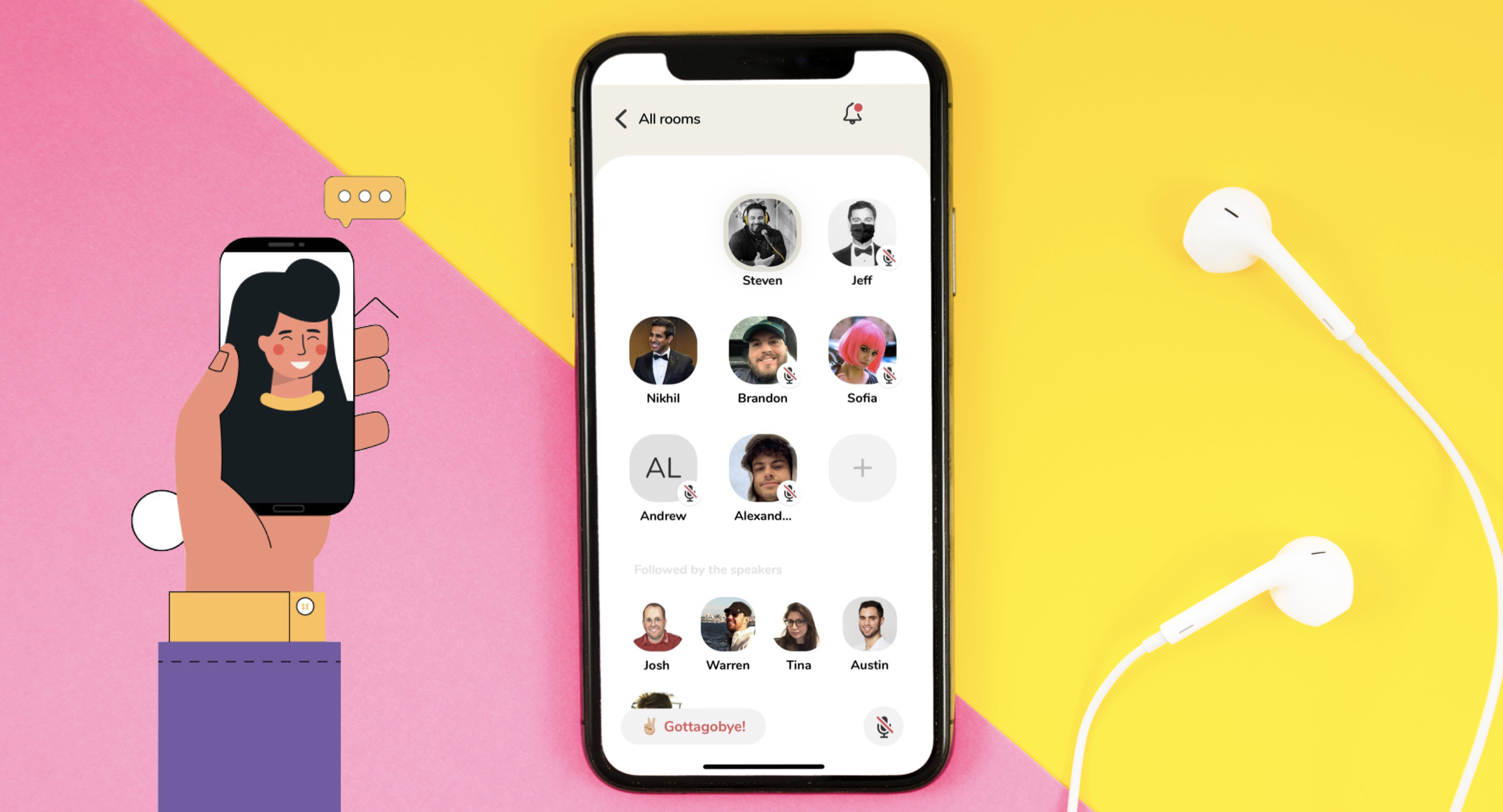
    Clubhouse isn’t complicated: Users can go on the app and join a “room” where a particular conversation is going on. Often, these conversations are focused on business and networking topics; “Pivoting from live events to virtual events + sponsorships” and “virtual writing cafe” were two rooms pulling in users on Monday, for example. Once inside, users can listen to the discussion and, if approved by the room moderator, chime in and join the conversation themselves. It’s not uncommon to see rooms with a few dozen speakers and a few hundred users listening in.

    Since launching in April, the app has grown to over 100,000 beta users, according to an individual familiar with the company’s internal metrics. The app’s early traction helped it land a $12 million round of funding from Andreessen Horowitz, valuing Clubhouse at $100 million.

    As the new, go-to spot to listen to entrepreneurs and stars, Clubhouse has also become the audio version of LinkedIn for those looking to make connections in Hollywood. Even in normal times, making it in the movie business is tough enough. But for Sade Sellers, a 31-year-old screenwriter from Burbank, California, one of the many problems tied to the pandemic has been the end to casual networking events — coffee meet-ups with executives, conferences and post-work drinks with people in the film industry — that have helped her career grow.

  • UOB Launches Entrepreneur Networking Initiative

    UOB Launches Entrepreneur Networking Initiative

    Banks in Asia continue to place strong emphasis on entrepreneurs, including UOB, which has launched a networking initiative for knowledge-sharing and collaboration opportunities within the segment.

    Members of «The Business Circle» will be able to tap into the bank’s network of entrepreneurs to learn from one another, facilitating cross-industry, cross-border connections and collaborations.

    Family firms are a significant contributor to Asia’s continued economic growth, accounting for 34 percent of the region’s gross domestic product, said Frederick Chin, UOB’s head of group wholesale banking and markets.

    Having worked with businesses across generations, we know that experience, expertise, and creativity can take any business to greater heights and we want to help them in that process.

    In addition to connections, The Business Circle will also run masterclasses and workshops covering topics such as diversification, digitalization, and cross-border expansion.

    Overseas trips will also be organized with the first one planned Chengdu and Chongqing in November this year. The trip will allow 50 members to visit Liangjiang New Area’s Digital Economy Industrial Park and Hema, Alibaba’s tech-driven supermarket.

    More than 300 business owners attended the launch of The Business Circle yesterday from Singapore, China, Indonesia, Malaysia, Myanmar, and Thailand.

  • Juniper Networks unveils Cloud-Grade Networking

    Juniper Networks unveils Cloud-Grade Networking

    Juniper Networks has launched a new Cloud-Grade Networking portfolio to help operators and enterprises more rapidly build and deploy cloud networks.

    Cloud-Grade Networking introduces a new set of principles for the way applications and services are designed and delivered, utilizing telemetry, automation and machine learning capabilities.

    The paradigm comprises four principles –  a platform-first approach, disaggregation, the concept of a self-driving network and software-defined security.

    As part of the platform-first approach, Juniper Networks has introduced a new Junos Node Slicing service model to enable operators to  run multiple services or instances on the same router but use a separate administrative design for each.

    A new Universal Chassis is meanwhile designed to disaggregate the network so operators can standardise all routing and switching deployments across data center and the WAN in a unified platform.

    Juniper Networks said these new approaches can reduce the operational complexity of managing end-users’ application needs by up to 60% and reduce platform qualification requirements by up to 50%.

    The company has also introduced two new professional services offerings to advance the concept of the self-driving network, which combines telemetry, workflow automation, DevOps, and machine learning in a single infrastructure.

    “The demand for cloud-based services continues to create disruption, resulting in complexity for operators and enterprises that need to pivot quickly. In order to establish a foundation to innovate across IT layers, organizations need to rethink the network,” Juniper Networks VP of marketing Paul Obsitnik said.

    “This is the next wave of cloud transformation, and Juniper is delivering it with Cloud-Grade Networking. We have been on this journey for a number of years and we believe Cloud-Grade Networking encapsulates the key tenets that organizations need to follow in order to reimagine how networks ultimately enable them to drive business success.”