Retail News CRM

Tag: New Balance

  • New Balance introduces new retail concept to Singapore

    New Balance introduces new retail concept to Singapore

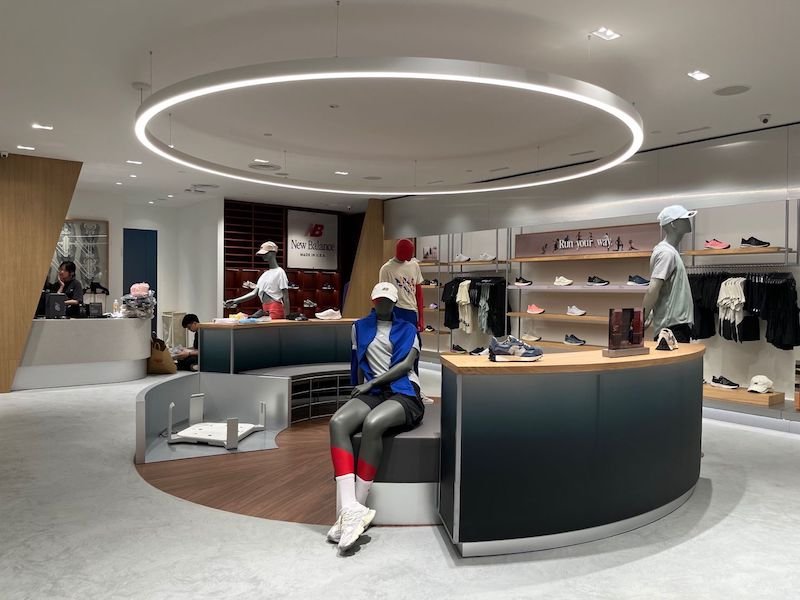
    New Balance recently opened a concept store in Singapore, featuring a Volumental 3D foot scanner in the fitting area.

    Since partnering with Volumental in 2017, the retailer says that it has scanned the feet of more than one million shoppers worldwide.

    The scan, which takes less than five seconds, provides employees with detailed information about a customer’s feet, helping them find a shoe that’s sure to fit.

    Volumental claims that the solution helps brands and retailers to: reduce return rates by 18%; increase footwear sales by 20%; achieve email capture rates of 71%.

    Earlier this year, Volumental launched a new self-service version of its AI-powered foot scanners.

    Specifically designed for an in-store experience, customers can take their own foot measurements at the click of a button and receive their best-fitting footwear recommendations on their phones.

    Volumental said it expected to launch this globally starting with select stores in the sporting goods industry, outlet malls and brand warehouses in 2023. This followed a beta test with Under Armour.

    “Our new self-service scanners will bring the same technology that specialty footwear retailers have enjoyed to many more retail segments,” said Alper Aydemir, CEO, Volumental.

    “Having worked with footwear retailers across different store formats, service environments, and staffing models, we realized the need for a self-service enabled shopping experience that is both innovative and easy to use for shoppers.”

    “This solution takes the guesswork out of the whole fitting experience and helps shoppers make smarter and faster purchase decisions with better-fit outcomes.”

    “The personalized recommendations create a more engaging customer experience, allow retailers to manage inventory in a much smarter way, and help solve the huge returns issue facing the industry.”

    Volumental’s self-service scanners will be placed in dedicated co-branded spaces in-store.

    Touchscreens will provide the customer with instructions on use as well as nearly instant personalized size recommendations on their perfect fitting brands and styles.

    Volumental was highly commended at the 2022 RTIH Innovation Awards last month, after impressing our judging panel in the Omnichannel Retail Initiative of the Year category.

    Our 2022 winners and highly commended entries were revealed at a sold-out event in central London on Tuesday, 6th December.

    RTIH Editor, Scott Thompson, said: “Innovation and technology play a critical role in the success of the retail sector, so it is great to recognize standout examples through our awards.”

    “Thanks to all those who entered the 2022 event. We received a record number of submissions and many fantastic examples of the continued resilience and dynamism of the retail space during hugely challenging times.”

    “Congratulations to our 2022 retail technology hall of fame entrants.”
  • Nike to replace New Balance as Liverpool FC kit provider

    Nike to replace New Balance as Liverpool FC kit provider

    Nike has signed on as the official kit provider of presumptive English Premier League 2020 champions Liverpool FC.

    The new partnership will commence on June 1 for the following 2020/21 season and continue for “multiple years” according to a statement by Nike.

    Nike will outfit the men’s, women’s and academy squads, as well as the coaching staff and Liverpool Football Club Foundation. Nike replaces New Balance with which the club won a High Court dispute in October.

    “We’re delighted to be partnering with Nike, one of the world’s leading brands,” said Billy Hogan, chief commercial officer of Liverpool Football Club. “We welcome them to the Liverpool FC family and expect them to be an incredible partner for the club, both at home and in the city of Liverpool, and also globally as we continue to expand our fan base.”

    The partnership coincides with Liverpool Football Club preparing to move into a new training facility for the 2020/21 season in Kirkby, a project that includes investment in improved sports facilities for the local community.

    “Liverpool Football Club has such a proud heritage and strong identity,” said Bert Hoyt, VP, GM Nike EMEA. “The partnership with Liverpool underscores our leadership in global football, and with the club’s passionate world-wide fan base and strong legacy of success, they have a very bright future ahead. We look forward to partnering with them to serve players and supporters with Nike innovation and design.”

  • Richemont joins Alibaba’s IP alliance on brand protection

    Richemont joins Alibaba’s IP alliance on brand protection

    Global luxury group Richemont has joined the Alibaba Anti-Counterfeiting Alliance, a partnership between the e-commerce giant and brands that works to protect intellectual property rights on Alibaba’s platforms. Geneva, Switzerland-based Richemont is now among the 115 members from 16 countries and regions that are a part of the IP alliance, as well as the latest from the luxury sector to partner with the e-commerce giant on brand protection. Richemont said it would share its technology, expertise and other information to support the Alliance’s efforts.

    Richemont owns 17 luxury brands, including Cartier, Montblanc, Piaget, Van Cleef & Arpels, Watchfinder & Co and Chloe, in addition to Yoox Net-A-Porter Group, the online retail platform. YNAP runs four different websites — Net-A-Porter, Mr Porter, lifestyle-goods destination YOOX and affordable-fashion seller The Outnet — as well as online flagship stores for leading fashion brands, such as Armani, Moncler and Valentino.

    The announcement comes a month after Alibaba and YNAP partnered to bring the site’s high-end goods to Chinese consumers. A joint venture between Alibaba and YNAP will launch a mobile app for the Net-A-Porter platform and menswear site Mr Porter, in addition to opening flagship stores for Net-A-Porter and Mr Porter on Tmall Luxury Pavilion, a channel that connects premier brands with China’s digital-first consumers.

    Richemont, along with New Balance, General Motors and McDonald’s, were the latest global brands to join the AACA. The alliance’s membership has more than tripled from the original 30 founding brands at its launch last year, and now includes  names, such as Bose, Canada Goose, Honda, Samsung, Mars, Adobe, Danone, Hasbro and L’Oreal, in 12 industry categories. They work with Alibaba in six key areas — proactive online monitoring and protection, a product test-buy program, offline investigations and enforcement actions, industry-law enforcement workshops, litigation tactics and public awareness campaigns — in the fight against IP infringement.

    In September last year, the AACA established an advisory board so that brands could provide feedback to Alibaba in areas related to IP enforcement. Alibaba has since upgraded its Intellectual Property Protection Portal as well, delivering faster navigation and a better user experience on the site, where rights holders report suspected infringing listing and share information with Alibaba. In addition, Alibaba’s Good Faith program, which is open to brands with a track record of accurate notice and takedown filings, has streamlined the reporting process.

    The IP alliance does not restrict its brand-protection efforts to the online space. Alibaba and its brand partners also work to find and eliminate fakes at their source. In the luxury sector, Alibaba and Louis Vuitton – one of the first members of AACA – conducted an offline investigation that resulted in the seizure in May of approximately RMB 100 million ($14.4 million) worth of counterfeit goods.

    “The protection of intellectual property rights requires all stakeholders to work closely together and share their expertise. The AACA will continue its efforts to establish industry best practices for IP protection by creating effective collaboration among brands, platforms and law enforcement,” said Michael Yao, Alibaba’s senior VP and head of Brand Protection and Cooperation.

  • Outstanding start for Nanchang Capital Outlets

    Outstanding start for Nanchang Capital Outlets

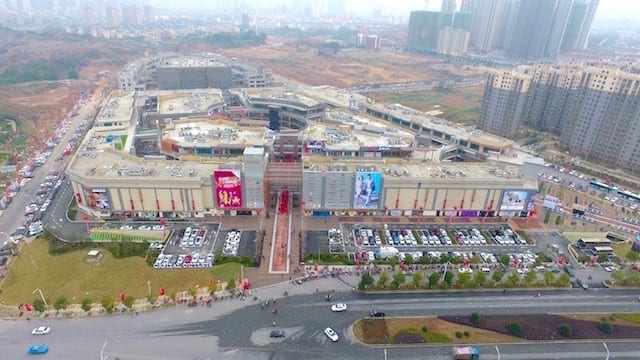
    In its first three days, Nanchang Capital Outlets generated sales of more than RMB21.8 million (US$3.2 million) with customer traffic exceeding 1.8 million.

    It is the second outlet project this year for Beijing Capital Grand, the commercial property arm of Beijing Capital Land, and its sixth outlet project in China. It is also the company’s first foray into central China. Nanchang is one of the 10 youngest cities in China.

    Covering 130,000sqm, Nanchang Capital Outlets combines key elements of Chinese lifestyle and culture. It has more than 300 shops, including international, fast-fashion and sportswear brands, children’s entertainment, theme restaurants, reading corners and 2000 parking spaces.

    Still to come are a trampoline park, Jump360, a 5000sqm Imax cinema and an 8000sqm supermarket.

    The project’s 150-plus fashion and lifestyle boutiques include Adidas, Aigner, Chic Outlets Multi Brands Boutique, New Balance, Nike, Rodrigo, Skechers and Stella Luna. The food line-up includes KFC, Taste of Caimi and Yuemandajiang Classic Sichuan Hot Pot.

    About 12 more Capital Outlets projects are on the drawing boards.

  • JD Sports Fashion moves to influence marketing as strategy

    JD Sports Fashion moves to influence marketing as strategy

    UK company JD Sports Fashion has engaged influencer marketing firm Rocketfuel Entertainment to help develop digital content for its brand in Malaysia.

    JD carries brands such as Adidas, New Balance and Nike as well as in-house labels Brookhaven, Pink Soda, Sonneti, and Supply and Demand.

    A JD spokesperson says it is eyeing growth in markets such as Singapore and Thailand, and aims to open 25 outlets by end of next year.

    Its senior brand marketing manager Jaclyn Tan says the biggest draw for its customers is the “extensive range of sneakers from multiple brands, including Western Europe exclusives available only in our stores”.

    CEO Justin Lim says the content will enable JD Sports Fashion to engage with its audience on its social platforms.

    Rocketfuel claims to have a social-media reach of more than 36 million in the region with influential personalities in beauty, fashion, lifestyle, automotive and parenting.

    The sports lifestyle retailer launched a flagship store for Asia last year at Pavilion Elite Kuala Lumpur, and this week opened a store at Putrajaya’s IOI City Mall. It also has outlets at Aeon Mall Tebrau City (Johor Bahru), Mid Valley Megamall, Sunway Pyramid and Sunway Velocity Mall, with another five stores to follow “very soon”.

  • AW Lab Singapore to open in Suntec City

    AW Lab Singapore to open in Suntec City

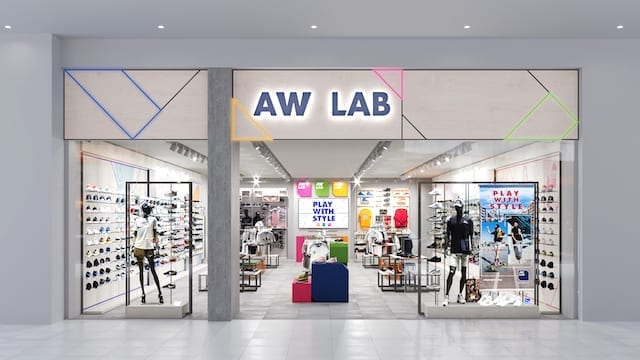
    AW Lab Singapore has opened a store in Suntec City, the first brick-and-mortar outlet in Asia Pacific for the Italian sports apparel retailer.

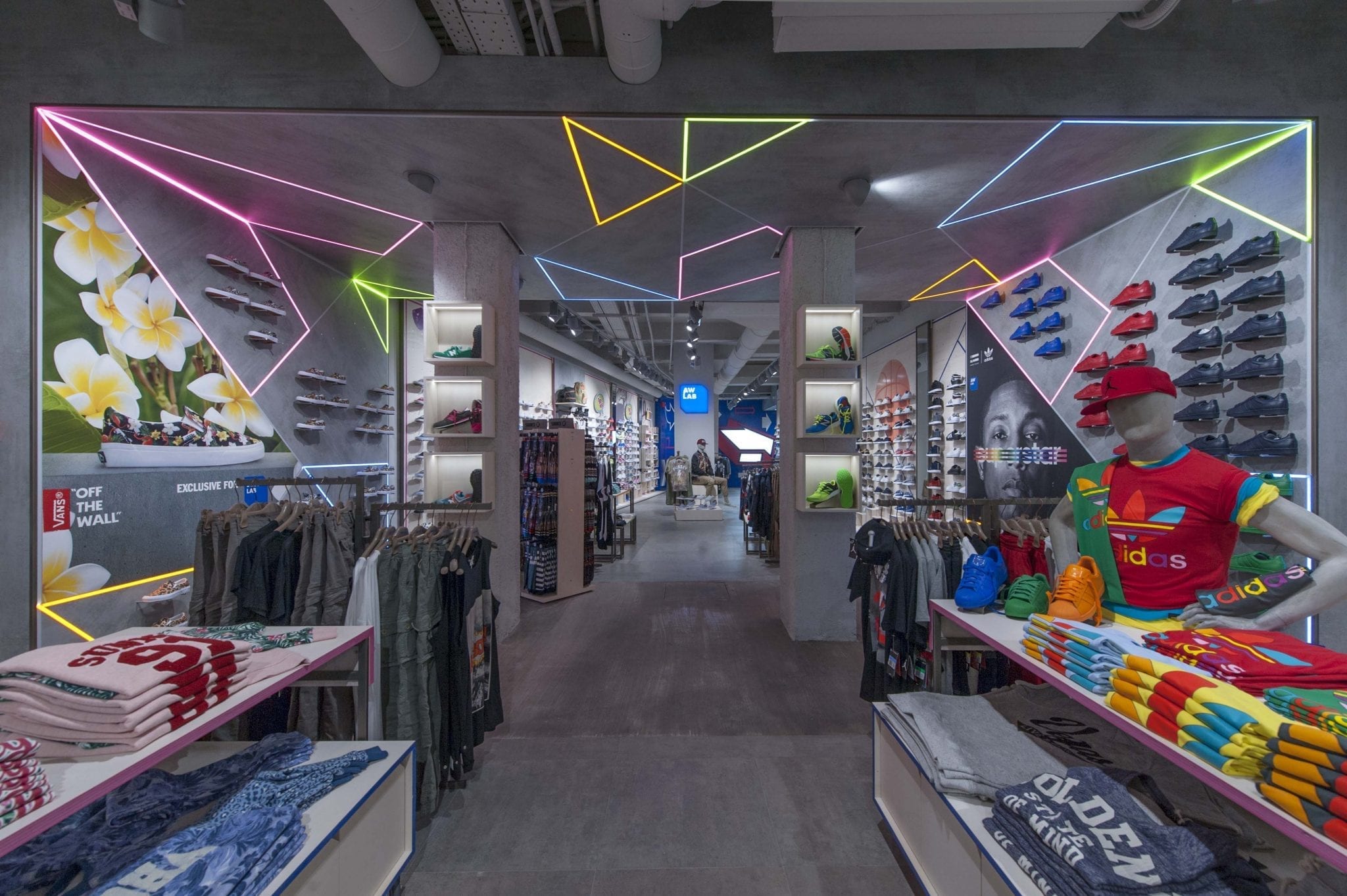
    Covering 2630sqft (240sqm), the store has a futuristic concept that invites young people to “play with style”. Whited out from floor to ceiling with blocks of bright colours, the outlet features ultra-sleek shelving and bright, stark lighting to present footwear from such brands as Adidas Originals, New Balance, Nike and Vans.

    Galvanised-steel racks are stocked with apparel from brands like Jordan and Under Armour, as well as AW Lab’s own fashion and street apparel labels, Down Up and Two of a Kind.

    The store also offers exclusive collaborations and limited-edition sneakers.

    “We have trust in the commitment and planning of the team to tap into the market’s potential, and it is high time we focus our attention here,” says head of Asia Giuseppe Nisi of AW Lab, which has opened more than 200 stores across Italy and Spain in its first three years.

    “Singapore has always offered its own style, and sometimes the best way to explore a city is simply to walk the streets,” he says. “That’s what we’ve always envisioned for AW Lab – to let the people define their own style while keeping it playful and exciting.”

    AW Lab is known for its exclusive collaboration collections with brands such as Adidas, Champion and Puma, and in Singapore will be releasing several special sneakers and collaborations in the coming months.

  • Chinese shoemakers ordered to pay New Balance $1.4 million

    Chinese shoemakers ordered to pay New Balance $1.4 million

    Three Chinese shoemakers have been ordered by a Chinese court to pay US sportswear company New Balance US$1.5 million in damages and legal costs for infringing its logo.

    It is believed to be the largest trademark infringement award ever granted to a foreign business in China.

    Suzhou Intermediate People’s Court, near Shanghai, ruled that the three defendants, who made shoes under the brand New Boom, “seized market share from New Balance” and “drastically damaged the business reputation of New Balance”.

    Zheng Chaozhong, Xin Ping Heng Sporting Goods and Bo Si Da Ke Trading had relied on the “malice of free-riding”, says the ruling. Their actions had led to “confusion by a large number of consumers”.

    The decision can still be appealed.

    New Balance has also taken on such Chinese brands as New Barlun and New Bunren since it started selling shoes on the mainland in 1995, reports The New York Times.

    In April, a court in Hangzhou awarded New Balance $500,000 in damages after ruling that a company making New Bunren shoes infringed its trademark. The same month, the Suzhou court fined five companies for breaching an injunction prohibiting them from selling shoes with New Balance’s “N” logo.

    However, New Balance once tried to reclaim intellectual property from a man using its Chinese name and was itself fined $16 million. The amount was later reduced to about $700,000, and a further appeal will go before China’s Supreme Court.

    Regarding the aggressive protection of its trademarks, New Balance’s senior counsel for intellectual property, Daniel McKinnon, says that if the China marketplace can be thought of as a schoolyard, “New Balance wants to make it abundantly clear we are the wrong kid to pick on”.

  • New Balance Singapore goes high tech

    New Balance Singapore goes high tech

    New Balance Singapore has introduced 3D foot-scanning technology in the latest of its eight brand stores (its shoes are also available from a range of authorised retailers).

    At New Balance at The Paragon, the US brand’s Stride ID technology scans a customer’s foot then recommends for the best shoe model and fit. The system also stores the customer’s data, which can be accessed online or on the brand’s app Stride ID.

    Meanwhile, the store has become the exclusive Singapore retailer for the new New Balance 574 Sport Tier 1 sneaker.

    New Balance began as a Boston-based arch-support company in the early 1900s, developed into a specialised shoe manufacturer in the 1970s and has grown to become an international athletic products company.

  • New Balance opens Tokyo concept store

    New Balance opens Tokyo concept store

    Located in Roppongi in Tokyo’s Midtown area, the store is named after the area it is situated – Roppongi, and the year 1906, when New Balance was born. Written as ‘19: 06’, the motif is meant to look like a digital clock to express the American footwear firm’s 111-year history and how it has modernised.

    Inside, the store features warm wood panelling to create a ‘stadium’ atmosphere, and industrial concrete material construction to reflect the ‘coexistence of sports and lifestyle,’ according to the brand in a press release.

    The Roppongi 19:06 store will also offer state-of-the-art apparel and footwear, with a range of limited-edition and collaborative items.

    This includes 44 pairs of the limited edition 3D-printed MS066 shoes will be available to purchase for ¥38,000 JPY (US$335 USD). Dubbed the “Zante Generate”, the running shoes were sold ahead of the Boston marathon last year and boast a shoe upper made of a high-quality Japanese-manufactured knit, with a portion of the sole 3D-printed.

    A men’s and women’s Japanese Wholegarment apparel collection, made of an innovative seamless knit technology, will also be available at the store at a price range of ¥14,000 JPY to ¥20,000 JPY (US$123 to US$176).

    According to New Balance, the brand manufactures 4 million U.S.-made pairs of sneakers per year. Since it was founded in Boston in 1906, New Balance has made it a priority to make a certain portion of its sneakers in the U.S., giving it a point of difference of American rival Nike.

  • Teenie Weenie deal is a big one

    Teenie Weenie deal is a big one

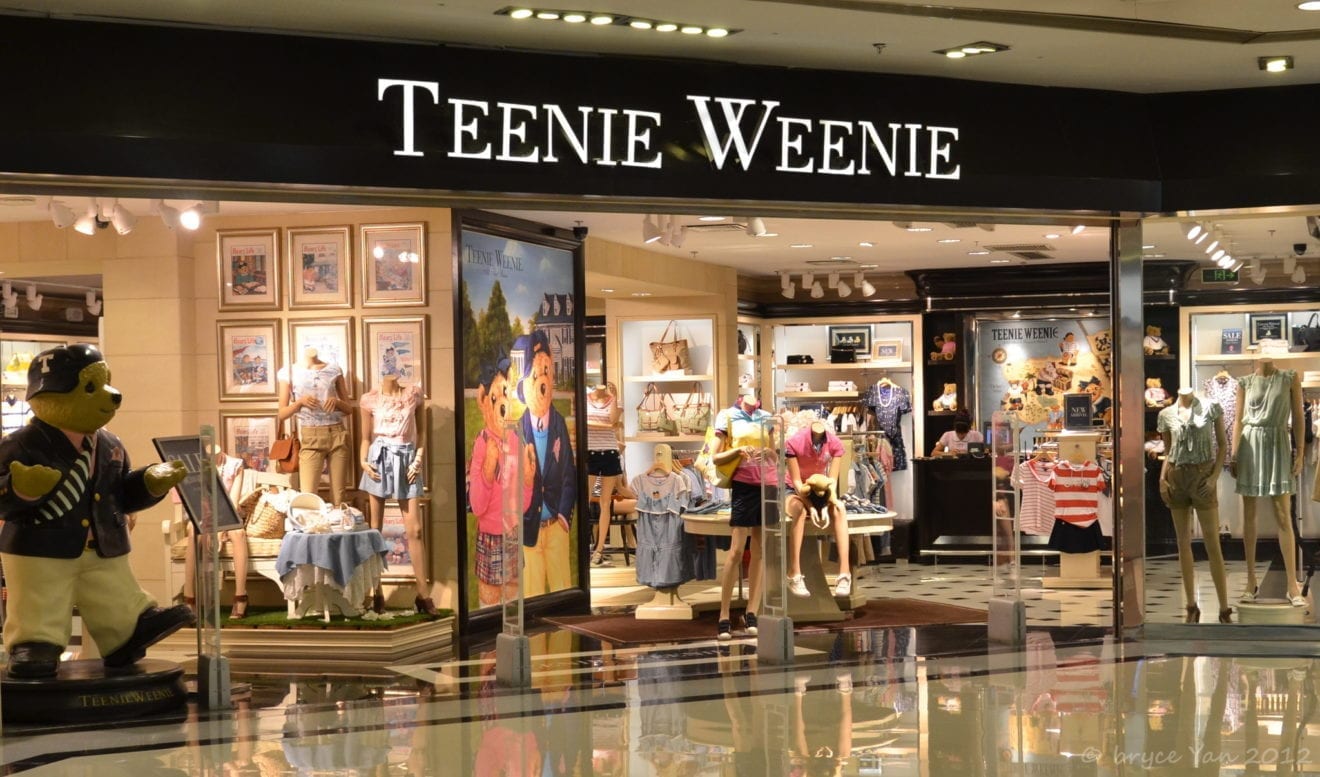
    The deal with V-Grass represents the biggest cross-border merger and acquisition agreement in Korea’s fashion industry.

    E-Land Group said proceeds from the sale will help the company reduce its debt level to 240 percent by the first quarter from the current level, which is above 300 percent.

    The final price is lower than the previously reported range of 1 trillion won. “After we adjusted our position on the operation of E-Land’s women’s wear unit in China, we finally agreed on the deal,” said a source at E-Land familiar with the deal.

    The company said that since Teenie Weenie’s book value stands at 120 billion won, it would obtain a profit worth 750 billion won through the sale.

    However, it will still own 10 percent of the fashion brand’s shares for three years to “maintain a stable partnership” with the Chinese company. “The reason why E-Land keeps a 10 percent stake is that both companies need to cooperate on production and business and generate synergy after the deal,” E-Land said in a statement.

    The board of directors at V-Grass passed the takeover agenda on Tuesday, and the shareholders are expected to cast a vote on Feb. 10.

    Following the decision, the Chinese retailer is expected to pay the price for sale on Feb. 20.

    The Nanjing-based company captured Chinese consumers’ shifting purchase behaviors in favor of more premium brands. But since the sale price is higher than its market capitalization, the company will pay with debt.

    On E-Land’s end, the sale is its latest effort to restore financial liquidity. The group had sold three properties in Mapo District, western Seoul, and Gangnam District, southern Seoul, last year, a move that brought in 250 billion won.

    The company will push forward to secure cash through sales of other properties. By the first quarter, it will sell 200 billion won worth of real estate and then 500 billion won later this year.

    The fashion group also plans to take E-Land Retail public in a capital-raising effort by the first half of this year, a move that E-Land believes will reduce its debt level to 200 percent.

    E-Land has been accumulating more debt as some of its brands like New Balance have lost traction among young consumers.

    Other analysts believe the group is excessively focused on physical expansion, increasing the number of brick-and-mortar stores even though more are turning to online and mobile shopping.

    Faced with headwinds, E-Land Group companies saw their credit ratings downgraded in December by the Korea Investors Service.

    There are 1,300 Teenie Weenie stores in China. Last year, the brand earned 421.8 billion won in sales while generating 112 billion won in operating profit and 86.3 billion won in net profit.

    V-Grass was established in 1997 and specializes in high-end women’s fashion.


  • New Balance India return

    New Balance India return

    New Balance India is to make a comeback – and says it aims to open about 50 stores within the next few years.

    The US sports shoes brand’s first foray into India was in the early 2000s, but it shut its shops after a few years. Now its VP for Asia Pacific Darren Tucker says it plans outlets across shopping malls and high streets in Delhi, National Capital Region (NCR), Mumbai and Bengaluru.

    “We were ahead of time,” says Tucker. “We did not have such a wide brand presence globally then, and the retailing experience was poor. Now, the market looks more mature.”

    Its first store this time around opened yesterday – an 1100 sqft (102 sqm) New Balance Athletic Shoes standalone outlet at DLF Mall of India in Noida, near New Delhi. The company has a distribution agreement with The Major Brands Group in Mumbai for retailing New Balance products in India.

    “It’s not about the number of stores,” says Tucker. “We would prefer to have a profitable retail presence and grow at a relatively slower pace this time.

    “All our global competitors are here. The market is built. We know our competitors, and that’s an advantage.”

    With an average selling price of Rs.7000 (US$105) for shoes, New Balance will be a premium offering. Tucker says apparel is a promising segment, so lifestyle will be a focus area. The company has also tied up with online retailer Jabong for e-etailing, and is negotiating with global partner Amazon for the Indian market.

    “Considering the growth of eCommerce in India, that’s a must,” says Tucker. The company will continue to leverage its global marketing properties across sports and athletics, and plans to develop local properties. “For India, it’s going to be cricket first.”

    At the moment, the sports shoe and apparel market in India is dominated by Adidas, Nike, Puma and Reebok. Japan’s Asics Corp. opened its first standalone store in Delhi last July.

    A report by Images F&R Research estimates India’s active sportswear market at Rs.6000 crore, growing at 13 per cent a year.

    New Balance, which reported $3.3 billion in sales worldwide in 2014, was founded in 1906 by British immigrant William J. Riley to sell arch supports to police officers and waiters. The company was bought by Jim Davis, the son of a Greek immigrant, in 1972 and from its base in Boston now sells athletic shoes, apparel and accessories for men, women and children across 5000 outlets worldwide under brands such as Aravon, Brine, Dunham, PF Flyers and Warrior Sports.

  • Yue Yuen sales rise on retail rollout

    Yue Yuen sales rise on retail rollout

    The world’s largest branded athletic and casual footwear manufacturer and retailer Yue Yuen Industrial says retail and wholesale sales of sportswear in Greater China rose 19.6 per cent in the first nine months of this year, due to an expanding store network.

    Yue Yuen operates more than 6000 retail stores and concessions across Greater China under its own name as well as the international brands it manufactures for.

    Total sportswear sales reached US$1.7 billion compared to US$1.456 billion in the same period last year. Other factors in the growth were the company’s efforts to increase efficiency and a better merchandise selection.

    Sales of athletic shoes were up by 3.4 per cent and sales of casual shoes were down by 5.6 per cent. The total volume of shoes sold increased by just 1.1 per cent to 231.4 million pairs for the period.

    Hong Kong listed Yue Yuen designs and makes shoes for brands including Nike, Crocs, Adidas, Reebok, Asics, New Balance, Puma, Timberland and Rockport as well as operating its own network of retail stores under the YY Sports brand, through subsidiary Pou Shen.

    The increased athletic shoes and sportswear sales helped boost Yue Yuen’s overall revenue by 5.8 per cent to US$6.3 billion and gross profit by 9.1 per cent to $1.422 billion. Total net profit attributable to owners of the company was $285.6 million, up 36.6 per cent year on year, according to figures filed with the stock exchange.

    Pou Shen, which opened 771 new points of sale during the nine months, increased its gross profit by 32.5 per cent to $566.5 million due to management’s strategy to concentrate on the retail business, improved operating efficiency, and better procurement of inventory.

    YY Sport instore wide