Retail News CRM

Tag: New Retail

  • Fung Retailing, Alibaba to collaborate bringing lifestyle brands into China

    Fung Retailing, Alibaba to collaborate bringing lifestyle brands into China

    Fung Retailing and Alibaba have formed a strategic partnership to launch more international lifestyle brands in Mainland China. The partnership will bring closer Alibaba’s 600-million user base and Fung Retailing’s 3000+ network of stores across Greater China, UK, France, South Korea, Singapore, Malaysia, Thailand and the Philippines. Its partly- or majority-owned businesses include Circle K and Zoff (under Convenience Retail Asia), Trinity, Toys R Us, Suhyang Networks, the UCCAL Fashion Group and Branded Lifestyle Holdings.

    The Fung Retailing and Alibaba collaboration aims to meet the increasing demand of Chinese consumers, building on the strengths of both parties in online and offline retailing, the two companies said in a statement. At the same time, it will better serve global brands by leveraging Fung Retailing’s global portfolio of brands, offline retail channels and marketing know-how, as well as Alibaba’s ecosystem, digital retail leadership, technology, and consumer insights.

    “That will help global brands tailor their product development and marketing strategies to meet the ever-changing needs of Chinese consumers,” the statement said. “The brands can also draw on Alibaba’s new retail channels, including Tmall and Intime, as well as Fung Retailing’s offline stores, thereby reducing costs, risks, and the time traditionally associated with entering the China market.”

    Photo: At the Fung Retailing and Alibaba MOU signing ceremony this week, from left: Sabrina Fung, group MD of Fung Retailing, Dr Victor Fung, group chairman of the Fung Group; Daniel Zhang, CEO of Alibaba Group; and Toby Xu, VP of Alibaba Group.

    Under a memorandum of understanding signed this week, both companies will join forces in global brand recruitment and offer brands merchandising, marketing and omnichannel distribution services. This collaboration will focus on the mainland China market as a first step, and potentially expand to other regions riding on Alibaba’s platforms.

    Speaking during the signing ceremony in Shanghai, Alibaba CEO Daniel Zhang said Alibaba wants to help global brands expand their foothold in China by fully integrating its New Retail capabilities, big data and technology with Fung Retailing’s “unparalleled advantages in brand and supply chain resources”.

    “We believe this partnership represents the beginning of a new chapter for New Retail.”

    Fung Retailing’s group MD Sabrina Fung said retail is changing exponentially, so it’s important to stay ahead of the curve, which this agreement allows the company to do.

    “Through this exciting strategic partnership with Alibaba, we will help customers navigate the full Chinese retail economy and reach China’s 1.4 billion consumers more easily. In this evolving retail landscape, and faced with changing consumer behavior and disruptive retail technologies, we are focused on developing new ways to do business,” she said.


  • Tmall, Swire Properties launch New Retail initiative

    Tmall, Swire Properties launch New Retail initiative

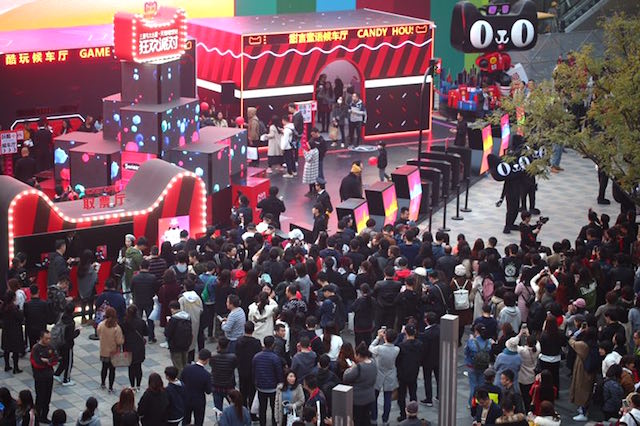
    Alibaba Group’s Tmall and Swire Properties are launching a New Retail initiative creating tailored retail experiences at Swire Properties’ five shopping malls in Mainland China. The partnership will bring benefits to customers in time for Alibaba’s 11.11 Global Shopping Festival on Sunday with Taikoo Li Sanlitun in Beijing the first brick-and-mortar shopping mall in Mainland China to experience this year’s 11.11 “red packet rain” this week.

    Swire Properties will introduce Tmall’s New Retail technologies at five of its developments: Taikoo Li Sanlitun and Indigo in Beijing; HKRI Taikoo Hui in Shanghai; Taikoo Hui in Guangzhou and Sino-Ocean Taikoo Li in Chengdu. The five New Retail initiatives include Tmall Smart Stores, a Tmall Pop-Up Store, Interactive Idol Engagement Photo Booths, Smart Nursery Rooms and a Smart Parking Service.

    Tmall Smart Stores: Shoppers will enjoy a seamless online and offline shopping experience from order to delivery (for participating physical stores). By signing up as members of selected brands, customers can instantly receive details on the latest promotions, and enjoy a return service by simply using their digital devices.

    Tmall Pop-Up Store: Tmall will open an interactive pop-up store featuring cutting-edge technology at Taikoo Li Sanlitun. This nine-day promotion during the Festival will offer shoppers in-depth and enhanced experiences.

    Interactive Idol Engagement Photo Booth: Fans will have a chance to ‘virtually interact with’ and snap a photo with their idol. This is the first-of-its-kind check-in hot spot in Mainland China.

    Smart Nursery Rooms: These offer mothers a relaxing and private space where they can nurse their babies at shopping malls. Vending machines will also offer essential nursing necessities.

    Smart Parking Service: By linking Alipay with their car license plates, drivers can pay parking fees with ease. This service will save drivers 80 per cent of the time usually spent on paying the parking charge and exiting the car park.

    “At Swire Properties, we are always looking for new ways to innovate and integrate the latest technologies into our business, so that we can bring unique experiences to our customers,” said Han Zhi, director, retail at Swire Properties. “Our collaboration with Tmall is a powerful example of digitisation. By harnessing rapidly developing online technologies and big data, our goal is to define the New Retail shopping experience.

    “This year marks the 10th anniversary of Taikoo Li Sanlitun and Alibaba’s 11.11 Global Shopping Festival, both of which have grown in leaps and bounds the past decade. We’re confident that our partnership, which also celebrates this milestone, will set a new benchmark in our respective industries and in the digital space.”

  • Alibaba’s second-quarter revenue jumps high

    Alibaba’s second-quarter revenue jumps high

    Alibaba’s second-quarter revenue grew 54 per cent year on year, reaching RMB 85.1 billion ($US12.3 billion). Net income attributable to shareholders was RMB 20 billion ($2.9 billion), a 13 per cent year-on-year increase. “Alibaba had another strong quarter of rapid growth,” said Alibaba Group CEO Daniel Zhang.

    “Annual active customers increased by 25 million to reach 601 million in the year ended September 30.”

    “Annual active customers increased by 25 million to reach 601 million in the year ended September 30.”

    Alibaba’s cloud-computing arm saw 90 per cent year-on-year growth to RMB 5.6 billion, launching more than 600 products and features during the quarter ranging from big data analytics, AI application innovation, security and internet-of-things enhancements.

    The business’s online Tmall operations saw a 30 per cent increase in gross merchandise value, driven by improved conversion rates and increased traffic in the fast-moving consumer goods, home furnishings and apparel categories.

    Alibaba’s New Retail strategy has continued to pay off across its Hema supermarkets network, with stores that have been in operation for at least 1.5 years seeing online sales account for 60 per cent of turnover for the September quarter. By the end of the quarter, 77 Hema stores had been opened in China.

    The group has dropped its forecast revenue guidance for the full year by 4 to 6 per cent to between RMB 375 billion and RMB 383 billion. As it stands, the group expects revenue to grow by 54 to 56 per cent.

  • Honestbee risk losses with new experimental offerings

    Honestbee risk losses with new experimental offerings

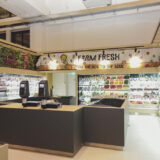
    Online grocery service Honestbee has opened a retail space which merges cashless grocery store with a restaurant and a testbed for new retail technologies.

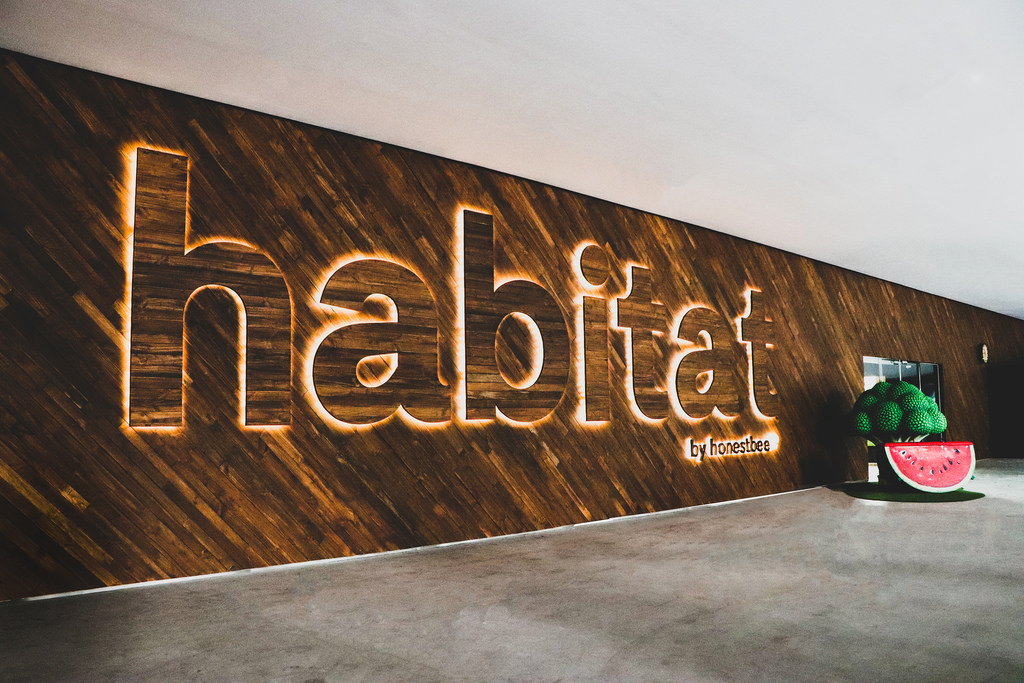
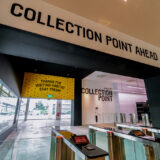
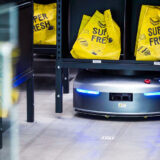
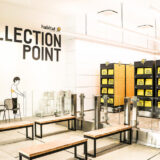
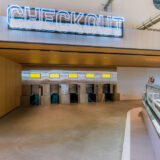
    Habitat by Honestbee in Pasir Panjang is billed as “the world’s first tech-integrated multi-sensory grocery and dining destination of its kind”. While Chinese online behemoth Alibaba may well challenge that claim, Habitat is certainly a revolution in Southeast Asia, boasting a cashless checkout experience and a fully automated robotic collection point, called RoboCollect.

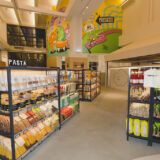
    Spanning 60,000sqft, Habitat by Honestbee is a full supermarket with more than 20,000 Asian and global foods and ingredients as well as daily essentials, which can be purchased both online and offline.

    The store also features 15 unique food and beverage concepts ranging from grain bowls and grilled wagyu meats to Japanese souffle pancakes and homemade kombuchas, all available to eat on site or take away.

    More features are under development, including an invitation-only private dining space, an oyster bar, an entire section devoted to charcuterie and cheese, and a hidden bar.

    Honestbee says the new space heralds the arrival of NewGen Retail, a concept defined as “innovation in retail technology that inspires more human engagement for a multi-sensory experience” and not hugely dissimilar to Alibaba’s New Retail concept.

    For purchases of 10 items or less, shoppers can use the Scan & Go function on the Honestbee app, so they can skip the checkout line and get their items on the spot. Those with bigger shopping lists can drop off their trolleys at the convenient AutoCheckout and Habitat will take care of the scanning and packing, with bags ready for collection at the RoboCollect Stations.

    Honestbee says customer orders can be processed between checkout and collection in as little as five minutes.

    Online grocery orders are fulfilled by ‘Shopper Bees’ (Honestbee staff) using overhead conveyor belts for greater productivity before ‘Driver Bees’ pick them up for delivery.

    Purchases can be paid for securely using BeePay, Honestbee’s own digital wallet, either online or offline.

    “Habitat by Honestbee is a beautiful, physical extension of the honestbee brand we all love,” said VP and MD at Habitat by Honestbee, Pauline Png.

    “With its launch, we now provide tech-enabled convenience, value and quality through food in both the online and offline experience. It is a unique combination of a full supermarket, speciality grocer, dining and interactive lifestyle destination. In this innovative space, one can expect a multi-sensorial food experience that nourishes, educates and inspires. We designed it so that customers can get their groceries and meals efficiently but also linger and enjoy the experience.”

    View the full gallery of the newest Habitat store below (16 images) :

  • Starbucks and Alibaba form New Retail Partnership in China

    Starbucks and Alibaba form New Retail Partnership in China

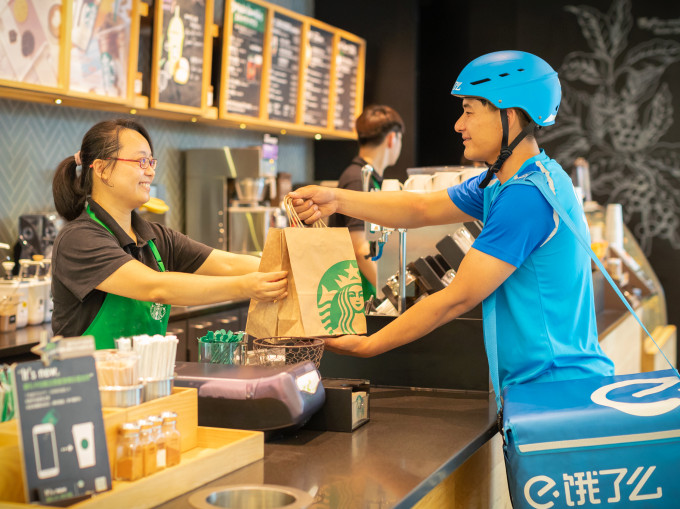
    Starbucks China and Alibaba have announced an alliance that stretches way beyond the latter’s online delivery platform Ele.me.

    The two companies describe their pact as “a deep, strategic New Retail partnership” that will enable a seamless Starbucks experience and transform the coffee industry in China.

    The partnership spans Ele.me, the food delivery platform acquired by Alibaba last month, Hema supermarkets, Tmall, Alipay and Taobao. Pilot delivery services by Starbucks China will start next month with the coffee company opening delivery kitchens to fulfil orders and “co-create an unprecedented virtual Starbucks store”.

    Starbucks China CEO Belinda Wong says the partnership with Alibaba breaks the physical and virtual barriers between the home, office, in-store and digital space.

    “It will make China the first Starbucks market to deliver a seamless Starbucks experience across all facets of our customers’ lives.”

    Alibaba CEO Daniel Zhang said Starbucks is more than a destination for premium coffee “and we share the same vision to pioneer a new coffee culture and lifestyle through innovation and technology”.

    It starts with Ele.me

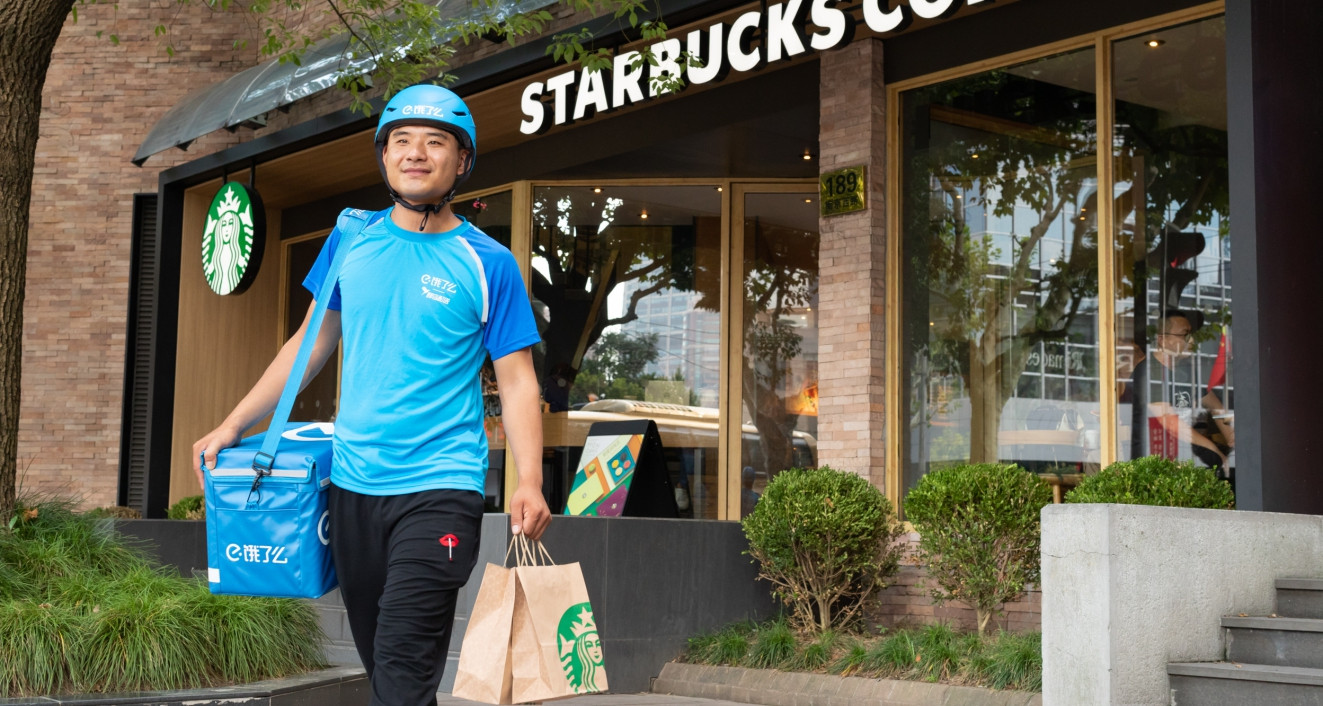
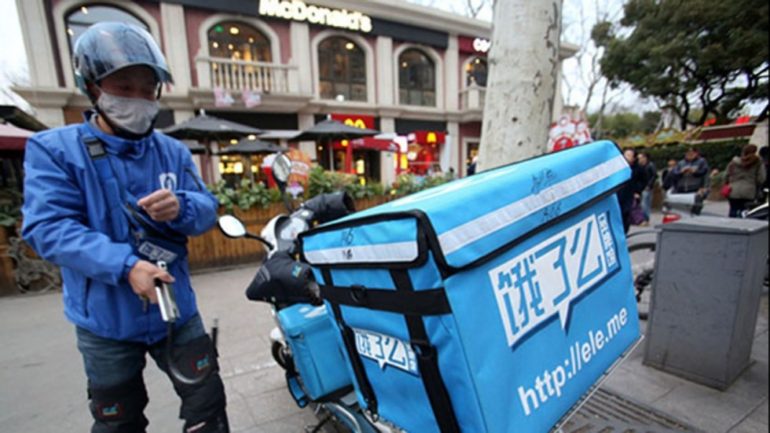
    Ele.me, China’s largest on-demand food delivery platform with 3 million registered delivery riders, will start delivering Starbucks orders from 150 stores in key trading zones in Beijing and Shanghai next month. By the end of the year, that service is expected to expand to more than 2000 Starbucks stores across 30 Chinese cities.

    The two companies have worked together to develop what they describe as “a unique, customised delivery infrastructure” including dedicated delivery riders, precise delivery times, and custom carriers. They believe they will be able to offer “a best-in-class coffee delivery service standard for Chinese customers” which could well be interpreted as a challenge to local startup Luckin Coffee which has grown into a US$1 billion company in less than a year, based on a mixed delivery and in-store model.

    Starbucks will partner with Hema supermarkets to open dedicated “Starbucks Delivery Kitchens” within stores. The kitchens will use Hema’s fulfillment and delivery capabilities to complement the delivery of Starbucks beverages offered through existing Starbucks stores. Starbucks will also use Hema’s consumer insights and fulfillment expertise to reach more communities across China.

    Data from Hema stores will be used to help plan the location of future Starbucks cafes, combined with delivery kitchens. The first delivery kitchens will open in selected Hema supermarkets in Shanghai and Hangzhou next month.

    Digital transformation

    Starbucks China and Alibaba say the creation of a ‘virtual Starbucks store’ in China is a key strategic initiative under the partnership.

    Alibaba will develop a centralised online management hub, with the capability to integrate and deliver a consistent Starbucks experience across multiple digital platforms. “This innovation will transcend the traditional limitations of a single-app visit by providing the consumer an elevated, and even more personalised Starbucks digital experience across the Starbucks app and Alibaba’s customer-facing mobile apps, including Taobao, Alipay, Tmall and Koubei,” the companies said in a statement.

    “This latest innovation will revolutionise the traditional offline-to-online model by effectively extending the reach of the Starbucks experience into the everyday lifestyle ritual of the Chinese consumer, regardless of time or place. Whether it is at home or in the office, within a Starbucks store or online, Starbucks customers will be able to access and enjoy a one-stop Starbucks experience when purchasing merchandise online, buying a Starbucks handcrafted beverage to be delivered to a friend or sending a Starbucks gift of love on the “Say it with Starbucks” social gifting platform.”

    Starbucks will progressively integrate its Starbucks Rewards membership platform onto the centralised system to use its consumer insights to deliver a personalised experience to customers.

    “Starbucks China and Alibaba are trusted business partners who share common values in the spirit of innovation and the unrelenting pursuit of product and service excellence,” the statement said.

    “Thanks to the elevated customer experience delivered by our more than 45,000 partners, Starbucks is growing and innovating faster in China than anywhere else in the world,” said Kevin Johnson, president and CEO at Starbucks Coffee Company. “Our transformational partnership with Alibaba will reshape modern retail, and represents a significant milestone in our efforts to exceed the expectations of Chinese consumers. Starbucks China is one to watch, and I have full confidence in the team that will bring the new innovation behind the Starbucks Experience to life.”

  • Ele.me big ambition ready to dominate China’s food-delivery market

    Ele.me big ambition ready to dominate China’s food-delivery market

    Ele.me aims to grab a majority share of China’s food-delivery market in the near future, CEO Wang Lai, (pictured), said this week.

    Moving into Alibaba’s ecosystem has already created new and immediate opportunities for Ele.me and the 3 million-strong delivery force registered through its platform, Wang said. While core food delivery is likely to provide strong growth longer-term, insights offered by various Alibaba apps and platforms, coupled with a growing need for last-mile delivery in Alibaba’s overall New Retail strategy, offer hints of what’s to come.

    Alibaba took control of Ele.me in May. In June, after plugging the delivery company into its ecosystem, Ele.me delivery orders for categories including supermarkets, convenience stores under Alibaba’s Ling Shou Tong program, fresh fruits and flowers climbed 110 per cent from a year earlier. In the future, Wang said there’s the chance for tie-ups with other Alibaba business units and collaboration with nationwide food chains as a delivery partner.

    Ele.me has already begun benefiting from consumer insights derived from Taobao, Tmall, Alipay, Youku and other platforms and apps in the Alibaba ecosystem, which drives traffic to Ele.me and helps it understand the needs of Chinese consumers.

    As for Ele.me’s core food-delivery market, the Alibaba unit recently launched a RMB3 billion summer promotion campaign that’s already starting to show results in several Chinese cities. In Hangzhou, Ele.me added 100,000 customers to its membership program early this month. In Changsha, during just the first two weeks of July, gross transaction volume climbed by almost 15 per cent over the same period in the previous month.

    The summer campaign kicked off with discounts and coupons for late-night snacks delivered during the recently ended FIFA World Cup 2018 tournament. The World Cup deals spurred what Ele.me said was a “rapid rise in food delivery” in early July, with momentum sustained since then.

    But it is the sector’s longer-term prospects that excite Ele.me’s CEO. Chinese customers spent around RMB4 trillion on food in 2017, according to China Cuisine Association data. Less than 10 per cent of that went toward food delivery, which has become one of the fastest-growing and most-competitive areas in China.

    “We view the limited penetration of delivery in the food and beverage sector to-date as a tremendous opportunity for growth,” Wang said.

    Ele.me also complements Koubei, Alibaba’s local services platform. By combining Ele.me’s on-demand delivery service with Koubei’s consumer-acquisition and in-store engagement capability for restaurants and service establishments, Alibaba can offer an integrated online/offline experience to consumers, in line with the group’s overall New Retail strategy.

    “The local-services market is a must-win for Alibaba as part of its New Retail strategy, and we look forward to Alibaba’s continued financial and technological support to win this market,” said Wang. “As the spending power of Chinese shoppers continues to grow, the local-services sector becomes critical for Alibaba to build customer and merchant engagement and fulfill its mission of accelerating the digital transformation of traditional retail.”

  • SF Express Entering New Retail with Shop in Chongqing

    SF Express Entering New Retail with Shop in Chongqing

    Chinese courier firm SF Express has opened its first New Retail store in Chongqing.

    The 3000sqm four-level “Wow Global Specialty Products Shop” is now the largest site in the city using the cross-border New Retail model, a mode of selling that involves data analytics and omni-channel technologies to effect an online/offline crossover. Chongqing is among the first cities slated for testing cross-border e-commerce trade by the Chinese administration.

    The SF Express store showcases a range of imported products hand-picked by procurement teams, featuring many that have been endorsed by Chinese online Key Opinion Leaders. The store uses facial recognition and behavioral analytics, including other technologies, to interact with customers based on extensive data on the brand’s online shoppers that it has collected over the years in the courier business. Shoppers may buy in-store or elect to order their purchases to be shipped from abroad.

    Wang Wei, president of SF Express, said New Retail integrates online and offline channels; marketers’ understanding of their customers; and a timely response to customer needs…

    “SF is using its huge on-the-ground network, air-cargo handling capacities and its 2000-plus researchers to build a national brand of integrated services encompassing online e-tailing and an offline supply chain.”

  • Alibaba shows off automated wine store in Hong Kong

    Alibaba shows off automated wine store in Hong Kong

    Alibaba’s Tmall, China’s leading B2C online marketplace, wants to give wine selection and consumption a 21st century upgrade.

    At Vinexpo Hong Kong this week, Tmall unveiled a host of new technologies for the industry, including an automatic wine store, initiatives far from the grape-stomping and oak barrels of old.

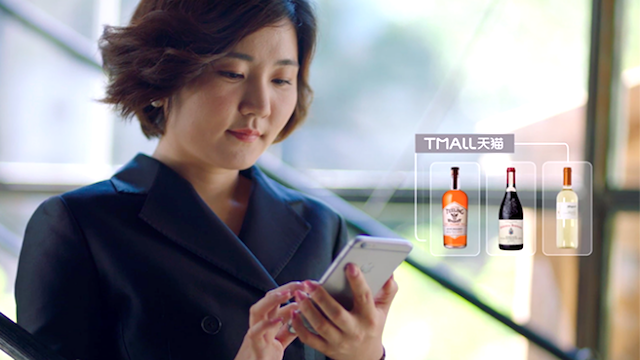
    Tmall showcased a “Future Bar,” which included facial-scanning for entry, a robot waiter, RFID technology to enhance browsing, touch-screen displays for product research and a “Smart Wine Cooler.” The technologies are part of a larger trend in “New Retail,” an initiative in China led by Alibaba to merge the best of online and offline commerce for the benefit of both consumers and merchants.

    Mike Hu, a senior director at Tmall, said the goal of New Retail is to make shopping more personal, more engaging and more convenient – even in traditionally stodgy industries such as wine.

    “China really is at the forefront of consumer engagement right now,” Hu said. “Shopping here is mobile, it’s fun, it’s interactive, and the wall between e-commerce and brick-and-mortar stores is coming down. This kind of comprehensive shopping experience is what Chinese consumers have come to expect, so wine sellers need to adapt if they want to be successful here.”

    Upon arriving at Alibaba’s booth, attendees were greeted by the Tmall Robot Waiter, who asked, “Hey, don’t you want to have a drink?” – in multiple languages. The advanced human-computer interaction offered a glimpse of the future for wine merchants and their customers, Hu said.

    Facial scanning

    Facial scanning, meanwhile, offered entry to the booth and pointed a still-growing but soon-to-be important part of the consumer experience in China: facial-recognition payments, Hu noted. Already, Alibaba’s supermarket chain, Hema, has implemented the technology in one of its Shanghai stores. It is being tested in a cashierless store at Alibaba’s Hangzhou headquarters as well.

    The RFID technology was embedded in the foil wrapping that covers the cork so that when they were picked up from a shelf, their product information was displayed on a nearby screen. So, too, were recommendations for food pairings.

    Touchscreens at the booth allowed visitors to research a wine’s home chateau and place orders through the brand’s Tmall flagship store. This kind of setup would save much-needed stock and shelf space for retailers, Hu said, while providing greater selection for consumers visiting the shop and offering delivery direct to their homes.

    Users of Tmall’s Smart Wine Cooler scanned a QR code to open the cooler door, after which they could choose their favorite bottle and then simply close the door again to pay automatically. Or, as Tmall put it, “close the door, the deal is done.”

    Ecommerce marketplaces, such as Tmall, are playing an important role in China’s wine market, said Guillaume Deglise, CEO of Vinexpo. Not least because the brick-and-mortar retail business is not on par with other markets.

    “It’s very difficult to find very good shops in China, especially in tier-two and tier-three cities,” Deglise said. “So, e-commerce is changing this.”

    Also, younger consumers in China are more used to online shopping than their peers in the US and Europe, he said, “so the distribution will be different in China than the rest of the world.”

    Asia, overall, is driving global growth in the wine market, according to a new report from Vinexpo. And China is leading that trend. The country was the world’s third-largest importer in 2017 by value, at $16.41 billion, behind only the US and UK By 2021, however, China will overtake the UK in the number-two spot with $22.97 billion – a near 40 per cent jump.

    Deglise points to the middle class for these increases, especially those in urban centers, such as Beijing and Shanghai. An uptake among women is also playing a role, as is a general trend toward wellness in China that has people reaching for vino instead of the country’s traditional “baijiu” hard liquor.

    Then, there’s travel to markets where wine is already popular, such as the US, Europe and Australia, which gives Chinese consumers the chance to try new varieties.

    “When they come back home they tend to drink more wine than before,” Deglise said.

    This means that wine-producing countries will benefit, he added. Vinexpo expects almost all producing countries to increase their exports to China over the next five years, making China the only market to prompt such demand.

    “All producing markets are depending on China,” Deglise said. “It’s a huge market with tremendous potential.”

    Alibaba signed two memoranda of understanding at Vinexpo on Wednesday, with governmental organisation Wine Australia and French wine critics Bettane & Desseauve. Tmall will work to market Australian wines on the platform and support Wine Australia’s marketing efforts around major events such as the 11.11 Global Shopping Festival. For Bettane & Desseauve, Tmall will use their reviews to complement its wine listings while also hosting their annual top wine lists as they are released. They will also partner on offline wine events in China.

  • Alibaba backs virtual showroom startup Ordre

    Alibaba backs virtual showroom startup Ordre

    Alibaba Group has bought a minority stake in Ordre, a European online luxury wholesale platform.

    Ordre, launched in 2015, allows fashion designers to show off their collections via 360-degree photography and virtual reality to interested wholesale buyers. The technologies make it more convenient for buyers, who aren’t always able to travel due to time and distance constraints, to build inventory each season. The reduced travel translates into lower carbon emissions at a time when sustainability is increasingly important to the industry, said Ordre.

    Dianne Von Furstenberg, Vivienne Westwood and Jason Wu are among the world’s leading designers who have established digital showrooms on Ordre. They also work with fashion brands such as Joseph.

    For Alibaba, the investment is a further push into the luxury sector, which is among its top strategic priorities, given the rising spending power and increasingly sophisticated tastes of Chinese consumers. The Hangzhou, China-based company plans to leverage Ordre’s technologies for consumers, however, delivering a more-enhanced shopping experience on platforms such as B2C marketplace Tmall.

    “Matching Ordre’s technology with Alibaba’s unique data insights and capabilities – of which our recently launched Luxury Pavillion is a great illustration—we can provide our consumers with a personalised and differentiated experience, helping brands develop a deeper engagement with them,” said Jessica Liu, president of Tmall Fashion and Luxury.

    The Luxury Pavillion, which lives within Tmall, was launched last August to deliver to China’s high-end consumers the same kind of brand exclusivity and tailored shopping experience online that they would expect at a brick-and-mortar store. About 50 brands, including l, offer products ranging from apparel and cosmetics to watches and luxury cars.

    The pavillion is driven by Alibaba’s New Retail technologies, which blend online and offline commerce to deliver a better buying experience for consumers. Simon Lock, founder and CEO of Ordre, said the company’s digital assets, including 360-degree images, 360 video and VR fashion shows and designer interviews, are in line with this strategy and could serve Tmall shoppers and brands.

    “Our 360-view allows consumers to understand every aspect and every view of a garment,” he said. “When you’re purchasing online, as much detail as can be provided is going to make your purchasing decision much more confident,” which can help drive down the product return rates.

    The companies are currently discussing a number of potential initiatives that would expand on these technologies. One of which would create new direct-to-consumer channels for Ordre’s partner brands by leveraging content to communicate their brand story and provide more information about products. For example, Ordre’s VR technology was able to recreate Stella McCartney’s Coachella-inspired 2018 fall show and the theatrical experience of Thom Browne’s latest showcase in Paris, so that buyers could watch fashion shows from the front row.

    Other potential collaborations include “fit avatars,” which allow buyers to see collections on models in 360-view and technology that allows buyers to remotely feel fabrics on a touch pad.

    Lock said he was also interested in Alibaba’s “See Now, Buy Now” technology, as well as the company’s artificial intelligence and cloud-computing capabilities.

    “We can work together to create the ultimate global fashion cloud,” he said.

  • Shift to New Retail ‘imperative’

    Shift to New Retail ‘imperative’

    A shift by brands to a New Retail model is imperative to remain relevant and competitive in China, according to a joint report from AliResearch and Bain & Co.

    The report, the most complete to date, offers a look at the blueprint for how companies and brands can seamlessly meld their online and offline channels, providing a better customer experience and making their own operations more efficient.

    It notes the challenge laid out by Alibaba Group CEO Daniel Zhang in a letter to investors, whereby companies need to tap big data analytics to redefine the core of retail – consumers, merchandise and stores – as well as the ties among them, to upgrade formats and create new retail occasions. And it cites a list of brands, including Mondelez, Friso, Estee Lauder and Bestseller, as “leading the charge to shape tomorrow’s retailing.”

    A fundamental change in thinking by companies and brands needs to happen with respect to the customer, viewing them “in the role of co-producers,” the report said. More than just identifying target consumers and their needs, more-comprehensive and dynamic profiles allow brands to find “ways to stimulate consumer needs, identifying look-alike consumers and turning consumers into brand ambassadors who effectively co-create the brand.”

    At the same time, products morph from mere commodities to becoming part of the consumption process and consumer experience. In the world of New Retail, products and delivery are inspired by consumer data and they’re highly personalized. Moreover, with a fully integrated, omnichannel experience, it’s no longer about simply spending time in an online or offline store. It’s about consumers shopping while enjoying content or spending time on social networks, the report said.

    “The best brands are determining how to integrate products with the overall experience of not only shopping, but learning about a product, using it and recommending it,” the report said.

    In all, the report highlights six steps “winning brands” are taking “to reshape the future and make the most of New Retail.” They are:

    • Identifying new governance principals for a customer-centric model
    • Developing new flexibility and efficiency in R&D and supply chains
    • Reimagining marketing and consumer management
    • Modernising route-to-market and retail formats
    • Transforming the organisation and operating model for digital
    • Investing in new technology development.

    The 24-page report covers each step in detail and offers case studies of the above-mentioned and other brands in their quest to reimagine and redefine their business through New Retail.

    While the report’s focus is on China, it telescopes outward and concludes that the changes Jack Ma predicted when he coined the “New Retail” term in 2016 “are arriving so swiftly and dramatically that each month seems to bring with it a big, new preview of what retailing will look like everywhere, as China sets a pace for the rest of the world.”

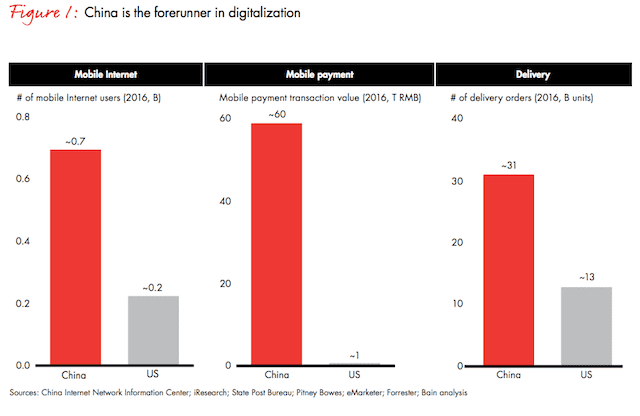
    New Retail in China has already taken hold in numerous sectors, transforming small, disparate shops and businesses into “order-and-delivery stations for e-commerce.” Food-delivery platform Meituan, for example, fulfills more than 18 million orders a day. And China is well ahead of other countries, such as the US, with 60 times more mobile payments.

    “Wherever retailing is headed, China is already there,” the report said. “For brands hoping to sell in China, survival means moving equally fast to capture this future ahead of competitors, both incumbents and digitally savvy upstarts. It will not be enough merely to keep up. Brands will be required to get ahead and help shape the vast changes, even as they completely overhaul the rules of engagement.”

    That means adopting a big-data-based approach to business, along with a new type of customer-centric experience that involves much-higher levels of engagement and personalisation than ever before. Businesses, themselves, need to erase any existing cross-unit barriers, investing in the technology and process redesign to make that happen, as well as changing their mindset.

    The results for brands that get it right are both clear and gratifying. Citing a case study from Mondelez, the report delves into what happened when the cookie company focused on customisation for Tmall’s Super Brand Day 2017. Its goal was to make Oreos more popular among teenagers.

    To do so, Mondelez partnered with third-party vendors and Tmall to create, launch and market a music box that played tunes when an Oreo cookie was placed on a turntable-like device. Taking a bite of the cookie and putting it back on the turntable changed the tune. Consumers could record their own voices on the music box and decorate it, customising it by scanning a QR code. Relying on a flexible supply chain, Mondelez brought the music box to market in just seven days, rather than a more-traditional two to three months.

    “It has been a New Retail success story,” the report said. “The singing biscuits generated 80 times more sales on Mondelez’s site than normal, with 90 per cent of the purchases made by new consumers.”

    Brands need to act now to adapt to a New Retail reality, though the changes they make to their operating models and the introduction of new capabilities won’t necessarily bear fruit right away.

    “New Retail is a work in progress that will require brands to constantly refine and reinvent themselves for new occasions, new formats and the steady flow of new ideas that will define retailing tomorrow,” the report concluded.

    You can read the full AliResearch/Bain report here.

  • Tmall taps 10 beauty brands for omnichannel growth

    Tmall taps 10 beauty brands for omnichannel growth

    Tmall will this year work with top beauty brands such as Estee Lauder and Lancome to help them surpass RMB 1 billion (US$157.9 million) in annual sales on the platform.

    The increased focus on the beauty sector will also see Tmall deliver an updated suite of New Retail solutions so that all merchants can better serve Chinese consumers, the Alibaba Group-owned B2C shopping site says.

    Tmall plans to partner closely with about 10 beauty brands in particular, also including SK-II and Olay, to help them break that sales threshold. New Retail initiatives include a new “try-before-you-buy” feature, where users pay a 10 per cent deposit to test a product with the promise of a simpler and faster refund process.

    “Our partnership with brands will cover every corner from online to offline,” Tmall president Jet Jing said. “We will be consistently involved in daily operations ranging from product innovation, brand building, channel management, supply chain to customer operations.”

    Tmall Supermarket would also expand its one-hour delivery service to more customers, as faster service is also a part of New Retail, Jing said. However, the biggest changes won’t come until the 11.11 Global Shopping Festival, which is typically when Alibaba rolls out its New Retail initiatives.

    The initiatives were announced during the Tmall Beauty Awards in Shanghai, where more than 1000 beauty professionals, from both international and home-grown brands, gathered for the annual event. This year, Estee Lauder, SK-II, Giorgio Armani Beauty and Givenchy each took away a “Super Brands Award,” for their outstanding performance in brand influence, marketing creativity and consumer engagement. Newcomer Givenchy on March 1 broke the single-day sales record, selling more than 58,000 lipsticks and generating over RMB 16 million – all in the first 12 hours of the day.

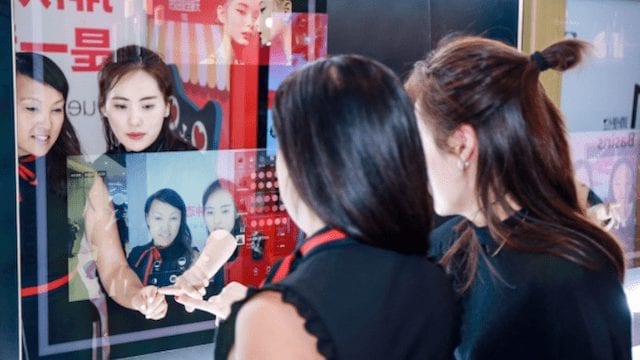
    Since launching in 2015, the awards largely have spotlighted New Retail-driven innovations. Featured technology at this year’s awards included the “Cloud Shelf” and the latest iteration of the augmented reality-powered “Magic Mirror,” which allows users to virtually try on new hairstyles, lipstick, eyeshadow and blush. Tmall said it would partner with with French cosmetics company L’Oreal to install Magic Mirrors in 50 of the beauty giant’s physical stores in China.

    Tmall hosts more than 3000 beauty brands on its platform, according to a report released by Tmall and Chinese research firm CBNData last year. Some of the newest entrants include LVMH-owned Givenchy, L’Oreal’s Giorgio Armani Beauty and Estee Lauder’s Darphin.

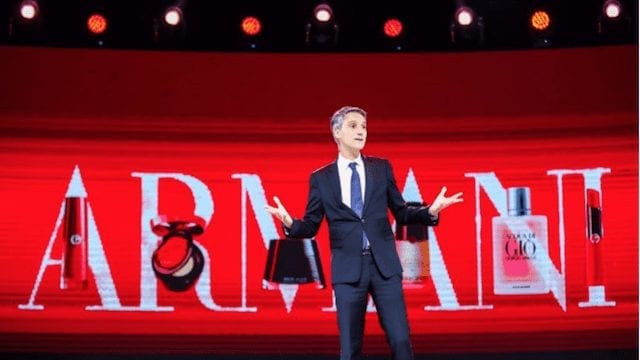
    “After two years of very successful acceleration in China, we felt this is the right timing to join Tmall to push artistry and premium-ness of the brand,” said Andrea Yann, GM of the China market at Giorgio Armani Beauty. “Our plan is really to understand from [Alibaba’s] database what are the main beauty concerns of Chinese women to solve their beauty issues, be very personalised still being [seen as] very artistry and premium.”

    Andrea Yann, GM of the China market at Giorgio Armani Beauty, speaks on stage.

    Younger more focused on beauty

    According to a report released by Tmall and market research consultancy Kantar, what they want is a more elaborate skincare regimen. Thirty-five per cent of respondents said they have added more steps to their beauty routines, and therefore are spending more on skincare products and cosmetics. Tmall attributed 53 per cent of the sales of beauty products on Tmall to consumers making more purchases per person.

    Beauty consumers in China – the world’s largest and fastest-growing beauty market at $22 billion – are also becoming younger than ever, the report noted. In 2017, users born after 1990 made up over 40 per cent of shoppers on Tmall Global, the site’s cross-border e-commerce channel, overtaking those born in the 1980s as the main consumption force on Tmall Global, the site’s cross-border e-commerce channel.

    Consumers born after 1990 like to try new products from new brands and less familiar origin countries, the report said.

    Embracing the new

    “In China, there’s more willingness to try new products at a faster rate than what you would see in different markets,” said Danielle Bailey, head of Asia Pacific research at digital agency L2.

    “It’s not that [Chinese beauty consumers] are less loyal, but their desire to explore is much higher,” she said. “This makes it more challenging for brands to sell to the market, but also creates new opportunities.”

    Tmall’s latest report also showed momentum for homegrown brands, particularly for skincare, where they accounted for 56 per cent of sales last year – up from 54 per cent in 2016. However, foreign brands still dominate the cosmetics category with 56 per cent of total makeup sales.

    Chinese brands are trying to boost their profiles by launching new prestige product lines or creating new products within an existing line, said Bailey. “It will be interesting to see if local brands can successfully transition to that space. It’s still a bit unclear because Western brands tend to be associated with better quality,” she added.

    From a product development standpoint, the pace of innovation in Asia has forced brands in the West to shrink development timelines to stay relevant, said Bailey. Where Western companies may take two years to release a product,” he said, “in Korea, some brands are launching new product every three months.”

    Time-to-market is indeed very important for beauty brands, said Ye Guohui, GM of Tmall’s new retail division.

    “Conducting market research alone can be very time-consuming, taking up to over a year,” he said. “But brands in China can leverage Alibaba’s data capacities to really shorten that timeline, and accelerate product development.”

  • Alibaba to thank New Retail for Its record sales

    Alibaba to thank New Retail for Its record sales

    Continuing momentum in Alibaba Group’s New Retail business helped drive a 56 per cent year-on-year growth in sales for the quarter to December 31.

    The performance of the New Retail category – which combines its online (non-marketplace) and fast-growing offline retail businesses, including investments in Sun Art Retail and other established businesses – was a core highlight of the quarter, according to CEO Daniel Zhang.

    “Alibaba had another great quarter driven by the continued strength of the Chinese consumer and the wide and innovative range of services we provide for merchants and consumers,” he said.

    “We are excited by the continued momentum in New Retail, which came to life during another record-breaking 11.11 Global Shopping Festival. We expanded the scale and footprint of our New Retail initiatives with the vision of delivering true convergence of the online and offline consumer experience through mobile and enterprise technology.”

    Maggie Wu, CFO, said the group’s core business generated significant free cash flow of US$7.1 billion during the quarter, “enabling us to invest in New Retail, cloud computing, digital entertainment and globalisation”.

    Revenue from core online commerce (marketplace) activities rose 57 per cent to US$11.257 billion and from cloud computing by 104 per cent to $553 million. Digital media and entertainment sales rose 33 per cent to $832 million.

    The number of annual active consumers on Alibaba Group’s China retail marketplaces reached 515 million, an increase of 27 million from the year to September 30.

    Net income was $3.586 billion with operating margin was 31 per cent and adjusted EBITA margin for the core e-commerce business 53 per cent.

    Group highlights

    Alibaba summarised group highlights in its earnings statement, including:

    Taobao: Artificial Intelligence (AI) drove user engagement, with the Taobao app’s intelligent personal recommendations and innovative content formats continuing to drive strong growth in user engagement, conversion and annual active consumers. “We continue to invest in machine learning technologies which we apply to use cases that match consumer intent and product selection to deliver the best consumer experience.”

    Tmall: Tmall recorded 43 per cent year-on-year growth in physical goods GMV during the quarter, reflecting robust growth across all major categories including apparel and accessories, consumer electronics (mobile phones) and FMCG. “Tmall continues to be the platform of choice for the world’s top brands, with Givenchy, Giorgio Armani Beauty and Volvo establishing Tmall flagship stores and Longines, Hennessy, Dom Perignon and Baccarat joining our Luxury Pavilion in this quarter.”

    11.11: Last year’s annual November 11 Global Shopping Festival exceeded the previous year’s records, with GMV settled through Alipay on Alibaba’s marketplaces up 39 per cent year-on-year to $25.9 billion. “The continuous success of this record-breaking event is enabled by our resilient and scalable technology, as well as payments and logistics infrastructure that is capable of operating at massive scale.”

    New Retail: Rapid expansion through partnerships and innovative technologies included the opening of five new Hema fresh grocery stores in Shanghai, Beijing, Ningbo and Suzhou, taking the network to 25 at year end. “Hema exemplifies the convergence of online and offline retail by leveraging our in-store proprietary technology, digitised supply chain system, consumer insights and mobile ecosystem to provide a seamless experience for consumers.”

    In November, Alibaba formed a strategic alliance with Sun Art Group, the leading hypermarket and supermarket chain by revenue in China with over 440 stores nationwide. “Through this partnership, we aim to equip traditional retailers with our proprietary technology and know-how in online offline convergence to implement their digital transformation. In addition, the partnership with Sun Art will also enable us to accelerate the expansion of our New Retail offerings with national scale.

    International:  Alibaba’s cross-border and international retail businesses continue to show strong growth. Revenue from international commerce retail business reached $727 million in the, representing 93 per cent year-on-year growth, driven by its Southeast Asian platform Lazada and its global retail marketplace AliExpress. “While the markets for Southeast Asia and cross-border commerce remain very competitive, they are in the early innings of the game. We are optimistic about the long-term secular growth prospects of our international markets and will therefore continue to make significant investments for market share growth and focusing on the best customer experience.”

    Cainiao Network: Alibaba’s logistics division, Cainiao Network, processed 812 million orders during the 11.11 event. Cainiao Network operates an electronic shipping label system that standardises shipping data into structured formats, which enables efficient pick-and-pack operations for merchants and sorting and routing operations for delivery partners. “The advantages of this system have resulted in broad adoption by merchants and logistics service providers, both on and off our platforms, putting us in position to serve the growing consumption economy in China and roll out our New Retail strategy.”

    Cloud Computing:  Cloud computing revenue grew 104 per cent year-over-year to $553 million, driven by both robust growth in paying customers and revenue mix toward higher value-add product.  “In the December quarter, Alibaba Cloud launched 396 new products and features and continued to introduce proprietary AI technologies to tackle real-world challenges, such as traffic planning and optimising efficiency in manufacturing and airport operations. Alibaba Cloud continues to expand its customer base across a variety of industries.”

    Alibaba Cloud customers include Watsons China, carmaker Geely, and Beijing Capital International Airport.

    Digital Media and Entertainment: During the quarter, Youku video’s daily average subscribers more than doubled year-on-year, driven by several original drama series and shows that became popular hits with users.

    AI and innovation: Alibaba says its AI-powered voice assistant, Tmall Genie, surpassed 1 million unit sales since its official launch in July and the end of the year. “Tmall Genie is supported by a growing collection of sales and services and is an effective vehicle for offering a comprehensive set of every-day living applications within the Alibaba ecosystem,” the company said.

    In January, Alibaba’s Institute of Data Science Technologies (iDST), its AI research arm, developed a deep-learning neural network for natural language processing that scored higher than humans on a Stanford reading-comprehension test, the first time a machine has outperformed humans on such a test. “This development underscores Alibaba’s commitment to technology research which we believe builds the foundation for our growth in the long run.”

    Ant Financial: Alibaba Group agreed to take a 33 per cent equity stake in Ant Financial that will strengthen its strategic relationship pursuant to the series of agreements reached with Ant Financial in 2014. “We believe deepening our relationship through an equity stake in Ant Financial will bring key strategic benefits to us, including advancing our New Retail strategy with mobile payments, increasing user acquisition and retention through collaboration with the Alipay digital wallet (Alipay Wallet), and enhancing the execution of our international expansion.”

    The number of Alipay Wallet’s daily active users more than doubled during the quarter on a year-on-year basis.