Retail News CRM

Tag: new zeland

  • PepsiCo names new CEO for Australia/New Zealand

    PepsiCo names new CEO for Australia/New Zealand

    PepsiCo has announced the appointment of Kyle Faulconer as the new CEO of Australia and New Zealand, effective January 2022.

    Faulconer will replace outgoing CEO, Danny Celoni, who was recently appointed to the Asahi Beverages Oceania Executive Leadership Team as the new CEO of Carlton & United Breweries, effective February 2022.

    To take up the new position, Faulconer will relocate to Sydney from the US, where he is currently Vice President and General Manager at PepsiCo’s Frito-Lay snacks business.

    He has had a 14-year tenure at PepsiCo and is a passionate advocate for consumer-centric innovation. Most recently he was responsible for leading the strategic agenda for Walmart, one of PepsiCo’s largest global customers.

    Wern-Yuen Tan, CEO, PepsiCo APAC, says that Faulconer’s strong market experience and people-first approach will be a great asset to the Australia and New Zealand team.

    “We are delighted to welcome Kyle to ANZ and know he will lead the team to new heights,” said Tan.

    In his new role, Faulconer will work to strengthen operations and drive innovation and growth across PepsiCo’s portfolio of drinks and snacks.

    He said: “I’m thrilled to join the world-class team and help the PepsiCo business continue to grow across Australia and New Zealand. I look forward to creating new opportunities to accelerate our positive, purpose-led impact for our partners, customers ad consumers.”

  • New Zealand to Introduce Climate Change Law

    New Zealand to Introduce Climate Change Law

    Banks, insurers and asset managers in New Zealand must make climate change-related disclosures for their businesses as New Zealand becomes a first-mover in green finance laws.

    All banks with total assets of more than NZ$1 billion ($703 million), insurers with more than NZ$1 billion in assets under management alongside equity and debt issuers listed on the country’s stock exchange will have to make disclosures, according to the proposed law which will see its first reading this week.

    Once the law is passed, the first disclosure reports will be released in 2023.

    The move towards more climate change-related disclosures will make New Zealand the world’s first to introduce such a law.

    Approximately 200 domestic firms and several foreign firms meet the NZ$1 billion thresholds to fall under the legislation.

    We simply cannot get to net-zero carbon emissions by 2050 unless the financial sector knows what impact their investments are having on the climate, said minister for climate change James Shaw said in a statement. This law will bring climate risks and resilience into the heart of financial and business decision-making.

  • Kathmandu lifts same-store sales in FY19

    Kathmandu lifts same-store sales in FY19

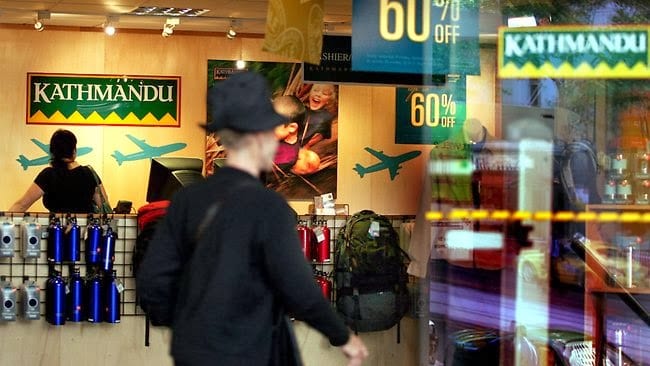
    Kathmandu has reported a 2.7 percent year-on-year increase in same-store sales in Australia in FY19, and a 3.9 percent decline in same-store sales in New Zealand year on year.

    Overall, group same-store sales grew 0.6 percent year on year in FY19, the outdoor retailer said in a trading update on its unaudited full-year results on Thursday.

    Total sales across the business grew 9.6 percent to $520 million (NZ$545 million) compared to the year prior, with Kathmandu seeing strong performance in Australia during the second half of the financial year.

    According to Kathmandu managing director and chief executive Xavier Simonet, this was due to strong winter sales in Australia, as well as the continued performance of footwear brand Oboz.

    US-based footwear brand Oboz, acquired in April 2018, is expected to see continued growth in FY20 and beyond, according to Simonet.

    The business expects to see net profit of between $52.9 million (NZ$55.5 million) and $54.3 million (NZ$57 million), based off of an EBIT of between $78.7 million (NZ$82.5 million) and $80.1 million (NZ$84 million).

    This is compared to last year’s net profit of $48.1 million (NZ$50.5 million) and $71.1 million (NZ$74.6 million).

    Kathmandu expects to release its audited full-year results in late September.

    Simonet has previously stated international growth remains a priority moving forward.

    Kathmandu appointed Amy Beck as president of its North American business in January of this year as part of this international push.

    “Kathmandu is on a journey of transformation,” Simonet said, noting that profit growth in the core Australasian business would be used to fund investment into future growth.

    “While we are focused on driving growth for our core Kathmandu business in Australia and New Zealand, we are also step by step diversifying our channels, brand and markets, particularly through Oboz which has delivered strong growth.”

  • Kiwis invest Money into Ethical Fashion Brand

    Kiwis invest Money into Ethical Fashion Brand

    With 14 days left to hit their minimum target, New Zealand-based ethical fashion brand Little Yellow Bird announced it has raised over $151,563 in its equity crowdfunding campaign.

    The Wellington-based company is offering Kiwis the chance to invest in the company for as little as $500 to scale its impact, grow the product range and make ethical fashion mainstream. The company also plans to expand internationally.

    Little Yellow Bird hopes to raise a minimum of $750,000 with its equity crowdfunding campaign on PledgeMe as it aims to become New Zealand’s first community-owned ethical fashion brand.

    “We are expanding, and we want to scale our voice and impact,” said Samantha Jones, Little Yellow Bird founder.

    Jones said the best way to do this was by having a community of values-aligned investors.

    Little Yellow Bird uses 100 per cent organic, rain-fed cotton and non-toxic dyes and follows a zero waste policy in its factories, saving millions of litres of water each year.

    With the fashion industry named as one of the biggest contributors to climate change across the world, producing about 10 per cent of greenhouse gas emissions, Yellowbird said it is “absolutely committed to ethical manufacturing.”

    “We track every single item of clothing from source to sale, and we ensure we have transparency across the entire supply chain for our products.”

  • New Zealand introduces groundbreaking zero carbon bill

    New Zealand introduces groundbreaking zero carbon bill

    New Zealand’s long-awaited zero carbon bill will create sweeping changes to the management of emissions, setting a global benchmark with ambitious reduction targets for all major greenhouse gases.

    The bill includes two separate targets – one for the long-lived greenhouse gases carbon dioxide and nitrous oxide, and another target specifically for biogenic methane, produced by livestock and landfill waste.

    Launching the bill, Prime Minister Jacinda Ardern said, “carbon dioxide is the most important thing we need to tackle – that’s why we’ve taken a net zero carbon approach. Agriculture is incredibly important to New Zealand, but it also needs to be part of the solution. That is why we have listened to science and also heard the industry and created a specific target for biogenic methane.”

    The Climate Change Response (Zero Carbon) Amendment Bill will:

    • Create a target of reducing all greenhouse gases, except biogenic methane, to net zero by 2050
    • Create a separate target to reduce emissions of biogenic methane by 10% by 2030, and 24-47% by 2050 (relative to 2017 levels)
    • Establish a new, independent climate commission to provide emissions budgets, expert advice, and monitoring to help keep successive governments on track
    • Require the government to implement policies for climate change risk assessment, a national adaptation plan, and progress reporting on the implementation of the plan.

    Bringing in agriculture

    Preparing the bill has been a lengthy process. The government was committed to working with its coalition partners and also with the opposition National Party, to ensure the bill’s long-term viability. A consultation process in 2018 yielded 15,000 submissions, more than 90% of which asked for an advisory, independent climate commission, provision for adapting to the effects of climate change and a target of net zero by 2050 for all gasses.

    Throughout this period there has been a discussion of the role and responsibility of agriculture, which contributes 48% of New Zealand’s total greenhouse gas emissions. This is an important issue not just for New Zealand and all agricultural nations, but for world food supply.

    Ministry for the Environment, CC BY-ND
    Another critical question involved forestry. Pathways to net zero involve planting a lot of trees, but this is a short-term solution with only partly understood consequences. Recently, the Parliamentary Commissioner for the Environment suggested an approach in which forestry could offset only agricultural, non-fossil emissions.

    Now we know how the government has threaded its way between these difficult choices.

    Separate targets for different gases

    In signing the Paris Agreement, New Zealand agreed to hold the increase in the global average temperature to well below 2°C and to make efforts to limit it to 1.5°C. The bill is guided by the latest Intergovernmental Panel on Climate Change (IPCC) report, which details three pathways to limit warming to 1.5°C. All of them involve significant reductions in agricultural methane (by 23%-69% by 2050).

    Farmers will be pleased with the “two baskets” approach, in which biogenic methane is treated differently from other gasses. But the bill does require total biogenic emissions to fall. They cannot be offset by planting trees. The climate commission, once established, and the minister will have to come up with policies that actually reduce emissions.

    In the short term, that will likely involve decisions about livestock stocking rates: retiring the least profitable sheep and beef farms, and improving efficiency in the dairy industry with fewer animals but increased productivity on the remaining land. Longer-term options include methane inhibitors, selective breeding, and a possible methane vaccine.

    Net zero by 2050 on all other gasses, including offsetting by forestry, is still an ambitious target. New Zealand’s emissions rose sharply in 2017 and effective mechanisms to phase out fossil fuels are not yet in place. It is likely that with protests in Auckland over a local 10 cents a liter fuel tax – albeit brought in to fund public transport and not as a carbon tax per se – the government may be feeling they have to tread delicately here.

    But the bill requires real action. The first carbon budget will cover 2022-2025. Work to strengthen New Zealand’s Emissions Trading Scheme is already underway and will likely involve a falling cap on emissions that will raise the carbon price, currently capped at NZ$25.

    In an initial reaction to the bill, the National Party welcomed all aspects of it except the 24-47% reduction target for methane, which they believe should have been left to the climate commission. Coalition partner New Zealand First is talking up their contribution and how they had the agriculture sector’s interests at heart.

    While climate activist groups welcomed the bill, Greenpeace criticized the bill for not being legally enforceable and described the 10% cut in methane as “miserly”. The youth action group Generation Zero, one of the first to call for zero carbon legislation, is understandably delighted. Even so, they say the law does not match the urgency of the crisis. And it’s true that since the bill was first mooted, we have seen a stronger sense of urgency, from the Extinction Rebellion to Greta Thunberg to the UK parliament’s declaration of a climate emergency.

    New Zealand’s bill is a pioneering effort to respond in detail to the 1.5ºC target and to base a national plan around the science reported by the IPCC.

    Many other countries are in the process of setting and strengthening targets. Ireland’s Parliamentary Joint Committee on Climate recently recommended adopting a target of net zero for all gasses by 2050. Scotland will strengthen its target to net zero carbon dioxide and methane by 2040 and net-zero all gasses by 2045. Less than a week after this announcement, the Scottish government dropped plans to cut air departure fees.

    One country that has set specific goals for agricultural methane is Uruguay, with a target of reducing emissions per kilogram of beef by 33%-46% by 2030. In the countries mentioned above, not so different from New Zealand, agriculture produces 35%, 23%, and 55% of emissions, respectively.

    New Zealand has learned from processes that have worked elsewhere, notably the UK’s Climate Change Commission, which attempts to balance science, public involvement and the sovereignty of parliament. Perhaps our present experience in balancing the demands of different interest groups and economic sectors, with diverse mitigation opportunities and costs, can now help others.

  • The Athlete’s Foot to open several more stores in New Zealand

    The Athlete’s Foot to open several more stores in New Zealand

    Performance footwear retailer The Athlete’s Foot has confirmed it will be opening at least 12 new stores across New Zealand and Australia in the next year.

    The news comes as the retailer opens a new flagship in Melbourne Central shopping centre in Australia today, featuring a new format that it hopes to replicate in upcoming store openings.

    “We’re not going to waste any time once we’ve proved this concept over the next couple of months,” The Athlete’s Foot general manager Steve Cohen told.

    “I think The Athlete’s Foot hasn’t opened a lot of stores over the last couple of years, and we have the appetite to absolutely get onto the expansion path.

    “If the Melbourne Central flagship works, and we’re confident that it will work, we see another half dozen of these across Australia and New Zealand pretty quickly… plus another half dozen that we’ve highlighted across the country.”

    The new store features an expanded product line and new technology to better suit product to consumer needs, and provides a roadmap for the future of the business.

    “We have had a few different store evolutions, but it’s been a couple of years now since we’ve really gone out and started again,” Cohen told.

    “Being a flagship, it needed to be at the forefront of the performance footwear space. I think our investment in the store, and the way we’ve progressed the whole experience, is leaps and bounds from where we’ve been in the past.”

    For the first time, The Athlete’s Foot has ditched the traditional foot measuring tool, the Brannock, in favour of its new MyFit3D measurement technology, which creates a 3D render of a customer’s feet and measures their gait and pressure points within 1mm.

    This technology is set to be pushed out across the brand’s 140 stores in the next nine months.

    “It gives you a lot more information relating to the consumer’s foot, and it actually ranks their foot relative to the rest of the population,” Cohen said.

    “People like hearing about themselves, so when you put them on the MyFit3D and you show them how long, or wide, or deep their foot is compared to the rest of the population, it’s a nice interactive way to engage with the customer.”

    With a more accurate measurement, the team in the Melbourne Central store will be able to recommend footwear from its expanded product line, which includes exclusive ranges from Asics and New Balance.

    The store also features LED screens that react to consumer behaviour; for instance, by displaying information about a particular shoe after the customer picks it up off the shelf. This keeps customers in the moment, rather than browsing for additional product information on their phones – and potentially purchasing an item online from another retailer.

    “The main thing is that we can be a lot more nimble in our messaging to the consumer [about] our new arrivals, or product or brand that we want to call out in store,” Cohen said.

    “It’s touch screen as well, so if we decide to go down the path of shopping online or engaging with the consumer from a people point of view we can do that as well.”

    The location played a large part in the product line The Athlete’s Foot was able to secure, with suppliers having been asking for a “cutting-edge performance execution” for some time.

    “What we’ve found off the back of that is that the suppliers are giving access to product that we might not have had access to, and we think that this is an exciting step forward for our brand,” Cohen said, indicating this access will filter through the rest of the business moving forward.

  • Kiwi spending habits revealed

    Kiwi spending habits revealed

    People living in Canterbury spend the third highest amount on eating out after Auckland and Wellington, according to data gleaned from Westpac NZ.

    The financial firm has drilled down into the data of over 96,000 CashNav app users and determined the spending habits and characteristics of Kiwi consumers across the country.

    Westpac’s CashNav app allows customers to track their daily spending habits by categorising what they spend their money on and identifying what is holding their saving aspirations back. It also notifies them if their spending is higher than usual.

    The app does this by automatically categorising customers’ EFTPOS, debit and credit card transactions into one of 12 categories such as eating out, shopping, travel, entertainment, home, groceries, transportation, utilities, education and health.

    The data found that those aged 18-75 years old and living in Canterbury spend around $380 on average per month at cafes, restaurants or fast food outlets – third only to Aucklanders who spend $486 and Wellingtonians who spend $436.

    In Canterbury, the biggest spenders were people aged 36-55 – they spent $453 per month compared to $366 for 18-35s and $318 for those aged 56-75 years old.

    However, when it comes to who spends the most on groceries, smaller populated regions spend more at the supermarket than Cantabrians who spend $657 on average per month. Those living in Marlborough spend the most on groceries each month at $712 on average, followed by Otago on $668 and Southland on $658.

    Meanwhile Hawke’s Bayers are some of the most careful spenders in the country

    When it comes to spending on groceries, people living in Hawke’s Bay spend the second lowest of 13 New Zealand regions on average per month.

    Westpac found that those living in Hawke’s Bay spend around $517 on average per month, beaten only by those in the Manawatu-Wanganui region who spend around $502 per month. People in Marlborough spend the most at $712 on average per month.

    When broken down into age groups, millennials (18-35s) in the Hawke’s Bay spend the least on groceries when compared to millennials living in other regions, at $372 per month on average.

    And in a region with an array of fine wines and dining options, people in Hawke’s Bay came in at only ninth out of 13 regions on their spending on eating out at cafes, restaurants, and at fast-food outlets.

    It’s a similar story when it comes to spending on health such as gyms fees, pharmacies, make-up stores and beauty salons, with people in the Hawke’s Bay spending about $183 on average per month – nearly $100 less than people in Auckland.

    “People in Hawke’s Bay appear to be keeping a close eye on their spending which is good,” said Westpac NZ GM of marketing, products and transformation, Andrew Kerr.

    Bay of Plentians are more likely to splash out on entertainment compared to many other New Zealand regions, according to the data.

    Those in the Bay of Plenty spend the third highest amount at around $223 on average per month at the movies, at concerts, or on gaming or gambling – beaten only by Auckland and Taranaki.

    People in Marlborough spend most on groceries compared to other regions, with Westpac finding Malburians spend around $$712 on average per month at the supermarket – the highest grocery spend in the country.

    When broken down into age groups, those aged 36-55 in Marlborough spend the most on groceries at around $924 while Marlborough millennials (18-35) spend $495 per month on average.

    People in the Manawatu-Wanganui watch their pennies the most when it comes spending on eating out, groceries, health and entertainment, with those living in the Manawatu-Wanganui spend the least of 13 regions on groceries at around $502 on average per month – $210 less than the highest spending region, Marlborough.

    People from Southland spend the third highest amount on groceries when compared to 12 other regions in New Zealand, beaten only by Marlborough and Otago respectively.

    Southlanders between the ages of 18-75 spend around $658 on average per month at the supermarket but when broken down further, Southlanders aged 36-55 spend $951, 56-75s spend $697 and millennials (18-35s) spend $538.

    Overall, mainlanders spend more on groceries than people in the North Island.

    People living in Otago are the second highest spenders at the supermarket on average, when compared to other New Zealand regions. When the spending is broken down into the various age groups, those in Otago aged 36-55 spend around $989 per month, 56-75s spend $798 and millennials (18-35s) spend $511 on average per month.

    People in Taranaki spend the second highest amount on entertainment in the country compared to other regions, according to data gleaned from Westpac NZ.

    When it comes to spending on groceries, people in Taranaki spend around $601 on average per month compared to people in the Marlborough region who spend $712.

    Other figures related to dining out at cafés, restaurants, and at fast-food outlets show Taranakians well down on their spending compared to other parts of the country -$151 less than Aucklanders on average.

    When it comes to spending on health such as gyms fees, pharmacies, make-up stores and beauty salons, Taranakians spend the fourth highest of 13 regions at $204.

    Spending habits show people in the Waikato spend more than many other regions on eating out but not as much as other parts of the country on groceries.

    Those in Waikato spend around $354 on average per month at cafes, restaurants and fast-food outlets – the fourth highest in the country.

    Those in the 36-55 age group in Waikato spend the most at $403, while millennials (18-35s) spend $343 – more than the 56-75s who spend $294 per month on average.

    Millennials (18-35s) living in Tasman watch their pennies the most when it comes to spending on entertainment compared to millennials in other New Zealand regions. People in Tasman spend the fifth highest on groceries at $654 per month on average, but the fourth lowest on eating out at cafes, restaurants and fast-food outlets at $320 per month.

    And in Auckland, those living north of the harbour bridge were spending more tucking into takeaways than other Aucklanders.

    People on the North Shore spent the most satisfying their fast food cravings with an average splurge of around $75 per month. That spending rose to $84 a month for those aged 36-55.

    Central/East Auckland residents spent the most in bars, on average $91 per month, followed by those on the North Shore on $85, South Auckland on $83 and West Auckland on $75.

    And with the café culture of Ponsonby and Grey Lynn it may come as no surprise that Central/East Aucklanders across all age groups spent the most at cafés and restaurants – on average $194 per month, followed by North Shore on $173, South Auckland on $143 and West Auckland on $130.

    “The interesting thing is that it’s not millennials eating so-called ‘smashed avocado’ – it’s the 36-55- year-old age group who’re spending the most in cafés, restaurants, bars and on fast food, followed by those aged 56-75,” said Kerr.


  • New Zealands’s Spark adds third EPC to mobile network

    New Zealands’s Spark adds third EPC to mobile network

    New Zealand operator Spark has added a third evolved packet core node to its mobile network to accommodate surging data traffic and add more resiliency.

    The company said it has deployed a new node in Porirua to allow it to meet strong demand for mobile data. Its customers have already downloaded 34 petabytes of data in the first eight months of the year, compared to just 6.9 petabytes over the same period last year.

    In addition, the additional node will allow the operator to shift and re-route traffic in the case of outages, particularly those caused by natural disasters or emergencies.

    “Rapid advances in wireless capability, together with the uptake of mobile apps and video streaming means we see people on the network for longer and downloading more data than ever before,” Spark general manager for networks Colin Brown said.

    “We want to ensure we are giving our customers the best wireless experience possible. The installation of this third node is important because our customers expect an ‘always on’ service and so we need to ensure we have the capacity and resiliency to provide this.”

    Spark is also the only New Zealand operator to date to have deployed 4.5G technology on its network, including carrier aggregation, 4×4 multiple input multiple output (MIMO) and 256 quadrature amplitude modulation (256 QAM).

    The company has so far switched on 4.5G in areas of nine cities and towns, and plans to add more towns to the footprint within the next 12 months as a stepping-stone to 5G adoption.

  • Kathmandu’s two for two director swap

    Kathmandu’s two for two director swap

    Christine Cross and John Holland will retire from the board of outdoor apparel retailer Kathmandu, with the Kiwi-based retailer announcing replacement directors following an extensive international search.

    Holland has been a director of Kathmandu since the company’s Initial Public Offering in 2009 while Christine Cross has served as a director since 2012.

    The two new directors joining the board are Philip Bowman and Brent Scrimshaw.

    Bowman is an Australian who has worked for many years in the UK and USA and is relocating to New Zealand towards the end of this year. He has experience in retail and other sectors including roles as CFO of Bass, CEO of Bass Taverns, executive chairman of Liberty PLC, CEO of Allied Domecq, chairman of Coral Eurobet, CEO of Scottish Power and CEO of Smiths Group. He has also held office as an independent director of BSkyB, Scottish & Newcastle and Berry Bros. & Rudd. He currently sits on the boards of luxury goods business Burberry Group, Spanish infrastructure group Ferrovial SA, and is chairman of Dubai based Majid al Futtaim Properties and housebuilder The Miller Homes Group (UK).

    Scrimshaw, also Australian, had an 18-year career with Nike Inc across marketing, commerce and general management. He led marketing across Nike Pacific, was the regional GM for Nike Nth America, was the chief marketing officer for Nike EMEA, and also served as vice president and chief executive of Nike Western Europe. He retired from Nike in 2012 and is currently the CEO and Co-Founder of Unscriptd.com and is a non-executive director of ASX listed Rhinomed (RNO) and Catapult International Limited (CAT).

    David Kirk, chairman of Kathmandu, said both directiors “bring absolutely first class understanding of retail, brand development and international markets” and are a “great fit for the next stage of Kathmandu’s journey.”