Tag: Next

  • Meta Unveils New Ray-ban Display: A Leap Forward In Smart Glasses Technology

    Meta Unveils New Ray-ban Display: A Leap Forward In Smart Glasses Technology

    During the recent Meta Connect event, CEO Mark Zuckerberg unveiled the Meta Ray-Ban Display, their latest innovation in smart glasses technology. This newly introduced product, featuring an integrated display, is not classified as an Augmented Reality (AR) device; however, Meta is fully engaged in the development of AR technology. There is speculation that the company might unveil another unexpected product before launching a comprehensive AR glass.

    The Potential of Smart Glasses

    Mark Gurman, a notable figure in the tech industry, disclosed his impression of the Ray-Ban Display in a recent newsletter. According to Gurman, this is the first instance where he recognized the considerable potential of smart glasses technology. He also revealed that Meta is in the process of designing another pair of smart glasses equipped with dual displays.

    Interestingly, the upcoming model, despite being non-AR, will be launched during the same year as the consumer-oriented Orion AR smart glasses. Although it may seem unusual, the company is presumably aware that the AR smart glasses will carry a hefty price tag. The Ray-Ban Display, retailing at $799, is currently incurring losses for Meta. Despite a decade of financial investment into its XR (Extended Reality) division, Reality Labs, Meta continues to face financial losses in its drive to become a leader in the future of computing technology.

    The Functionality of Ray-Ban Display

    The existing Ray-Ban Display projects a screen to one side of the user’s vision. It is expected that the forthcoming dual-display model will expand upon this feature, potentially projecting two screens on either side and possibly granting the user the ability to operate two or more apps concurrently.

    Even though XR enthusiasts are eagerly awaiting the release of the AR glasses set for 2027, the current Meta Ray-Ban Display serves as an effective tool for practice.

    A Dual Display Smart Glasses in the Pipeline

    In other news, a beautifully illustrated book titled “Iconic Phones: Revolution at Your Fingertips” is set to release this fall. The book promises to offer a unique insight into some of the most distinctive and unforgettable phones from the past two decades. It is expected to be a must-have for tech enthusiasts, chronicling the stories of over 20 fan-favorite phones and their contribution to the technological revolution.

    Questions & Answers

    What is the Meta Ray-Ban Display?
    The Meta Ray-Ban Display is the latest innovation in smart glasses technology from Meta. It features an integrated display.

    What does the future hold for Meta’s smart glasses?
    Meta is reportedly working on another pair of smart glasses that will feature two displays. In addition, the company plans to release the Orion AR smart glasses in 2027.

    What is the “Iconic Phones: Revolution at Your Fingertips” book about?
    “Iconic Phones: Revolution at Your Fingertips” is an illustrated book that details the stories of more than 20 fan-favorite phones from the past two decades, highlighting their impact on the technological revolution.

  • Coupang Surpasses $8 Billion Mark: Record Revenue And Profit Turnaround Amid Taiwan Expansion

    Coupang Surpasses $8 Billion Mark: Record Revenue And Profit Turnaround Amid Taiwan Expansion

    South Korean retail behemoth Coupang has experienced substantial growth this year, boasting a record revenue of $8.52 billion in Q2, a rise of 19% year-over-year with an FX-neutral basis. This marks the first time the company has surpassed the $8 billion mark.

    Additionally, Coupang achieved a net profit of $31 million, a significant turnaround from last year’s Q2 deficit of $105 million. The company’s adjusted EBITDA hit $428 million.

    Core Strengths

    Coupang’s primary source of income comes from its Product Commerce sector, which encompasses Rocket Delivery, Rocket Fresh, Rocket Growth, and the marketplace. The adjusted EBITDA for this segment climbed to $663 million, and margins reached an unprecedented 9%.

    Most of the revenue growth in Q2 came from existing customers. According to Bom Kim, Coupang’s founder and CEO, even the oldest customer cohorts demonstrated robust spending increases in the double digits.

    Kim stated, “As we expand our selection to match customer preferences, they’re also purchasing across a broader number of categories.”

    The Rocket Delivery model, previously criticized for its extravagant spending and capital intensity, is now viewed as a competitive advantage. Same-day and dawn delivery volumes soared over 40% year-over-year, primarily due to the addition of over half a million new Rocket SKUs in Q2.

    Taiwan’s Progress

    Coupang’s Developing Offerings segment, which encompasses Taiwan Rocket Delivery, Coupang Eats, Coupang Play, and Farfetch, posted a revenue of $1.19 billion, an increase of 33% year-over-year. Although this unit is still not profitable, with an adjusted EBITDA loss of $235 million, a majority of this loss can be attributed to increased investment in Taiwan.

    Coupang’s CFO, Gaurav Anand, noted that Taiwan is the main reason behind a revised full-year EBITDA loss prediction for the segment, estimated to be between $900 million and $950 million.

    Coupang launched its Wow membership program in Taiwan in March, targeting a population of 23 million and a retail sector valued at $152.7 billion. Since entering the market in 2022, the company has invested approximately $355 million in expanding its logistics infrastructure and product selection.

    This investment appears to be producing early results, with Taiwan’s revenue surging 54% quarter-over-quarter and recording triple-digit growth year-over-year. These improvements are not only due to customer acquisition but also improved customer retention and spending.

    Kim commented, “Our Taiwan offering is growing faster and stronger than even the most optimistic forecasts we set at the beginning of the year.” He added that they see a similar growth trajectory in Taiwan as they did in the early years of scaling their retail offering in Korea.

    Despite initial concerns, Coupang’s aggressive investment indicates growing belief that Taiwan could become a second profitable market in the long term.

    While Taiwan’s progress overshadows other areas, Coupang’s other businesses continue to develop. Food delivery service Coupang Eats showed continuous double-digit growth, benefiting from the company’s established logistics infrastructure.

    Additionally, Coupang Play, its streaming platform, has added new features like a Sports Pass, providing access to premium sports leagues ranging from the Premier League to Nascar.

    Although these businesses are not yet profitable, they help to retain users within the Coupang ecosystem.

    Looking forward, Coupang faces significant challenges. The South Korean retail sector has been declining for 13 consecutive quarters – the longest recorded downturn. With limited room for further growth at home, the company’s future hinges on maximizing each customer’s value or finding new customers abroad. Taiwan is off to a strong start, but expanding it into a second growth engine may prove challenging, and the level of investment required could test investor patience if results don’t keep up the pace.

    Questions & Answers

    What contributed to the growth of Coupang’s Q2 revenue?
    Existing customers contributed to most of the growth, with spending increases across all cohorts. Additionally, the company expanded its product selection, leading to customers buying across a wider range of categories.

    What is the role of Taiwan in Coupang’s financial strategy?
    Taiwan is a significant focus for Coupang’s investment, aimed at expanding its market beyond South Korea. The company’s aggressive investment in Taiwan indicates a growing belief that it could become a second profitable market in the long term.

    What challenges does Coupang face moving forward?
    Coupang is challenged by the continuous decline in the South Korean retail sector. With limited potential for domestic growth, the company’s future success increasingly relies on maximizing value from each customer and expanding its customer base abroad. Additionally, the level of investment required in markets like Taiwan could test investor patience if results don’t match the pace of investment.

  • 7-eleven Eyes Nationwide Expansion: 5000 Stores In Philippines By Next Year

    7-eleven Eyes Nationwide Expansion: 5000 Stores In Philippines By Next Year

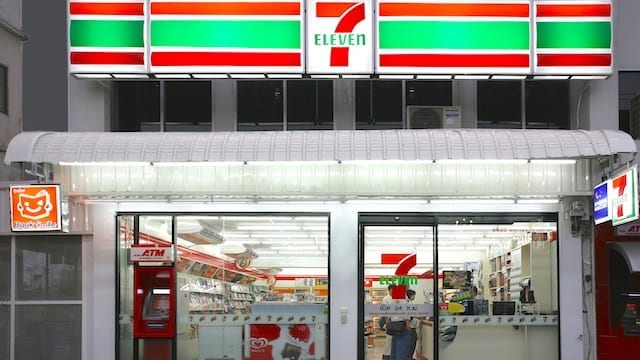
    Philippine Seven Corp (PSC), the company that operates 7-Eleven stores domestically, has plans to significantly increase the number of outlets across the country by next year. The ambitious goal is to expand their current network to an impressive 5000 branch total.

    Ambition for Expansion

    During a recent press briefing, PSC Chairman Jose Victor P Paterno confirmed that the company is well on its way to reaching this considerable goal. He expressed confidence by stating it was “safe to say” that the 5,000-store landmark will be achieved by next year.

    As it stood at the close of last year, PSC was operating 4,130 7-Eleven stores throughout the Philippines. This indicates an intent to open between 450 and 500 new outlets over the course of this year.

    Funding the Growth

    The expansion will be facilitated by a PHP5.5-billion (US$97 million) capital expenditure program. Although this is somewhat less than the previous PHP6-billion allocation, it is by no means a small investment.

    Strategic Expansion

    The planned growth of 7-Eleven outlets is not just about increasing numbers. PSC’s strategy is to target areas that are currently underserved in terms of retail, responding to the growing nationwide demand for retail options that are both accessible and convenient.

    Questions & Answers

    What is the goal of Philippine Seven Corp (PSC) for their 7-Eleven outlets by next year?
    The company aims to expand its current network to a total of 5000 stores nationwide.

    How many new 7-Eleven stores does PSC plan to open this year?
    PSC plans to open between 450 and 500 new outlets over the course of this year.

    What is the strategy behind PSC’s expansion of 7-Eleven outlets?
    The expansion is part of a broader strategy to reach underserved markets and respond to increasing demand for accessible and convenient retail options nationwide.

  • British retailer Next, US investor plan joint bid for Arcadia

    British retailer Next, US investor plan joint bid for Arcadia

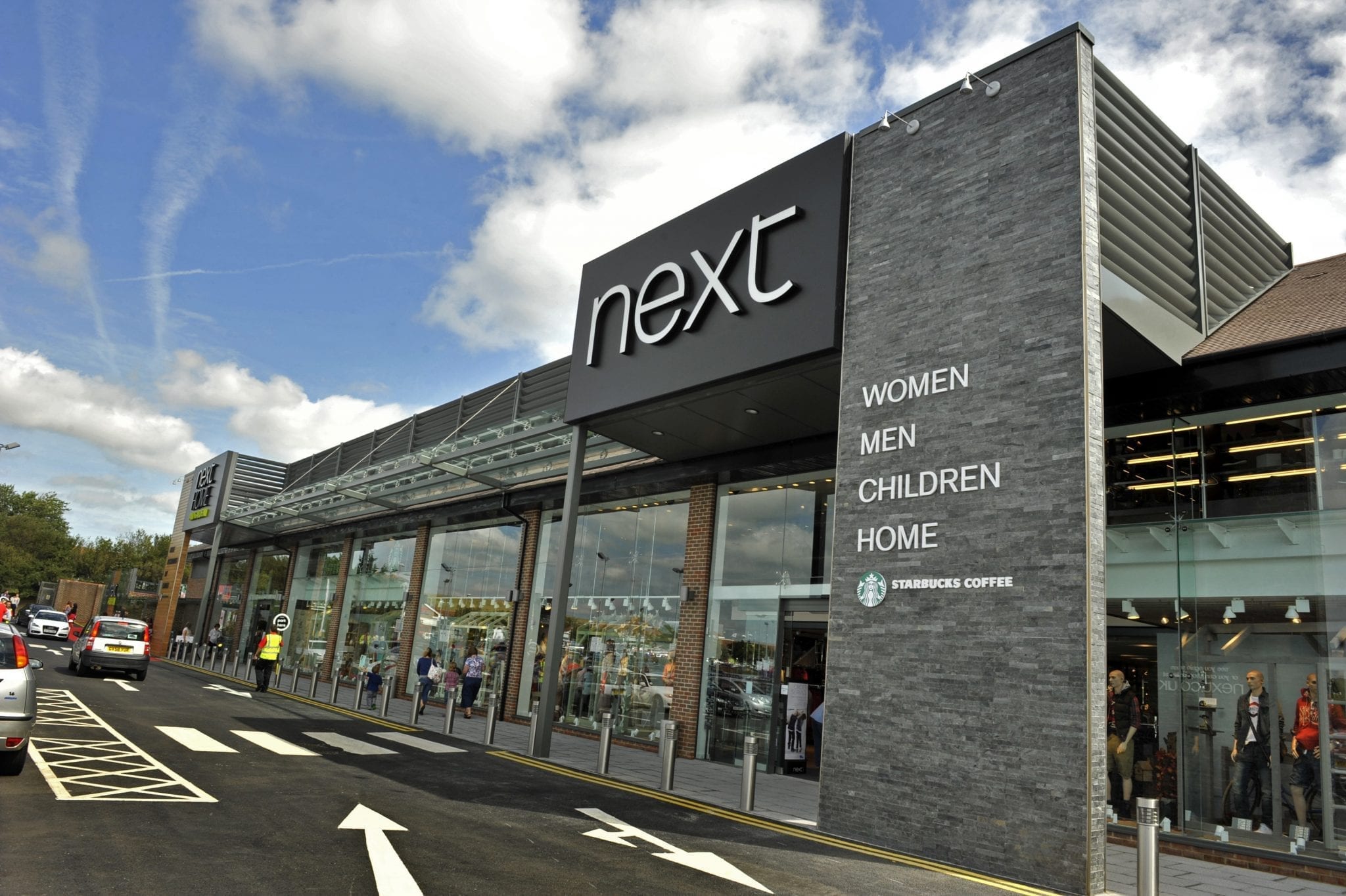
    Fashion retailer Next is in talks with American investment firm Davidson Kempner Capital Management for a joint bid to gain control of Arcadia fashion group, which collapsed into administration last month, Sky News reported on Friday.

    The two companies were “likely, but not certain” to bid for Arcadia ahead of a revised deadline next Monday, the Sky News report added, citing sources.

    Under the plans being discussed, Davidson Kempner would provide the majority of the funding required to complete a takeover, Sky News reported.

    Next and Davidson Kempner Capital Management did not immediately respond to requests for comment.

    Arcadia’s collapse into administration in November put over 13,000 jobs at risk, with the company becoming one of the UK’s biggest corporate casualties of the COVID-19 pandemic.

    The fashion group, whose brands include Topshop, Topman, Dorothy Perkins, Wallis and Miss Selfridge, trades from 444 leased sites in the United Kingdom and 22 overseas.

    The Daily Telegraph earlier this month reported Authentic Brands was planning a takeover of Arcadia Group, which had declined sportswear group Frasers’ offer of a “lifeline” loan of up to 50 million pounds.

  • Next faces a downturn

    Next faces a downturn

    Next profits have fallen for the first time in nearly a decade.

    The UK high street fashion retailer said pre-tax profits fell 3.8 per cent to  £790.2 million last fiscal year.

    Emily Stella, a senior retail analyst with GlobalData, says the company has faced numerous challenges over the last year: erratic weather, rising import costs as the pound depreciated, and Next Directory being hit by increased competition from online pure-plays Asos and Boohoo.

    “Not to mention a more general shift away from clothes buying in favour of spending on leisure,” she commented.

    “Next’s stance on discounting – only marking down items during sale periods – has been a good thing for the retailer, sustaining consumer perceptions of product value and allowing Next to retain high margins. However, full-price retail sales were down 4.6 per cent, indicating that shoppers are not buying into its current proposition – and Next admits it has not been fast enough at responding to new trends.”

    But she says the retailer remains one of the best-run brands on high street – the issue is that the clothing market is “far tougher than before”.

    Next says it anticipates a difficult first half of the new trading year with improved performance in the latter half.

    “But the retailer could find the next few years a challenge as competition intensifies and Next struggles to keep up,” concludes Stella.

  • New Look loses market share in tough year

    New Look loses market share in tough year

    New Look’s share of the UK clothing market has fallen to 2.6 per cent for calendar year 2016 – from 2.7 per cent in 2015.

    Stores have failed to drive the necessary footfall to return its like-for-like performance to positive territory, with year-to-date (39 weeks to 24 December 2016) UK like-for-likes are down 7.3 per cent with the likes of Next, Primark and Matalan also finding it tough to grow organic stores sales during 2016. Moreover, weaker sales and significant levels of discounting throughout the year led to a 32.6 per cent decline in underlying operating profit to £111.5 million, bringing margins down 4.2 percentage points to 9.8 pr cent.

    The strength of the online competition has dampened the appeal of New Look’s physical stores.

    The fashion-led product mix, attractive pricing and inspiring shopping experience at the likes of boohoo.com, Missguided and Asos continue to encourage New Look’s core shopper base to browse and shop more online reducing the need to visit physical stores. This shift has benefited New Look’s online platform as has its investment in product styling, delivery options and editorial content.

    The double digit growth in online sales highlights that the problem does not lie with product – it is the number of stores New Look operates and their lack of responsiveness during periods of unseasonal weaker.

    Store closures, enhanced visual merchandising, increased product newness and adapting its seasonal mix and phasing is essential to return like-for-likes to growth and limit the threat of the online pure-plays.

    Honor Strachan

  • Fashion chain Next faces crossroads

    Fashion chain Next faces crossroads

    Fashion chain Next needs to carefully rethink who its customers are and how best to attract them to avoid falling into the same trap as M&S, says a retail analyst.

    The UK-based retailer has released its fourth quarter results for 2016, described by Emily Stella, analyst with Verdict Retail, as “poor” against a weak comparative.

    “The retailer admits it expected more from its Christmas sales. Next’s underwhelming performance was not isolated to the fourth quarter: 2016 has been a difficult year for the retailer, with full price sales for the year to date down 1.1 per cent on last year.”

    The company said it expected profits to fall in its 2017-18 financial year by between 2 per cent and 14 per cent due to “tougher times” ahead. A 0.4 per cent quarterly increase in total sales was achieved purely through discounting, which means narrower margins. Price rises, already flagged, may reduce revenue in the year ahead by a further 0.5 per cent.

    “Next has long been a retail star, seemingly unable to do wrong,” observed Stella. “However, the retailer acknowledges that 2017 could be a challenging year as consumers continue to restrict spending and a devalued pound forces price rises.”

    She said the recent results may mark the start of a difficult period for the retailer.

    “As it stands, Next’s current shoppers aren’t buying into its proposition – perhaps an indication that Next is failing to identify with its target market. To avoid falling into the same trap as M&S, Next will need to carefully rethink who its customer is and how to best attract them.”

    Next’s share price fell by 14 per cent after its gloomy projections.

  • Mothercare recovery hits a bump

    Mothercare recovery hits a bump

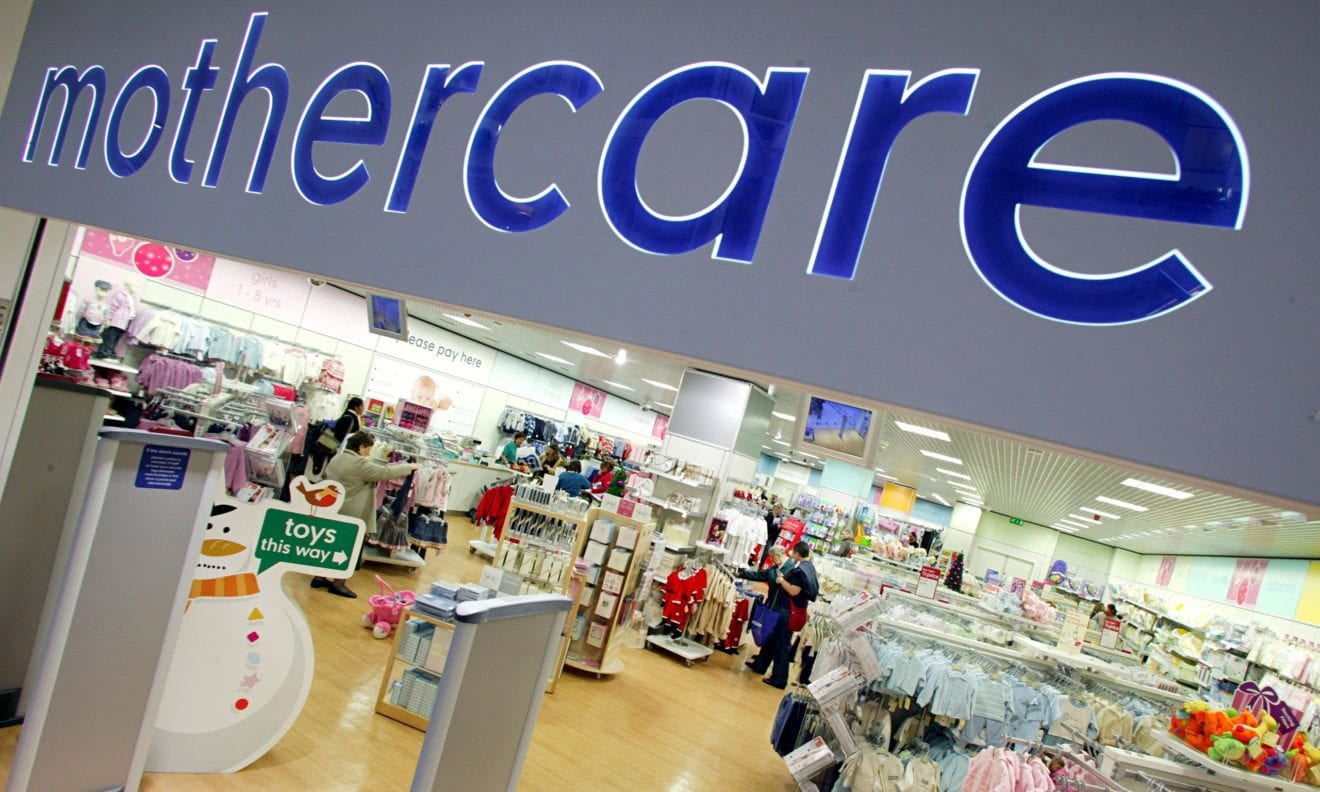
    Mothercare is in the process of a much needed turnaround strategy for its UK business that aims to bring the UK side of its proposition back to profit.

    After a reasonable first quarter result, the retailer has felt the effects of a tougher economic climate in the second, with like-for-likes dipping into negatives for the combined first half year.

    From March onwards expect to see Mothercare increase its prices, given that close to half its products are sourced in US dollars, which will likely be another blow to UK profits.

    Mothercare continues to focus on its digital business, with online sales now 40 per cent of total UK retail sales, compared to 36 per cent this time last year. However, a significant 44 per cent of online sales come from instore orders on staff iPads – which suggests consumers are visiting stores but due to limited floor space there’s poor product availability. Mothercare’s ‘online’ sales don’t look quite so impressive.

    Mothercare has other issues to contend with. While the retailer is popular for newborns, in the next couple of years, the business will need to focus on retaining these consumers with celebrity and fashion-led ranges as fast fashion retailers such as H&M, Zara and Next draw this customer base from its stores.

    International remains an area of success for Mothercare, boasting profits of £20.8 million. However, the volatile international market means the retailer must not rely on its international success to soften the losses it continues to make in the UK.

  • M&S, Debenhams stand most to gain from BHS breakup

    M&S, Debenhams stand most to gain from BHS breakup

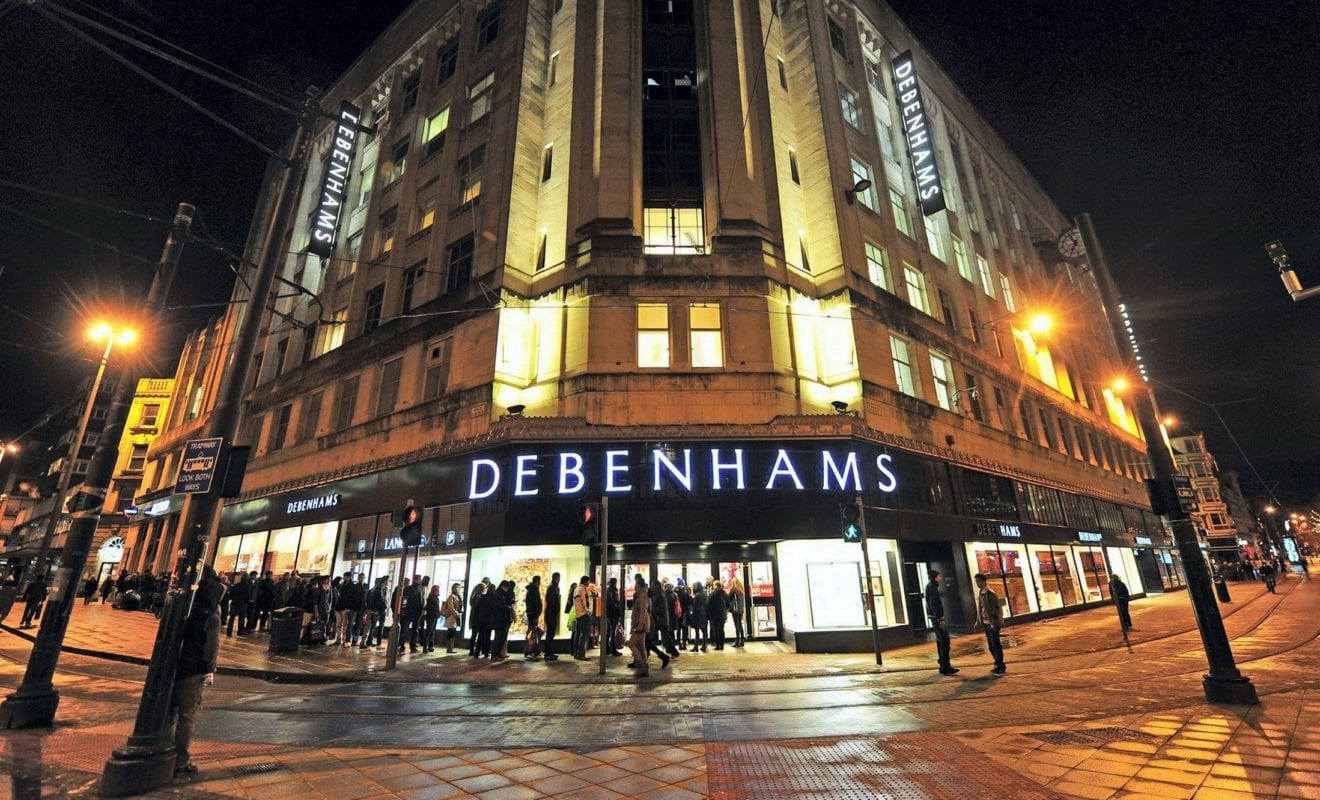
    Only the very bravest of investor should consider retaining BHS in its current dilapidated state. But if such a buyer cannot be found, and a BHS breakup ensues, with the store estate sold to other retailers, Marks & Spencer and Debenhams would be the main beneficiaries.

    As the deadline for bids for BHS looms, hopes are rising that a buyer can be found for the entire store estate and that its 11,000 employees can be protected. Even if such a buyer is found, it is likely to have to conduct major surgery to revive the moribund brand. Verdict data shows that it has consistently lost market share to its competitors in all its key sectors, and its weak multichannel offer, dated brand and underinvested store environment mean any buyer would have to think seriously about retaining the BHS name.

    BHS’ clothing proposition has become ever more irrelevant over the years, and many of its clothing shoppers have already defected to more agile competitors, leading to its market share more than halving in the 10 years to 2015.

    BHS clothing market share 2010-15

    BHS’ predominantly 45+ shopper base enjoy the convenience of shopping for a disparate variety of products under one roof, which means that department store rivals such as Debenhams and M&S would be first in line to benefit from its fallout. The grocers should also receive a much-needed boost given the similarity of their clothing proposition to BHS in terms of design and affordability.

    This is backed up by looking at where BHS clothing shoppers also tend to shop (from Verdict’s March 2016 How Britain Shops survey of 10,000 consumers) – M&S is the clear leader, and should be able to translate this into an increase in market share.

    Where BHS clothing shoppers also shop for clothing

    Clothing specialists at the value end of the market, such as Matalan, Primark and New Look are also likely to benefit; as are online pureplays such as Amazon – albeit to a lesser extent.  It is, however, those retailers that make a concerted effort to draw in BHS shoppers, through customer acquisition initiatives such as targeted promotions or local marketing campaigns that will see the maximum gains.

    BHS homewares market share 2010-15

    BHS’ unopposed trudge toward mediocrity has had a significant impact on where its remaining shoppers are likely to now go for homewares purchases. The retailer’s brand positioning means its shoppers will have also shopped at the ever growing homewares discounter set, like B&M and Home Bargains. However, it is Amazon and Argos, both value focused retailers with modern and extensive delivery/channel offers that have been the main beneficiaries of disaffected BHS shoppers in the past and will undoubtedly be so in the future.

    High street retailers M&S and Debenhams are also in line to see a marginal upswing as high street focused customers seek out alternatives. The former has the most similar customer profile to BHS and hence is more likely to be a first choice. However, M&S has made some strategic moves to appeal to younger, more fashion-conscious homewares shoppers in recent years, therefore BHS’ customers may be a little surprised about what is on offer when they visit, aside from its core bedding and bathroom offer.

    Living room textiles: Home Retail Series market share 2015

    BHS is currently strongest in softer, more aesthetic categories, such as living room textiles and lighting, as opposed to functional products such as cookware. Therefore its demise would be unlikely to have a significant impact on the grocers. Conversely, Dunelm and Next share a similar emphasis on textiles and design-led categories, and as such, their already strong performance in the homewares category is likely to be bolstered further should BHS disappear altogether.


  • SuperGroup’s stellar performance

    SuperGroup’s stellar performance

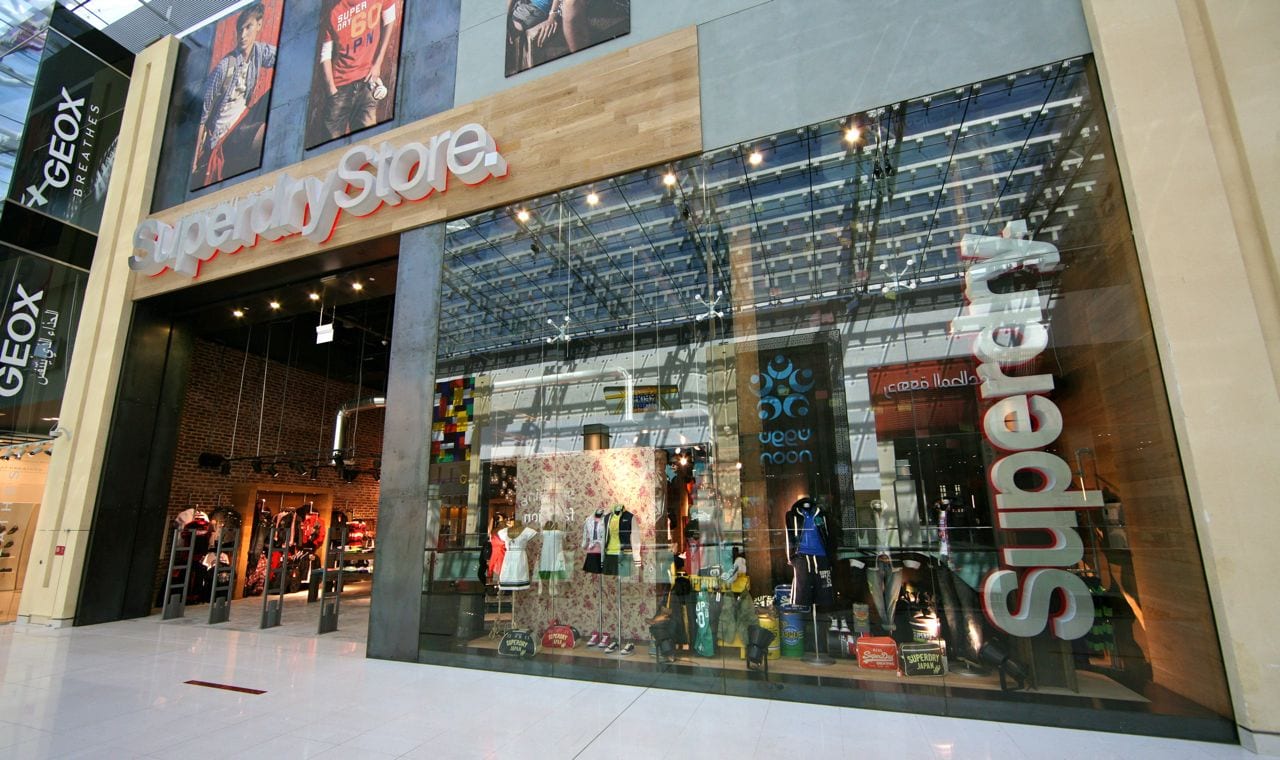
    Against a bleak background of stalling sales from major high street players such as Next and Primark, SuperGroup has posted a stellar set of full-year results.

    Strong growth was achieved across both its retail and wholesale divisions – 24.5 per cent and 13.7 per cent respectively – contributing to total group revenue of £589.5 million.

    There was no mention of poor weather affecting fourth quarter retail sales, which were up by 29.9 per cent on a top line basis and by 15.4 per cent on a like-for-like basis, highlighting how Superdry’s transeasonal ranges are more aligned with the manner in which consumers shop than many other retailers. Consumers’ shopping habits are changing, and seasonal product drops are increasingly irrelevant when shoppers prefer to buy across seasons – a lesson several clothing retailers would do well to learn.

    No doubt, the net 24 stores the retailer opened during the year were major contributors to its full-year results, but robust like-for-like growth indicates consumer demand remains strong for Superdry’s distinctive product. 2015 was a year of product development and range extensions for the retailer, with new sports and activewear ranges added, a highly-publicised collaboration with actor Idris Elba, and greater focus on womenswear – all initiatives which have driven spend from existing shoppers while recruiting new ones.

    On a slightly less upbeat note, founder James Holder has resigned as brand & design director of the business. However, he will be creating and working exclusively in SuperDesign Lab – a design consultancy where he intends to focus on innovation to support Superdry. It’s a well-thought out move especially as Verdict Retail data shows that consumers are increasingly demanding value for money.

    Incorporating fabric and technology innovation into key product ranges such as sports and activewear, will help Superdry provide more value to existing and prospective customers – thereby positioning it well for long-term growth.