Tag: NFC

  • EU set to approve Apple’s plan to open its NFC technology for rivals

    EU set to approve Apple’s plan to open its NFC technology for rivals

    Apple is gradually opening its ecosystem to competitors in the European Union. Just last week, the first third-party app store became officially available. Now, it appears that it’s time for Apple to open up its mobile wallet.

    The EU Commission is poised to greenlight Apple’s previously announced policy changes regarding access to the NFC chip on the iPhone. This move aims to foster competition in the contactless payments market. The commission’s decision is expected to be officially announced in the coming weeks.
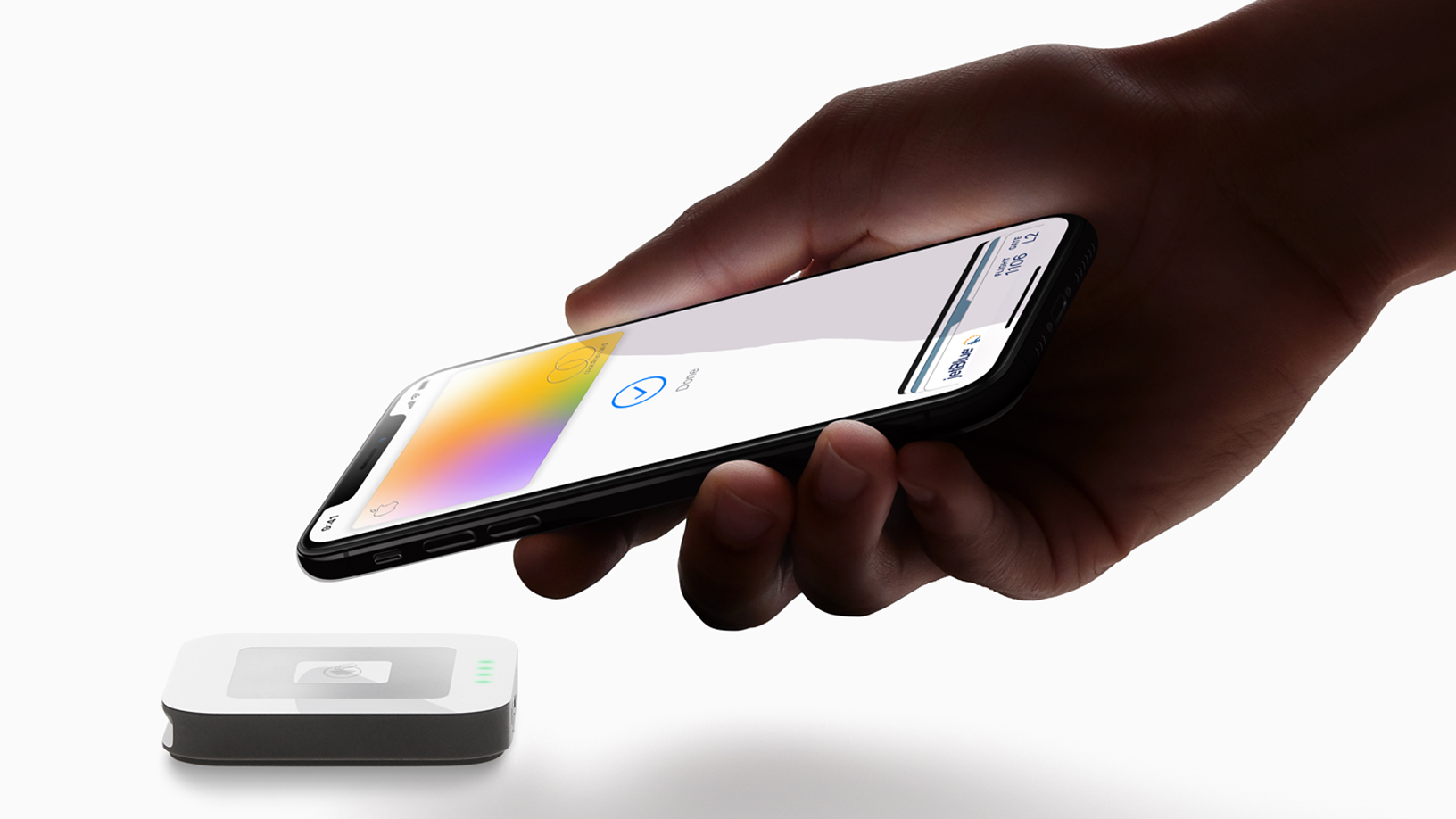
    These changes mean that third-party apps can be the default wallet app that pops up when users double-click the side button and hold their phone near a payment terminal. Apple’s tap-and-go technology, called near-field communication (NFC), lets you make contactless payments with mobile wallets.

    Until now, Apple has tightly controlled access to the NFC contactless chip on the iPhone, citing concerns about user experience, privacy, and security. This has made Apple Pay the dominant contactless payment option on the iPhone, with virtually no competition.

    Two years ago, the European Commission accused Apple of stifling competition for its Apple Pay mobile wallet by blocking rival mobile wallet app developers from accessing its tap-and-go technology.

    Apple’s attempt to settle the investigation by altering its policies would enable it to avoid a finding of wrongdoing and fend off a potential significant fine, which could amount to as much as 10% of its global annual turnover.

    And the Cupertino tech giant likely wants to avoid further fines, especially considering that just last month, the company received a hefty €1.84 billion (around $2 billion directly converted) fine, its first EU antitrust penalty. This fine was imposed for hindering competition from Spotify and other music streaming rivals through restrictions on its App Store.

    That being said, the inclusion of alternative contactless payment apps won’t be a completely unrestricted free-for-all. App developers will need to request entitlement from Apple to gain these privileges. They’ll also need to adhere to various industry standards and possess the necessary licenses to handle consumer payments to qualify.

  • Apple attempts to escape EU fine by offering to open its NFC technology for rivals

    Apple attempts to escape EU fine by offering to open its NFC technology for rivals

    In an attempt to avoid a hefty fine and ongoing legal battle with the European Union, Apple is reportedly proposing to open up its near-field communication (NFC) technology, used for tap-and-go payments, to its rivals.

    This move comes after the European Commission launched an antitrust investigation into Apple’s practices surrounding Apple Pay, suspecting that the company was unfairly restricting access to key technology to maintain its dominance in the mobile payment market.

    Despite not holding the majority share of smartphone sales or being the dominant mobile payment service in the EU, Apple Pay has gained significant traction, with over 2,500 banks and more than 250 fintech and challenger banks across Europe using the service.

    Apple’s efforts to address the EU’s concerns come amidst a broader crackdown on the company’s business practices. The EU recently labeled Apple as a “gatekeeper” under the Digital Markets Act (DMA), which empowers the Commission to regulate big tech firms that hold dominant positions in the digital market.

    Earlier this year, Apple acknowledged the possibility of third-party app stores on iPhones but later challenged the EU’s ruling mandating rival app stores. Additionally, it has appealed the inclusion of iMessage in the DMA’s gatekeeper designation, arguing that iMessage’s market share in Europe is too small to warrant regulatory scrutiny, which actually might turn out to be true.

    As Apple navigates these regulatory challenges, it’s clear that the company is facing increasing pressure to address concerns about its competitive practices in the EU. The proposed NFC access could be a step in the right direction. However, it remains to be seen whether it will be enough to appease the Commission and avoid further regulatory scrutiny.

  • Google Wallet is adding QR code card payments for phones without NFC

    Google Wallet is adding QR code card payments for phones without NFC

    Google Wallet is adding support for QR code payments, making it easier for users to pay for goods and services at locations and with devices that do not support NFC. With QR code payments, users can simply scan a code displayed by the merchant with their phone’s camera, and the payment will be processed automatically.

    This capability was announced by Google today via a blog post specifically targeting the Google for Brazil conference taking place in said country. Expanding digital payments in the country was referenced as one of the initiatives currently in the works.
    As such, Brazilians who use Google Wallet will be the first that will get to experience this new way of making payments. QR codes are pretty universal and as long as the device has a camera, it will be able to use them with their digital wallet.
    The QR code payment feature is being launched in Brazil first because a significant portion of smartphones in the country do not have NFC, the technology used in contactless payment methods. This means that many Brazilians have been unable to use Google Wallet’s digital payments feature.

    This addition will make Google Wallet more accessible as well as bring the safety and ease of digital payments to more people. QR code payments are a secure and convenient way to pay for goods and services, and their worldwide popularity makes them the perfect workaround for those that lack the necessary hardware to use NFC.

    Google Wallet is expected to launch the QR code payment feature in Brazil in the coming months and will, of course, be available to all Android devices with a camera. Hopefully, if this experiment works out well in Brazil, this could open up the possibility for this payment method to become available elsewhere in the world via Google Wallet.
  • Apple Pay and iPhone NFC restrictions can get Apple fined by the EU

    Apple Pay and iPhone NFC restrictions can get Apple fined by the EU

    Antitrust investigations from the European Commission on tech giants such as Apple, Google, and Facebook have been going strong in the past couple of years, and tech giants have already faced fines from the EC on some dubbed ‘anticompetitive’ behaviors.

    Fines for anticompetitive behavior with Apple Pay and NFC against Apple are being finalized. The investigation has been going on since last year when the EC antitrust regulators have focused on Apple Pay and the iPhone’s NFC chip that makes contactless payments possible and began to scrutinize the practice. What the commission started investigating, in the beginning, was whether Apple unfairly locked out other contactless payment services by restricting the use of the NFC chip inside iPhones.

    The report from the EC states that Apple will get charged for “anti-competitive practices related to its NFC chip technology”, but the exact details are still unclear. It is possible these charges could force Apple to “open up its mobile payment system to rivals”.

    The EU competition enforcer is currently drafting a statement of objections that will express the concerns. The document is expected to be sent to Apple next year.

    Apple has been opening up access to the NFC chip in iPhones in recent years; however, third-party contactless payment systems have had a hard time in comparison to Apple Pay integration with iOS, so this could have been an issue for antitrust regulators. The way that the NFC chip in an iPhone works seems to give an advantage to Apple Pay which antitrust regulators do not like. For example, when an iPhone comes near to an NFC reader, the Wallet and Apple Pay interface is immediately automatically shown, something third-party systems cannot do on the iPhone.

    Earlier this year, the European Commission concluded in another investigation (this one is a preliminary conclusion at the moment, not a final decision, so keep that in mind) that Apple is indeed in breach of anti-competitive laws. More precisely, the investigation here was about Apple Music and music streaming services, and whether Apple was favoring its own solution on iPhones and thus making it harder for third-party music streaming services to compete.

    This anti-competitive behavior was related to the high commission fees that Apple imposed on third-party apps in the App Store and that the company does not allow app developers to tell users there are other payment methods… sounds familiar? Maybe yes, as this is the same complaint game maker Epic Games had against Apple and why the popular Fortnite game is no longer to be found on the App Store, for more than a year now.

    The aforementioned preliminary conclusion does not impose any fines or regulations yet, as it is not final. The next step is for the commission to review the case with Apple.In this case, after the period of reviewing it with Apple, the commission will decide whether to proceed with formal charges. If found in breach of competition law, the EC can force Apple to change the rules of the App Store or pay a fine for past offenses, which can go up to 10% of annual revenue.

    It is not only Apple that the EC is investigating for breaching competitive laws. Under investigation are also other tech giants such as Google, and even Amazon (for anti-competitiveness in the smart home market). The EC is also investigating the voice assistants on devices from Apple, Google, and Amazon, for the same issues.

  • Apple releases iOS and iPadOS 13.6 with CarKey, bug fixes, and more

    Apple releases iOS and iPadOS 13.6 with CarKey, bug fixes, and more

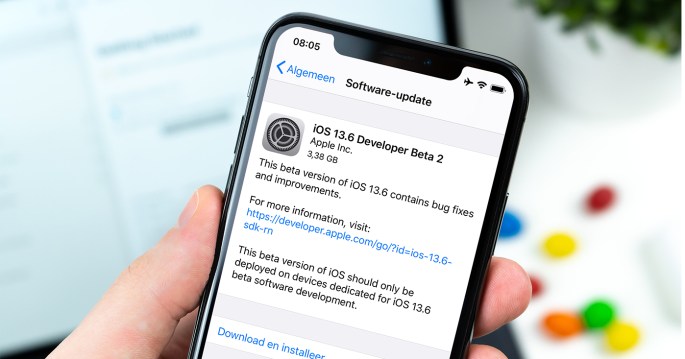
    Even as the iOS 14 public beta remains in its early days, Apple today released iOS and iPadOS 13.6. With the update, users can decide to download iOS and iPadOS updates but not install them. Or, users can decide to download iOS and iPadOS updates and install them overnight. The devices taking advantage of the automatic software updates must be charging and connected to the internet via Wi-Fi to finish updating. You can customize this feature by going to Settings > General > Software Update > Customize Automatic Updates

    The update adds new categories in the health app for symptoms that come up in the Cycle Tracking and ECG apps. It also adds new symptoms including fever, chills, sore throat, or coughing, and allows iOS and iPadOS users to share these symptoms with third-party apps. The iOS 13.6 update also adds audio features to the Apple News+ subscription app for the iPhone and iPad. It also enables the CarKey feature for the iPhone. This allows you to control a compatible automobile using your handset. Apple just posted a new support page. The key is added to the iOS Wallet app and the feature will also work with the Apple Watch Series 5. CarKey is available for the iPhone SE (2nd generation), iPhone 11 Pro, iPhone 11 Pro Max, iPhone 11, iPhone XS, iPhone XS Max and the iPhone XR.

    Check out the support page to see how to set up the feature. If you use Express Mode you can put your iPhone near the car door to unlock it. And placing the iPhone near the car’s key reader will start the engine. If you turn off the Express Mode, you will have to authenticate every time you want to use your phone as a car key. Even if your iPhone battery needs to be charged, in ExpressMode it still will be able to run CarKey for up to five hours after it starts using power reserve. And you can share your digital keys with someone you trust by sending it to them via iMessage. The other party must have a compatible iPhone.

    The update also adds FaceTime to users in the United Arab Emirates (UAE). The country had banned the video chat app and even with today’s update, Apple failed to mention this in its support notes. The update also exterminates some bugs including one that drained users’ batteries after the iOS 13.5 and iOS 13.5.1 updates.

    Right now, the first Apple iOS 14 public beta is available for those who don’t mind taking a risk. Beta software is usually buggy and the battery life might suffer; as a result, you probably do not want to install the first public beta on your daily driver. The lure of new features this year is irresistible, however, and includes Android-style widgets, the App Library that separates apps by category and allows users to search for apps by name. It is the closest that iOS users have to an app drawer at the moment.

    With iOS 14, Siri’s UI no longer covers the entire screen and the digital assistant reportedly gets smarter. And incoming phone calls no longer hijack the entire screen and are greatly reduced to a small notification banner at the top of the screen. And App Clips allows an iPhone user to use a third-party app that he or she has yet to install. This is done by scanning a QR code or using an NFC signal to open only the necessary part of an app required to complete a task.

    If you feel tempted to install the iOS 14 public beta, keep in mind that the final version of the operating system will probably be ready in September. That is pnly a couple of months away.

  • Singtel’s NFC Partners Nets for Central Bank Payments

    Singtel’s NFC Partners Nets for Central Bank Payments

    The partnership leverages NCS’ capabilities in building government applications and infrastructure, and Nets’ experience as Singapore’s national payments provider and facilitating cross-border payments.

    NCS and the Network for Electronic Transfers (Nets) group will jointly develop a new real-time electronic payment and securities settlement platform for central banks in Asia Pacific, according to a memorandum of understanding (MOU) signed on Monday.

    The ceremony took place via video conferencing in light of enhanced safe distancing measures against the Covid-19 outbreak.

    The platform will be secure, resilient and robust by design to allow interoperability with current and future payment systems and facilitate high-value inter-bank fund transfers, a statement said. According to the partners, this will enhance the way central banks deliver monetary policies and critical market infrastructure to support financial stability.

    NCS and Nets will also develop a «next-generation suite of central banking products» that can be customized to the regulatory needs of different financial markets.

    This will allow the firms to expand their footprints in markets in Southeast Asia, as well as Hong Kong and China, the announcement said.

    NCS is an information, communications and technology (ICT) service provider that works with governments and firms in the Asia Pacific region on digital infrastructure projects, and global and regional banks to support their front and back-end operations.

    While we continue to strengthen our core services, we are also investing in our digital capabilities to develop local-IP fintech products and platforms to fuel our growth in the financial services sector, said Ng Kuo Pin, CEO, NCS, about the partnership.

  • You might soon unlock your BMW with your iPhone

    You might soon unlock your BMW with your iPhone

    Apple and premium German car manufacturer BMW are seemingly collaborating to bring the CarKey iPhone feature to eligible vehicles of the carmaker. Evidence for this was unraveled in the iOS 14 code, hinting that iPhone users might soon be able to unlock their BMW cars with their iPhones thanks to the CarKey feature. As a reminder, the existence of CarKey itself was revealed in the iOS 13.4 beta back in February.

    Given that BMW was among the very first automakers to adopt Apple’s CarPlay feature a few years back, it would make sense to assume that CarKey could be adopted on upcoming beemers as well.

    It seems that CarKeys could be stored inside the ubiquitous Wallet app and even be shared with other people through iMessage. “Yo, mom, shared me the keys for the car” would sound a whole lot cooler! Code strings suggest that you will not only be able to lock and unlock your vehicle with your device, but also start it remotely. This is already available through the BMW Connected app, but native iOS support would definitely be great. There would seemingly be two ways to unlock the car – either by holding your phone near the NFC-enabled door handle or just having your iPhone in your pocket.

    Apple could use NFC, UWB (ultra-wide band) chip, or a combination of the two. The UWB chip debuted with the iPhone 11-series but has been pretty underused when it comes to features, as it’s currently only used to aid AirDrop discovery.

    On the topic of anti-theft countermeasures, CarKey will enjoy the same level of biometric security that the sensitive data on your iPhone enjoys, but there would seemingly be an option to use CarKey without having to authenticate yourself with a Face ID scan or a PIN code for an even faster experience.

    BMW itself neither denied or acknowledged the rumored functionality. When asked, the company replied rather nonchalantly with “Please understand that at this point we cannot confirm your request nor give you further details. We would like to refer you to our press release, ” which suggests that we could be in for news on the matter very soon.

  • Apple Pay focussing on wider NFC adoption

    Apple Pay focussing on wider NFC adoption

    Apple has been trying to replace your wallet with your iPhone for years now. Despite the relatively wide adoption of Apple Pay (at least in the States), however, it’s still not abundant enough to make you think twice about leaving your wallet at home. One of the main reasons for that is that Apple, in its typical fashion, has restrained the things developers can use the available hardware and software for. But it seems that might be changing very soon.

    Apple recently announced changes coming to the way NFC can be used on its iPhones in combination with Apple Pay during a conference for electronic transactions. Called Transact, the conference was held in Las Vegas in late April and was host to a rare Apple presentation that’s not during one of the company’s own events.

    Apple is looking to make it easier for businesses to integrate NFC payments into the Apple Pay ecosystem. To do that, it is going to allow its Core NFC framework to work with multiple NFC formats. Currently, Apple only supports one format called NFC Data Exchange Format. Three new formats are expected to be added with the release of iOS 13. These changes, among many others, will likely become official during Apple’s Worldwide Developers Conference 2019 that starts on June 3.

    But NFC formats don’t matter to users, they care about what that means for the way they use their devices. There will be some noticeable improvements in that area if Apple’s plans come to fruition. The company’s goal is to make paying for almost everything as easy and convenient as possible. Let’s take a look at what’s its vision.One example given at the presentation was the so-called micro-mobility, which is a fancy term for all the scooter-renting services like Bird and Lime. Right now, each of those comes with its own app that you can use not only to locate a scooter but mostly to pay for your time using it. Needing an app and an account adds friction, as experts call it, which reduces the number of people that use the service. Apple is working in cooperation with some of these companies to remove that extra step. In the future, tapping on the NFC chip of the scooter will allow you to rent it straight from Apple Pay. This will not only make it easier for non-frequent users to rent scooters but will also improve security, as you’re not sharing payment information with yet another entity.

    And then there are parking meters. The ones that allow mobile payments come with their own app as well. Similar to the scooter approach, Apple aims to cut out the unnecessary step of installing and logging into various apps (companies still get their money, after all) by handling everything within Apple Pay. The same technology can be applied to almost anything, from vending machines to public transport and all sorts of venues that you need to pay to get into.

    But NFC is not only useful for payments, but it can also carry all sorts of information. A few companies are already partnering with Apple to streamline the sign-up process for their loyalty programs by using NFC instead of paper forms people need to fill out.

    Once the ball starts rolling, we’ll likely see more and more businesses joining Apple’s initiative. This move will strengthen its ecosystem and tie down iPhone users to the brand even more than they already are. Hopefully, it will also nudge Google to put more effort into its own Google Pay.

  • Westpac introduces Apple Pay in New Zealand

    Westpac introduces Apple Pay in New Zealand

    Westpac New Zealand customers can now use Apple Pay wherever contactless payments are accepted.

    This reflects the findings of a recent study by Allied Market Research, which found that younger consumers appreciate the simplicity of mobile payments.

    The mobile payment market is expected to reach $4.5 trillion by 2023, according to the research firm, which also notes the market is growing with a “lightning-fast” rate in Asia-Pacific.

    However, even mobile payments are beginning to be superseded.

    The report noted that near field communication (NFC) and QR technology is fast becoming standard in various parts of Asia-Pacific, and various market players are already investing in this new technology.

    Westpac is celebrating the launch of Apple Pay by donating $2.50 for every customer who uses Apple Pay five times before May 2, 2019, to charity. Each customer will also receive a one-off payment of $10.

    “It is yet another reason for our customers to get excited about Apple Pay,” Shane Howell, Westpac’s chief experience officer, said.

    The four charities that will benefit from the initiative are the Mental Health Foundation, Shine, Sustainable Coastlines, and New Zealand’s rescue helicopter services.

  • Hyundai Develops Smartphone Based Digital Key

    Hyundai Develops Smartphone Based Digital Key

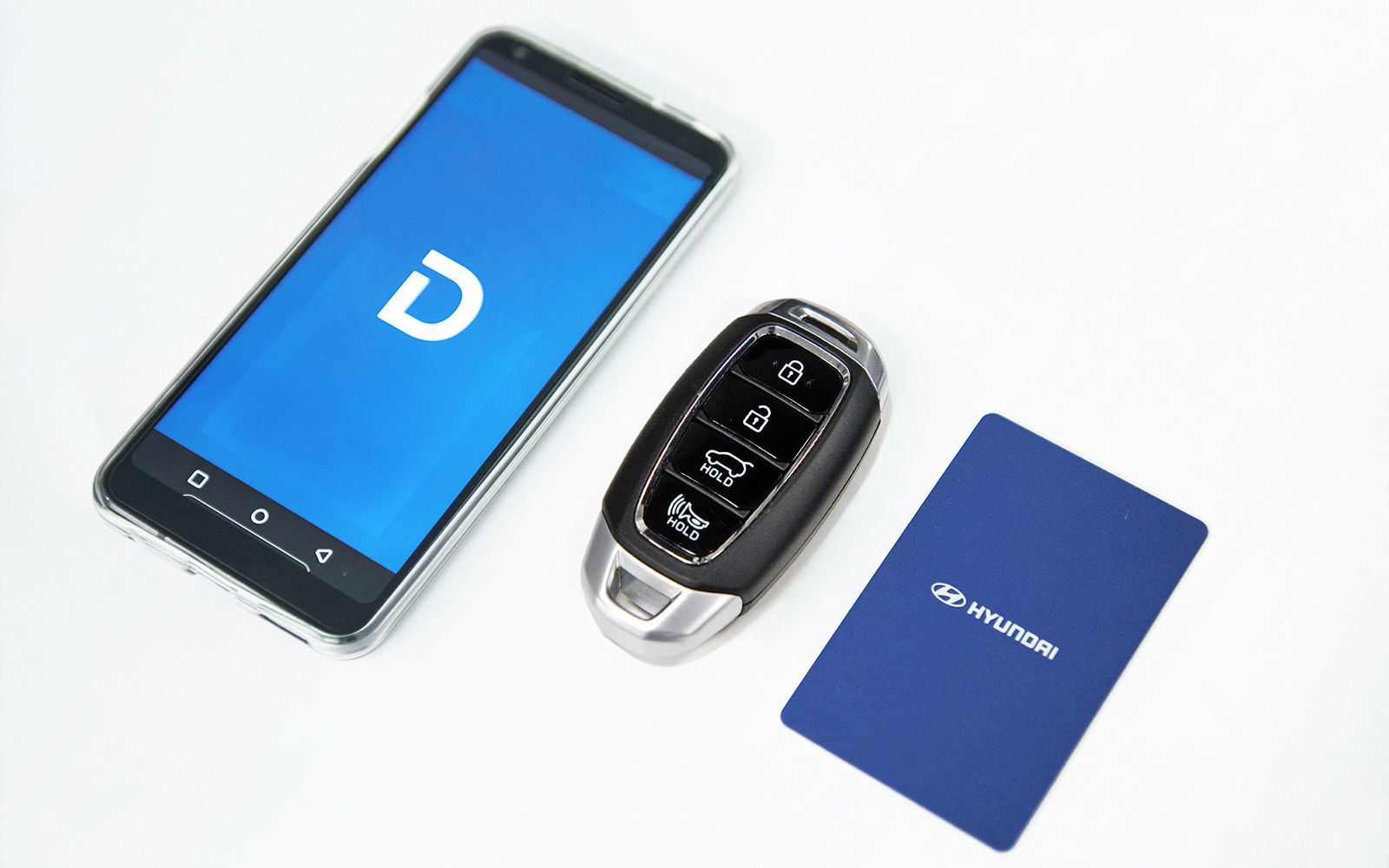
    Hyundai Motor Group announced the development of a Digital Key, which allows users to unlock and start a vehicle via their smartphone. Replacing a traditional physical key, the new Digital Key can be downloaded via an app and can be used by up to four authorised people. The Digital Key can be downloaded via a cell phone application and Near Field Communication (NFC) technology detects the presence of an authorized Digital Key-enabled cellphone in close proximity to the vehicle door. NFC is a form of Radio Frequency Identification (RFID), which boasts a high level of security. The NFC wireless data communication takes place only when the device and the reader are placed several centimetres apart.

    The NFC antenna for entry identification is located in the handles of the driver and front passenger’s doors, whilst one for starting the engine is located within the wireless charging pad. After unlocking the vehicle, the user can start the engine by placing the smartphone on the wireless charging pad in the centre console and pressing an engine Start/Stop button on the dashboard.

    The user’s preferred vehicle settings are stored in the vehicle. When the key is recognized those settings are adjusted automatically – including the position of mirrors, seats and the steering wheel, as well as controls for the audio, video and navigation (AVN) systems and head-up display.Hyundai’s Digital Key can be used to control selected vehicle systems remotely via their smartphone. Using Bluetooth Low Energy (BLE) communication, users can lock and unlock the vehicle, activate the alarm and start the engine. In addition, once the vehicles with autonomous parking features are commercialized, such features are also expected to be remotely controlled.

    The level of access to different vehicle functions can be tailored to each user, for a defined period. The vehicle owner can pre-set the duration of vehicle use or limit the use to only certain features when renting the vehicle. For instance, it can even be used to enable a courier to open the trunk to deliver a parcel.

    For cases such as using a valet service or visiting a repair shop, where handing over a digital key is not feasible, conventional smart key and card type key are also provided. Hyundai Motor Group aims to gradually implement the technology in its new production vehicles, starting later this year.

  • Singapore telcos hit the road with transit NFC pay service

    Singapore telcos hit the road with transit NFC pay service

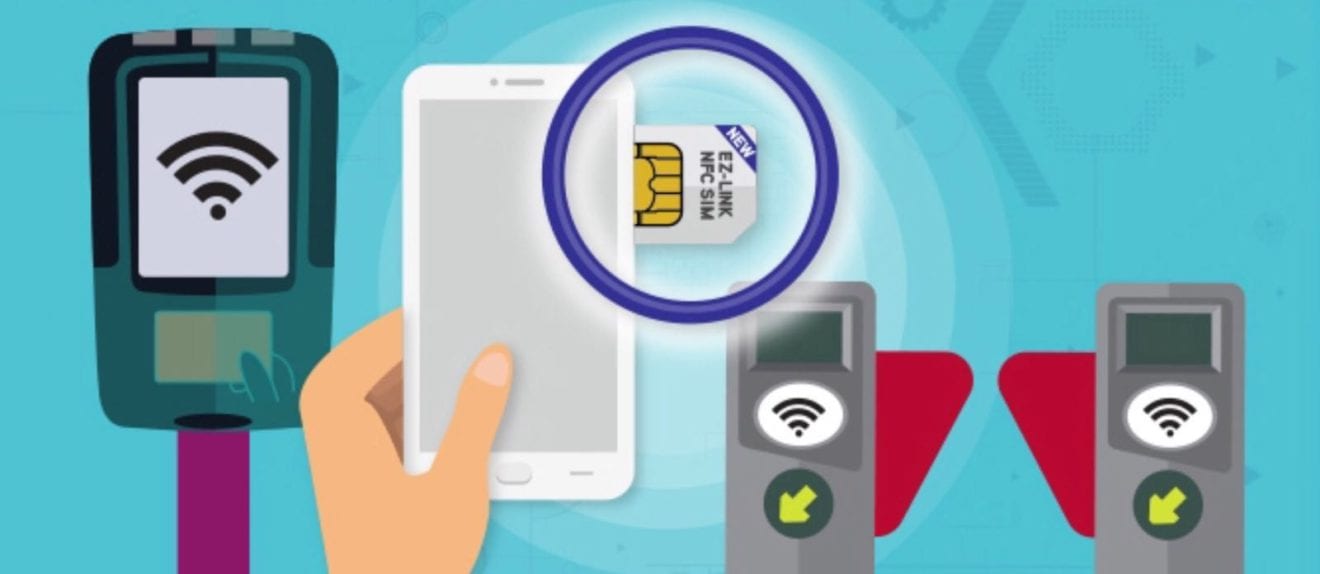
    Singapore’s three telcos have unveiled plans to offer NFC-enabled service for the country’s public transport network, enabling mobile users to pay for their fares using their smartphones.

    All three operators issued statements today, alongside a separate release from industry regulator Land Transport Authority (LTA), which announced the completion of a joint pilot conducted between the telcos and local public transport operators, as well as payment service provider EZ-Link. The latter’s contactless payment card currently is used by public transport commuters and as a payment option at more than 30,000 locations, including convenience stores, fast food outlets, retail stores, and taxis.

    Available today, M1’s service would be the first to allow its subscribers to swop their SIM cards for NFC-enabled chips that they could then use on buses and trains island-wide. They could do so at any of the telco’s retail outlets, but would need to have compatible devices for the NFC payment to work, including Samsung Galaxy Note Edge 4G+ and Sony Xperia Z. The Apple iPhone was not on the current list of approved devices.

    The NFC SIM cards are embedded with EZ-Link purse, which supports specifications under Singapore’s own standard Contactless e-Purse Application (CePAS). Upon activating the new SIM cards, mobile users would be able to top up or check the balance of their credit stored in the purse, as well as use their device to pay for other services that support ez-link payments.

    Singtel said sale of its transit NFC SIM cards would start in late-April, when subscriber would be able to purchase the chips from its retail stores. A S$5 registration fee for these SIM cards would be waived for a limited time, the operator said.

    M1 said its transit SIM card would cost S$37.45, with a service activation fee of S$9.10 that also would be waived until April 30.

    StarHub said its NFC transit chips would go on sale at its retail outlets from April 2 and would be priced at S$37.45 for a new SIM, or S$26.75 for a SIM replacement. It added that the “NFC ez-link purse fee” of S$5 would be waived “until further notice”.

    The telco’s head of business strategy Yeong Mun-Ling said: “This development is a step in the right direction towards stimulating digital commerce growth in Singapore. Our world is becoming increasingly digital and we are looking forward to meeting the needs of our mobile customers, who want to do more with their smartphones.”

    M1 CMO P. Subramaniam also noted: “Transit is the ‘killer phone app’ Singapore consumers have been looking forward to and we are pleased to be the first to offer customers the convenience of making payment with the one device that is always with them, their phone.”

  • Here’s why new NFC-enabled SIM cards may flop in Singapore

    Here’s why new NFC-enabled SIM cards may flop in Singapore

    The service is too costly. Singapore’s telco operators recently unveiled new NFC-powered SIM cards, which will allow commuters to pay fares using their mobile phones. The SIM cards will also be accepted at 30,000 ez-link terminals across the island.

    However, the new SIM cards might fail to gain enough popularity because of several stumbling blocks, according to a report by DBS.

    The report noted that the popularity of iPhones in Singapore is a big hurdle to the rise of the new SIM cards. The NFC-powered SIM cards are incompatible with iPhones, which only support Apple Pay and make up a third of mobile phone sales in the country.

    DBS also highlighted that ez-link is not accepted at 7-11 stores and many other retail outlets, which prefer NETS and credit cards.

    Apart from these hurdles, the cards are also extremely expensive at $37.50 apiece.

    “EZ-link is not widely popular for retail transactions even in Singapore. Plus NFC enabled payment is not adding any security feature to the ez-link card while “Apple Pay” adds security to credit card transactions. So we do not see that the NFC enabled SIM based payments will be widely used. Anyway, telcos may not get much commission out of the transactions, as the bulk may go to ez-link for its large customer base using it for buses and trains,” the report noted.

  • Mozido Brings NFC Mobile Wallet Services to Indonesia

    Mozido Brings NFC Mobile Wallet Services to Indonesia

    Mozido, a provider of mobile wallets for payment and commerce solutions, today announced it has launched NFC mobile payment and loyalty services for Telkomsel Indonesia, in partnership with Verifone Mobile Money and financial services provider Finnet Indonesia.

    Mozido powers Telkomsel’s NFC-based TWallet application for its 140 million subscribers, enabling them to seamlessly tap and pay with their mobile device at participating merchant locations. Mozido also provides Telkomsel’s merchants with a mobile coupon management system that provides retailers the ability to send their own branded coupons directly to targeted TWallet consumers. Participating merchants span the verticals of fast food, cinema and supermarkets, and include McDonald’s, Wendy’s, Coffee Bean and Tea Leaf, Baskin Robbins, 7 Eleven, Cinema XXI, GraPARI, Alfamart and Indomaret.

    Previously, the mobile money services for the TWallet, which provide consumers with account balance, bill payment, airtime top-up, person-to-person transfers, and transaction history, was a USSD (unstructured supplementary service data) service, disconnected from the wallet. Now, with Mozido’s NFC mobile payments wallet, accountholders are able to use the services seamlessly from their mobile wallet application. Mozido works in partnership with Finnet Indonesia to connect users with Indonesia’s banks nationwide.

    “Indonesia’s 255 million people are ready for mobile solutions that enable payments, financial inclusion, and consumer engagement. Mozido is privileged to quickly expand our presence in this important region by powering TWallet for Telkomsel’s 140 million subscribers,” said Michael Liberty, founder of Mozido. “We look forward to working with Telkomsel to bring unprecedented levels of convenience and consumer engagement through mobile payment and marketing services for consumers and merchants.”

  • Shenzhen Tong launches NFC transport and payment service in China

    Shenzhen Tong launches NFC transport and payment service in China

    ZTE Nubia Z9 and Z9 Max owners across the Chinese city of Shenzhen can now use a service launched by transportation operator Shenzhen Tong to make NFC mobile payments for public transportation and for purchases in retail stores.

    The company is making use of Oberthur Technologies’ (OT) Pearl secure elements embedded in the ZTE NFC devices for the service.

    “OT provides the Shenzhen Tong applet enabling the service, available from both Shenzhen Tong and Nubia mobile wallets, as well as the connection between the transport operator and the handset manufacturer through OT’s China Secure Hub,” OT says. “Nubia Z9 and Z9 Max owners are now able not only to securely access all public transportation services in Shenzhen, but also pay in retail stores.

    “All they need to do is download the Shenzhen Tong Dianshang application or the Nubia application and Nubia OTA (over the air) service upgrade. Once the corresponding applet is remotely installed on Pearl by OT, users simply have to hold their smartphone near the contactless reader in the bus or the subway or near the contactless payment terminal in stores.”

    “With the Shenzhen Tong smartphone NFC application, we expect to further enhance the experience of our customers in public transportation and in retail shops,” says Wang Dongjun, general manager at Shenzhen Tong.

    “OT is supporting several Chinese public transport operators in major megalopolis like Shenzhen for the deployment of their services on flagship smartphones of various brands equipped with our eSE,” adds Marek Juda, managing director of OT’s connected device makers business.

  • XIUS Awarded NFC Patent by USPTO

    XIUS Awarded NFC Patent by USPTO

    XIUS, a leader in delivering innovative, revenue-generating solutions to mobile operators, banks and financial institutions worldwide, announced today the award of its patent in Near Field Communication (NFC) technology. The invention relates to a smart integration of dual architecture contactless SIM into mobile devices and describes the method of efficiently performing various financial transactions. The patent filed in February 2010, was awarded by the US Patent and Trademark Office recently this year.

    NFC as a technology is extending beyond applications initially envisioned by the market. End users have started to believe that using their mobile phone for payments is safe and also addresses privacy concerns. Mobile wallets are now making a significant impact by creating new market opportunities. XIUS mobile payments solution is powered by futuristic technologies including NFC, and aims to deliver customers seamless services and enriched experiences in real-time fashion.

    Speaking on the occasion, said G.V. Kumar, CEO and Managing Director, “The award of yet another patent is testimony to XIUS’ thought leadership and emphasis on innovation. XIUS takes immense pride to have developed years ago, a SIM based solution for NFC enabled payments. Our endeavoring efforts have borne fruit and the award of this patent only reiterates our strong belief and commitment to continue innovating and contributing to the industry”.

    XIUS implements NFC as one of the technologies in offering banks and financial institutions its unique technology enabled banking services. The solution leverages existing mobile ecosystem and extends banking services to the unbanked and under-banked segments of the population that banks are otherwise challenged to penetrate and cater to.

    NFC technology allows retailers and brands to engage with increasingly connected mobile consumers. Retailers and brands can use NFC during the customer journey to improve in-store experiences, enable touch & go payments, generate more sales, and enhance customer loyalty and trust. As part of its mobile commerce offerings, XIUS NFC-based payment solution improves customer experience and delivers control of purchase flow to the merchant.

    Whether deployed to facilitate banking transactions or in a retail outlet, XIUS NFC mobile enabled solution has diverse uses among those that are now being widely publicized and adopted by technology companies / retail chains in evolved markets such as the US and Europe in the recent times.