Tag: NFV

  • Altran, Wind River developing end-to-end NFV platform

    Altran, Wind River developing end-to-end NFV platform

    Engineering and R&D services provider Altran has announced a partnership with critical infrastructure software provider Wind River to develop an end-to-end networks functions virtualization (NFV) platform.

    Under the agreement, Altran is using Wind River Titanium Cloud, an NFV infrastructure software platform for telecom operators, to develop a platform that incorporates NFV in the data center and at the network edge.

    Altran has designed its VNF Management and Orchestration Platform to help operators lower costs, accelerate service delivery and meet customer demands for high availability.

    The platform will provide an environment for vendors to deploy virtual network functions (VNFs) on Wind River infrastructure software.

    The platform will take advantage of Altran’s programmable VNF Lifecycle Management solution – which can integrate with any VNF as well as with third-party orchestrators – and its integrated policy engine.

    “The Wind River Titanium Cloud ecosystem provides outstanding infrastructure for highly available, robust and agile virtualization platforms needed in telecommunications networks and industrial control,” said Altran North America group SVP and chief engineering officer N. Mohan Rangan said.

    “We are delighted to be a part of Wind River’s initiative. Service provider customers will benefit greatly from a comprehensive NFV platform that handles a wide variety of sophisticated VNFs.”

  • Rakuten using Red Hat technologies in mobile rollout

    Rakuten using Red Hat technologies in mobile rollout

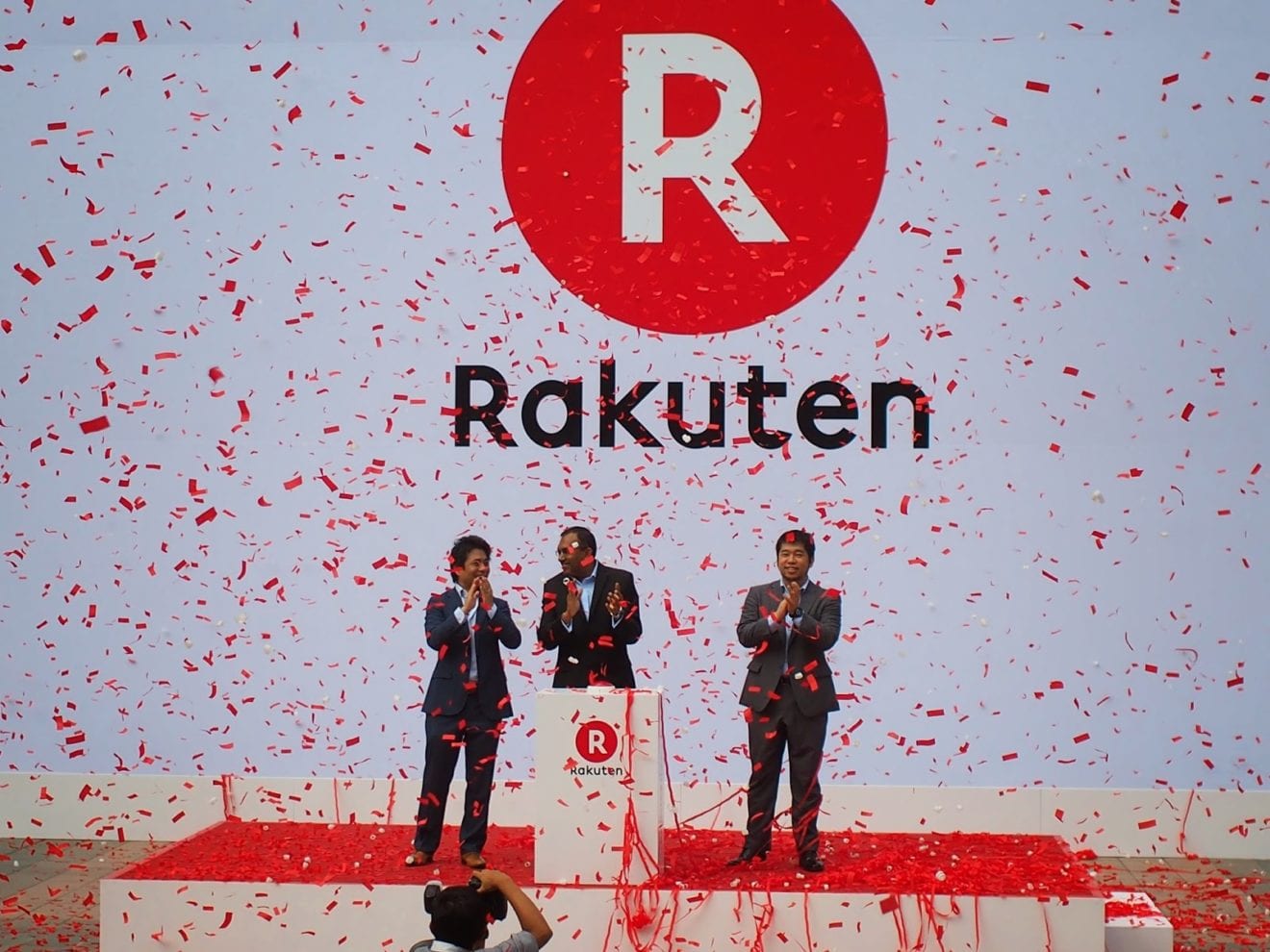
    Japan’s Rakuten announced it has arranged to use open source technologies provided by Red Hat in its upcoming end-to-end cloud native mobile network.

    The network, which is scheduled to launch in October, will use Red Hat’s open hybrid cloud technologies, Rakuten announced at this week’s Mobile World Congress in Barcelona.

    Rakuten Mobile Network has built an NFV based network supported by Red Hat Enterprise Linux, the Red Hat OpenStack Platform and Red Hat Ceph Storage software-defined storage solution.

    The deployment will support the planned launch of 4G mobile services, and leave Rakuten Mobile Network well placed to roll out 5G services subject to government licensing approval.

    “Our vision is to build a network that innovates at the speed of software and scales at the speed of cloud, and with a culture founded in technical and operational innovation, we are uniquely positioned to achieve that. We are excited to work with leading partners from around the world such as Red Hat as we work to create the world’s first end-to-end fully virtualized cloud-native network,” Rakuten Mobile Network CTO Tareq Amin said.

    “End-to-end automation for both network and services is a pillar of our systems building strategy, and by using Red Hat’s open source technology we can achieve automation and auto-scaling, enabling more productive operations and allowing us to provide cost-effective services to our customers.”

  • Open source movement to disrupt NFV and SDN marketplace

    Open source movement to disrupt NFV and SDN marketplace

    Software-defined networking (SDN) and network functions virtualization (NFV) are predicted to enable businesses that use these technologies to gain greater flexibility in backhaul infrastructure.

    Cost savings is the primary driver for accelerated NFV and SDN adoption, but these benefits will be realized gradually.

    According to Technology Business Research’s 1Q18 NFV/SDN Telecom Market Landscape report, open-source groups will spur NFV and SDN adoption by establishing industry standards that foster interoperability among a broader range of solution providers.

    “The ability to reduce capex will initially be the largest cost benefit realized by adopters of NFV and SDN as software-mediated technologies enable operators to significantly reduce spend on proprietary hardware,” said TBR telecom senior analyst Michael Soper. “Reducing opex will be a longer process as most operators will maintain both legacy and virtualized environments until they are ready to migrate fully to virtualized infrastructure.”

    As operators pursue cost reduction through NFV and SDN, incumbent vendors face numerous threats to their business models and disruption on multiple technology fronts. Industry trends are moving against the vendor community, with incumbent vendors, particularly hardware-centric vendors, poised to struggle the most.

    Operators globally are focused on significantly reducing the cost of network operations and capex, underscored by a desire to disaggregate the black box and commoditize the hardware layer. White-box-based universal customer premises equipment is the leading application of industry-standard hardware thus far, but operators are targeting additional domains, including the core and edge network.

    Operators are also facilitating NFV and SDN adoption by targeting new hires with relevant skill sets, retraining existing employees and launching internal startups to quickly improve their resource pools.

  • China Mobile, GSMA, Huawei to address NFV reliability

    China Mobile, GSMA, Huawei to address NFV reliability

    China Mobile, the GSMA and Huawei have agreed during Mobile World Congress 2017 to jointly build an assessment framework for achieving carrier-grade NFV reliability.

    The project aims to combine industry efforts to construct a scalable framework for NFV in telecoms networks enabling proactive, flexible and intelligent network maintenance.

    Because of the difficulties surrounding locating network faults when using complex network technologies such as NFV, operators are looking to move towards a proactive network maintenance model to eliminate potential issues before user services are affected, the partners said.

    GSMA technical director Michele Zarri commented that carrier-grade NFV-reliability is a critical aspect of the virtualization of mobile networks, and is in-line with the industry body’s 5G Network Virtualization project.

    “There will be numerous business opportunities and challenges in the 5G era. However, Five-9s reliability is required for virtualized networks,” he said.

    “The GSMA will work to define network requirements and formalize the assessment framework including metrics and measurements for achieving carrier-grade NFV reliability.”

    Huawei GM for global customer support services Zhao Yongjun added that through the collaboration, the vendor aims “to consolidate industry efforts to explore new digital technologies and carry out joint-innovation to create tomorrow’s proactive intelligent network maintenance system.”

    He said the system will support “real-time, intelligent perception and preventative measures to meet increasing ultra-reliable network requirements.”

  • LG U+ deploys Korea’s first NFV routing system

    LG U+ deploys Korea’s first NFV routing system

    South Korea’s LG U+ has deployed the nation’s first carrier-grade virtual routing system using technology from Juniper Networks, as part of efforts to prepare its network for the 5G evolution.

    LG U+ is deploying Juniper Networks’ Ethernet switches and its vMX virtual router for the upgrade project.

    The operator selected Juniper due to its prior experience with the vendor’s routing equipment, as well as the vendor’s support for OpenStack-based NFV orchestration and expertise in the NFV segment.

    Juniper was also able to meet the operator’s resiliency requirements with its virtual routing solution’s  auto recovery and auto healing functions.

    Juniper worked closely with LG U+ on the integration of the system with existing infrastructure and devices. The operator also enabled IPv6 routing, anti-hacking and anti-DDoS attack services in LG U+’s NFV infrastructure, and additional features may be aadded in the future.

    “We are very excited about Korea’s first commercial launch of a carrier-grade NFV-based router,” LG U+ GM for transport platform development Jae-ho Choi said.

    “I believe this will enable us to not only drastically improve our routing performance, but provide greater stability and a more diverse range of services for our customers. As a leader of the 5G era, LG U+ plans to expand the adoption of NFV equipment in close, continued cooperation alongside Juniper Networks.”

  • Huawei, Telkomsel trial Wi-Fi calling and VoLTE based on NFV

    Huawei, Telkomsel trial Wi-Fi calling and VoLTE based on NFV

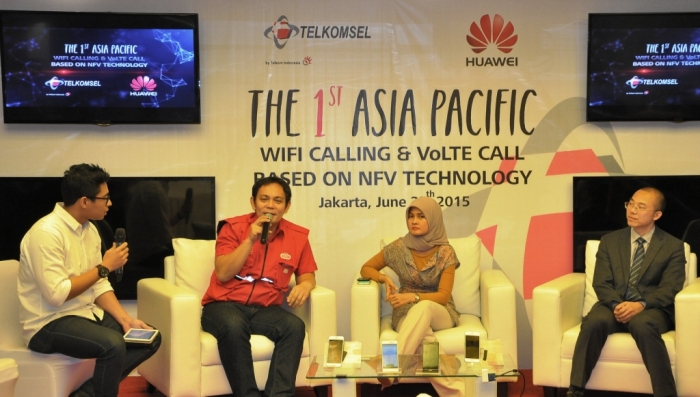
    Huawei Technologies said Telkomsel, a telecom operator in Indonesia, has demonstrated its 4G convergent communication service trial for Wi-Fi calling and VoLTE (Voice over LTE) based on NFV technology (Network Function Virtualization) in Jakarta.

    Wi-Fi calling and VoLTE will enable Indonesia’s 280 million mobile users to experiences HD voice and HD video within the shortest connecting time. When a subscriber switches between 4G and Wi-Fi environment, the call will not be interrupted.

    “This Wi-Fi Calling and VoLTE trial is part of our efforts to provide better service quality, and will also create an exciting new experience for customers in using our services,” said Ivan Permana, vice president, Technology & System, Telkomsel.
    Telkomsel in pact with Huawei
    Telkomsel, the #1 telecom operator, has more than 141 million subscribers Indonesia. Telkomsel has built more than 95,000 BTSs. Telkomsel’s broadband now reaches 300 cities. Telkomsel operates a 24-hour call center and more than 400 service centers GraPARI across Indonesia.

    Image: Tommy G Tanjung, engineer of Technology Strategy, Telkomsel, Ivan Cahya Permana, VP of Technology and System, Adita Irawati, VP of Corporate Communications, and Zhang Qin, head of Core Network Marketing, Huawei