Tag: nissan leaf

  • Nissan’s latest Leaf EV available for preorder

    Nissan’s latest Leaf EV available for preorder

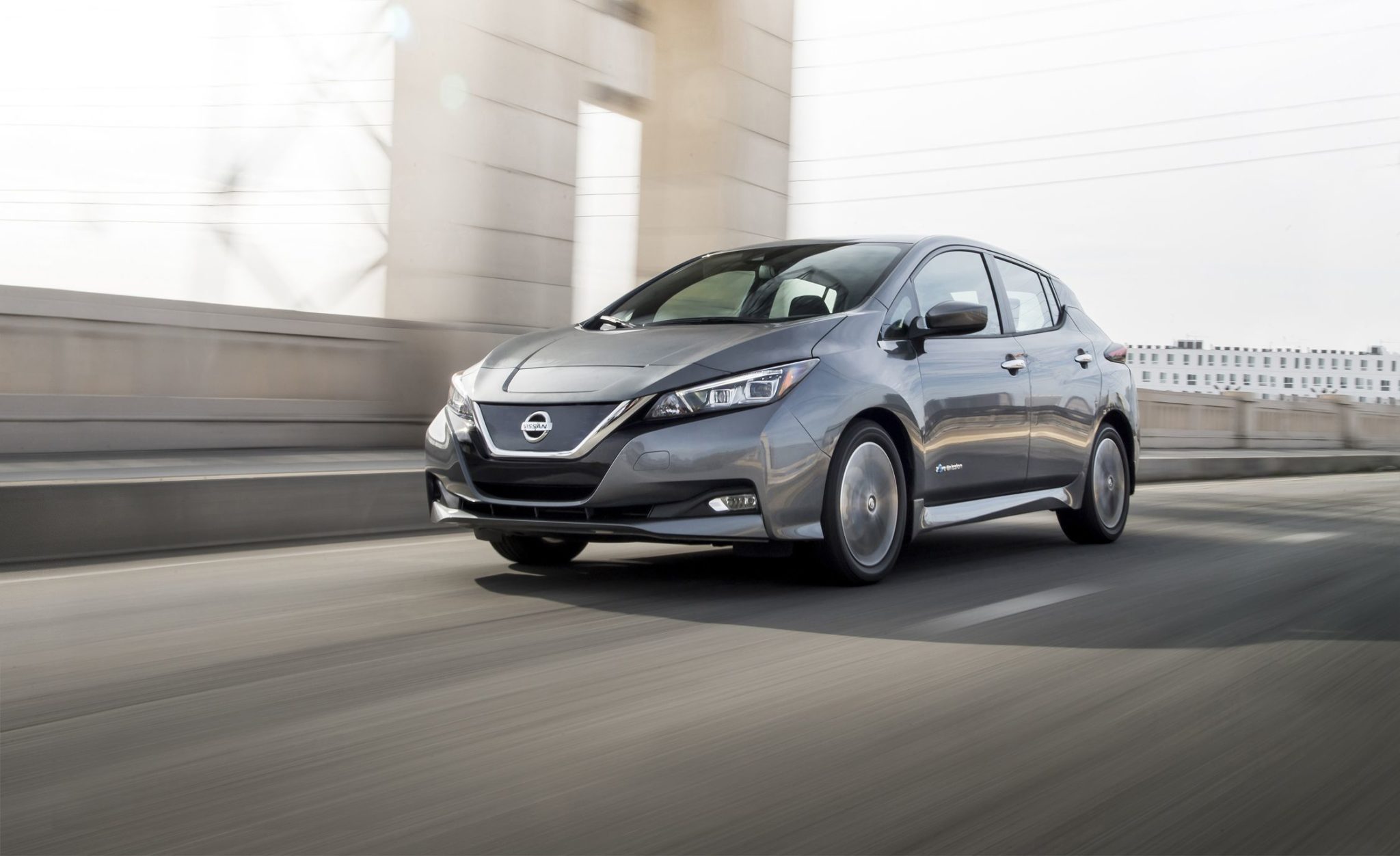
    Nissan Korea Thursday introduced an updated version of its Leaf electric vehicle (EV) at the Daegu International Future Auto Expo, hoping to grow its share of the domestic EV market. The vehicle was released in Japan in September.

    Nissan’s local unit started accepting preorders on Thursday, and the model is expected to be on the roads of Korea in the first quarter of next year.

    The Leaf is not widely known here as Japan’s Nissan is not strong in the domestic market. The car, however, was the world’s first mass produced electric vehicle when introduced 2010. A total of 370,000 units had been sold globally as of October.

    In the latest generation, Leaf comes with advanced performance and smart car technologies, the carmaker said.

    This includes the “e-Pedal,” which enables the driver to accelerate and decelerate with the use of a single pedal. The pedal is linked to a regenerative brake, which produces electricity as it slows the car. The feature is often found in new offerings in the EV market.

    Nissan Korea also says the latest Leaf allows for 360-degree surround view and is capable of maintaining distance with vehicles ahead.

    Performance has been enhanced with a 38 percent increase in horsepower compared to the previous model – now 150 horsepower. Torque is upped by 26 percent.

    Despite multiple improvements, the driving range, important to the success of an electric vehicle, is likely to disappoint Korean consumers.

    The Leaf can travel up to 231 kilometers (143 miles) on a single charge.

    The Kona SUV, from Hyundai Motor, can travel 400 kilometers per charge. GM Korea’s Bolt EV has a 380-kilometer range. The Niro SUV, from Kia Motors, is able to go 380 kilometers on a single charge.

    The exact price hasn’t been announced, but the company said at the event the price will be set under 50 million won.
  • Nissan Leaf approved for vehicle-to-grid use in Germany

    Nissan Leaf approved for vehicle-to-grid use in Germany

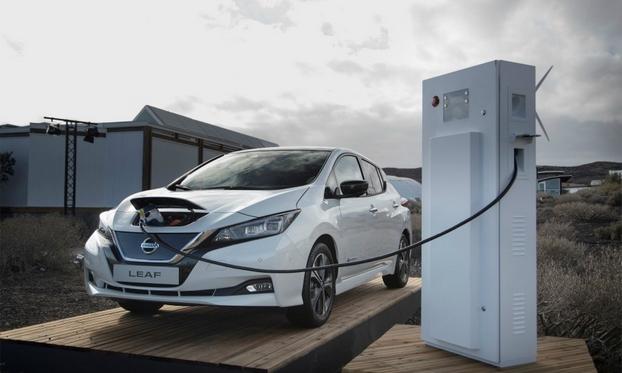
    Nissan’s Leaf is the first electric vehicle to secure regulatory approval as an energy backstop for Germany’s electricity grid. So-called vehicle-to-grid (V2G) technology is a connection between the EV and the grid through which power can flow from the grid to the vehicle and vice-versa, potentially enabling car owners to sell energy to the network. This would allow utilities to use EVs as a backstop if demand rises.

    Nissan said it would initially target corporate clients with fleets of more than 60 electric vehicles, adding that services based on V2G technology would be offered in Germany starting next year.

    “We strongly believe in an emission-free future,” said Guillaume Pelletreau, Vice President and Managing Director, Nissan Center Europe. “Leaf batteries could make an important contribution to energy transition in Germany and a sustainable future.”

    The initiative was also supported by Daimler-backed The Mobility House, local utility Enervie and German transmission system operator Amprion, which is co-owned by RWE and infrastructure investors including Munich Re, Swiss Life and Talanx.

    Nissan is relying on the CHAdeMO charging standard, which has been jointly developed by several Japanese companies as a competitor to Tesla’s supercharger system and the European-backed Combined Charging System (CCS).

    That puts Nissan at odds with European automakers, including BMW and Volkswagen, who are pushing to have the CCS, which is also capable of V2G services, established.

    “Nissan is ahead for now but other technologies, including Tesla’s supercharger can theoretically do the same thing,” said Thomas Raffeiner, chief executive and founder of The Mobility House.

    Nissan has so far sold about 370,000 electric vehicles and, along with top shareholder Renault, has been very active in exploring how car batteries can be integrated into the wider power system.

    While a mass uptake of EVs is expected to put a major strain on the power grid and require billions of euros in infrastructure investments, car batteries have already proven that they can become part of the network.